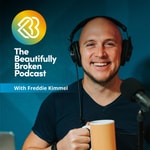
The Beautifully Broken Podcast, hosted by Freddie Kimmel, is a one-stop destination for people looking to incorporate wellness technology, a positive mindset, and good energy into their lives. With a mission of helping people become their most authentic selves, it covers a wide variety of topics, from biohacking and functional medicine to mental health, providing practical advice and resources. As a survivor of metastatic cancer, chronic Lyme disease, and mold toxicity, Freddie brings his unique experience to the show's interviews and highlights technology that has made a measurable shift in his road to feeling incredible. Tune in to explore the power of the human spirit and how to live a healthier, happier life.
Site
RSS
Apple
Data updated on 05/10/2026
Recent rankings
Latest chart positions across Apple Podcasts and Spotify rankings.
Shared links between episodes and podcasts
Links found in episode descriptions and other podcasts that share them.
Cancer, Keto & Internet Oncology: Why Your Terrain Matters More Than Any Protocol | Dr. Nasha Winters (From the Vault)
Season 10 · Episode 308
Monday, September 28, 2026 • Duration 01:28:44
Dr. Nasha Winters, ND, FABNO, author of The Metabolic Approach to Cancer and host of the Tend the Terrain podcast, returns to Beautifully Broken for a conversation that feels even more urgent now than when we first recorded it. This one's from the vault.
When Dr. Nasha was diagnosed with cancer in 1991, there was no Dr. Google, no Facebook groups, and no influencers selling protocols. It still felt overwhelming. Today, a newly diagnosed person faces a flood of well-meaning advice from friends, feeds, and forums, and much of it was never meant for them. Freddie and Dr. Nasha unpack what she calls the core mistake of modern cancer care, on both the conventional and alternative sides: focusing on the treatment instead of the person.
They dig into when a ketogenic diet can support someone with cancer and when it can backfire, why ketones and "the keto diet" aren't the same thing, and why "starve cancer by cutting sugar" oversimplifies the biology. Dr. Nasha walks through her Four S's framework (sugar, stress, sex hormones, and sleep) and explains why a perfect diet can't outrun chronic stress or 1 a.m. doom-scrolling. She also shares a hard-earned lesson as a "recovering juice-aholic," and a case that shows how green juice can concentrate more than nutrients.
From there, the conversation moves into the lymphatic system's overlooked role in oncology, CO2 therapy versus hyperbaric oxygen, total plasma exchange and why detox can go sideways without proper preparation, and her emerging concept of terrain capacity: knowing when to push the body and when to restore it. Dr. Nasha offers a measured, cautionary take on the rush toward repurposed drugs like fenbendazole and ivermectin, and shares her perspective on the rise of colon cancer in young adults.
Along the way, she opens up about something personal: what it means to be known as "the cancer person," and how to hold a diagnosis as part of your story without letting it become your whole identity.
The episode closes with the one question Dr. Nasha tells anyone to ask a cancer center before walking through the door: Do you support my terrain while you're supporting my tumor?
Episode Highlights
0:00 — Welcome back, Dr. Nasha Winters 1:35 — The elevator pitch: stories, patterns, what makes you tick 3:39 — "Internet oncology" and the wellness overwhelm 4:36 — Diagnosed in 1991: cancer before Dr. Google 7:13 — When data brings us closer to ourselves, and when it pulls us away 9:46 — Why her path was never meant to be your protocol 11:03 — "You can't market the fundamentals" 12:43 — Is keto right for cancer? When it helps, when it backfires 14:26 — Ketones ≠ keto diet: the many ways to get there 16:09 — Ketones and the hallmarks of cancer 20:04 — "Starve cancer by cutting sugar": what's true, what's not 22:09 — The Four S's: sugar, stress, sex hormones, sleep 24:32 — Phones, dopamine and the libido question 29:39 — Confessions of a recovering juice-aholic 30:07 — The AML case: a cornfield, daily juice and arsenic 33:26 — Being known as "the cancer person" 36:19 — Story-driven, science-backed 39:04 — CO2 therapy vs. hyperbaric: expansion vs. pressure 47:37 — 100 technologies and the discernment problem 49:01 — The lymphatic gap in oncology 50:21 — Do lymph nodes contain cancer or spread it? 58:26 — Brain fog, glymphatics and the neck 1:01:18 — Total plasma exchange and extracorporeal hyperthermia 1:04:32 — Why detox goes sideways: the tortoise beats the hare 1:06:27 — Terrain capacity: when to push, when to restore 1:09:07 — Fenbendazole, ivermectin and the repurposed-drug rush 1:14:33 — Why is colon cancer rising in young adults? 1:22:00 — The one question to ask any cancer center
Lightpath LED Red Light Therapy — Full-body and targeted red light therapy designed to support recovery, cellular energy, circulation, and everyday wellness. Use code BEAUTIFULLYBROKEN for a discount on all products.
AuraWell PEMF + MagnaWave — Explore FDA-cleared AuraWell PEMF technology for at-home recovery, along with MagnaWave systems used by practitioners for performance and wellness applications. Learn what device is right for you and Book A Call.
Silver Biotics Wound Healing Gel — A water-based silver hydrogel wound dressing designed for moist wound care and protection of minor cuts, abrasions, lacerations, skin irritations, and first- and second-degree burns. Use code BEAUTIFULLYBROKEN for 30% off.
MaxGen Labs — At-home genetic testing that analyzes more than 200 genetic variations across areas including methylation, folate and B12 pathways, detoxification, hormone metabolism, sleep, energy, focus, and nutrition. This is the report I personally used to optimize my lifestyle and supplements for better health outcomes.
Hosted by Simplecast, an AdsWizz company. See pcm.adswizz.com for information about our collection and use of personal data for advertising.
Fascia, Lymph & Breath: 4 Simple Levers That Actually Move the Needle
Season 10 · Episode 307
Monday, September 21, 2026 • Duration 28:22
Fascia, lymphatic drainage, and HRV training: four episodes' worth of lessons, distilled into one solo recap you can actually use.
Freddie opens with Lauren Sambitaro's cadaver-workshop story: two women of similar age, wildly different fascia — one pliable and gel-like, one dried out and restrictive. The lesson isn't just about fascia itself, it's about hydration. Freddie breaks down a simple daily water target (body weight ÷ 2 = ounces), why filtered/reverse-osmosis water can leave you mineral-depleted even while "hydrated," and why a sedentary, shallow-breathing lifestyle stalls the lymphatic system that's supposed to clear cellular waste in the first place. He shares a free biofeedback hack — a belt or necktie wrapped around the belly to feel diaphragmatic breath — and talks through his own recovery from abdominal adhesions using long, breath-paired fascia holds.
From there, he revisits Dr. Paul Savage's take on total plasma exchange (TPE): a real, medically-used detox therapy that's gained mainstream buzz, but — per Savage himself — isn't necessary for everyone, and runs $6,000–$13,000 per treatment in the US. Freddie's framing stays consistent with the show's editorial stance: TPE is promising, but it's not independently validated as a must-have, and the same detox pathway (the lymphatic system) can be supported for free through movement, breath, and sauna use. He references a commonly-cited figure — a 40% reduction in all-cause mortality from frequent sauna use — while flagging it as a bold, widely-repeated claim worth treating with appropriate skepticism rather than as settled science.
The episode closes with Matt Bennett's HRV and resonance breathing work: an affordable, no-affiliate-code tracker ($150, lifetime access) that Freddie contrasts with thousand-dollar biofeedback and EEG sessions — the tool doesn't need to be expensive to be effective, it needs to be used consistently. Freddie shares his own nightly and morning routine (dark room, no late eating, morning sunlight, red-tinted glasses) as the "boring" foundation underneath all the higher-tech tools in his home, and tells the story of sharing that tech with a local high school football player — watching him regain mobility and turn in a standout game the same night.
The through-line: expensive, cutting-edge therapeutics have real value, but they're not required. Movement, breath, hydration, and consistency are free, unglamorous, and still do most of the work.
HRV, Vagal Nerve Training & Nervous System Recovery with Matt Bennett
Season 10 · Episode 306
Monday, September 14, 2026 • Duration 01:18:24
HRV, vagal nerve training, and nervous system recovery are having a real moment — but most people using a wearable to track any of it don't actually know what the data means or how to act on it. Matt Bennett, founder of Optimal HRV and a former mental health therapist specializing in complex trauma, joins Freddie to explain what heart rate variability is really measuring, how resonance frequency breathing trains the vagal nerve directly, and why a validated baseline matters more than any single readiness score.
They get into RMSSD vs. SDNN vs. high frequency HRV, the science behind resonance frequency breathing, and how vagal nerve training works like a strength practice — the more you do it, the more resilient your nervous system recovery becomes. Freddie and Matt also cover the everyday levers that move HRV most: alcohol, sleep consistency, fasting windows, walking, and nasal breathing. Matt closes out with how clinicians, coaches, and military performance teams use HRV data differently than the average wearable user, and why he built Optimal HRV to make vagal nerve training and nervous system recovery accessible at every price point.
Podcast Highlights: 0:00 – Welcome Matt Bennett & Freddie's Optimal HRV experience 2:01 – Matt's path into wellness: mental health therapy & complex trauma 4:04 – The missing piece: quantifying nervous system healing 6:23 – Partnering with a Harvard HRV researcher on resonance frequency breathing 6:46 – HRV 101: what heart rate variability actually measures 9:53 – Why the autonomic nervous system runs the whole show 10:03 – Is low HRV always bad? Population norms explained 12:32 – Can HRV be too high? Pacemakers, beta blockers & outliers 14:18 – Freddie's data: fasting windows, exosomes & recovery spikes 15:17 – The real cost of alcohol on HRV 18:36 – Sleep consistency, cold plunge timing & circadian cues 21:03 – The four pillars: sleep, nutrition, movement, breathing 23:25 – Nasal & diaphragmatic breathing vs. mouth/chest breathing 24:33 – Sprint intervals, Carol Bike & low-tax cardio 25:30 – Finding movement that fits your life 28:12 – Why hiking is Matt's HRV sweet spot28:41 – Readiness scores: are Whoop, Oura & Garmin actually valid?31:23 – RMSSD, SDNN & high frequency HRV, explained simply36:48 – The one metric to track if you only track one37:11 – What makes Optimal HRV different from a wearable39:19 – Resonance frequency breathing & finding your number41:30 – The vagal break: training your nervous system like a muscle45:17 – What strengthening the vagal break actually changes49:13 – Pricing, compatible devices & getting started53:16 – How much daily practice actually moves the needle58:01 – Resonance breathing for sleep, performance & flow state1:04:29 – How clinicians, coaches & military teams use this data1:08:43 – Device compatibility & where to start1:11:09 – Closing thoughts & where to find Optimal HRV
Juvent's Micro-Impact Platform: Bone Health & Vibration Plate Safety with Peter Simonson
Season 10 · Episode 305
Monday, August 31, 2026 • Duration 01:20:06
Freddie sits down with Peter Simonson — a Georgia Tech-trained mechanical engineer who invented Medtronic's TSRH-3D spinal implant system before turning his focus to bone health as President and Co-Founder of Juvent — for a deep dive into micro-impact therapy and why bone may be the most overlooked organ system in longevity conversations.
Peter walks through the history of vitamin discovery, starting with scurvy and vitamin C, as a framework for understanding micro-impact as a daily mechanical requirement rather than a treatment for any single condition. From there, the conversation moves into the engineering itself: why the Juvent Micro-Impact Platform® is capped at 0.3G, how frequency and load are two entirely different safety variables, and why a body of vibration-safety literature exists in occupational safety research that most clinicians have never encountered. Peter also references a study conducted at St. Jude on bone density outcomes in pediatric transplant patients, and the two share personal family stories — Freddie's mother and Peter's mother — about osteoporosis and mobility later in life.
Note: this conversation covers emerging research and technology. Some figures and studies mentioned reflect the guest's own citations and firsthand experience shared in conversation.
Peak Moments
0:00 – Intro: morning routine and setting up the conversation
1:18 – What is Juvent? Defining the category
1:57 – The scurvy & vitamin C history lesson
5:48 – Why micro-impact is a daily requirement, not a treatment
10:03 – What's actually inside the Juvent platform
11:15 – Why 0.3G — the bone science behind low-load, high-frequency
12:42 – Walking vs. jackhammer: the frequency/impact analogy
13:48 – The porcine brain study and "Faraday spikes"
15:33 – The hidden body of occupational vibration-safety literature
Thyroid Health, Hashimoto's & Mineral Balancing for Women's Hormones with Sophie Shepherd — She Talks Health
Season 10 · Episode 304
Monday, August 24, 2026 • Duration 57:05
Hashimoto's, thyroid dysfunction, and hormone imbalance — Sophie Shepherd, founder of She Talks Health and host of the She Talks Health Podcast, joins Freddie Kimmel to break down why "balancing your hormones" is usually the wrong starting point. A Functional Diagnostic Nutrition Practitioner who works primarily with women navigating Hashimoto's, thyroid issues, and mystery symptoms like fatigue, bloating, anxiety, and brain fog, Sophie shares her own decade-long health story — from unexplained teenage digestive pain to a hypothyroid diagnosis dismissed as "normal labs" — and the path that led her out of theater and into functional medicine.
The conversation covers hair tissue mineral analysis (HTMA) testing, why mineral balancing (especially copper, zinc, and manganese) can restore fertility and regulate cycles without directly touching hormones, the limits of hormone panels like the Dutch test for irregular cycles, and why chronic stress — emotional, physical, and environmental — is the upstream driver hiding behind most "hormone problems." Sophie and Freddie also get into red light therapy for thyroid inflammation, an honest take on cold plunging for women with Hashimoto's, subconscious rewiring tools like the quantum time technique, and a candid conversation about trust, bio-individuality, and the sponsorship-driven infighting in the health influencer space.
Episode Highlights:
00:00 Introduction to Sophie Shepherd's Journey
04:05 Turning Point: Diagnosis and Realization
07:01 The Ripple Effect of Healing and Referrals
09:05 The Role of Stress and Emotional Trauma
11:06 Tools for Nervous System and Stress Regulation
12:58 Personal Experiences with Anxiety and Illness
14:54 Supporting Hormone Balance with Minerals
16:59 The Power of Bioindividual Approaches
18:48 The Limitations of Labs and the Role of Mindset
Fascia, Cadaver Labs & Peptides: Lauren Sambataro (BioHacker Babes) on Why More Health Data Isn't Working
Season 10 · Episode 303
Monday, August 17, 2026 • Duration 01:14:52
Fascia, cadaver labs, iron and ferritin, red light therapy marketing, peptides, and total plasma exchange (TPE) — Freddie sits down with functional health practitioner Lauren Sambataro of the BioHacker Babes for a wide-ranging conversation on why more health data and more powerful interventions haven't translated into better health outcomes.
Freddie and Lauren dig into the difference between context and content — how wearable data (Oura scores, HRV, sleep scores), viral health claims, and confident internet voices can quietly reprogram how people feel about their own bodies. They get into the iron and ferritin trend sweeping women's wellness content, the marketing spin behind "medical grade" red light panels, and why more information often means less clarity.
The conversation turns clinical with a look at total plasma exchange (TPE) and EBOO — who actually needs them versus who's chasing a shortcut — and into peptides, where Lauren shares her current protocol (BPC-157, TB-500, Kisspeptin) for perimenopause and tissue repair, while Freddie talks through his own stack, including low-dose retatrutide.
The back half centers on fascia: Lauren's four-day cadaver lab course, and what healthy fascia looks and feels like compared to fascia shut down by scarring, dehydration, and a sedentary life — and what that means for how anyone moves, rolls, and recovers.
Episode Highlights:
1:22 — What Lauren actually does as a functional health practitioner
2:16 — How her approach has evolved over the last decade
4:00 — Wellness has gotten more complex: peptides, PEMF, and high-level interventions go mainstream
5:24 — Are we actually getting healthier with more access to information?
8:45 — Context vs. content: why we overcomplicate health
14:00 — The double-edged sword of wearable data (the Oura ring example)
16:32 — Freddie's 4-hour no-food-before-bed rule and HRV
18:42 — Reclaiming ice baths and contrast therapy from online noise
21:41 — Stop demonizing what nature already gave us
24:14 — The iron/ferritin trend and the danger of one-size-fits-all advice
26:07 — Resonant breathing and finding your personal breath rate
28:55 — Why ferritin is trending in women's health right now
33:00 — Red light marketing claims and the "medical grade" myth
36:49 — Freddie's dog: the ultimate biohacker with no placebo effect
38:21 — Total plasma exchange (TPE): Freddie's first exposure and the current craze
41:42 — TPE recovery time and lymphatic drainage as a lower-cost alternative
43:03 — Who actually needs TPE vs. who's chasing a quick fix
44:46 — EBOO explained: ozonating and filtering the blood
50:41 — Lauren's peptide protocol: BPC-157, TB-500, and Kisspeptin for perimenopause
53:09 — Freddie's peptide stack and why retatrutide outperformed GLP-1s for him
56:24 — Lauren's cadaver lab experience: two bodies, two very different stories
1:00:00 — What healthy vs. unhealthy fascia actually looks like
1:04:54 — Foam rollers vs. towel work vs. long holds for releasing fascia
1:07:53 — Closing thoughts and where to find Lauren and the BioHacker Babes
Blood Plasma Exchange for Detox: Dr. Paul Savage on Toxins, Peptides & Longevity
Season 10 · Episode 302
Monday, August 10, 2026 • Duration 01:10:10
Toxins, plasma exchange, and the detox conversation nobody's having correctly — Dr. Paul Savage joins the show to break down what's actually driving chronic disease in America.
Paul went from 300-pound ER doctor to building 70 wellness centers, then walked away from all of it in 2022 when he realized toxin levels in his patients had outpaced everything traditional detox tools could handle. He moved his family to Brazil, co-authored Avoiding Toxins: Reducing Your Toxic Exposure, and built MD Lifespan around one core idea: you can't out-supplement a toxic load this heavy — you have to remove it directly.
In this conversation, Freddie and Paul get into:
The "bathtub theory" — why turning off the spigot matters more than trying to drain faster
How therapeutic plasma exchange (TPE) actually works, step by step
The four worst toxin categories: plastics, forever chemicals (PFAS), mold, and pesticides/herbicides
Why symptoms — not toxin panels alone — are the real yardstick
Neurocognitive and immune biomarkers as the clearest signal that TPE is working
Peptides, nutrients, and immunoglobulins as part of MD Lifespan's broader protocol
Why insurance doesn't cover this yet, and what would need to change
Long story long, if you've ever felt like you're doing everything right and still can't shake fatigue, brain fog, or inflammation, this episode gives you a framework for asking a different question.
Big love, everybody.
2:13 — What got Paul into medicine
7:17 — Turning point: doctor warns Paul about his health trajectory
8:20 — Paul's transformation and opening a men's health practice
11:46 — Realizing toxic burden was becoming overwhelming
12:40 — Freddie's framework for detox and daily non-negotiables
14:49 — The book Avoiding Toxins, Reducing Your Toxic Exposure
Dr. Shayne Morris (Systemic Formulas) on Gut Health, Herbal Genomics & the Microbiome That Outweighs Every Animal on Earth
Season 10 · Episode 301
Monday, August 3, 2026 • Duration 01:20:55
Dr. Shayne Morris didn't stumble into the microbiome world — he inherited it. Now CEO of both Systemic Formulas and Alimentum Labs, Shayne's grandfather started the company back in 1984 as a healer studying Eastern, Polynesian, and South American medicine, and Shayne spent his career turning that legacy into hard science: how nature actually produces healing, and why the microbes living in and on us — which outweigh every other living thing on the planet combined — do more biochemical work than our own 23,000 genes ever could. In this episode, we get into herbal genomics (Shayne coined the term "herbalomics" back when he realized compounds like turmeric were directly switching genes on and off), why methylated vitamins were considered fringe in 2007 when Systemic started using them, and the surprisingly recent science connecting fungal overgrowth to childhood ADHD and eczema.
We also break down the Holobiome Roadmap — Systemic's five-stage system designed to make gut and cellular health personalized without handing a patient fourteen different bottles and no instructions — and why compliance, not complexity, is usually what determines whether a protocol actually works. Along the way: the real story behind why doctors started washing their hands between autopsies and deliveries, and details on Systemic's NextGen event in Ogden, Utah (September 18–20), where Freddie will be speaking on sales as a role of service.
Highlights:
00:00 - Introduction to Shane Morris and microbiome’s significance
02:20 - Microbes as the foundational layer of health
05:05 - The weight of the microbiome on planetary health
07:01 - How microbes have been misunderstood and underappreciated
09:00 - The impact of diet and environment on microbiome diversity
11:07 - The immune system’s development through microbial exposure
13:26 - The importance of personalized microbiome therapies
17:17 - From natural remedies to microbiome science and research
300 Episodes Later: Why Personalized Medicine Is the Only Medicine That Works
Season 10 · Episode 300
Monday, July 27, 2026 • Duration 41:37
To mark 300 episodes of the Beautifully Broken Podcast, Freddie Kimmel goes solo behind the mic for an unscripted reflection on nearly eight years of conversations about health, healing, and human potential. He unpacks why personalized medicine — not another supplement, device, or biohack — is the throughline of everything the show has covered, and why both legacy medicine's one-size-fits-all disease model and the biohacking industry's overhyped claims miss the same fundamental point: context matters more than content, and healing happens in relationship, not in isolation.
The episode also turns personal — Freddie shares recent grief over the loss of two friends from his Broadway and NYC theater years, including a loss to suicide, and reflects on his own journey through metastatic cancer, chronic illness, and building a business untethered from sponsorship incentives. He closes with a direct call to action: the world needs people to show up as warriors, not consumers, and to take radical ownership of their health, their time, and their voice.
Episode Highlights
00:01 Reflecting on 300 episodes and why guests have been hard to choose
02:22 Gratitude for listeners, reviews, and the team behind the show
04:50 What's changing: bringing video to every episode
07:15 The disease paradigm and the case for personalized medicine
09:24 Why biohacking and longevity claims are becoming overhyped
11:46 Context over content: building the Biological Blueprint course
14:08 Rewriting the light module and pushing into nuance
16:28 Vitamin D, information vs. transformation
18:51 Processing the loss of two friends, including a loss to suicide
21:16 Crisis support and sitting with grief
22:53 Cancer, agency, and perspective on time
Healthspan, Epigenetics & Peptides: Human Flourishing with Dr. Melissa Grill-Petersen
Season 10 · Episode 299
Monday, July 20, 2026 • Duration 01:27:19
Dr. Melissa Grill-Petersen, DC, MS, BCHH, is the founder and CEO of Human Longevity Global and co-founder of Peptide University, and in this episode she breaks down peptides in plain terms: naturally occurring signaling molecules that instruct the body's existing pathways rather than replace them. She and Freddie dig into why peptide quality of effect depends on foundational health — cell membrane integrity, nutrient status, hormone balance — and why she sees peptides as one input among many, not a shortcut around the basics. The conversation also covers the "exposome," the case for designing environments (cities, workplaces, healthcare systems) around healthspan rather than sick-care, and the emerging economic argument for longevity research reframed around health-adjusted life years.
Beyond the science, Dr. Melissa shares the personal story that shaped her mission — watching her mother's cancer go into remission through an intensive lifestyle shift, then return after returning to old patterns — and how that experience shaped her belief that inputs, not just genetics, drive health outcomes. The episode closes with a quick-fire round on her favorite peptide for cell membrane support and where peptide delivery research is headed next. A candid, systems-level look at longevity, personal responsibility, and human flourishing from one of the field's most recognized educators.
Episode Highlights
00:00 Intro and welcome to Dr. Melissa G Petersen
09:36 Mom’s cancer diagnosis and the power of changing inputs
10:01 Mind-body medicine, remission, and relapse
11:23 Processing trauma, meaning, and purpose
13:22 Wholeness, healing, and releasing what is not ours
29:43 Macro to micro: where health really starts
34:24 Healthspan vs lifespan
36:37 The economics of extending healthspan
38:03 Exposome, environmental inputs, and upstream design
Episode Highlights
00:00 Introduction to Body Wisdom and Self-Listening
00:30 Balancing External Guidance with Inner Signals
09:08 Therapeutic Techniques for Fascia and Adhesions
11:26 Total Plasma Exchange and Detoxification
13:48 Measuring Toxins and Personalizing Detox
14:42 Sweating, Sauna, and Toxin Elimination
16:00 Heart Rate Variability and Resonant Breathing
17:00 Affordable Biofeedback and Self-Regulation
18:53 Overwhelm and Simplifying Health Practices
20:10 Sleep Hygiene and Daily Routines
22:07 Sharing Wellness Practices with Others
23:31 Success Stories and Community Impact
24:59 Resources, Courses, and Next Steps
Upgrade Your Wellness
Lightpath LED Red Light Therapy — Full-body and targeted red light therapy designed to support recovery, cellular energy, circulation, and everyday wellness. Use code BEAUTIFULLYBROKEN for a discount on all products.
AuraWell PEMF + MagnaWave — Explore FDA-cleared AuraWell PEMF technology for at-home recovery, along with MagnaWave systems used by practitioners for performance and wellness applications. Learn what device is right for you and Book A Call.
Silver Biotics Wound Healing Gel — A water-based silver hydrogel wound dressing designed for moist wound care and protection of minor cuts, abrasions, lacerations, skin irritations, and first- and second-degree burns. Use code BEAUTIFULLYBROKEN for 30% off.
MaxGen Labs — At-home genetic testing that analyzes more than 200 genetic variations across areas including methylation, folate and B12 pathways, detoxification, hormone metabolism, sleep, energy, focus, and nutrition. This is the report I personally used to optimize my lifestyle and supplements for better health outcomes.
Hosted by Simplecast, an AdsWizz company. See pcm.adswizz.com for information about our collection and use of personal data for advertising.
Related Shows Based on Content Similarities
Discover shows related to The Beautifully Broken Podcast, based on actual content similarities. Explore podcasts with similar topics, themes, and formats, backed by real data.