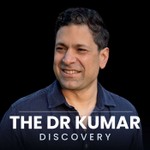
Welcome to The Dr. Kumar Discovery, a health and wellness podcast hosted by Dr. Ravi Kumar, a board-certified neurosurgeon. This is the medical podcast for anyone who wants honest, evidence-based answers to the health questions that matter most. No corporate influence. Just a physician who reads the research, questions the dogma, and breaks it down in plain language so you can make better decisions about your own health.
Dr. Kumar is a practicing neurosurgeon who brings a surgeon's precision to topics most doctor podcasts only scratch the surface of. Each episode dives deep into the science behind metabolic health, cardiovascular disease, heart disease, hormones, nutrition, brain health, mental health, pain, inflammation, weight loss, aging, blood pressure, sleep, and longevity. Whether it's the truth about seed oils, the real data on GLP-1 drugs and weight loss, the science of cold water therapy, how light can heal the body, or why your testosterone is declining, Dr. Kumar goes straight to the peer-reviewed literature and tells you what the evidence actually shows, not what the headlines say. This is evidence-based medicine in plain English.
The show features three formats. Solo deep dives explore a single health topic from the ground up, covering everything from the biology to the practical takeaways you can use today. Expert interviews bring on leading researchers, clinicians, and forward-thinking voices in health and medicine for in-depth conversations you won't hear anywhere else. The Tribulations series tells the true stories behind medicine's greatest breakthroughs, from the discovery of penicillin to the invention of vaccines to a father's fight to save his son's life. These are the stories of the doctors, scientists, and patients who changed the course of medicine.
Topics covered on the show include testosterone and hormone optimization, sleep science, photobiomodulation and red light therapy, exercise with oxygen therapy, creatine, uric acid and gout prevention, gut health and probiotics, cardiovascular risk and Lp(a), cholesterol, PANDAS in children, PTSD and trauma, acetaminophen safety, glyphosate, foot health, and much more.
If you're tired of generic health advice and want to hear from a neurosurgeon who actually reads the studies, The Dr. Kumar Discovery is your podcast. New episodes drop regularly. Subscribe and join the discovery.
For show notes, references, and more, visit drkumardiscovery.com/podcast
Site
RSS
Apple
Classements récents
Dernières positions dans les classements Apple Podcasts et Spotify.
Liens partagés entre épisodes et podcasts
Liens présents dans les descriptions d'épisodes et autres podcasts les utilisant également.
Saccharomyces boulardii Explained: The Probiotic That Protects Your Gut
Saison 1 · Épisode 20
dimanche 21 septembre 2025 • Durée 19:24
***Correction*** - The CNCM I-745 strain of Saccharomyces boulardii is currently only sold by Florastar. This is the most studied strain of Saccharomyces boulardii. I've also tried brands such as Jarrow and Pure, and they've worked well, but the majority of the research supports the CNCM I-745 strain. In the podcast, I mentioned that most of the strains are this CNCM I-745 strain, but that was factually incorrect.
What if a simple yeast, scraped from the peel of tropical fruit during a cholera epidemic, could change the way we protect our microbiome?
In the 1920s, French microbiologist Henri Boulard stumbled upon a probiotic unlike any other. Saccharomyces boulardii isn’t a bacteria, but a hardy yeast that survives heat, stomach acid, and bile. Today, it’s one of the best-studied tools for preventing antibiotic-associated diarrhea, treating traveler’s diarrhea, and protecting gut health when illness strikes.
In this episode of Tribulations, Dr. Ravi Kumar takes you on a journey that weaves history, science, and practical medicine. You’ll discover:
The remarkable story of how Boulard’s curiosity led him from alcohol fermentation to a lifesaving probiotic during a cholera outbreak.
Why Saccharomyces boulardii acts as a “shepherd” in the gut, preserving balance while pushing back against harmful bacteria.
Clinical trial evidence showing its effectiveness against antibiotic-associated diarrhea, traveler’s diarrhea, and recurrent C. difficile infection.
Practical dosing strategies for adults and children—when to use it, how long to continue, and important safety caveats.
Why a $15 supplement sometimes outperforms prescriptions in protecting your microbiome.
It’s a story of serendipity, science, and a forgotten yeast that still holds lessons for modern medicine.
Testosterone Replacement Therapy Explained: Should Men Restore Youthful Levels?
Saison 1 · Épisode 19
dimanche 14 septembre 2025 • Durée 41:14
Testosterone levels decline steadily with age, leaving many men with less energy, lower libido, more body fat, weaker bones, and fading vitality. By age 60, 1 in 5 men is already clinically hypogonadal, and by 80, half are. But should we accept this as inevitable, or use modern medicine to restore hormones to youthful levels?
In this episode of The Dr. Kumar Discovery Podcast, Dr. Ravi Kumar unpacks the science of male hormone optimization. You’ll learn what healthy testosterone looks like in younger men, how testosterone really works in the body, and what happens when levels drop too low. We’ll also cover natural ways to boost testosterone and explore the evidence behind testosterone replacement therapy (TRT).
In this episode, you’ll discover:
Why testosterone, free testosterone, and SHBG all matter for male health.
The biological roles of testosterone, DHT, and estradiol, and why balance is key.
How low testosterone impacts libido, mood, bone strength, metabolism, and body composition.
The vicious cycle of low T, belly fat, and estrogen.
Lifestyle and supplement strategies that naturally improve testosterone.
The history of testosterone therapy, from Brown-Séquard to modern TRT.
Today’s replacement options: injections, creams, enclomiphene, HCG, and more.
The real risks and side effects of TRT, and why “super-physiological” dosing backfires.
How to know if TRT is right for you, and the workup every man should get first.
If you’ve wondered whether testosterone replacement could help restore energy, strength, and vitality... or you want to understand how male hormones shape health, this episode is essential listening.
For more health insights, subscribe to The Dr. Kumar Discovery Podcast on any major platform.
Why is vitamin C—a nutrient most people take for granted—still at the center of scientific debate and miraculous recoveries? In “The Vitamin C Paradox,” Dr. Ravi Kumar explores the hidden complexity behind this essential molecule, from our evolutionary dependence to its overlooked medical potential. Discover how the right dose, at the right time, could change everything from your daily health to survival in the face of severe illness.
What You’ll Learn
Why humans lost the ability to make vitamin C—and the clever ways our bodies compensate.
How vitamin C works as a master antioxidant and is uniquely recycled in human red blood cells.
Hidden signs of deficiency—and why “modern scurvy” is more common than you think.
What science really says about vitamin C for colds, immune support, cardiovascular health, and recovery.
The untold story of IV vitamin C—and how one family’s determination changed a young boy’s fate.
How to optimize your own vitamin C intake for health, stress, illness, and special situations.
Why the RDA might be set far too low—and what our closest primate relatives can teach us.
Episode 8: You’re Probably Deficient in Omega-3—Here’s How to Fix It
Saison 1 · Épisode 9
mercredi 25 juin 2025 • Durée 40:30
Episode Summary
In this deep-dive episode, Dr. Ravi Kumar explores why omega-3 fatty acids are foundational to human health—touching on their biochemistry, evolutionary history, robust clinical evidence, and practical strategies for optimizing intake. You’ll learn:
What “omega-3” really means and why your body can’t make these fats on its own
Early discoveries by George and Mildred Burr in the 1920s
The Inuit paradox: high-fat diets with low cardiovascular disease
Landmark trials such as REDUCE-IT and EVAPORATE demonstrating cardioprotective effects
Roles across the lifespan: brain development, mood regulation, eye health, immune function, muscle maintenance, liver health, skin integrity, and more
Evolutionary insights from traditional populations and enzymatic conversion of ALA → EPA/DHA
Practical guidance on food sources, supplement types (triglyceride vs. ethyl ester, krill, algal oil), dosing, safety (oxidation, contaminants), and certification (IFOS)
Practical Suggestions
Daily baseline: Aim for ≥2 g combined EPA + DHA (with at least 1 g EPA)
High-dose therapy: 3–4 g/day EPA-rich for hypertriglyceridemia, arthritis, depression
Pregnancy: At least 500 mg DHA daily (algal oil option for vegans)
Food sources: Prioritize small, low-contaminant fish (sardines, anchovies, mackerel); include wild-caught salmon sparingly
Supplement selection: Choose triglyceride-form fish oil, IFOS-certified; watch for oxidation (peroxide/anisidine levels) and contaminant removal via molecular distillation
Topic: A comprehensive look at vitamin K2’s discovery, mechanisms, clinical evidence, and why it’s essential for calcium homeostasis, bone strength, and vascular health.
📖 Episode Overview
Historical journey from Weston A. Price’s “Activator X” to the Nobel‐winning discovery of vitamin K
Biochemical roles of K1 vs. K2: activating clotting factors vs. directing calcium into bones and out of arteries
Ancestral dietary patterns that once guaranteed year-round vitamin K2 intake
Key clinical findings on bone mineral density, fracture risk, arterial calcification, and beyond
Drug interactions: how warfarin and statins inadvertently disrupt K2 pathways
Supplementation strategy: MK-7 vs. MK-4, practical dosing, and Dr. Kumar’s personal protocol
Next episode teaser on omega-3 fatty acids
✨ Key Takeaways
Vitamin K2 (menaquinones) is indispensable for proper calcium placement—bones vs. arteries.
Traditional diets provided K2 via seasonal greens and fermented foods; modern diets are often deficient.
Meta-analyses and RCTs demonstrate up to 57% fewer fractures and slower arterial calcification with K2.
MK-7 (180–375 µg/day) offers superior bioavailability and tissue delivery compared to MK-4.
Pair K2 with vitamin D and dietary fat for optimal absorption.
📚 References & Study Summaries
Episode 6: The Silent Epidemic: Are You Low on Vitamin D?
Saison 1 · Épisode 7
jeudi 29 mai 2025 • Durée 36:27
In this episode, Dr. Ravi Kumar uncovers the powerful, misunderstood role of vitamin D in your health—and why nearly half the world is deficient. Far more than a bone vitamin, vitamin D acts as a hormone that regulates over 1,000 genes and plays a role in everything from immune function and mood to metabolism, muscle strength, and even cancer prevention.
Dr. Kumar shares stories from his family, travels, and medical practice—including a powerful transformation in his grandmother’s health—to reveal the often-overlooked symptoms of deficiency and how to fix them. You’ll learn about testing, dosing, and a simple immune-boosting protocol used in his own household, along with the vital connection between vitamin D and sunlight, inflammation, and modern life.
And this is just the beginning. At the end, Dr. Kumar teases the next episode on Vitamin K2, the critical cofactor that ensures vitamin D works where you need it—and not where you don’t.
🔍What You’ll Learn in This Episode
Why vitamin D is both a nutrient and a hormone
How vitamin D deficiency became a modern epidemic
The story of Tiny Tim and rickets in 19th-century cities
The science of how sunlight creates vitamin D in the skin
Why elderly individuals often go undiagnosed with deficiency
How low vitamin D levels affect bones, muscles, brain function, and mood
What lab test to ask for and what levels to aim for
A household protocol Dr. Kumar uses at the first sign of illness
Why inflammation can block vitamin D activation—even with sun exposure
The optimal blood levels based on ancestral health data
Why vitamin D alone isn’t enough for bone health without vitamin K2
🧪 Key Studies and References Explore the research behind this episode:
Comprehensive review of vitamin D’s role in immunity, bone health, and chronic disease.
Episode 5: The Untold Power of Diet and LifeStyle (Cardiovascular Disease: Part 5)
Saison 1 · Épisode 6
vendredi 23 mai 2025 • Durée 53:06
Episode 5: The Untold Power of Diet and Lifestyle (Cardiovascular Disease: Part 5)
In this episode, we uncover why real-world interventions—whole-food diets, metabolic health markers, and the simplest “medicine” of all—walking—outperform any pill in preventing and reversing heart disease.
Topics include
Ancestral lessons from the Mediterranean, Panama, Japan, and the Nordic countries
Estimate your 10-year cardiovascular risk using standard clinical inputs.
Episode 3: Is High LDL Really the Culprit? (Cardiovascular Disease Part 3)
Saison 1 · Épisode 4
vendredi 9 mai 2025 • Durée 32:14
In this episode of the Dr. Kumar Discovery Podcast, we dive deep into one of the most controversial questions in human health: Does high LDL cholesterol actually cause heart disease?
We explore the historical origins of the cholesterol hypothesis, unpack evidence from traditional societies and modern studies, and challenge the “lower is better” narrative. You’ll learn how cholesterol functions in the body, why LDL may not be the villain it’s made out to be, and when lowering it actually makes sense.
We cover:
The story of President Roosevelt and how his death led to the Framingham Heart Study
What traditional cultures like the Tsimane, Maasai, and Inuit reveal about “normal” cholesterol
Why very low LDL is associated with higher all-cause mortality
What CAC scans tell us about real cardiovascular risk
The Injury Response Hypothesis — a new way to view atherosclerosis
Whether statins make sense in every case — and how to personalize your approach
Whether you’re taking a statin, being told to start one, or just want a deeper understanding of cholesterol and cardiovascular risk, this episode offers a balanced, evidence-based perspective that cuts through the noise.
A landmark cohort study launched in 1948 to uncover causes of cardiovascular disease. It helped establish cholesterol, smoking, and blood pressure as key risk factors.
2. Traditional Populations with High LDL but Low Heart Disease
Tokelauan Islanders
Episode 2: The Seed Oil Problem — How Linoleic Acid Fuels Heart Disease (Cardiovascular Disease Part 2)
Saison 1 · Épisode 3
samedi 3 mai 2025 • Durée 37:55
In this eye-opening second installment of our series on cardiovascular disease, Dr. Ravi Kumar dives deep into the forgotten history and modern science behind one of the most controversial components of our diet: seed oils.
We’ll explore how linoleic acid—the dominant fat in seed oils—became a staple in the modern food supply, why its structure makes it chemically fragile and pro-inflammatory, and how its oxidation within LDL particles may be the real spark that ignites atherosclerosis.
You’ll learn:
Why the diet-heart hypothesis linking saturated fat to heart disease falls apart under scrutiny
The disturbing truth behind how seed oils are chemically extracted using hexane
How linoleic acid disrupts the body’s inflammatory balance and contributes to chronic disease
Why LDL isn’t the villain—but what’s inside LDL particles might be
The striking findings from forgotten studies like the Sydney Diet Heart Study, the Minnesota Coronary Experiment, and Dr. Malhotra’s Indian railway worker research
Practical steps to reduce seed oil intake and rebalance your omega-6 to omega-3 ratio
If you’ve ever wondered why heart disease remains the world’s #1 killer despite decades of low-fat advice, this episode will challenge what you think you know—and offer a clearer path forward.
References:
Seven Countries Study – Ancel Keys et al. (1970) https://pubmed.ncbi.nlm.nih.gov/6739443/ Epidemiological study of 11 579 men in seven countries showing a correlation between saturated-fat intake and heart-disease rates (association, not causation)
Sydney Diet Heart Study – Ramsden et al., BMJ 2013 https://www.bmj.com/content/346/bmj.e8707 Randomized trial replacing saturated fat with high-linoleic safflower oil; intervention group experienced 70 % more coronary events and 62 % higher all-cause mortality
Minnesota Coronary Experiment – Ramsden et al., BMJ 2016https://www.bmj.com/content/353/bmj.i1246Randomized trial swapping saturated fat for corn oil; participants aged 65 and over in the PUFA group had higher mortality and no reduction in atherosclerosis at autopsy
Key Takeaways
Vitamin C is about more than scurvy. It’s central to immunity, tissue repair, mental clarity, and more.
Most people get just enough to “get by.” Far higher intakes may be needed for true resilience—especially in illness or stress.
IV vitamin C acts differently from oral forms and shows real promise in cancer care and critical illness.
Even today, vitamin C deficiency is surprisingly common and often overlooked.
Practical Recommendations
Daily health: 500–1,000 mg ascorbic acid (plus vitamin C–rich foods throughout the day)
During illness or stress: Up to 6,000 mg daily, divided in smaller doses (and stay hydrated)
Cancer/critical illness: Discuss IV vitamin C as an integrative option with your healthcare provider
Best supplement forms: Plain ascorbic acid is ideal; buffered or liposomal forms may help sensitive stomachs
Don’t Miss
Why the RDA for vitamin C was set only to prevent scurvy—not to optimize health or immune function.
What wild animals and primates reveal about human vitamin C needs.
How clinical research has often misrepresented the full potential of vitamin C.
References & Further Reading
All referenced clinical trials, peer-reviewed papers, and additional resources for this episode can be found on our Vitamin C Episode page.
(Link to be updated once your references page is live.)
Help Us Grow
If this episode made you think differently, please share it with someone you care about and leave a review on your favorite podcast platform. Your support helps bring practical, evidence-based health information to more people.
Disclaimer: This episode is for informational purposes only and is not a substitute for medical advice. Please consult your healthcare provider before making any health decisions.
Dietary Intake of Menaquinone Is Associated with a Reduced Risk of Coronary Heart Disease in Older Men and Women
Prospective cohort of older adults showing that higher dietary menaquinone (vitamin K2) intake was linked to a significant reduction in coronary heart disease incidence.
Vitamin K2 Ameliorates Osteoarthritis by Suppressing Ferroptosis and Extracellular Matrix Degradation Through Activation of GPX4
Preclinical rodent study demonstrating that MK-7 improves cartilage integrity, reduces pain scores, and lowers osteoarthritis severity by inhibiting ferroptosis and activating the antioxidant enzyme GPX4.
Multiple Dietary Vitamin K Forms Are Converted to Tissue MK-4 in Mice
Animal feeding trial revealing that dietary phylloquinone (K1) and various menaquinones (MK-4, MK-7, MK-9) all serve as precursors for tissue MK-4, highlighting a common conversion pathway across tissues.
Role of Menaquinone-7 in Bone Health: A Comprehensive Review
Systematic review in Frontiers in Nutrition summarizing mechanistic and clinical evidence for MK-7’s effectiveness in enhancing bone mineral density, reducing fracture risk, and exhibiting an excellent safety profile.
Effect of Vitamin K2 on Bone Mineral Density and Fracture Risk in Postmenopausal Women
Meta-analysis of RCTs involving over 6,400 participants, showing that VK2 supplementation (primarily MK-4 and MK-7) significantly improved lumbar spine BMD and lowered overall fracture risk by approximately 57%.
Vitamin K Status in Chronic Kidney Disease and Hemodialysis Patients
Observational study reporting elevated levels of undercarboxylated vitamin K-dependent proteins (dp-ucMGP, ucOC) in CKD and dialysis cohorts, indicating widespread subclinical K deficiency in these populations.
Dietary Vitamin K Intake and Bone Health in Public-Health Populations
Population-level analysis linking higher dietary vitamin K intake to reduced osteoporosis prevalence and fewer fractures among older adults, reinforcing the public-health importance of K.
Long-Term MK-4 Therapy Prevents Vertebral Fractures in Osteoporotic Women
Clinical trial showing that 45 mg/day MK-4 over 3 years significantly lowered the incidence of new vertebral fractures compared to control, despite pharmacologic dosing far above dietary levels.
Comparative Pharmacokinetics of MK-7 vs. MK-4 in Humans
Pharmacokinetic study revealing that MK-7 has a substantially longer half-life and higher steady-state blood levels than MK-4 when administered orally, supporting MK-7’s use in supplementation.
Effect of Low-Dose MK-7 on Osteocalcin Carboxylation
Controlled trial finding that 180 µg/day of MK-7 for 12 weeks significantly increased the ratio of carboxylated to undercarboxylated osteocalcin, indicating enhanced bone-matrix protein activation.
Regional Differences in Vitamin K2 Biomarkers and Bone Health
Cross-sectional study of Japanese adults correlating serum K2 levels (MK-7) with superior bone density measures and lower fracture prevalence across regions with habitual natto consumption.
Traditional Dietary Sources of Vitamin K2 in Japanese Communities
Ethnographic dietary survey documenting seasonal consumption of natto, fermented vegetables, and dairy in rural Japanese villages, with measured K2 intakes averaging >300 µg/day.
If you found this episode helpful, please share it with someone who might benefit—and don’t forget to leave a review on your favorite podcast platform. It helps new listeners discover the show and supports this journey of discovery.
FH patients had increased cardiovascular mortality before age 70, but no increased risk after 70—challenging the assumption that LDL is always harmful.
Among NSTEMI patients, those with LDL below 105 mg/dL had over twice the risk of death over 3 years compared to those with higher LDL.
Controlled Feeding Trial on LDL Oxidation – Hunter et al. (2000) https://pubmed.ncbi.nlm.nih.gov/10694774/ Participants on an oleic-acid–rich diet (olive oil) had LDL particles significantly more resistant to oxidative modification than those on a linoleic-acid–rich diet (sunflower oil)
U.S. Adipose Linoleic Acid Trends – Ramsden et al. (2015) https://pubmed.ncbi.nlm.nih.gov/26567191/ Review showing adipose-tissue linoleic-acid content rose by 136 % since the late 1950s, mirroring increased dietary intake of seed oils
Indian Railway Workers Heart-Attack Rates – Malhotra (1969) https://www.ncbi.nlm.nih.gov/pmc/articles/PMC487855/ Analysis of over one million workers: North India (high saturated-fat diets) had low CHD rates, while South India (high seed-oil diets) had a 675 % higher heart-attack mortality
Soybean Oil Consumption Increase – Allison et al. (2011) https://www.ncbi.nlm.nih.gov/pmc/articles/PMC3076650/ U.S. food-supply data demonstrating per-capita soybean-oil consumption rose more than 1 000-fold from 1909 to 1999, driving up dietary linoleic acid
Podcasts Similaires Basées sur le Contenu
Découvrez des podcasts liées à The Dr Kumar Discovery. Explorez des podcasts avec des thèmes, sujets, et formats similaires. Ces similarités sont calculées grâce à des données tangibles, pas d'extrapolations !