The Christian Clinician – Details, episodes & analysis
Podcast details
Technical and general information from the podcast's RSS feed.
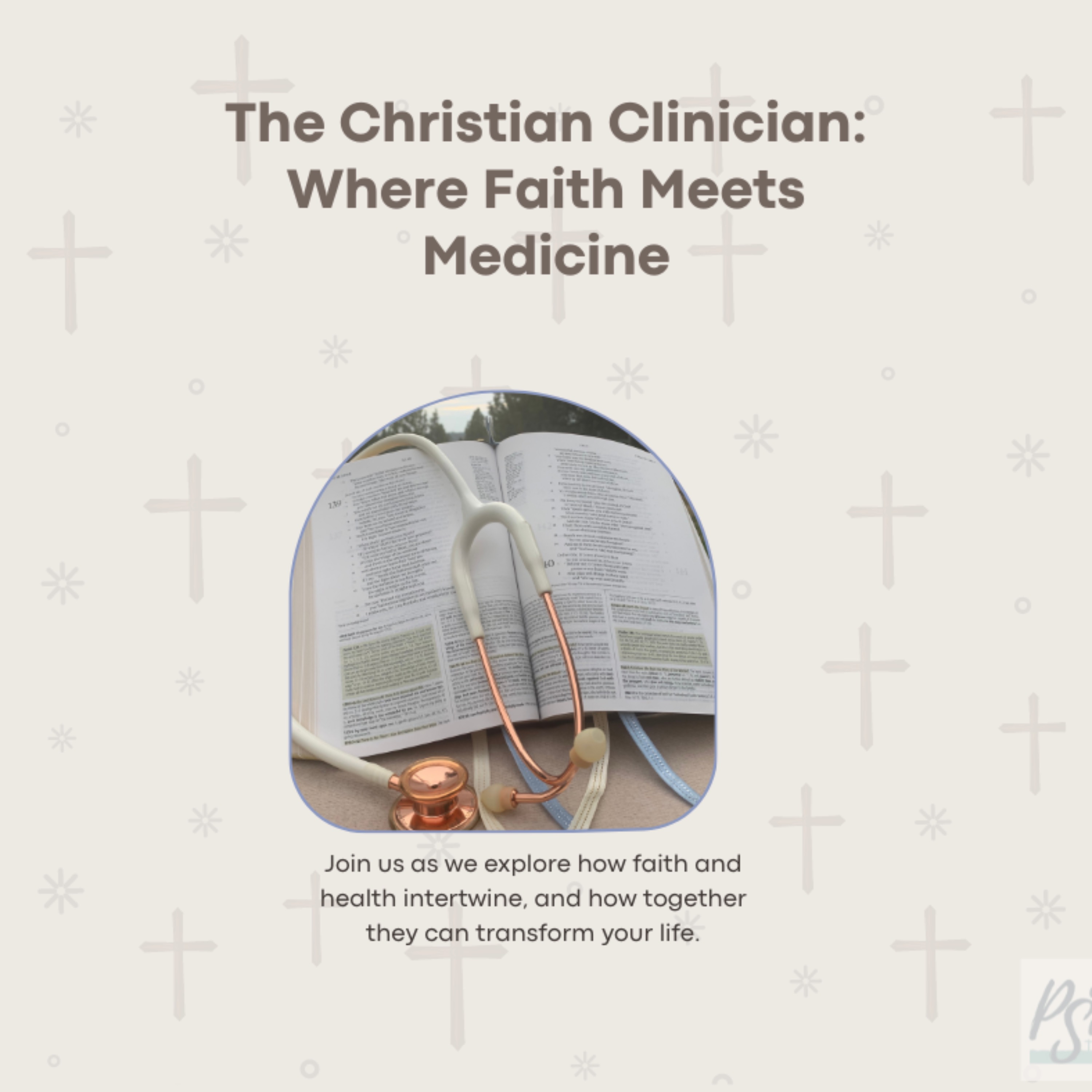
The Christian Clinician
Dr. Tanya Paynter
Frequency: 1 episode/22d. Total Eps: 42

The Christian Clinician is a podcast that explores the intersection of faith, physiology, and whole-person health.
Hosted by Dr. Tanya Paynter, a licensed naturopathic physician, the show examines how spiritual practices, emotional health, and the body’s physiological systems are deeply interconnected—and why healing cannot be fully understood apart from our relationship with God.
Rather than treating faith and medicine as opposing forces, The Christian Clinician brings them into thoughtful conversation, drawing from Scripture, clinical insight, research, and lived experience. Each episode invites listeners to consider how prayer, trust, suffering, doubt, gratitude, and obedience shape not only spiritual life, but emotional and physical well-being as well.
This podcast is for those who sense that something is missing in their health journey—for clinicians who desire to care for the whole person, and for individuals seeking a more integrated understanding of healing that honors both scientific integrity and Christian faith.
At its core, The Christian Clinician is about becoming whole by design—formed by a Creator who made us to love Him with heart, soul, mind, and strength.
“And you shall love the Lord your God with all your heart and with all your soul and with all your mind and with all your strength.”
— Mark 12:30 (ESV)
Recent rankings
Latest chart positions across Apple Podcasts and Spotify rankings.
Apple Podcasts
🇩🇪 Germany - alternativeHealth
23/04/2026#79
Spotify
No recent rankings available
Shared links between episodes and podcasts
Links found in episode descriptions and other podcasts that share them.
See all- https://drtabatha.com/
44 shares
- https://kristinfitch.com/devotional/
34 shares
- https://fasttofaith.com/
29 shares

RSS feed quality and score
Technical evaluation of the podcast's RSS feed quality and structure.
See allScore global : 84%
Publication history
Monthly episode publishing history over the past years.
The Reconstruction Project: Answering Objections and Rebuilding Faith (with Drs. Shepardson and Dr. Travis) S3E14
Season 3 · Episode 14
mercredi 15 avril 2026 • Duration 54:09
Many apologetics resources focus on making a positive case for Christianity—but real conversations often start with an accusation.
Christians are hypocrites. Christianity is anti-LGBTQ. The Bible supports slavery. The church is abusive. God is cruel.
In this episode of The Christian Clinician, Dr. Tanya Paynter interviews Dr. Andrew “Ike” Shepardson and Dr. Melissa Cain Travis about their book The Reconstruction Project: Recovering Truth and Rebuilding Faith. They explain why they wrote this book as a work of negative apologetics—not to win arguments, but to remove roadblocks that keep people from even considering Christianity as true and good.
Together, they discuss how apologetics has shifted over the last decade: objections are often less about whether Christianity is true and more about whether it is morally good. They also talk candidly about the places the church has failed, why honesty matters when addressing historical and moral objections, and why every apologetic conversation should ultimately point back to Jesus and the gospel.
This episode is especially for Christians who want to engage hard questions with clarity, humility, and confidence—and for anyone who feels stuck between honest objections and the desire to rebuild faith on solid ground.
In this episode, you’ll explore
• Why apologetics conversations often begin with an accusation rather than a question
• What “negative apologetics” is and why it matters for deconstruction conversations
• Why many objections today focus on whether Christianity is good, not just true
• How naturalism undermines meaning, free will, and rationality
• How the problem of evil connects to objective moral claims and a moral lawgiver
• How Jesus dignifies women (Mary, the Samaritan woman, resurrection witnesses)
• Why honesty about church failures is essential to credible apologetics
• How to use the book chapter-by-chapter as a practical reference tool
Episode Timestamps
01:08 Introducing Dr. Andrew Ike Shepardson and Dr. Melissa Cain Travis + the book
02:34 Why they wrote The Reconstruction Project (negative apologetics)
09:42 Is Christianity good?
11:45 Diving into the book
14:29 The hardest chapters to write (abuse, abortion, crusades)
22:29 Naturalism and meaning: why “create your own meaning” falls short
31:10 The problem of evil, free will, and moral objectivity
42:16 Christianity and women: how Jesus dignifies women
47:59 Companion resources and how to use this book practically
51:18 Where to find the authors and their work
Resources Mentioned
• The Reconstruction Project: Recovering Truth and Rebuilding Faith — Dr. Andrew Ike Shepardson & Dr. Melissa Cain Travis
https://www.amazon.com/Reconstruction-Project-Recovering-Truth-Rebuilding/dp/1430088389
Examples of positive apologetics books
• Reasonable Faith William Lane Craig
https://www.amazon.com/Reasonable-Faith-Christian-Truth-Apologetics/dp/1433501155
• On Guard — William Lane Craig
https://www.amazon.com/Guard-Defending-Faith-Reason-Precision/dp/1434764885
• Christian Apologetics — Douglas Groothuis
https://www.amazon.com/Christian-Apologetics-Comprehensive-Biblical-Faith/dp/0830839356
• Knowledge of God in the World and the Word — Andrew Ike Shpardson & Douglas Groothuis https://www.amazon.com/Knowledge-God-World-Word-Introduction/dp/0310113075
About the Guests
Dr. Andrew “Ike” Shepardson is Chief of Christian Integration and Discovery at Valor Christian High School and leads the Master’s program in Christian Apologetics at Colorado Christian University.
Dr. Melissa Cain Travis serves as Assistant Professor of Apologetics at Houston Christian University. She is a Fellow at the Discovery Institute Center for Science and Culture and writes for Shadowlands Dispatch, a Substack magazine dedicated to cultural apologetics.
Connect with the Authors
• Dr. Andrew “Ike” Shepardson: ikeshepherdson.com
• Dr. Melissa Cain Travis: melissacanetravis.com
• Substack: Music of the Spheres (Melissa Cain Travis)
• Shadowlands Dispatch (Substack publication)
• Discovery Institute Center for Science and Culture (Melissa Cain Travis, Fellow)
About the Host
Dr. Tanya Paynter is the host of The Christian Clinician, a podcast exploring the intersection of Christian faith, physiology, and whole-person health. As a licensed naturopathic physician, she helps Christians understand how spiritual practices and theological beliefs shape stress physiology, emotional resilience, and long-term health.
Where to Find Dr. Tanya Paynter
Learn more at www.psalmmedical.com
Visit the podcast webpage at https://www.psalmmedical.com/cc-podcast
Follow The Christian Clinician on Social Media
YouTube: https://www.youtube.com/@thechristianclinician
Biblical Practices and the Nervous System: Mid-Season Recap
Season 3 · Episode 13
mercredi 8 avril 2026 • Duration 22:53
Welcome to a mid-season recap of The Christian Clinician.
In this mid-season recap of The Christian Clinician, Dr. Tanya Paynter steps back to look at the bigger picture of Season 3 and why this season has been centered on biblical practices and physiology—how prayer, gratitude, and forgiveness shape the nervous system, retrain the brain, and help deactivate chronic fight-or-flight responses.
So far this season, we’ve covered three practices: prayer, gratitude, and forgiveness. In each series, the goal has been twofold: to deepen our relationship with God and to understand how these practices shape physiology over time—helping retrain the brain, reduce stress reactivity, and create steadier emotional regulation.
This episode is also a mid-season reset. If you’re new to the podcast, this is the best place to start. If you’ve been listening for a while, it’s a chance to revisit these practices with fresh perspective and remember why this season matters.
Dr. Paynter also previews what’s coming next: two author interviews and an opportunity to catch up on episodes you may have missed while the season continues forward.
In this episode, you’ll explore
• The big picture purpose of Season 3 and why it focuses on physiology
• The three practices covered so far: prayer, gratitude, and forgiveness
• Why spiritual practices impact stress physiology, brain patterns, and fight-or-flight
• How deepening relationship with God supports emotional regulation over time
• What’s coming next in the season (author interviews and continued practice focus)
Episode Timestamps (Mid-season recap episodes under ~20 minutes → 5–7 timestamps; here are 7)
00:00 Welcome and what The Christian Clinician is about
00:29 Why this mid-season recap matters
01:11 Prayer, gratitude, forgiveness: what we’ve covered so far
02:05 Why biblical practices shape physiology and the nervous system
05:10 The goal: deeper relationship with God and reduced fight-or-flight
08:40 Catch up suggestions for new and returning listeners
11:05 What’s coming next: author interviews and the next stretch of the season
Resources Mentioned
• Season 3 resources and downloads: https://www.psalmmedical.com/ccseason3-signup
• Podcast webpage (episode list): https://www.psalmmedical.com/cc-podcast
About the Host
Dr. Tanya Paynter is the host of The Christian Clinician, a podcast exploring the intersection of Christian faith, physiology, and whole-person health. As a licensed naturopathic physician, she helps Christians understand how spiritual practices like prayer, gratitude, and forgiveness shape stress physiology, emotional resilience, and long-term health.
Where to Find Dr. Tanya Paynter
Learn more at www.psalmmedical.com
Visit the podcast webpage at https://www.psalmmedical.com/cc-podcast
Follow The Christian Clinician on Social Media
YouTube: https://www.youtube.com/@thechristianclinician
Lord, Thank You for Another Day: The Power of Gratitude for Anxiety and Emotional Health S3E5
Season 3 · Episode 5
mercredi 11 février 2026 • Duration 22:14
Gratitude is often treated as a mindset or an attitude we’re supposed to have as Christians. But in Scripture, gratitude is more than positive thinking—it’s a biblical practice that shapes how we relate to God, ourselves, and the world around us.
In this episode of The Christian Clinician, Dr. Tanya Paynter begins a new focus on gratitude by exploring what the Bible actually teaches about thankfulness and why it matters for emotional and physical health. Drawing from Scripture, current research, and clinical insight, she explains how gratitude functions as a relational practice—one that helps regulate the nervous system, reduce emotional reactivity, and restore perspective during periods of stress, anxiety, and overwhelm.
This episode also addresses common resistance to gratitude, including guilt-driven gratitude and forced positivity. Rather than dismissing pain, biblical gratitude creates space to acknowledge hardship honestly while still recognizing God’s presence and provision.
If gratitude feels difficult, artificial, or emotionally out of reach, take a listen and discover how Scripture and science together can help you practice gratitude rooted in God’s character rather than reactive to changing circumstances.
- What Scripture actually means by gratitude and thanksgiving
- Why gratitude is a relational practice, not a way to change your circumstances
- How gratitude shapes trust in God over time
- Why gratitude is not the same as denying hardship
- How gratitude reduces stress reactivity and decreases anxiety
- Letting go of guilt-based or forced gratitude
- Noticing gratitude as a bodily experience, not just a thought
- Practicing gratitude without denying pain or loss
- Beginning a gratitude practice that feels honest and sustainable
- Biblical passages on thanksgiving and trust
- 1 Thess 5:18
- Is 26:3
- Psalm 46:1, 62:6, 112:7
- Jer 29:11
- Eph 2:10, 4:23
- Phil 4:8
- Research on gratitude and emotional regulation
- Álvaro Tala. "[Thanks for everything: a review on gratitude from neurobiology to clinic].." Revista medica de Chile, 147 6 (2019): 755-761 . https://doi.org/10.4067/s0034-98872019000600755.
- Kini, Prathik, Joel Wong, Sydney McInnis, Nicole Gabana, and Joshua W. Brown. “The Effects of Gratitude Expression on Neural Activity.” NeuroImage 128 (March 2016): 1–10. https://doi.org/10.1016/j.neuroimage.2015.12.040.
- Fox, Glenn R., Jonas Kaplan, Hanna Damasio, and Antonio Damasio. “Neural Correlates of Gratitude.” Frontiers in Psychology 6 (September 2015). https://doi.org/10.3389/fpsyg.2015.01491.
- Euston, David R., Aaron J. Gruber, and Bruce L. McNaughton. “The Role of Medial Prefrontal Cortex in Memory and Decision Making.” Neuron 76, no. 6 (2012): 1057–70. https://doi.org/10.1016/j.neuron.2012.12.002.
- Hazlett, Laura I., Mona Moieni, Michael R. Irwin, et al. “Exploring Neural Mechanisms of the Health Benefits of Gratitude in Women: A Randomized Controlled Trial.” Brain, Behavior, and Immunity 95 (July 2021): 444–53. https://doi.org/10.1016/j.bbi.2021.04.019.
- Mills, P. J., Redwine, L., Wilson, K., Pung, M. A., Chinh, K., Greenberg, B. H., Lunde, O., Maisel, A., Raisinghani, A., Wood, A., & Chopra, D. (2015). The role of gratitude in spiritual well-being in asymptomatic heart failure patients. Spirituality in Clinical Practice, 2(1), 5–17. https://doi.org/10.1037/scp0000050
- Season 3 resources and downloads available at: https://www.psalmmedical.com/ccseason3-signup
Nothing in this episode is intended to take the place of concurrent medical care, including medications and alternative therapies as appropriate. However, biblical practices provide an additive quality to any treatment plan for anxiety, stress response, sympathetic over-activation, or other conditions such as hormone imbalance or emotional health considerations.
00:00 – Why gratitude is often misunderstood
02:41 – Gratitude as a biblical practice, not positive thinking
05:36 – Why forced gratitude creates resistance
08:14 – Gratitude, suffering, and emotional honesty
11:02 – How gratitude affects the body and nervous system
14:58 – Beginning a grounded gratitude practice
18:42 – Invitation into the gratitude cycle
Dr. Tanya Paynter is the host of The Christian Clinician, a podcast exploring the intersection of Christian faith, physiology, and whole-person health. As a licensed naturopathic physician, she is especially interested in how biblical practices shape emotional regulation, stress response, and spiritual formation. Through careful teaching, clinical insight, and honest reflection, Tanya helps listeners move away from performance-based spirituality and toward practices rooted in trust and relationship.
Learn more at www.psalmmedical.com
Visit the podcast webpage at https://www.psalmmedical.com/cc-podcast
YouTube: https://www.youtube.com/@thechristianclinician
Redeeming Eden: How Women in the Bible Advance the Story of Salvation [BOOK REVIEW] S3E4
Season 3 · Episode 4
mercredi 4 février 2026 • Duration 34:49
Before we turn our attention to the biblical practice of gratitude, we pause to widen the lens through which we consider faith, Scripture, and the story God is telling.
In this episode of The Christian Clinician, Dr. Tanya Paynter is joined by Old Testament scholar Dr. Ingrid Faro to discuss her newest book Redeeming Eden: How Women in Scripture Advance the Story of Salvation. This conversation widens the lens through which we consider faith and health by looking carefully at how Scripture tells its story—and whose voices are often overlooked.
Drawing from Hebrew language and narrative theology, Dr. Faro explains how women in the Bible are not peripheral figures, but central participants in God’s redemptive work. From Eve and Sarah to Rahab, Ruth, Tamar, and Bathsheba, these stories reveal patterns of faithfulness, courage, suffering, and restoration that shape the larger story of salvation.
Together, Dr. Paynter and Dr. Faro also address difficult themes in Scripture, including trauma, abuse of power, repentance, and healing. Rather than flattening these passages or avoiding their weight, this episode models a careful, compassionate approach to reading the Bible that takes both the text and lived experience seriously.
This episode is especially for you if you’ve wrestled with how women are portrayed in the Bible, felt unsettled by difficult Old Testament passages, or desire a deeper reading of Old Testament Scripture.
• Why women in Scripture are central—not incidental—to redemption history
• How Hebrew language reveals patterns often missed in English translations
• Why community matters for faithful biblical interpretation
• How trauma, repentance, and restoration are handled honestly in Scripture
• What it means to bear God’s image—together, as men and women
• Redeeming Eden: How Women in Scripture Advance the Story of Salvation by Dr. Ingrid Faro
• Related biblical themes: image of God, covenant, redemption, trauma and restoration
• Season 3 resources and downloads available at: https://www.psalmmedical.com/ccseason3-signup
Find Dr. Ingrid Faro
• Website: https://www.ingridfaro.com/
• Instagram: https://www.instagram.com/ingrid.s.faro/
• Facebook: https://www.facebook.com/ingrid.s.faro
• Redeeming Eden: https://www.amazon.com/Redeeming-Eden-Advance-Salvation-Streaming/dp/0310169305
Episode Timestamps
00:00 – Redeeming Eden and how women shape the story of salvation
03:12 – Why women are central to the story of redemption
06:45 – Trauma, power, and difficult Old Testament passages
10:18 – Patterns of repentance, faithfulness, and restoration
14:02 – How Redeeming Eden reframes familiar biblical stories
17:36 – Why this matters for how we read Scripture today
Dr. Tanya Paynter is the host of The Christian Clinician, a podcast exploring the intersection of Christian faith, physiology, and whole-person health. As a licensed naturopathic physician, she is especially interested in how spiritual practices and theological beliefs shape emotional and physical well-being. Through careful teaching, clinical insight, and thoughtful conversations, Tanya helps listeners approach faith with honesty, depth, and intellectual integrity.
Learn more at www.psalmmedical.com
Visit the podcast webpage at https://www.psalmmedical.com/cc-podcast
Follow The Christian Clinician on Social Media
YouTube: https://www.youtube.com/@thechristianclinician
When Prayer Feels Like a Chore: Learning to Pray Relationally
Season 3 · Episode 3
mercredi 28 janvier 2026 • Duration 20:28
Episode Description
Prayer can become dry and effortful, something we do because we’re supposed to rather than something we want to. This is especially true during seasons of frustration, stress, or spiritual fatigue. In this episode of The Christian Clinician, Dr. Tanya Paynter explores how to reframe prayer as a lived, relational interaction with God rather than a spiritual obligation.
Building on the earlier teaching and testimony episodes in the prayer cycle, Dr. Paynter walks through practical ways to engage prayer more fully. Drawing from Scripture, personal experience, and clinical insight, she explains that different types of prayer affect us in different ways and why God invites us to bring our full range of emotions into His presence.
This episode focuses on releasing “prim and proper” prayer, making space for lament, anger, stillness, and listening, learning to recognize prayer as a two-way relationship. Listeners are encouraged to cultivate a prayer life that is emotionally honest and rooted in trust, even when words fail.
This episode is especially for you if prayer feels dry, uninspired, or emotionally distant, but you still long for a deeper, more honest relationship with God.
In this episode, you’ll explore:
· Why prayer can become dry or emotionally flat over time
· How different forms of biblical prayer shape our relationship with God
· Why God invites emotional honesty—including anger, frustration, and lament
· How prayer can be both expressive and receptive, not just one-sided
· Why prayer is a relational experience rather than just something Christians are “supposed” to do
You’ll also be guided through:
· How to begin praying honestly when you don’t have the right words
· Ways to practice stillness and listening without forcing outcomes
· How to release the expectation of “prim and proper” prayer language
· Ways to experiment with different types of prayer to enrich your prayer life
· Making prayer a place of relationship instead of effort
Resources Mentioned
· Biblical categories of prayer (lament, supplication, thanksgiving, listening prayer)
· Greek and Hebrew words for prayer, including palal and proseuchomai
· Book referenced observationally: When God Talks Back by T.M. Luhrmann
· Downloadable prayer resources available here: https://www.psalmmedical.com/ccseason3-signup
Hebrew (Old Testament)
- Palal – to pray, intercede, engage relationally with God
- Shaphakh – to pour out (lament, grief, emotional release)
- Za‘aq – to cry out in distress or desperation
- Qara – to call upon the name of the Lord
- Tefillah – prayer as an intentional act or posture
- Teḥinnah – a plea or supplication for mercy
- Sha’al – to ask or request
Greek (New Testament)
- Proseuchomai – to pray; to turn toward God in relationship
- Deomai – to beg or plead earnestly
- Aiteō – to ask with expectation
- Hiketeuō – to entreat or appeal deeply
- Entynchano – to intercede
- Eucharisteō – to give thanks
Episode Timestamps
00:00 – Honest frustration and emotional prayer
01:45 – Why prayer often feels one-sided
03:07 – Reframing prayer as relationship, not obligation
05:44 – Emotional honesty and “anger prayers”
10:42 – Learning to listen for God’s voice
15:25 – Practicing prayer beyond checklists
19:53 – Closing reflection and invitation
Dr. Tanya Paynter is the host of The Christian Clinician, a podcast exploring the intersection of Christian faith, physiology, and whole-person health. As a licensed naturopathic physician, she is especially interested in how spiritual practices—like prayer—shape not only our faith, but our emotional and physical well-being. Through thoughtful teaching, clinical insight, and honest reflection, Tanya helps listeners move away from performance-driven spirituality and toward a more relational, embodied life with God.
Learn more about Dr. Paynter’s clinical work and writing at www.psalmmedical.com
Visit the podcast webpage at https://www.psalmmedical.com/cc-podcast
Follow The Christian Clinician on Social Media
YouTube: https://www.youtube.com/@thechristianclinician
Prayer and Physical Healing: A Christian Testimony (with Dr. Ingrid Faro)
Season 3 · Episode 2
mercredi 21 janvier 2026 • Duration 22:20
What happens when prayer doesn’t just change how you feel—but changes what’s happening inside your body?
In this episode of The Christian Clinician, Dr. Tanya Paynter sits down with Old Testament scholar and author Dr. Ingrid Faro to hear her powerful testimony of physical healing during a season of deep trauma, exhaustion, and unresolved anger toward God. After years of caregiving, chronic stress, and deteriorating health, Dr. Faro describes a moment of honest surrender in prayer that led to an immediate and tangible physiological change.
Together, they explore how prayer functions not simply as a request for answers, but as an act of relationship—one that reshapes the nervous system, reframes suffering, and invites healing even when circumstances remain unchanged. This conversation offers hope for anyone who has prayed for years without seeing the outcome they expected, reminding listeners that the true transformation often begins in how we approach God, not in the answers we receive.
Today’s Action Steps
- Practice thankfulness by intentionally looking for even the smallest things you can be grateful for each day
- Communicate honestly with God, sharing disappointments as well as joys
- Ask God to show you His perspective on your circumstances rather than relying solely on your own
- Begin developing a regular prayer habit, starting with simple moments (morning, night, shower, transitions)
- View prayer as an ongoing dialogue with God throughout the day, not just a scheduled activity
Resources Mentioned in Today’s Episode
- Philippians 4:8–9 (ESV)
- Dr. Faro's books (see below)
- Dr. Ingrid Faro — Professor of Old Testament at Northern Seminary
- Book: Demystifying Evil by Dr. Ingrid Faro
- Tells her testimony in depth and explores the topic of evil and why good people suffer
- https://www.amazon.com/Demystifying-Evil-Biblical-Personal-Exploration/dp/1514004933
- Book: Redeeming Eden by Dr. Ingrid Faro — available now for purchase
- https://www.amazon.com/Redeeming-Eden-Advance-Salvation-Streaming-ebook/dp/B0F1FFRPPS?ref_=ast_author_mpb
00:00 — Dr. Faro's moment of physical healing
01:30 — Introduction to Dr. Ingrid Faro and her work
02:00 — Years of trauma, caregiving, and declining health
05:45 — Anger toward God and spiritual exhaustion
06:45 — “Your anger is killing you” — the turning point
07:30 — Encounter with Jesus and immediate healing
09:20 — Gratitude, contentment, and the “keys to happiness”
12:00 — Shalom, wholeness, and healing others
13:45 — Prayer as ongoing communication with God
16:30 — Developing daily prayer habits
20:05 — When prayers aren’t answered the way we expect
About the Host
Dr. Tanya Paynter is a licensed naturopathic physician and the host of The Christian Clinician, a podcast dedicated to exploring the connection between faith, physiology, and whole-person health. Through biblical teaching, clinical insight, and honest conversations, the show helps listeners understand how their relationship with God impacts their physical and emotional well-being.
She is also the founder of the Christian Women’s Health Fellowship, a faith-centered community supporting women who are navigating chronic symptoms, stress, and spiritual questions alongside their health journey. When she’s not recording or researching, Dr. Paynter is a self-proclaimed research nerd who loves deep conversations and helping people connect the dots between faith and the body.
YouTube: https://www.youtube.com/@thechristianclinician
Does Prayer Work? Biblical Prayer, Health, and the Nervous System
Season 3 · Episode 1
mercredi 14 janvier 2026 • Duration 22:48
Does prayer work? Many Christians pray faithfully and still wonder why prayer feels silent, unanswered, or ineffective. In this episode of The Christian Clinician, Dr. Tanya Paynter examines Christian prayer, health, stress, and the nervous system through a biblical and clinical lens.
Drawing from Scripture, evidence-based medicine, and current research on prayer and health, Dr. Paynter explains how different forms of biblical prayer affect the body’s stress response, regulate the nervous system, and support emotional and physical resilience. She also speaks candidly about her own struggle with unanswered prayer and the moment she realized prayer was never meant to function as a spiritual transaction or wish list.
This episode addresses:
- Does prayer actually work?
- How Christian prayer affects stress and anxiety
- The relationship between prayer and the nervous system
- Why some prayers feel unanswered
- What scientific studies on prayer can—and cannot—measure
- How biblical prayer reduces chronic stress and supports health
- Why prayer is relational, not performative
If you’ve ever felt discouraged, confused, or doubtful about prayer, this conversation offers a grounded, compassionate, and biblically faithful reframe without guilt, hype, or spiritual pressure.
Today's Action Steps
- Set aside 10-15 minutes daily for intentional, uninterrupted prayer to foster connection with God and experience health benefits.
- Expand prayer beyond requests by including adoration, thanksgiving, lament, contrition, consecration, faith, and intercession.
- Reflect on the motivation behind your prayers and incorporate gratitude and praise, not just petitions.
- Practice being still and present during prayer—find a quiet space or time (like in the shower) to talk to God.
- Revisit prayers that feel “unanswered” and persist in faith, trusting God’s timing and solutions.
Download Episode Worksheet - Designed for Prayer: 7 Day Prayer Devotional
Resources Mentioned
- Scripture (ESV):
- Philippians 4:6–7;
- Psalm 145:18;
- Isaiah 26:3;
- Romans 12:2;
- Numbers 6:24–26
- Newman, David B., John B. Nezlek, and Todd M. Thrash. “The Dynamics of Prayer in Daily Life and Implications for Well-Being.” Journal of Personality and Social Psychology 124, no. 6 (2023): 1299–313. https://doi.org/10.1037/pspp0000454.
- Ironson, Gail, and Salman Shaheen Ahmad. “Frequency of Private Prayer Predicts Survival Over 6 Years in a Nationwide U.S. Sample of Individuals with a Chronic Illness.” Journal of Religion and Health 63, no. 4 (2024): 2910–23. https://doi.org/10.1007/s10943-023-01870-z.
- Upenieks, Laura. “Unpacking the Relationship Between Prayer and Anxiety: A Consideration of Prayer Types and Expectations in the United States.” Journal of Religion and Health 62, no. 3 (2023): 1810–31. https://doi.org/10.1007/s10943-022-01708-0.
- Anderson, James W., and Paige A. Nunnelley. “Private Prayer Associations with Depression, Anxiety and Other Health Conditions: An Analytical Review of Clinical Studies.” Postgraduate Medicine 128, no. 7 (2016): 635–41. https://doi.org/10.1080/00325481.2016.1209962.
- Designed for Prayer seven-day devotional (link above)
- Types of prayer discussed from biblical perspective (adoration, thanksgiving, lament, petition/supplication, contrition, consecration, faith/deliverance)
Key Topics & Timestamps
00:00 – Does prayer work? A personal struggle with prayer
01:07 – Faith and evidence-based medicine
02:10 – Why prayer isn’t a wish list
03:27 – Biblical types of prayer
05:19 – What research can measure about prayer
08:32 – Prayer, stress, and the nervous system
11:12 – Prayer, longevity, and chronic illness
12:14 – Physiological effects of prayer
13:14 – Philippians 4:6–7 and God’s design for peace
15:44 – Why 10–15 minutes of daily prayer matters
18:43 – Revisiting prayers you stopped praying
21:11 – Invitation to the seven-day prayer devotional
About The Christian Clinician
The Christian Clinician explores the intersection of Christian faith, health, neuroscience, and evidence-based medicine. Hosted by Dr. Tanya Paynter, the podcast equips Christian women to think clearly about their faith, engage prayer honestly, and pursue health without guilt or spiritual pressure.
Subscribe for more conversations on:
Christian prayer and health
Prayer and anxiety
Faith and neuroscience
Biblical approaches to stress
Christian women’s health and faith
Connect with Dr. Tanya Paynter
YouTube: https://www.youtube.com/@thechristianclinician
Instagram: https://www.instagram.com/christianclinician
Facebook: https://www.facebook.com/TheChristianClinician
Hashtags
#DoesPrayerWork #ChristianPrayer #PrayerAndHealth #PrayerAndStress #PrayerAndAnxiety #BiblicalPrayer #FaithAndHealth #ChristianWomen #ChristianClinician
The Physical Benefits of Biblical Practices - Season 3 Introduction
Season 3
lundi 12 janvier 2026 • Duration 11:20
Season Three of The Christian Clinician is for the Christian woman who is exhausted—physically, emotionally, and spiritually—and wants to bring God into the healing process in a real and meaningful way.
If you’ve tried prescriptions, supplements, diets, protocols, lifestyle changes, or stress-management plans and still feel like something is missing, this season explores the healing that happens when faith and health are no longer treated as separate categories.
Each episode in Season Three focuses on one biblical practice—such as prayer, Sabbath, worship, forgiveness, gratitude, or fellowship. We begin by examining what Scripture actually teaches about that practice. Then, we look at the research behind it, exploring how God designed the body to respond when these practices are lived out in relationship with Him and not simply as religious performance.
You’ll learn how biblical practices affect the nervous system, stress response, sleep, anxiety, hormones, and emotional health—and why healing truly begins when relationship replaces obligation.
This season also features conversations with biblical scholars, clinicians, and Christian apologists to help clarify Scripture, address common misunderstandings about faith, and support a faith-centered approach to health that is both theologically grounded and clinically informed.
Season Three is not about doing more or fixing yourself.
It’s an invitation to draw closer to God and discover how your body was designed to function when faith becomes part of the healing journey.
You Say Jesus Didn't Really Rise? Addressing Common Skeptic Challenges to the Resurrection S2E15
Season 2 · Episode 15
mercredi 26 novembre 2025 • Duration 39:22
In this episode of The Christian Clinician, host Dr. Tanya Paynter, a wellness expert who integrates faith and evidence-based medicine, tackles the most common objections to the resurrection of Jesus. Drawing on her personal journey through doubt, extensive historical and theological research, and her academic background, she breaks down skeptical arguments and shares logical, evidence-based responses. The discussion covers theories such as mass hallucination, metaphorical resurrection, legend development, the wrong tomb, the swoon theory, and the stolen body theory, offering listeners reasoned rebuttals and practical advice for addressing these issues. Dr. Tanya Paynter empowers listeners with confidence in the historical reliability of the resurrection, emphasizing its foundational impact on faith and everyday life. The episode concludes with a reflection on how understanding the resurrection can reshape priorities and spiritual commitment.
Today's Action Steps
- Reflect on the evidence for the resurrection and consider which objections you struggle with most.
- Make time to research and understand historical and theological sources to strengthen your faith.
- Journal or meditate on how the resurrection affects your personal priorities and relationship with God.
- Engage in conversations about these objections with others to practice articulating logical, evidence-based responses.
- Evaluate your daily routine for ways to prioritize spiritual connection and growth.
Resources Mentioned in Today's Episode
- Strobel, Lee. The Case for Christ. Grand Rapids, MI: Zondervan, 1998.
- Edwards, William D., Wesley J. Gabel, and Floyd E. Hosmer. “On the Physical Death of Jesus Christ.” JAMA 255, no. 11 (March 21, 1986): 1455–63.
- Groothuis, Douglas. Christian Apologetics: A Comprehensive Case for Biblical Faith. 2nd ed. Downer’s Grove, IL: IVP Academic, 2022.
- Habermas, Gary R. The Historical Jesus: Ancient Evidence for the Life of Christ. 11th ed. Joplin, MO: College Press Publishing Company, 1996.
- Habermas, Gary R. The Risen Jesus and Future Hope. Lanham, MD: Rowman and Littlefield Publishers, Inc., 2003.
- Habermas, Gary R., and Michael R. Licona. The Case for the Resurrection of Jesus. Grand Rapids, MI: Kregel Publications, 2004.
- Strauss, Mark L. Four Portraits, One Jesus: A Survey of Jesus and the Gospels. 2nd ed. Grand Rapids, MI: Zondervan Academic, 2007.
Time Stamps
- 00:00:00 – Introduction and importance of the resurrection
- 00:00:54 – Overview of common objections addressed in this episode
- 00:03:08 – Personal story of doubt and search for logical evidence
- 00:03:36 – Mass hallucination objection debunked
- 00:05:50 – Individual hallucination and large group appearances explained
- 00:06:12 – Metaphorical resurrection theory rebuttal
- 00:07:17 – Addressing the legend and myth development theory
- 00:09:24 – Variations in the Gospel accounts and authenticity of eyewitness testimony
- 00:15:25 – Wrong tomb theory and its rebuttal
- 00:16:09 – The swoon theory and medical evidence against it
- 00:24:44 – The stolen body theory and why it’s unlikely
- 00:29:00 – Role of women witnesses and implications for historical accuracy
- 00:30:21 – Impact of resurrection on daily life and faith
- 00:33:00 – Prioritizing spiritual growth and relationship with God
- 00:37:36 – Focusing on the deeper meaning of the resurrection
Dr. Tanya Paynter is a passionate wellness expert, podcast host, and Christian scholar dedicated to linking faith and evidence-based practices for holistic health. Through her podcast The Christian Clinician, she guides listeners in exploring the intersection of wellness and spirituality, helping them revitalize their health and renew their faith with confidence and research-driven insight.
Follow The Christian Clinician on Social Media:
YouTube: https://www.youtube.com/@thechristianclinician
Evidence for the Resurrection Even Skeptics Accept (Part 2) S2E14
mercredi 19 novembre 2025 • Duration 27:41
Episode Summary
In this episode of The Christian Clinician, host Dr. Tanya Paynter continues her deep dive into the evidence for the resurrection of Jesus Christ, focusing on the final three of Gary Habermas’ “minimal facts” argument. Dr. Tanya Paynter, a passionate advocate for integrating faith and evidence-based medicine, reviews the historical and logical support for the conversion of Paul and James, as well as the evidence for the empty tomb. Drawing from her own struggles reconciling science and faith, she emphasizes how these well-supported facts offer a reasoned foundation for Christian belief, even in challenging moments of doubt. The episode equips listeners with key arguments for defending their faith and highlights the transformative power of the resurrection.
Today's Action Steps
- Study and internalize the "minimal facts" argument, focusing on the five historical claims supporting the resurrection.
- Reflect on personal faith, leveraging historical evidence to strengthen confidence during moments of doubt.
- Practice articulating the logical case for the resurrection with friends or in discussions, using Paul and James’s conversions as examples.
- Explore the resources mentioned for a deeper understanding of Christian apologetics related to the resurrection.
Resources Mentioned in Today's Episode
- Strobel, Lee. The Case for Christ. Grand Rapids, MI: Zondervan, 1998.
- “CHURCH FATHERS: Contra Celsum, Book II (Origen).” Accessed November 17, 2024. https://www.newadvent.org/fathers/041....
- Edwards, William D., Wesley J. Gabel, and Floyd E. Hosmer. “On the Physical Death of Jesus Christ.” JAMA 255, no. 11 (March 21, 1986): 1455–63. https://doi.org/10.1001/jama.1986.033....
- Eusebius. “CHURCH FATHERS: Church History, Book II (Eusebius).” Accessed November 22, 2024. https://www.newadvent.org/fathers/250....
- Groothuis, Douglas. Christian Apologetics: A Comprehensive Case for Biblical Faith. 2nd ed. Downer’s Grove, IL: IVP Academic, 2022.
- Habermas, Gary R. The Historical Jesus: Ancient Evidence for the Life of Christ. 11th ed. Joplin, MO: College Press Publishing Company, 1996.
- Habermas, Gary R. The Risen Jesus and Future Hope. Lanham, MD: Rowman and Littlefield Publishers, Inc., 2003.
- Habermas, Gary R., and Michael R. Licona. The Case for the Resurrection of Jesus. Grand Rapids, MI: Kregel Publications, 2004.
- Strauss, Mark L. Four Portraits, One Jesus: A Survey of Jesus and the Gospels. 2nd ed. Grand Rapids, MI: Zondervan Academic, 2007.
- Tacitus. “The Internet Classics Archive | The Annals by Tacitus.” Accessed November 21, 2024. https://classics.mit.edu/Tacitus/anna....
Time Stamps
- 00:00 – Introduction and summary of the importance of the resurrection in Christian belief
- 01:13 – Recap of the “minimal facts” argument and criteria for historical acceptance
- 03:09 – Encouragement on facing doubt and value of historical faith evidence
- 04:49 – Introduction to Paul’s conversion and its significance
- 06:31 – Recap of Paul’s encounter on the road to Damascus
- 09:47 – Paul’s enduring guilt and transformation as evidence
- 11:52 – Conversion of James, Jesus’s brother, from skeptic to church leader
- 14:59 – Analysis of the empty tomb as the fifth minimal fact
- 16:17 – The significance of women as first witnesses
- 18:00 – Enemy attestation and alternative explanations for the empty tomb
- 21:23 – Marking of Jesus’s tomb and historical deviations
- 22:17 – All five minimal facts summarized; resurrection as the most logical conclusion
Host Bio
Dr. Tanya Paynter is the host of The Christian Clinician, where she combines her expertise in evidence-based medicine with her Christian faith to provide listeners with balanced, thoughtful discussions on faith and health. Her passion lies in helping others bridge the gap between science and faith, empowering them with logic and historical evidence to strengthen belief and well-being.
Follow The Christian Clinician on Social Media:
YouTube: https://www.youtube.com/@thechristianclinician
Related Shows Based on Content Similarities