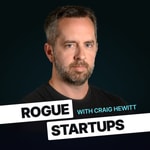
Rogue Startups – Details, episodes & analysis
Podcast details
Technical and general information from the podcast's RSS feed.
Recent rankings
Latest chart positions across Apple Podcasts and Spotify rankings.
Apple Podcasts
🇬🇧 Great Britain - entrepreneurship
27/06/2025#95🇩🇪 Germany - entrepreneurship
03/05/2025#86🇬🇧 Great Britain - entrepreneurship
28/04/2025#94🇬🇧 Great Britain - entrepreneurship
26/04/2025#100🇬🇧 Great Britain - entrepreneurship
25/04/2025#68🇬🇧 Great Britain - entrepreneurship
24/04/2025#39🇬🇧 Great Britain - entrepreneurship
23/04/2025#83
Spotify
No recent rankings available
Shared links between episodes and podcasts
Links found in episode descriptions and other podcasts that share them.
See all- https://zapier.com/
805 shares
- https://sparktoro.com/
346 shares
- https://vidiq.com/
227 shares
- https://twitter.com/TheCraigHewitt
27 shares
- https://twitter.com/coreyhainesco
22 shares

- https://twitter.com/aarondfrancis
17 shares
RSS feed quality and score
Technical evaluation of the podcast's RSS feed quality and structure.
See allScore global : 53%
Publication history
Monthly episode publishing history over the past years.
RS341: Microconf 2025 Recap
mercredi 26 mars 2025 • Duration 17:48
Craig recaps his biggest takeaways from MicroConf 2025, reflecting on lessons in positioning, lead generation, conference ROI, and the power of going all in on what’s working. From tactical marketing insights to personal reflections, this episode delivers both strategic clarity and founder fuel.
RS340: Is AI Killing SaaS w/ Tim Schumacher
mercredi 19 mars 2025 • Duration 43:00
In this episode of Rogue Startups, Craig sits down with founder and entrepreneur Tim Schumacher to discuss his insights on AI, the future of SaaS, and what makes a company successful.
In 2001, Tim co-founded Sedo.com, the world's largest domain marketplace. Since selling the company, he’s been active as an Entrepreneur and/or Investor in various start-ups, such as Eyeo (makers of Adblock Plus), Ecosia, Hitfox, Aklamio, Miomente, PiwikPro, BasicThinking, Home, Zolar, Joblift, SaaS.group, and others.
Highlights from Craig and Tim’s conversation:- The future of SaaS keeps founders up at night
- Using artificial intelligence to analyze feedback and company metrics for smarter decision-making
- How to make your data, and your customers' data, available across multiple platforms and environments
- What impact will AI and automation have on the economy and the future of work?
- Why are some in the SaaS industry still hesitant to adopt AI, and what are their fears?
- Key factors that drive business growth and longevity.
- Product-Market Fit vs Founder-Market Fit: Understanding the difference and why both matter.
- Starting a business at the intersection between climate tech and AI
- Remote work vs in-office culture: How the workplace dynamic is evolving in the age of digital transformation.
If you feel like Rogue Startups has benefited you and it might benefit someone else, please share it with them. If you have a chance, give Rogue Startups a review on iTunes. Do you have any comments, questions, or topic ideas for future episodes? Feel free to reach out to me:
- Twitter: @TheCraigHewitt
- LinkedIn:
RS331: I'm Still Here...
mercredi 18 décembre 2024 • Duration 09:23
After a 2+ month hiatus, we're back!
Sorry for the pause in episodes, but thank you for tuning in this week.
In this episode I talk through why the forever long break in the podcast, what I've learned in that time, and where things are with me and the business.
But most of all, I want to hear from you...what do you want out of this podcast.
RS330: Product-Led Playbook with Wes Bush
mercredi 9 octobre 2024 • Duration 47:52
Wes Bush is a leading authority on product-led growth (PLG) and is here to guide Craig through the playbook for implementing product-led strategies in your business. This episode is invaluable for entrepreneurs eager to understand how product-led growth works, as well as those skeptical about its effectiveness. Listeners will gain insights into the product-led mindset and methodology that Wes employs for successful PLG implementation.
Do you have any comments, questions, or topic ideas for future episodes? Send Craig an email at podcast@roguestartups.com. If you feel like our podcast has benefited you and it might benefit someone else, please share it with them. If you have a chance, give Rogue Startups a review on iTunes. We’ll see you next week!
Highlights from Craig and Wes’ conversation:- Differences and Similarities Between Product-Led Growth (PLG) and Self-Service SaaS
- How to Leverage PLG as a Marketing Tool
- Internal to External Growth Loops (e.g., Canva)
- Providing Value and Education to Empower Customers
- Overcoming the Fear of Change and Embracing Creative Destruction
- The Product-Led Implementation Program and Wes Bush’s New Book
- From Contender to Leader: Navigating Your Market
- Castos: A Case Study in Product-Led Growth
Wes is an entrepreneur, author, and product-led coach. Over 500,000 people have read his Product-Led Growth book and listened to the ProductLed Podcast.
Links & Mentions from This Episode:“Why Nations Fail” by Daron Acemoglu and James A. Robinson
Rogue Startups Resources:Follow Craig on Twitter/X
Craig on LinkedIn
How To Hire For Growth
mercredi 25 septembre 2024 • Duration 14:20
In this episode of Rogue Startups, I dug into several pressing questions from the community. From knowing when to pull the plug on a marketing channel to the debate around hiring for support versus sales, we covered ground that matters deeply to founders and entrepreneurs. Here’s a breakdown of the key takeaways that can help you level up your startup game.
1. When Should You Know if a Channel is Working?A common dilemma many founders face is determining whether a new marketing channel is working. If you’ve ever wondered how long you should invest in a channel before calling it quits, you’re not alone.
Here’s how I break it down:
- Give New Channels at Least 90 Days: If you’re starting fresh with a channel, 90 days is the minimum timeframe to give it. Less than that is almost never enough.
- Existing Channels Need Time Too: Even for established channels that you’re tweaking or optimizing, 90 days is still a good baseline. After that, look at the data to guide your decision.
- Focus on Leading Indicators: Whether it’s impressions on LinkedIn, open rates in email campaigns, or early engagement in SEO, you need to assess the leading metrics first. These are the earliest signs that a channel is gaining traction.
For example, if you’re working on LinkedIn, impressions tell you whether your content is even being seen. Engagement and DM conversations are steps that follow, but focusing on what starts the funnel will help you decide if you should stick with it.
2. The Support, Success, or Sales DilemmaAnother big question I often get asked is, “How do I know whether I need to hire for support, sales, or customer success?” This decision depends largely on where your business is in its growth stage and the roles you want to fill.
- Support Roles: These are typically more reactive—answering support tickets, maintaining a knowledge base, and troubleshooting. If customers are having common issues, or if onboarding is a bottleneck, it might be time to bring in a support team member.
- Success Roles: Customer success is more proactive. The goal here is to ensure customers get the most value from your product. This role could be key if your customers are signing up but not converting to paid users, or if you’re looking to drive expansion revenue.
- Sales Roles: Salespeople hunt for new business and close deals. If you’re looking to generate new demand or work with enterprise clients, this is the hire for you. Sales is more aggressive in its pursuit of growth, but if your inbound leads just need a quick demo, you may not need a dedicated salesperson—success could handle it.
I suggest founders think about these roles in terms of function and their contribution to revenue growth. Where is the biggest gap in your customer journey?
3. Focus on Customers and Revenue-Generating ActivitiesAs entrepreneurs, it’s easy to get bogged down in tasks that feel productive but don’t directly drive growth. One of my favorite principles to live by is focusing on activities closest to your customers and revenue.
- Direct Conversations Over Complex Funnels: Fancy marketing automation systems might feel like progress, but especially early on, nothing beats direct customer conversations. Whether it’s cold outreach or calling people in your network, it’s the quickest way to gather real data and refine your approach.
- Avoid Procrastination vi...
RS328: Are you Productive or Effective as a founder?
mercredi 18 septembre 2024 • Duration 14:27
Running a business is both incredibly rewarding and exhausting. Over the years, I’ve experienced highs of motivation and productivity, but I’ve also hit those low points, battling burnout and loneliness. In this post, I want to share some of the habits, strategies, and mindset shifts that have helped me stay in the game and maintain the discipline and accountability necessary to keep moving forward. If you’re a founder—or on any long-term entrepreneurial journey—I hope these insights can help you do the same.
The Isolation of Being a FounderBeing a single founder can be a lonely journey. For me, working from home, with my wife and kids out for the day, often leaves me in the company of my dog and cats. While solitude has its perks, isolation can be damaging to both motivation and productivity.
- Find Community: Join a mastermind group or work from a co-working space. Being around people, even casually, can be a game-changer. I started playing tennis twice a week—not because I’m a tennis fanatic, but because it gives me a social outlet and some physical exercise. Finding balance between work, family, and social time is key to staying mentally sharp.
- Surround Yourself with Peers: Programs like TinySeed or the DC Accelerator not only offer education but surround you with like-minded individuals who push you to level up. In my career, the periods when I’ve had a strong community around me have been my most productive.
One of the biggest myths in entrepreneurship is the idea of the “solopreneur” doing everything on their own. The reality? Success comes from being accountable, whether it’s to your team or an external source.
- Accountability to Your Team: I’ve got payroll to meet, and employees who count on me. That creates built-in accountability. But even if you’re a one-person operation, you need some form of this. Whether it’s a peer accountability partner or joining a program with structured check-ins, having someone who will ask, “Did you get that done?” is crucial.
- Accountability Buddy: Inspired by a conversation with Rob Walling, I decided to create My Founder Pal, an accountability network for founders to check in with each other regularly. It’s still in its early stages, but the idea is to create a system where we set goals and follow up on progress, offering each other the motivation to keep pushing forward.
One simple habit that has had a huge impact on my productivity is making a list of three things I need to get done each day. I literally put the notebook on my keyboard so it’s the first thing I see before starting my day. These can be small tasks, but they are important things that move the needle. I prefer to write the list in the morning so I have a fresh perspective on what matters most that day.
This simple act keeps me focused on what’s essential, rather than getting distracted by Slack or email first thing in the morning. It’s about prioritizing effectiveness over productivity—doing what matters most rather than just doing more things.
Sharing Your WorkAnother aspect of accountability that I’ve found useful is sharing my work with my team. Whether it’s a new YouTube video or an internal operations playbook, I post it in Slack for feedback and accountability. It not only helps me feel more productive, but it also fosters a sense of friendly competition among my team.
Avoiding Negati...RS327: 3 Traits Of Successful Founders w/ Rob Walling
mercredi 11 septembre 2024 • Duration 44:07
Craig has TinySeed’s Rob Walling in the hot seat today. They’re chatting about defining, attaining, and maintaining success. What does success mean to you? How do focus, clarity, and execution fit into it? Rob, a leading founder and one of the most successful entrepreneurs in the SaaS industry, shares his expert advice and insights on achieving success.
Do you have any comments, questions, or topic ideas for future episodes? Send Craig an email at podcast@roguestartups.com. If you feel like our podcast has benefited you and it might benefit someone else, please share it with them. If you have a chance, give Rogue Startups a review on iTunes. We’ll see you next week!
Highlights from Craig and Rob’s conversation:- What makes Rob Walling a successful founder
- How to gain clarity and focus in your decision-making
- Relentless execution: why the winners are those who practice every day
- Intrinsic vs. extrinsic motivation
- Creating a network of accountability
- The parallels between “fitness” and being a founder
- Making success fun
- Finding someone to hold you accountable
- Is there a one-stop shop for founders?
- The layers of Rob’s business model funnel
Rob Walling is the founder of TinySeed, host of Startups For The Rest Of Us, and of MicroConf. Rob has bootstrapped multiple startups to exit, most recently Drip. He has been advising, mentoring, and investing in startups for more than a decade. He has also written The SaaS Playbook which aims to help entrepreneurs strategize and build frameworks from the trenches so they can grow successful SaaS companies.
Links & Mentions from This Episode: Rogue Startups Resources:Follow Craig on Twitter/X
Craig on LinkedIn
RS326: 5 Things Most Founders Struggle With
mercredi 4 septembre 2024 • Duration 19:12
Today’s a solo episode with Craig where he’s talking through the 5 common topics and themes that he helps most of his coaching clients through.
Whether it’s through his 1:1 coaching with private clients or in serving as Advisor In Residence at TinySeed, where he’s advised over 50 SaaS founders, a few common patterns have emerged.
These topics include:
- Managing Uncertainty
- Getting a Sanity Check On New Initiatives
- Being An Accountability Partner
- Navigating Financial Troubles
- Sales & Marketing Strategy
Most important thing to remember from this is that being a founder is tough, but you are not alone. Text a friend, join a community, get a coach, but somehow build that support network around yourself so that you can thrive as a founder to grow your business.
If you’re interested in learning more about my one-on-one founder coaching head over to craighewitt.me/coaching – I offer free 30 minute consultation sessions, and if we’re a good fit to work together we can go from there.
RS325: Stuck? Ask Yourself These 3 Questions
vendredi 30 août 2024 • Duration 10:00
Are you a SaaS founder feeling stuck, unmotivated, or unsure about your next move? In this video, I dive into three powerful questions that can help you break through mental barriers and gain clarity on your business’s direction.
These thought-provoking questions will challenge you to confront hard truths, think like an outsider, and tap into your own wisdom. Whether you’re just starting out or scaling up, these insights will help you refocus and reinvigorate your entrepreneurial journey. Don’t miss this opportunity to gain a fresh perspective on your SaaS business!
RS324: $100 Million Bootstrapped SaaS with Adam Robinson
mercredi 21 août 2024 • Duration 41:34
In this episode of the Rogue Startups podcast, Craig sits down with Adam Robinson to explore key topics such as founder psychology, overcoming self-limiting beliefs, and avoiding self-sabotage. They delve into how to identify and break free from the plateau and gradual decline that can occur when you believe you have achieved product-market fit but haven’t. Adam, who has built multiple successful businesses, shares his valuable insights and practical tips with Craig. Don’t miss out—tune in to gain actionable advice from an experienced entrepreneur!
Do you have any comments, questions, or topic ideas for future episodes? Send Craig an email at podcast@roguestartups.com. If you feel like our podcast has benefited you and it might benefit someone else, please share it with them. If you have a chance, give Rogue Startups a review on iTunes. We’ll see you next week!
#Highlights from Craig and Adam’s conversation:- The success story behind Adam’s unicorn B2B SaaS business
- An in-depth exploration of achieving product-market fit
- The importance of establishing effective business processes
- How to avoid the entrepreneurial trap: recognizing when to transition to a new venture
- The story behind “2,300 sign-ups and 13 paying customers, 6 weeks after launch”
- How Adam deals with bad press when he pushes the envelope
- The future of data privacy and cookies
- Creating value for customers and learning from mentors and successful entrepreneurs
Adam is the CEO of Retention.com. Retention.com is the industry-leading Shopify e-commerce solution for increasing revenue. They enable email-based retargeting so brands can re-engage lapped audiences and grow their email lists for the future. On the outside, Retention.com is a magic wand that makes money fall from the sky. He also runs RB2B, a website that helps identify your anonymous website visitors.
#Links & Mentions from This Episode: #Rogue Startups Resources:Follow Craig on Twitter/X
Craig on LinkedIn
Related Shows Based on Content Similarities