Free Bluegrass Gospel Hymns and Songs – Details, episodes & analysis
Podcast details
Technical and general information from the podcast's RSS feed.
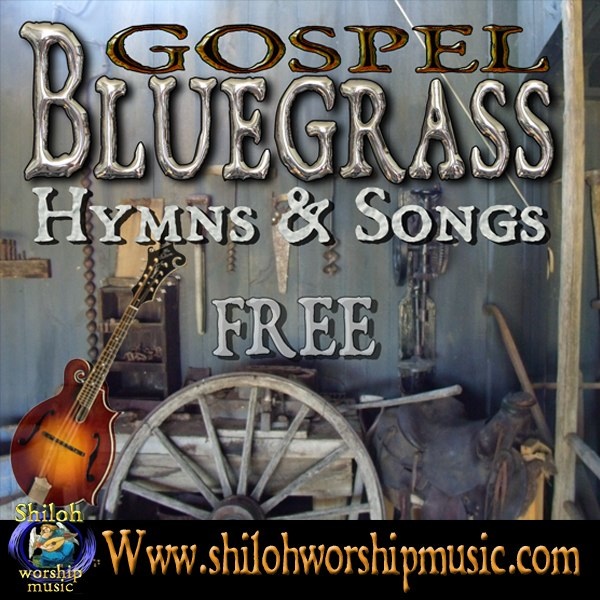
Free Bluegrass Gospel Hymns and Songs
Free Bluegrass Gospel Hymns and Songs
Frequency: 1 episode/37d. Total Eps: 50

Recent rankings
Latest chart positions across Apple Podcasts and Spotify rankings.
Apple Podcasts
🇨🇦 Canada - music
29/07/2025#100
Spotify
No recent rankings available
Shared links between episodes and podcasts
Links found in episode descriptions and other podcasts that share them.
See allRSS feed quality and score
Technical evaluation of the podcast's RSS feed quality and structure.
See allScore global : 48%
Publication history
Monthly episode publishing history over the past years.
Amazing Grace
jeudi 24 novembre 2016 • Duration 03:09
A rendition of Amazing Grace by Judy Collins went to the top of the popular music charts in the U.S. in the 1970s. It was the first and only time a spiritual song has done this.
The hymn was written by John Newton, an English man who was born in 1725.(more info on Newton below) During the first 30 years of his life, Newton was certainly a miserable, unhappy, and mean person--in other words, "a wretch." As a child he was rebellious and constantly in trouble. As a young man he used profanity, drank excessively, and went through periods of violent, angry behavior. When Newton was in his early twenties, he became involved in the slave trade: living in Africa, hunting down slaves, and managing a "slave factory" (where the unfortunate captives were held for sale). Later he was the captain of a slave ship which made three voyages from Great Britain to Africa (where he loaded a cargo of slaves) and finally to America to sell them. During one voyage he cried out to God for mercy as the ship was tossed about in a storm. His ship was spared and John Newton began his walk towards Christ. He continued to be a slave trader for some years but there was a slow transformation and within the next 20 years Newton had given up this life and had become the parish priest of Olney, a village near London. Whilst here he wrote the the words to the famous hymn, Amazing Grace. (compiled from various sources on the Internet)
This NEW BLUEGRASS VERSION of this Classic HYMN was produced by Shiloh Worship Music. We pray this song blesses you and draws you into His Amazing Presence. It is a bluegrass version of the tune, with Banjo,Guitar, Acoustic Bass, Mandolin and Fiddles . Vintage footage from Appalachia accompanies this traditional Bluegrass hymn
VISIT OUR YouTube CHANNEL http://www.youtube.com/user/ShilohWorshipGroup
Words: John Newton (1715-1807)
Music: American melody from Carrell's and Clayton's Virginia Harmony (1831)
AMAZING GRACE
D G D
Amazing grace! How sweet the sound
D A
That saved a wretch like me!
D G D
I once was lost but now I'm found;
Bm D A D
Was blind, but now I see.
'Twas grace that taught my heart to fear
And grace my fears relieved.
How precious did that grace appear
The hour I first believed!
The Lord has promised good to me;
His Word my hope secures.
He will my shield and portion be
As long as life endures.
Through many dangers toils and snares
I have already come.
'Tis grace hath brought me safe thus far
And grace will lead me home.
When we've been there ten thousand years,
Bright shining as the sun,
We've no less days to sing God's praise
Than when we first begun.
© 2012 Shiloh Worship Music COPY FREELY;This Music is copyrighted to prevent misuse, however,permission is granted for non-commercial copying-Radio play permitted.
www.shliohworshipmusic.com
John Newton
From Wikipedia, the free encyclopedia
John Newton.
John Henry Newton (July 24, 1725 December 21, 1807) was a British sailor and Anglican clergyman. Starting his career at sea, at a young age, he became involved with the slave trade for a few years. After experiencing a religious conversion, he became a minister, hymn-writer, and later a prominent supporter of the abolition of slavery. He was the author of many hymns, including "Amazing Grace" and "Glorious Things of Thee are Spoken."
Early life
John Newton was born in Wapping, London, in 1725, the son of John Newton Sr., a shipmaster in the Mediterranean service, and Elizabeth Newton (née Seatclife), a Nonconformist Christian. His mother died of tuberculosis in July, 1732, about two weeks before his seventh birthday.[1] Two years later, he went to live in Aveley, the home of his father's new wife.[2] Newton spent two years at boarding school. At age eleven he went to sea with his father. Newton sailed six voyages before his father retired in 1742. Newton's father made plans for him to work at a sugar plantation in Jamaica. Instead, Newton signed on with a merchant ship sailing to the Mediterranean Sea.
In 1743, while on the way to visit some friends, Newton was captured and pressed into the naval service by the Royal Navy. He became a midshipman aboard HMS Harwich. At one point, Newton attempted to desert and was punished in front of the crew of 350. Stripped to the waist, tied to the grating, he received a flogging of one dozen lashes, and was reduced to the rank of a common seaman.[3][unreliable source?]
Following that disgrace and humiliation, Newton initially contemplated suicide.[3][unreliable source?] He recovered, both physically and mentally. Later, while Harwich was on route to India, he transferred to Pegasus, a slave ship bound for West Africa. The ship carried goods to Africa, and traded them for slaves to be shipped to England and other countries.
Newton proved to be a continual problem for the crew of Pegasus. They left him in West Africa with Amos Clowe, a slave dealer. Clowe took Newton to the coast, and gave him to his wife Princess Peye, an African duchess. Newton was abused and mistreated along with her other slaves. It was this period that Newton later remembered as the time he was "once an infidel and libertine, a servant of slaves in West Africa."
Early in 1748 he was rescued by a sea captain who had been asked by Newton's father to search for him. And he made it to freedom.[citation needed]
In 1750 he married his childhood sweetheart in St. Margaret's Church, Rochester[4].
[edit]
Spiritual conversion
He sailed back to England in 1748 aboard the merchant ship Greyhound, which was carrying beeswax and dyer's wood, now referred to as camwood. During this voyage, he experienced a spiritual conversion. The ship encountered a severe storm off the coast of Donegal and almost sank. Newton awoke in the middle of the night and finally called out to God as the ship filled with water. After he called out, the cargo came out and stopped up the hole, and the ship was able to drift to safety. It was this experience which he later marked as the beginnings of his conversion to evangelical Christianity. As the ship sailed home, Newton began to read the Bible and other religious literature. By the time he reached Britain, he had accepted the doctrines of evangelical Christianity. The date was March 10, 1748, an anniversary he marked for the rest of his life. From that point on, he avoided profanity, gambling, and drinking. Although he continued to work in the slave trade, he had gained a considerable amount of sympathy for the slaves. He later said that his true conversion did not happen until some time later: "I cannot consider myself to have been a believer in the full sense of the word, until a considerable time afterwards."[5]
Newton returned to Liverpool, England and, partly due to the influence of his father's friend Joseph Manesty, obtained a position as first mate aboard the slave ship Brownlow, bound for the West Indies via the coast of Guinea. During the first leg of this voyage, while in west Africa (1748–1749), Newton acknowledged the inadequacy of his spiritual life. While he was sick with a fever, he professed his full belief in Christ and asked God to take control of his destiny. He later said that this experience was his true conversion and the turning point in his spiritual life. He claimed it was the first time he felt totally at peace with God.
Still, he did not renounce the slave trade until later in his life. After his return to England in 1750, he made three further voyages as captain of the slave-trading ships Duke of Argyle (1750) and African (1752–1753 and 1753–1754). He only gave up seafaring and his active slave-trading activities in 1754, after suffering a severe stroke, but continued to invest his savings in Manesty's slaving operations."[6]
[edit]
Anglican priest
In 1755 Newton became tide surveyor (a tax collector) of the port of Liverpool, again through the influence of Manesty. In his spare time, he was able to study Greek, Hebrew, and Syriac. He became well known as an evangelical lay minister. In 1757, he applied to be ordained as a priest in the Church of England, but it was more than seven years before he was eventually accepted.
Such was his frustration during this period of rejection that he also applied to the Methodists, Independents and Presbyterians, and applications were even mailed directly to the Bishops of Chester and Lincoln and the Archbishops of Canterbury and York.
Eventually, in 1764, he was introduced by Thomas Haweis to Lord Dartmouth, who was influential in recommending Newton to the Bishop of Chester, and who suggested him for the living of Olney, Buckinghamshire. On 29 April 1764 Newton received deacon's orders, and finally became a priest on June 17.
As curate of Olney, Newton was partly sponsored by an evangelical philanthropist, the wealthy Christian merchant John Thornton, who supplemented his stipend of £60 a year with £200 a year "for hospitality and to help the poor". He soon became well known for his pastoral care, as much as for his beliefs, and his friendship with Dissenters and evangelical clergy caused him to be respected by Anglicans and Nonconformists alike. He spent sixteen years at Olney, during which time so popular was his preaching that the church had a gallery added to accommodate the large numbers who flocked to hear him.
Some five years later, in 1772, Thomas Scott, later to become a biblical commentator and co-founder of the Church Missionary Society, took up the curacy of the neighbouring parishes of Stoke Goldington and Weston Underwood. Newton was instrumental in converting Scott from a cynical 'career priest' to a true believer, a conversion Scott related in his spiritual autobiography The Force Of Truth (1779).
In 1779 Newton was invited by John Thornton to become Rector of St Mary Woolnoth, Lombard Street, London, where he officiated until his death. The church had been built by Nicholas Hawksmoor in 1727 in the fashionable Baroque style. Newton then became one of only two evangelical preachers in the capital, and he soon found himself gaining in popularity amongst the growing evangelical party. He was a strong supporter of evangelicalism in the Church of England, and remained a friend of Dissenters as well as Anglicans.
Many young churchmen and others enquiring about their faith visited him and sought his advice, including such well-known social figures as the writer and philanthropist Hannah More, and the young Member of Parliament, William Wilberforce, who had recently undergone a crisis of conscience and religious conversion as he was contemplating leaving politics. Having sought his guidance, Newton encouraged Wilberforce to stay in Parliament and "serve God where he was".[7][8]
In 1792, he was presented with the degree of Doctor of Divinity by the College of New Jersey (now Princeton University).
[edit]
Abolitionist
Newton in his later years
In 1788, 34 years after he had retired from the slave trade, Newton broke a long silence on the subject with the publication of a forceful pamphlet "Thoughts Upon the Slave Trade", in which he described the horrific conditions of the slave ships during the Middle Passage, and apologized for "a confession, which ... comes too late ... It will always be a subject of humiliating reflection to me, that I was once an active instrument in a business at which my heart now shudders." A copy of the pamphlet was sent to every MP, and sold so well that it swiftly required reprinting.[9]
Newton became an ally of his friend William Wilberforce, leader of the Parliamentary campaign to abolish the slave trade. He lived to see the passage of the Slave Trade Act 1807.
Newton has been called hypocritical by some modern writers for continuing to participate in the slave trade while holding strong Christian convictions. Newton later came to believe that during the first five of his nine years as a slave trader he had not been a Christian in the full sense of the term: "I was greatly deficient in many respects ... I cannot consider myself to have been a believer in the full sense of the word, until a considerable time later."[10] Although this "true conversion" to Christianity also had no immediate impact on his views on slavery, he eventually came to revise them.
[edit]
Writer and hymnist
The vicarage in Olney where Newton wrote the hymn that would become "Amazing Grace".
In 1767 William Cowper, the poet, moved to Olney. He worshipped in the church, and collaborated with Newton on a volume of hymns, which was eventually published as Olney Hymns in 1779. This work had a great influence on English hymnology. The volume included Newton's well-known hymns "Glorious Things of Thee are Spoken", "How Sweet the Name of Jesus Sounds!", "Let Us Love, and Sing, and Wonder", "Come, My Soul, Thy Suit Prepare", "Approach, My Soul, the Mercy-seat", and "Faith's Review and Expectation", which has come to be known by its opening phrase, "Amazing Grace".
Many of Newton's (as well as Cowper's) hymns are preserved in the Sacred Harp. He also contributed to the Cheap Repository Tracts.
[edit]
Commemoration
The gravestone of John Newton in Olney with the epitaph he penned.
■ The town of Newton, Sierra Leone is named after John Newton. To this day there is a philanthropic link between John Newton's church of Olney and Newton, Sierra Leone.
■ Newton was recognized for his hymns of longstanding influence by the Gospel Music Association in 1982 when he was inducted into the Gospel Music Hall of Fame.
Nothing But The Blood
mercredi 30 décembre 2015 • Duration 03:01
Nothing But The Blood
1. What can wash away my sin? Nothing but the blood of Jesus; What can make me whole again? Nothing but the blood of Jesus.
Chorus: Oh! Precious is the flow That makes me white as snow; No other fount I know, Nothing but the blood of Jesus.
2. For my pardon, this I see, Nothing but the blood of Jesus; For my cleansing, this my plea, Nothing but the blood of Jesus. (Repeat chorus)
3. Nothing can for sin atone, Nothing but the blood of Jesus Naught of good that I have done, Nothing but the blood of Jesus. (Repeat chorus)
4. This is all my hope and peace, Nothing but the blood of Jesus; This is all my righteousness, Nothing but the blood of Jesus. (Repeat chorus)
Public Domain
COPY FREELY;©2011 Shiloh Worship MusicThis Music is copyrighted to prevent misuse, however,permission is granted for non-commercial copying only. Written by Robert Lowry (1826-1899) Public Domain
I Am A Pilgrim
jeudi 31 octobre 2013 • Duration 02:56
Traditional-Public Domain
G D7 G
I am a pilgrim and a stranger
C G
Traveling through this wearisome land
C
I've got a home in that yonder city good Lord
G D7 G
And it's not not made by hand
D7 G
I've got a mother a sister and brother
C G
Who have been this way before
C
I am determined to go and see them good Lord
G D7 G
Over on that other shore
Repeat #1
D7 G
I'm going down to that river of Jordan
C G
Just to bath my wearisome soul
C
If I could just touch the hem of His garment good Lord
G D7 G
Then I know He'll take me home
© 2013 Shiloh Worship Music COPY FREELY;This Music is copyrighted to prevent misuse, however,permission is granted for non-commercial copying-Radio play permitted- www.shilohworshipmusic.com
When We All Get To Heaven
mardi 29 octobre 2013 • Duration 03:09
Guitar Chords & Lyrics
A E A
Sing the wondrous love of Jesus, Sing His mercy and His grace
A D A/E E A
In the mansions bright and blessed, He’ll prepare for us a place
A
When we all get to heaven
A B7 E
What a day of rejoicing that will be
A7 D
When we all see Jesus
A/E E A
We’ll sing and shout the victory
A E A
While we walk the pilgrim pathway, Clouds will overtake the sky
A D A/E E A
But when trav’ling days are over, Not a shadow, not a sigh
A E A
Let us then be true and faithful, Trusting, serving every day
A D A/E E A
Just one glimpse of Him in glory, Will the toils of life repay
A E A
Onward to the prize before us, Soon His beauty we’ll behold
A D A/E E A
Soon the pearly gates will open, We shall tread the streets of gold
© 2013 Shiloh Worship Music COPY FREELY;This Music is copyrighted to prevent misuse, however,permission is granted for non-commercial copying-Radio play permitted- www.shilohworshipmusic.com
Will There Be Any Stars?
lundi 12 août 2013 • Duration 02:50
Words: Eliza E. Hewitt, 1897
Music: John R. Sweney 1897 Public Domain
G C
I am thinking today of that beautiful land
D7 G
I shall reach when the sun goeth down
C
When through wonderful grace by my Savior I stand
D7 G
Will there be any stars in my crown
Will there be any stars any stars in my crown
D7
When at evening the sun goeth down
G C
When I wake with the blest in those mansions of rest
G D7 G
Will there be any stars in my crown
C
In the strength of the Lord let me labor and pray
D7 G
Let me watch as a winner of souls
C
That bright stars may be mine in the glorious day
D7 G
When His praise like the sea billows roll
Repeat #2
C
Oh what joy will it be when His face I behold
D7 G
Living gems at His feet to lay down
C
It would sweeten my bliss in the city of gold
D7 G
Should there be any stars in my crown
© 2013 Shiloh Worship Music COPY FREELY;This Music is copyrighted to prevent misuse, however,permission is granted for non-commercial copying-Radio play permitted- www.shilohworshipmusic.com
Come Go with Me to That Land
vendredi 9 août 2013 • Duration 02:13
(Traditional)
E E7 A E
Well, come go with me to that land, come go with me to that land
E C#m7 F#m7 – B7
Come go with me to that land, where I’m bound.
E E7 A C
Come go with me to that land, come go with me to that land,
E B7 E
To that land, to that land, where I’m bound.
Be singing and dancing....
And milk and honey....
Gonna see Jesus in that Land….
© 2013 Shiloh Worship Music COPY FREELY;This Music is copyrighted to prevent misuse, however,permission is granted for non-commercial copying-Radio play permitted- www.shilohworshipmusic.com
Down At The Cross Where My Savior Died
dimanche 28 juillet 2013 • Duration 02:42
Down at the cross where my Savior died,
Down where for cleansing from sin I cried,
There to my heart was the blood applied;
Glory to His Name!
Refrain
Glory to His Name, glory to His Name:
There to my heart was the blood applied;
Glory to His Name!
Oh, precious fountain that saves from sin,
I am so glad I have entered in There Jesus saves me and keeps me clean;
Glory to His Name!
Refrain
Come to this fountain so rich and sweet,
Cast thy poor soul at the Savior’s feet;
Plunge in today, and be made complete;
Glory to His Name!
Refrain
Elisha A. Hoffman, pub.1878 Public Domain
© 2013 Shiloh Worship Music COPY FREELY;This Music is copyrighted to prevent misuse, however,permission is granted for non-commercial copying-Radio play permitted- www.shilohworshipmusic.com
Palms Of Victory
samedi 13 juillet 2013 • Duration 03:37
D A7 D
I saw a wayward traveler in tattered garments clad
A7 D
And struggling up the mountain it seemed that he was sad
A7 D
His back was laden heavy his strength was almost gone
A7 D
It shouted as he traveled deliverance has come
D A7
Then palms of victory crowns of glory
D A7 D
Palms of victory I shall wear
D A7 D
The summer sun was shining, the sweat was on his brow
A7 D
His garments worn and dusty, his step seemed very slow A7 D
But he kept pressing onward, for he was going home A7 D
Still shouting as he journeyed, "Deliverance will come!"
D A7 D
I saw him in the evening the sun was sinking low
A7 D
It'd overcome the mountain and reached the vale below
A7 D
He saw that golden city his ever lasting home
A7 D
And shouted loud Hosanna deliverance has come
D A7 D
The songsters in the arbor, that stood beside the way
A7 D
Attracted his attention, invited his delay
A7 D
His watchword being "Onward!", he stopped his ears and ran
A7 D
Still shouting as he journeyed, "Deliverance will come!"
D A7 D
It seems I hear the angels around the throne so grand
A7 D
They're shouting glad Hosanna we reached the promise land
A7 D
When we have reached that city our race on earth we've run
A7 D
We'll all shout loud Hosanna deliverance has come
alternate verses
I saw a blood washed pilgrim, a sinner saved by grace,
Upon the King’s highway, with peaceful, shining face;
Temptations sore beset him, but nothing could afright;
He said, “The yoke is easy, the burden, it is light.”
Refrain
Then palms of victory, crowns of glory,
Palms of victory I shall wear.
His helmet was salvation, a simple faith his shield,
And righteousness his breastplate, the spirit’s sword he’d wield.
All fiery darts arrested, and quenched their blazing flight;
He cried “The yoke is easy, the burden, it is light.”
Refrain
I saw him in the furnace; he doubted not, nor feared,
And in the flames beside him, the Son of God appeared;
Though seven times ’twas heated, with all the tempter’s might,
He cried, “The yoke is easy, the burden, it is light.”
Refrain
’Mid storms, and clouds, and trials, in prison, at the stake,
He leaped for joy, rejoicing, ’twas all for Jesus’ sake;
That God should count him worthy, was such supreme delight,
He cried, “The yoke is easy, the burden, is so light.”
Refrain
I saw him overcoming, through all the swelling strife,
Until he crossed the threshold of God’s eternal life;
The crown, the throne, the scepter, the name, the stone so white,
Were his, who found, in Jesus, the yoke and burden light.
Refrain
© 2013 Shiloh Worship Music COPY FREELY;This Music is copyrighted to prevent misuse, however,permission is granted for non-commercial copying-Radio play permitted- www.shilohworshipmusic.com
Are You Washed In The Blood?
samedi 29 décembre 2012 • Duration 02:58
Copyright: Public Domain
1. Have you been to Jesus for the cleansing pow’r? Are you washed in the blood of the Lamb? Are you fully trusting in His grace this hour? Are you washed in the blood of the Lamb?
◦ Refrain: Are you washed in the blood, In the soul-cleansing blood of the Lamb? Are your garments spotless? Are they white as snow? Are you washed in the blood of the Lamb?
5. Are you walking daily by the Savior’s side? Are you washed in the blood of the Lamb? Do you rest each moment in the Crucified? Are you washed in the blood of the Lamb?
6. When the Bridegroom cometh will your robes be white? Are you washed in the blood of the Lamb? Will your soul be ready for the mansions bright, And be washed in the blood of the Lamb?
7. Lay aside the garments that are stained with sin, And be washed in the blood of the Lamb; There’s a fountain flowing for the soul unclean, Oh, be washed in the blood of the Lamb!
Written by Elisha A. Hoffman, pub.1878 Copyright: Public Domain ©2011 Shiloh Worship Music COPY FREELY;This Music Recording is copyrighted to prevent misuse, however,permission is granted solely for non-commercial copying. www.shilohworshipmusic.com
Shall We Gather At The River?
vendredi 28 décembre 2012 • Duration 04:29
Words & Music: Robert Lowry, 1864; first published in Happy Voices, 1865:
One afternoon in July, 1864, when I was pastor at Hanson Place Baptist Church, Brooklyn, the weather was oppressively hot, and I was lying on a lounge in a state of physical exhaustion…My imagination began to take itself wings. Visions of the future passed before me with startling vividness. The imagery of the apocalypse took the form of a tableau. Brightest of all were the throne, the heavenly river, and the gathering of the saints…I began to wonder why the hymn writers had said so much about the “river of death” and so little about the “pure water of life, clear as crystal, proceeding out of the throne of God and the Lamb.” As I mused, the words began to construct themselves. They came first as a queston of Christian inquiry, “Shall we gather?” Then they broke in chorus, “Yes, we’ll gather.” On this question and answer the hymn developed itself. The music came with the hymn.
Robert Lowry
Shall we gather at the river,
where bright angel feet have trod,
with its crystal tide forever
flowing by the throne of God?
Refrain:
Yes, we'll gather at the river,
the beautiful, the beautiful river;
gather with the saints at the river
that flows by the throne of God.
2. On the margin of the river,
washing up its silver spray,
we will walk and worship ever,
all the happy golden day.
(Refrain)
3. Ere we reach the shining river,
lay we every burden down;
grace our spirits will deliver,
and provide a robe and crown.
(Refrain)
4. Soon we'll reach the shining river,
soon our pilgrimage will cease;
soon our happy hearts will quiver
with the melody of peace.
©2000-2011 Shiloh Worship Music COPY FREELY;This Music is copyrighted to prevent misuse, however,permission is granted soley for non-commercial copying.
Related Shows Based on Content Similarities