FoundMyFitness – Details, episodes & analysis
Podcast details
Technical and general information from the podcast's RSS feed.

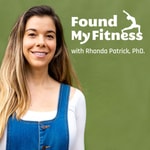
FoundMyFitness
Rhonda Patrick, Ph.D.
Frequency: 1 episode/39d. Total Eps: 111

Recent rankings
Latest chart positions across Apple Podcasts and Spotify rankings.
Apple Podcasts
No recent rankings available
Spotify
🇺🇸 USA - trending
02/05/2026#177↗🇺🇸 USA - trending
01/05/2026#188↗🇺🇸 USA - trending
15/04/2026#195↘🇺🇸 USA - trending
14/04/2026#191↘🇺🇸 USA - trending
13/04/2026#183→🇺🇸 USA - trending
12/04/2026#184↘🇺🇸 USA - trending
11/04/2026#168↘🇬🇧 Great Britain - trending
10/04/2026#161↘🇺🇸 USA - trending
10/04/2026#135↘🇬🇧 Great Britain - trending
09/04/2026#114↘
Shared links between episodes and podcasts
Links found in episode descriptions and other podcasts that share them.
See allRSS feed quality and score
Technical evaluation of the podcast's RSS feed quality and structure.
See allScore global : 53%
Publication history
Monthly episode publishing history over the past years.
#109 How To Boost NAD Levels To Fight Inflammation, Improve Recovery, and Slow Aging | Dr. Charles Brenner
lundi 9 février 2026 • Duration 01:59:24
Many symptoms attributed to aging are also consistent with chronic inflammatory stress and impaired NAD metabolism. Dr. Charles Brenner explains the mechanisms, the human data, and what interventions actually move the needle. He also cuts through the crowded world of NAD boosters, including oral NAD pills, NMN, NR, and NAD IV drips, clarifying what actually raises NAD in humans and what emerging research suggests about NR for lowering inflammation and improving recovery.
Timestamps:
- (00:00) Introduction
- (05:36) Why disease states disrupt NAD levels
- (10:20) How coronavirus infection impacts NAD levels
- (13:34) Can diet and supplements artificially inflate NAD levels?
- (15:27) Why blood NAD might not show the full picture
- (16:59) How obesity and insulin resistance drain NAD resources
- (19:40) Does poor sleep disrupt NAD levels?
- (20:32) The anti-inflammatory effects of nicotinamide riboside (NR)
- (25:17) Can a single lifestyle change restore NAD?
- (28:01) Cognitive benefits of NAD precursors
- (31:37) Should you measure your NAD levels?
- (34:37) Does exercise boost NAD—and if so, which type?
- (36:39) Can NAD precursors speed exercise recovery?
- (39:14) Is acute sleep loss enough to lower NAD?
- (40:46) Does NR supplementation during pregnancy benefit offspring?
- (45:21) Safety of nicotinamide riboside during pregnancy
- (47:27) Could NR supplementation support fertility?
- (48:37) Shift work and jet lag—can NAD precursors help?
- (51:19) Morning or night—when should you take NR?
- (54:20) NAD supplements vs. precursors—what actually boosts NAD?
- (58:07) NAD IV drips—real benefits or just hype?
- (59:15) Oral vs. IV nicotinamide riboside—what's more effective?
- (1:00:44) Do oral NAD supplements genuinely raise NAD levels?
- (1:02:37) NMN vs. NR—does being 'one step closer' really matter?
- (1:05:44) Does the gut microbiome influence NAD production?
- (1:08:22) Could NR supplementation enhance immune function?
- (1:11:41) Can NR supplementation improve peripheral artery disease?
- (1:16:05) Can NR realistically reduce liver fat?
- (1:21:12) Does NR supplementation give athletes a recovery edge?
- (1:22:57) What's a safe dosage for nicotinamide riboside?
- (1:25:00) Resveratrol and pterostilbene—beneficial pairing or pointless stack?
- (1:26:35) NAD precursor supplements—why sourcing matters
- (1:28:48) Do NAD precursors increase cancer risk?
- (1:34:34) Is NR worth supplementing for healthy individuals?
- (1:38:56) From enzyme nerd to NAD pioneer (Brenner's origin story)
- (1:43:26) Simplifying NAD's role in energy and repair
- (1:50:13) Why DNA repair depends heavily on NAD
- (1:52:03) The PARP/NAD-consumption mechanism
- (1:54:42) NAD's role in gene regulation
- (1:57:02) Why NAD shortages hit the brain hardest
#108 The Best Type of Exercise for Longevity
dimanche 7 décembre 2025 • Duration 02:18:49
Download my "How to Train According to the Experts" guide
One minute of vigorous exercise may be worth up to ten minutes of "moderate" cardio for extending lifespan and preventing chronic disease. In this Journal Club episode, Rhonda Patrick, PhD and endurance athlete Brady Holmer dissect a new Nature Communications study of more than 70,000 adults showing that vigorous intensity is roughly 4–10x more potent than moderate activity for reducing all-cause mortality, cardiovascular events, type 2 diabetes, and cancer outcomes—far beyond the long-standing 1:2 rule embedded in global exercise guidelines.
Timestamps:
- (00:00) Introduction
- (07:01) What exactly is the 1:2 rule for exercise intensity?
- (08:18) Calorie burn vs. longevity—origins of the 1:2 rule
- (11:15) What counts as 'vigorous' exercise, really?
- (13:35) Where the exercise guidelines fall short
- (14:19) Can your wearable predict disease risk years in advance?
- (20:11) Is vigorous activity easier to achieve than people think?
- (22:47) How researchers avoided the 'healthy user bias'
- (23:59) Health equivalence ratio—a better way to measure exercise benefits?
- (25:45) Is vigorous exercise truly 4–10x more effective?
- (29:55) Can one vigorous minute match an hour of gentle walking?
- (32:02) Why vigorous activity—not gentle—offers dose-dependent benefits
- (33:50) Is vigorous exercise 5x better at preventing heart attacks & strokes?
- (34:24) Why vigorous activity stands out for cancer prevention
- (34:59) Does zone 2 qualify as vigorous exercise?
- (36:11) Dose-response comparison—vigorous vs. moderate vs. light activity
- (37:22) Is vigorous exercise the secret to younger arteries?
- (43:15) Why aging hearts need intensity
- (46:09) Can vigorous exercise halt your VO₂ max decline?
- (47:26) Why moderate exercise alone might not improve VO₂ max
- (49:21) Is vigorous exercise 10x more powerful at preventing diabetes?
- (55:48) Mitochondrial biogenesis—why intensity is essential
- (58:40) Can you directly measure mitochondrial health?
- (1:00:57) Does vigorous exercise kill circulating tumor cells?
- (1:07:15) Why vigorous intensity triggers beneficial hormone changes
- (1:08:05) Can vigorous activity protect older adults from falls?
- (1:12:36) Does vigorous exercise combat inflammation?
- (1:14:29) Is high-intensity training the key to a younger brain?
- (1:16:01) Is vigorous exercise more powerful than we realized?
- (1:17:50) Can the benefits of vigorous exercise fit into a pill?
- (1:19:08) How small doses of intensity might extend your lifespan
- (1:23:15) Do short bursts of vigorous movement match full workouts?
- (1:27:26) Why your wearable might undervalue short vigorous bouts
- (1:30:06) Can planned micro-workouts replace traditional gym sessions?
- (1:35:10) Why exercise guidelines urgently need updating
- (1:46:35) Does light activity still offer real benefits?
- (1:49:04) Is vigorous exercise safe for older adults?
- (1:53:28) Are high-intensity workouts detrimental to female hormones?
- (1:58:02) Safe vigorous exercise options—even with chronic illness
- (1:59:05) The 80/20 rule for balancing intensity and recovery
- (2:01:30) Inside Brady's routine—how much vigorous exercise is optimal?
- (2:05:17) Can vigorous activity boost kids' brainpower (and grades)?
- (2:08:14) Are we significantly underestimating vigorous exercise benefits?
- (2:10:03) Why chasing steps isn't the answer
#099 The Science of Exercise for Cancer | Kerry Courneya, PhD
lundi 3 mars 2025 • Duration 01:51:09
Download my "How to Train According to the Experts" guide
Discover my premium podcast, The Aliquot
For decades, exercise was considered an optional part of cancer care—something beneficial for general health but not essential. The evidence is now overwhelming: exercise is not just supportive—it's a therapeutic intervention that recalibrates tumor biology, enhances treatment tolerance, and improves survival outcomes.
With over 600 peer-reviewed studies, Dr. Kerry Courneya's work has fundamentally reshaped our understanding of how structured exercise—whether aerobic, resistance training, or high-intensity intervals—can mitigate treatment side effects, enhance immune function, and directly influence cancer progression.
Timestamps:
- (00:00) Introduction
- (04:31) Why exercise should be effortful
- (05:17) How to meaningfully reduce risk of cancer
- (09:06) What type of exercise is best?
- (10:43) How exercise reduces risk—even for smokers and the obese
- (13:32) Weekend-only exercise
- (16:33) 150 vs. 300 minutes per week (more is better—up to a point)
- (18:47) Why pre-diagnosis exercise matters
- (21:53) Why resilience to cancer treatment starts with exercise
- (23:45) Why low muscle mass drives cancer death
- (26:42) Why BMI fails to measure true obesity
- (30:35) Why daily activity isn't enough (structured exercise matters)
- (32:18) Breaking up sedentary time—do 'exercise snacks' help?
- (34:34) Supplements vs. exercise
- (35:16) Where exercise fits with chemo and immunotherapy
- (38:14) Why rest is not the best medicine
- (44:04) Aerobic vs. resistance
- (44:57) How weight training improves 'chemo completion'
- (47:25) Why exercise creates vulnerability in cancer cells (limitations do apply)
- (49:53) Why exercise might be crucial for tumor elimination
- (55:47) Why cardio may be better at clearing tumor cells
- (59:02) When cancer spreads quickly—and when it doesn't
- (1:00:27) Why liquid biopsies may prevent over-treatment
- (1:05:40) Exercise-sensitive vs. exercise-resistant cancers
- (1:08:50) Prostate cancer therapy—why strength training matters
- (1:10:54) When exercise is the only therapy—does it work?
- (1:12:10) Why HIIT reduces PSA in prostate cancer
- (1:14:24) Avoiding overtreatment—can exercise buy you time?
- (1:14:44) Why high-intensity exercise boosts anti-cancer biology
- (1:15:55) Turning a diagnosis into a wake-up call
- (1:18:55) Why oncologists are rethinking exercise
- (1:21:34) Why exercise eases anxiety about cancer—proven psychological benefits
- (1:27:44) Before, during, and after treatment
- (1:29:46) Why exercise is unique among cancer therapies
- (1:31:00) Why cancer patients stop exercising—the risky mistake almost everyone makes
- (1:33:25) How to get sedentary cancer patients exercising (realistically)
- (1:35:59) The $1 million per patient case for including exercise
- (1:37:40) Why recurrence trials haven't convinced doctors—yet
- (1:40:20) The bottom-line message
- (1:40:39) The myth of a cancer panacea (exercise included)
- (1:46:51) What's the best $50 investment for staying active?
- (1:47:24) Only 15 minutes per day—what's the best anti-cancer exercise?
#009 Rhonda Answers the Most Popular Questions About Vitamin D
jeudi 6 août 2015 • Duration 30:08
Dr. Rhonda Patrick answers some of the most popular questions regarding vitamin D including:
- (00:00) Introduction
- (02:22) How do you decide how much vitamin D to supplement with?
- (12:51) Is it possible to get too much vitamin D?
- (20:52) Is there a difference between vitamin D made from the sun versus a supplement?
- (24:43) What form of vitamin D is more bioavailable or absorbed better?
Join over 300,000 people and get the latest distilled information straight to your inbox weekly: https://www.foundmyfitness.com/newsletter
Become a FoundMyFitness premium member to get access to exclusive episodes, emails, live Q+A's with Rhonda and more: https://www.foundmyfitness.com/crowdsponsor
#008 Sleep, Daylight Anchoring, and Effects on Memory & Obesity with Dan Pardi
mardi 28 juillet 2015 • Duration 01:05:45
Dan Pardi
Dr. Dan Pardi researches sleep neurobiology and is a co-founder of Dan's Plan, an online wellness and technology company.
In this episode, we discuss...
- (00:00) Introduction
- (03:27) Circadian rhythms are key to health
- (07:07) Artificial lights suppress melatonin production
- (12:04) Sleep clears toxins from the brain
- (16:14) Sleep deprivation increases appetite and decreases energy expenditure
- (24:09) Sleep is critical for creating long-term memories
- (31:29) Blue light can reset circadian rhythm in the Antarctic winter
- (36:57) Long-term exercise improves sleep quality in women
- (44:43) Sleep deprivation worsens decision-making
- (51:02) Practices that encourage healthy sleep
- (53:57) A healthy diet supports good sleep
- (59:59) Dan's plan bridges the gap between research and your personal health
Join over 300,000 people and get the latest distilled information straight to your inbox weekly: https://www.foundmyfitness.com/newsletter
Become a FoundMyFitness premium member to get access to exclusive episodes, emails, live Q+A's with Rhonda and more: https://www.foundmyfitness.com/crowdsponsor
#007 Tim Ferriss on Biomarkers, Ketosis, Microbiome, and Lyme Disease
lundi 20 juillet 2015 • Duration 01:15:11
Tim Ferriss
Tim Ferris is a notorious self-experimenter, three-time New York Times bestselling author, angel investor, startup advisor, and much, much, much more.
In this episode, we discuss...
- (00:00) Introduction
- (02:29) Oxytocin, vasopressin, and the neuroendocrine basis of pair bond formation
- (05:54) Tim's self-experimentation with the ketogenic diet and the biomarkers he measures daily
- (14:55) Can a ketogenic diet reduce Alzheimer's disease risk?
- (22:14) Inflammation accelerates aging, but is necessary for tissue repair
- (26:17) Vitamin C reduces inflammation, but may also inhibit muscle growth
- (35:22) Tim describes his experience with Lyme disease
- (45:43) Rhonda talks about her experience with MRSA and antibiotics
- (48:55) Tim's personal experience with ketosis
- (55:06)The 4-Hour Body talks about improving your body's performance while doing less
- (01:02:56) How to reduce social stress by exposing yourself to similar stresses
- (01:09:52) Meditation can help you stay focused and improve production
- (01:12:40) Tim Ferriss' future plans in Hollywood
If you're interested in learning more, you can read the full show notes here.
Join over 300,000 people and get the latest distilled information straight to your inbox weekly: https://www.foundmyfitness.com/newsletter
Become a FoundMyFitness premium member to get access to exclusive episodes, emails, live Q+A's with Rhonda and more: https://www.foundmyfitness.com/crowdsponsor
#006 Jim Kean Talks Biomarkers, Building a Spectator Sport
jeudi 2 juillet 2015 • Duration 32:51
Jim Kean
Jim Kean is the CEO of National Pro Grid League (NPGL) and founder of WellnessFX.
In this podcast Rhonda and Jim discuss the quantified self movement and the importance of measuring biomarkers more than once, the gut's role in cholesterol and serotonin in the gut versus in the brain, about the role of exercise in preventing neuroinflammation and the effects of overtraining on sex hormones.
We also chat a bit about the psychology of constructing a new, non-gender segregated, team spectator sport and bringing it to market, the factors that separate a professional spectator sport from any other form of entertainment: including patriotism, justice, and vicariousness, the mathematical nature of the sport and the floor coach's role in monitoring athletes before they start "redlining," how NPGL teams may find new ways to tune their gameplay and find an edge on the competition in the future by stepping up the use of more advanced athlete-level analytics.
In this episode, we discuss...
- (00:00) Introduction
- (01:11) Optimizing performance and health has become more accessible
- (07:18) Frequent blood tests helped Jim find his optimal level of Vitamin D
- (09:45) Jim's habits for optimizing insulin sensitivity and lean body mass
- (11:06) Exercise reduces inflammation caused by kynurenine
- (12:16) Exercise increases BCAA uptake by muscle, increasing serotonin in the brain
- (13:33) Jim Kean introduces the book, Grain Brain
- (14:32) Dysfunctional insulin receptors are found in Alzheimer's disease
- (16:11) Endotoxin reacts with LDL cholesterol to form heart disease-promoting foam cells
- (19:09) How you make a successful sport
- (29:13) What is overtraining in cross-fit and what are the consequences?
If you're interested in learning more, you can read the full show notes here.
Join over 300,000 people and get the latest distilled information straight to your inbox weekly: https://www.foundmyfitness.com/newsletter
Become a FoundMyFitness premium member to get access to exclusive episodes, emails, live Q+A's with Rhonda and more: https://www.foundmyfitness.com/crowdsponsor
#005 Dr. Bruce Ames Talks CHORI-Bar Weight Loss
lundi 22 juin 2015 • Duration 09:30
Dr. Bruce Ames
Dr. Rhonda Patrick speaks with Dr. Bruce Ames, about a micronutrient- and fiber-dense nutrition bar (referred to as the CHORI bar) that was developed in the Ames laboratory.
The bar was formulated to be moderate in calories (107 kcal/≈25 g bar), but nutrient dense, with a polyphenolic-rich matrix of fruit, walnuts, and non-alkali-processed dark chocolate, supplemental vitamins, minerals, docosahexaenoic acid (DHA), a blend of insoluble and soluble fibers, protein, and glutamine. Most vitamins and minerals are present in amounts representing 10 to 50% of their corresponding recommended daily allowance (RDA) per bar; with the exceptions of vitamin D and vitamin C (both added above 50% RDA). The goal was not to meet the RDA in every case but to complement standard dietary intakes by consumption of 2 bars each day. People that ate the bar were told not to change their diets but just to eat the bars on top of their normal diet. Lean people that ate the CHORI bar twice a day were able to raise HDL, lower homocysteine, and raise glutathione in just two weeks. Overweight/obese people with low inflammation that ate the bar showed weight loss after 8 weeks, raised their HDL, lowered triglycerides and small LDL particles, and improved insulin sensitivity. Overweight/obese people that had high inflammation were able to lower their inflammation after 2 weeks of eating the bar and raise their HDL after 8 weeks.
If you're interested in learning more, you can read the full show notes here: https://www.foundmyfitness.com/episodes/choribar-weight-loss
Join over 300,000 people and get the latest distilled information straight to your inbox weekly: https://www.foundmyfitness.com/newsletter
Become a FoundMyFitness premium member to get access to exclusive episodes, emails, live Q+A's with Rhonda and more: https://www.foundmyfitness.com/crowdsponsor
#004 Bruce Ames on Triage Theory, Longevity Vitamins & Micronutrients
jeudi 12 février 2015 • Duration 43:17
Dr. Bruce Ames
In this podcast, Dr. Rhonda Patrick interviews her mentor, Dr. Bruce Ames, about his triage theory and other nutrition topics. Dr. Ames was the 23rd most-cited scientist between 1973 and 1984, which is evidence of his long and productive career investigating human health and disease. Dr. Ames continues his research expanding our knowledge of nutrients such as vitamin D and its role in Autism spectrum disorder.
In this episode, we discuss...
- (00:00) Introduction
- (04:18) Dr. Ames discovers vitamin deficiency-induced DNA damage
- (10:35) Triage theory explains nutrient rationing
- (14:37) Nutrient deficiencies cause insidious damage and accelerate aging
- (25:25) Expanding the list of essential vitamins (e.g., lutein & zeaxanthin)
- (31:05) A Western diet pattern is mostly empty calories
- (36:46) Challenges running randomized double-blind clinical trials in nutrition
- (38:12) Nutrition is not the focus of our current healthcare system
- (42:15) Dr. Ames' philosophy about healthy and delicious foods
If you're interested in learning more, you can read the full show notes here.
Join over 300,000 people and get the latest distilled information on triage theory, longevity & micronutrients straight to your inbox weekly: https://www.foundmyfitness.com/newsletter
Become a FoundMyFitness premium member to get access to exclusive episodes, emails, live Q+A's with Rhonda and more: https://www.foundmyfitness.com/crowdsponsor
#003 5 to 7x More Stem Cells from Placenta with Dr. Frans Kuypers
mercredi 17 décembre 2014 • Duration 01:01:46
In this interview, Dr. Rhonda Patrick talks to Dr. Frans Kuypers about his lab's discovery on how the human placenta is a rich source of pluripotent stem cells, and yet the placenta is thrown away after delivery.
In this episode, we discuss...
- (00:00) Introduction
- (04:39) The human placenta as a source of hematopoietic cells
- (11:30) Pluripotent cells can differentiate into any cell in the human body
- (13:03) Public banking of abundant pluripotent placental stem cells
- (18:06) Therapeutic applications of stem cells
- (22:56) Stem cells as part of a physician's toolkit
- (28:56) Epigenetics of induced pluripotent stem cells
- (34:49) Biogenerators could use young cells to produce growth factors and other chemicals
- (38:36) Transferring blood from young mice into old mice regenerates tissues using GDF11
- (43:32) Opportunities and challenges of banking stem cells
- (52:49) Stem cells could eliminate deaths due to lack of bone marrow donors
- (56:37) The way we fund research isn't optimal for society
If you're interested in learning more, you can read the full show notes here.
Join over 300,000 people and get the latest distilled information straight to your inbox weekly: https://www.foundmyfitness.com/newsletter
Become a FoundMyFitness premium member to get access to exclusive episodes, emails, live Q+A's with Rhonda and more: https://www.foundmyfitness.com/crowdsponsor
Related Shows Based on Content Similarities