Food Junkies Podcast – Détails, épisodes et analyse

Détails du podcast

Informations techniques et générales issues du flux RSS du podcast.
Podcast Food Junkies Podcast

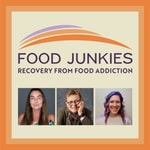
Food Junkies Podcast

Clarissa Kennedy

Forme & Santé
Forme & Santé

Fréquence : 1 épisode/6j. Total Éps: 322

Hosting podcast Libsyn
Welcome to the "Food Junkies" podcast! Here we aim to provide you with the experience, strength and hope of professionals actively working on the front lines in the field of Food Addiciton. The purpose of our show is to educate YOU the listener and increase overall awareness about Food Addiction as a recognized disorder. Here we discuss all things recovery, exploring the many pathways people take towards abstinence in order to achieve a health forward lifestyle. Most importantly how to THRIVE rather than just survive. So stay positive, make a change for yourself, tell others about your change, and hopefully the message will spread. The content on our show does not supplement or supersede the professional relationship and direction of your healthcare provider. Always seek the advice of your physician or other qualified mental health provider with any questions you may have regarding a medical condition, substance use disorder or mental health concern.
Site
RSS

Classements récents

Dernières positions dans les classements Apple Podcasts et Spotify.

Apple Podcasts

    Aucun classement récent disponible

Spotify

    Aucun classement récent disponible


Qualité et score du flux RSS

Évaluation technique de la qualité et de la structure du flux RSS.

See all
Qualité du flux RSS
À améliorer

Score global : 53%


Historique des publications

Répartition mensuelle des publications d'épisodes au fil des années.

Episodes published by month in

Derniers épisodes publiés

Liste des épisodes récents, avec titres, durées et descriptions.

See all

Episode 254: Dr. Paul O'Malley

Saison 4 · Épisode 254

jeudi 6 novembre 2025Durée 54:17

Dr. Paul O'Malley is a Los Angeles-based dentist who's redefining what it means to care for your teeth—and your whole body. With more than 30 years of experience, Dr. O'Malley specializes in biomimetic and holistic dentistry, which basically means he works with your body, not against it. His focus is on preserving your natural tooth structure, using biocompatible materials, and avoiding the "drill and fill" mindset that leaves so many people anxious about the dentist's chair.


He earned his DDS from Creighton University and completed a residency at Baylor University, but what really sets him apart is his philosophy: dentistry should heal and protect, not just patch things up. Over the years, he's trained with some of the top names in cosmetic and restorative dentistry and has become a fellow of both the International Academy of Dentofacial Esthetics and the Academy of Biomimetic Dentistry.


At his practice in Encino, California, Dr. O'Malley helps patients restore confidence, comfort, and long-term oral health—often with procedures that are far less invasive than traditional methods. He's also the founder of Great Oral Health, a line of probiotic-based products designed to support a healthy mouth microbiome and overall wellness.

We all know sugar messes with our health — but did you know it's one of the biggest culprits behind tooth decay, gum disease, and even inflammation throughout your body? 😬

💥 It's not just how much sugar you eat — it's how often!
Every sip or bite keeps your teeth bathing in acid and your enamel under attack.
🦠 Your mouth has a microbiome too — good bacteria that protect you!
Constant sugar, grazing, or even "healthy" acidic drinks (like lemon water or sugar-free soda) can throw that balance off.


💧 The fix is simple and kind:
✨ Eat in meals, not all day.
✨ Rinse with water after coffee, tea, or lemon water.
✨ Wait 20 minutes before brushing to protect enamel.
✨ Floss daily (it breaks up the "bug party" that causes decay).
✨ Use a soft brush and gentle angle — your gums aren't a kitchen floor!
✨ Try hydroxyapatite toothpaste (it helps re-harden enamel naturally).


❤️ Your mouth is part of your body — not separate from it.
Bleeding gums, bad breath, or constant sensitivity are not normal signs of "aging."
They're little SOS signals asking for care.


💬 And for parents: kids copy what we do, not what we say. Brushing and rinsing together is a tiny daily act of prevention and connection.
Let's make "self-care" include our smiles. Because a healthy mouth = a healthier body.

LINKS:

https://www.greatoralhealth.com/ https://www.drpaulomalley.com/  

The content of our show is educational only. It does not supplement or supersede your healthcare provider's professional relationship and direction. Always seek the advice of your physician or other qualified mental health providers with any questions you may have regarding a medical condition, substance use disorder, or mental health concern.

Episode 253: Clinician's Corner - From Rules to Guardrails: Rewriting the Manual for Recovery

mercredi 29 octobre 2025Durée 44:17

Molly and Clarissa get real about the spoken and unspoken "rules" we inherit—from family, culture, religion, peers, and recovery spaces—and how those rules can quietly run our lives. They explore when structure is protective (especially early recovery) and when rigidity shrinks our world. The invitation: notice the rule, name whose voice it is, examine its intention, and rewrite it as a flexible, values-aligned boundary (a loving guardrail) that serves your recovery today.

What we cover

Invisible operating systems: How covert rules ("Don't cry in public," "Finish your plate," "Don't upset Dad," "Work before rest") get encoded as truth and shape choices, identity, and self-worth.

Where rules come from: Family modeling, culture/diet/purity narratives, religion & tradition, media comparison loops, and past painful moments that birthed survival strategies.

When rules help vs. harm: The cast-to-brace metaphor—early structure can be lifesaving; never taking the brace off becomes its own injury.

Food-recovery example: "The kitchen is closed after dinner." Helpful as temporary scaffolding; harmful if it overrides true hunger, fuels all-or-nothing thinking, or becomes punishment.

Language that frees: Swap "I can't" for "I choose not to (right now)." Replace rules with loving guardrails anchored in values, not fear.

Meeting the Rebel: How the inner rebel shows up when we feel controlled, and how flexibility + permission reduces backlash and binge risk.

Compassion over condemnation: Seeing the origin story of a rule reveals it was protective, not defective—which softens shame and opens space to change.

Support matters: Borrowing a "prosthetic prefrontal cortex" from trusted people (group, therapist, friend) to reality-check and practice flexibility safely.

Try this: a simple Rule Audit

Spot it: What's one rule you notice yourself following today?

Name the voice: Whose rule is it (family, program, culture, scared younger you)?

Intention check: What safety or benefit was it trying to create? Does that need still exist?

Cost check: How does it limit you now (shame, rigidity, disconnection from body needs)?

Rewrite it: Old: "I can't eat after dinner."
New: "I stop after dinner unless I'm truly hungry—then I have a planned, recovery-friendly snack without shame."

Make it safer: Pre-plan options, text a support person, add a brief grounding before eating, pre-portion, and debrief after.

Nuggets & reframes

"Rules kept me safe then; values-based guardrails grow me now."

"Different doesn't equal dangerous. It's okay if new feels wobbly."

"Recovery should make life bigger, not smaller."

"Permission reduces rebellion."

"Thank you, old rule, for what you protected. I'm choosing something kinder now."

Reflection questions for listeners

Which rule in your life feels most rigid right now? What would a kinder, values-aligned version look like?

If you replaced one "I can't" with "I choose not to—for now," what changes in your body and nervous system?

Who are your go-to people to borrow perspective from when your threat system is loud?


The content of our show is educational only. It does not supplement or supersede your healthcare provider's professional relationship and direction. Always seek the advice of your physician or other qualified mental health providers with any questions you may have regarding a medical condition, substance use disorder, or mental health concern.

FJ Recovery Stories Episode 28: Sunnie Meadows

mardi 9 septembre 2025Durée 56:29

Meet Sunnie, whose name fits her perfectly; she is truly a ray of sunshine. With warmth and openness, she shares her personal journey with food addiction in a way that brings hope and healing to others. Sunnie has the rare gift of championing everyone, celebrating victories both big and small, and reminding us that every step forward matters. Her honesty and courage light the path for those still struggling, and her kindness uplifts all who know her. She is an inspiration, a bright soul, and I feel so blessed to call her my friend. I just absolutely love her!

Feel free to join our supportive community on Facebook: Sugar-Free for Life Support Group - where we believe "I'm Sweet Enough."

If you're considering personalized assistance, CJ, a Certified Addiction Professional specializing in Food Addiction, is here for one-on-one coaching. Reach out to CJ at cjnguy@myfoodaddictioncoach.com 

Interested in sharing your recovery story on our show? We'd love to hear from you! Please email FJRecoverystories@gmail.com 

If you find inspiration in recovery narratives, you won't want to miss the Food Junkies Podcast. Check it out at https://www.foodjunkiespodcast.com/.

Episode 175: International Food Addiction Consensus Conference

jeudi 2 mai 2024Durée 46:53

Dr. Jen Unwin, PsyD, FBPSs co-founder of Food Addiction Solutions (FAS)

Jen is a Clinical Psychologist who worked for over 30 years in the NHS in the UK. She specialised in the role of hope in quality of life and was chair of the UK Association for Solution-Focused Therapy. After a lifetime of addiction to sugar and carbohydrates, she finally understood that the solution was abstinence and trained in Holistic Addiction Medicine with Heidi. They have been working together to devise and evaluate successful treatment approaches to food addiction and to raise awareness of the condition internationally. Jen's best hopes are that treatment will be more available and that the condition of food addiction will be formally recognised.

Heidi Giaever, Founder of The Collaborative Health Community, CFK and co-founder of Food Addiction Solutions (FAS)

Heidi's original degree was in chemical engineering. She subsequently retrained in Nutrition, Lifestyle Medicine and Hollistic Addicition Medicine (HAM), following her declining cognitive and mental health during her late 30s, found to have been caused by her poor diet and struggle with sweet-foods addiction. Heidi's mission is to provide suitable platforms and further, collaborate with her partners to raise awareness of food addiction and develop creative community-based initiatives to work preventatively with children and young families.

Molly Painschab, LCPC, LAC, Sweet Sobriety Co-Founder

Molly is a dual-licensed mental health and addiction counsellor specializing in behavioural change using Solution Focused Brief Therapy (SFBT), Cognitive Behavioural Therapy (CBT), and Motivational Interviewing (MI). Molly is passionate about empowering individuals with self-determination on their healing journey. Her best hope is to continue advocating for marginalized individuals to receive the services required to overcome disordered eating and addiction.

Clarissa Kennedy, RSW, Sweet Sobriety Co-Founder

Clarissa possesses expertise and practical experience across multiple therapeutic approaches, including Cognitive Behavioural Therapy (CBT), Mindfulness-Based Interventions, Dialectical Behaviour Therapy (DBT) tailored for Eating Disorders, and Motivational Interviewing. Having navigated her own journey of recovery from food addiction, she aims to raise awareness about this disorder, help distinguish it from eating disorders, and highlight how addressing it can help support recovery from other substance use disorders.

In this episode:

How we got here

What the consensus process consists of

What we are most excited about

How the Consensus work ties into the Food Addiction Recovery Clinical Study

Next steps

The International Food Addiction Consensus Conference


YOU'RE INVITED to the International Food Addiction Consensus Conference

Friday May 17, 2024, in London, UK

This informative and engaging gathering will build awareness for the growing problem of Food Addiction, not only for us adults but also for children and future generations.

Speakers include:

Chris Van Tulleken

Robert Lustig

Michael Moss

Vera Tarman

Adrian SotoMota

Erica LaFata

David Wiss (Video)

Timothy Brewerton (Video Link)

Anna Lembke (Video Link)

Nicole Avena

Susan Peirce Thompson


Why attend?

•Gain valuable insights from international researchers, physicians, clinicians, and metabolic experts.

•Network with professionals and like-minded individuals.

•Learn about Food Addiction, and how ultra-processed foods impact the brain.

•See the latest scientific research on the addictive nature of certain foods and the clinical research in this area.

•Support our international program to get Food Addiction recognized as a disorder, listed in the ICD-11, to improve the food environment for future generations.

We hope you will join us for a full day of education, connection, and hope! 


TICKET SALES END MAY 12, 2024!

If you are unable to attend or view the livestream and still want to support this work, you can:

Attend the Conference or Purchase a Livestream Ticket: http://bit.ly/3ROJSCE

Donate a Ticket: Pay for another attendee, and we will ensure it goes to a healthcare professional, student or public member who wouldn't otherwise be able to attend – use the link in the show notes.

Spread the Word: Share our cause with your friends, family, and colleagues. The more people know about our mission, the greater our reach. You can use social media, email, or good old-fashioned word of mouth to help us raise awareness.

Donate: Every dollar, pound or any other currency you contribute goes directly towards making this conference possible and supports our work to get food addiction recognized by The World Health Organization (WHO). Check show notes for the link!  https://bit.ly/4bIwKa3


The content of our show is educational only. It does not supplement or supersede your healthcare provider's professional relationship and direction. Always seek the advice of your physician or other qualified mental health providers with any questions you may have regarding a medical condition, substance use disorder, or mental health concern.

FJ Recovery Stories Episode 8: Linda Witnov

Saison 1 · Épisode 8

lundi 29 avril 2024Durée 59:19

With a twinkle in her eye and a warm welcoming smile, please give a warm welcome to Linda Witnov. Years ago, she chose a path of self-discovery, leaving a past defined by addiction behind. Years of self-discovery have revealed a genuine spirit that radiates outward.  Linda isn't afraid to share her truth, offering a hand up and a genuine smile to anyone who needs it.

Feel free to join our supportive community on Facebook: Sugar-Free for Life Support Group - where we believe "I'm Sweet Enough."

If you're considering personalized assistance, CJ, a Certified Addiction Professional specializing in Food Addiction, is here for one-on-one coaching. Reach out to CJ at cjnguy@myfoodaddictioncoach.com 

Interested in sharing your recovery story on our show? We'd love to hear from you! Please email FJRecoverystories@gmail.com 

If you find inspiration in recovery narratives, you won't want to miss the Food Junkies Podcast. Check it out at https://www.foodjunkiespodcast.com/.

Episode 174: Dr Paul Kolodzik

Saison 4 · Épisode 174

jeudi 25 avril 2024Durée 53:03

Today we speak to Dr Paul Kolodzik is a medical doctor specializing in metabolic health and weight loss. He completed his medical training at the  Wright State University School of Medicine and has served as Assistant Clinical professor at this site since 1989.  He is board certified in preventative and emergency medicine and has over 20 years of experience working in emergency medicine. He is also  board certified in Addiction Medicine and has treated people with food addiction, as well as weight loss and metabolic disease over the last five years.

In addition to his medical practice, Dr. Kolodzik is the author of "The Continuous Glucose Monitor Revolution," which provides a comprehensive guide on using CGMs for improved health and weight management. His passion lies in educating people about the benefits of continuous glucose monitoring and helping them achieve their weight loss goals using  low-carb diets and other lifestyle changes. We are food junkies podcast are wondering if these devices can help us in food addiction recovery. 

In todays Episode:

What is a continuous glucose monitor (CGM) and how does it work?
The connection between blood sugar levels, insulin resistance, and weight gain?

What are some of the key advantages of using a CGM for weight loss and improving metabolic health?
How does a CGM provide insights that other methods versus other means of tracking like a regular glucomenter or a fitness tracker? 

What are the steps to getting started? 
How can someone interpret and make sense of their CGM data? 
What are the key patterns to look for to show good  or poor metabolic health? 
How would you use these to make adjustment to your diet?
Should you work  with a health care provider using these?
Besides diet, what other lifestyle factors can influence CGM readings?

How can CGMs help food addicts better understand their triggers and cravings?
How can these be used to help create a food addiction recovery food plan?
Or your patients with food addiction any different than other patients - do you have special / different advice to give us? 
What resources or support are available for non-diabetics looking to use CGMs?

Follow Dr. Kolodzik:

https://www.metabolicmds.com

The content of our show is educational only. It does not supplement or supersede your healthcare provider's professional relationship and direction. Always seek the advice of your physician or other qualified mental health providers with any questions you may have regarding a medical condition, substance use disorder, or mental health concern.

Episode 173: John F. Kelly, Ph.D., ABPP

Saison 4 · Épisode 173

jeudi 18 avril 2024Durée 50:09

Dr. Kelly is the Elizabeth R. Spallin Professor of Psychiatry in Addiction Medicine at Harvard Medical School. He is the Director of the Recovery Research Institute at the Massachusetts General Hospital (MGH), the Associate Director of the Center for Addiction Medicine at MGH, and the Program Director of the Addiction Recovery Management Service. Dr. Kelly is a former President of the American Psychological Association's (APA) Society of Addiction Psychology, and is a Fellow of the APA and a Diplomate of the American Board of Professional Psychology.

He has served as a consultant to U.S. federal agencies and non-federal institutions, as well as foreign governments and the United Nations. Dr. Kelly has published over 200 peer-reviewed articles, chapters, and books in the field of addiction medicine. His work has focused on addiction treatment and the recovery process, mechanisms of behavior change, and reducing stigma and discrimination among individuals suffering from addiction.

In this Episode:

What initially sparked his interest in studying Alcoholics Anonymous and 12-step programs?
What were the the key findings of the Cochrane review regarding the efficacy of AA and 12-step approaches?
How effective is AA compared to professionally-delivered addiction treatments like cognitive behavioral therapy?
Why does AA work for some people but not others?
How well does AA work for diverse populations?
Are there certain groups for whom it works better or worse?
Could these findings be applied to other recovery communities? i.e. Sweet Sobriety, Smart Recovery, LifeRing?
What role can AA play within a modern system of clinical addiction treatment and recovery support?
His thoughts on harm reduction
Why he thinks that sometimes in the addiction field it's either a harm reduction model OR an abstinence model instead of both offered.
The research on average recovery trajectories (ie 4 – 5 years before they decide to stop even though the use is very problematic due to stigma or fear and trying moderation, then 7 or 8 years and multiple treatment interventions before they get one full year of abstinence, then 5 years of continuous remission before people are no longer at an elevated risk versus the normal population)
People with addiction ned to be given permission to practice recovery instead of just being expected to just stop immediately 
Does he believe in Food Addiction ?
His thoughts on what our next steps should be to get Food Addiction Recognized  

Follow John Kelly and the Recovery Research Institute:

https://www.recoveryanswers.org

The content of our show is educational only. It does not supplement or supersede your healthcare provider's professional relationship and direction. Always seek the advice of your physician or other qualified mental health providers with any questions you may have regarding a medical condition, substance use disorder, or mental health concern.

FJ Recovery Stories Episode 7: Charity Silva

Saison 1 · Épisode 7

lundi 15 avril 2024Durée 01:02:55

Today, CJ has the pleasure of interviewing a wonderful friend, Charity Silva. Charity is a beacon of warmth and kindness. Her eyes hold a quiet wisdom, reflecting a deep connection to something larger than herself. Spirituality infuses her every word, a constant search for meaning and beauty. But it's her boundless love that truly shines. A gentle word, a helping hand. Charity makes everyone feel seen and cherished, leaving a trail of light wherever she goes. You will truly enjoy getting to know Charity on this week's episode.

Feel free to join our supportive community on Facebook: Sugar-Free for Life Support Group - where we believe "I'm Sweet Enough." https://www.facebook.com/groups/SugarFreeForLife/?mibextid=oMANbw

If you're considering personalized assistance, CJ, a Certified Addiction Professional specializing in Food Addiction, is here for one-on-one coaching. Reach out to CJ at cjnguy@myfoodaddictioncoach.com.

Interested in sharing your recovery story on our show? We'd love to hear from you! Please email FJRecoverystories@gmail.com.

Episode 172: Dr. Debbie Danowski

jeudi 11 avril 2024Durée 52:27

Dr. Debbie Danowski is an expert on media literacy and food addiction. She holds a Ph.D. in Media Education from Capella University and is an associate professor at Sacred Heart University, where she has researched and taught for over 25 years on the intersection of media, advertising, and problematic eating behaviors.   Dr. Danowski's research and publications focus on the role of advertising and media in enabling food addiction and disordered eating patterns. She is the author of several peer-reviewed journal articles and, most recently, her 2023 book 'Happy Eating' and Food Addiction in American Advertising.   Dr. Danowski also served on the board of directors of the Food Addiction Institute, a nonprofit organization dedicated to raising awareness about food addiction and providing pathways to recovery. Through her research, writing, speaking engagements, and public health advocacy, Dr. Danowski aims to spread understanding of how media and advertising can enable food addiction, reduce stigma around this disease, and highlight evidence-based treatment approaches.   Happy Eating  

The content of our show is educational only. It does not supplement or supersede your healthcare provider's professional relationship and direction. Always seek the advice of your physician or other qualified mental health providers with any questions you may have regarding a medical condition, substance use disorder, or mental health concern.

Episode 171: Dr. Georgia Ede

Saison 4 · Épisode 171

jeudi 4 avril 2024Durée 55:44

Dr. Georgia Ede is an internationally recognized expert in nutritional and metabolic psychiatry. Her twenty-five years of clinical experience include twelve years at Smith College and Harvard University Health Services, where she was the first to offer students nutrition-based approaches as an alternative to psychiatric medication.


Dr. Ede co-authored the first inpatient study of the ketogenic diet for treatment-resistant mental illness, developed the first medically accredited course in ketogenic diets for mental health practitioners, and was honored to be named a recipient of the Baszucki Brain Research Fund's first annual Metabolic Mind Award. Her new book Change Your Diet, Change Your Mind was released on January 30, 2024. 

Follow: https://www.diagnosisdiet.com

The content of our show is educational only. It does not supplement or supersede your healthcare provider's professional relationship and direction. Always seek the advice of your physician or other qualified mental health providers with any questions you may have regarding a medical condition, substance use disorder, or mental health concern.


Podcasts Similaires Basées sur le Contenu

Découvrez des podcasts liées à Food Junkies Podcast. Explorez des podcasts avec des thèmes, sujets, et formats similaires. Ces similarités sont calculées grâce à des données tangibles, pas d'extrapolations !
Podcast The Dr. Gabrielle Lyon Show
Podcast LONGEVITY with Nathalie Niddam
Podcast The Girlfriend Doctor w/ Dr. Anna Cabeca
Podcast Dr. Jockers Functional Nutrition
Podcast The Model Health Show
Podcast What's The Juice
Podcast The Jesse Chappus Show
Podcast The Ben Azadi Show
Podcast Biohacking Beauty: The Anti-Aging Skincare Podcast
Podcast Health, Wealth & Godly Wisdom
© My Podcast Data