Thinking With Somebody Else's Head – Details, episodes & analysis
Podcast details
Technical and general information from the podcast's RSS feed.
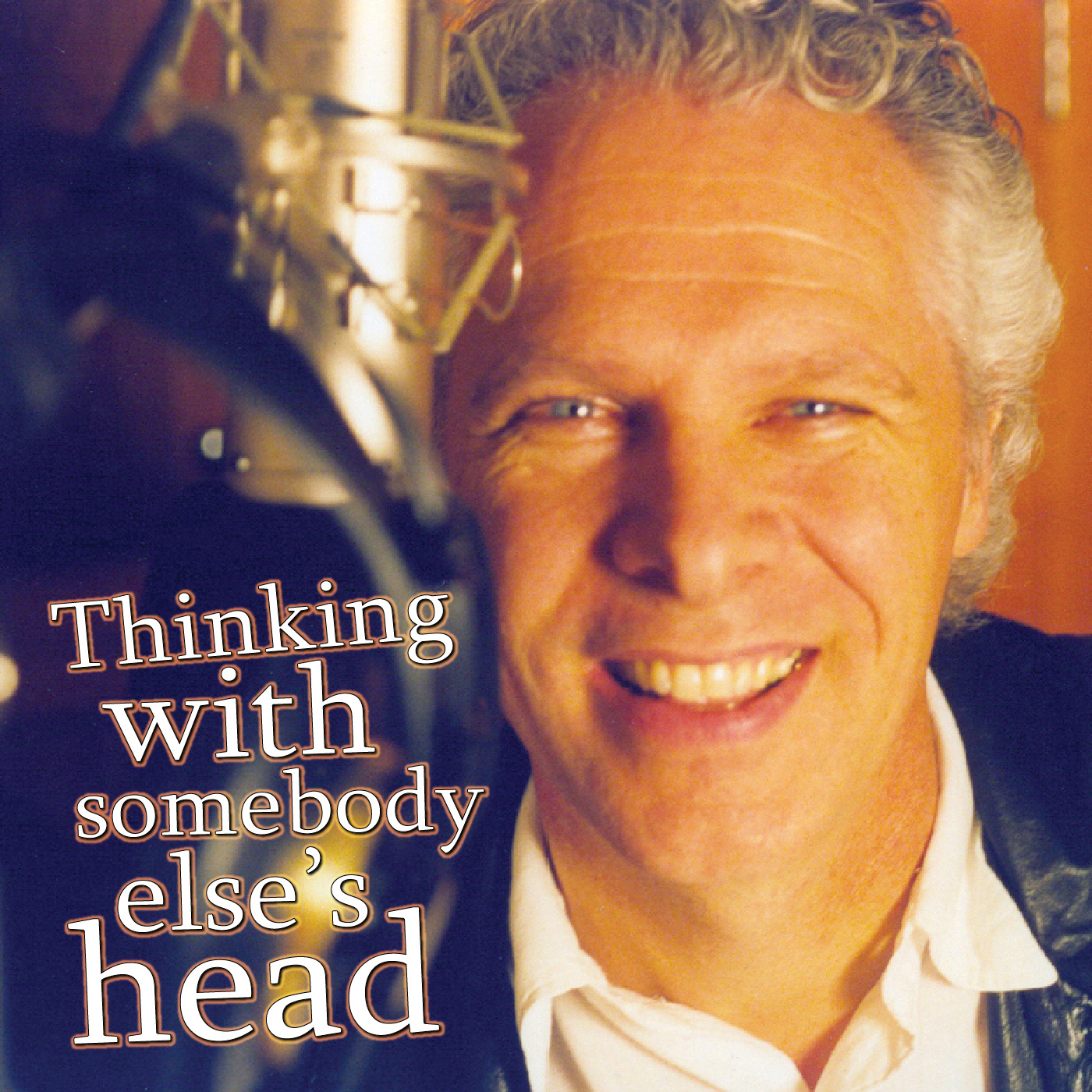
Thinking With Somebody Else's Head
Richard Lloyd Jones
Frequency: 1 episode/43d. Total Eps: 99

Recent rankings
Latest chart positions across Apple Podcasts and Spotify rankings.
Apple Podcasts
🇩🇪 Germany - philosophy
26/01/2026#97🇩🇪 Germany - philosophy
25/01/2026#70🇨🇦 Canada - philosophy
08/01/2026#89
Spotify
No recent rankings available
Shared links between episodes and podcasts
Links found in episode descriptions and other podcasts that share them.
See all- https://www.weforum.org/
99 shares

- https://www.weforum.org/great-reset/
21 shares
RSS feed quality and score
Technical evaluation of the podcast's RSS feed quality and structure.
See allScore global : 53%
Publication history
Monthly episode publishing history over the past years.
Hidden Repugnance Toward God - Ep 12 - Therapeutic Theology Series
lundi 22 décembre 2025 • Duration
That might stop you in your tracks even if you're not a practicing Christian.
Dangerous faith? Really? During Christmas week?
My initial thought on seeing the headline was, "Is that really necessary?"
The article goes on to make the usual rather pedantic points about fanaticism and religious intolerance.
Which are, of course, legitimate concerns. But what causes pause, I think, is the driving force underneath the article. That things of God, in many circles, are still ridiculed and sneered at, and faith in a Creator is evidence of an "inferior mind", as some scientific thinkers would have us believe.
At this time of the year especially, maybe we should stop to consider what the man who gave rise to Christianity actually had to say. And maybe by reflecting on His example and teachings, we might just uncover the validity of his story.
The Hidden Repugnance Toward God, today on our Therapeutic Theology Series.
Click here to listen to this episode.
Stop Eliminating Christianity from History - Ep 11 - Therapeutic Theology Series
vendredi 12 décembre 2025 • Duration
And criticizable -- although not politically correctness makes them closed to much critique.
We must be careful with all of these. Our fears of winding up on the wrong side of history can lead us to slant things too far in the other direction, thereby skewing our view of history too much. After all, if we're going to expect the figures from history to be saints and totally politically correct on every social issue, we're going to find slim pickings for historical heroes.
And we need to be really careful in our evaluation of Christianity. I know lamentable things have been carried out in the name of God -- and continue to be carried out today -- but we must see what is likewise true: the values and teachings of Christ continue to form the basis of the most advanced societies on our planet.
And at this Christmas time of the year, it is important to remember that. Stop Eliminating Christianity from History, today on our Therapeutic Therapy series.
Click here to listen to this episode.
True Freedom - Ep 2 - Therapeutic Theology Series
mardi 2 septembre 2025 • Duration
The idea of Creation. The new atheists rail against that. "It's not rational," they insist. The product of a weak mind.
Yes, I've heard all that before. In fact, I'm quick to admit that may have been my mind some years ago.
I say "may" because I'm not sure what I thought about the origins of all this we see around us in the natural world. I think I didn't give it so much thought actually. I remember looking on theological discourse as something out of date somehow. Like hardly pertinent in a modern world with more sophisticated concerns.
And now I can sheepishly acknowledge that I knew nothing about something I thought I knew everything about.
Well, a little humility goes a long way after all. And in Episode 2 of our Therapeutic Theology series, we delve into the nature of a Creation that comes and is sustained by an Intelligence. By a Being actually, Who has created us in His image.
Perfect knowledge for those who have the courage to admit they don't know it all yet.
Theology and Science - Ep 1 - Therapeutic Theology Series
mercredi 27 août 2025 • Duration
What we're trying to do in our new series here is offer a scientific analysis of spiritual phenomena, especially looking at mental illness and demonic possession. But not the demonic possession we see in the movies. Rather, we delve into the negative diabolical influence that’s a factor for all of us everywhere in our modern society. And this is totally a new approach, because the official exorcists and exorcism protocols have not included this transdisciplinary science that Dr. Keppe has developed. Which means that we are not treating this issue in our modern world. In fact, religions all over the world are not even speaking about the devil anymore.
Keppe entered into the area of psychotherapy to try to treat clients individually and in group sessions in scientific ways. And this meant dealing not only with their economic, health, work and relationship problems, but with their existential or spiritual problems as well.
And to do that, Keppe found materialistic psychoanalytical theories incomplete, and so he created his own interdisciplinary science. He called Analytical Trilogy, which he named for the union of science with philosophy and theology. So this is now not something that's only theological, only philosophical, only scientific, but all three of those aspects together, which gives it a lot of capacity to understand human problems and bring solutions.
Join us on what will be a fascinating journey into the human experience.
Self-Improvement Requires Sacrifice
mercredi 13 août 2025 • Duration
Anyone who's been even peripherally involved in the self-help movement will be familiar with the literature promising solutions. The three steps to this, the pathways to that, the enumerated habits that lead to accomplishment or resolution or bliss.
Finally
The great Brazilian psychoanalyst and social scientist, Dr. Norberto Keppe, is not of that persuasion. His work is deeply psychological and spiritual and works with each individual, treating specifically the problems of each one. Because while there are general psychopathologies we all exhibit -- like envy, pride, and megalomania -- how those manifest during the individual incidents in our lives is particular.
So no formulas for Keppe. That being said, there are universal principles of a healthy and productive life that Keppe counsels. And habits based on those principles can truly bring fulfillment. We'll touch on one aspect of this in this episode.
Self-development Requires Sacrifice, today on Thinking with Somebody Else's Head.
Click here to listen to this episode.
Performance and the Free Will
mercredi 9 juillet 2025 • Duration
I'm Richard Lloyd Jones, and this is Thinking with Somebody Else's Head. The debate between talent and hard work is a dynamic one. Is it raw talent that carries the day or practice and dedication that reigns? I remember deciding when I was 11 or so, on hearing my recorded singing voice played back on my cousin's new cassette recorder, that I couldn't sing.
How that marked my life, because I thought, wrongly, that you were born with singing talent or not.
Wish I could redo that decision.
Later in life, I heard about Vladimir Horovitz’s statement late in his life that if he hadn't practiced for one day, he would hear the difference. For two days, his wife would hear the difference. Three days with no practice, and the audience would notice.
A poster child for hard work.
Because becoming good at anything requires both talent and dedication, right? And probably not in equal measure. After all, we get in the way of our own success a lot, don't we?
Performance and Free Will, today on Thinking with Somebody Else's Head.
Paradise as Reality, Not Imagination
mercredi 9 juillet 2025 • Duration
Memories of paradise. That's not just a great dream sequence or catchy movie title. That's something that resonates through almost every culture on Earth.
The Roman poet, Tacitus, wrote in the first century A.D. about how humans lived following the prompting of their own nature, which led to righteous actions.
In India, the story has been passed on of how all humans were saintly.
The Chinese sage, Chuang Tzu, wrote about an age of perfect virtue.
And of course, the Biblical story speaks about Eden, a Garden of harmony and peace and oneness with God.
In Portugal, there is a beautiful word that doesn't really have a translation into English: saudades. It means a state of deep yearning for someone or something that's absent, and "indolent dreaming wistfulness."
This is what we feel in relation to Paradise. That memory resonates in our hearts and somehow is behind our drives to accomplish and improve.
Paradise as Reality, not Imagination, today on Thinking with Somebody Else's Head.
The Perils of Living Unconsciously
jeudi 24 avril 2025 • Duration
Freud believed we were often influenced by memories, traumas and instincts we had repressed, but they influenced our behaviors anyway. He got there by studying hypnosis, analyzing dreams and paying attention to those slips of the tongue that reveal what we try to keep hidden.
"No mortal can keep a secret," Freud maintained. "If his lips are silent, he chatters with his fingertips. Betrayal oozes out of him at every pore."
Poetic language that. And the idea has weaved its way into our modern psyche. All of us have used that excuse along the way. "Man, I was completely unconscious. What was I thinking?!"
The great Brazilian psychoanalyst, Norberto Keppe, has advanced Freud significantly with his concept of inconscientization. It's not that we're naturally full of hidden indecent desires and animal instincts. For Keppe, we banish from our consciousness what we don't want to admit. That means, we know what's going on, but we deny what we know.
And that has serious consequences.
The Perils of Living Unconsciously, today on Thinking with Somebody Else's Head.
Love, Consciousness and the Troubled World
mardi 1 avril 2025 • Duration
There's an old Chinese phrase that goes, "It's better to be a dog in peaceful times than a man in a time of chaos."
Wishful thinking, some may call that, for it's difficult to see peaceful times at any moment in human history. Most of us with a bit of life experience hearken back to when times were easier, and end up moralizing to any who will listen that our times back then were superior. And while that may be superficially true, it's not all that helpful. And complaining doesn't make the young fold feel any better.
In fact, your and old may just end up pointing fingers at each other as to who's to blame for the world as it is.
We'd like to dip our feet into those tumultuous waters in this podcast to suggest that all those lamentations and blame apportioning miss the fundamental point: we've been on an inverted path for millennia. We've reached the end of the road in a literal sense.
Can any sense be made of the correct way to go now?
Love, Consciousness and the Troubled World, today on Thinking with Somebody Else's Head.
Inversion in Everyday Life
samedi 15 mars 2025 • Duration
I've been in Brazil going on 24 years, using Norberto Keppe's psychotherapeutic methodology in education and communications, and also as a psychoanalyst at Keppe's school. The positive results available to anyone who studies with us and accepts the consciousness that comes through our classes and therapy sessions are noteworthy. From overcoming learning blocks to resolving long-standing or acute personal or professional conflicts to curing from medical conditions, Keppe's on to something.
Where Freud initiated psychoanalysis with the idea that neurosis was caused by cultural and moral values, and Jung wanted to integrate our shadow side into our personality, and Alfred Adler helped clients with their feelings of inferiority, Keppe has reached conclusions about the human problematic with his great discovery of inversion.
The Final Frontier of the human psyche, and the way to finally understanding ourselves and resolving our greatest problems.
Inversion in Everyday Life, today on Thinking with Somebody Else's Head.
Related Shows Based on Content Similarities