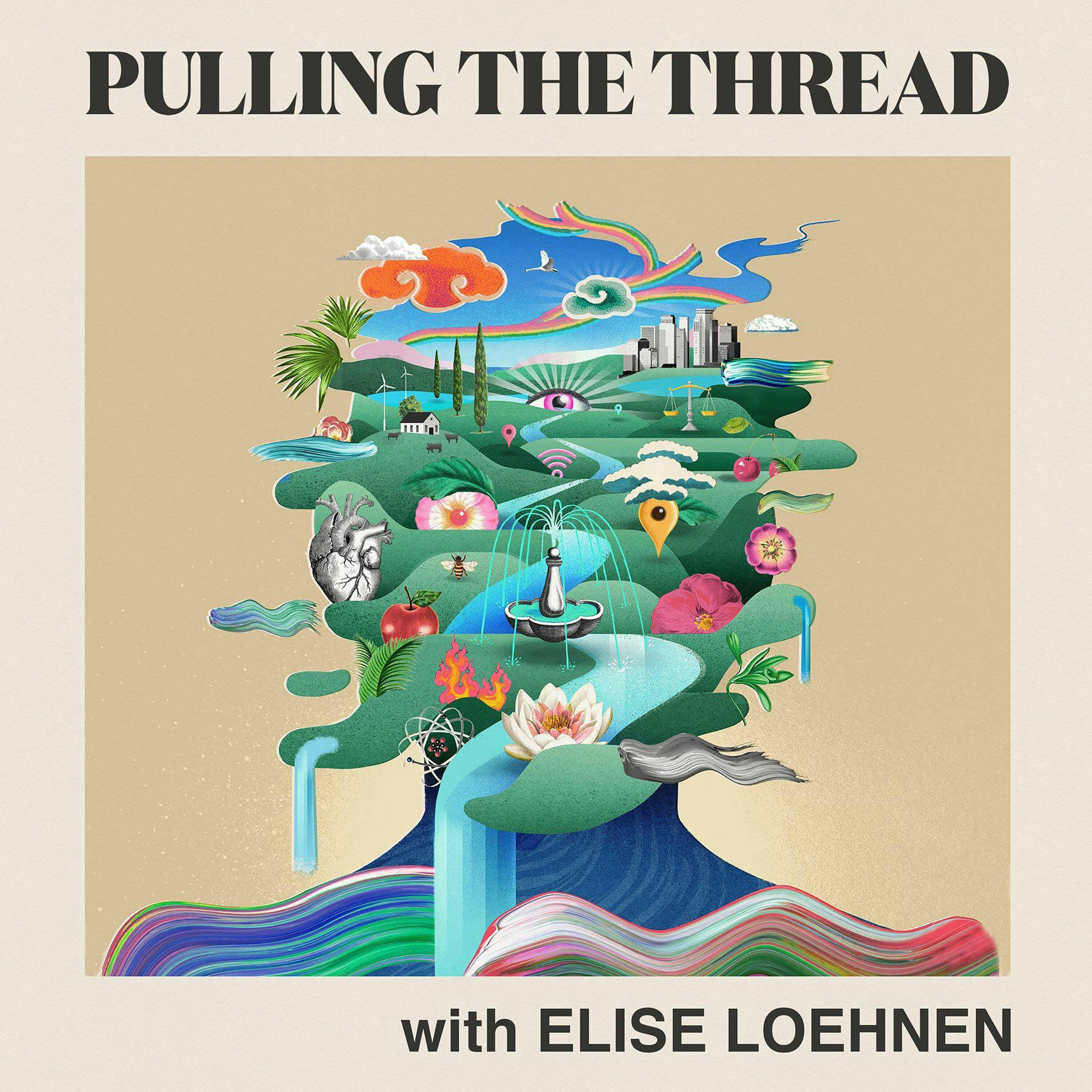
Writer Elise Loehnen explores lifeâs big questions with todayâs leading thinkers, experts, and luminaries: Why do we do what we do? How can we understand and love ourselves better? What would it look like to come together and build a more meaningful world?
Site
RSS
Spotify
Recent rankings
Latest chart positions across Apple Podcasts and Spotify rankings.
Shared links between episodes and podcasts
Links found in episode descriptions and other podcasts that share them.
âLiving on fire is really a metaphor for figuring out two things,â says Shannon Watts. âWhat is limiting you. And what is calling you.â Watts spent 11 years as the full-time volunteer lead of Moms Demand Action, which she founded. Now, as she puts it, Watts continues to summon the audacity of other women. Today, she shares so many useful life nuggets from her new book, Fired Up: How to Turn Your Spark Into a Flame and Come Alive at Any Age.
For the show notes, head over to my Substack.
Learn more about your ad choices. Visit podcastchoices.com/adchoices
Finding Faith in our Future (Krista Tippett)
Thursday, June 12, 2025 ⢠Duration 55:59
âYou're going to find a lot of people doing their best, revealing how beautiful and strange we are, and how remarkable we can be,â says Peabody Award-winning broadcaster and founder of On Being Krista Tippett. In this conversation, Tippett shares where we might turn for more hope and pleasure, and how she thinks about what shapes our presence in the world.
For the show notes, head over to my Substack.
Learn more about your ad choices. Visit podcastchoices.com/adchoices
Another Way of Seeing Betrayal (Monthly Solo)
Monday, April 28, 2025 ⢠Duration 54:15
For Aprilâs guest-less episode, Iâm looking back on the wild ride that was this month, and trying to make sense of this period of contemplation in my life. I share a few realizations Iâve had about: uncertainty (involving Phil Stutzâs âevil wedding cakeâ theory); betrayal (involving a special tarot reading with Mark Horn); whether or not I have faith that the universe will support me (involving a group workshop on what women want); and what weâre meant to be doing here (involving a gondola ride with Chelsea Handler). I also answer a couple of listener questions about how I manage my time, and my research and creative processes.
For the show notes, head over to my Substack.==
Learn more about your ad choices. Visit podcastchoices.com/adchoices
How Story Can Heal (Akiva Goldsman)
Thursday, December 21, 2023 ⢠Duration 50:31
âI think what's interesting about healing, psychological healing, is there's always a narrative that helps. So sometimes when you go to therapy, and you tell a story, and in the story, you locate your despair, and it's a knot, and then with the therapist, you work through the knot, you feel better. And was all the pain really attendant to that knot? Or did you just kind of load up that knot with some of the despair that comes from being alive and then you kind of work through it and that story helps you live life better. And I think that's true also this idea of how we look at the different personality states and we can name them and we can give them ages and it's a story that helps us understand ourselves.â
So says Akiva Goldsman, an Oscar, Golden Globe, and WGA-Award winning screenwriter whose credits include A Beautiful Mind, The Client, Batman Forever, A Time to Kill, Practical Magic, Cinderella Man, I Am Legend, The Da Vinci Code, Angels & Demons, Insurgent, and I, Robot. Heâs on Pulling the Thread today, though, to talk about Apple TV+âs The Crowded Room, a psychological thriller starring Tom Holland and Amanda Seyfried on which he was both the writer and the showrunner.
So first, some warnings: Yes, there are spoilers, though in my opinion, nothing that will markedly change your experience of watching the show. In fact, knowing the back story made it easier for me to get through the first, very stressful episode. (It gets easier, and by episode three, I was riveted.) And also, a trigger warning: The Crowded Room and our conversation today explore childhood sexual abuse, which is also part of Akivaâs personal history.
MORE FROM AKIVA GOLDSMAN:
âThe Crowded Roomâ on Apple TV+
Learn more about your ad choices. Visit podcastchoices.com/adchoices
On Reducing Harm & Saving Lives (Maia Szalavitz): ADDICTION
Monday, December 18, 2023 ⢠Duration 59:07
âI think it's really important for, you know, people to realize that you can totally be an absolutely excellent parent of a traumatized child and the trauma had nothing to do with you and you couldn't possibly have prevented it. So I think, you know, assuming that there is trauma in somebody's addiction history, which is not always the case, but if there is, you should not immediately assume that it was bad parenting because sure, that could be the case sometimes, but again, there's so many different ways that people can be traumatized by so many different people. And it's also the case that so much of addiction has to do with people's temperament that will set them up for things. So, if you are incredibly sensitive to stimuli, something that wouldn't traumatize someone else might traumatize you. And again, that's not your parents fault. That's just how you were born.â
So says Maia Szalavitz, a contributing opinion writer for the New York Times and author of two fantastic books about addiction. Her New York Times bestseller, Unbroken Brain, tells the story of her own heroin and cocaine addiction as a student at Columbia University in the â80sâshe was expelled for dealing and barely escaped prison timeâwoven together with the decades of work sheâs done as a journalist in the addiction space after entering recovery in her early â20s. In it, Maia offers a compelling case for why addiction should be thought of as a learning disability, in part because so many people âgrow out of it.âÂ
Maiaâs latest bookâUndoing Drugs: The Untold Story of Harm Reduction and the Future of Addictionâtaught me so much and challenged so many of the stories about addiction I was holding onto. Ultimately, itâs an optimistic book in the face of what feels like an overwhelming cultural challenge, a challenge that only seems to get worse every monthâMaia explains why weâre trending in this direction, and more importantly, what we can do to shift our collective fate toward recovery. And what an expanded idea of recovery might mean.Â
MORE FROM MAIA SZALAVITZ:
Undoing Drugs: How Harm Reduction is Changing the Future of Drugs and Addiction
Unbroken Brain: A Revolutionary Way of Understanding Addiction
The Boy Who Was Raised as a Dog
Read Maia on The New York Times
Maiaâs Website
Follow Maia on X
Further Listening on Pulling the Thread:
PART 1: Holly Whitaker, âReimagining Recoveryâ
PART 2: Carl Erik Fisher, M.D., âBreaking the Addiction Binaryâ
ADDICTION: Anna Lembke, M.D., âNavigating an Addictive Cultureâ
TRAUMA: Gabor MatĂŠ, M.D., âWhen Stress Becomes Illnessâ
BINGE EATING DISORDER: Susan Burton, âWhose Pain Counts?â
Learn more about your ad choices. Visit podcastchoices.com/adchoices
The Malleability of the Brain (David Eagleman)
Thursday, December 14, 2023 ⢠Duration 01:06:11
âAs you grow older, your brain is able to keep rewiring all the time. And so we have this impression that the flexibility of the brain decreases as you get older. But in fact, it's just because your brain's job is just to figure out how to get by in the world and do a good job in the world. And once you've figured most things out, like, oh, these are different kinds of personalities, and this is how I need to do something at work, and this is how I use email and phone and whatever, then your brain does less changing only because it has successfully done its job, and it doesn't need to keep changing. The brain changes when there's surprise, when there's something that happened that it wasn't expecting, then it changes up. So, you still have plenty of plasticity even when you're 90 years old. It's just that most people aren't using it at that point because they say, Oh, I got it. I know how things work.â
So says David Eagleman, renowned neuroscientist, podcast host, and the author of many bestselling books about consciousness and the brainâalong with more than 120 academic publications. Besides his perch as a neuroscientist at Stanford University, David is the co-founder of two venture-backed companies, including Neosensory, which is a pioneering wrist device that enables the deaf to hear. Yep, thatâs right.
David is fascinating, and hopefully this conversation lives up to his capacity: We discuss the malleability of the brain to adjust to its inputs, the roots of synesthesia, how those who are born blind and deaf can now use touch to see and hear, and why we dream. Ultimately, we explore just how it happens that a brain trapped in a dark vault can create the vibrancy of our existence.
David is a TED speaker, a Guggenheim Fellow, and serves on several boards, including the American Brain Foundation and the The Long Now Foundation. He is the Chief Scientific Advisor for the Mind Science Foundation, and the winner of Claude Shannon Luminary Award from Bell Labs and the McGovern Award for Excellence in Biomedical Communication.
Whatâs cooler? He has served as the scientific advisor to several television shows (including Westworld and Perception).
Ironicallyâconsidering we both host podcasts and David is a neuroscientistâwe had some technical difficulties during our conversation, but the hope is that this is not perceptible to you!Â
MORE FROM DAVID EAGLEMAN:
Livewired: The Inside Story of the Ever-Changing Brain
The Brain: The Story of You
Sum: Forty Tales from the Afterlives
Davidâs Podcast: âInner Cosmosâ
Davidâs Website
Follow David on Instagram
Davidâs Company: Neosensory
Learn more about your ad choices. Visit podcastchoices.com/adchoices
Breaking the Addiction Binary (Carl Erik Fisher, M.D.): ADDICTION
Monday, December 11, 2023 ⢠Duration 01:00:54
âI want to say that it's not just some idea about suffering, it's also a function of social and economic systems that are deliberately weaponizing an individualized view of suffering as a technique, as a strategy. I found across eras and eras and eras in the book is that addiction supply industries, which is what one scholar calls them, like the alcohol industry, the tobacco industry, they constantly come back to this hyper individualization in saying, you know, like, the problem is not in the bottle, the problems in the person. If so many people can drink, quote unquote normally, that means the problem is really with these sick people over here. And that happened with tobacco. And then very directly and deliberately, things like the processed food industry and other modern addiction supply industries have used the same language.â
So says Carl Erik Fisher, an addiction psychiatrist, bioethics scholar, author, and person in recovery. Carl is also an assistant professor of clinical psychiatry at Columbia University, where he teaches law, ethics, and policy relating to psychiatry and neuroscience, particularly where they converge with substance use disorders and other addictive behaviors. He hosts a podcast called Flourishing After Addiction and is launching a Substack, where heâll organize his thinking around treatment paths and modalities. Most pertinent to our conversation today, heâs the author of The Urge: Our History of Addiction, which is a fascinating deep dive into our long cultural fascination with addictive substances, interlaced with his own story, and stories from his practice: In fact, the book opens in Bellevue where Carl is not functioning as a doctorâin this case, heâs the patient, after suffering an addiction-induced manic episode that put him into recovery. Carl is brilliant and kind, and also fluent in all the prevailing science about addictive behaviorâŚscience that hasnât really ruled the day until recent years. Instead, the addiction space has been one of binariesâyouâre compulsive, or you exercise choice; youâre normal, or an addict; you have no control to stop, or you have all the control and refuse to use it; and on and on and on.
MORE FROM CARL ERIK FISHER:
The Urge: Our History of Addiction
Carlâs Podcast: Flourishing After Addiction
Carlâs Website
Follow Carl on Instagram
Carlâs Newsletter
Carlâs Substack
Further Listening on Pulling the Thread:
PART 1: Holly Whitaker, âReimagining Recoveryâ
ADDICTION: Anna Lembke, M.D., âNavigating an Addictive Cultureâ
TRAUMA: Gabor MatĂŠ, M.D., âWhen Stress Becomes Illnessâ
BINGE EATING DISORDER: Susan Burton, âWhose Pain Counts?â
Learn more about your ad choices. Visit podcastchoices.com/adchoices
The Gordian Knot of Mental Illness (Rachel Aviv)
Thursday, December 7, 2023 ⢠Duration 43:40
âI think what one of the things that's interesting to me is like when we think about what causes distress and a life that goes awry, there's so much attention to different causes, but the way that the story, or the diagnosis, or the treatment interacts with our identity, I think, is not thought about as much. Like, the way that the very intervention itself changes our sense of who we are feels like it gets neglected. There's this sense that, you know, the diagnosis is describing something that is always solid and real and less thought given to like, well, how does that diagnosis interact with a mind? And how does the mind change knowing that the mind has been characterized this way?â
You might recognize Rachel Avivâs name from The New Yorker, where sheâs been a staff writer for a decade, covering subjects like medical ethics, psychiatry, criminal justice, and education. Sheâs been a finalist for the National Magazine Awards twice, and in 2022 she won one for profile writing. In 2022, she also published Strangers to Ourselves: Unsettled Minds and the Stories That Make Us, a recipient of the Whiting Creative Nonfiction Grant and named by The New York Times as one of the ten best books of the year. In It, Aviv tells the story of four people and the treatment they underwentâor notâfor their mental illness. Itâs a gorgeously told, layered exploration of all that we donât know about the brain and the mind, and how various treatment modalities restructure our livesâincluding the stories we tell about who we are. Okay, letâs get to our conversation.
MORE FROM RACHEL AVIV:
Strangers to Ourselves: Unsettled Minds and the Stories That Make Us
Read Rachel in The New Yorker
Follow Rachel on X
Learn more about your ad choices. Visit podcastchoices.com/adchoices
Reimagining Recovery (Holly Whitaker): ADDICTION
Monday, December 4, 2023 ⢠Duration 57:39
âFor years, I was asking myself whether or not I was an alcoholic versus really asking myself whether or not alcohol was actually providing any benefit to me. And for me, it was just like, This realization when I stopped drinking that I had been asking the wrong question for my whole drinking career and like, why are we not asking the question? We're just like, we're drinking, it's compulsory in our society. It's exceptional if you don't drink. And then it's also this very addictive drug that's marketed to us in a way that totally overrides our ability to like make rational choices around it. It's like the most socially accepted drug that you can use and like, we just don't have meaningful conversations or informed consent or any, you know, so for me, a huge part of me quitting drinking, which I did in 2013, it was this realization of Intellectually understanding I had been asking the wrong question which for me was a huge empowerment and part of the reason I was able to quit.â
So says Holly Whitaker, author of the New York Times bestselling Quit Like a Woman: The Radical Choice to Not Drink in a Culture Obsessed with Alcohol. I had heard about Holly long before I met her, primarily because she was disrupting recovery culture and many people did not like this. But the more I learned about her, the more I spoke to her, the more I witnessed her impact on culture, the more I was completely taken by both her brilliance and her willingness to say the things. Be warned: If you read her book, youâll never think about alcohol again. In its pages, she recontextualizes the way weâve been trained to normalize boozeâand also the way the current recovery scene is shaped for the consciousness, and egos, of men. Sheâs created companies in the vein of a feminine-centered recovery, and it feels like sheâs just getting started in the way we talk about addictive substancesâand addiction. Those who struggle will find a lot of relief in her words, and I understand why.Â
MORE FROM HOLLY WHITAKER:
Quit Like a Woman: The Radical Choice to Not Drink in a Culture Obsessed with Alcohol
Hollyâs Newsletter
Hollyâs Website
Hollyâs Podcast
Follow Holly on Instagram
Further Listening on Pulling the Thread:
ADDICTION: Anna Lembke, M.D., âNavigating an Addictive Cultureâ
TRAUMA: Gabor MatĂŠ, M.D., âWhen Stress Becomes Illnessâ
BINGE EATING DISORDER: Susan Burton, âWhose Pain Counts?â
Learn more about your ad choices. Visit podcastchoices.com/adchoices
Grappling with Part X (Phil Stutz)
Thursday, November 30, 2023 ⢠Duration 43:11
âIf there is this part of you that you think is inferior, the weak spot, something you're ashamed of, etc., it's one of these things where if you believe it's true, there's a part of the human soul, we call it part X. It doesn't want you to have any kind of forward motion, doesn't like it, it wants to render your life failure. It wants you to never re change your potentials. And it wants you to hate yourself, which is the biggest thing. So, the genesis of the tools came from the idea, we have to be active about dealing with this.â
So says Phil Stutz, the creator of the Tools. You might know Phil from his bestselling book of the same name, or its sequel Coming Alive. Or you might know him from the Netflix documentary Stutz, which is a profile of him as a beloved psychotherapist who doesnât practice in a particularly traditional way. What you might not know is that Phil is actually a psychiatristâhe received his MD from NYU and then abandoned the standard approach, feeling like he wasnât helping patients at all. He created The Tools for exactly that: To provide practices for people to move through lifeâs obstacles, rather than just listening to them talk about them. Ad nauseum. One of the things that I love most about Philâs approach is the way in which he uses the spiritual, or what he calls âHigher Forces.â Foundationally, he believes that a beneficent universe will move in as soon as you put yourself in motion, unlocking creativity and growth. His latest book, Lessons for Living: What Only Adversity Can Teach You, is a beautiful collection of essays about aging, hard times, and obstacles. Itâs equal parts moving and practical, much like Phil himself.Â
MORE FROM PHIL STUTZ:
Lessons for Living: What Only Adversity Can Teach You
The Tools: Five Tools to Help You Find Courage, Creativity, and Willpowerâand Inspire You To Live Life in Forward Motion
Coming Alive: Four Tools to Defeat Your Inner Enemy, Ignite Creative Expression & Unleash Your Soulâs Expression
âStutzâ on Netflix
The Tools Website
Learn more about your ad choices. Visit podcastchoices.com/adchoices
Related Shows Based on Content Similarities
Discover shows related to Pulling The Thread with Elise Loehnen, based on actual content similarities. Explore podcasts with similar topics, themes, and formats, backed by real data.