Partnered with a Survivor: David Mandel and Ruth Reymundo Mandel – Details, episodes & analysis
Podcast details
Technical and general information from the podcast's RSS feed.
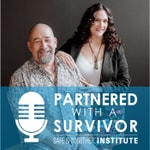
Partnered with a Survivor: David Mandel and Ruth Reymundo Mandel
Ruth Reymundo Mandel & David Mandel
Frequency: 1 episode/19d. Total Eps: 133

This podcast is a series of conversations.
What started as a series of intimate conversations between Ruth and David that ranged from personal to professional experiences around violence, relationships, abuse, and system and professional responses which harm, not help, has now become a global conversation about systems and culture change. In many episodes, David and Ruth are joined by a global leader in different areas like child safety, men and masculinity, and, of course, partnering with survivors. Each episode is a deep dive into complex topics like how systems fail domestic abuse survivors and their children, societal views of masculinity and violence, and how intersectionalities such as cultural beliefs, religious beliefs, and unique vulnerabilities impact how we respond to abuse and violence. These far-ranging discussions offer an insider look into how we navigate the world together as professionals, as parents, and as partners. During these podcasts, David and Ruth challenge the notions which keep all of us from moving forward collectively as systems, as cultures, and as families into safety, nurturance, and healing.
We hope you join us.
Have an idea for a podcast? Tell about it here: https://share.hsforms.com/1l329DGB1TH6AFndCFfB7aA3a1w1
Recent rankings
Latest chart positions across Apple Podcasts and Spotify rankings.
Apple Podcasts
🇬🇧 Great Britain - relationships
18/06/2026#69🇬🇧 Great Britain - relationships
17/06/2026#77🇬🇧 Great Britain - relationships
04/06/2026#99🇬🇧 Great Britain - relationships
03/06/2026#72🇬🇧 Great Britain - relationships
25/06/2025#92🇬🇧 Great Britain - relationships
24/06/2025#69🇬🇧 Great Britain - relationships
06/11/2024#74
Spotify
No recent rankings available
Shared links between episodes and podcasts
Links found in episode descriptions and other podcasts that share them.
See all- https://mybook.to/mK39V
247 shares
- https://safeandtogetherinstitute.com
242 shares
RSS feed quality and score
Technical evaluation of the podcast's RSS feed quality and structure.
See allScore global : 48%
Publication history
Monthly episode publishing history over the past years.
Season 5, Episode 10: Beyond Presence: Redefining Responsible Fatherhood in a Domestic Abuse-Informed World
Season 5 · Episode 10
mercredi 23 octobre 2024 • Duration 01:02:52
📝 In this thought-provoking episode, we explore the nuanced intersection of father engagement and domestic abuse-informed practice with Chris Brown, President of the National Fatherhood Initiative (NFI). Our conversation examines how we can thoughtfully promote father involvement while maintaining high standards for men as parents, disrupting gender double standards and keeping the safety and long term wellbeing of children at the center.
🎯 **Key Topics:**
• The historical context behind NFI's founding and evolution of fatherhood programs
• Examining father absence through a domestic abuse-informed lens
• Balancing father engagement with survivor safety and well-being
• The importance of holding perpetrators accountable as parents
• Building community capacity to support safe, stable father involvement
💭 **Notable Quotes:**
"We need to acknowledge fathers as key caregivers while having high expectations for their behavior as parents. Supporting father involvement can't come at the expense of adult and child survivor safety." - David Mandel
"When we talk about father absence, we have to look at the whole picture - including how perpetrator patterns of coercive control contribute to family separation." - Ruth Reymundo Mandel
✨ **Key Takeaways:**
• The need to integrate domestic abuse screening and safety protocols into fatherhood programs
• How gender bias impacts our expectations of fathers vs mothers
• The importance of early intervention to develop parenting skills in boys and young men
• Strategies for practitioners to engage fathers while partnering with survivors
📚 **Resources Mentioned:**
• Safe & Together's Working with Men as Parents training
• Multiple Pathways to Harm framework
• NFI's fatherhood program resources
• Domestic abuse-informed engagement strategies
🔗 **Connect with NFI:**
[https://www.fatherhood.org/](https://www.fatherhood.org/)
🔗 **Connect with Safe & Together Institute:**
[https://safeandtogetherinstitute.com/](https://safeandtogetherinstitute.com/)
[https://academy.safeandtogetherinstitute.com/pages/home](https://academy.safeandtogetherinstitute.com/pages/home)
Join us next time as we continue exploring domestic abuse-informed approaches to strengthening families. Remember - meaningful father engagement must center the safety and well-being of adult & child survivors.
Now available! Mapping the Perpetrator’s Pattern: A Practitioner’s Tool for Improving Assessment, Intervention, and Outcomes The web-based Perpetrator Pattern Mapping Tool is a virtual practice tool for improving assessment, intervention, and outcomes through a perpetrator pattern-based approach. The tool allows practitioners to apply the Model’s critical concepts and principles to their current case load in real
Check out David Mandel's new book "Stop Blaming Mothers and Ignoring Fathers: How to transform the way we keep children safe from domestic violence."
Visit the Safe & Together Institute website
Start taking Safe & Together Institute courses
Check out Safe & Together Institute upcoming events
Season 5, Episode 9: Partnering vs. Practicing: The Hidden Bias in Professional Crisis Work
Season 5 · Episode 9
mardi 22 octobre 2024 • Duration 50:58
🔄 Transforming Professional Standards
Join us from São Miguel, Azores, Ruth's paternal ancestral home, as we challenge conventional metrics of professionalism and explore how institutional practices, mandates, best practices often reinforce dangerous barriers between professionals and survivors of domestic abuse. We examine what true Partnership looks like when we step beyond traditional professional boundaries.
📊 Measuring What Matters:
• Evaluating professional success through survivor partnership outcomes
• Identifying KPIs, practices & policies that perpetuate professional bias & poor outcomes
• Tracking meaningful engagement and Impact versus procedural compliance, top down best practices not tied to end user experience
🚫 Confronting Professional Bias:
• Recognizing when "professionalism" becomes a barrier to authentic connection
• Understanding how institutional metrics can reinforce harmful power dynamics
• Examining personal and systemic prejudices in professional practice
⚖️ Institutional Accountability:
• Creating measurements for authentic survivor engagement
• Developing metrics that value survivor voice and choice
• Establishing KPIs that promote genuine Partnering
💡 Shifting Professional Culture:
• Moving from expert-driven top-down practice to Partnering and end user impact-based practice
• Redefining success in professional-survivor relationships
• Building institutional, training and policy support for transformative practice
🎯 Action Steps for Change:
• Implementing survivor-centered performance metrics
• Developing reflection tools for professional bias
• Creating accountability systems for authentic partnership
Join our global network as we work to transform how professionals engage with survivors and measure success in domestic abuse-informed practice.
🔗 Access our professional development resources at https://safeandtogetherinstitute.com/
📱 Connect with our community of practice at https://academy.safeandtogetherinstitute.com/pages/home?preview=true
#ProfessionalismRedefined #SystemsChange #Partnering #Professionalstandards #Bestpractices #SafeAndTogether
Now available! Mapping the Perpetrator’s Pattern: A Practitioner’s Tool for Improving Assessment, Intervention, and Outcomes The web-based Perpetrator Pattern Mapping Tool is a virtual practice tool for improving assessment, intervention, and outcomes through a perpetrator pattern-based approach. The tool allows practitioners to apply the Model’s critical concepts and principles to their current case load in real
Check out David Mandel's new book "Stop Blaming Mothers and Ignoring Fathers: How to transform the way we keep children safe from domestic violence."
Visit the Safe & Together Institute website
Start taking Safe & Together Institute courses
Check out Safe & Together Institute upcoming events
Season 4 Episode 12: Research That Puts Survivors at the Center
Season 4 · Episode 12
samedi 9 décembre 2023 • Duration 49:24
Historically research hasn’t always involved or benefited the population being studied. Dr. Elizabeth Dalgarno, the Director, and Founder of the SHERA Research Group is staunch advocate of research that is undertaken by and with the people it concerns rather than “on” them. In this far-ranging interview, Ruth, David, and Dr Dalgarno discuss:
- SHERA’s research into health effects on survivors of their family court involvement in Brazil and England (Spoiler Alert: The negative health effects of family court involvement for domestic abuse survivors is significant!)
- What practitioners can do differently within the current context of family law environment to improve outcomes for child and adult survivors
- How to use research to help improve the social care and family court response to domestic abuse
- The need for greater accountability and transparency as it relates to systems that impact survivors
- The need for appropriate credentialing, training, and experience for evaluators in the family court context
- The need for adequate data on the impacts of family law policies & practices on victim survivors.
- The global need for domestic violence-informed training for lawyers, children’s representatives, and judges around family violence, custody, and access
The SHERA Research Group, a collective of multidisciplinary professionals with over 100 years cumulative experience of working in health inequalities, law, finance, social care and domestic abuse research and support organizations.
Dr Elizabeth Dalgarno, the Director and Founder of SHERA Research Group and a Lecturer at University of Manchester England.Dr. Dalgarno has worked in public and private health and social care for over 20 years and specialises in challenging inequalities and systemic challenges in health and social care. Her work with women who have been through family court focusses on their health-related experiences and the harmful pseudoscience of so-called 'parental alienation' and has been featured in a documentary 'Mums on the Run' on the BBC iplayer, at the UN Human Rights Council and in multiple media outlets.
Related Podcasts
Season 3 Episode 2: Perpetrators’ Weaponization Of Mental Health And Addiction Against Survivors
Now available! Mapping the Perpetrator’s Pattern: A Practitioner’s Tool for Improving Assessment, Intervention, and Outcomes The web-based Perpetrator Pattern Mapping Tool is a virtual practice tool for improving assessment, intervention, and outcomes through a perpetrator pattern-based approach. The tool allows practitioners to apply the Model’s critical concepts and principles to their current case load in real
Check out David Mandel's new book "Stop Blaming Mothers and Ignoring Fathers: How to transform the way we keep children safe from domestic violence."
Visit the Safe & Together Institute website
Start taking Safe & Together Institute courses
Check out Safe & Together Institute upcoming events
Season 4 Episode 11: Human Resources Policy & Domestic Violence: Creating A Domestic Violence-Informed Organization
Season 4 · Episode 11
mardi 5 décembre 2023 • Duration 53:22
- Domestic violence represent 27% of workplace violent events
- 1 in 5 victims take time off from work due to abuse
- 20% of victims of domestic abuse had taken off month or more in prior year
- 56% arrived late at least 5x/month
- 53% missed at least 3 days of work/month
- 65% of companies do not have domestic violence policy (SHRM)
These statistics only represent a fraction of the picture of how domestic violence perpetrators impact their partner's employment, but also how they impact employers and the overall workplace environment. In addition to the impact on the survivor's employment (poor performance, lateness, absenteeism, lost of income, lost of career advancement), employers face worker attrition, performance related loses and even liability.
In this podcast, David and Ruth discuss a range of issues associated with domestic violence perpetrator behavior and the workplace. Their discussion covers:
- The importance of consistent domestic violence-informed culture (inside and out) especially if your organization's work touches on families
- Different ways perpetrators harm a partner's employment including abuse at work, interfering with their ability to work and hindering career advancement
- Different strategies organization can engage in to make their human resource policy more informed including using the Safe & Together Institute Ally Guide as resource
Check out these related episodes
Season 4 Episode 4: Being abused by a partner while advocating for others
Season 4 Episode 2: Coming “Out” As A Survivor in a Professional Setting: A Practitioner’s Journey
Season 3 Episode 3: Minisode On Worker Safety & Well-Being: When Workers Have Their Own Histories Of Abuse
Now available! Mapping the Perpetrator’s Pattern: A Practitioner’s Tool for Improving Assessment, Intervention, and Outcomes The web-based Perpetrator Pattern Mapping Tool is a virtual practice tool for improving assessment, intervention, and outcomes through a perpetrator pattern-based approach. The tool allows practitioners to apply the Model’s critical concepts and principles to their current case load in real
Check out David Mandel's new book "Stop Blaming Mothers and Ignoring Fathers: How to transform the way we keep children safe from domestic violence."
Visit the Safe & Together Institute website
Start taking Safe & Together Institute courses
Check out Safe & Together Institute upcoming events
Season 4 Episode 10: Ensuring the Voice of the Child is Heard, and Child’s Best Interests are Considered in Domestic Abuse Cases: How the Safe & Together Model Helps Promote the Rights of Children
Season 4 · Episode 10
samedi 18 novembre 2023 • Duration 52:28
- Are children domestic violence victims in their own right?
- Are they co-victims with the adult survivor?
- What is the relationship between the child and the adult survivors’ experiences
- How do we hold domestic violence perpetrators accountable in their role as parents?
- How do we consider the child’s relationship to the perpetrator in decisions related to them?
- How do we make sure both adult and child survivors receive the support they need and deserve?
- How do we consider the best interests of child survivors as we craft our policy and practice response to domestic violence?
- How do we ensure that child survivors’ voices are heard in matters that are relevant to them?
These are some of the critical questions being asked around the globe as governments, through their courts, legislatures and agencies, work to ensure the safety and well-being of children impacted by domestic violence perpetrators’ behaviors. They are not just academic questions as they are central to decisions made every day by governmental bodies like child protection and family court. For governments and non-governmental organizations (NGOs), a primary touchstone for these questions is the United Nations Convention on the Rights of the Child (UNCRC), the most widely accepted human rights document in history.
From its inception the Safe & Together Model has employed a robust child-centered framework to keep the focus on children’s experience, needs and wishes in the context of domestic violence cases. Compared to other domestic violence assessment and practice frameworks which often treat children as an afterthought to the safety and well-being of the adult survivor, the Safe & Together Model has always focused on addressing the children’s distinct lived experiences. It differs dramatically from other approaches which assume that you don’t need to focus separately on the experience of the child but only need to keep the children safe by keeping the adult survivor safe — in essence making invisible the unique and individual experience of the child.
In this episode, David and Ruth discuss how the Safe & Together Model supports the rights of children through the lens of its alignment with the UNCRC. With a special focus on the "voice of the child" (Article 12) and children's best interest decision-making (Article 3), David Ruth talk about
- How domestic violence perpetrators' actions attack children's human rights
- How a literal interpretation of the "voice of the child" is not enough especially when it comes to the most vulnerable children
- How many of perpetrator's behaviors of coercive control happen outside a child's view but still impacts them
- How the Model help
Now available! Mapping the Perpetrator’s Pattern: A Practitioner’s Tool for Improving Assessment, Intervention, and Outcomes The web-based Perpetrator Pattern Mapping Tool is a virtual practice tool for improving assessment, intervention, and outcomes through a perpetrator pattern-based approach. The tool allows practitioners to apply the Model’s critical concepts and principles to their current case load in real
Check out David Mandel's new book "Stop Blaming Mothers and Ignoring Fathers: How to transform the way we keep children safe from domestic violence."
Visit the Safe & Together Institute website
Start taking Safe & Together Institute courses
Check out Safe & Together Institute upcoming events
Season 4 Episode 9: The Last Drop Film: A revolutionary new tool for professionals working with young people around Coercive Control
Season 4 · Episode 9
mercredi 1 novembre 2023 • Duration 35:22
The problem of dating violence and coercive control among young people has been sorely overlooked, and educational resources are hard to find...until now! In order make coercive control visible to youth & to fill a gap in professional education materials & intervention strategies for young people, we have partnered with the revolutionary new abuse prevention film, The Last Drop . In this Podcast interview, Ruth & David interview Adam Joel, the Writer & Director of the Last Drop Film.
In this interview we speak about
- how this film came to be, how a diverse group of Lived Experience Experts informed the film & what he hopes the films impact will be.
- Why the way we tell the story of abuse is vital to preventing & intervening with abuse.
- How messaging & advocacy about domestic violence needs to include a focus on coercive control, not just physical violence
- How youth populations have unique patterns of coercive control, often invisible to adults, like digital coercion related to the social media world that is so important young people
- Safe & Together Institute's role in as Executive Producer on the film including producing a Professional Ally Guide as a companion to The Last Drop to assist professionals working with youth populations with strategies & tools when working with youth experiencing or perpetrating coercive control.
Watch the Trailer
Purchase the film for one year unlimited use
https://www.instagram.com/lastdropfilm/
Now available! Mapping the Perpetrator’s Pattern: A Practitioner’s Tool for Improving Assessment, Intervention, and Outcomes The web-based Perpetrator Pattern Mapping Tool is a virtual practice tool for improving assessment, intervention, and outcomes through a perpetrator pattern-based approach. The tool allows practitioners to apply the Model’s critical concepts and principles to their current case load in real
Check out David Mandel's new book "Stop Blaming Mothers and Ignoring Fathers: How to transform the way we keep children safe from domestic violence."
Visit the Safe & Together Institute website
Start taking Safe & Together Institute courses
Check out Safe & Together Institute upcoming events
Season 4 Episode 8: “Heart Healing”: An interview with Mibbinbah’s Lisa and Jack Bulman
Season 4 · Episode 8
mercredi 18 octobre 2023 • Duration 59:22
In this episode, Ruth & David speak with Lisa & Jack Bulman of Mibbinbah Spirit Healing about their work in community to facilitate healing from intergenerational trauma, support healthy relationship connections and strengthen the wellbeing of Aboriginal & Torres Strait Islander men and families. Mibbinbah uses a “whole of communities” approach which brings men & women together to heal in community. (From the Mibbinbah website: “The two words Mibbin meaning Men or Eagle and Bah meaning place come from the Eastern Yugambeh Language of South Eastern Queensland. Therefore placing the two words together gives us Eagle or Men’s place.”)
Jack & Lisa talk about the heart healing work they do within Aboriginal & Torres Strait Islander communities to strengthen & support their families after generations of colonization which created family separation, violence & abuse.
In the interview the discussion touches on:
· Jack speaks about the origins of Mibbinbah Health in his need in University for a Safe Space for Aboriginal & Torres Strait Islander men to connect, support & heal together.
· Jack describes the negative police response to Aboriginal men coming together to heal in nature & how that helped him further develop his work with community
· How Lisa and Jack see addressing violence as separate from men's business & women's business
· How Partnering is critical when it comes to work with community
· The importance of deep listening to healing and how this differs from prescriptive approaches to addressing trauma and violence.
· How healing and combating family violence is important to the work of decolonization
· The importance of self-responsibility for adopting behaviors which heal harm to self & community.
· The pitfalls and limitations of how men’s behavior change is currently understood as Individual and reductionist rather than as familial & communal.
The interview also includes Jack and Lisa speaking about concrete behaviors professionals can adopt to culturally safely & appropriately support Aboriginal & Torres Strait Islander people in healing from family violence & the intergenerational impacts of ongoing colonization.
To listen to Jack and Lisa Bulman on the Mibbinbah podcast
You may also want to listen to….
Season 2 Episode 17: Intervening With Domestic Violence Perpetrators: “We Can’t Leave A
Now available! Mapping the Perpetrator’s Pattern: A Practitioner’s Tool for Improving Assessment, Intervention, and Outcomes The web-based Perpetrator Pattern Mapping Tool is a virtual practice tool for improving assessment, intervention, and outcomes through a perpetrator pattern-based approach. The tool allows practitioners to apply the Model’s critical concepts and principles to their current case load in real
Check out David Mandel's new book "Stop Blaming Mothers and Ignoring Fathers: How to transform the way we keep children safe from domestic violence."
Visit the Safe & Together Institute website
Start taking Safe & Together Institute courses
Check out Safe & Together Institute upcoming events
Season 4 Episode 7: Survivors Are Better Parents Than Most People Think (even survivors themselves)
Season 4 · Episode 7
jeudi 6 juillet 2023 • Duration 53:59
In this episode, David & Ruth talk about why the Safe & Together Institute focuses on survivor protective capacities and some of the research behind this approach. While assessments of harm and risk, and trauma frameworks are important, these approaches highlight danger and pathologies. But these approaches, while necessary, are not sufficient enough for true collaboration and partnering with survivors. In a world where there are gender double standards related to parenting, e.g. higher standards for women as parents than for men, it is essential that we don’t just focus on harms but also on survivors’ protective efforts and acts of resistance and parenting skills even in environments where the perpetrator is controlling so much. Assessment, and documentation of survivors’ protective capacities can make the difference between whether those children stay safely with that survivor, removed by child protection or placed with an abusive parent.
David and Ruth discuss some of the research behind this strength-based approach to survivors as parents like:
- The growing body of evidence to suggest many domestic violence survivors are good parents who actively take steps to promote their child’s safety and well-being.
- Multiple studies find that mothers who are domestic violence survivors are functioning similarly or even better as parents than their counterparts who are not being abused.
- Greater stress and negative effects of violence on the adult survivor does not always equal compromised parenting.
- A majority of domestic violence survivors, even those experiencing severe violence, do not experience depression or anxiety.
- Most domestic violence survivors do not use drugs nor abuse alcohol to the point of drunkenness.\
- Despite barriers created by the perpetrator, many domestic violence survivors engage in a range of actions to promote the well-being and safety of their children including medical care, employment, and housing.
- Maternal warmth or “mothering resilience” may play a critical protective role for children exposed to perpetrator behavior.
David & Ruth will also talk about how assessing, validating and documenting survivors’ strengths can play an important role in Partnering with Survivors. When professionals assess, validate and document survivors’ protective capacities:
- The validation can combat the perpetrator's mental and psychological control– “you are not a bad mom but a good mom operating in a difficult situation”
- It can help systems and practitioners partner with survivors, e.g. identify st
Now available! Mapping the Perpetrator’s Pattern: A Practitioner’s Tool for Improving Assessment, Intervention, and Outcomes The web-based Perpetrator Pattern Mapping Tool is a virtual practice tool for improving assessment, intervention, and outcomes through a perpetrator pattern-based approach. The tool allows practitioners to apply the Model’s critical concepts and principles to their current case load in real
Check out David Mandel's new book "Stop Blaming Mothers and Ignoring Fathers: How to transform the way we keep children safe from domestic violence."
Visit the Safe & Together Institute website
Start taking Safe & Together Institute courses
Check out Safe & Together Institute upcoming events
Season 4 Episode 6: “The Professional Part of Me is Not Separated from the Personal:” An interview with Nneka MacGregor
Season 4 · Episode 6
lundi 26 juin 2023 • Duration 01:16:21
Survivors, who are professionals, can live in fear that if they share their experience in the workplace, they will be dismissed and disregarded. In this episode, Ruth & David speak with Nneka Mcgregor, founder & Executive Director of WomenattheentrE, about the need to transform our systems so that professionals who are survivors, can safely share their experience to strengthen the response of systems to gender-based violence.
Nneka shares her journey as a survivor and a professional including how attempts by those in the domestic violence field to silence her made her even more committed to speaking out. Nneka outlines how survivor knowledge of systems and services failures is vital to making those systems more effective and responsive. Nneka, Ruth & David discuss how survivors are treated as “other,” reflecting cultural attitudes which see survivors as broken and biased. They dive down into the negative impact on professionals and survivors when organizational cultures operate from a place of demeaning, diminishing, controlling, silencing & dictating to survivors.
Nneka shares concrete strategies from her organization, WomenatthecentrE, about creating a professional, survivor nurturing, successful & supportive advocacy organization. Together, David, Ruth and Nneka explore how professionals and organizations can partner with survivors, and the importance of organizational performance markers for supporting survivors inside an agency.
Learn more about WomenatthecentrE
Take our ecourse Partnering with Survivors
You may also want to listen to:
Season 4 Episode 2: Coming “Out” As A Survivor In A Professional Setting: A Practitioner’s Journey
Season 3 Episode 7: Understanding And Validating Survivors’ Acts Of Resistance
Now available! Mapping the Perpetrator’s Pattern: A Practitioner’s Tool for Improving Assessment, Intervention, and Outcomes The web-based Perpetrator Pattern Mapping Tool is a virtual practice tool for improving assessment, intervention, and outcomes through a perpetrator pattern-based approach. The tool allows practitioners to apply the Model’s critical concepts and principles to their current case load in real
Check out David Mandel's new book "Stop Blaming Mothers and Ignoring Fathers: How to transform the way we keep children safe from domestic violence."
Visit the Safe & Together Institute website
Start taking Safe & Together Institute courses
Check out Safe & Together Institute upcoming events
Season 4 Episode 5: An interview with Caring Dads co-creator Dr. Katreena Scott
Season 4 · Episode 5
mardi 20 juin 2023 • Duration 01:07:07
There are few intervention programs for fathers who use violence as part of their parenting. In this episode, David & Ruth take a deep dive into the work that needs to happen with violent fathers with Dr. Katreena Scott, the co-creator of the Caring Dads program. In this interview, David Ruth and Katreena speak about
- The importance of intervening with violent fathers
- What makes Caring Dads different than a traditional men’s behavior change programming
- How Caring Dads is different than traditional parenting programs
- How Caring Dads centers the safety and well-being of adult and child survivors
- The synergies between the Safe & Together Model and the Caring Dads program
- The research on the effectiveness of men’s behavior change programs
- How low expectations of men impact the work with families
- How important it is for fathers’ to act respectfully towards their children’s mothers
Learn more about Caring Dads
Other relevant episodes of Partnered With A Survivor
Season 3 Episode 9: Coercive Control in Children’s and Mother’s Lives: An interview with author and academic Dr. Emma Katz
Season 3 Episode 1: “This is a collective male problem:” An interview with international journalist Grant Wyeth
Season 2 Episode 19: Using the concepts of collaborative co-parenting to hold perpetrators more accountable in family court
Season 2 Episode 17: Intervening with Domestic Violence Perpetrators: “We can’t leave anything on the table”
Now available! Mapping the Perpetrator’s Pattern: A Practitioner’s Tool for Improving Assessment, Intervention, and Outcomes The web-based Perpetrator Pattern Mapping Tool is a virtual practice tool for improving assessment, intervention, and outcomes through a perpetrator pattern-based approach. The tool allows practitioners to apply the Model’s critical concepts and principles to their current case load in real
Check out David Mandel's new book "Stop Blaming Mothers and Ignoring Fathers: How to transform the way we keep children safe from domestic violence."
Visit the Safe & Together Institute website
Start taking Safe & Together Institute courses
Check out Safe & Together Institute upcoming events
Related Shows Based on Content Similarities