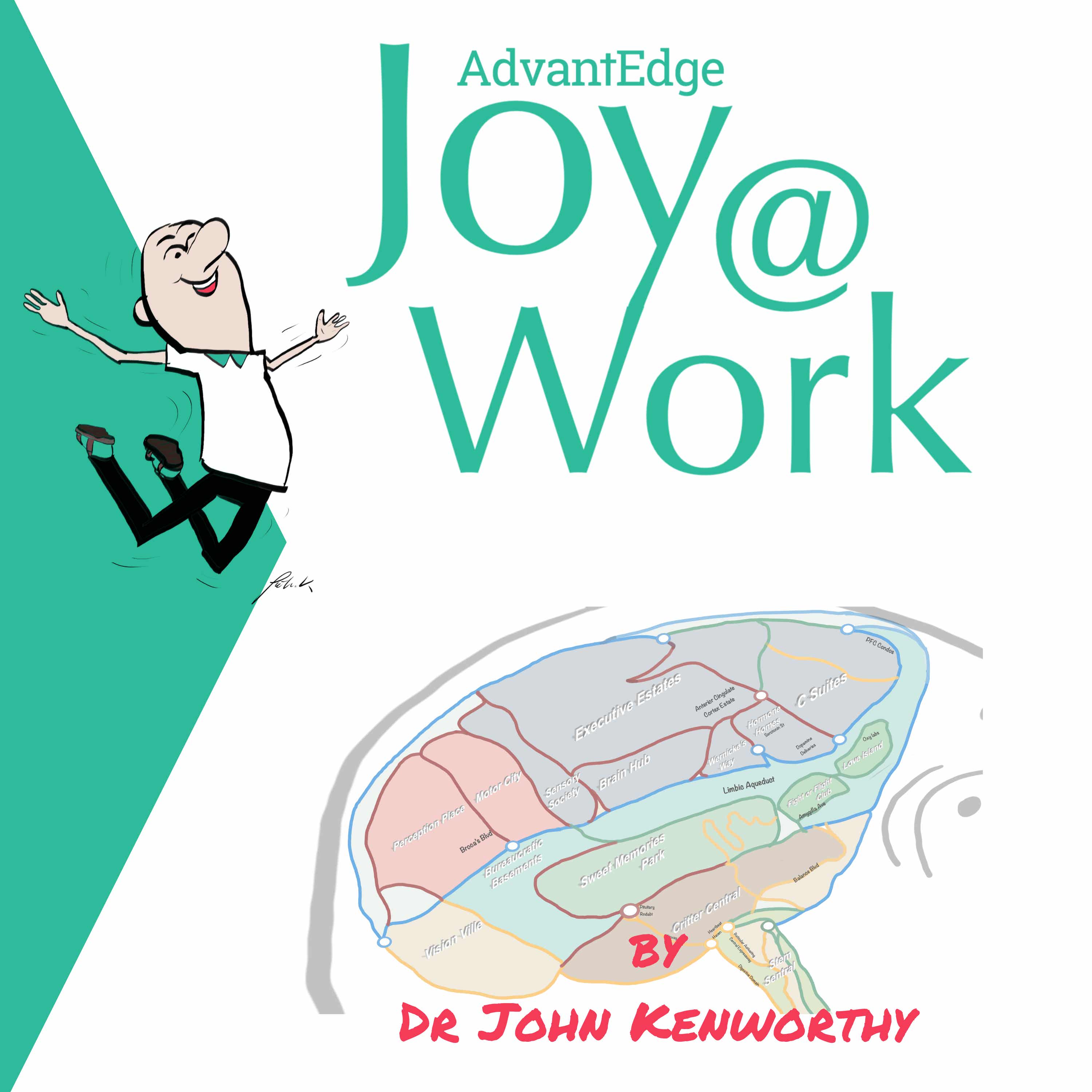
Joy@Work Podcast – Details, episodes & analysis
Podcast details
Technical and general information from the podcast's RSS feed.

joyatwork.substack.com
Recent rankings
Latest chart positions across Apple Podcasts and Spotify rankings.
Apple Podcasts
🇨🇦 Canada - management
07/11/2025#91
Spotify
No recent rankings available
Shared links between episodes and podcasts
Links found in episode descriptions and other podcasts that share them.
See all- http://dictionary.com
11 shares

- https://theenergyproject.com/
8 shares


RSS feed quality and score
Technical evaluation of the podcast's RSS feed quality and structure.
See allScore global : 53%
Publication history
Monthly episode publishing history over the past years.
The 4Cs of Joyful Living
jeudi 30 novembre 2023 • Duration 11:05
At the beginning of this series of GuidePosts we noted that the number of people reporting stress, anxiety and depression is massive! The WHO note that mental health issues have increased 13% in the last decade (in 2017) and substance disorders up some 20% and with suicide as the second leading cause of death among 15-29 year olds - you realise that this is a huge problem.
1 Billion people across the world suffer a mental health problem in 2022!
That’s 1 person in 8!!!
WHO World Mental Health Report 2022
The increase of substance abuse is evidence that people are trying to cope with their stress, anxiety and depression with the “pleasure” of the dopamine high. This is creating a dopamine imbalance which can lead to addiction and is instead making us chronically unhappy according to Dr Robert Lustig in his excellent book, Hacking of the American Mind.
In all our striving in the pursuit of happiness we seem to be paying the price in alcohol and drug abuse, gambling, excess unhealthy food (ice cream, chocolate), smoking and social media “likes”. Meanwhile stress and anxiety are on the rise and incidents of rage make the news daily.
And that stress and cortisol increase reward seeking behaviour and decrease reasoning ability!
The world isn’t in pursuit of happiness, it’s seeking pleasure to offset the stresses of living… because it’s quicker than actually pursuing happiness and joy!
How do you increase happiness and joy in your whole life?
I’m so glad that you asked.
As I mentioned - taking a dopamine pleasure high route is quicker - especially (ab)using substances. BUT, it’s short lived and within minutes or hours you’ll be after another high due to the increasing dopamine imbalance and addiction.
Instead we can deal with chronic unhappiness and gain long term benefits through some simple, deliberate changes to how we go about our every day life. Dr Lustig proposes a solution he calls the 4C’s of Happiness: Connect, Contribute, Cope and Cook. (Check out “Hacking the American Mind”)
Connect.
Connect with people you like and enjoy. Join your local church, a social group or simply have a conversation. Preferably in person. Make sure that you practice empathy with them - this engages your mirror neurons to feel what they feel, or to “walk in their shoes”. The result is a serotonin boost and a feeling of personal contentment and fulfils your own personal need for belonging and perhaps mattering.
Time with pets can also be beneficial and achieve much the same result.
PS. Emailing, Facebooking, Insta’ing, Threading or X’ing is NOT connecting.
Contribute
Give something of yourself: your time, your resources, your skills, your energy and your attention to something larger than yourself. Volunteer at a shelter, help a charity, make or repair something for someone else who needs your help.
Giving to others is self-transcendent (spoiler alert! This is a large part of your purpose in this life!) and fulfils your personal need to matter.
Cope
Three activities that will improve your serotonin receptors in your brain (and hence make you feel happier and better): Sleep, Mindfulness and Exercise.
Sleep deprivation increases stress and cortisol and causes depression!. Sleep is so essential for your brain and body and can fill several volumes alone for the essential benefits and much advice. Read Why We Sleep, by Mathew Walker or Claudia Aguirre’s 7 Healthy Tips for a Better Night’s Sleep.
PS. Screens KILL sleep!!! And trying to multitask (which you cannot!!) is costing you sleep because it increases stress and cortisol.
Mindfulness practice helps you alter your brain waves and calms your mind deliberately. We’ll be using a mindful process in bridging from stress to joy.
Exercise regularly. Whatever takes your fancy. I personally recommend walking - even better with some company or a dog. Decent brisk walking is nothing but beneficial. Running is tougher on your body, cycling means dodging pedestrians and cars. And good stretching is amazingly beneficial - pilates or yoga for low impact.
Combine exercise with mindfulness is better than using SSRI’s for treating depression!
PS. TV/Netflix surfing increases dopamine, kills sleep, is mindless and usually accompanied with unnecessary trips to the fridge for another beer, candy bar or ice cream.
Cook for yourself! If you don’t know how to cook, you are being held hostage by the food industry (most who are in it to make profit and care less about your health and well-being and like you being addicted to sugar highs etc!)
You need to boost two items in your diet and knock one out: Up Tryptophane, More Omega 3 and Less Fructose.
Tryptophan is an essential amino acid found sometimes in whole milk, nuts, seeds, eggs, poultry and fish (esp Salmon). It is the precursor to serotonin. You need more of it!
Omega 3 is another fatty acid that is an anti-inflammatory and improves your mood. Find it in fish (esp Salmon and Mackeral), algae, nuts, plant oils.
Fructose is added sugar. Reduce and better still, cut it. It depletes serotonin and ramps up your dopamine. It is the anti-happiness food of choice!
PS Fast food is your enemy. Fish is your friend (and no I don’t mean filet o’ fish burgers!) Learn to cook and choose wisely - your body and brain will thank you.
That’s it! Connect with others, Contribute by giving, Cope by sleeping well and mindful exercise and Cook (fish, poultry, eggs, nuts and seeds) for yourself. You will be happy!
What about Joy?
Where happiness is an emotion (serotonin) and circumstantial, Joy is a choice in spite of circumstances.
It is said that Joy is of the heart, happiness is on the face.
We’re going to tackle How to Increase Joy@Work next.
This is a public episode. If you would like to discuss this with other subscribers or get access to bonus episodes, visit joyatwork.substack.com
How to Raise Performance and have Joy@Work
samedi 21 octobre 2023 • Duration 08:25
From what we’ve learned so far, we know that to raise performance anywhere, we need to be able to choose to be At Cause.
We’ve also learned about the affects of five important neurotransmitters: Dopamine (pleasure), Serotonin (happiness), Cortisol (stress), Adrenaline (fear), Anandamide (Peace and Joy).
We need to know about four additional Neurotransmitters in your brain’s “cocktail bar”: Oxytocin (love, trust), Vasopressin (attachment), Endorphins (resilience) and Acetylcholine (focus).
Stay with me, because I am coming back to the impact on your leadership and performance improvement @work. Meantime, let’s talk about love:
Love, often confused with joy or happiness (and sometimes pleasure) is a combination of two things: Attachment and Attraction:
Attachment
Attachment is tied to the neurotransmitters Oxytocin and Vasopressin. Oxytocin is known as the “love and trust” chemical. It’s responsible for increasing the bonding between a mother and her new born, and for that trusting relationship bond with a colleague or team member.
Vasopressin’s effects are less well understood but it appears to be gender specific. For men, Vasopressin is believed to make men more suspicious, even aggressive, towards novel males. Thus a new male joining the team may be viewed with more suspicion by the other males in the team.
In contrast, for women, it appears that Vasopressin makes them friendlier towards novel women.
Attraction
When you enjoy doing something, you are attracted to it, which makes you feel “happy” with a cascade of Dopamine, Norepinephrine and Serotonin.
You can see why feeling attracted to someone or something can easily get confused with fear mixed with pleasure mixed with happiness! Explains a lot that I wish I’d known when puberty struck!
It’s also why attraction can also cause a lack of appetite (your digestive tract got shut down in the fear response!) and a loss of sleep (which is affected by Serotonin).
Performance Enhancement
As you do things well and get into your “zone” or in your “flow”, your performance improves thanks to the additional cascade of Anandamides and Endorphins.
Endorphins are your brain’s natural pain killers. They are released to help cope when your body feels pain or stress. You can get a boost of these through exercise or any demanding activity.
Performance improvement @work
Ok, we’ve got the necessary foundational understanding.
When you do something that matters to you, you are attachedto it (Oxytocin and Vasopressin).
When you do something that you enjoy, you are attracted to it and just a little fearful (Dopamine, Norepinephrine and Serotonin).
Then you get into your zone or flow or your high performancestate (Anandamides and Endorphins).
You stay focused on task because the dopamine high mixed with a little fear to make it an exciting challenge triggers Acetylcholine - and signals your Reticular Activating System (RAS) to focus attention on the task at hand.
These eight neurochemicals significantly enhance performance and is addictive (scientists prefer to use the word “autotelic”). Hence we experience “flow” in our performance and we will go out of our way to re-experience it. Basically, we increase our own intrinsic motivation and inspiration to continually enhance our own performance!
AND there’s more! These chemicals also augment the creative process and pattern recognition. Oxytocin and Vasopressin disregulate your Neo-cortex, widening your self perspective, liberating your mind to new thoughts and feelings. Making us more creative and faster in how we do things!
Command and Control leaders should be aware that, in contrast, fear narrows perspective and inhibits performance and increases distress further degrading performance!
Which would you choose?
This is a public episode. If you would like to discuss this with other subscribers or get access to bonus episodes, visit joyatwork.substack.com
Overcoming Performance Anxiety
mercredi 1 mars 2023 • Duration 14:17
Public speaking is one of the top fears of many people – in fact, it’s been rated as the number one fear for some. But why is that? Is it really the act of standing in front of a group of people and talking that’s the problem?
Thanks for reading Joy@Work! Subscribe for free to receive new posts and support my work.
It turns out that the real fear behind public speaking isn’t the speaking itself, but rather the fear of public humiliation. We’re all concerned about what other people think of us and being put in the spotlight can be a scary thing. We’re concerned about whether we’ll make a fool of ourselves or look out of place. We worry that people will laugh at us, ridicule us, or even outright make fun of us. This fear of looking “stupid” or “silly” is what really stands in the way of many people.
And, because we fear this, we can quickly become overwhelmed with performance anxiety. Now, any time we need to perform in front of anyone else, anxiety sets in.
Performance Anxiety is the fear or stress you experience before, during and after a performing any specific task.
Public speaking is one example, but it could be as simple as brushing your teeth or getting out of your bed or a chair. Or it could be your boss asking you a question for which you haven’t got the answer - it’s not necessarily that you don’t know the answer, but in the pressure of the moment…. Poof! It’s gone. Or maybe the factual answer is not the correct answer?
Any time that you feel pressured to perform or feel the need to meet an expectation, performance anxiety can take centre stage - your mouth dry, head aching, nauseated, shortness of breath, uncontrollable shaking, racing heart, loss of concentration and feeling overwhelmed… heck, you only need to add incredible intense chest pain and you were off to A&E and the cardiac ward!
Performance anxiety is not fun! It’s an equal opportunities affliction caring nothing for age, gender, experience, fitness or race. And fortunately, it’s all in the mind.
If only there was a way to interrupt our anxious thinking and overcome performance anxiety…
If you ever suffer from a little or a lot of performance anxiety, here’s four simple mind hacks I’ve learned from people who always appeared to be calm, cool and super-confident. And anyone can do all of them as easily as you can breathe, laugh, pose for a picture or dance. I didn’t say that you could do them all well, but easy for sure 😃.
Before we get into this, a little medical disclaimer - the information presented in this article is not medical advice and should not be used to replace the advice of a qualified medical professional. Please consult your doctor to discuss any medical issues or treatments you may be considering.
First up is the easiest of all and something you’ve been doing since birth: Breathing. Only, you probably don’t breathe well at all (few people do!)
Breathe!
Instead, deliberately breathe in through your nose for 4, hold for 4 and breathe out sharply through your mouth for 4. And do it 4 times!
This reduces your stress hormones, especially Cortisol, and triggers your vagus nerve and your Parasympathetic Nervous System and helps calm you down.
Easy peasy, right? Ready for something a little more tricky?
Have a Laugh!
No really. Laugh out loud. Start making the sound of laughter and just keep at it.
Of course you can watch the crazy, funny videos on YouTube or TikTok or wherever, or listen to a joke. Whatever tickles your fancy. Or just laugh like the laughing policeman song:
The Laughing Policeman - Charles Jolly / Penrose
It takes a while but I know that you feel way better already. That’s the dopamine rush that’s making you feel good.
And any time you witness someone performing in any capacity who kicks off with a joke… they usually think it’s to warm up the audience, which it can do (but it can backfire badly!), it’s really to warm themselves up.
Ready for a little challenge?
Pose!
This is an astounding trick to play on your own brain. Lets boost testosterone and serotonin in the brain - and a drop of dopamine for good measure :-)
You know that feeling you get at the end of a race where you win? Or when your favourite team scored the winning goal? Or maybe when you scored highest in a competition, or your name was on the coveted list? That moment when you were a winner, a victor, a conquerer, a champion?
Yes? Fantastic - that’s the feeling we’re after. What did you do with your body at that moment? Chances are it was the V for victory pose, a fist pump, a salute, hands on hips or a high five. Whichever you like the most, that’s your pose. Strike it!
No? Oh really? That’s sad. Not even once? You ever felt proud of any achievement? What did you do? A nod to yourself, a secret fist pump, a little “uha” under your breath?
You can strike a pose anyway right? Hands on hips like superwoman, V for victory like a winning runner, fist pump for a medal winner or an ace in tennis.
Strike your pose and let out a roar.
The roar’s just for added bonus 🦁
Feel the pose, close your eyes and hear the crowd cheer. They’re cheering for you. In less than two minutes, your brain is switching channels from SNS to PNS, increasing testosterone, a smidge of serotonin and a dose of dopamine. Feel it as your performance anxiety melts away and is steadily replaced by pride.
Too embarrassing for you? Head to the toilet facilities, and do it in private.
Not so tough after all, huh? A bit odd, sure, but your body is telling your brain that you are proud, a winner, victorious - and your brain, ever wanting to get the world to make sense, responds.
And now for the pinnacle of positive feelings…
Dance!
Dance is complex for your brain. There’s usually music, a beat, which involves your hearing and sense of kinaesthetic touch. There’s some sort of coordinated movement which involves your motor cortex and your body muscles which releases endorphins which make you feel good. There may be memory involved for a specific dance routine - a dose of dopamine. It can be social (some oxytocin) and it’s always fun and it makes you happy. All that and it’s good to stave off dementia, alzheimers, dizziness, anxiety and depression.
Do yourself a favour. Have a little celebration jig. Flail your arms, move your feet, swing your body.
It doesn’t need to be pretty, it doesn’t need to be coordinated, heck it doesn’t need to be in time to any music. Just do the movement and your brain will respond with the appropriate signals, chemicals and feelings because you’re celebrating with a jig - ergo, you must be in a good mood, having fun and are happy.
I saw a Tony Robbins video of his pre-stage routine and adopted something like it for myself just before a vital meeting with the board of a major organisation I’d been trying to win over against much more established and branded providers.
Just before the meeting I was anxious in the waiting area outside the conference room and I was alone. Every “what if” doubt and worry came to the front of my thoughts. There was a large mirror on the wall, but that as OK. I started my jig. I got into it. I did a few vocal exercises, a couple of fist bumps, and slowed down to breathe. I shook it all off and my intense anxiety subsided.
I was invited into the conference room all smiles and pumped and confident and then I saw the huge glass wall looking directly out into the waiting area. The very spot I had been doing my little jig… And I looked at the people and there were a few smirks and looks of disdain… Nothing to lose - I flushed beetroot and shared my little trick with them. I even got them on their feet and doing a jig.
Our fear and anxiety isn’t that we can’t perform, it’s that we will be rejected and feel humiliated!
So accept yourself. Breathe because it’s good for you. Laugh because it makes you feel good. Pose because it makes you feel victorious and dance because it’s fun.
Thanks for reading Joy@Work! Subscribe for free to receive new posts and support my work.
I’m Dr John kenworthy and it’s been my pleasure to share this Joy@Work AdvantEdge Guide with you today. Thank you for joining me and supporting my work.
Remember if you ever think that you might benefit from an outside voice with a fresh perspective to challenge and empower you, your team or your organisation to a new level of performance and engagement, then let’s talk now. You can follow the link at my website joyatwork.coach
And if you know someone who you know would benefit from this Joy@Work Guide, please share this with them either by sharing the podcast link or, if you’re listening on the Joy@Work website, it’s even easier to just click the share button.
Be blessed and have an awesome day.
This is a public episode. If you would like to discuss this with other subscribers or get access to bonus episodes, visit joyatwork.substack.com
LA 034: How to Improve Team Performance
samedi 9 juillet 2016 • Duration 08:00
This is a story of two leaders. We worked with the organisation on team leadership because one of their sales teams was "highly successful" and another was "doing poorly, with a very low morale". The organisation wanted us to "find out what's working in [the high-performing team], fix the [low-performing team] and run a training programme for all the other sales teams to be as good as [the high-performing team]." Ann, the leader of the high-performing team had joined the company 5 years previously as a sales representative. She was good at her job and always exceeded her targets. She was promoted to team leader after 3 years and had infused her own enthusiasm, determination and will to her team. Her team members were happy, hard-working and also successful, most exceeding targets. Joe, the leader of the low-performing team had similarly joined the company 5 years previously, though as sales team leader. Joe's team were, by contrast, unhappy and unsuccessful in achieving targets. This had been the case for all 5 years. The team members had changed frequently over, this time, only one member remained from the original team that Joe took over. Ann was enthusiastic when we spoke with her about her success. Saying "It's great to have such a wonderful team. I enjoy working with them and we're doing well." She went on, "My boss is great, really believes in me and lets me run things the way I want. I like that, and I try to treat everyone in the team the same way. When they are down about something, maybe their kid is in trouble or sick, I let them take time out if they need to, so long as the work gets done sometime, it doesn't 'have to be 9 to 5. I trust them to make up the time, and they do, and more!" Joe was belligerent when we spoke, "I have tried everything possible to make these people work harder and make target. They're always moaning that their kid's sick or they have to visit the doctor. Always skiving off, taking toilet breaks, going for coffee. If I turn my back for one instant, they're gone." When prompted, Joe continues, "My boss is pretty useless. Only ever comes round at the end of the month to [tell me off] for not making target. To be honest, I'm fed up, I don't 'think I'll ever get this team to perform and the stress is making me sick." There are, of course, several things here we could expand on, but what was clearly apparent was that Ann's boss believed in her and she, in turn, believed in her team and their abilities, that she could trust them and that they would deliver. Joe's Ann's boss believed in her and she, in turn, believed in her team and their abilities, that she could trust them and that they would deliver. Joe's boss, didn't appear to be that concerned for Joe and didn't help. Joe, in turn, trusted staff to 'skive' and believed that she would never get the team to perform. When someone else, particularly someone in authority over you (a leader, parent, boss, teacher) believes in you and your abilities it helps you to believe in yourself and your team. What you believe on the inside, becomes manifest on the outside. This is usually the attitude that you portray and the way you communicate. It saddens me that quite a number of clients I meet who have had someone steal their self-esteem at some point in their life. Be it a parent, a lousy teacher or a bullying superior. The good news for many is that it has helped them to turn victimhood into victory. Making sure that they never do that to someone else. But not everyone has someone who will help build them up. And, unsurprisingly, those who, like Joe, tend to believe the worst of everyone, were themselves robbed of their self-esteem earlier in their life and career. The great news is that you can turn it around, by appreciating your own value, your own core strengths and choose to edify yourself. The quickest and most effective way to build yourself up is remarkably simple. Believe in someone else today If, by some chance you
This is a public episode. If you would like to discuss this with other subscribers or get access to bonus episodes, visit joyatwork.substack.com
LA 033: How to Overcome the Great Delusions of Your Success
samedi 2 juillet 2016 • Duration 14:41
Do you believe that to succeed you just have to be lucky, Or perhaps you believe it's all about your own hard work? No, then perhaps you think it's down to having the right connections. After all, the saying goes, it’s now what you know, it’s who you know.
"Luck" hints to us that all good things are the result of chance. Some people are lucky, some aren't. Or so the conventional thinking goes.
But the truth is, fortune isn't found in a four leaf clover or at the end of a rainbow. Good luck follows hard work. It may seem that the people who get “all the breaks” do so effortlessly, but when you look deeper, you will find effort, persistence, and determination.
In other words, “lucky” people reap opportunities because they've worked hard to get where they are, not because circumstances have magically lined up to give them a smooth ride.
So often, “lucky breaks” in life have actually come about because you have worked diligently, and often unglamorously, to achieve your goals. In other words, good luck doesn't come to you… you must go to it. And that’s why the key to being lucky isn't chance. It’s good, old-fashioned, roll-up-your-sleeves-and-make-it-happen work.
M. Scott Peck in ‘the Road Less Traveled’ starts: “Life is difficult”. What is most surprising, is that, for many people, this is a revelation! Go to any business networking event, or meet a potential client – especially during the current economic situation and they will be moaning incessantly about the enormity of their problems, burdens or difficulties as if life should be easy.
Perhaps you are struggling on your journey to achieving your ‘success’ and you may be suffering the consequences of one or more of the nine common delusions about achieving success. Depending on how much you believe your ‘success’ is down to what you do (cause) and how much is down to external forces over which you have little or no control (effect) determines where you might be:
It’s impossible!
Particularly for those just embarking on their journey, ‘success’ is a place far away. We may have wonderful dreams about it and a delightfully crafted goal. But as the days, weeks and months go by and ‘success’ doesn't appear to be any closer, many people throw in the towel. More budding entrepreneurs than I can recall have given up – life without a salary is just too tough.
When we've given up because ‘success’ is impossible, we’ll then criticize it. Anyone who achieves success whom we deem less worthy is the subject of our scorn and contempt – “they don’t deserve it!”.
It’s a mystery to me…
If we survive the ‘impossible’ stage, seeing others achieving yet success continues to elude us we search for the secret.
We need to find the magic formula, the silver bullet or the golden key.
Returning to that bookshop to find ‘the’ book that will change our lives. So many promise that you can achieve success in business, life, management, health, diet and they are snapped up.
Business people are constantly looking for quick fixes to problems:
To sell more, we need the sales messages and techniques that instantly convert a cold call into a lifelong customer.
To produce more, we need the unique leadership skills that magically and massively increase performance.
To maintain shareholder value we need to increase profitability by increasing sales and reducing costs simultaneously. Either that or we cook the books to make it look as though we did.
Lady luck?
OK, so there’s no absolute secret to success. Sure we can learn from others, but they didn't really do it instantly, it took time. But essentially, they were in the right place at the right time. No more than luck.So if success is down to luck – all I can do is hope for it. One day my ship will come in. Next year, when the current economic crisis is over. The dice will fall my way.
May as well buy lottery tickets.If you've waited for ‘lady luck’ long enough and still on the journey, by now you may believe that luck only comes to those who create it for themsel
This is a public episode. If you would like to discuss this with other subscribers or get access to bonus episodes, visit joyatwork.substack.com
LA 032: How to Handle Tall Poppy Syndrome and Madras Crabs in the workplace
samedi 25 juin 2016 • Duration 13:01
“True heroism is remarkably sober, very undramatic. It is not the urge to surpass all others at whatever the cost, but the urge to serve others whatever the cost.”Arthur Ashe
I've been working with a client this past week who's something of a maverick. A rebel. A person who has a different opinion and ideas about the way forward. It's a joy for me to work with someone so intent on making a real difference and not content to follow the way things have been done in that particular organisation for years. Because the organisation is in a bit of a rut. They're not growing, they're stagnating. And before long, they could easily simply die out.
This leader has passion and believes that, with a few changes, things could be different. That there is life in the old dog yet.
But no-one wants to change. Whispering and worry abound in the company, everyone knows that there's problems. That margins have been squeezed, that the market is drying up and they could easily become obsolete. They know this. They understand this. Yet, this leader, my client, is struggling to be heard. Anytime he rises to offer a possible solution, it is rejected out of hand as being too new, too risky, too dangerous. After all, that is not the way we do things around here.
He faces tension from all directions, the company leadership, his peers and the staff: but in different ways that I refer to as Tall Poppy Syndrome and the Madras Crabs.
The old guard resent his new fangled ideas. They see this upstart as a tall poppy in the management team. The younger staff keep their heads down and seem fearful of supporting any proposal that wins such disfavour.
There's a tall poppy in every workplace . They're the people who seem to have it all. Whether it's looks, talent, success or simply they got what you deserve.
Resentment can soon build and, left unchecked, turn into abject misery.
What would you do in the same position? You are certain that you know how to turn things around. Do you push back or do you back off?
When should you push back?
Are you telling them what they NEED to know rather than what they WANT to hear? Then you should push back.
If you know that time is running out, you should push back (heck, if you’re right, then maybe the business won’t exist so you’d lose your job anyway!) I love this phrase about time running out: The broken glass on the ground is from the window of opportunity that was slammed shut.
The broken glass on the ground is from the window of opportunity that was slammed shut.
If you have been entrusted with a responsibility and are having difficulty, it is better that your boss knows about it and has the opportunity to help you rather than fail miserably alone. Push back
Or should you back off
If you’re promoting your own agenda. Doing your own thing. If you’ve said it a couple of times and they don’t seem to catch on… they probably don’t want to catch on…. Back off.
Have I already made my point?
“You do not lead people by hitting them over the head – that’s assault not leadership.” – Dwight Eisenhower
Does my request exceed my relationship?
I was working with a Malaysian company and the Chairman’s son and daughter were in the ‘high-potential’ group I was coaching. And as is quite common when such situations occur, they had an air of superiority because of their relationship with the big boss. Quite often they would both step beyond normal boundaries in their relationship with their direct bosses, which was inappropriate. Not only is it inappropriate in that they were trying to abuse a family relationship, but by stepping beyond the relationship level with their direct boss, they were actually antagonizing their own direct bosses who would often respond by deliberately undermining their power whenever they could. They were not making friends and influencing people, rather they were building a culture of nepotistic favour and would become reliant on positional power in the future.
Now I pushed the matter with them both and the cha
This is a public episode. If you would like to discuss this with other subscribers or get access to bonus episodes, visit joyatwork.substack.com
LA 031: How to be at Cause for your Life and Creative Success
samedi 18 juin 2016 • Duration 13:37
Are you at Cause or Effect?
One of the most common issues faced by people in their lives and leadership is: life happening. John Lennon's famously said
"Life happens whilst you're making other plans."
Some of you are going to like this, others won't like this one little bit. Essentially, you have a choice. A very simple choice. You can choose to create their future, or you can accept the one that you get.
Moving from effect to cause
"But..." I hear you about to interrupt... there are no 'buts'. Sorry about that. Yes, it is true that other people, the world, the circumstances around them may well prevent them from achieving their goal. So what are you going to do about it?
Can you cause the world do something different? There are many things that you cannot change... the weather for example. So the answer is…. overcome the problem.
Can you make another person do whatever is necessary? Neither you nor anyone else can directly cause them to do something, though you can influence them.
"But..." I continue to hear... There are no buts. You choose to act to overcome the obstacle.
In any given situation, we start with a choice. We can act to make something happen, or, we react to the external situation. Both appear to start the same way. Yet, they start a cycle that is either virtuous or destructive in the long term.
Most people who are motivated towards achievement are likely to be in the creative cycle. Those of you who are more motivated away-from things that you do not want, will be in the survival cycle.
When you are at effect, you react to something external to you (or something that you believe is outside your control). Your primary purpose is to protect yourself (or your people).
Your personal values and beliefs will determine what you see as obstacles, both conscious and unconscious and these influence your choice to address or avoid the obstacles.
In the survival cycle, you will try to avoid the obstacles in your path to reacting to the external 'threat'. And, as you try to avoid them, you will adapt or assimilate your reaction to do so. As a result of obstacle avoidance, your result is likely to be less than optimal. Most often the result achieved is not really the desired result. This leads to disappointment and your survival vision... "I have to"..."I must..." in order to survive.
On the other side, you can choose to take action. The desired end result could be considered to be exactly the same thing, and the external environmental pressures could also be exactly the same as for the person who 'reacts'. It's a mindset choice that makes the greatest difference here. In the creative cycle, your purpose is to discover potential and possibilities.
You take action and come across the self-same obstacles. But instead of trying to avoid the obstacles, you address them. Experimenting and testing to find the best way to overcome the obstacles. When you find the optimal way to address the obstacle, you gain your desired result and CELEBRATE!. You have a creative vision... "I like to..."..."I want to..."
Survival cycle strategies that we employ (and we all employ them at some point) are often developed early in life and were originally a creative response to a situation. It worked then and achieved the desired results then. Later in life, we continue to use the same response yet circumstances have changed.
A common example of taking an early life response and applying it in later life that I come across frequently is when a child's parents use punishment as their primary means of maintaining discipline at home and as their primary means of getting the child to do certain tasks or chores. This often means that you may be choosing to be at cause, and using the creative cycle, yet those obstacles, well they turn out to be insurmountable... so you avoid them instead, adapting and assimilating, true, not getting the optimal result but, life really does happen whilst you are making other plans.
Do you want to be at cause for your life,
This is a public episode. If you would like to discuss this with other subscribers or get access to bonus episodes, visit joyatwork.substack.com
LA 030: How Well Do You Influence Yourself?
samedi 11 juin 2016 • Duration 13:51
When we ask this question in our workshops, we are usually met with blank stares at first. I call them ‘blank stares’ because to be looked at as if you are completely off your trolley isn’t something I choose to reinforce.
The first response from that first brave soul suggests that there is no need to influence oneself. Basically, it runs like this: I decide to do something, I tell myself to do it, and I do it. No influence is required. I don’t have to ask myself nicely, or threaten myself with unpleasant consequences, or persuade myself that it will be worthwhile. Really? If we could slow down the thought processes going on, you might think differently.
Let’s take a slightly different approach. I suspect that you have, inside you, at least two ‘voices’ - the pro voice and the con voice. The optimist and the pessimist. The good and the bad. You may have more, you may not consider them as ‘voices’ - that’s OK, I hope that you can work with me on the concept for a little while.
Let’s say that this is two radio stations, 55.5 and 66.6. The first station on 55.5 is supportive - bolstering your ego, always proud of you and your achievements. The second, on 66.6 is the doubter, always casting doubts in your mind, running you down, always suggesting that others are trying to get you, that you should not listen to 55.5, it always lets you down - you never realise the dreams that 55.5 suggests. 66.6 reminds you of the difficulties you had the last time you tried to do this or that. How nothing ever works for you, that it’s all about luck and fate and chance and that you just are not a lucky person. If you buy a lottery ticket, you will always miss by one number at best. That nobody else deserves to win anything either. Basically, this is a bad voice.
I can see some of you nodding your heads as you read this. Don’t worry, you’re not schizophrenic - this is normal, everyone has this going on. Some days it’s like a continuous debate, others, one or both are quiet with little to say. You know you have a problem when you cannot distinguish between the voices and which of you is real.
So, which station do you tune into?
Here’s the two stations output for a few common golfing scenarios…
66.6
Approaching the first Tee on competition day:
‘Well, it’s a lovely morning with plenty of gusty breezes to knock your ball off centre, and a touch of rain in the air, but very unpredictable whether it’ll rain now or later. You did some good practice yesterday but you know it’ll all go to pieces today don’t you? You know that you always screw up on the first drive and there’s no mulligans today. See your competition today, wow, that first group were good weren’t they. No chance you’ll keep up with them is there. Still, perhaps you can just enjoy the game for a change and not worry about winning or losing - after all you know you’ll lose, so why get your hopes up? Ridiculous game, I don’t know why you bother, should have stayed home and cut the grass. be more useful than out here, being mocked by your friends… oh no, talking of which, there they are, why do they have to come and watch my first drive. They’ll cough or chatter just as I’m lining up, I know they will. Oh well, my turn now, what a disaster, prepare for the worst and don’t get angry…
First Tee shot: So nicely lined up, but then anyone can put a ball on a tee can’t they. Now settle down, breath, how’s the grip - that instructor why did he have to change my grip, it won’t work. Right align my feet, look up, look down, those people down there, are in my line, why do they have to stand there, don’t they know they could be hit… calm yourself, that’s right, may as well get calm now, because once you hit it there won’t be any calm left, And if you screw up this drive, it’ll all be downhill for the whole day. never recover, so get this right. Wiggle the bum, yes nice, settle, legs bent just right, what if my weight shifts before I strike then hit those
This is a public episode. If you would like to discuss this with other subscribers or get access to bonus episodes, visit joyatwork.substack.com
LA 029: Do you Want to Impress People or Make an Impact?
samedi 4 juin 2016 • Duration 07:35
Size Doesn’t Matter; Impact Does When you think about thought leaders such as Martin Luther King Jr., Gandhi, or even Oprah, it’s tempting to conclude that YOU couldn’t make very much of an impact in the world like they have. After all, they are special. They are “big”. I couldn't possibly do what they have done! And while you may not be Mother Theresa or the Dali Lama, you are NEVER too “small” to make a real difference in the world. Because the truth is, you don’t need to be famous or lead an historic movement to have an impact. You just need to do what needs doing in your corner of the world. Too often, we talk ourselves out of taking a stand or making a contribution because we tell ourselves it won’t matter, or that no one will notice. Nothing could be further from the truth. In fact, ordinary people around the world make the GREATEST impact in the lives of others. You can’t put a price on teaching a child to be kind and empathetic. Or spending time with an elderly person who has no family. Or feeding a single mom and her children who have fallen on hard times. Think of someone you know who makes a real difference in your life. Are they famous? Probably not. When you think of ways you can make an impact, you don’t need to be big, world-famous, or change the course of history. You just have to believe in the value, significance and influence you have on others. And then go out and share it. Do you want to impress or impact people? Making an impact on people takes time and effort to build and maintain a closer relationship. Impressing followers can be done with little or no relationship. All we need is the will to be involved and to leave a memorable impression on followers. It can be done at a distance – a concert, a convention, a conference, heck you can impress on YouTube or Facebook, even a tweet. Influencing followers can be done with some relationship. Influence requires the will of the follower to be involved. The follower must want to be influenced by the leader and this usually involves a connection between leader and follower. Impacting followers can only be done through an intimate relationship. Both the wills of the leader and follower need to be involved. They agree to accountability and growth usually “up-close and personal”. It is time to shift paradigms. Especially for our younger future leaders. They don’t want a “sage on the stage”, they want a “guide on the side”. As leaders who desire to impact others we need to follow Dawson Trotman’s axiom, “More time with less people equals greater impact for everyone.” To truly impact people, leaders need to coach and mentor others effectively for organisational and individual results. My challenge to you is to become a true leader to the people you serve.
This is a public episode. If you would like to discuss this with other subscribers or get access to bonus episodes, visit joyatwork.substack.com
LA 027: What's the Source of Your Power?
jeudi 2 juin 2016 • Duration 18:03
I watched a movie recently about a Michelin Star chef, it's called Burnt and the movie is quite good and somewhat realistic, certainly in the way the chefs behave under pressure. It reminded me of my early career in the kitchens and some of the Chef's I had worked with. Superstar Chefs are renowned for screaming vulgarities, throwing tantrums and punishing staff for any wrong-doing, perceived or real. And with sharp knives and live flames around, you learn to quickly obey. As the saying goes, if you can’t stand the heat, get out of the kitchen. In my own experience, chefs use coercive power to achieve what they require, with the excuse that any other form of leadership simply takes too long. So what other sources of power can a leader utilise when they want to motivate others and get them to do things that matter? This week I want to help you understand five different sources of power in the workplace and how you can build a more sustainable source of long-term leadership power and gain influence. People follow powerful people Leadership and power are closely linked even though leadership is NOT about power or position. People follow people who are powerful. And because others follow, the person with power leads. [player] You can Download the Report and Template here But leaders have power for different reasons. Some are powerful because they alone have the ability to hire or fire, others may give you a bonus or a raise. Some are powerful because they can assign you tasks you don't like. Yet, while leaders of this type have formal, official power, their teams are unlikely to be enthusiastic about their approach to leadership, if these are all they rely on. More positively, leaders may have power because they're experts in their fields, or because their team members admire them. People with these types of power don't necessarily have formal leadership roles, but they influence others effectively because of their skills and personal qualities. And when a leadership position opens up, they'll probably be the first to be considered for promotion. Do you recognize these types of power in those around you – or in yourself? And how does power influence the way you work and live your life? Five sources of Power One of the most notable studies on power was conducted by social psychologists John French and Bertram Raven in 1959. They identified five bases of power: Legitimate – Power that comes from the belief that a person has the right to make demands, and expect compliance and obedience from others. Reward – Resulting from one person's ability to compensate another for compliance. Expert – Power that is based on a person's superior skill and knowledge. Referent – The result of a person's perceived attractiveness, worthiness, and right to respect from others. Coercive – Comes from the belief that a person can punish others for noncompliance. When you are aware of these sources of power, you can better understand why you're influenced by someone, and decide whether you want to accept the base of power being used. Recognize your own sources of power. Build your leadership skills by using and developing your own, appropriate sources of power, and for greatest efficacy. The most effective leaders develop and use referent and expert power mainly. To develop your leadership abilities, learn how to build these types of power, so that you can have a positive influence on your colleagues, your team, and your organization. The Five Bases of Power Let's explore French and Raven's bases of power according to these sources. Positional Power Sources Legitimate Power A president, prime minister, or monarch has legitimate power. As does a CEO, a pastor, a policeman or a fire chief. People holding these formal, official positions – or job titles – typically have legitimate power or auhtority. Social hierarchies, cultural norms, and organizational structure all provide the basis for this type of power. But it can be unpredictable and unstable. If yo
This is a public episode. If you would like to discuss this with other subscribers or get access to bonus episodes, visit joyatwork.substack.com
Related Shows Based on Content Similarities