BAD AT KEEPING SECRETS – Details, episodes & analysis
Podcast details
Technical and general information from the podcast's RSS feed.
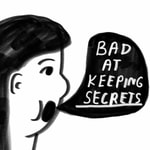
BAD AT KEEPING SECRETS
looking at secrets to understand why we are the way we are.
Frequency: 1 episode/18d. Total Eps: 59

peopleiveloved.substack.com
Recent rankings
Latest chart positions across Apple Podcasts and Spotify rankings.
Apple Podcasts
🇩🇪 Germany - books
25/12/2025#79🇫🇷 France - books
14/07/2025#89
Spotify
No recent rankings available
Shared links between episodes and podcasts
Links found in episode descriptions and other podcasts that share them.
See all- https://www.danpink.com/
162 shares
- https://www.annieduke.com/
116 shares
- https://katherine-may.co.uk/
95 shares
RSS feed quality and score
Technical evaluation of the podcast's RSS feed quality and structure.
See allScore global : 59%
Publication history
Monthly episode publishing history over the past years.
There is Enough for YOU with Jennifer Pastiloff
jeudi 26 juin 2025 • Duration 01:33:54
Proof of Life. Proof of Enough.This week, I had the joy of talking with Jennifer Pastiloff, bestselling author of On Being Human, about her powerful new book Proof of Life — and wow.
This book is a reminder that being messy, tender, and still here is more than enough. It’s a kind of miracle.
Lately, I’ve been giving small bundles — fresh food, flowers, a handwritten note — and realizing they’re really just that: proof of life. A way to say, “I see you. You’re already enough.”
Jennifer’s book is that, too. Honest, funny, raw, and deeply alive.
👉 Pre-order Proof of Life here or check out her upcoming book events here.Trust me — you’ll want to read it. It made me just feel good. I hope it makes you feel something, anything, and let that be enough.
With love, Carissa
Get full access to BAD AT KEEPING SECRETS at peopleiveloved.substack.com/subscribe
I have a crush on...
lundi 16 juin 2025 • Duration 46:05
Hi, it’s Carissa, and this is Bad at Keeping Secrets. Are you an anxious person? I am. So when I saw the headline “This book is for anxious women,” I had to get it.
I feel oddly calmed and understood by the complex social dynamics of Curtis Sittenfeld. It is almost like she is in my head in the moments of cringe when I find myself saying the exact wrong thing for the moment I am in. In our conversation, we talk about the actual equation for being a creative success, the role of luck in our lives, and how to navigate complex social dynamics. Her new collection of short stories focuses on exploring mid-life through overturning our beliefs about ourselves and the events that define us. Show Don’t Tell is a celebration of enduring friendship. It made me think about how the friends in my life show up for me and how I want to show up for them. You know, the people who you can be yourself all the time? The friends who show up when you get a difficult diagnosis. Or have a bad day. After reading, I felt the desire to reach out to the people in my life. To dig into each other’s lives becuase there is nothing else more interesting (to me atleast).
Share this post with your bestie…
I felt this weird pull towards Curtis in this interview, almost like I longed to be in her life, and I didn’t want our conversation to end. She is a master storyteller. When I re-listened to our interview, I felt this giddy joy, the joy that comes from almost a crush.
There are lots of secrets—I hope you enjoy.
Sending love, Carissa
PS Both Curtis and I have direct ties to Minnesota. My heart goes out to everyone there in their shock and grief. I just don’t understand. Something I will say, is that I am taking comfort in lowering the “horizon line.” I am reaching out to the people close to me, calling my congress members, going to small gatherings, and smiling as often as I can. When I feel overwhelmed with the terror and horror of the world as I understand it, I recommend this portal for hope.
PPS Bad At Keeping Secrets is a podcast by Carissa Potter (me). The audio was produced by Officially Quigley, and the sound editing was done by Mark McDonald. Mark helps people start podcasts, and I highly recommend him if you have been thinking about starting one. You can sign up for a free meeting with him here.
PPPS My book is OUT. Get your copy here. Or from your local bookstore. I am so grateful to be able to do things that make me feel like I have a purpose in this life.
Get full access to BAD AT KEEPING SECRETS at peopleiveloved.substack.com/subscribe
How to create meaning.
lundi 15 avril 2024 • Duration 36:23
Recently, I read something somewhere that admitting you were lonely was one of the most shameful things someone could do. And yet, I do it all the time. Without shame. I am lonely. Yes. What is weird is that I also crave alone time. Which I don’t have and seems so luxurious after having a kid.
What does feeling lonely mean then? I thought it was a longing to be around people but really, it is not that at all. Lonely for me is a hunger to feel seen, safe, and cared for.
This week I got the honor and it was a true pleasure to talk to Priya Parker about how to create rituals that matter. Priya works to help people create collective meaning in their lives through gatherings. She is a master facilitator, strategic advisor, acclaimed author of The Art of Gathering: How We Meet and Why it Matters, and the host and executive producer of the New York Times podcast, Together Apart.
Being inclusive can also mean everyone is not invited.
One thing that I was kinda shocked by, in the interview was the concept of Generous Exclusion. I come from a family and community where everyone is invited. The goal of this is to have everyone know they are welcome and wanted. Priya says that this is often done because people want to be inclusive, but inclusivity needs to match the purpose of the gathering. By curating our gatherings around the purpose, Priya says that we can feel held. That more people is not always the answer to creating more collective meaning. It is being intentional about who you invite and why.
How are you making meaning right now?
So I test-drove some of Priya’s advice for Easter this year. I am culturally Judeo-Christian, but not practicing. I wanted to create a ritual for finding hope and possibility in the spring. To make time to look at the buds on the trees and imagine the beauty about to blossom right around the corner. The flowers and sweet smells promised by the change in season. I hosted an egg-dying gathering with two other families from M’s school.
In the past, Easter has not been a thing I thought too much about. Since I was raised Unitarian, we had baskets with candy arrive on Sunday am. We knew it was our parents, but that didn’t really take the fun or magic out of a basket filled with pastel colors and candy. It was the default. It was nice.
For this egg party, I wanted to invite everyone, but Priya’s (and Josh’s voice) said to keep it small. It was still chaos. We started with a meditation where we used our five senses to see a lemon, finishing with taste and holding there for a few moments. I bet you can feel it now in your mouth starting to salivate and your jaw tightening. It’s risky to eat sour food. But a little risk is often invigorating and exciting.
Who do you gather with? Share this so you can create something together… if you want.
After holding the lemon in our mouths, we contrasted it with a cube of sugar (yes my teeth are rotting out of my mouth. Sorry dentists). I was hoping to create a feeling in our bodies of relief. That was coming with the change in seasons. That we had all been through so much, that something good was coming. And just, what if everything worked out?
The party was fun. Or I had fun. I got to feel grateful to be around people and learn about how we all contain so many versions of ourselves. It was a gathering I wanted to be at. I wanted to feel grounded in the fact that time was moving forward, and I had very little if any control, but at least I didn’t feel alone.
If you want a quick FREE guide for creating meaningful gatherings, Priya made one just for Bad At Keeping Secrets: Priya Parker x People I've Loved
In the guide, you’ll find 5 ways to QUICKLY build belonging, a feeling I am desperate for. And why introverts make good hosts. Surprise. Who knew?
If you are interested in more than a quick guide, here is where you can find more information:
* The Art of Gathering Digital Course
* The Art of Gathering newsletter
Lastly, thanks for reading and being here. I got so many sweet notes about the decision to change the People I’ve Loved. It made me feel so supported in one of the most difficult decisions I have ever made. I am grateful for you. Just so you know.
ALSO, Take 25% off anything you want through April on People I've Loved. Get your mom a card in which you tell her how you feel about her. Or not. But it helps us clean out the studio and you are supporting a small business.
USE CODE: FORMOM25
xo, Carissa
BAD AT KEEPING SECRETS is a reader-supported publication. To receive new posts and support my work, consider becoming a free or paid subscriber.
Get full access to BAD AT KEEPING SECRETS at peopleiveloved.substack.com/subscribe
Do you wonder if you are doing more? You are.
lundi 25 mars 2024 • Duration 37:33
We are in this amazing moment where we are trying to make a more equitable future by the ways that we structure our time and resources. We have never had more freedom to create meaning and systems that serve us. But cis women in hetero-relationships are still doing more of the work and feeling burnt out as the default parent even when they are also the breadwinners.
I became a fan of Eve Rodsky when I saw her documentary. She is a Harvard-trained lawyer who works with families (like the one in Succession) to mediate wealth management and distribution. What does that mean? I only have TV and movie reference points.
Eve had a day where she broke down over not getting the correct blueberries for her husband’s smoothies. Why should she be responsible for household management, family and social planning, and finance?
The data is in – women actually do more work. And as a culture, we value their time less. Take for example, the idea that breastfeeding is free. Have you heard that? I sure have. I even thought it during the super brief week I was able to do it. BUT it’s not. It costs time. And we live in a culture where time is money.
We need to start by uncoupling money with time.
In her book, Fair Play, Eve helps us actually do the thing – make the work we do visible to our partners, have the hard conversations, and ask for what we need to create a more equitable and sustainable partnership.
This is good for everyone. Bringing to light unspoken assumptions about who should do what and whose time is valuable. I hope you enjoy. Visit Eve’s website for TONS of free resources.
BAD AT KEEPING SECRETS is a reader-supported publication. To receive new posts and support my work, consider becoming a free or paid subscriber.
Get full access to BAD AT KEEPING SECRETS at peopleiveloved.substack.com/subscribe
Setting Yourself Up For Failure.
lundi 19 février 2024 • Duration 41:29
“To witness one life's miserable devastation and see her reach, instead, for joy. Let your life rest on what is already good. It's just another day in the good-bad, bad-good earth machine.”
Kate Baer is a poet who I love. I found out about her work when What Kind of Woman her first collection of poems came out. It was raw and true and I loved every moment in it - not because it was perfect - but because it reflected my experience. Kate is not into easy. There is something with ease that seems boring, or not representative of what makes life dynamic.
Kate just says it, how she is feeling, because as she says: “It will feel good.” We talk about our personal dealings with mental illness, how God shows up in her work, and having faith that you are right where you need to be.
For years now, I have personally been turning to poetry to explain and make me feel understood through the hard moments. Kate’s writing is where I turn for comfort and someone to sit with me through it.
I hope you enjoy. To see more from Kate, visit here:
And finally, a poem from Kate’s book:
Thanks for being here with me.
Get full access to BAD AT KEEPING SECRETS at peopleiveloved.substack.com/subscribe
Avoidance of pain leads to more pain.
lundi 29 janvier 2024 • Duration 36:09
I grew up thinking that addiction was not something that ran in my family. So I didn’t have to worry about it. My parents were both not really into drinking. My grandparents had been raised in the Depression and had seen the damage that alcohol could do on families and were so scared of it that they didn’t drink.
When I came of age, I was not interested in it. I tried it. I have been drunk. I think the first time was when I was traveling abroad at 16. I don’t remember the details of the event, but I do remember slamming my head on the floor over and over and asking to have sex (even though I had never before) with a guy I had just met. He said no. I was lucky. I didn’t feel that way at the time. I woke up feeling rejected and physically ill.
This could have gone so many ways, but when I returned home to the States, and no longer had access to alcohol, I just didn’t drink. I thought I was free from that and hard drugs, due to the times I had had painkillers. I was not crazy about them because I enjoyed pooping. And on them, basic body functions shut down.
But I am dealing with addiction. To my phone.
And I wanted to understand why. And what I could do about it. Anna Lembke is a psychiatrist who studies addiction at Stanford University. Her book, Dopamine Nation changed my life. I say that in the respect that it altered the framework in which I understand how pleasure and pain work. We need both for balance in our brains.
Thank you for reading BAD AT KEEPING SECRETS. This post is public so feel free to share it.
We are all living in an age where we have immediate access to high reward and high dopamine stimuli. It might be drugs, it might be romance novels, gambling, it might be social media, or news feeds. Whatever it is, it is something that is accessible and lurking within your reach, providing little (or big) hits of dopamine. These drug-ified stimuli keep us ever in need of more to return to a balanced state.
Dopamine was first discovered in the 1950s as an important neurotransmitter for motivation and reward processing. Mice that were not able to produce it stopped eating. No longer taking enjoyment in food. Depression is a state in which we are in chronic dopamine depletion. There are more neurotransmitters involved, but most people agree that dopamine is important in processing pleasure.
Are you finding yourself checking your phone as the first thing and last thing that you do each day? Are you taking less pleasure in things that you thought you valued? I am. And I don’t like it.
Anna takes the science of desire and the wisdom of recovery programs to find balance in the brain. She believes that to take pleasure again, we need to balance it with healthy pain. For example, exercise, intermittent fasting, or cold plunges. Or dopamine fasting for 30 days. She doesn’t think that more pleasure is the answer to our ever-pain-avoidant culture.
“Mutual honesty precludes shame and presages an intimacy explosion, a rush of emotional warmth that comes from feeling deeply connected to others when we’re accepted despite our flaws. It is not our perfection but our willingness to work together to remedy our mistakes that create the intimacy we crave.”
The first step, is being honest. Truth-telling and lying are both contagious. Having a place where you can go and be totally honest and still be accepted is important. Radical honesty is a path to your authentic self. Lies are a lot of work, and telling the truth helps free up your cognitive load. It also helps you feel closer to people.
We are all in recovery. How can we see each other with more compassion and empathy within our increasingly black and white, right and wrong world? By seeking to understand each other, we naturally tend to care for each other. I don’t want to change your mind, I am just curious why you are the way you are.
Run towards the hard stuff – find ways to immerse yourself in the life you have been given. There is something so profound in our experience of the spectrum of emotions. Something human, that we are longing for, can be re-discovered.
Love, Carissa
PS This podcast is self-funded by me. Because I love talking to people who I believe in, I am so lucky they say yes. With help from Stephanie Tsou (you rock!!!), Mark McDonald (he helps make people’s podcast dreams a reality) and my lovely sister/soulmate, Officially Quigley did the music.
BAD AT KEEPING SECRETS is a reader-supported publication. To receive new posts and support my work, consider becoming a free or paid subscriber.
Get full access to BAD AT KEEPING SECRETS at peopleiveloved.substack.com/subscribe
Why do we avoid rest?
lundi 8 janvier 2024 • Duration 23:18
I have known Ashley Neese for years. We met when we gave a talk together in the winter of 2019. I have been obsessed with her ever since. Her new book, Permission to Rest insists that we need rest for ourselves, for healing, for repair, and yes, for our communities. And then, Permission to Rest shows you how to do the work of resting.
“There are a million reasons not to rest,” says our culture. Prioritizing rest is hard, but necessary. I don’t know about you, but I was raised with the notion that in order to have worth, I had to be doing something productive for society. I had to clean, practice something, and help others. If I took time to rest, I was lazy, hopeless, and worthless. For years, I ignored what was going on by working on something else.
BAD AT KEEPING SECRETS is a reader-supported publication. To receive new posts and support my work, consider becoming a free or paid subscriber.
Rest is hard because it makes space for us to confront what is going on in our bodies. Instead of running from our feelings, we are forced to tend to them. Ashley will teach you to find strength in your body.
Transformation, a word that I have been hearing and using a lot as of late, I feel is something we assume happens in one major moment. It can, but also, it can happen with the accumulation of lots of small moments, mundane moments, the micro moments. We can start small – by starting small and not taking on the capital “T” trauma we can make transformation sustainable.
Ashley also has a substack that you should definitely check out:
PS This podcast is self-funded by me. Because I love talking to people who I believe in, I am so lucky they say yes. With help from Stephanie Tsou (you rock!!!), Mark McDonald (he helps make people’s podcast dreams a reality) and my lovely sister/soulmate, Officially Quigley did the music.
PPS More about Ashley:
Ashley Neese is a renowned breathwork teacher, somatic practitioner, author, parent, and land steward. She has spent over a decade working at the intersections of embodiment, transformation, and renewal. Ashley is host of The Deeper Call podcast, where she shares restorative conversations with people who move and inspire her – intended to contextualize our experiences and re-establish our interconnectedness. She lives with her family in a valley of wise old oak trees in California.
Thank you for reading BAD AT KEEPING SECRETS. This post is public so feel free to share it.
Get full access to BAD AT KEEPING SECRETS at peopleiveloved.substack.com/subscribe
Is depression a character flaw or illness?
lundi 11 décembre 2023 • Duration 38:37
“It's startling to realize how narrowly we avoid, or miss, living radically different lives.” - Rachel Aviv
Have you ever wondered why your life worked out the way it did? Yes. You have. We all have. Why are some people a success? Other’s not so much? Why do some people with similar diagnoses, DNA, and environments have such different life outcomes?
I have wondered this throughout my life. It comes in waves. I asked a mentor once in art grad school if she could tell me who would become a famous artist. After 30 years of teaching, she still said she had no idea who would be able to make it in the art world. That she was always surprised. I think this is honest. I am dubious of people who think that they know things like this. Often, when we can account for our own bias, lack of knowledge, and mood, there are too many open variables to guess with any accuracy. (I know that Annie Duke would disagree with this. She argues that we have more information then we think we do.)
I grew up in a house where it was okay to be sad. At least those words were said out loud. I think that our house promoted other feelings in actions: for example, positively rewarding happy moods something very common in my generation, perhaps it still is. People in the family who were more beautiful, outgoing, and smart were met with interest. In some ways, you could argue this is a normal thing, that the feelings we put out attract like feelings, happy people attract happy people. But what about the people who are sad? Don’t they need love too? What can pull a person out of a sad spiral?
At the age of 10 I started seeing a therapist, at 15 I started on an SSRI. I was diagnosed with depression and anxiety. To this day, I am kinda unsure where they each end and begin. As I now understand it, I think I have anxiety that turns into guilt, which turns into depression. And it could pop up, or manifest like a chronic illness at any time. Being turned on almost by stimuli that I can never really fully understand.
And I am lucky. I somehow was able to keep living. Through processing all these uncomfortable emotions, and make it through the hard parts of my “illness.” That with a flip of a coin, things could have been so different. I know this. And if I think too hard about it, I falter. That dark area gets closer. There is always some amount of active avoidance of the pointlessness of it all that I need to function.
In Rachel Aviv’s book, Strangers to Ourselves, Rachel meets a woman who is seemingly on a parallel path to her. They are both young, from similar backgrounds, and are being treated in an inpatient program for anorexia. Rachel's institutional moment becomes an anomaly and for some unknown reason, Hava’s becomes chronic. After years go by, Rachel seeks out Hava only to find out she is no longer living. Hava has spent most of her life battling her anorexia. The mystery of their tangled lives and possibilities is poetic.
Context is everything. Each situation is different. There is not a catch-all. There is not one solid definition of mental health that everyone agrees on. At a time when most people I know have some experience with anti-depressants, without creating a false nostalgia, is life that much harder now? That we have to drug ourselves to get through each day? (I do.)
I pathologize stories of mental illness that are deeply personal and situational. I am human and I like simple explanations. I contort my mind into shapes that it can fit in within an “evidence-based” medical system. One answer or explanation feels so good when opposed to the truth that we don’t have any answers. And all systems of understanding have some truth to them.
But what if mental illness is also a reflection of our community? The good, the bad and the ugly?
We are afraid to talk about these things because they might become contagious, and we should be afraid to an extent. I feel it when I am with someone who is deeply in pain. But what if we need to talk about it as a community to feel better? To repair the pain that we have caused. I don’t have any answers. But I am searching for some real feeling even while being aware that realness can never really exist.
Sending softness and care your way, love always, Carissa
BAD AT KEEPING SECRETS is a reader-supported publication. We love having you here.
PS This podcast is self-funded by me. Because I love talking to people who I believe in, I am so lucky they say yes. With help from Stephanie Tsou (you rock!!!), Mark McDonald (he helps make people’s podcast dreams a reality) and my lovely sister/soulmate, Officially Quigley did the music.
“The philosopher Ian Hacking uses the term “looping effect” to describe the way that people get caught in self-fulfilling stories about illness. A new diagnosis can change “the space of possibilities for personhood,” he writes. “We make ourselves in our own scientific image of the kinds of people it is possible to be.”
— Rachel Aviv
Get full access to BAD AT KEEPING SECRETS at peopleiveloved.substack.com/subscribe
How to slow down and...
dimanche 3 décembre 2023 • Duration 43:57
In celebration of darkness, this week I want to revisit my chat with Katherine May, a best-selling author and podcast host, of whom I adore in so many ways. I first heard about her with her book, Wintering: The Power of Rest and Retreat in Difficult Times during the height of the lockdown in 2020. In so many ways, this book helped me let go of control and step back. That there is comfort in resting. I don’t know about you, but I needed permission to use rest as a way to keep going.
When I saw she had a new book coming out, I had to talk to her. I do these interviews because I love meeting people and I love sharing ideas that I feel are helpful in defining what it means to be alive in these times. And wow, Katherine does that. First, let me explain the title. For those of you who thought of rainbows and unicorns with this title, sadly, there are not any featured in this book. However, the elements here, are no less filled with wonder and magic. The book is organized around connecting with the Earth, Water, Fire, and Air - giving into the cyclical nature of being.
Western culture so often has us working against the seasons, nature, and each other. This leaves us feeling disconnected and often like we are swimming upstream (maybe this is just me? IDK) working against forces that naturally offer soothing moments.
I also pretend Katherine is a dictionary, and ask her how she would define terms that I feel like I don’t really have a grasp on even though I have spent my life using them freely. For what seems like forever, I have been trying to make a structure for meaning that reflects the world I have experienced. Perhaps you are doing this too? It feels like a longing for understanding and connection, a search for some truth (all the while knowing there probably is none…).
We re-define Enchantment, Rituals, Resilience, and how Katherine sees God in this moment. She, however, pushes back on the idea of fixed definitions altogether. And why it might feel good to feel small sometimes.
Sending softness and care your way, love always, Carissa
PS This podcast is self-funded by me. Because I love talking to people who I believe in, I am so lucky they say yes. With help from Stephanie Tsou (you rock!!!), Mark McDonald (he helps make people’s podcast dreams a reality) and my lovely sister/soulmate, Officially Quigley did the music.
One last thing, we just got more 12-month planners in at People I’ve Loved. If you want one in time for the new year, order here.
If you like this, it would mean the world if you subscribed. I appreciate you.
Get full access to BAD AT KEEPING SECRETS at peopleiveloved.substack.com/subscribe
What is a lie? The unraveling of our shared reality...
lundi 13 novembre 2023 • Duration 45:05
“...sometimes, when something is such an integral part of your life, it's hard to see where the raw material ends, and the inspiration begins.”
Sarah Viren, author of To Name the Bigger Lie, tackles big questions such as the location of truth, the value/curse of doubt, the pliability of personal narratives, and the allure of conspiracy theories. I first read about her story “The Accusations Were Lies, But Could We Prove it?” in the New York Times magazine here. It was a thriller.
I have been longing for a collective truth. Something that I feel like in the past 15 years or so has been slowly disappearing. Perhaps it never existed? To work together, to understand each other, to love, we need to agree on something called a fact and truth, right? I want to have things like, we both saw the same news, or read the same books, or listened to the same random country song on the radio because there was nothing else but commercials on. I miss feeling grounded in facts.
For Sarah, there are events in her life that make her question, I mean really question reality. In high school, her idol, a teacher named Dr. Whiles turns out to be a holocaust denier. What happens when you love and trust someone, someone who has helped you shape your personhood, but then no longer shares your reality? The second story that the book focuses on is that of a series of lies that a fellow academic says about her partner sexually harassing their students.
Thank you for reading BAD AT KEEPING SECRETS. This post is public so feel free to share it.
Sarah has been trained in the classics, with the idea of doubt playing out in her own life in ways that start to dismantle her reality. Is her partner not the person she knows? Is there life to a lie?
Lies, active lies, and big lies create distance between people. We can use truth to come together, to understand and to relate, to heal and repair together. Lies also create a space to be creative, to test out different realities, and to solve problems. Is lying inherently wrong? I don’t think so. I think delusions can be useful and informative. I am not saying that we should lie. On the contrary, I think the ability to tell the truth, is a luxury of comfort and acceptance that I have the privilege of. I don’t need to lie to be loved. I don’t need to be something other than what I am to have worth.
These are the facts: life is messy. There are no easy narratives. We are all complex creatures in a dark moment. How can we hold each other with love, understanding, and tenderness as we are stuck in this waiting room? I hope you enjoy this conversation.
Something else beautiful and complex for you – Ocean Voung’s A Letter to My Mother That She Will Never Read.
Bad At Keeping Secrets, the podcast is Stephanie Tsou and Carissa Potter. Audio by Officially Quigley. Sound editing by Mark McDonald. Mark is helping people start their podcasts, if you have been thinking about starting one, I would highly recommend him. Sign up for a free meeting with him here
BAD AT KEEPING SECRETS is a reader-supported publication. To receive new posts and support my work, consider becoming a free or paid subscriber.
Get full access to BAD AT KEEPING SECRETS at peopleiveloved.substack.com/subscribe
Related Shows Based on Content Similarities