Two guys talking **it - A Gastroenterology and Hepatology podcast – Details, episodes & analysis
Podcast details
Technical and general information from the podcast's RSS feed.
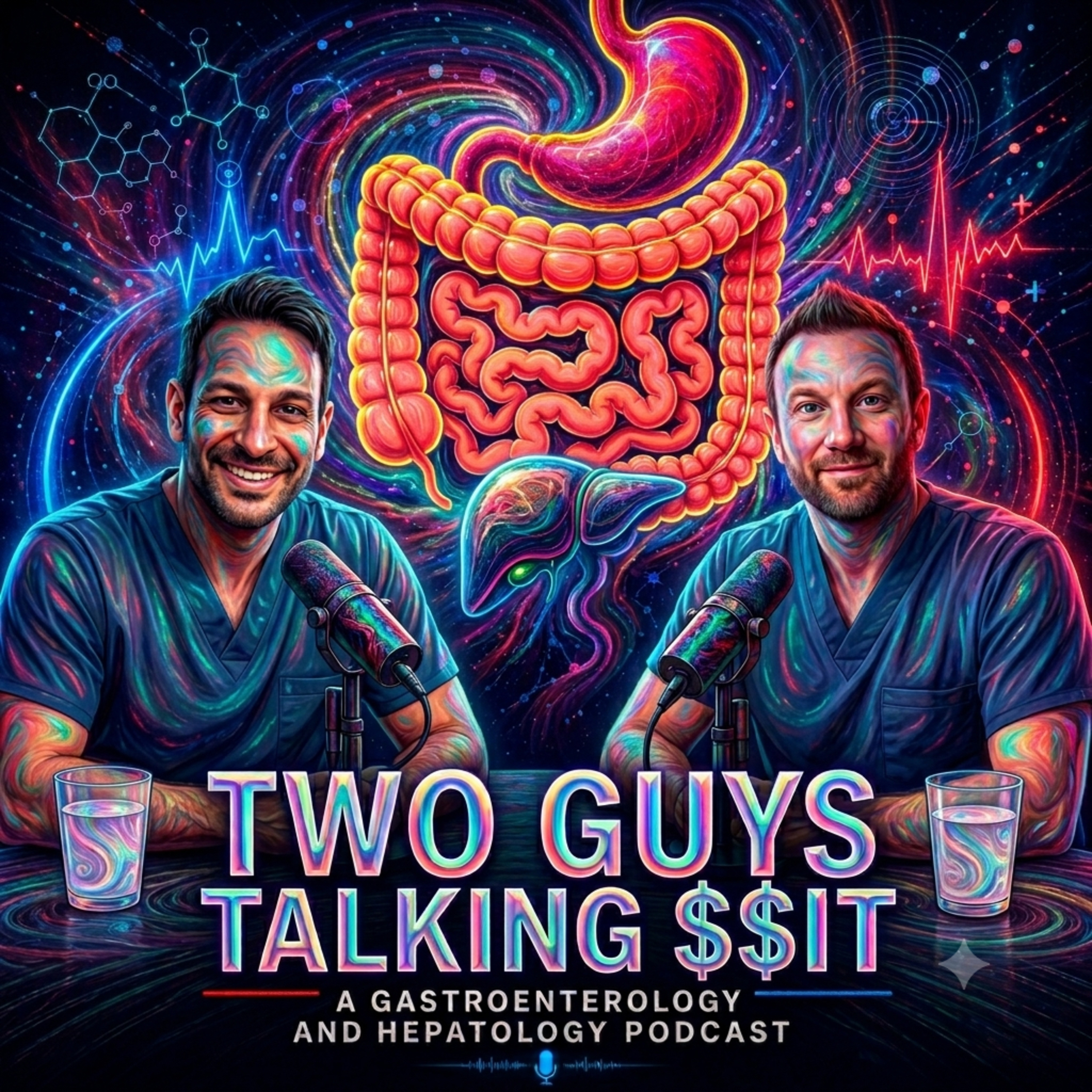
Two guys talking **it - A Gastroenterology and Hepatology podcast
A/Prof Jon Segal and Dr James Haridy
Frequency: 1 episode/132d. Total Eps: 12

Recent rankings
Latest chart positions across Apple Podcasts and Spotify rankings.
Apple Podcasts
No recent rankings available
Spotify
No recent rankings available
Shared links between episodes and podcasts
Links found in episode descriptions and other podcasts that share them.
See allRSS feed quality and score
Technical evaluation of the podcast's RSS feed quality and structure.
See allScore global : 62%
Publication history
Monthly episode publishing history over the past years.
#12: Season 2 Trailer
lundi 8 juin 2026 • Duration 02:12
We're back. After a longer-than-planned hiatus involving life, work, and the general chaos of being two busy clinicians: Two Guys Talking $#it is returning for Season 2.
The spark? Jon got stopped in a hospital corridor by a non-gastro colleague who'd been listening to the IBS episode with Alex Ford and had shared it with her neighbour. Turns out the show has fans in unexpected places, and that was enough to get us back in front of a microphone.
Season 2 kicks off with one episode a month and a lineup that already has a few things in the works. Same format, same vibe, no Backstreet Boys cover. Glad to have you back.
As always comments, questions, feedback and suggestions please send to:
X: @2guystalkingit
Email: 2guystalkingit@gmail.com
#01: Introduction
Season 1 · Episode 1
mercredi 18 décembre 2024 • Duration 03:40
Hello world..
Welcome to Two guys talking **it - a podcast designed for gastroenterologists and hepatologists or anyone interested in the field. Each week, join Jon and James as we bring you expert discussions, the latest research, and practical clinical insights amongst a lot of talking **it..
In this episode we briefly introduce the podcast. Bear with us as we try to work this thing out!
Please leave any comments or requests for future episodes, or catch us on twitter (@Jonathansegal85 or @JamesHaridy)
#03: Our best of 2024 in Gastroenterology and Hepatology
Season 1 · Episode 2
mercredi 15 janvier 2025 • Duration 43:23
Every podcast is incomplete without a 'best of' episode from the previous year. In this episode Jon and James talk about their big learnings / seminal papers / themes of 2024 in Gastroenterology and Hepatology.
We wish we could have included more!
As always, please leave questions/comments either below or on our X (@2guystalkingit).
#06: ECCO Takeaways with Dr Beatriz Gros
Season 1 · Episode 6
dimanche 23 mars 2025 • Duration 01:04:03
Jon and James welcome Dr Beatriz Gros, a leading expert in inflammatory bowel disease (IBD). They discuss key findings from the recent European Crohn's and Colitis Conference in 2025.
Dr. Beatriz Gros (X: @bealoquebea Instagram: @dr.beatrizgros) is a consultant gastroenterologist based in Córdoba, Spain, specializing in inflammatory bowel disease (IBD). She serves as a Consultant Gastroenterologist at Reina Sofía University Hospital in Córdoba and has also worked as a Senior Clinical Fellow at the Western General Hospital in Edinburgh, UK. Dr. Gros has a particular interest in environmental factors associated with the development of IBD and predictors for disease flares, contributing to studies like the PREdiCCt study. She actively engages in medical education through social media platforms such as Instagram and Twitter, and is the creator of the educational website www.ibd-eii.com, which offers summaries of over 140 clinical trials and relevant IBD studies. Dr. Gros’ dedication to advancing IBD research and education has made her a respected figure in the gastroenterology community.
As always comments, questions and feedback please send to:
Email: 2guystalkingit@gmail.com
Chapters
03:32 Introduction and Guest Introduction
05:30 Reflections on the ECCO Conference
08:10 Systemic antibody response predicting onset of IBD
13:12 Predicting Disease Onset and Flare Factors
13:45 The PREDICT Study and Its Implications
21:44 Dietary Insights and the Mediterranean Diet
23:30 The ADAPT Study on Emulsifiers and IBD
30:00 General dietary recommendations in IBD
33:48 Fiber consumption and Crohn's Disease development
39:40 The Role of Plant-Based Diets in IBD
43:18 Environmental factors in association with IBD
45:53 Understanding Environmental Factors in IBD
47:25 Linking IBD and Neurodegenerative Diseases and Vedolizumab
54:32 Proactive Monitoring in Ulcerative Colitis
Keywords
IBD, ECCO Conference, Bea Gros, PREDICT Study, Mediterranean Diet, Emulsifiers, Disease Prediction, Patient Care, Dietary Studies, Holistic Health, Crohn's Disease, Ulcerative Colitis, plant-based, fiber, environmental factors, probiotics, nutrition
#04: Professor Alex Ford - Navigating disorders of gut-brain interaction and IBS
Season 1 · Episode 4
mercredi 22 janvier 2025 • Duration 01:10:31
Professor Alex Ford is a renowned researcher in Gastroenterology, specializing in Disorders of Gut-Brain Interaction (DGBIs). Based at the University of Leeds, he has authored numerous high-impact studies on conditions like irritable bowel syndrome (IBS) and functional dyspepsia. With a focus on evidence-based treatments and advancing our understanding of the gut-brain axis, Professor Ford is widely recognized for his contributions to both clinical practice and academic research.
Summary
In this conversation, we interview Professor Ford about his work and insights into Disorders of Gut-Brain Interaction (DGBI). Alex explains the complexities of IBS, including its diagnosis, the role of the gut-brain axis, and the impact of symptoms on patients' quality of life. He discusses the diagnostic criteria for IBS, the significance of bile acid diarrhea, and various treatment approaches, including the use of gut-brain neuromodulators. The conversation also covers the ATLANTIS trial, which investigated the efficacy of amitriptyline in treating IBS in primary care, and touches on the concept of neuroplasticity in relation to long-term treatment effects. We go on to discuss the complexities of managing Irritable Bowel Syndrome (IBS), emphasizing the importance of psychological therapies, the nuances of treatment sequencing, and common mistakes made in IBS management. Professor Ford highlights the need for evidence-based approaches, the role of probiotics, and reflects on his academic career, stressing the importance of mentorship and the ability to discern valuable opportunities in one's professional journey.
Chapters
03:00 Introduction to Alex Ford and His Work
05:04 Understanding Irritable Bowel Syndrome (IBS)
11:22 Diagnostic Criteria for IBS
14:05 The Role of Bile Acid Diarrhoea
18:44 Treatment Approaches for IBS
20:06 The ATLANTIS Trial and Its Findings
30:07 Neuroplasticity and Long-term Effects of Neuromodulating agents
37:47 Neuromodulator titration and Psychological Therapies in IBS41:59 Sequencing Treatments for IBS
48:45 Common Mistakes in IBS Management
55:34 Probiotics: Evidence and Recommendations
59:56 Reflections on an Academic Career
Articles discussed:
ATLANTIS Trial: https://www.thelancet.com/article/S0140-6736(23)01523-4/fulltext
Probiotic meta-analysis: https://www.gastrojournal.org/article/S0016-5085(23)04838-2/fulltext
Follow us:
Twitter/X: https://x.com/2guystalkingit
#10: A/Prof Gianluca Ianiro and Dr Benjamin Mullish - The gut microbiome in health and disease
Season 1 · Episode 10
mercredi 9 juillet 2025 • Duration 01:03:20
Today we’re talking bugs, bowels, and breakthroughs with A/Prof Gianluca Ianiro and Dr. Ben Mullish, two microbiome maestros who make poo science strangely fascinating.
A/Prof Gianluca Ianiro is an Associate Professor of Gastroenterology at the Università Cattolica del Sacro Cuore in Rome and a Consultant at the Gastroenterology Unit of the Fondazione Policlinico Universitario Agostino Gemelli IRCCS. His clinical and research interests center on the gut microbiota, with a particular emphasis on fecal microbiota transplantation (FMT) and its applications in gastrointestinal disorders such as Clostridioides difficile infection and irritable bowel syndrome. Recognized as a leading expert in his field, Professor Ianiro has contributed extensively to international consensus guidelines and has been acknowledged for his work with the United European Gastroenterology Rising Star award. He also leads the Microbiome Clinic at Gemelli, translating cutting-edge microbiome research into clinical practice.
Dr. Benjamin Mullish is a Senior Clinical Research Fellow in the Division of Digestive Diseases at Imperial College London and an Honorary Consultant in Hepatology and Gastroenterology at St Mary’s Hospital, part of the Imperial College Healthcare NHS Trust. He is also an IPPRF Research Fellow within the Department of Metabolism, Digestion and Reproduction at Imperial College. His research focuses on the gut microbiome and faecal microbiota transplantation (FMT), particularly in the context of liver disease and gastrointestinal infections.This conversation delves into the complexities of the microbiome, particularly the gut microbiome, and its significant role in health and disease.
We discuss the dynamic nature of the microbiome, the challenges in microbiome research, and the potential for microbiome-based therapeutics. They also explore the roles of prebiotics and probiotics, the future of microbiome diagnostics, and the potential future concept for specialised microbiome clinicians to bridge the gap between research and clinical practice.
As always comments, questions and feedback please send to: X: @2guystalkingit
Email: 2guystalkingit@gmail.com
Chapters
00:20 J + J Introduction
05:11 Introduction to the Microbiome
07:16 Understanding the Gut Microbiome
10:04 The Dynamic Nature of the Microbiome
13:21 Factors Influencing the Gut Microbiome
16:15 Clinical Relevance of Stool Microbiome
19:24 Microbiome and Disease: Cancer and Liver Health
22:12 Microbiome in Inflammatory Bowel Disease (IBD) and Metabolism
25:20 Future Directions in Microbiome Research
35:20 The Uncertainty of Microbial Therapeutics
37:10 The Future of Microbiome Research
42:41 Understanding Prebiotics and Probiotics
56:49 The Need for Microbiome Clinician specialists
#09: A/Professor Emma Halmos & Dr CK Yao - Food is Medicine.. or is it?
Season 1 · Episode 9
jeudi 5 juin 2025 • Duration 56:18
Today we welcome two world-leading dietitians to talk all things diet in IBD and IBS....
A/Prof Emma Halmos is a senior research dietitian at Monash University and the Alfred Hospital. Her scientific achievements have had a major impact in clinical practice nationally and internationally. The most notable was the pivotal feeding study that demonstrated the low FODMAP diet was efficacious in patients with IBS. A/Prof Halmos has been elected onto the D-ECCO (Dietitians of European Crohn’s and Colitis Organisation) committee and is a leading coordinator for the first ECCO guidelines on nutrition in IBD. Her current role at Monash University is leading research on novel dietary therapy to treat IBD and IBS.
Dr CK Yao is a senior research dietitian at Monash University and the Alfred Hospital, and recent NHMRC emerging leader. In 2017, CK completed her PhD investigating dietary manipulation of gut microbial function and the application of gaseous biomarkers in patients with functional and inflammatory bowel disease. Dr Yao currently leads a research programme looking at optimising dietary strategies for patients with ulcerative colitis and those with an ileoanal pouch.We discuss the critical role of diet in managing inflammatory bowel disease (IBD), particularly Crohn's disease and ulcerative colitis.
We explore various dietary patterns, the impact of emulsifiers and ultra-processed foods, and the importance of personalized dietary advice. We talk about the significance of dietitians in guiding patients towards healthier choices. This conversation delves into the complexities of dietary recommendations for various gastrointestinal conditions, particularly focusing on the Mediterranean diet, Crohn's disease, and IBS. We discuss cultural influences on diet, the importance of personalized nutrition, and the emerging trends in dietary therapy. Finally we touch on the new ECCO Diet in IBD guideline that is set to be published soon.
As always comments, questions and feedback please send to: X: @2guystalkingit
Email: 2guystalkingit@gmail.com
Chapters
00:00 Introduction with J & J
4:20 On to our guests... Diet and IBD
05:50 Dietary Patterns for Disease Prevention
08:53 Therapeutic Diets and Active IBD
11:58 Controversies in Dietary Recommendations
15:02 The Impact of Emulsifiers and Ultra-Processed Foods
18:07 Practical Dietary Advice for Patients in IBD
21:02 Cultural Considerations in Dietary Recommendations
23:57 Food as Medicine: A Discussion
27:03 Exploring Diverse Dietary Patterns
30:13 Conclusion and Future Directions
32:26 Cultural Influences on Diet and Health
34:40 Dietary Recommendations for active Crohn's Disease
37:22 Understanding Pouch Patients
38:11 Initial Assessment for IBS Patients
44:25 Screening for ARFID
48:03 Emerging Dietary Trends in IBS
51:40 New Guidelines in IBD Nutrition
Papers discussed
Fitzpatrick JA, Gibson PR, Taylor KM, Anderson EJ, Friedman AB, Ardalan ZS, Smith RL, Halmos EP. Clinical Trial: The Effects of Emulsifiers in the Food Supply on Disease Activity in Crohn's Disease: An Exploratory Double-Blinded Randomised Feeding Trial. Aliment Pharmacol Ther. 2025 Apr;61(8):1276-1289. https://pubmed.ncbi.nlm.nih.gov/39967287/
Fitzpatrick JA, Gibson PR, Taylor KM, Halmos EP. Development of Novel High and Low Emulsifier Diets Based upon Emulsifier Distribution in the Australian Food Supply for Intervention Studies in Crohn's Disease. Nutrients. 2024 Jun 18;16(12):1922. . https://pubmed.ncbi.nlm.nih.gov/38931276/
Halmos EP, Gibson PR. Controversies and reality of the FODMAP diet for patients with irritable bowel syndrome. J Gastroenterol Hepatol. 2019 Jul;34(7):1134-1142. https://pubmed.ncbi.nlm.nih.gov/30945376/
A FODMAP Gentle approach: https://www.monashfodmap.com/blog/gentle-fodmap-diet/
The SCOFF Questionnaire: https://ceed.org.au/wp-content/uploads/2024/05/SCOFF.pdf
#11: A/Prof Elliot Tapper - Liver legends, lies and lactulose
Season 1 · Episode 11
mardi 29 juillet 2025 • Duration 56:57
Today we had the privilege of talking to a true superstar in the world of Hepatology.
Elliot B. Tapper MD is an Associate Professor in the Division of Gastroenterology and Hepatology at the University of Michigan. He is Academic Chief of Hepatology. His primary goal is to empower patients to enjoy a high quality of life. He is an expert in the management of chronic liver disease, performance of clinical trials, and big data for the study of liver disease. He has developed strategies that reduce symptoms and improve quality of life and invented tools that have helped keep patients with cirrhosis at home and away from the hospital. He is the Editor-in-Chief of Hepatology Communications.
In this episode, A/Prof Tapper discusses his journey in hepatology, the impact of social media on medical education, and his innovative research on muscle cramps and pickle juice. He debunks common myths surrounding methotrexate and liver disease, explores the complexities of ammonia levels in hepatic encephalopathy, and shares insights on frailty in liver disease management. The conversation also touches on the evolving perspectives on antibiotic prophylaxis in cirrhosis and the critical importance of diagnostic paracentesis. Elliot emphasizes the positive aspects of hepatology and the exciting developments in the field.
As always comments, questions and feedback please send to: X: @2guystalkingit
Email: 2guystalkingit@gmail.com
Chapters
05:08 Introduction to Elliot and His Work
08:14 The Power of Social Media in Medical Education
11:10 The Fascination with Pickle Juice and Muscle Cramps
14:00 Innovative Research During COVID-19
17:01 Exploring Non-Pharmaceutical Interventions
20:04 Debunking Myths Around Methotrexate and Liver Disease
23:10 Addressing Misconceptions About Medications
25:56 The Impact of AI on Medical Literature
28:56 The Ammonia Debate in Clinical Practice
30:17 Understanding Ammonia as a Clinical Biomarker
37:28 Assessing Frailty in Liver Disease Patients
44:20 Reevaluating SBP Prophylaxis in Cirrhosis
49:03 The Importance of Diagnostic Paracentesis
52:34 The Positive Side of Hepatology
Keywords
Elliot Tapper, hepatology, liver disease, medical education, social media, muscle cramps, methotrexate, ammonia levels, frailty, antibiotic prophylaxis, diagnostic paracentesis
#02: Immune checkpoint colitis and hepatitis
Season 1 · Episode 2
lundi 23 décembre 2024 • Duration 41:55
Episode #02: Checkpoint conversations
In the first full episode, we tackle the rising challenge of managing colitis and hepatitis triggered by immune checkpoint inhibitors. From recognizing these entities to exploring (non) evidence-based management strategies. Join us for a conversation packed with insights, or if you just want to hear Jon try and pronounce 'nomenclature'.
Please leave any questions, comments, or suggestions either on our twitter feed (@2guystalkingit) or below. We will try to answer any listener questions on the next show.
#07: Dr Simon Gabe - Rebuilding the gut: Intestinal rehabilitation
Season 1 · Episode 7
lundi 7 avril 2025 • Duration 01:03:27
This is a really special episode with an incredible doctor (Jon says "the best clinician I have ever met").
Today we welcome Dr Simon Gabe, an internationally renowned expert in intestinal rehabilitation. Dr Simon Gabe is a consultant in gastroenterology & intestinal rehabilitation at St Mark’s Hospital and chair of the NHS National Reference Centre for Severe Intestinal Failure at St Mark’s. This is also an Integrated Care centre for intestinal failure and a recognised ESPEN Training Centre. He has a wide clinical experience in dealing with complex nutritional problems, inflammatory bowel disease, fistula management, intestinal failure requiring enteral or parenteral support, home parenteral nutrition and consideration of intestinal transplantation. Dr Gabe is a past President of BAPEN. He co-founded the National Adult Small Intestinal Transplant (NASIT) Forum in the UK and has been an active member of a Clinical Reference Group within NHS England responsible for the development of a clinical network in England for all patients with Intestinal Failure (HIFNET). He currently co-chairs the HPN Clinical Advice and Management Group for NHS England.
As always comments, questions and feedback please send to: X: @2guystalkingit
Email: 2guystalkingit@gmail.com
Chapters
04:15 Introduction to Simon Gabe
06:59 Understanding Intestinal Rehabilitation
09:56 Defining Intestinal Failure
13:29 Trends in Intestinal Failure Causes
16:23 Bowel Length and Nutritional Support
20:26 Managing Short Bowel Syndrome
26:06 Barriers to Recognizing Intestinal Failure
30:37 Patient Evaluation Process for Intestinal Failure
33:07 Empowering Patients in Line Management
36:21 Managing Line Sepsis: Best Practices
43:17 Understanding Ehlers-Danlos Syndrome (EDS) and Nutrition
50:14 Nutritional Support in Cancer Patients
54:18 Enteral Support in Dementia Patients
57:15 Addressing Intestinal Ischemia: A Call to Action
Keywords
Intestinal rehabilitation, intestinal failure, nutrition, gastroenterology, patient care, bowel length, short bowel syndrome, nutritional support, clinical practice, healthcare, line management, line sepsis, Ehlers-Danlos Syndrome, nutritional support, cancer patients, dementia, intestinal ischemia, patient empowerment, multidisciplinary team, intravenous nutrition
Related Shows Based on Content Similarities