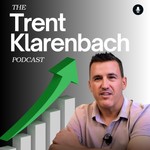
The Trent Klarenbach Podcast is people stories from agriculture.
Trent Klarenbach talks with farmers, grain merchants, and others who built a life in prairie agriculture.
The conversations are about the person, the decisions, and the work, not this week's market.
He also publishes the Klarenbach Grain Report and the Klarenbach Special Crops Report.
Grain Report
Special Crops Report
More information about Trent can be found at :
https://www.klarenbach.ca/
Find Trent here:
LinkedIn: https://www.linkedin.com/in/trent-klarenbach-0a059641/
Instagram: https://www.instagram.com/klarenbac
Site
RSS
Apple
Data updated on 23/10/2026
Recent rankings
Latest chart positions across Apple Podcasts and Spotify rankings.
Shared links between episodes and podcasts
Links found in episode descriptions and other podcasts that share them.
Details about The Trent Klarenbach Podcast, a podcast by Trent Klarenbach
Related Shows Based on Content Similarities
Discover shows related to The Trent Klarenbach Podcast, based on actual content similarities. Explore podcasts with similar topics, themes, and formats, backed by real data.
Klarenbach Special Crops Report: https://specialcropsreport.klarenbach.ca/
More from Klarenbach Research: https://www.klarenbach.ca/
This episode is for information and education only and is not financial or investment advice.
Blockchain Grain Trade: Jason Dearborn on GRNX, GrainX Tokens & Feed Barley Exports
Episode 24
Friday, September 4, 2026 • Duration 01:04:39
Trent Klarenbach and The Trent Klarenbach Podcast welcome Jason Dearborn of GRNX Global to discuss building integrated, blockchain-based tools for global grain trade, including the upcoming GrainX token designed to house and monetize farm data with governance constrained to farmers. Dearborn describes GRNX’s partner companies, an integrated app suite, and a completed real-world shipment of feed barley to Japan that will include an agricultural carbon-credit payment of about $4/tonne to the producing farmer via GRNX’s data and payment rails. The conversation covers digitizing and commercializing farm knowledge, AI-enabled insights from aggregated “data lakes,” data sovereignty and the importance of Saskatchewan-based data centers, concerns about federal control during geopolitical conflict, and proposals for freehold-style land titling in Saskatchewan. They close with reflections on Eatonia community culture and local hockey history.00:00 Jason Dearborn00:26 GRNX Global & Blockchain Grain Trade04:25 Agricultural Carbon Credits11:58 Data Sovereignty & War34:50 Freehold Titling & Farmland44:13 Bond Markets & the Economy53:24 Eatonia & Hockey NostalgiaDisclaimer:Trading in the financial markets involves a risk of loss. Our videos and other content produced by Klarenbach Research are for informational, educational, or entertainment purposes only and do not constitute trading or investment recommendations or advice.Subscribe to the free Klarenbach Grain Report newsletter:• https://www.grainreport.klarenbach.ca/Subscribe to the free Klarenbach Special Crops Report newsletter:• https://specialcropsreport.klarenbach.ca/Grab your risk-free 30-day trial to one of Klarenbach Research's newsletters:• https://www.klarenbach.ca/pricingLearn more at https://www.klarenbach.ca/Have a question for Trent? Join the Klarenbach Research Telegram Group: https://t.me/klarenbachresearchFollow Trent on X: https://twitter.com/TrentKlarenbachFollow Trent on Barchart: https://www.barchart.com/news/authors/392/trent-klarenbachFollow Trent on TradingView: https://www.tradingview.com/u/Trent.klarenbach/Follow the Klarenbach Research LinkedIn Page: https://www.linkedin.com/company/klarenbach-researchKlarenbach Research | Trent Klarenbach
Pulse & Canary Seed Acreage: David Nobbs’s Ground Survey vs. StatsCan
Episode 23
Wednesday, August 26, 2026 • Duration 01:07:00
Trent Klarenbach interviews David Nobbs of Harvest Grain to review Nobbs’ late-July/early-August field survey and compare it with StatsCan and Saskatchewan Crop Insurance data, noting seeding delays and major market declines over the past year. Nobbs reports lentil acres down about 19% with shifts from large green to reds, but argues large Canadian and Australian stocks will cap prices; he disputes recent carry-in figures and explains why survey-based estimates can be unreliable. He sees pea acres down (especially in the northeast) with green pea oversupply after reduced China shipping, chickpea acres sharply lower versus StatsCan, and a big canary seed acreage collapse with implications for tighter supply in 2027 despite current carryout. Canola acres are up, flax acres up about 23–24%, oats down, and he urges more crop-insurance reporting detail by lentil and pea class.00:00 Introduction & Field Survey Overview02:56 Lentils11:49 Peas13:20 Chickpeas20:27 Canola21:43 Flax27:02 Oats & Cereals52:22 Canary Seed Deep Dive01:06:48 Closing Thoughts
Disclaimer:
Trading in the financial markets involves a risk of loss. Our videos and other content produced by Klarenbach Research are for informational, educational, or entertainment purposes only and do not constitute trading or investment recommendations or advice.
Subscribe to the free Klarenbach Special Crops Report newsletter:
Glenna Marchant’s 90 Years: Farm Life, Family, and Lessons from Eatonia, Saskatchewan
Episode 22
Thursday, July 30, 2026 • Duration 01:10:28
Glenna Marchant’s 90 Years: Farm Life, Family, and Lessons from Eatonia, SaskatchewanTrent interviews his longtime friend Glenna Marchant of Eatonia, Saskatchewan, ahead of her 90th birthday, covering her life from growing up on a farm near Kindersley to raising a family and staying active today. Glenna was born July 23, 1936, the second youngest of 13 children, and recalls rural life without electricity or running water, travelling by horse and sleigh, and strong community support. She met Maurice in 1958, had four children (Montie, Jackie, Neil, Shawn), and moved from the farm to town after a 1973 flood. She describes farm and family work, later marrying Mac Marchant in 2005 after Maurice died in 2002. Glenna shares her large family (12 grandchildren and over 30 great-grandchildren), quilting and crafting hobbies, travel experiences, plans to move to Cochrane Place, and her message to stay happy and keep in contact with family.00:00 Glenna Marchant00:05 Family Life06:27 Early Childhood18:04 Post-War Years & Meeting Maurice19:54 Farm Life & Raising a Family36:06 Travels & Later Years
Shaun Wildman on Farmland Values, Yield Gains, Renewable Fuels, and Canada’s Grain Infrastructure
Sunday, June 14, 2026 • Duration 56:14
Think soaring interest rates are about to crash the farmland real estate market? Think again—the actual data behind global yields and massive renewable fuel legislation might completely shock you.
In this episode of the Trent Klarenbach Podcast, recurring guest and farmland real estate expert Shaun Wildman breaks down the long-term future of Canadian agriculture.
Despite rising interest rates and short-term margin pressures, Shaun shares an incredibly bullish outlook for Western Canadian farmland values driven by jaw-dropping technology gains and the massive scale of the renewable diesel industry.
From exposing the realities of global warming's impact on crop yields to discussing why standard grain-handling margins are tight, this deep dive challenges the status quo and uncovers where the real agricultural wealth is being made.
🚀 Key TakeawaysThe Power of Human Ingenuity: Modern farming technology has completely redefined drought resistance; a Saskatchewan drought today yields 30 bushels of durum compared to single digits in the past.
The Renewable Fuel Revolution: Renewable diesel doesn’t face the same "blend wall" issues as ethanol, opening up an almost limitless domestic demand for vegetable oils like canola.
Interest Rate Reality Check: While a doubling of interest rates impacts aggressive, high-leverage operations, the broader asset base of Western Canadian farms remains remarkably resilient.
The Elephant in the Port: Why spending billions on the Port of Churchill is a sentimental trap, and why federal infrastructure capital should actually go toward West Coast grain bottlenecks.
Canada's Food Exports & Ag Data: Panel with Ritz, Charlebois, Leuprecht & Dearborn
Episode 20
Tuesday, June 2, 2026 • Duration 01:02:39
Is Canada treating its massive food production as a simple commodity while the rest of the world weaponizes it?
Join former Ag Minister Gerry Ritz and top experts as they expose the shocking vulnerabilities in Canada’s food supply chain, data sovereignty, and defense doctrine.
In this episode of the Trent Klarenbach Podcast, we diagnose a major strategic failure: the weaponization of food.
Canada is one of the world's top five food exporters, yet it completely lacks a hard security doctrine to protect its agricultural supply chains in times of global conflict.
This episode dives deep into the realities of retail fragility, bureaucratic overreach, state-controlled grocery stores, and the next big battleground: farm data sovereignty and AI.
Food as a Geopolitical Weapon: Canada acts as a passive commodity exporter rather than leveraging its massive food abundance as a strategic stability and deterrence asset for global allies.
The "Black Box" of Retail Fragility: Thin grocery margins, urban-rural asymmetries, and a massive national data deficit leave Canadian supply chains highly vulnerable to sudden, volatile market shocks.
Ideology vs. Practical Farming: Government overregulation—from carbon taxes to intrusive environmental plans—is driving up production costs and stifling agricultural entrepreneurship.
David Nobbs on Special Crops: Lentils, Canaryseed and Peas: Big Supplies and Iran-Dubai Disruptions
Episode 19
Thursday, April 9, 2026 • Duration 48:11
Is the Special Crops market finally hitting bottom? 🌾
In this episode of the Trent Klarenbach Podcast, we are joined by David Nobbs of Harvest Grain for a critical update on the special crops market as of April 8, 2026.
With seeding just around the corner, David shares his "spreadsheet meeting" insights on navigating one of the most complex marketing years in recent memory.
We dive deep into how the Iranian war and geopolitical tensions have disrupted shipping routes into Dubai—a major hub for Canadian lentils—and what the resulting "hangover effect" means for your 2026 price targets.
Whether you are deciding between Lairds, Estons, or making a last-minute shift to Canary Seed, this discussion provides the boots-on-the-ground perspective you need.
Key Topics Covered:
The Geopolitical Shift:
How the conflict in the Middle East is hammering containerized shipping and rail freights.
Lentil Deep Dive:
Analysis of the 1.7 million tonne carryout and why the Red lentil rally might be a "head fake".
Canary Seed Bottom?
David explains why he is actually increasing his canary seed acres despite the five-year bearish trend.
Pea Market Outlook:
The impact of Chinese tariffs, the lack of early-season movement, and the one "bright spot" in green peas.
Seeding Decisions 2026:
Navigating $1,300/ton urea and the risks of "cowboy" farm management in a volatile year.
Adam Kuznia on Writing, Soil Biology, Fertility Reduction, and Drone Agronomy in the Red River Valley
Episode 18
Thursday, March 26, 2026 • Duration 01:11:39
Host Trent Klarenbach interviews North Dakota/Red River Valley agronomy entrepreneur and Farming Full-Time Substack writer Adam Kuznia about how writing became a therapeutic “relief valve,” the nerves of publishing, and why creators should prioritize authenticity over audience expectations.
Kuznia describes gaining more recognition outside his hometown, his farming background in Stephen, Minnesota, and how small rural towns have declined over time.
The conversation centers on reducing fertilizer while maintaining yields by focusing on soil biology, mineralization, and making tied-up nutrients plant-available—especially phosphorus in high-pH soils—along with cautioning against cutting too fast.
Kuznia outlines launching True Grit Agronomy, partnering with Harvest Drone, and using cost-share programs to reduce paperwork and risk, plus the expanding capabilities and economics of spray drones and emerging agronomy-focused AI tools.
00:00 Podcast intro and guest
01:07 Where to find Adam
02:24 Writing process and habits
06:26 Publishing fears and authenticity
13:20 Audience comes last
14:51 Reducing fertilizer with biology
17:58 No till soil changes
23:37 Farm roots and career path
26:48 Small town decline
29:36 Family farm boom and bust
33:05 Land prices and paradigm shift
34:39 How to transition fertility
35:14 Soil Tests First
Shaun Wildman: From Rural Saskatchewan to the Chicago Board of Trade and Global Canola Trading
Monday, March 16, 2026 • Duration 01:03:26
From Rural Saskatchewan to Global Canola Markets: Shaun Wildman on Trading Floors, Pulses, and Viterra
Trent Klarenbach interviews lifelong friend Shaun Wildman of Flaxcombe, Saskatchewan, tracing his path from rural hockey and Ag Economics at the University of Saskatchewan to a career in commodities.
Wildman describes early brokering at Rayglen Commodities, arbitrage opportunities in special crops, and his time on the Chicago Board of Trade and Winnipeg Commodity Exchange during the open-outcry era.
He explains moving into futures brokerage and then into Saskatchewan Wheat Pool/Xcan, where he learned pulse trading under tight margins before advancing into canola and destination export markets, including a dominant role in China.
Wildman discusses company restructuring under Mayo Schmidt, Viterra’s growth and sale to Glencore, risk and default realities in global trade, and his current focus on investments, some futures and stock trading, and pursuing a real estate license to advise on farmland.
00:00 Welcome and Guest Intro
00:59 Growing Up Rural Saskatchewan
02:16 Hockey Roads and Blizzard Stories
05:47 University Days and Public Speaking
07:47 Rayglen Commodities and Early Arbitrage
11:29 Chicago Trading Floor Experience
16:31 Winnipeg and Open Outcry Chaos
27:13 Xcan and Pool Hedging Desks
30:01 Switch to Cash Trading Lentils
31:59 Early Risky Export Trades
33:56 Pulses Desk to Canola
34:39 FOB Strategy and Partners
36:06 China Market Power Era
36:51 Small Volume Big Intensity
39:24 Market Shocks and Defaults
Allan Johnston on Building Johnston’s Grain and Growing from a Farm Garage to 35 Employees
Season 1 · Episode 16
Monday, March 9, 2026 • Duration 01:01:54
Trent Klarenbach interviews Allan Johnston, founder of Johnston’s Grain in Welwyn, Saskatchewan, about growing up on a farm near Moosomin, early interests in machinery, and adopting continuous cropping after witnessing severe soil drifting on neighboring fields.
Johnston describes losing heavily during early-1980s drought and high interest rates, quitting farming in 1986 to protect family land, and entering grain marketing through Capital Grain and mentorship from Don Monroe.
He recounts building a mustard business with buyers like PJ Anderson, Elders Grain, and Humboldt Flour Mills, early struggles with cash flow and farmer reliance on the Canadian Wheat Board, and persistence through setbacks.
Johnston details expansion into DTN market information, poly bag sales, and later major growth under his son Chevy and partner Joel into chemicals, regenerative products, agronomy, and fertilizer, crediting the end of the Wheat Board monopoly and family support.
Data Freedom is the New Marketing Freedom: The next 30 years of agricultural sovereignty depend on farmers owning, geofencing, and commercializing their own operational data via blockchain and AI.
The Danger of State Control: The panel soundly rejects the push toward state-run grocery stores and centralized grain management, arguing that free-market competition is what actually builds systemic resilience.
Subscribe to the free Klarenbach Grain Report newsletter:
Trading in the financial markets involves a risk of loss. Our videos and other content produced by Klarenbach Research are for informational, educational, or entertainment purposes only and do not constitute trading or investment recommendations or advice.
Subscribe to the free Klarenbach Special Crops Report newsletter:
Trading in the financial markets involves a risk of loss. Our videos and other content produced by Klarenbach Research are for informational, educational, or entertainment purposes only and do not constitute trading or investment recommendations or advice.
Subscribe to the free Klarenbach Grain Report newsletter:
Trading in the financial markets involves a risk of loss. Our videos and other content produced by Klarenbach Research are for informational, educational, or entertainment purposes only and do not constitute trading or investment recommendations or advice.
Subscribe to the free Klarenbach Grain Report newsletter: