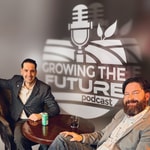
CONVERSATIONS THAT MATTER.
The Growing the Future Podcast features conversations on innovation, entrepreneurship, and personal and professional growth in the agriculture community.
Site
RSS
Apple
Data updated on 02/10/2026
Recent rankings
Latest chart positions across Apple Podcasts and Spotify rankings.
Shared links between episodes and podcasts
Links found in episode descriptions and other podcasts that share them.
Discover shows related to Growing the Future, based on actual content similarities. Explore podcasts with similar topics, themes, and formats, backed by real data.
Farm Wiring: Why the Hardest Problem Has No Part Number
Season 8 · Episode 53
Thursday, October 1, 2026 • Duration 01:01:52
The hardest thing to fix on a farm doesn't have a part number. It's whatever went wrong between people, and unlike a tractor, you can't just order the replacement part.
Dan built this session around an experiment: using the same diagnostic logic a farm already trusts, soil test, tissue test, soil map, applied to people instead of fields. He walks through his own Kolbe, CliftonStrengths, and Enneagram results live, then brings on Robert Woolf to tell a real story: when Dan and Robert negotiated Robert's return for Cohort 3, they each let an AI interview them for hours, then let the two AI agents work out 90 percent of the deal before either of them read a final draft. Stefano Zanotto, early in his own cohort, joins to talk about what the same diagnostics surfaced for him.
What's Inside
Why Dan treats three personality assessments like a soil test, a tissue test, and a soil map, and what happens when all three point the same direction
How a multi-hour AI interview replaced a negotiation neither party wanted to have in person
What actually went wrong when Dan tried to run things the way he's wired, instead of how the work needed to be done
Why a team's energy breaks down into five types, initiating, investigating, organizing, executing, finishing, and what happens when a team is short on one
What a farm succession handover looks like when everyone's real motivations are on the table before the hard conversation starts
Subscribe to the Growing the Future Podcast wherever you listen, and register for Convergence Conference 2027 at convergence.ag.
Register for the Convergence Conference at convergence.ag and stay updated by subscribing to the Growing the Future Podcast at growingthefuturepodcast.ca.
The AI Agronomist Transformation
Season 8 · Episode 52
Friday, September 25, 2026 • Duration 59:57
Robert Woolf is 67. He is not a programmer. In season he is scouting fields fourteen to sixteen hours a day, and he used to get home and forget half of what he'd found before he could write it up.
His grandson brought up AI at a rodeo. Robert's first thought was that he was too close to retirement to bother learning it. He didn't retire. He built thirteen AI agents instead, one of which checks the other twelve, and this conversation is him walking through exactly how.
What's Inside
Growing up on the family farm, twelve years at a John Deere dealership, and how sales and shop work shaped the way he thinks about a client relationship
The precision ag coaching network that taught him more about why farming works than farming itself did, and the culture of open collaboration he says he has never found anywhere else
Twelve years of independent coaching, more than a hundred irrigation pivots under his management, and a body that finally told him to slow down
Why his own grandchildren were raised to think AI would ruin the world, and what changed their minds
A full walkthrough of his agent hierarchy: sixteen scattered projects reorganized into a single reporting structure, one integrator directing the rest
What a client question that used to take hours to verify now takes minutes to answer, and why
His stated reason for doing any of this at 67: sixty years and more than sixty harvests of accumulated judgment that does not have to end with him
Why he will not touch a free AI tool, and what he tells anyone thinking about walking away from this entirely
Related Episodes
GYFOS Cohort 2 Session 8, where this same agent structure gets built live in front of the room
Connect with Robert Woolf Available through the Growing Your Future Operating System cohort
A farm and its neighbour, same region, same growing conditions, can sit $187 an acre apart in what actually gets made. That gap decides what gets paid down, what gets replaced, and eventually what gets passed on.
This is the third session in MNP's Know Your Numbers series. The first two took the conversation from the books to the whole-farm benchmark. This one goes past the fence line and into the field.
What's Inside
What a profit map actually is: gross margin minus labour, power and machinery, deliberately stripped of capital structure so it is not just a proxy for farm size
The Soil Intellect Map, MNP's own layering of electrical conductivity and topography, and what it is built to find
Why the spread in crop input spending between top producers and average ones turned out small, and why the real gap sits somewhere else entirely
What gross margin by seeding date actually shows, and why canola punishes a late start harder than wheat does
A live guess from the room on what share of farms know their gross margin field by field, and how far off the real number was
Ransom land: the term for the acres you keep farming only because they came bundled with the ground you actually want
Why some of the most successful farms are also the most likely to let a weak field coast, simply because it is easy to ignore when the rest of the operation is carrying it
Canola is priced off documents written in another country, and most of the people growing it have never read one.
Susan Stroud spent more than fifteen years in the cash grain business, buying by truck and rail and loading out on barge, before building No Bull Ag into a grain and oilseed analysis service. She joins Dan and co-host Ryan Bonnett of ABB Solutions for a working session on the policy machinery underneath the canola market.
What's Inside
How a California low carbon fuel standard, commissioned by a movie star governor, set off the renewable diesel boom that built Canada's crush capacity
What a RIN actually is, what a small refinery exemption does, and what happened when the hardship calculation was quietly rewritten this September
Why canola oil fell off the tax credit map entirely in 2025, and the single amendment that brought it back for 2026
Where canola meal goes, why meal has overtaken oil as the profit driver in crush, and what broiler chickens have to do with your basis
Her read on why the risks are stacking bullish, and why she still tells producers to keep selling into strength rather than sitting on their hands
Resources Mentioned No Bull Ag market insights, with a two week preview AgVentures international tours
Convergence Is Back. Here Is What We Are Building.
Season 8 · Episode 48
Friday, August 28, 2026 • Duration 01:01:51
Agriculture does not run along a single track. The agronomy decisions, the farm business pressures, the succession conversations, and the quiet health questions underneath all of it are connected -- and for most people in agriculture, they never land in the same room. Convergence Conference 2027 was built for that room.
You are invited.
Convergence Conference 2027 | February 2 to 4, 2027
DoubleTree by Hilton, Regina, Saskatchewan
Theme: Cross Currents
Four pillars. One room. A few hundred people who think the way you do -- or challenge the way you do.
Agronomy. Farm Business Management. Health and Wellness. Agri-Food Production.
In this briefing, Dan Aberhart sits down with Terry Aberhart (conference founder), Warren Bills (MNP), Laura Shoemaker (farmer and repeat attendee), and Courtney Thevenot (Scotiabank) to talk about what the room has produced over three years and what is being built for 2027. Warren Bills makes a live money-back guarantee on YouTube. Laura Shoemaker proposes a retirement workshop and is elected to chair the committee before the hour is out.
We are also working on Ag Rocks for Charity, an opening-night live music and community fundraiser in support of STARS Air Ambulance. We will share more as that piece takes shape.
Topics and Timestamps
0:00 -- Four pillars: agronomy, farm business management, health and wellness, agri-food production
1:00 -- Convergence Conference 2027 is open -- February 2 to 4, DoubleTree Regina
Know Your Numbers: See Where You Stack Up
Season 8 · Episode 47
Tuesday, August 25, 2026 • Duration 01:04:54
Most operators assume the best farms in their region are spending a lot more to get a lot more out of their land. The data says otherwise. Travis Girard, a farm management consultant with MNP, and Dean Klippenstine, also with MNP, return for the second session in the Know Your Numbers benchmarking series, drawing on a database that now covers roughly 1,500 farms and 8.5 million acres across the Prairies.
What's Inside
- Why the production expense gap between top performing farms and average ones came in at just seven dollars an acre, not the twenty five to fifty most people guessed
- Seven years of profitability data across the region, including the one year almost everyone assumes was the worst, and wasn't
- The three things Dean Klippenstine says separate profitable farms from the rest, starting with crop selection
- Why labor, power, and machinery costs come down to mindset more than acres under management
- What bringing your three worst fields up to your own farm's average gross margin could be worth in a year
A $1.2 million combine is only as fast as the slowest part of the yard behind it, and for most harvests, that slow part isn't the field. It's the space between the combine and the bin: the trucks, the augers, the dryer, and the person running between all three. Dan Aberhart brought three operators together who've each solved that bottleneck a different way, from a hundred-thousand-dollar retrofit to a fully automated grain-handling site eight months and one generation in the making.
What's Inside
• How Brennan McArthur built an automated grain-handling system near Watrous that dumps a legal Super B in about eight minutes, and what actually pushed him to build it
• Vince Pawluski's remote-control retrofit kit that lets one operator run more than one machine, and the real dollar cost of an idling tractor
• Trevor Scherman on why a magnetic drop pan is still the cheapest data-collection device on the farm, even as combine automation does more of the calibration itself
• What each guest thinks won't be automated for years yet, and why the combine seat is the last one they expect to see empty
• Where smaller automated units fit against Western Canada's big-iron reality, and why swarm technology hasn't earned trust yet
If the data side of this conversation landed for you, look for the back-catalog episode with sprayer specialist Tom Wolf on calibration and coverage. It's the same instinct Trevor brings to a drop pan, applied to the boom instead of the header.
Sell High or Sell Wrong - A Pre-Harvest Market Briefing
Season 8 · Episode 45
Wednesday, August 12, 2026 • Duration 01:04:27
Canola's up on a good rally, fertilizer's down from its spring highs, and for the first time in a while, Western Canadian producers have a little swagger back. But every rally raises the same question: is this the one you lock in, or the one that convinces you to wait too long?
Dave Norris of Norris Crop Consulting and Todd Rowan of IXL Innovations, two grain marketing advisors working with the top tier of Western Canadian producers, join Darren Sander of Crop Aid Nutrition, a working farmer near Rosetown, Saskatchewan, to read where this crop actually stands and what it means for pricing decisions this fall.
The math is tight. Two bushels an acre off the Canadian canola average works out to about a million tons. With crush running at 14 million tons and exports near 9 million, a crop landing at 21 million tons instead of 23 leaves someone rationed. The panel breaks down the real story on crop size, why China stepping back into the market matters more than most producers realize, and what the fertilizer and fuel numbers actually tell you about locking in the 2026 crop now.
What's Inside
Why 2 bushels off the Canadian canola average works out to about a million tons, and what that means for pricing
What it means when 14 million tons of crush and 9 million tons of exports meet a crop that might land at 21 million tons
Why China stepping into the canola market in August is a signal worth watching, and what it tends to wake up in other buyers
Why fertilizer at $850 a ton looks different once you compare it to what canola is actually worth right now
The real reason most producers miss good pricing windows: they respond to a push notification, not a website they have to remember to check
A live read on the August USDA report as it dropped, and what it changed in the room in real time
If this conversation makes you think about who's actually watching your marketing decisions, go back in the catalog for our episode with Derek Squair on what a grain market coach actually gets paid to do, a conversation that asks the same question from the other side of the table.
Farm Succession Planning Canada: Are You Prepared?
Season 8 · Episode 44
Tuesday, August 11, 2026 • Duration 01:00:21
Picture the one person your farm cannot run without. Now picture their chair empty tomorrow morning. Can someone else access the accounts, make payroll, or explain what the farm owes and why? If those answers only live in one person's head, the farm is not prepared, no matter how good the balance sheet looks.
Jace Young grew up watching his grandfather's 55 year, multimillion dollar Kansas farm operation collapse into bankruptcy in 2005, then built Legacy Farmer to help other families get their financial house in order before the same thing happens to them. Jolene Bolding, Manager of Advisory Services at Farm Credit Canada, has her own story of a farm sale her family decided on before she ever got a seat at the table. Wade Berlinic, Associate Broker with Hammond Realty's Ag Exits and Acquisitions Strategies team, sees what happens when that conversation gets put off until the land is already on the market.
Together they walk through why only 12 percent of Canadian farms have an actual transition plan, what it costs a family when nobody has one, and the five stage process Jace uses to move an operation from financial blind spots to a plan everyone in the family can actually see.
What's Inside
- Why a farm can look bulletproof on paper and still not be prepared for one empty chair
- The story behind Jace Young's grandfather losing a 55 year, multimillion dollar Kansas operation, and what it did to the family afterward
- Why only 12 percent of Canadian farms have a written transition plan, and what that gap actually costs
- The five stage process Legacy Farmer uses to move a family from financial blind spots to a real plan: Position, Production, Profit, Protection, and Prosper
- Why the conversation almost never starts with the numbers, it starts with pride, ego, and who is willing to ask for help
- What $55 billion in Canadian farm assets transferring in the next decade means for every family still putting this conversation off
If this conversation hits home, go back in the catalog for our episode with Elaine Froese on farm family transition and communication, one of the clearest voices in Western Canada on getting these conversations started before they're forced. It also pairs well with our conversation with Robert Andjelic on where farmland capital is actually moving right now.
Independent Agronomist Jaeda Hoppe: Going Out on Your Own at 24
Season 8 · Episode 43
Monday, August 10, 2026 • Duration 59:31
Every farmer has somebody they call. The story we tell about that is a
farmer who doesn't know what he's doing, hiring someone else to think
for him. Jaeda Hoppe thinks that story is wrong.
She went independent at 24, after two of her clients tracked her down
through her mother's hair salon and asked her to work for them
privately. Four years later, she still has the same five clients she
started with. This conversation is about what she actually gets paid
for, once the theory runs out.
What's Inside
- What a producer is actually paying an independent agronomist for, once
the theory runs out
- Why she recommends every young agronomist start in ag retail, even
though almost nobody treats it as an end goal
- The built-in objectivity problem when a retailer's margin depends on
which product they recommend
- Why she's seen close to zero measurable results from the biological
products she's evaluated
- Compartmentalizing stress: the skill she says separates the farmers
and agronomists who last from the ones who don't
- Her weekly Sunday text subscription sharing field observations, and
Subscribe to the Growing the Future Podcast wherever you listen, and register for Convergence Conference 2027 at convergence.ag.
Register for the Convergence Conference at convergence.ag and stay updated by subscribing to the Growing the Future Podcast at growingthefuturepodcast.ca.
Subscribe to the Growing the Future Podcast wherever you listen, and register for Convergence Conference 2027 at convergence.ag.
Register for the Convergence Conference at convergence.ag and stay updated by subscribing to the Growing the Future Podcast at growingthefuturepodcast.ca.
Subscribe to the Growing the Future Podcast wherever you listen, and register for Convergence Conference 2027 at convergence.ag.
Register for the Convergence Conference at convergence.ag and stay updated by subscribing to the Growing the Future Podcast at growingthefuturepodcast.ca.
2:00 -- Platform partners and panel introductions: Terry Aberhart, Warren Bills, Laura Shoemaker, Courtney Thevenot
5:00 -- Terry Aberhart on the gap in agriculture that started the conference
8:00 -- Jessica Jansen keynote and the moment that defined what Convergence actually is
10:00 -- Warren Bills on the post-COVID case for in-person gatherings
12:00 -- Laura Shoemaker: the live-concert analogy for being in the room
14:00 -- Courtney Thevenot on what makes this conference different from any other in agriculture
17:00 -- Terry on choosing your own journey -- and why unexpected speakers land hardest
19:00 -- Diamond Fernandez, integrative health, and the cholesterol research nobody expected
22:00 -- Warren's three takeaways: being seen, Matt Havens on generations, Diamond Fernandez
25:00 -- 2027 banquet: Patty Durand and Chris Corbett, family business improv
27:00 -- Laura on farm succession, transition planning, and the retirement conversation agriculture avoids
33:00 -- Warren on the life change he made at Convergence 2025, and his live money-back guarantee for 2027
37:00 -- Terry's three takeaways: network, deep-topic breakouts, agriculture as an optimistic room
46:00 -- The conference hall of fame: years of speakers and why the roster matters now
48:00 -- convergence.ag -- four pillars, why it matters, ticket call to action
49:00 -- Journey Track preview: arriving prepared, going deeper, leaving with a plan
51:00 -- 2027 speaker roster taking shape
53:00 -- Courtney's three takeaways: caliber of speakers, breadth of topics, intimacy of the room
55:00 -- Laura's three takeaways: holistic approach, always at least one thing you didn't expect
58:00 -- Warren's live guarantee on YouTube: e-transfer your money back if you don't get value
1:00:00 -- Audience survey, the retirement workshop idea hatched on air, Cross Currents theme confirmed
1:01:00 -- Closing: February 2 to 4, 2027, DoubleTree Regina, convergence.ag
Register for the Convergence Conference at convergence.ag and stay updated by subscribing to the Growing the Future Podcast at growingthefuturepodcast.ca.
Subscribe to the Growing the Future Podcast wherever you listen, and register for Convergence Conference 2027 at convergence.ag.
Register for the Convergence Conference at convergence.ag and stay updated by subscribing to the Growing the Future Podcast at growingthefuturepodcast.ca.
Subscribe to the Growing the Future Podcast wherever you listen, and register for Convergence Conference 2027 at convergence.ag.
Register for the Convergence Conference at convergence.ag and stay updated by subscribing to the Growing the Future Podcast at growingthefuturepodcast.ca.
Subscribe to the Growing the Future Podcast wherever you listen, and register for Convergence Conference 2027 at convergence.ag.
Register for the Convergence Conference at convergence.ag and stay updated by subscribing to the Growing the Future Podcast at growingthefuturepodcast.ca.
Subscribe to the Growing the Future Podcast wherever you listen, and register for Convergence Conference 2027 at convergence.ag.
Register for the Convergence Conference at convergence.ag and stay updated by subscribing to the Growing the Future Podcast at growingthefuturepodcast.ca.
Register for the Convergence Conference at convergence.ag and stay updated by subscribing to the Growing the Future Podcast at growingthefuturepodcast.ca.