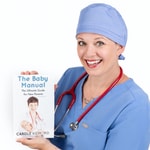
New babies are difficult. Don't you wish they came with a manual? Well, now there is one! Hosted by a pediatrician mom, The Baby Manual will help guide you through everything you actually need to know to take care of a baby. Whether this is your first baby or your fifth, I bet you’ll hear something helpful in here that you didn’t know. Enjoy The Baby Manual podcast, and enjoy your new baby!
Site
RSS
Apple
Data updated on 22/09/2026
Recent rankings
Latest chart positions across Apple Podcasts and Spotify rankings.
Shared links between episodes and podcasts
Links found in episode descriptions and other podcasts that share them.
Dr. Carole Keim welcomes Jen Lumanlan, host of the Your Parenting Mojo podcast and author of Parenting Beyond Power, to The Baby Manual for a thoughtful conversation about respectful parenting and why parents can begin building a connected relationship with their child from the newborn period. Jen shares how her own parenting journey led her to study child development and education, and explains how RIE (Resources for Infant Educarers), an approach often associated with respectful parenting, helped her begin seeing babies as active participants in everyday caregiving rather than simply recipients of care.
Together, Dr. Keim and Jen explore the difference between respectful or gentle parenting and permissive parenting, why both children’s and parents’ needs matter, and how everyday moments like diaper changes, feeding, crying, play, and bedtime can become opportunities for connection. They also discuss co-regulation, boundaries, natural consequences, scaffolding, parental triggers, and the importance of recognizing the needs underneath a child’s behavior. For expecting and new parents, this episode offers an encouraging framework for understanding their baby’s needs, recognizing their own needs, and building connection through everyday interactions from the very beginning.
Key Moments
00:00 Welcome and why parenting begins in the newborn period
03:01 Gentle parenting vs. permissive parenting
05:04 Seeing your baby as a whole person
07:41 Turning everyday caregiving into connection
09:49 Why babies don’t need to be happy or entertained all the time
10:51 Baby crying and understanding parents’ emotional triggers
13:23 Looking beneath challenging behavior to find the underlying need
16:10 Babies are always changing: sleep, soothing, and development
18:16 Why parenting was never meant to happen without a village
21:46 Understanding needs, natural consequences, boundaries, and limits
24:14 Preparing your parenting partnership before baby arrives
27:23 Co-regulation and how babies “borrow” a parent’s calm
30:27 Letting go of pressure around toys and child development
34:28 Scaffolding skills and knowing when your child needs extra help
About Jen Lumanlan:
Jen Lumanlan brings a unique combination of deep research expertise and genuine understanding of what parents face every day.
With undergraduate degrees from UC Berkeley, a Master's from Yale, and later Master's degrees in both Psychology (Child Development) and Education, Jen doesn't just read the research - she understands how to translate it into approaches that actually work in real families.
Jen has reviewed more than 10,000 academic papers on parenting and child development for 250+ episodes of the Your Parenting Mojo podcast, and has interviewed the Who's Who in related fields.
Jen also knows that research alone isn't enough. That's why she's also a CoActive Coach and is trained in the Gottman Method. This means she listens in ways that help you discover what works for your unique family rather than imposing one-size-fits-all solutions.
Jen's background in corporate environmental strategy - as well as her late-diagnosed Autism - helps her to see patterns and connections that others often miss. She helps families to see patterns of behavior that indicate underlying needs, so you can navigate parenting challenges while staying true to your values.
Hosted by Simplecast, an AdsWizz company. See pcm.adswizz.com for information about our collection and use of personal data for advertising.
607 - Sleep Without Training
Season 6
Wednesday, August 26, 2026 • Duration 40:41
Dr. Carole Keim welcomes internationally certified baby sleep consultant and founder of the Yawn Baby Sleep platform, Camille Jaramis, for an insightful conversation about baby sleep in the first two years of life. Together, they explore how newborn sleep differs from infant sleep, what really happens during the four-month sleep regression, and why developmental changes, like the Wonder Weeks, can temporarily disrupt even the best sleeper. Camille explains the difference between self-soothing and self-settling, and why flexibility and age-appropriate expectations are so important for both babies and parents.
Camille and Dr. Keim also explore the cultural pressures many families face around sleep schedules, maternity leave, and “sleep training,” offering reassurance that there is no one perfect way to help a baby sleep. Camille shares practical guidance on sleep environments, including light exposure, white versus pink noise, and safe sleep basics, along with insights into how her AI-powered sleep support tool, Yawn, helps parents personalize sleep plans based on their baby’s unique temperament and developmental stage. Most importantly, Dr. Keim and Camille remind parents to give themselves grace, because healthy sleep is a journey, and every family’s path looks a little different.
Key Moments
00:00 Meet Camille Jaramis and her journey into baby sleep consulting
04:20 Surviving the hospital phase and newborn sleep realities
09:18 Understanding the Wonder Weeks and developmental leaps
14:25 The four-month sleep regression explained
16:01 Sleep environment basics: noise, darkness, and red light
18:27 Overtired cycles and nap transitions (3 to 2 naps, 2 to 1 nap)
23:34 Introducing Yawn: AI-powered personalized sleep support
27:05 Wake windows explained and how they change with age
33:56 Sharing the mental load between parents
38:19 A final reminder to give yourself grace
About Camille Jaramis:
Camille Jaramis is an internationally certified baby sleep consultant and the founder of Ask Yawn, an AI-powered parenting support platform designed to provide personalized, research-informed sleep guidance. After building and leading a large global community focused on baby sleep, Camille recognized how overwhelming and conflicting parenting advice can be for families navigating the early years.
606 - Building Your Village
Season 6
Wednesday, August 12, 2026 • Duration 42:57
Dr. Carole Keim continues the It Takes a Village season with an encouraging solo episode focused on one of the biggest questions new parents ask: How do I build a village when I don’t already have one? Whether you're far from family, new to your community, or simply feeling overwhelmed, Dr. Keim shares practical ideas for creating a strong support network during pregnancy, the newborn period, and beyond. She explores how modern parenting has changed, why raising a child is truly a team effort, and how every family can build a village that fits their unique circumstances.
Dr. Keim discusses the different pressures often experienced by birthing and non-birthing parents, practical ways partners can support one another, and why asking for, and accepting, help is one of the healthiest things new parents can do. She shares realistic strategies for meeting parents' basic needs, including meal trains, meal preparation, sleep, household responsibilities, and protecting mental health during the postpartum period. Dr. Keim also offers practical ideas for finding community through friends, neighborhood groups, religious organizations, local parent groups, and trusted online resources, while reminding parents that genuine, in-person connection is an important part of building the village every family deserves.
Key Moments
00:00 Why every family needs a village in today's world
01:24 How modern parenting has changed—and why parents feel stretched so thin
02:48 Understanding the different pressures on birthing and non-birthing parents
05:18 Helping partners feel supported, capable, and connected
08:54 Resources that help parents feel informed and empowered before baby arrives
11:06 Postpartum mental health affects both parents
16:16 Meeting moms' basic needs with food, water, and practical support
22:24 Meal trains, meal prep, and making nutrition easier for new families
27:31 Sleep strategies and realistic expectations during the newborn period
605 - Diapers, Your Way
Season 6
Wednesday, July 29, 2026 • Duration 42:14
Dr. Carole Keim welcomes entrepreneur and innovator Miki Agrawal to The Baby Manual for a thought-provoking conversation about sustainability, parenting, and how caring for our children can also mean caring for the planet they will inherit. Best known for founding Thinx and TUSHY, Miki shares the inspiration behind her newest venture, HIRO Diapers, and explains how becoming a mother led her to rethink one of the biggest sources of household waste: disposable diapers. Together, Dr. Keim and Miki explore how innovation, nature, and practical parenting solutions can work hand in hand.
Miki explains the environmental challenges posed by disposable diapers and introduces the science behind HIRO Diapers, which pair reduced-plastic diapers with beneficial fungi designed to help accelerate biodegradation in landfills. She also discusses postpartum products, elimination communication, and ways families can make environmentally conscious choices without sacrificing convenience. Throughout the conversation, Dr. Keim and Miki encourage parents to remember that even small, thoughtful actions can add up to meaningful change for future generations.
Key Moments
00:00 – Why diapers deserve their own episode
Dr. Keim explains why she dedicated an entire episode to diapers and reviews disposable diapers, cloth diapers, and elimination communication before introducing today's guest.
12:59 – Meet Miki Agrawal and her entrepreneurial journey
Miki shares her background, from founding WILD, THINX, and TUSHY to becoming inspired by motherhood to rethink disposable diapers.
17:47 – The environmental impact of disposable diapers
Learn why billions of diapers end up in landfills, how long they last, and what motivated Miki to look for a better solution.
19:55 – The idea behind HIRO Diapers
Miki describes the inspiration that led her to fungi-based diaper technology and the years of research behind the product.
23:42 – How the fungi system works
Discover how the fungal pouch is designed to activate after disposal, why it stays separate from the baby, and the safety considerations behind it.
604 - Potty Train your Newborn
Season 6
Wednesday, July 15, 2026 • Duration 43:29
Dr. Carole Keim welcomes Andrea Olson, founder of Go Diaper Free, Tiny Undies, and Tiny Potty, for a fascinating conversation about elimination communication (EC), sometimes called potty learning from birth. Andrea shares how discovering EC with her first child transformed her experience of parenting and led her to help families around the world rethink infant toileting. Together, she and Dr. Keim explore the history of potty training, how cultural norms have changed over time, and why many families are becoming interested in introducing potty awareness much earlier than is typical in the United States.
Andrea explains how elimination communication focuses on observing and responding to a baby’s natural cues rather than waiting until the toddler years to introduce the toilet. She discusses practical ways families can get started, even part-time, including simple “easy catches” such as offering the potty after waking or feeding. Dr. Keim and Andrea also talk about daycare, siblings, developmental differences, potty learning during major family transitions, and the products and resources Andrea created to support families who choose this approach. This episode offers parents an encouraging look at an alternative approach to toileting that emphasizes communication, connection, and flexibility.
Key Moments
00:00 – Introduction to Andrea Olson and elimination communication
01:18 – Andrea’s journey from first-time parent to EC educator
03:44 – How elimination communication differs from traditional potty training
06:25 – Historical potty training trends and changing cultural expectations
14:03 – What elimination communication is and how it works
17:12 – Easy catches: wake-ups, feedings, and recognizing cues
21:24 – Making EC work with daycare, caregivers, and your village
28:01 – Potty learning, new siblings, and avoiding regressions during transitions
35:40 – Troubleshooting challenges and setting healthy boundaries
36:29 – Tiny Undies, Tiny Potty, and resources for early potty learners
603 - Fed is Best for Newborns
Season 6
Wednesday, July 1, 2026 • Duration 42:08
Bringing home a new baby comes with so many questions, and feeding is often at the top of the list. In this solo episode, Dr. Carole Keim walks parents through the basics of newborn feeding with a reassuring message: fed is best. She explains what to expect during the first days of life, including how small a newborn’s stomach really is, how breastfeeding develops over time, and why feeding can feel challenging in the beginning. Parents will learn about colostrum, milk production, feeding frequency, and how to recognize signs that their baby is getting enough to eat.
Dr. Keim also explores common breastfeeding challenges, practical tips for improving latch and milk supply, and the role of pumping, bottle feeding, donor milk, and formula. She discusses the benefits of breastfeeding while also emphasizing that there are many safe and healthy ways to nourish a baby. Whether you plan to breastfeed, formula feed, pump, or combine methods, this episode offers evidence-based guidance and encouragement to help you make feeding decisions with confidence during those important first weeks with your newborn.
Key Moments
00:00 Welcome and why “Fed is Best” matters
01:18 Why breastfeeding can be harder than expected
02:43 Newborn stomach size and feeding volumes by day
03:56 The first nights of feeding and newborn hunger patterns
05:03 Pumping, storing colostrum, and building milk supply
06:19 Benefits of breastfeeding for moms and babies
10:33 Breastfeeding recommendations and realistic feeding choices
14:35 Latch basics and breastfeeding troubleshooting
18:37 Pacifiers, nipple care, and knowing if baby is getting enough
22:41 Tongue ties, milk supply tips, and common breastfeeding concerns
31:36 Bottle feeding, formula options, and choosing the right formula
602 - OB, Midwife, or Doula?
Season 6
Wednesday, June 17, 2026 • Duration 37:03
Dr. Carole Keim takes listeners through one of the earliest and most important decisions in pregnancy: choosing the right support team. In this solo episode, she explains the differences between obstetricians, certified nurse midwives, and doulas, helping parents understand the unique role each plays during pregnancy, labor, delivery, and postpartum recovery. Dr. Keim also walks through the typical timeline of prenatal visits, ultrasounds, testing, and vaccines, giving expectant parents a practical overview of what to expect from the first positive pregnancy test through delivery.
With her warm and reassuring approach, Dr. Keim also explores what labor and birth are really like beyond what’s often portrayed in movies. She discusses birth plans, labor support, cervical checks, fetal monitoring, inductions, C-sections, and postpartum healing, while emphasizing that every pregnancy and birth experience is different. Parents will come away with a clearer understanding of how to build a supportive birth team and how to prepare emotionally and physically for welcoming a new baby.
Key Moments
00:00 Introduction to OBs, midwives, and doulas
02:17 Pregnancy tests and scheduling the first prenatal appointment
03:35 The 8–12 week visit, ultrasounds, and viability checks
05:35 The 20-week anatomy scan and fetal development
07:53 Glucose tolerance testing and gestational diabetes screening
10:16 Vaccines during pregnancy: Tdap, flu, COVID, and RSV
12:29 Breech babies, turning procedures, and planned C-sections
14:58 Routine late pregnancy visits and induction discussions
16:15 Certified nurse midwives vs obstetricians
20:07 What doulas do during pregnancy, labor, and postpartum
24:23 Birth plans, labor positions, and creating a calming environment
27:13 Labor monitoring, cervical checks, and delivery interventions
31:59 Postpartum healing, recovery, and spacing pregnancies
35:23 Final thoughts and additional resources for parents
__
How to choose an OB or midwife
601 - Vitamins for Brain Development with Dr. Gupta
Season 6
Wednesday, June 3, 2026 • Duration 27:48
Dr. Carole Keim sits down with neurologist and Mama Bird founder Dr. Mika Gupta for an insightful conversation about baby brain development and the critical role nutrition plays from preconception through early childhood. As both a physician and a mom, Dr. Gupta draws on personal experience and explains the concept of the “first 1,000 days”. She explains why this window is so important for building a strong foundation for a child’s lifelong brain health. Together, Dr. Keim and Dr. Gupta explore how thoughtful nutritional choices can support mom and baby during this period of rapid growth and development.
Dr. Gupta and Dr. Keim discuss key nutrients that support brain development, including iron, DHA, choline, iodine, and methylated B vitamins, along with practical guidance on how to meet these needs through diet and supplementation. Dr. Gupta also breaks down common misconceptions about prenatal vitamins. She highlights the importance of ingredient forms like methylfolate and why one supplement may not cover everything. With Dr. Keim’s warm and relatable guidance, this episode empowers parents with knowledge to make informed, supportive choices for themselves and their growing babies.
Key Moments
00:00 Meet Dr. Mika Gupta and her journey into neurology and nutrition
02:19 What are the “first 1,000 days” and why they matter
03:03 Why prenatal vitamins should start before pregnancy
04:03 Understanding MTHFR and methylated vitamins
06:22 Key nutrients for baby’s brain development explained
08:22 Can you get enough nutrients from food alone?
11:26 Nutrition needs during postpartum and breastfeeding
12:48 Common mistakes when choosing prenatal vitamins
16:44 Why one prenatal vitamin isn’t enough for everything
18:38 What “brain-first” vitamins mean
23:55 One key takeaway for supporting baby’s brain development
About Dr. Mika Gupta:
Dr. Mika Gupta is a double board-certified neurologist, MIT-trained, and founder of Mama Bird. She’s also a mother of two — a daughter training at the Royal Ballet School and a son with Down syndrome — two radically different brains that taught her more about human potential than any textbook ever could.
511 - Family Medicine with Dr. David Tusek
Season 5
Wednesday, December 3, 2025 • Duration 29:04
Dr. Carole Keim welcomes Dr. David Tusek, board-certified Family Physician and Founder of Cloud Medical, to the show to discuss early childhood development and the good habits that set children up for life. Dr. Tusek identifies the five pillars of health and discusses personalized and preventive childhood medicine with Dr. Keim. The conversation explores modern habits and their impact on children, the critical role of parents, and the idea of introducing a whole-person health framework into children’s growth to ensure emotional and physical well-being.
The five pillars of health identified by Dr. Tusek are hydration, nutrition, exercise, sleep, and stress reduction. He and Dr. Keim expand on each pillar, describing how sugar functions in nutrition, the glycemic index and its relation to prediabetes in children. The importance of movement and outdoor play is highlighted, especially as screens take priority in children’s lives, and they stress the need for better sleep hygiene. The conversation investigates how healthy whole-person habits can be fostered from a young age and how the right habits can help steer children away from chronic disease.
Dr. David Tusek:
Dr. Tusek is a board-certified family physician who also has experience as an emergency room doctor. He is a member of the American Academy of Anti-Aging Medicine and the Institute of Functional Medicine.
Dr. Tusek relishes the close connectivity with his Cloud DPC patient-members, whether they are training for the Olympics, dealing with an illness, or simply trying to lose a few pounds. He believes that enhancing one’s quality of life is just as important as extending the quantity of our years.
Dr. Tusek combines expertise in advanced diagnostics and optimization of brain and body function using a broad-based approach, blending cutting-edge technologies with a natural orientation. He uses a wide variety of gentle, needle-based therapies to treat musculoskeletal and neuromuscular conditions and injuries (including PRP and Botox). He performs various office-based surgeries, cryosurgeries, and treatments of minor trauma. In 2004, he became one of the first practitioners in Colorado to offer bio-identical hormone implants, and has been working closely with compounding pharmacies (those pharmacies that prepare personalized medications for patients), to provide the purest, most effective forms of natural therapies.
510 - Pediatric Cardiology with Dr. Tal Gospin MD
Season 5
Wednesday, November 19, 2025 • Duration 27:12
Dr. Carole Keim welcomes pediatric cardiologist Dr. Tal Gospin, MD, to The Baby Manual to talk about what pediatric cardiology is and how it differs from adult cardiology. Dr. Gospin explains how much of pediatric cardiology is concerned with congenital heart disease, abnormalities people are born with. She watches for the shape of an infant’s heart and the sounds it makes, even in utero, and discusses exactly what she looks for with Dr. Keim. They explore fetal echocardiograms, infant heart function, and what parents can watch for in newborns to see if a pediatric cardiologist needs to be consulted.
Dr. Gospin and Dr. Keim discuss when a baby’s heart murmur should be referred to a pediatric cardiologist and the differences between an innocent murmur and a pathologic murmur. Innocent murmurs that appear in newborns typically disappear in infancy. Dr. Gospin shares that some types of pediatric cardiac issues will show up as a lack of weight gain in infants, and when to reach out to a pediatrician for a referral. They talk about echocardiograms and what to expect, whether the baby feels any discomfort or not from an EKG, and what the scans are looking for. They discuss breathholding episodes, fainting, and explain what’s happening and what a parent can do. This episode provides a lot of insight into pediatric cardiology and gives parents insight into the functioning of their infant’s heart.
Dr. Tal Gospin, MD:
Dr. Tal Gospin graduated with honors from Washington University in St. Louis with her undergraduate degree in Psychology. She obtained a Masters in Physiology and her Medical Doctorate from Georgetown University School of Medicine, where she was elected into Alpha Omega Alpha, the National Medical Honor Society. Dr. Gospin continued on to pursue a pediatrics residency at New York Presbyterian Hospital/Columbia University in New York City. She then completed her fellowship in pediatric cardiology at Baylor College of Medicine/Texas Children's Hospital in Houston, Texas. Dr. Gospin’s fellowship training included caring for patients with a broad spectrum of cardiac conditions and working with leading experts in the field of pediatric cardiology and cardiac surgery. She concentrated her fellowship training on echocardiography, outpatient care for children with complex congenital heart disease, as well as fetal imaging and prenatal counseling.
Drawing on her background in human-centered technology and her experience supporting hundreds of thousands of parents, Camille created Ask Yawn to deliver tailored, practical support that adapts to each child’s unique needs. Her work focuses on helping parents feel confident, informed, and supported as they navigate baby and toddler sleep.
__
Resources discussed in this episode:
The Holistic Mamas Handbook is available on Amazon
Hosted by Simplecast, an AdsWizz company. See pcm.adswizz.com for information about our collection and use of personal data for advertising.
26:21 – Supporting parents beyond diapers
Dr. Keim and Miki discuss postpartum recovery, period underwear, bidets, and products that can make the postpartum period more comfortable.
27:40 – Elimination communication and using fewer diapers
The conversation explores early potty awareness, reducing diaper use, and balancing convenience with sustainability.
30:10 – Building an eco-conscious parenting community
Miki explains HIRO's broader mission of educating parents about elimination communication, non-toxic living, and environmentally conscious parenting.
31:00 – Small choices can make a big difference
The discussion turns to plastic pollution, ecosystem health, and how everyday parenting decisions can contribute to meaningful environmental change.
37:10 – Where parents can learn more
Miki shares where families can find HIRO Diapers, follow the company's work, and connect with her mission online.
About Miki Agrawal:
Miki Agrawal is the creative force behind acclaimed social enterprises TUSHY (the modern bidet brand), THINX (period-proof underwear), and WILD (NYC’s first gluten-free pizza concept), collectively valued at over $250 million. Miki is the author of best-selling books "DO COOL SH*T" and "DISRUPT-HER”.
Her next company, HIRO, is a revolutionary nature-based start-up harnessing ancient technology - fungi - to help solve the global plastic crisis. Their first product is a baby diaper that is designed to return to the earth with the help of friendly fungi. (They chose diapers to launch with because they’re the #1 household plastic waste item that takes 400+ years to decompose in a landfill - and each baby uses ~6,000 diapers in their lifetime. Wild, right?) HIRO Diapers’ mission is to return to the earth with the help of little HIRO Myco-pods that you add in during the diaper change. They’re soft, safe, unbleached (the only one!), high-performing, and ready to change the game. Check out HiroDiapers.com to learn more.
Recognized as one of Fast Company's "Most Creative People," a "Young Global Leader" by the World Economic Forum, and named one of INC's "Most Impressive Women Entrepreneurs," Miki brings a wealth of experience and expertise to the stage as a keynote speaker. Her authentic talks have been validated by audiences at MindValley, EO, and Capitalism.com, who have voted for her as the #1 best speaker among hundreds of speakers.
Miki's compelling presentations delve into her 20+ years of entrepreneurial adventures, from boldly inventing products in traditionally taboo categories to creatively launching and scaling them exponentially. She openly shares her authentic revelations, embracing the colorful journey that defines her.
When you experience Miki on stage, you'll witness more than a speaker; she's a dynamic, truth-telling performer delivering an unforgettable one-woman show. Combining her captivating presence with her profound insights into innovation and creative marketing, Miki's presentations have the power to drive any company towards innovative transformation. For more, go to mikiagrawal.com/speaking
__
Resources discussed in this episode:
The Holistic Mamas Handbook is available on Amazon
Hosted by Simplecast, an AdsWizz company. See pcm.adswizz.com for information about our collection and use of personal data for advertising.
About Andrea Olson:
Andrea Olson is the founder of Go Diaper Free, Tiny Undies, and Tiny Potty. She is an author, educator, and advocate for elimination communication who has helped families around the world explore infant potty learning. Through books, courses, podcasts, and practical products, Andrea provides resources for parents interested in reducing diaper dependence and building communication around toileting from an early age.
__
Resources discussed in this episode:
The Holistic Mamas Handbook is available on Amazon
Hosted by Simplecast, an AdsWizz company. See pcm.adswizz.com for information about our collection and use of personal data for advertising.
OBs, family doctors, and midwives can deliver babies
Group practices are pretty standard nowadays; meet your main doctor/midwife but also meet the team who might be delivering (either other people in the office or a laborist)
Personality fit is a big deal
Obstetricians and family doctors are medical doctors. Their training involves 4 years of undergrad, 4 years of medical school, and 4 years of residency (12 years total).
There are two types of midwives: lay midwives and CNMs.
Lay midwives are those who have experience delivering low-risk babies out of the hospital, typically at home. They have no certification or licensure requirements, and no formal medical training. Home births with a lay midwife are by far the most dangerous and I have seen some bad outcomes and cannot ethically support them. When I speak about midwives during this episode, I am not including lay midwives.
CNMs are required to have a bachelor’s degree in nursing (4 years of undergrad), then 2 years of graduate-level nurse midwife training (6 years total).
The main differences are the knowledge base and the approach to care.
Doctors
Nurses
OBs, family doctors, and midwives can see you during your pregnancy and can deliver babies vaginally.
Only OBs can perform c sections and take care of high-risk pregnancies (moms under 18yrs or over 35 years, those with health conditions, those with prior c-section, twins/triplets
Birth location
OBs deliver in hospitals because it is the safest setting
Midwives can deliver at hospitals, birth centers, and/or at home depending on the local regulations
Timing of appointments
In the US, the number of weeks starts at the beginning of your last period, so when you miss a period and test you are 4 weeks pregnant
Ovulation and fertilization happen at 2 weeks, so you aren’t actually pregnant until then, but we are counting from LMP
In the US, the due date is at 40 weeks
In other countries they may count dates starting at conception/ovulation, so the due date is at 38 weeks
Initial appt: 6-8 weeks or whenever you find out you’re pregnant, whichever is later
First trimester (until 12 weeks and 6 days): you’ll be seen 2-3x; initial confirmation appt, 6-8 weeks for dating, 10-12 weeks for NIPT. Blood testing and urine testing for STIs, drugs, ultrasound for dates, hear heartbeat, NIPT (check out the genetics episode 503)
Second trimester (13 0/7 to 27 6/7): appts about every other week, anatomy scan, testing for gestational diabetes, further genetic testing and/or ultrasounds if indicated.
Third trimester (28-40 weeks): appointments every 2 weeks, then weekly starting at 38 weeks. Check urine for protein (a sign of pre eclampsia) at each visit. GBS screen. RPR on admission to hospital.
Postpartum: 2 weeks and 6 weeks
High-risk pregnancies will be seen more often. A pregnancy can become high risk at any time.
Doula
What they can do: emotional support, physical comfort during labor and delivery.
What they can’t do: anything medical, including deliver babies.
Reasons you might want one: to keep you as comfortable as possible during labor; they can get you food/water/ice chips, rub your feet or neck if you want, call the nurse for you, crowd control, can articulate your preferences while you’re in labor, possibly also attending to partner during delivery
Reasons you might not want one: expense, privacy, not needed if you have a support person
Birthing options / Birth plans
Birth plans
How you want your birth experience to be
Birth is a very tenuous process and doesn’t always go according to plan. A birth plan is a nice outline of preferences, if you have any.
If you are planning a vaginal delivery, keep in mind that your birth team has the main objective of having a healthy mom and baby. If your provider says that something needs to change during labor or delivery, there is usually a medical safety reason for that change.
Scheduled C-Sections
Reasons you might be scheduled for a C-section: repeat, breech baby, twins/triplets, high risk for underlying medical conditions in you or the baby. Scheduled C-sections typically have a shorter birth plan:
music in the operating room
one support person in there with you
will the support person go with the baby or stay with mom when the C-section is over?
Even if you’re scheduled for a C-section, you might go into labor early and need an urgent or emergent C-section before the scheduled date.
Scheduled inductions
Reasons you might be scheduled: post dates, pre eclampsia, gestational diabetes, specific high-risk pregnancy reasons
There are a few ways to induce labor, including medication taken by mouth or placed in the vagina to help open the cervix, IV medication called pitocin which causes your uterus to contract, and placing something such as a stick that absorbs fluid and expands or a balloon that is placed by your provider in the cervix to help it open
Less to plan, but the same as for vaginal delivery.
Mixed evidence as to whether scheduled inductions are more or less likely to end in C-section
Vaginal delivery
If you fully go into labor naturally, meaning you have contractions every 3-5 minutes lasting 1 minute each and your water breaks, you may need no intervention at all.
Hosted by Simplecast, an AdsWizz company. See pcm.adswizz.com for information about our collection and use of personal data for advertising.
After her son was born, Dr. Gupta stopped trusting a system that was never built for women and started building what should have existed all along: evidence-based tools for brain health during the first 1000 days, the most critical window of development. She’s a brain activist — helping women see that the invisible architecture they build and sustain is the most neurologically important work in human life.
__
Resources discussed in this episode:
The Holistic Mamas Handbook is available on Amazon
Hosted by Simplecast, an AdsWizz company. See pcm.adswizz.com for information about our collection and use of personal data for advertising.
In 2009, Dr. Tusek founded one of the nation’s first DPC programs, which he sold in 2016. He then went on to launch Cloud Medical DPC, and currently oversees several other healthcare ventures and projects related to health optimization, behavior change, and addiction medicine.
He believes that the soul of primary care medicine lies both in diagnosing and treating existing health problems with the most advanced technologies, as well as deeply considering what it means to be healthy and to heal as human beings, and how to most efficiently unlock our innate capacities for thriving and flourishing. In the spirit of this pursuit, Cloud Medical has launched a variety of programs under the “School of Health” banner.
As a previous member of the steering committee of the Direct Primary Care Coalition based in Washington, DC, Dr. Tusek is a recognized leader in healthcare transformation and was invited to the White House to discuss the future of American medicine. He was named among the “Top Doctors in Concierge Medicine” and is a former qualifier for the Ironman Triathlon World Championships in Kona, Hawaii. He enjoys skiing, cycling, and spending time with his wife and two daughters in the playground that is Colorado.
__
Resources discussed in this episode:
The Holistic Mamas Handbook is available on Amazon
Hosted by Simplecast, an AdsWizz company. See pcm.adswizz.com for information about our collection and use of personal data for advertising.
Dr. Gospin is board-certified in Pediatrics and Pediatric Cardiology. She is a fellow of the American Academy of Pediatrics and the American College of Cardiology. Her clinical interests include transthoracic echocardiography, fetal imaging, evaluation and treatment of children with congenital and acquired heart disease, pediatric arrhythmias, as well as hypercholesterolemia and hypertension. Dr. Gospin brings her diverse knowledge base and training into the community to provide comprehensive medical care with a passion for personalized attention.
__
Resources discussed in this episode:
The Holistic Mamas Handbook is available on Amazon
Hosted by Simplecast, an AdsWizz company. See pcm.adswizz.com for information about our collection and use of personal data for advertising.
Related Shows Based on Content Similarities
Discover shows related to The Baby Manual, based on actual content similarities. Explore podcasts with similar topics, themes, and formats, backed by real data.