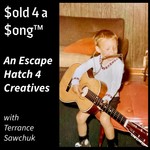
My mission for the Sold 4 a Song Brand™ is to pull back the curtain of the music and technology industries and reveal the structures that have historically kept creators at a disadvantage. I aim not only to demystify the business and tech side of music so that music creators can reclaim control over their careers but to guide artists by the hand with actual solutions.
Sold 4 a Song™ isn’t just a podcast — it’s a revolution for undervalued creatives. Hosted by Terrance Sawchuk, Billboard #1 writer & multi-platinum producer, each episode helps you rewrite your story from Undervalued to Unstoppable.
At the core, I guide creators how to:
• Own their art and intellectual property rather than give it away.
• Leverage their music and data to create opportunities and income streams.
• Streamline their creative and business processes so they can focus on making art while staying profitable.
• Sustain their careers by building long-term models of independence, resilience, and growth.
This mission is about evening the playing field—shifting the power back into the hands of the creators. It’s not just guidance, but empowerment: giving artists the tools, frameworks, and mindset to thrive in an industry that often undervalues them.
What’s the true worth of a songwriter or artist? For too long, artists have been selling themselves short — and today, the challenge has only grown with AI. $old 4 a $ong podcast reverse-engineers the ways creatives have been undervalued — and reveals how to build a sustainable career in the chaos.
Hosted by Billboard #1 multi-platinum songwriter and producer Terrance Sawchuk, this show is about reclaiming ownership and streamlining a sustainable creative life. Each episode brings real conversations with legendary hitmakers, executives, and disruptors who confirm, It’s time to start playing the game above the game.
#3: Hit Me With Your Best Schwartz, Fair Trade Music with Hit Songwriter Eddie Schwartz
Episode 5
Monday, September 1, 2025 • Duration 39:35
In this episode of 'Sold for a Song', legendary songwriter Eddie Schwartz shares his journey in the music industry, detailing the struggles and triumphs of being a songwriter. He discusses the creation of his iconic song 'Hit Me With Your Best Shot' and the challenges he faced in getting it recognized. The conversation then shifts to the Fair Trade Music initiative, aimed at ensuring fair compensation for music creators and promoting ethical practices in the music industry. Schwartz emphasizes the importance of education and accountability for modern songwriters, advocating for a shift in how artists manage their careers and rights.
Takeaways
The journey of a songwriter is often filled with challenges and rejections.
'Hit Me With Your Best Shot' faced initial criticism but became a hit.
Fair Trade Music aims to create a more ethical music industry.
Songwriters must educate themselves about the business side of music.
Being fearless in creativity and business is essential for success.
The music industry is currently dominated by corporate interests.
Songwriters need to monitor their rights and compensation closely.
Fair Trade Music provides a framework for fair compensation.
Modern songwriters must write undeniable songs to succeed.
Collaboration and support among music creators are vital for change.
Titles
The Struggles of a Songwriter
Creating 'Hit Me With Your Best Shot'
Sound bites
"You can't stop an idea whose time has come"
"The industry is mostly run by the industry"
"Fair Trade Music is a tool that we can use"
Chapters
00:00 The Journey of a Songwriter
20:15 Fair Trade Music Initiative
29:23 The Modern Songwriter's Mindset
Keywords
songwriting, music industry, Fair Trade Music, artist rights, music creators, songwriter journey, music value chain, creative empowerment, music royalties, songwriter education
👉 Be fearless in your creativity, and fearless in your business.
Sold 4 a Song™ Podcast hosted by Terrance Sawchuk, Billboard #1 multi-platinum songwriter, producer, artist, mixer, & entrepreneur.
Sold 4 a Song™ is a living exploration of creative worth, ownership, and the true value of music — inside the systems that monetize it.
If this episode resonates, you can follow the work at sold4asong.com.
#2: The Way You Do Everything with Prince's Bus Driver Neville Drew Shende
Episode 4
Monday, September 1, 2025 • Duration 57:59
In this episode of $old 4 a $ong, host Terrance Sawchuk goes behind the scenes of the touring world with Neville Drew Shende — veteran entertainer coach driver, Director of Tour Relations at Pioneer Coach, and founder of CDL Platinum.
Neville shares stories from two decades on the road with iconic artists like Prince, Alicia Keys, Aerosmith, Papa Roach, and Disturbed, offering a rare look at life on tour and the lessons that shaped his career. From the discipline and artistry of Prince to the importance of self-worth, hard work, and healthy balance, Neville brings a fresh perspective on what it takes to succeed in entertainment.
Takeaways
Prince was always moving forward, despite industry pressures.
The importance of self-worth in the music industry.
Building relationships is key to success in entertainment.
Understanding the nuances of your craft is essential.
Creativity should not be stifled by external expectations.
The value of hard work and dedication in achieving success.
Positive energy can uplift those around you.
Investing in yourself is crucial for long-term success.
The importance of maintaining a healthy work-life balance.
Learning from experiences shapes your professional journey.
Summary
In this episode, Neville Drew Shende shares his incredible journey as an entertainer bus driver, detailing his experiences with iconic artists like Prince. He discusses the importance of self-worth, creativity, and the relentless pursuit of excellence in the music industry. Neville emphasizes the value of building relationships and understanding the nuances of one's craft, while also introducing his CDL Platinum course aimed at empowering drivers in the entertainment industry.
Titles
Behind the Scenes with a Rock Star Bus Driver
Lessons from the Road: Insights from Neville Drew Shendi
Sound bites
"Let the baker make the bread."
"I fell in love with the guitar."
"I was the smoothest cat."
Chapters
Neville Drew Shende – Professional Biography
#1: New York State of Mind with A&R Executive Patrick Clifford
Episode 3
Monday, September 1, 2025 • Duration 53:14
In this episode of Sold 4 A Song, host Terrance Sawchuk engages with Patrick Clifford, a veteran A&R executive, to explore the evolution of the music industry, the importance of empowering artists, and the challenges faced by creators today. Patrick shares his journey from the romanticism of the old school music business to the modern landscape shaped by technology and streaming. The conversation highlights memorable experiences with iconic artists, the significance of ownership, and the necessity for artists to be business-savvy in a rapidly changing environment.
Takeaways
The music industry has historically undervalued songwriters and artists.
Empowering artists is essential for their success and recognition.
Old school music business had a romanticism that is often missed today.
Music played a crucial role in societal changes during the 60s and 70s.
Becoming an A&R man was a dream fueled by passion for music.
Early experiences in the industry shaped Patrick's career path.
The 70s music scene was chaotic yet vibrant, akin to the Wild West.
Discovering and nurturing new talent is a rewarding aspect of A&R.
The Neville Brothers' comeback album was a significant project for Patrick.
Artists today must navigate a complex landscape of technology and business.
Sound bites
"I met John Lennon with Harry Nilsson."
"I wanted to be an A&R man."
"Artists today must be business savvy."
Chapters
00:00 The Encounter with John Lennon
00:18 Patrick Clifford's Journey in A&R
01:45 The Romanticism of Old School Music Business
03:42 The Impact of Music on Society
06:27 The Path to Becoming an A&R Man
09:45 Early Experiences in the Music Industry
12:12 The Wild West of the 70s Music Scene
16:12 Discovering New Talent: The Romantics
18:26 Working with Iconic Artists
21:55 The Neville Brothers and Daniel Lanois
25:08 The Evolution of the Artist's Role
27:15 Navigating the Modern Music Landscape
31:05 The Business Savvy Artist
33:31 Ownership and Control in the Music Industry
36:00 The Role of AI in Music Production
36:19 Memorable Moments at the Dakota
40:45 The Currency of Heart and Soul in Music
46:16 The Importance of Serving Others in Music
music industry, songwriters, artists, A&R, empowerment, music history, modern music, artist management, ownership, AI in music
Patrick Clifford – Bio
#5: The Legend To The Legends. Hall of Fame Songwriter Roger Cook Part 2
Episode 7
Tuesday, September 16, 2025 • Duration 41:10
Legendary songwriter Roger Cook joins host Terrance Sawchuk on Sold for a Song to share untold stories behind hit records, the realities of Nashville’s music machine, and the future of music ownership. From Bono bar stories to Alanis Morissette’s Jagged Little Pill sessions, this episode is packed with songwriting wisdom, industry laughs, and lessons every creative needs to hear.
Full Show Notes
Episode Summary
In this powerful episode of Sold for a Song, Terrance Sawchuk sits down with Hall of Fame songwriter Roger Cook (You Got Your Troubles, I Just Want to Dance with You) for an unfiltered conversation about:
The highs and lows of songwriting success
Crazy stories with Bono, The Beatles, and Roy Orbison
The Nashville writing grind vs. creative freedom abroad
Music industry greed, market share royalties, and blockchain’s future
Why the simplest songs often hit the hardest
This episode isn’t just music history—it’s a roadmap for songwriters, artists, and anyone navigating creative ownership in today’s industry.
Key Takeaways
“Write one for the radio, one for yourself.” Roger’s simple but powerful philosophy on staying authentic.
Market share vs. fairness: Why songwriters often lose money despite millions of streams—and how Web3 could fix it.
Creative freedom matters: Why some of the best songs come from outside the pressure cooker of Nashville.
The hit songs that changed everything: From You Got Your Troubles to I Just Want to Dance with You.
Lessons from legends: Stories involving Bono, The Beatles, John Prine, and Alanis Morissette.
Quotes from the Episode
“The easiest thing you’ll ever do in this business is sign a record deal. The hardest thing? Keeping it.” – Roger Cook
Call to Action
Credits
SEO Keywords (paste in Podbean “Tags”)
#4: The Legend To The Legends. Hall of Fame Songwriter Roger Cook Part 1
Episode 6
Tuesday, September 9, 2025 • Duration 44:07
Legendary songwriter Roger Cook—the only British citizen inducted into the Nashville Songwriters Hall of Fame—joins Terrance Sawchuk to unpack six decades of craft, business, and integrity. From “Long Cool Woman (In a Black Dress)” and “I’d Like to Teach the World to Sing” to “Talking in Your Sleep,” Roger shares how to write songs that outlast trends, the reality of publishing splits, why masters vs. publishing changed the game, and how artists can build direct, sustainable careers with 100 true fans.
You’ll hear frank stories about George Martin, The Beatles, UK/US publishing practices, live performance royalty gaps, demo culture, co-writing integrity, and why Roger still writes two to three days a week at 85—with a Guild ukulele John Prine gifted him.
What You’ll Learn
Craft: How to write for the listener (and widen your cutability from 3 artists to 33)
Business: Why historic publishing deals siphoned value—and how to negotiate smarter today
Royalties: The uncomfortable truth about US live performance payouts vs. other countries
Strategy: Masters vs. publishing, why investors buy catalogs, and what “uncorrelated assets” mean
Career Design: Portals, community, and the “100 fans x $1,000” model
Chapter Timestamps
00:00 Spiritual payment: why one great line is its own paycheck
01:00 Terrance’s intro + mission of $old 4 a $ong
03:20 Roger at 85: perspective, gratitude, longevity
05:40 Choirboy roots → harmony, melody, first groups (The Harmonettes → The Sapphires)
08:09 The Kestrels, first co-write: “You’ve Got Your Troubles (I’ve Got Mine)”
09:35 When The Fortunes “got the song” and raced it to a hit
11:00 George Martin, “Michelle (ma belle),” and becoming artists
12:43 The publishing math: 70 years after death & the 50/50 (that wasn’t really 50/50)
14:21 US live performance royalties vs. Canada; forms no one files
About Roger Cook
Notable Quotes
Mentions & References
Credits
#10: I Just Wanna Be Unique Like Everyone Else
Episode 12
Tuesday, October 21, 2025 • Duration 10:24
In this episode of Sold 4 a Song, Terry tackles one of the most misunderstood—and most exploited—ideas in the music business: being “unique.”
He opens with a classic, brutally honest “music industry haiku” using Bob Dylan to illustrate how the industry endlessly chases originality… then immediately tries to standardize it, replicate it, and replace it. Labels search for “the next Bob Dylan,” then a younger Bob Dylan—until even Bob Dylan himself becomes unrecognizable to the system that once needed him.
Terry argues that while the industry operates on market share, creators cannot. Artists who chase trends, comparisons, or approval end up disconnected from the only real leverage they have—their unique human blueprint. With over 11 million artists on Spotify, the paradox is this: you have zero competition if you are truly yourself.
The conversation deepens through insights from Dr. Bruce Lipton, shared via a Tony Robbins podcast, exploring how most people live 95% of their lives based on subconscious programming installed by age seven. Terry connects this science to creativity—explaining how fear, conformity, and “malware” thinking suppress authenticity, while movement, action, and consciousness awaken it.
For creators, this revelation becomes liberation. Trauma, stories, and lived experience aren’t weaknesses—they’re the raw material for songs. Artists become the first listener, channeling truth back into the world, awakening something in others through honest expression.
The episode closes with a powerful reframe: you don’t compete with noise—you transcend it. By turning inward, rejecting comparison, and embracing your unapologetic self, you become “unique… just like everybody else.”
Key Takeaways
The music industry chases originality—but only at scale
Labels care about market share; creators must care about truth
With millions of artists online, authenticity eliminates competition
Imposter syndrome is a byproduct of suppressed uniqueness
95% of behavior is driven by early subconscious programming
#9: From Rejection to Revelation: What Are They Gonna Say—No?
Episode 11
Tuesday, October 14, 2025 • Duration 25:22
aIn this foundational solo episode, Terry pulls back the curtain on who he is, where he came from, and why Sold 4 a Song exists at all—especially now, in the age of streaming and AI.
He starts with a clear mission: to put power and value back into the minds, hearts, and hands of creators, at a pivotal historical moment where AI and platforms are poised to strip even more leverage from songwriters and artists. If artists don’t act now, Terry warns, their ownership and value may slip away in ways that will be almost impossible to recover.
From there, he walks through his journey:
Growing up in Espanola, Ontario, a pulp-and-paper town filled with music, family jam sessions, French folk songs, and country tunes.
Discovering songwriting at 16 on his grandmother’s piano, locking himself in the basement for years and logging only 14 days outside over a two-year span that weren’t school or work.
Attending Harris Institute in Toronto, getting placed at Arnyard Studios, and cutting his teeth with producer Arnold Lanni and engineer Michael Jack / Michael Saracini.
Recording a small band called As If that would eventually become Our Lady Peace, going on to make the Naveed and Clumsy albums.
Forming The Miller Stain Limit, signing a deal with Universal, and then getting dropped—learning brutally that “success” can evaporate overnight.
Re-learning the craft in the Pro Tools era at Silver Birch Studios, working with multicultural artists from all over the world and soaking up Arabic, African, Russian, and reggae traditions—realizing how deeply music is tied to culture, food, religion, and story.
Writing with a young Alanis Morissette, having songs considered for Jagged Little Pill, and only later realizing how profoundly that experience shaped his career and lens on value and ownership.
Terry then chronicles his move to Nashville: the three-year visa clock, the financial strain, and the uphill climb to be seen as a songwriter in a town that doesn’t care what you’ve done elsewhere—only what you can do in the room today.
The turning point comes with “Barefoot Blue Jean Night”:
co-writing it with Eric Paslay and Dylan Altman, broke and almost out of runway, making a “scrappy” demo in his apartment with a laptop, a $100 mic, and $60 computer speakers. Instead of playing it safe, Terry leans into his Toronto “no rules” background: building a hooky drum groove using Stylus RMX gospel stomps and claps, adding R&B/808 textures, creating a drum hook as strong as the chorus itself.
#8: He's A Maniac On The Floor. Oscar Nominated, Grammy Award Winning Songwriter Producer Dennis Matkosky
Episode 10
Tuesday, October 7, 2025 • Duration 48:03
Oscar-nominated, Grammy-winning songwriter/producer Dennis Matkosky (Diana Ross, Flashdance, Al Jarreau, Boz Scaggs, Keith Urban, LeAnn Rimes) sits down with host Terrance Sawchuk to drop a masterclass on creative longevity and business ownership. From writing “Maniac” in 15 minutes and tailoring it for Flashdance with Phil Ramone, to the long road behind Keith Urban’s “You’ll Think of Me,” to discovering and championing HARDY, Dennis shares hard-won lessons on belief, persistence, and treating yourself like the CEO of your art. We get into LA vs. Nashville, film/TV cuts, admin vs. ownership, AI and streamlining, and the new “blue ocean” model where artists own code, data, and distribution.
If you’re a songwriter, artist, or producer who’s ready to stop waiting for permission and start running your career like a business, this one’s a gem.
What You’ll Learn
The real story behind “Maniac” and how lyrics were reshaped for Flashdance
Why great songs are timeless—but cuts are all about timing
Admin deals vs. publishing ownership (and when each makes sense)
How Dennis evaluates and develops talent (and why HARDY bends genres)
The mindset shift: artists as CEOs—and how to build leverage
How AI can streamline the boring stuff so you can create more
Blue-ocean strategies for an artist-owned future (own your portal, data, and distribution)
Guest
Dennis Matkosky — Oscar-nominated, Grammy-winning songwriter/producer. Credits include Diana Ross (“Mirror, Mirror”), Michael Sembello (“Maniac”), Al Jarreau, Boz Scaggs (“Heart of Mine”), LeAnn Rimes (“I Need You”), Keith Urban (“You’ll Think of Me”), Chicago, and more. Co-founder at Relative Music Group.
#7: In Fred We Trust. Hits, Heartbreak, and the Art of Producing Legends with Fred Mollin.
Episode 9
Tuesday, September 30, 2025 • Duration 41:56
What does it take to produce the greatest songwriters on earth—and still love the work decades later? Grammy-nominated, Juno Award-winning producer Fred Mollin joins Terrance Sawchuk to talk about building trust with legends (Jimmy Webb, Kris Kristofferson, Johnny Mathis, Billy Joel, James Taylor), surviving label bankruptcies, composing for film/TV, and why great producers are often great reducers.
You’ll hear the true story behind “Sometimes When We Touch,” how a label collapse wiped out life-changing royalties, why U.S. theatrical runs don’t pay performance royalties to composers (but Europe does), and the making of Jimmy Webb’s intimate classic Ten Easy Pieces—including the version of “By the Time I Get to Phoenix” that Bob Dylan singled out in his book The Philosophy of Modern Song. Fred also shares an email that nearly led to producing Dylan himself.
If you care about songs, studios, and the humans who make them, this one’s a masterclass.
Highlights
Trust, taste, and the producer as “reducer”
The crash course: label bankruptcy and lost producer royalties
TV/film back-end vs. U.S. theatrical: what pays and what doesn’t
How Ten Easy Pieces was really recorded (and why it feels live)
Calling in favors: building a Rolodex that gets legends to say “yes”
Modern albums, mega-tracklists, and the algorithm era
Trauma, truth, and why autobiographical songs hit harder
Timestamps
00:49 Intro: Why Sold for a Song exists
02:00 Who is Fred Mollin?
06:45 Dan Hill, Matt McCauley & producing a global hit
10:50 When the label goes bankrupt (and your check vanishes)
12:30 Film/TV royalties 101 (U.S. vs. Europe)
13:30 The Clive Davis “yes-sir” moment
17:45 Becoming the “duets” guy & calling legends
21:20 Making Jimmy Webb’s Ten Easy Pieces
Resources & Links
#6: Somebody's Someone. The Pride of Chicago, Daphne Willis.
Episode 8
Tuesday, September 23, 2025 • Duration 46:19
In this episode, the conversation explores the challenges and triumphs of artists in the music industry, focusing on the importance of self-worth, the impact of personal struggles, and the evolving landscape of music distribution and fan engagement. The guests share their experiences navigating the complexities of the industry, the role of social media, and the significance of authentic connections with fans. They also discuss the power of music to heal and the future of technology in the music world.
Takeaways
You can't ignore the pain of your audience.
The music industry undervalues its contributors.
Self-worth is crucial for artists.
Crowdfunding can empower artists financially.
Social media is a tool for connection, not just promotion.
Authenticity resonates more than perfection.
Music has the power to heal and connect people.
Building a community is essential for artists.
Navigating the industry requires resilience and adaptability.
Personal struggles can enhance artistic expression.
Titles
The Pain Behind the Music: A Deep Dive
Navigating the Music Industry: Insights and Strategies
Sound bites
"You can't get sent 52,000 messages in a year."
"There's so much work involved in everything."
"I made like 30 grand each album."
Chapters
00:00 The Pain Behind the Music
02:42 The Journey of an Artist
05:54 Navigating the Music Industry
08:43 The Role of Social Media in Music
11:34 The Impact of Personal Struggles
14:32 Creating Meaningful Connections
17:35 The Evolution of Crowdfunding
20:36 The Importance of Authenticity
23:42 The Power of Music to Heal
26:26 The Future of Music and Technology
Keywords
music industry, songwriters, artists, mental health, crowdfunding, social media, personal struggles, authenticity, connections, healing
Sold 4 a Song™ Podcast hosted by Terrance Sawchuk, Billboard #1 multi-platinum songwriter, producer, artist, mixer, & entrepreneur.
Related Shows Based on Content Similarities
Discover shows related to Sold 4 a Song, based on actual content similarities. Explore podcasts with similar topics, themes, and formats, backed by real data.
00:00 The Journey of an Entertainer Bus Driver
20:55 Lessons from Prince: The Art of Perfection
45:32 Navigating the Music Industry: Artist Control and Value
49:01 Empowering Drivers: The CDL Platinum Course
Keywords
entertainer bus driver, Prince, music industry, artist control, CDL Platinum, Neville Drew Shende, songwriting, self-worth, creative empowerment, tour management
👉 Subscribe, review, and share this episode with someone who needs to hear it.
👉 Join the movement at TerranceSawchuk.com.
Current Role:
Director of Tour Relations at Pioneer Coach, one of the leading companies handling coach services for high-profile performing artists.
Industry Experience:
Carries approximately 22 years of extensive experience in the entertainment touring industry, including logistics, fleet management, and driver relations
Clients: Prince, Alicia Keys, Papa Roach, Disturbed, Aerosmith...
Managed a fleet of over 37 entertainer sleeper buses, coordinating 36 full-time and 48 part-time drivers—a complex logistical operation demanding precision and reliability.
Entrepreneurial & Creative Ventures:
Owner of Nelvis Enterprises LLC (since March 2004):
Published a book titled “The Entertainer Coach Driver: An Inside Look”, offering behind-the-scenes insight into the concert touring world.
Sold 4 a Song™ Podcast hosted by Terrance Sawchuk, Billboard #1 multi-platinum songwriter, producer, artist, mixer, & entrepreneur.
Sold 4 a Song™ is a living exploration of creative worth, ownership, and the true value of music — inside the systems that monetize it.
If this episode resonates, you can follow the work at sold4asong.com.
You can reach Patrick Clifford on Instagram @pchollywood.
👉 Subscribe, review, and share this episode with someone who needs to hear it.
👉 Join the movement at TerranceSawchuk.com.
Name: Patrick Clifford
Nickname: “The Pope of Five Points” – a playful title reflecting his gregarious presence and beloved status in East Nashville’s Five Points neighborhood, where locals often greet him with friendly honks and cheers
Early Career
Began with Nemperor Artists, working closely with James Taylor and Cat Stevens, and notably discovered and recorded The Romantics Served in A&R departments at major labels: Epic, A&M, Chrysalis, and Capitol, working with Miami Sound Machine, Blues Traveler, and The Neville Brothers
As a senior executive at BMG, he collaborated with iconic figures like Etta James and Ziggy Marley
Ten Ten Music Group
Joined Ten Ten Music Group in Nashville in 2005, serving as VP of A&R until 2013
Disney Music Publishing
In June 2013, Patrick was named Vice President of Music Publishing and A&R for Disney Music Publishing in Nashville.
In this role, he handled creative leadership, expanded the writer roster, and managed the exploitation of Disney’s extensive song catalog.
Recent Work & Local Legacy
After his stint at Disney, Patrick launched his own consulting company, began managing artists, and became an independent A&R representative for Concord Music Group.
A beloved figure in East Nashville, he has affection for the neighborhood, frequently seen at spots like The Basement East, The 5 Spot, and others—earning him his “Pope of Five Points” reputation.
Sold 4 a Song™ Podcast hosted by Terrance Sawchuk, Billboard #1 multi-platinum songwriter, producer, artist, mixer, & entrepreneur.
Sold 4 a Song™ is a living exploration of creative worth, ownership, and the true value of music — inside the systems that monetize it.
If this episode resonates, you can follow the work at sold4asong.com.
“At some point, you might as well fail being you.” – Terrance Sawchuk
“Write for love first. Let the hits take care of themselves.” – Roger Cook
Subscribe, rate, and review $old 4 a $ong to help more creators reclaim their worth.
Want to go deeper? Watch for the $old 4 a $ong Academy + 1:1 mentoring inside the private portal.
Host: Terrance Sawchuk
Guest: Roger Cook
Production: $old 4 a $ong / Terrance Sawchuk
Music/Editing: Terrance Sawchuk
Location: Nashville, TN
songwriting, music business, publishing splits, masters vs publishing, Nashville, George Martin, The Beatles, Roger Cook, Terrance Sawchuk, ASCAP, royalties, country songwriting, catalog sales, investor catalogs, 1000 true fans, ukulele, John Prine
Sold 4 a Song™ Podcast hosted by Terrance Sawchuk, Billboard #1 multi-platinum songwriter, producer, artist, mixer, & entrepreneur.
Sold 4 a Song™ is a living exploration of creative worth, ownership, and the true value of music — inside the systems that monetize it.
If this episode resonates, you can follow the work at sold4asong.com.
16:02 Cook & Greenaway: integrity over easy credits
17:49 Modern split creep: how a writer can end up with 5%
21:44 Masters vs. publishing: the big shift with streaming scale
23:40 100 true fans; ASCAP averages; building direct value
25:18 Roger’s routine: still writing 2–3 days a week
27:18 First meeting in Nashville (golf, AIR Studios, Beatles orbit)
31:30 “Love Don’t Let Me Go,” Hillary Lindsey demo, Gordie Sampson
33:15 Coming to Nashville “cocky,” learning to write for the ears here
34:47 “Talking in Your Sleep” and leaving the “English bits” out
36:13 Lyrics first: mixing for words (carving 1 kHz), pop vs. country sensibilities
37:41 Computers, programming, AI voices—and protecting “soul”
39:02 The ukulele from John Prine
40:08 The Beatles’ shockwave; Little Richard, Chuck Berry, Orbison, Everlys
42:35 Work ethic vs. entitlement: Hamburg, clubs, and stagecraft
43:50 Closing: claim your worth, build your portal, own your career
Roger Cook is a member of both the American Songwriters Hall of Fame and the Nashville Songwriters Hall of Fame. His songs have been recorded by The Hollies, Don Williams, Crystal Gayle, George Strait, John Denver, and many more. Notable works include “Long Cool Woman (In a Black Dress),” “I’d Like to Teach the World to Sing,” and “Talking in Your Sleep.” He has collaborated with the greats on both sides of the Atlantic and helped shape pop, country, and rock for over five decades.
“I get paid in my soul as a writer.” — Roger Cook
“Change one word and 33 artists can cut your song.” — Roger Cook
“We need a new norm where creators keep leverage.” — Terrance Sawchuk
George Martin, The Beatles (Rubber Soul, “Michelle”)
The Fortunes — “You’ve Got Your Troubles (I’ve Got Mine)”
Subscribe, rate, and review $old 4 a $ong to help more creators reclaim their worth.
Want to go deeper? Watch for the $old 4 a $ong Academy + 1:1 mentoring inside the private portal.
Host: Terrance Sawchuk
Guest: Roger Cook
Production: $old 4 a $ong / Terrance Sawchuk
Music/Editing: Terrance Sawchuk
Location: Nashville, TN
songwriting, music business, publishing splits, masters vs publishing, Nashville, George Martin, The Beatles, Roger Cook, Terrance Sawchuk, ASCAP, royalties, country songwriting, catalog sales, investor catalogs, 1000 true fans, ukulele, John Prine
Sold 4 a Song™ Podcast hosted by Terrance Sawchuk, Billboard #1 multi-platinum songwriter, producer, artist, mixer, & entrepreneur.
Sold 4 a Song™ is a living exploration of creative worth, ownership, and the true value of music — inside the systems that monetize it.
If this episode resonates, you can follow the work at sold4asong.com.
Environment and beliefs influence creativity and expression
Trauma and life experiences often become the most powerful songs
Artists act as conduits—becoming the first listener
You don’t compete with trends; you turn inward and create
True sustainability comes from unapologetic originality
I Just Want to Be Unique Like Everyone Else
Why Chasing “The Next Bob Dylan” Kills Creativity
“Who is this Bob Dylan? … Who the hell is Bob Dylan?”
“You have zero competition if you’re actually yourself.”
“Labels operate on market share. Artists can’t.”
“Your DNA is a library of blueprints—you choose which ones get read.”
“You don’t compete with noise. You transcend it.”
00:00 The Bob Dylan haiku & industry obsession with sameness
01:00 Welcome to Sold 4 a Song
02:15 Imposter syndrome and creative resistance
03:20 Why artists truly have no competition
04:45 Market share vs creative truth
05:46 Dr. Bruce Lipton, programming, and consciousness
07:58 Trauma, songs, and becoming the first listener
09:10 Authenticity as creative leverage
10:30 Why you never compete—only turn inward
11:40 Unique, just like everybody else
authenticity, uniqueness, Bob Dylan, music industry mindset, creativity, imposter syndrome, artist identity, Dr. Bruce Lipton, consciousness, epigenetics, self-worth, creative purpose, originality, artist development
Sold 4 a Song™ Podcast hosted by Terrance Sawchuk, Billboard #1 multi-platinum songwriter, producer, artist, mixer, & entrepreneur.
Sold 4 a Song™ is a living exploration of creative worth, ownership, and the true value of music — inside the systems that monetize it.
If this episode resonates, you can follow the work at sold4asong.com.
That rough, unconventional demo is what gets Jake Owen’s attention. Producer Joey Moi recreates the feel for the master, and the song explodes—changing Jake’s life and Terry’s, and ultimately securing Terry’s U.S. green card.
From there, Terry moves into film/TV work (including placements like Mad Max), navigates divorce and burnout, and eventually has to fall back in love with music again. In that process, a new question emerges: How do I give back? He realizes he’s now fighting for “the previous version” of himself—the underdog creator who keeps getting undervalued.
That leads him into the deeper history behind the phrase “sold for a song”:
Tracing it back through Shakespeare (All’s Well That Ends Well: “sold a goodly manor for a song”).
Even further to Queen Elizabeth I, Edmund Spenser’s performance of The Faerie Queene, and Lord Burleigh’s legendary complaint: “All this for a song?” when the Queen ordered Spenser be richly paid.
The literal definition—“very cheaply, especially for less than something is worth”—becomes the backbone of Terry’s brand: a symbolic mirror of how creators have been treated for hundreds of years, long before streaming, PROs, or TikTok.
The episode closes by tying everything back to AI, ownership, and the future. Terry lays out his core mission and framework:
Worth & Value – Remember who you are and what your work is truly worth
Leverage – Use tools and tech to your advantage, not the other way around
Streamline – Design systems that buy back your time and focus
Sustain – Build a career that lasts, without selling the core of who you are
Through his upcoming book, Sold 4 a Song Artist Accelerator, and private portal, Terry is committed to going toe-to-toe with the music industry—on behalf of creators—at this critical inflection point.
The undervaluing of creators predates Spotify by centuries
You can come from a tiny mill town and still shape global records
Scrappy, honest demos can change your entire life
Burnout and victim mentality are common—but survivable
“Sold for a song” is not just a phrase; it’s a pattern we must break
AI can either be a tool for creators or another layer of exploitation
The path forward is Worth → Leverage → Streamline → Sustain
The time to reclaim ownership is right now, not “once things settle”
Why I Built Sold 4 a Song (and Why It Matters Now More Than Ever)
From Barefoot Blue Jean Night to the AI Era: My Journey & My Fight
“My goal is to put power and value back into the minds and hearts of creatives.”
“We should be leveraging technology—not being leveraged by it.”
“I grew up in a tiny pulp-and-paper town and somehow ended up writing hits and fighting for creators.”
“‘Sold for a song’ literally means being paid far less than you’re worth. That’s been our reality for centuries.”
“If we don’t act now in the AI era, I don’t know if we’ll ever get our leverage back.”
00:00 Cold open – the real reason Terry is doing this
01:01 Welcome to Sold 4 a Song
02:30 Why this solo episode, why now
03:03 Streaming, AI, and the most leveraged generation of creators ever
04:00 Growing up musical in Espanola, Ontario
05:10 Discovering songwriting at 16 and living at the piano
06:00 Harris Institute, Arnyard Studios, and early studio years
07:30 As If → Our Lady Peace, Naveed and Clumsy
07:50 The Miller Stain Limit and a short-lived major label deal
09:00 Pro Tools, multicultural Toronto, and chasing the origins of music
11:51 The move to Nashville and starting over again
14:04 Writing “Barefoot Blue Jean Night” and the broke-apartment demo
18:26 The Stylus RMX drum hook and Jake Owen cut
20:32 Film/TV era, Mad Max, divorce, and burnout
21:30 Realizing it’s time to give back to “previous you”
22:43 The origin of “sold for a song” and centuries of undervaluation
24:10 Why worth, leverage, streamline, sustain are the new non-negotiables
24:40 AI, ownership, and why the clock is ticking
25:00 Book, accelerator, and Terry’s promise to go to war for creators
AI and music, creator ownership, songwriter leverage, streaming era, artist accelerator, Barefoot Blue Jean Night, Our Lady Peace, Alanis Morissette, underpaid creators, “sold for a song” origin, Nashville journey, sync & film/TV, artist worth, Claiming your value, creator revolution.
Sold 4 a Song™ Podcast hosted by Terrance Sawchuk, Billboard #1 multi-platinum songwriter, producer, artist, mixer, & entrepreneur.
Sold 4 a Song™ is a living exploration of creative worth, ownership, and the true value of music — inside the systems that monetize it.
If this episode resonates, you can follow the work at sold4asong.com.
“You’re the CEO of your company. Don’t hand away the 2% you can control.” — Dennis
“Great songs are timeless; getting them cut is all timing.” — Terrance
“Own the code. Own the data. Own the distribution.” — Terrance
00:00 Opening riff — Artists as CEOs
02:55 Dennis’s early years (Philly roots, Sembello, jazz)
05:50 “Maniac” genesis → Flashdance with Phil Ramone
12:10 Grammy/Oscar season and stiff competition
13:00 Writing/producing for Boz Scaggs, Al Jarreau, Chicago
18:45 LA sessions → film/TV → Nashville move
20:20 “I Need You” (LeAnn Rimes) and pitching strategy
23:40 “You’ll Think of Me” (Keith Urban) — the long game
26:05 Spotting HARDY and bending the genre
30:35 Ownership, leverage, and the artist-as-CEO mindset
37:20 Algorithms, radio, and the new release reality
39:40 Blue-ocean playbook for artist-owned futures
44:20 AI for streamlining creative businesses
45:55 Dennis’s upcoming book & parting wisdom
Songwriting, Music Business, Ownership, Publishing, Sync, Nashville, Flashdance, HARDY, Keith Urban, LeAnn Rimes, Creativity, AI for Creators, Independent Artists, Relative Music Group, Terrance Sawchuk
Sold 4 a Song™ Podcast hosted by Terrance Sawchuk, Billboard #1 multi-platinum songwriter, producer, artist, mixer, & entrepreneur.
Sold 4 a Song™ is a living exploration of creative worth, ownership, and the true value of music — inside the systems that monetize it.
If this episode resonates, you can follow the work at sold4asong.com.
25:30 Standing on the shoulders of great players
26:50 The Bob Dylan email (and what might have been)
29:10 Working with Lamont Dozier & the Motown wellspring
32:30 The algorithm era vs. live, charted studio magic
34:15 Creativity, trauma, and writing what hurts
37:50 Fred’s book, tour, and new Jimmy Webb project
Fred’s book (signed): FredMollinUnplugged.com
Fred’s site: FredMollin.com
Host: Terrance Sawchuk — TerranceSawchuk.com
www.fredmollin.com
Sold 4 a Song™ Podcast hosted by Terrance Sawchuk, Billboard #1 multi-platinum songwriter, producer, artist, mixer, & entrepreneur.
Sold 4 a Song™ is a living exploration of creative worth, ownership, and the true value of music — inside the systems that monetize it.
If this episode resonates, you can follow the work at sold4asong.com.
Sold 4 a Song™ is a living exploration of creative worth, ownership, and the true value of music — inside the systems that monetize it.
If this episode resonates, you can follow the work at sold4asong.com.