Self Careapist Therapist Podcast – Details, episodes & analysis
Podcast details
Technical and general information from the podcast's RSS feed.
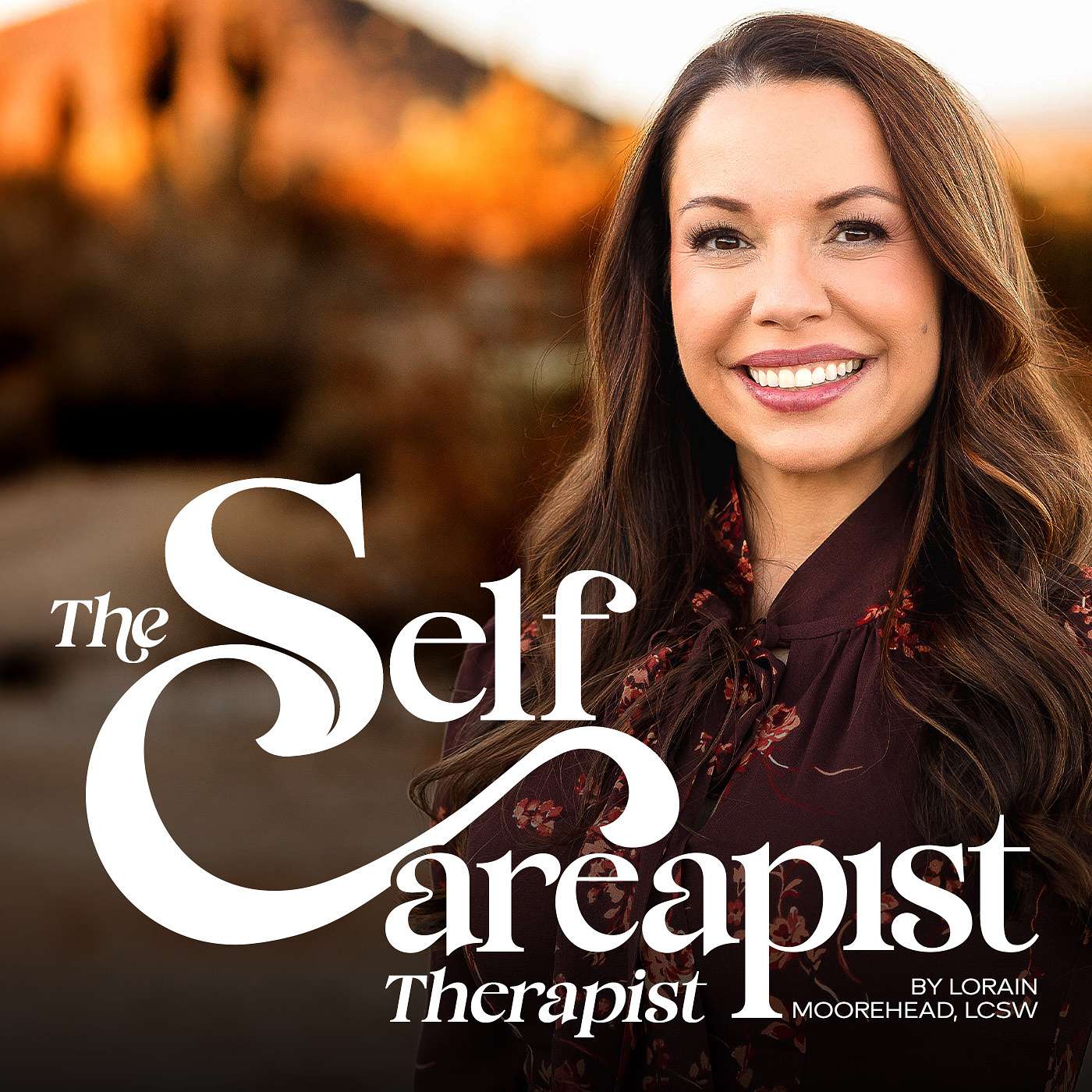
Self Careapist Therapist Podcast
Lorain Moorehead
Frequency: 1 episode/12d. Total Eps: 30

How do you actually use EMDR, CBT, or IFS in session, not the textbook version, but with a real client sitting across from you? Self Careapist Therapist is a therapist-to-therapist podcast where licensed clinicians break down the
clinical skills, modalities, and hard conversations that training programs skim over.
Hosted by Lorain Moorehead, LCSW, PMH-C, EMDR Certified Approved Consultant, Clinical Supervisor, and graduate school faculty associate. Each week features expert guests, including researchers, authors, and practicing clinicians, sharing
evidence-based interventions you can take straight into your next session.
Topics include:
• EMDR therapy, trauma processing, and advanced EMDR applications
• Internal Family Systems (IFS), parts work, and integrative trauma approaches
• CBT, DBT, RO-DBT, ACT, and third-wave cognitive behavioral therapies
• Clinical supervision, therapist training, and professional development
• Trauma, complex trauma, PTSD, CPTSD, and nervous system regulation
• ADHD, autism, neurodiversity-affirming assessment and treatment
• Therapist burnout, perfectionism, compassion fatigue, and sustainable self-care
• Couples therapy, attachment theory, and relational wounds
• Anxiety, OCD, and exposure-based interventions
• Grief, prolonged grief disorder, and meaning-making
• Suicide risk assessment, CAMS, and crisis intervention
• Parent-child therapy, adolescent anxiety, and family systems
• Perinatal mental health
• Ketamine-assisted psychotherapy and emerging modalities
• Clinical ethics, risk management, and culturally responsive practice
• Private practice development, insurance, and building a sustainable career
Questions we answer:
• How do I use EMDR, CBT, DBT, or ACT in real-life sessions, not just textbook examples?
• How do I choose which therapy modality to learn next?
• How do other therapists handle burnout and compassion fatigue?
• How do I integrate different modalities instead of feeling like I'm doing them wrong?
• When should I use IFS parts work versus EMDR reprocessing?
• How do I grow as a therapist after grad school or licensure?
• How do I make my practice more trauma-informed and culturally responsive?
• How do I find my niche or specialty as a clinician?
• What does evidence-based therapy actually look like in practice?
• How do therapists cope with imposter syndrome and self-doubt?
• How do I explain complex therapy concepts to clients in simple language?
• What is the best podcast by therapists, for therapists?
Whether you are a seasoned clinician or a graduate student, every episode is designed to sharpen your clinical thinking and reconnect you with the curiosity that makes therapy meaningful. Conference-level education and psych journal-quality conversations delivered while you drive, walk, or decompress between sessions.
Many episodes offer a free CEU for licensure in Arizona through the Board of Behavioral Health Examiners. Content is relevant for continuing education across LCSW, LMHC, LPC, LMFT, NCC, NBCC, and psychology licensure.
Subscribe and leave a review. It helps other therapists find the show.
Recent rankings
Latest chart positions across Apple Podcasts and Spotify rankings.
Apple Podcasts
No recent rankings available
Spotify
No recent rankings available
Shared links between episodes and podcasts
Links found in episode descriptions and other podcasts that share them.
See all- https://lorainmoorehead.com/podcast
30 shares
- https://davidepstein.com/range/
24 shares
- https://pdanorthamerica.org/
9 shares
RSS feed quality and score
Technical evaluation of the podcast's RSS feed quality and structure.
See allScore global : 62%
Publication history
Monthly episode publishing history over the past years.
ACT Then and Now: Why the Originator Turned a Framework Into an Invitation with Dr. Steven C. Hayes
Season 2 · Episode 9
mardi 5 mai 2026 • Duration 01:04:05
What does it actually mean to practice ACT — and how would you know if you already are? Dr. Steven C. Hayes, the originator of acceptance and commitment therapy, joins the podcast to talk about the 45-year arc of ACT's development, where the field of psychotherapy has gone wrong, and what it would mean to truly serve the person sitting in front of you. This conversation covers the six core processes of psychological flexibility, why randomized controlled trials may be misleading your clinical work, and why Dr. Hayes thinks every therapist should start by trying ACT on themselves. If you have been ACT-curious, or if you have been using elements of it without naming it, this episode gives you the bones.
Episode Timestamps
0:00 — Introduction
1:27 — What ACT is, and why it may already be in your practice
2:41 — ACT in a single sentence: open, aware, and actively engaged
4:48 — The origin story: personal suffering, panic disorder, and the limits of existing evidence-based therapy
8:08 — Did ACT precede DBT? Dr. Hayes on Marsha Linehan and the shared roots of third-wave approaches
10:35 — Process-based therapy: why the technique matters less than the mechanism
13:29 — What to do instead of drawing a fence around your modality
21:27 — The six core processes of psychological flexibility, explained one by one
29:32 — Reaching more people: how ACT is being used in lower- and middle-income countries
33:28 — Why your journal articles may be statistically misleading you (the ergodic theorem)
38:30 — Idiographic measurement: tracking the individual, not the aggregate
43:00 — PsychFlex and the Personalized Life Assessment Network: tools you can use now
48:51 — The eugenics roots of standard statistical methods in psychology
52:29 — The neurodiversity movement and what it gets right
56:00 — Outcome measurement that fits the actual person
1:01:35 — Where ACT is going: empowering clinicians from the bottom up
Episode Highlights
- ACT is not a set of techniques. It is a model built around processes of change — the small, repeatable behaviors that lift people up or push them down. A new randomized trial is published on ACT every two days.
- Psychological flexibility — learning to be more open, aware, and actively engaged in meaningful life — is the core target of ACT. Dr. Hayes argues it is also the mediating mechanism behind DBT, MBCT, and most other third-wave approaches.
- The six core processes of ACT are organized around three pairs: openness (cognitive defusion and acceptance), awareness (flexible attention and a transcendent sense of self), and engagement (values and committed action). They are not six separate things — they work as a system.
- The statistical methods clinicians rely on — Pearson's R, analysis of variance, factor analysis — were developed by eugenicists and assume that differences between people predict any individual's future. The ergodic theorem, proven in the 1930s, demonstrates mathematically that this assumption is false.
- Process-based therapy means starting with the person in front of you, identifying which processes are lifting them up or pushing them down, and choosing methods that move those processes. The label you attach to it matters less than whether it works for that person.
- Dr. Hayes recommends two starting points for clinicians: (1) do a perceived causal network with your client — map what matters, what helps, what hurts — and (2) track those nodes over time with a small number of personalized items. He has been doing this with himself for years.
- ACT has more randomized trials from lower- and middle-income countries than any other psychotherapy model. Dr. Hayes attributes this to the process-based approach: when clinicians are empowered to apply principles in their own cultural language, the framework travels.
Resource
The Self Careapist Therapist Podcast is a biweekly conversation with Lorain Moorehead, LCSW a therapist in private practice. With guests ranging from expert psychologists, therapists, researchers and authors, each episode offers a deep dive and keeps listeners from intern to advanced supervisor in mind while dropping gems and aha moments for everyone who loves to learn! If you love learning and want to keep track of some future learning opportunities, grab your personal curriculum here!
If you liked this episode, feel free to subscribe and leave a review! Your support helps us be a top mental health podcast and resource. See you next week!
Accelerated Resolution Therapy (ART): How It Compares to EMDR with the founder, Lainey Rosenzweig, LMFT
Season 2 · Episode 8
mercredi 22 avril 2026 • Duration 59:37
What happens when a therapist takes EMDR training, loves the eye movements, and throws out the protocol entirely? Laney Rosenzweig did exactly that. In 2007, she walked out of an EMDR training room convinced there was a better way. Eighteen years later, ART (Accelerated Resolution Therapy) has been trained at military bases, studied at Mayo Clinic and Yale, and is resolving complex trauma in a single session. Laney joins the show to break down how ART works, who it helps, and what the training path looks like for licensed clinicians.
Episode Timestamps
• 0:38 - The origin story of ART
• 9:27 - Modifications since the stroke and continued dedication
• 10:14 - Commonalities between ART and EMDR origins
• 11:48 - Eye movements vs. other bilateral stimulation methods
• 13:45 - Positization and the role of humor in ART
• 15:32 - The ART script and how it restructures trauma
• 17:14 - ART training at military bases and Walter Reed
• 18:33 - ART as a foundational model vs. EMDR
• 19:24 - Free association vs. guided protocol
• 22:56 - How to set expectations with new ART clients
• 24:25 - The role of metaphor in ART
• 26:23 - Staying passionate after decades of clinical work
• 28:30 - What to expect from the basic three-day training
• 31:43 - Practicum structure and the three-to-one ratio
• 33:25 - Advanced training and credentialing pathway
• 36:09 - Who is not a candidate for ART
• 37:19 - How to explain ART to a new client
• 39:56 - Working with children and the SAFT technique
• 42:53 - Training licensed therapists and ethical considerations
• 44:30 - Becoming an ART trainer
• 47:36 - How ART grew through word of mouth and research
• 54:03 - Free intro sessions and getting started
• 58:12 - Self-care through ART
Episode Highlights
• ART was developed after Laney found EMDR's free association protocol too unpredictable. By placing eye movements directly on the problem and building in a structured end point, she created a model that consistently resolves trauma in one session.
• The core mechanism is image rescripting combined with eye movements. Rather than asking clients to free associate, the ART script guides the brain to replace distressing images with positive ones, which Laney calls positization.
• Humor is a deliberate part of the ART approach. Laney gave the example of a palmetto bug phobia transformed into a favorable image of Willie Nelson. When clients can bring lightness to a previously terrifying image, the therapeutic shift has taken hold.
• Metaphor is built into the model, not added as an option. The brain processes in images during sleep, and ART mirrors that process. Clients who resist direct confrontation of a trauma can work entirely through metaphor, including a structured script for clients who fear change.
• ART is not free association. Unlike EMDR, the therapist guides the protocol from start to finish. Clients know what to expect and sessions have a clear endpoint, which Laney found critical for both therapist confidence and client safety.
• The three-day basic training
The Self Careapist Therapist Podcast is a biweekly conversation with Lorain Moorehead, LCSW a therapist in private practice. With guests ranging from expert psychologists, therapists, researchers and authors, each episode offers a deep dive and keeps listeners from intern to advanced supervisor in mind while dropping gems and aha moments for everyone who loves to learn! If you love learning and want to keep track of some future learning opportunities, grab your personal curriculum here!
If you liked this episode, feel free to subscribe and leave a review! Your support helps us be a top mental health podcast and resource. See you next week!
The Top 5 Self Care Tips of 2025
Season 1 · Episode 18
mercredi 31 décembre 2025 • Duration 25:14
Welcome to the final episode of the year! In this solo wrap-up, Lorain revisits the most powerful self-care insights, quotes, and practical strategies shared by the incredible guests who joined The Self Careapist Podcast in 2025. This episode weaves together short audio clips from guests—researchers, clinicians, authors, and innovators—to highlight the patterns, contradictions, and surprising themes that emerged around what real self-care looks like for mental health professionals.
Whether you’re reflecting on the year behind you or preparing intentionally for the one ahead, this episode gives you a grounded, compassionate, evidence-informed way to think about your own self-care plan.
Key Themes Across All Guests
- Self-care is individualized, not prescriptive.
- Movement often regulates faster than stillness.
- Micro-practices matter: two minutes can shift everything.
- Physiological rhythm informs emotional capacity.
- Creativity is deeply restorative for mental health clinicians.
- Self-care is both internal (mindset, skills) and external (hobbies, movement, community).
- Leaders set the tone for collective self-care culture.
- Passion and purpose are protective against burnout.
Chapters
00:00 Introduction to Self-Care and the Podcast
00:52 Reflections on Self-Care Trends of the Year
02:30 The Importance of Activity in Self-Care
04:25 Mindset and Internal Processes in Self-Care
06:34 Community and Connection in Self-Care
08:44 Quick Self-Care Techniques
09:57 Visualization and Trauma Management
12:24 Mitigating Secondhand Trauma and Burnout
13:52 Nutrition and Self-Care
15:58 Emotion Regulation Skills
17:54 Distress Tolerance Toolkit
19:06 Motivation and Goal Setting for the New Year
19:50 Creative Expression in Work
21:53 Conclusion and Community Engagement
Resources Mentioned
- The Self Careapist Podcast Episode Archive
- Each referenced guest’s full episode
Want to Share Your Self-Care Values?
Visit LorainMoorehead.com/podcast to submit:
- Self-care strategies that worked for you this year
- Skills you want to practice more often
- Guests you’d like to hear in 2026
Connect with Lorain
Website: LorainMoorehead.com
Instagram: @lorainmoorehead
Podcast: The Self Careapist Podcast
Continuing Education: Many episodes offer a free CEU for licensure in Arizona through the Board of Behavioral Health Examiners. Content is relevant for continuing education across LCSW, LMHC, LPC, LMFT, NCC, NBCC, and psychology licensure.
Subscribe and leave a review — it helps other therapists find the show.
The Self Careapist Therapist Podcast is a biweekly conversation with Lorain Moorehead, LCSW a therapist in private practice. With guests ranging from expert psychologists, therapists, researchers and authors, each episode offers a deep dive and keeps listeners from intern to advanced supervisor in mind while dropping gems and aha moments for everyone who loves to learn! If you love learning and want to keep track of some future learning opportunities, grab your personal curriculum here!
If you liked this episode, feel free to subscribe and leave a review! Your support helps us be a top mental health podcast and resource. See you next week!
Healing Through ACT: A Trauma Journey with Dr. Darrah Westrup and Dr. Robyn Walser
Season 1 · Episode 16
mercredi 17 décembre 2025 • Duration 59:03
You Are Not Your Trauma: Acceptance and Commitment Therapy for Healing
In this episode, I'm joined by two remarkable clinicians who together have over 60 years of combined experience working with trauma: Dr. Darrah Westrup and Dr. Robin Walser. These two have been collaborating for nearly two decades and three books. Their latest book, "You Are Not Your Trauma" published by Guilford Press, offers something different from traditional trauma treatments.
While many approaches focus primarily on symptom reduction, Darrah and Robin take us further—into the territory of meaning, values, and vitality. They're not just asking "How do we make the pain go away?" but rather "How do you want to live your life, even while carrying a difficult history?"
In this conversation, we explore:
- What Acceptance and Commitment Therapy (ACT) is and why it's so effective for trauma work
- The three pillars of ACT: Open, Aware, and Engaged
- The paradox of avoidance—how our natural instinct to run from pain can actually keep us stuck in it
- Why battling trauma is like swatting at a bee—you might survive if you let it pass, but once you engage in battle, things escalate
- The distinction between the self that experiences trauma and the experiences themselves
- How values don't compete and don't depend on history
- Why trauma survivors don't need to wait until symptoms disappear to start living meaningful lives
Powerful stories from this conversation:
- A client who spent 30 years stuck in a trauma story, believing they couldn't move forward until the trauma was "resolved"—and the breakthrough that came from accepting that history only goes in one direction
- A survivor of childhood sexual trauma who discovered that new memories surfacing no longer frightened her because she realized: "I'm larger than that"
- A veteran who learned his values were still available to him, regardless of what he'd seen or done
- Darrah's personal experience with a visualization exercise that changed everything for her
About our guests:
Dr. Darrah Westrup began her career at the VA Palo Alto Health Care System, where she was director of a 90-day residential treatment program for military women with trauma and severe PTSD. She has been working with ACT since her dissertation work and brought ACT into residential treatment for the first time in 2000.
Dr. Robin Walser worked at the National Center for PTSD and studied under Dr. Steve Hayes, the developer of ACT, at the University of Washington. She was part of Dr. Marsha Linehan's DBT team during graduate school and has been practicing ACT since 1991.
Resources mentioned:
- You Are Not Your Trauma by Dr. Darrah Westrup and Dr. Robin Walser (Guilford Press)
- Learning ACT, Second Edition by Dr. Robin Walser
- Association for Contextual Behavioral Science (ACBS)
- Online mindfulness meditations accompanying the book
Continuing Education: Many episodes offer a free CEU for licensure in Arizona through the Board of Behavioral Health Examiners. Content is relevant for continuing education across LC
The Self Careapist Therapist Podcast is a biweekly conversation with Lorain Moorehead, LCSW a therapist in private practice. With guests ranging from expert psychologists, therapists, researchers and authors, each episode offers a deep dive and keeps listeners from intern to advanced supervisor in mind while dropping gems and aha moments for everyone who loves to learn! If you love learning and want to keep track of some future learning opportunities, grab your personal curriculum here!
If you liked this episode, feel free to subscribe and leave a review! Your support helps us be a top mental health podcast and resource. See you next week!
A Multi-Faceted Approach to Understanding Motivation
Season 1 · Episode 15
mercredi 3 décembre 2025 • Duration 54:53
In this insightful conversation, Dr. Hillary Hurst Bush discusses her collaboration with Dr. Ellen Braaten on the Motivation Mindset Workbook, an extension of the book Bright Kids Who Couldn't Care Less. The discussion delves into the concepts of aptitude, pleasure, and practice, exploring how these elements interact to influence motivation in children and teens. Dr. Bush shares personal anecdotes and professional insights, emphasizing the importance of understanding individual motivations and the role of family and societal expectations.
Takeaways
- Motivation is not a fixed trait; it ebbs and flows.
- Aptitude, pleasure, and practice are interconnected.
- The Motivation Mindset Workbook aims to make motivation accessible.
- Understanding individual motivations is crucial for growth.
- Family and societal expectations can impact motivation.
- Pleasure should be genuine and not just an escape.
- Overscheduling can hinder exploration and motivation.
- Mismatch in expectations can be mistaken for lack of motivation.
- Values and gratitude can guide motivation and pleasure.
- Motivation is fluid and can change over time.
Sound bites
Motivation is not a fixed trait. Aptitude is a muscle, not fixed. Pleasure should be genuine. Mismatch, not lack of motivation. Values guide motivation and pleasure. Motivation is fluid and changeable. Family expectations impact motivation. Understanding motivations is crucial. Overscheduling hinders motivation. Motivation Mindset Workbook insights.
Chapters:
00:00:00 - Introduction to Motivation Mindset*
An overview of the Motivation Mindset Workbook
00:03:00 - Aptitude, Pleasure, and Practice
Exploring the core concepts that drive motivation in children and teens.
00:09:00 - Personal Insights and Experiences
Dr. Bush shares personal stories and professional insights on motivation.
00:15:00 - Family and Societal Expectations
Discussing the impact of family and societal pressures on motivation.
00:21:00 - The Fluidity of Motivation
Understanding how motivation can change and adapt over time.
Resources Mentioned:
Range- David Epstein
Bright Kids Who Couldn't Care Less- Ellen Braaten
The Motivation Mindset Workbook- Ellen Braaten & Hillary Hurst Bush
Continuing Education: Many episodes offer a free CEU for licensure in Arizona through the Board of Behavioral Health Examiners. Content is relevant for continuing education across LCSW, LMHC, LPC, LMFT, NCC, NBCC, and psychology licensure.
Subscribe and leave a review
The Self Careapist Therapist Podcast is a biweekly conversation with Lorain Moorehead, LCSW a therapist in private practice. With guests ranging from expert psychologists, therapists, researchers and authors, each episode offers a deep dive and keeps listeners from intern to advanced supervisor in mind while dropping gems and aha moments for everyone who loves to learn! If you love learning and want to keep track of some future learning opportunities, grab your personal curriculum here!
If you liked this episode, feel free to subscribe and leave a review! Your support helps us be a top mental health podcast and resource. See you next week!
How We Can Help Parents Master Their Emotions with Dr. Alissa Jerud
Season 1 · Episode 14
mercredi 19 novembre 2025 • Duration 52:58
Dr. Alissa Jerud, clinical psychologist and author of Emotion Savvy Parenting joins us to discuss methods to assist parents with remaining emotionally aware while parenting. Dr. Jerud specializes in helping parents master their emotions during the most challenging moments of parenting.
Discover why focusing on parental emotion regulation (rather than controlling children's behavior) creates better outcomes for the entire family. Dr. Jerud shares her ART framework (Accept, Regulate, Tolerate), adapted from DBT specifically for parents navigating everyday struggles.
What You'll Learn
Learn practical techniques for helping parents master their emotions in real time. Dr. Jerud demonstrates how to apply DBT principles without requiring formal training, making these tools accessible for any therapist working with parents.
Key Topics:
- The ART framework for parents mastering their emotions in heated moments
- CARE skills that reduce heart rate by 50% in 30 seconds
- Chain analysis adapted for parenting reactions (not children's behavior)
- Why forcing apologies backfires and what to do instead
- Inhibitory learning approach for anxious parents
- Opposite action and radical acceptance in parenting contexts
- How to handle public tantrums, sibling conflicts, and teen independence anxiety
- Teaching emotion regulation without full DBT certification
Perfect For
Therapists, counselors, social workers, and mental health professionals working with parents, families, or anyone interested in emotion regulation skills. Especially valuable for clinicians seeking practical, evidence based tools to recommend or teach in session.
Featured Resource
Book: Emotion Savvy Parenting: How to Help Your Kids Cope, Regulate, and Thrive by Developing Your Own Emotional Intelligence by Dr. Alissa Jerud (now available in audiobook format)
About the Guest
Dr. Alissa Jerud is a licensed clinical psychologist specializing in anxiety disorders and emotion regulation. She trained under Dr. Marsha Linehan (creator of DBT) at the University of Washington and now helps parents master their emotions through evidence based approaches rooted in DBT and exposure therapy with inhibitory learning.
Episode Highlights
The Grocery Store Scenario: Dr. Jerud walks through a classic parenting challenge (the checkout line candy bar meltdown) demonstrating how parents mastering their emotions changes the entire dynamic. Learn specific tools like slow exhales, opposite action, and reframing thoughts that work in real time.
The Apology Paradox: Discover why demanding apologies from dysregulated children backfires and how modeling genuine apologies leads to children who naturally give heartfelt, handwritten apologies and repair attempts.
Golden Opportunities: Shift perspective from dreaded meltdowns to practice opportunities. When parents view challenging moments as chances to strengthen their emotional mastery, the entire family benefits.
The Heart Rate Demo: Learn about the CARE skills (adapted from DBT's TIP
The Self Careapist Therapist Podcast is a biweekly conversation with Lorain Moorehead, LCSW a therapist in private practice. With guests ranging from expert psychologists, therapists, researchers and authors, each episode offers a deep dive and keeps listeners from intern to advanced supervisor in mind while dropping gems and aha moments for everyone who loves to learn! If you love learning and want to keep track of some future learning opportunities, grab your personal curriculum here!
If you liked this episode, feel free to subscribe and leave a review! Your support helps us be a top mental health podcast and resource. See you next week!
Transforming Crisis Care With Revolutionary Vision and Partnerships
Season 1 · Episode 13
mercredi 5 novembre 2025 • Duration 56:06
Join therapist Lorain Moorehead, LCSW, as she interviews Kevin Curtis, LCSW from the Huntsman Mental Health Crisis Care Center about revolutionizing mental health access. Learn how innovative crisis intervention models are transforming care delivery and reducing clinician burnout.
What You'll Learn
Kevin Curtis shares groundbreaking approaches to mental health crisis care that eliminate traditional barriers to treatment. Discover how integrated services—including dental care, legal support, and flexible treatment pathways—create better outcomes for clients while supporting clinician wellbeing.
Key Topics:
- Removing insurance barriers from mental health crisis care
- Implementing the CAMS framework for suicide intervention
- Creating partnerships that bridge gaps between systems
- Integrating dental and legal services into crisis care
- Leveraging peer support specialists effectively
- Designing systems that reduce clinician burnout
- Building flexible care continuums from hours to weeks
Perfect For
Therapists, social workers, mental health counselors, crisis intervention specialists, and behavioral health administrators seeking innovative approaches to reduce barriers, improve client outcomes, and create more sustainable practice environments.
Featured Resources
- CAMS (Collaborative Assessment and Management of Suicidality) Framework
- Certified Crisis Worker Certification
- Book: 4,000 Weeks: Time Management for Mortals
About the Guest
Kevin Curtis works in administration at the Huntsman Mental Health Crisis Care Center, where he focuses on creating accessible, barrier-free mental health systems and supporting clinicians to do their best work.
#MentalHealthCrisisCare #TherapistPodcast #CrisisIntervention #SocialWork #ClinicalInnovation #TherapistBurnout #MentalHealthAccess
Continuing Education: Many episodes offer a free CEU for licensure in Arizona through the Board of Behavioral Health Examiners. Content is relevant for continuing education across LCSW, LMHC, LPC, LMFT, NCC, NBCC, and psychology licensure.
Subscribe and leave a review — it helps other therapists find the show.
The Self Careapist Therapist Podcast is a biweekly conversation with Lorain Moorehead, LCSW a therapist in private practice. With guests ranging from expert psychologists, therapists, researchers and authors, each episode offers a deep dive and keeps listeners from intern to advanced supervisor in mind while dropping gems and aha moments for everyone who loves to learn! If you love learning and want to keep track of some future learning opportunities, grab your personal curriculum here!
If you liked this episode, feel free to subscribe and leave a review! Your support helps us be a top mental health podcast and resource. See you next week!
Navigate the Nuances of AuDHD: A Deep Dive of Autism and ADHD with Dr. Tony Attwood and Dr. Michelle Garnett
Season 1 · Episode 12
mercredi 22 octobre 2025 • Duration 59:18
In this insightful episode of The Self-Careapist Podcast, we are joined by world-renowned autism experts Dr. Michelle Garnett and Dr. Tony Attwood of Attwood and Garnett Events to explore the evolving understanding of combined autism and ADHD often referred to as AuDHD. Together, they unpack how the field has shifted from autism as a standalone, to understanding it as “autism plus,” often intertwined with ADHD, anxiety, mood disorders, BPD, learning disorders, and other experiences of neurodiversity.
The conversation moves from diagnostic history and gender differences to the lived experience of camouflaging, self-identity, and the importance of emotional awareness in therapy. They introduce practical, affirming tools like energy accounting, the spoken social story, and considerations for alexithymia and burnout.
Whether you’re a seasoned clinician looking to update your approach or a new learner, this episode offers compassion, clarity and humor for understanding how to connect and serve our AuDHD clients.
Resources Mentioned
- CAT-Q: Camouflaging Autistic Traits Questionnaire
- Modified Questionnaire for Autism Spectrum Conditions (MQ-ASC)
- Wheel of Emotion
- Maja Toudal – Energy Accounting
- Lawson’s Work on Monotropism
- Attwood & Garnett’s Library of Trainings
Episode Chapters
00:00 – Introduction: Autism’s evolution
02:56 – Personal Journeys into Autism Research
06:10 – Understanding the Autism Spectrum
08:58 – Autism Plus: The Intersection with ADHD
11:58 – Camouflaging and Masking
15:09 – Gender Differences in Autism
17:49 – Diagnosis and Self-Identity
20:46 – Therapeutic Approaches for Neurodivergent Clients
23:56 – Mindfulness and Emotional Awareness
26:54 – Creative Therapies and Self-Expression
30:01 – Energy Accounting and Burnout Prevention
32:50 – Understanding Neurodiversity
36:11 – Final Reflections
Continuing Education: Many episodes offer a free CEU for licensure in Arizona through the Board of Behavioral Health Examiners. Content is relevant for continuing education across LCSW, LMHC, LPC, LMFT, NCC, NBCC, and psychology licensure.
Subscribe and leave a review — it helps other therapists find the show.
The Self Careapist Therapist Podcast is a biweekly conversation with Lorain Moorehead, LCSW a therapist in private practice. With guests ranging from expert psychologists, therapists, researchers and authors, each episode offers a deep dive and keeps listeners from intern to advanced supervisor in mind while dropping gems and aha moments for everyone who loves to learn! If you love learning and want to keep track of some future learning opportunities, grab your personal curriculum here!
If you liked this episode, feel free to subscribe and leave a review! Your support helps us be a top mental health podcast and resource. See you next week!
Identification, Prevention, and Care for Sex Trafficking Survivors with Dr. Dominique Roe Sepowitz
Season 1 · Episode 11
mercredi 8 octobre 2025 • Duration 52:09
Human trafficking is often hidden in plain sight. In this episode of The Self Careapist Podcast, Dr. Dominique Roe-Sepowitz, professor at Arizona State University and director of multiple anti-trafficking programs, stops by to speak with Lorain about about identification, prevention, and care for sex trafficking victims and survivors.
Content Warning: This episode discusses human trafficking, sexual violence, and exploitation. Please listen with care.
This conversation explores the full arc of identification, prevention, and trauma-informed care for human trafficking victims. From validating survivor experiences and creating prevention programs with law enforcement, to treatment models designed for healing, Dominique shares both research and real-world strategies for working with this population.
You’ll learn:
- How to identify human trafficking victims using accurate, client-driven language
- Prevention strategies involving law enforcement, housing programs, and community partners
- Treatment approaches for sex trafficking victims, including the STAR Group, a CBT-based model for recovery
- Why clinicians should seek expertise beyond client sessions to avoid harm
- Strategies for therapist self-care and managing burnout when working with highly traumatized survivors
Why this matters
Supporting human trafficking survivors requires more than compassion—it demands knowledge, collaboration, and trauma-informed care. By focusing on identification, prevention, and treatment, clinicians and advocates can play a critical role in helping victims reclaim safety and dignity.
Resources:
Sex Trafficking Training Materials
Listen now for expert insights on human trafficking identification, prevention, and care plus practical tools you can use to support survivors.
Continuing Education: Many episodes offer a free CEU for licensure in Arizona through the Board of Behavioral Health Examiners. Content is relevant for continuing education across LCSW, LMHC, LPC, LMFT, NCC, NBCC, and psychology licensure.
Subscribe and leave a review — it helps other therapists find the show.
The Self Careapist Therapist Podcast is a biweekly conversation with Lorain Moorehead, LCSW a therapist in private practice. With guests ranging from expert psychologists, therapists, researchers and authors, each episode offers a deep dive and keeps listeners from intern to advanced supervisor in mind while dropping gems and aha moments for everyone who loves to learn! If you love learning and want to keep track of some future learning opportunities, grab your personal curriculum here!
If you liked this episode, feel free to subscribe and leave a review! Your support helps us be a top mental health podcast and resource. See you next week!
A Psychologist’s Guide to Recognizing Pathological Demand Avoidance
Season 1 · Episode 10
mercredi 24 septembre 2025 • Duration 50:51
In this compelling episode of The Self Careapist Podcast, Dr. Maylin Griffiths, a clinical psychologist and founder of the Arizona Pediatric Assessment Center, joins Lorain Moorehead, LCSW, to demystify the misunderstood profile of Pathological Demand Avoidance/ Pervasive Drive for Autonomy (PDA).
Dr. Griffiths explains how PDA often hides behind misdiagnoses like ODD or ADHD and share actionable tips for therapists conducting assessments and collaborating with school systems. She emphasizes the role of curiosity in assessments and valuable resources for clinicians and families.
Notes:
- Curiosity drives effective assessment practices.
- Pathological Demand Avoidance (PDA) is a unique profile that requires specific strategies.
- Social strategies can be misinterpreted as manipulative behavior.
- Strengths of PDA kids include creativity and leadership skills.
- Collaboration among professionals is vital for comprehensive assessments.
- Shift from “manipulation” to “equalizing” when thinking about client behavior
Links:
Arizona Pediatric Assessment Center
Chapters:
00:00 Introduction to Assessment in Psychology
02:57 The Role of Assessments in Therapy
06:05 Understanding ODD and ADHD
08:56 Exploring Pathological Demand Avoidance (PDA)
12:00 Key Components of PDA
14:58 Social Strategies and Coping Mechanisms
18:09 The Impact of Autonomy on Behavior
20:43 Role-Playing and Social Strategies
23:43 Fixation and Its Effects
25:46 Understanding PDA and Autism Profiles
28:23 Navigating Social Dynamics and Self-Identification
30:09 Strategies for Effective Communication
36:13 Managing Demands and Autonomy
39:24 The Role of Sensory Sensitivities
44:15 Strengths and Unique Abilities of PDA Kids
45:46 Resources for Clinicians and Families
47:45 The Importance of Collaborative Assessments
Continuing Education: Many episodes offer a free CEU for licensure in Arizona through the Board of Behavioral Health Examiners. Content is relevant for continuing education across LCSW, LMHC, LPC, LMFT, NCC, NBCC, and psychology licensure.
Subscribe and leave a review — it helps other therapists find the show.
The Self Careapist Therapist Podcast is a biweekly conversation with Lorain Moorehead, LCSW a therapist in private practice. With guests ranging from expert psychologists, therapists, researchers and authors, each episode offers a deep dive and keeps listeners from intern to advanced supervisor in mind while dropping gems and aha moments for everyone who loves to learn! If you love learning and want to keep track of some future learning opportunities, grab your personal curriculum here!
If you liked this episode, feel free to subscribe and leave a review! Your support helps us be a top mental health podcast and resource. See you next week!
Related Shows Based on Content Similarities