Sales 101: The B2B Sales Classroom – Details, episodes & analysis
Podcast details
Technical and general information from the podcast's RSS feed.
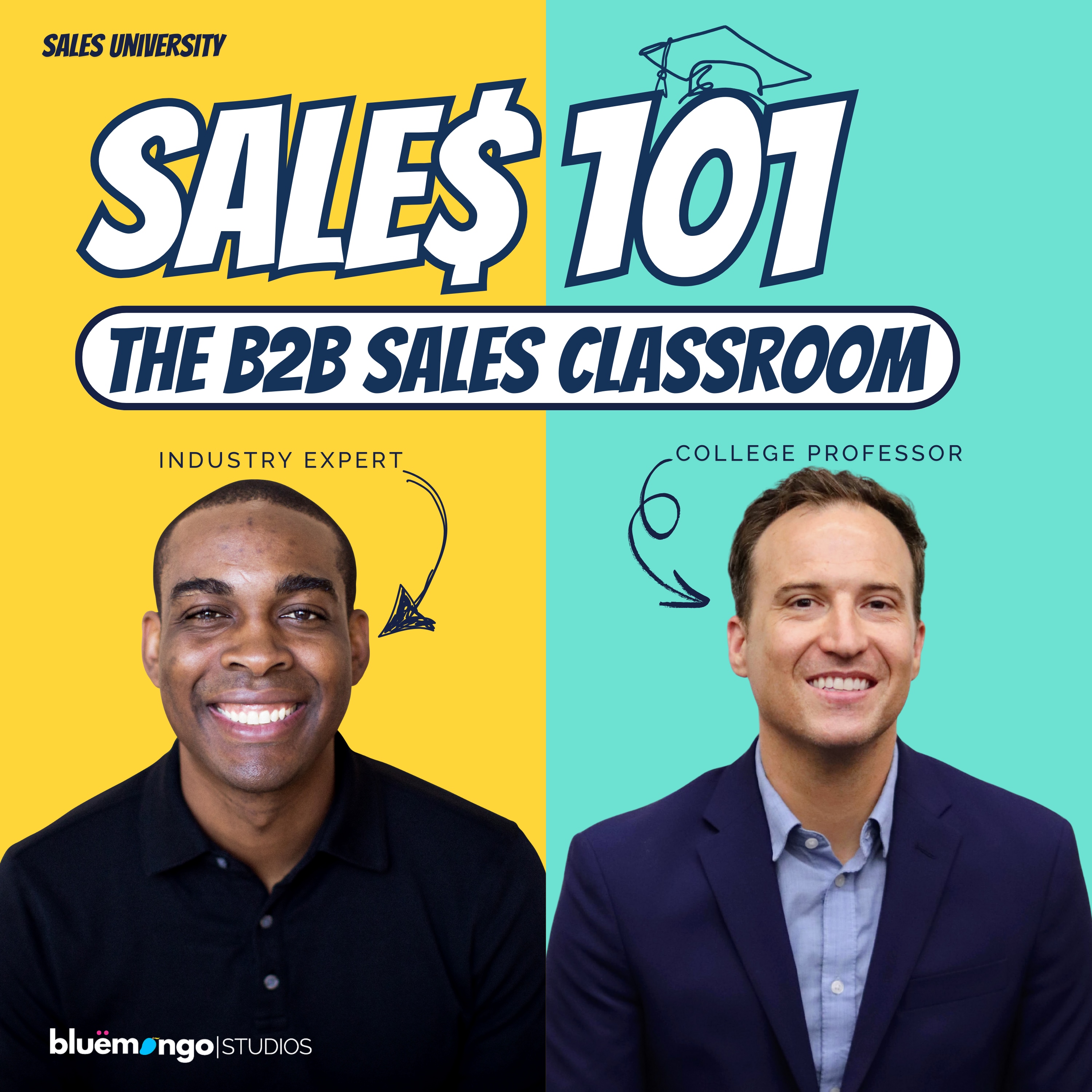
Sales 101: The B2B Sales Classroom
Donald C. Kelly & Dr. Bj Allen
Frequency: 1 episode/6d. Total Eps: 28

Recent rankings
Latest chart positions across Apple Podcasts and Spotify rankings.
Apple Podcasts
🇩🇪 Germany - howTo
25/05/2026#98🇩🇪 Germany - howTo
24/05/2026#84🇨🇦 Canada - howTo
21/05/2026#95🇨🇦 Canada - howTo
20/05/2026#57🇨🇦 Canada - howTo
16/05/2026#88🇨🇦 Canada - howTo
15/05/2026#58🇺🇸 USA - howTo
05/12/2025#87
Spotify
No recent rankings available
Shared links between episodes and podcasts
Links found in episode descriptions and other podcasts that share them.
See allRSS feed quality and score
Technical evaluation of the podcast's RSS feed quality and structure.
See allScore global : 52%
Publication history
Monthly episode publishing history over the past years.
How to Design Sales Courses that Actually Prepare Students for the Field—Not Just the Final Exam | Rich Kuzmeski - 02
Episode 2
mercredi 3 décembre 2025 • Duration 21:25
In this episode, we delve into how educators can actively prepare students for real-world sales challenges, moving beyond rote memorization and final exams. Rich Kuzmeski shares invaluable insights into experiential learning strategies that facilitate student success, enhancing both confidence and competency in the field of sales.
Creating Engaging Role Plays for Practical Learning
● Role plays designed to mirror real-life scenarios empower students to create their own scripts, fostering ownership and individual learning.
● Students research various industries thoroughly, refining their understanding and relevant questioning techniques necessary for success in sales.
● Structured role plays focus on the discovery call process, allowing students to practice asking impactful questions rather than simply pitching a product.
The Importance of Listening and Discovery in Sales
● Students often struggle with the fear of silence during sales calls, making it crucial to build their comfort with open-ended questioning and attentive listening.
● Emphasizing a 70/30 listening-to-talking ratio teaches students that effective selling is rooted in understanding customer needs rather than just presenting.
● By structuring prompts to encourage follow-up questions, students learn to drive conversations deeper, uncovering critical insights necessary for making meaningful connections.
Extending Learning Beyond the Classroom
● Participation in internal and external sales competitions provides students with hands-on experiences that translate classroom knowledge into actionable skills in real-world situations.
● Establishing connections with industry representatives and creating opportunities for networking prepares students for internships and jobs after graduation.
● Achievements in competitions bolster student resumes while enhancing the overall credibility of the sales program, attracting more prospective students and professionals to engage.
Homework Challenge or Action Steps
● Challenge students to design their own sales role play based on a chosen industry, incorporating both questions and anticipated answers to practice smooth dialogue.
● Encourage educators to implement experiential learning techniques, such as guest speakers and live events, to enrich the educational experience beyond textbooks.
"Be honest. It's way easier to remember the truth than it is to remember what you may or may not have made up." ● Rich Kuzmeki.
Resources
● Oklahoma State University Sales Center(https://business.okstate.edu/sales)
● Sales Competitions Overview(https://business.okstate.edu/sales/competitions)
Subscribe to our newsletter - https://open.substack.com/pub/sales101b2bsalesclassroom/p/teaching-professional-selling-for?r=9thf3&utm_campaign=post&utm_medium=web&showWelcomeOnShare=false
Credits
Produced by bluëmango | STUDIOS Music by SoundStripe. Thanks for tuning in!
Step-by-Step Guide to Creating a College Sales Curriculum Your Students Will Love | Donald Kelly and BJ Allen - 01
Episode 1
mercredi 3 décembre 2025 • Duration 30:57
Have you ever tried to create a courseware for a sales class and just felt like you had no clue what to do? Today, we’re going to share some of the mistakes that we made and how you can avoid them.
The Horrors of Starting a Sales Curriculum
· Sales leaders and professors are always stuck with one question when building their first curriculum: Where do you even start?
· How do you find that perfect balance between a traditional classroom or university learning style and sales, which is such an applied discipline?
· We both share our stories about developing our first sales curriculum for our college students.
· Our experience also helped us notice the mistakes other sales professors were making.
· The common course development mistakes we saw were: trying to cover too much content, creating too many unstructured assignments, and lacking an efficient grading system.
Four Steps to Building a Sales Curriculum
· Make sure you have a pen and paper ready. We go into the details of each of these steps and the resources that will help you build your sales curriculum.
1. Define Your Course’s Focus: You need to know what job role you’re preparing your students for. Are you teaching future entry-level sellers, Business Development Representatives (BDRs), Sales Development Representatives (SDRs), account managers, or something else?
· Narrowing this down will help you know what personal experiences you should share and what your core course subjects should be.
2. Choose Your Sales Process: Is there a specific process, methodology, or widely recognized industry resource that you use to structure your course? A logical progression is essential.
· Sales is a highly applied discipline, and most students taking an intro class don’t even know what professional selling really is. Throwing every possible approach or concept at them at once actually does more harm than good.
· Instead, picking a foundation—whether it’s a sales method like Challenger, SPIN, Sandler, or a structured process laid out in a well-regarded textbook—helps you guide students step by step. Each week or module builds on the last, creating continuity and a “map” students can follow.
3. Integrate Learning into the Real World: Consider how to bring the realities of sales into the classroom.
· Figure out what tools, scenarios, or voices you’re going to use to teach your students. For example, we created a simulation to go along with our textbook, designed assignments on how to use specific tools such as Apollo, and invited industry experts to share their knowledge with our students.
4. Make Grading Efficient for You: Design your grading and assignments so your students will know what’s expected. But also tailor it to how you can save time.
· Do this by using clear rubrics, integrating assignments, getting help from TAs, and leveraging automation when you can.
"You can't teach everything in one classroom." - BJ Allen.
“It’s tough being able to take 15 - 20 years of experience and give it all to a student. It’s not wise to teach them everything at once, as they won’t be able to absorb it all. They just need enough to get to the next step.” - Donald Kelly.
Resources
· Get your copy of Fanatical Prospecting by Jeb Blount.
· Connect with Donald Kelly and BJ Allen on LinkedIn. Be sure to reach out for feedback or help with your own curriculum.
· Visit the show’s Substack for additional resources and downloads.
Trailer
mardi 2 décembre 2025 • Duration 02:51
Join our Substack - https://open.substack.com/pub/sales101b2bsalesclassroom/p/teaching-professional-selling-for?r=9thf3&utm_campaign=post&utm_medium=web&showWelcomeOnShare=false
What Is This Podcast All About?
mardi 2 décembre 2025 • Duration 12:33
Welcome to the B2B classroom, students! Our sales podcast is designed to be a resource for college sales students and professionals. We, your co-hosts Donald Kelly and BJ Allen, interview industry experts to get their insights on the current trends in the B2B world.
Introducing Ourselves: Donald Kelly and BJ Allen
- Before we discuss why we started this podcast, we wanted to introduce ourselves to you and share our story.
- We teach sales at the college level, co-authored a sales textbook, and designed a simulation that goes along with it.
- But our friendship goes back years before this; we met at a church mission, and 20-plus years later, we are still making memories together.
About the Podcast: Sales 101
- After teaching hundreds of students and developing numerous partnerships, we're bringing the knowledge of both the classroom and the industry to the sales world.
- With so much information available, many professors struggle to share their knowledge effectively, and students are often unsure which methods are best to use.
- We aim to show professors how to build a curriculum from their own expertise—or from others'—and empower students to adopt these proven strategies.
- The podcast topics include our discussion on one of the most popular topics in the industry: AI in sales. Our past students will come on to share their stories and tell you what they wish they'd known. We will also host industry experts like Mark Hunter and Christy Jones, who will share their real-world experiences.
“Our purpose is to become a resource for you.” - Donald Kelly.
“We’re both passionate about helping the next rising generation of sellers.” - BJ Allen.
Resources
www.https://sales101podcast.com/
Subscribe to our newsletter - https://open.substack.com/pub/sales101b2bsalesclassroom/p/teaching-professional-selling-for?r=9thf3&utm_campaign=post&utm_medium=web&showWelcomeOnShare=false
Credits
Audio by SoundStripe.
The Best Way To Utilize AI In Your Sales Class | Donald C. Kelly & Dr. BJ Allen - 25
Episode 25
mercredi 13 mai 2026 • Duration 15:34
Over the last few years, AI has made its way into everything. So how do you actually bring it into your sales classroom in a way that prepares students for the real world? We partnered with Stukent to show you how to use it for roleplay in the classroom.
Why AI Is Changing Sales Education
- AI is not just a trend. It is already shaping how sales professionals work every day. The challenge for professors is figuring out how to bring that into the classroom in a way that feels practical and relevant.
- This is where AI roleplay comes in. Instead of relying only on student to student practice, professors can now create more realistic selling environments.
Making Roleplay Feel Real
- One of the biggest challenges in teaching sales is making roleplay feel authentic. Students know when it is just practice.
- With AI, that changes. The buyer responds in real time, asks questions, and even pushes back like a real prospect would.
- That means students are not just memorizing scripts. They are learning how to think, adapt, and respond in the moment.
Better Experience for Students and Professors
- AI roleplay does not just help students. It also makes things easier for professors.
- Instead of reviewing every interaction, AI can handle feedback and evaluation, reducing workload while still giving students a high quality experience.
- It also removes bias and creates a more consistent learning environment.
Preparing Students for the Real World
- The goal is simple. Help students feel what real selling is like before they step into their first role.
- With AI, you can adjust difficulty levels, simulate different buyer personalities, and create scenarios that reflect real sales conversations.
“One of the best things about AI roleplay is you can adjust the difficulty. For beginners, it can be simple, but at advanced levels, it feels real. I’ve seen it hang up on students within 20 seconds, just like real life.” — Dr. BJ Allen
Resources
Connect with Dr. BJ Allen and Donald C. Kelly on LinkedIn to continue the conversation or share how you're applying these strategies in your classroom.
Learn how you can bring AI into your classroom and more about Stukent here.
The Secret to Winning Deals Before Your Competitors Know There’s a Need | Donald C. Kelly & Dr. BJ Allen - 24
Episode 24
mercredi 6 mai 2026 • Duration 20:01
Buyers are making decisions before they ever talk to a seller. If your students are not part of that process, they are already out of the running. How do you teach them to become the go-to seller in today’s buyer journey? We’re breaking down three strategies to help them stand out and stay top of mind.
The Modern Sales Problem
- Thanks to technology, buyers now have a world of information at their fingertips. They are researching solutions, comparing options, and forming opinions long before they ever speak to a seller.
- By the time a conversation happens, many have already made internal decisions or narrowed their shortlist. If your students are not part of that early research phase, they are already at a disadvantage.
- It gets even tougher with Requests for Proposals (RFPs). Many are built around the features of a preferred solution or based on templates from past vendors, which quietly limits opportunities for new sellers to compete.
Classroom Implementation Strategies
- So how do you actually prepare students for this shift? It starts with helping them show up earlier in the buyer’s journey.
- Build Subject Matter Expertise: Encourage students to use LinkedIn as more than a place for cold outreach. When they consistently share insights and engage with industry content, they start to build a presence. Over time, they become someone buyers recognize and trust before a conversation even happens.
- Bring the Buyer Into the Classroom: Let students hear directly from buyers. Invite guest speakers who can walk through how decisions are really made, who is involved, and what their research process looks like. It gives students a clearer picture of what is happening behind the scenes.
- Strengthen Discovery Skills: Teach students how to ask better questions during discovery. The goal is to understand what the buyer actually values and whether they have already been influenced by another solution. When students can uncover that early, they can position themselves more effectively without putting down the competition.
“In this era, it’s no longer about being the best. It’s about being the best known in your space.” — Donald C. Kelly
“It’s great for buyers to have context around what’s happening before they engage.” — Dr. BJ Allen
Resources
Connect with Dr. BJ Allen and Donald C. Kelly on LinkedIn to continue the conversation or share how you're applying these strategies in your classroom.
What Every Student Needs To Do On LinkedIn To Land A Job! | Donald C. Kelly & Dr. BJ Allen - 15
Episode 15
mercredi 4 mars 2026 • Duration 23:09
One of the biggest worries students face is whether they will be able to get a job after graduation. How can you help ease their concerns? In this episode, we share how professors can teach their students to sell themselves and land jobs more effectively on LinkedIn.
Crafting a Standout LinkedIn Profile
- Branding matters more than ever. When recruiters visit LinkedIn profiles, they want to see a consistent message that tells a clear story.
- They don’t just want to see that someone graduated from the University of South Florida.
- Recruiters want to understand your passion, the position you’re seeking, and your relevant achievements.
Communicating Passion & Value
- Crafting a story isn’t as hard as students may think. They just need to think of their LinkedIn profile as a personal website.
- Even without professional experience, students can differentiate themselves by highlighting the details of their unique experiences.
- BJ goes into detail on how to tailor each LinkedIn profile section into a one-minute elevator pitch that lets recruiters clearly see their interest and passion for sales.
Building Presence & Network Consistently
- Everyone thinks you have to be a big influencer to get attention on LinkedIn, but that’s far from the truth. What matters more when building a presence is consistency.
- Trying to provide a class assignment is one that helps students intentionally build their presence on the platform. Have them connect with ten new people weekly to secure an informational interview.
Creative Cadence & Prospecting Techniques
- Being creative is a part of being a seller. In our course, we develop different ways students can uniquely reach out to prospects.
- For example, we offer a simulation that reinforces some of the advice shared in this episode.
- One of the best ways to stand out to prospects is by sending a voice or video message to grab their attention and encourage a response.
“I tell my students to build your sales cadence by using LinkedIn for voice messages. LinkedIn has the option to do a voice message and a lot of people find them annoying, but they work because they're different. If you want to stand out, you have to TRY to stand out.” - Dr. BJ Allen
Resources
If you would like to view our sales course, go to thesalesevangelist.com/linkedin.
From India to the Midwest: Building a Sales Curriculum That Actually Works | Pramit Banerjee - 14
Episode 14
mercredi 25 février 2026 • Duration 21:29
You want to teach a specific sales theory in your classroom but aren’t sure how students can apply it in the real world? Joining me in this episode is Pramit Banerjee, a Missouri Western State University sales professor, to share how he builds his sales curriculum to give students the hands-on experience they need. Oh, and sorry, BJ missed this episode. He was in Florida for a sales competition!
Meet Pramit Banerjee
- Thirty years ago, working in sales wasn’t even on Banerjee’s radar. From a young age, he was told his only career options were doctor, engineer, or failure.
- Because medicine was so competitive, Banerjee decided to earn an MBA and start a career in marketing.
- After graduating, he landed a sales manager position at Nokia and struggled to understand sales at first.
- Through trial and error, he eventually got the hang of it and became a sales educator at Missouri Western State University.
Making Sales Real in the Classroom
- If you struggle with making theoretical concepts feel real for your students, Banerjee suggests sharing personal stories from your time in the field.
- Students can’t learn everything from textbooks and won’t experience real sales until they start their first sales roles. Your workplace experience can give them valuable knowledge before they get there.
- Banerjee also recommends that professors form industry partnerships. Local companies can offer mini-mentorships to give students firsthand exposure to sales careers.
- Most students struggle with role plays and would rather avoid them. Of course, there’s no way around it. Banerjee shares how he keeps role plays fun and engaging so students can get the experience they need.
- The last creative way Banerjee makes sales real in the classroom is by using AI-driven role plays.
- Students scan QR codes to start role plays with AI acting as supportive or challenging prospects. The AI adjusts difficulty to each student’s skill level, creating a realistic, tech-forward learning environment.
Student Reactions & Teaching Impact
- Banerjee’s students love the interactive nature of his classes, which keeps them engaged and involved in the learning process.
- Relating real-world experiences to classroom lessons helps students see the relevance of what they’re learning.
- The AI-driven exercises, while challenging at first, complement hands-on role plays and enhance the experiential learning experience.
“Know your own strengths and be your own self. We all have different strengths. Try to find out what you are good at.” - Pramit Banerjee
Resources
Chat with Pramit Banerjee about this episode or sales education through email, pbanerjee@missouriwestern.edu.
Here's How To Teach Sales Mindset | Donald C. Kelly & Dr. BJ Allen - 13
Episode 13
mercredi 18 février 2026 • Duration 24:57
You can’t go into sales with just any mindset. If your students’ mindset is to join the industry only for the money, they may not make it very far. How can professors help students develop the right sales mindset before their first role? Dr. BJ Allen and I are going to tell you how in this episode.
Fixed vs. Growth Mindset: Why It Matters
- BJ opens by pointing out that sales is tough. Students and new professionals often struggle with motivation, rejection, and the day to day grind of selling.
- We talk through Carol Dweck’s concept of fixed versus growth mindset and why developing a growth mindset makes such a big difference in sales and in life beyond the classroom.
- Students regularly tell us that learning how to recognize and shift their mindset is one of the most valuable takeaways from their courses.
Motivating Students: Discovering Their “Why”
- We also dig into the importance of helping students uncover their personal “why.” That deeper motivation is what keeps them going when sales gets hard.
- Whether it is supporting family, traveling, or genuinely helping customers, having a clear reason behind the work fuels long term persistence and confidence.
Learn, Implement, Feedback
- Throughout the episode, we share a simple and practical approach: learn, implement, ask for feedback, and repeat.
- This cycle reinforces continuous improvement and resilience while encouraging students and educators to see mistakes as part of the learning process.
“Teach students not just what salespeople do, but how successful salespeople think. It’ll benefit them, whether they stay in sales or not.” - BJ Allen
Is AI Killing The SDR Role? | Kristie Jones, Dr. BJ Allen & Donald C. Kelly - 12
Episode 12
mercredi 11 février 2026 • Duration 25:15
AI has made many changes within the sales industry, including the SDR role. Those in the role will need to focus more on personalization over sequences, but how? Joining us for this episode is Kristie Jones, author and sales professional, to answer that question. She also shares how forward thinking sales education is adapting to keep up with tech savvy and highly informed buyers.
From Process to Personalization
- We open the conversation by talking about the decreasing importance of templated outreach and rigid sales sequences.
- Kristie explains why deep personalization and customization are becoming essential in every buyer interaction.
- Today’s buyers gather so much information on their own that generic messaging simply does not work the way it once did.
The Buyer’s Journey Has Changed
- We also discuss how buyers now expect to self educate before ever speaking with a sales rep. They download content, attend webinars, and even use AI tools to research solutions.
- Because of this shift, companies must lead with transparency, and the roles of SDRs and BDRs look very different than they did just a few years ago.
Redefining the SDR and BDR Role
- We explore how entry level sales roles are evolving. It is no longer just about dialing and sending emails.
- These professionals now need strong critical thinking skills, the ability to interpret intent signals, and the confidence to step into conversations that are already well underway.
- Kristie shares why she sees a move toward a junior AE model and emphasizes creativity and value driven engagement.
The New Sales Curriculum
- We also talk about what this means for sales educators. Kristie encourages professors to shift classroom activities away from memorizing scripts and toward understanding use cases, creating value, and developing soft skills.
- Trust building, objection handling, industry knowledge, and strong alignment between marketing and sales are more important than ever.
Practical Classroom Applications
- To make this practical, Kristie suggests using real world scenarios in the classroom. She recommends challenging students to analyze buyer behavior and craft personalized, high value outreach strategies that reflect how modern sales actually works.
“Buyers are so much further along that you cannot rely on email templates or generic voicemails. So the question becomes, how do you use the information you have to reach out in a way that is customized, gets their attention, and makes them say yes?” - Kristie Jones
Resources
Find Kristie Jones on LinkedIn or visit kristiekjones.com.
Related Shows Based on Content Similarities