Post Money – Details, episodes & analysis
Podcast details
Technical and general information from the podcast's RSS feed.
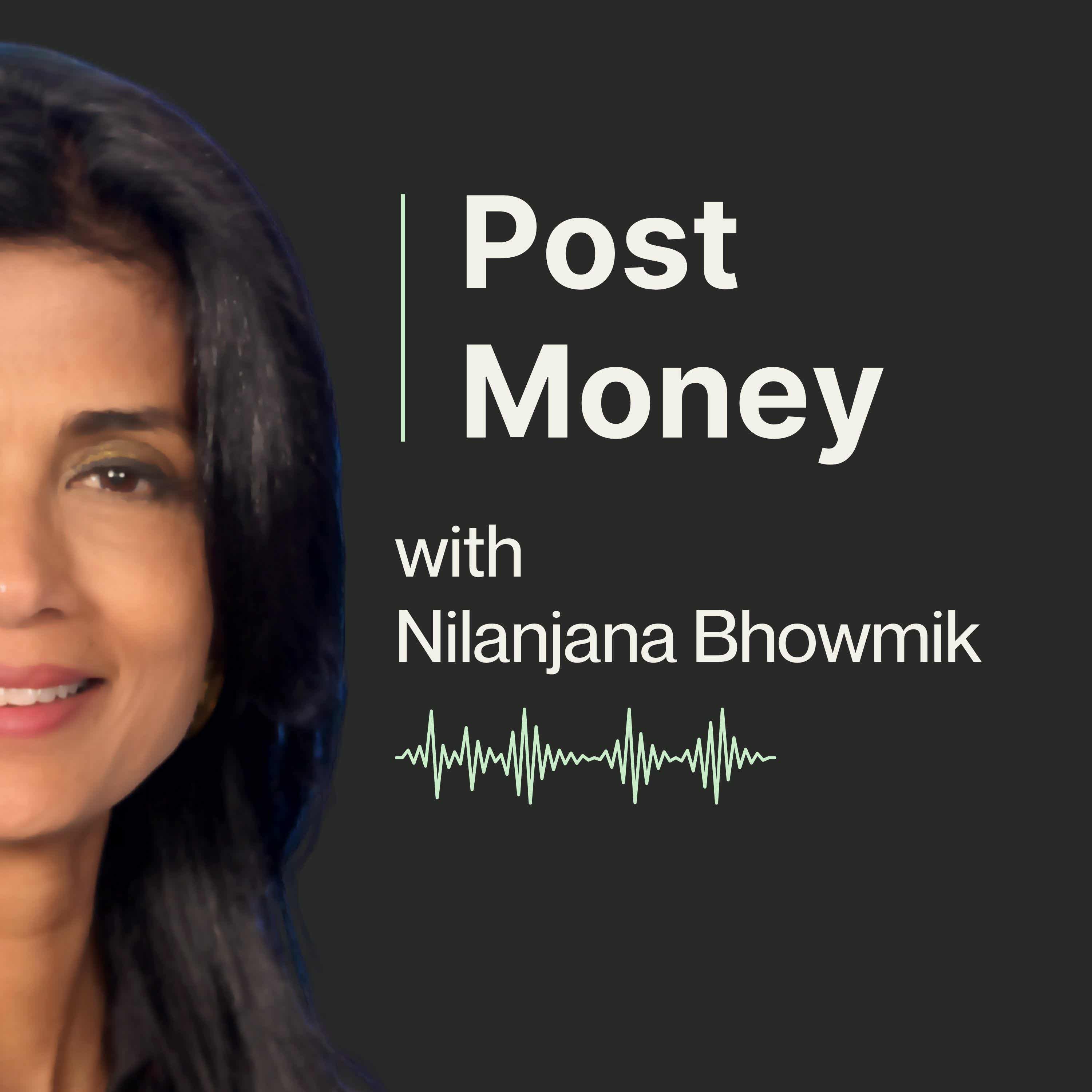
Post Money
In-depth conversations with top founders and VCs on building, scaling, and raising capital across industries.
Frequency: 1 episode/8d. Total Eps: 22

postmoneypodcast.substack.com
Recent rankings
Latest chart positions across Apple Podcasts and Spotify rankings.
Apple Podcasts
🇨🇦 Canada - entrepreneurship
13/05/2026#97
Spotify
No recent rankings available
Shared links between episodes and podcasts
Links found in episode descriptions and other podcasts that share them.
See all- https://www.primary.vc/
34 shares

- https://converge.vc/
10 shares
RSS feed quality and score
Technical evaluation of the podcast's RSS feed quality and structure.
See allScore global : 69%
Publication history
Monthly episode publishing history over the past years.
Uber, PillPack, Coupang First-Check VC: The One Rule He Never Breaks
jeudi 7 mai 2026 • Duration 45:40
David Frankel wrote some of the earliest checks into companies like Uber, Coupang, PillPack, Whoop, Shield AI and Suno, yet his firm, Founder Collective, still refuses to lead Series A rounds or aggressively double down on portfolio companies. In this conversation, he explains why too much funding can quietly destroy startups, why founder-investor alignment matters more than ownership percentage, and how venture capital remains wildly inefficient even in the AI era.
Before becoming one of the most respected seed investors in venture capital, David built the first commercial internet service provider in South Africa during the earliest days of the internet boom. What followed was a crash course in hypergrowth, acquisitions, global expansion, and eventually a massive exit that left him unexpectedly depressed and convinced he had sold too early.
That experience became the foundation for how he thinks about founders, risk, ambition, and investing today.
This conversation goes deep into the realities of building venture-backed companies: the psychology of founders, the hidden dangers of scaling too fast, the pressure of raising capital, and why startup life often looks far more glamorous from the outside than it feels from the inside.
David breaks down Founder Collective’s famous “first-check only” strategy, why the firm never negotiates with founders twice, and how some of the biggest startup winners looked before the rest of the market noticed them.
Inside the episode:
* Why Founder Collective backed Uber, Coupang, PillPack, Shield AI and Suno while refusing to lead later rounds
* The “first-check only” strategy that almost no VC firm copied
* The difference between raising money for product-market fit vs market domination
* Why some billion-dollar companies needed shockingly little capital in the early days
* The founder test David uses before writing a check: “green button or red button?”
* The real reason venture markets are still highly inefficient
* What Founder Collective looks for in AI founders in 2026
* The only kind of failure founders truly cannot come back from
* How secondary markets changed venture capital forever
Watch Full Episode on YouTube:
About David Frankel:
David Frankel is the co-founder and Managing Partner of Founder Collective, a seed-stage VC fund whose mission is to build the most aligned fund for founders at the seed stage. An immigrant who got his entrepreneurial start selling airbrushes at a South African swap meet, David went on to co-found Internet Solutions, Africa's first and largest ISP, which he sold to NTT. In 2000, he was voted the South African Technology Achiever of the Century.Post a Fulbright Foreign Scholarship and an MBA with distinction from Harvard, David moved back to the USA. He provided the first capital for numerous companies, including Olo (NYSE: OLO), where he worked closely with founder Noah Glass through its IPO and acquisition in 2025 by Thoma Bravo. At Founder Collective, he is the lead investor in Coupang (NYSE: CPNG), SeatGeek, PillPack (acquired by Amazon), Shield AI, and more recently, Suno. Founder Collective's broader portfolio includes Uber (NYSE: UBER) and The Trade Desk (NYSE: TTD). David was ranked #2 on the 2025 Midas Seed List and has appeared on the Midas List of the world's best venture capital investors seven times.David is also the co-founder of NextUp, a youth employment accelerator in South Africa, which recently partnered with educator Taddy Blecher to launch the Maharishi NextUp Institute of Technology (MNIT) in Johannesburg, training underprivileged youth in AI, robotics, and cybersecurity.Connect with David Franklin: https://www.linkedin.com/in/davidafrankel1/Connect with Nilanjana Bhowmik: https://www.linkedin.com/in/nilanjanabhowmik/
Converge VC website:
https://converge.vc/
This is a public episode. If you would like to discuss this with other subscribers or get access to bonus episodes, visit postmoneypodcast.substack.com
Anthropic's Mythos: The AI Too Dangerous to Release
mardi 28 avril 2026 • Duration 19:15
Anthropic just drew a line in the sand. Their latest frontier model MYTHOS is so capable at autonomously discovering and exploiting cybersecurity vulnerabilities that they’ve refused to release it to the public. Instead, it’s being quietly handed to a handful of giants like Microsoft and JP Morgan Chase and top government officials, including the Treasury Secretary and the Fed Chair have already been briefed.
In this episode, James Falkoff joins Nilanjana Bhowmik to break down exactly what MYTHOS is, why it’s different from every AI model before it, and why the implications stretch far beyond cybersecurity.
Inside the episode:
* Why MYTHOS crossed the line that Opus 4.6 didn’t
* Why MYTHOS can reverse-engineer closed-source code (including proprietary systems like Windows) to surface vulnerabilities no human ever caught
* The shift from human-speed cyberattack to machine-speed and why defense must now match that pace
* Why Anthropic chose to restrict access instead of releasing publicly
* Why the government took the warning seriously and whether the market did too
* The equity crisis hiding inside AI model access
* What MYTHOS signals about where open-source models are heading
* The growing concern: unequal access to powerful AI systems
* Opus 4.7 and the “lazy model” debate
* Compute scarcity as the hidden constraint shaping AI progress
Watch Full Episode on YouTube
About James Falkoff:
James has over 16 years of experience investing in technology across public and private markets, including more than a decade in venture capital. He has led over 25 early-stage investments and is known for his thought leadership, strong exit track record, and hands-on work with portfolio companies to drive growth.
Before joining Converge, he was a Principal at Longworth Venture Partners, where he partnered with Nilanjana Bhowmik to identify high-potential sectors and secure early access to top startups. His portfolio includes companies like Olapic (acquired by Monotype), RapidMiner (Altair), JIBE (iCIMS), and TrackVia (Primus Capital).
Connect with James Falkoff:https://www.linkedin.com/in/jamesfalkoff/
Connect with Nilanjana Bhowmik:https://www.linkedin.com/in/nilanjanabhowmik/
Converge VC Website:
This is a public episode. If you would like to discuss this with other subscribers or get access to bonus episodes, visit postmoneypodcast.substack.com
AI's Quiet Earthquake on VC Strategy | Anne Dwane
mardi 17 février 2026 • Duration 35:15
If you’re trying to predict the next unicorn by pattern-matching the last one, you’re probably already behind. In this episode, Anne Dwane of Village Global explains why predicting startup outliers has never been more difficult, how AI is quietly reshaping venture capital strategy, and why diversified 100-company seed portfolios may outperform concentrated conviction bets.
Drawing on her journey from founding Military.com through the dot-com crash to serving as Chief Business Officer at Chegg and now General Partner at Village Global, Anne breaks down the logic behind broad portfolio construction, scout-driven deal flow, disciplined entry valuations, and why capital efficiency often beats mega rounds.
Inside the episode:
* Why every startup journey is “like driving a Humvee across the desert” and what the dot-com crash taught about durable business models
* Why the next trillion-dollar company probably won’t look like the last one
* How Village Global builds a diversified seed portfolio of ~100 companies using 30+ operator scouts
* What “narrative engineering” means and why storytelling now differentiates founders
* Why private markets can “hide sins” but public markets expose weak fundamentals
* How agentic tools, usage-based APIs, and collapsing transaction costs are reshaping the theory of the firm
* Why leadership now matters more than management in an AI-driven world
Watch full episode on YouTube:
About Anne Dwane:
Anne Dwane is a venture capitalist and former tech founder, venture-backed CEO, and public company executive with over 20 years of experience scaling companies from startup through IPO. She has managed full P&Ls, built high-performance teams, and developed products and services used by tens of millions of customers. Anne led two companies to successful acquisitions by Monster and Chegg, identified and integrated more than six acquisitions, and held P&L responsibility before and after Chegg’s IPO, when the company reached a valuation exceeding $1B.
This is a public episode. If you would like to discuss this with other subscribers or get access to bonus episodes, visit postmoneypodcast.substack.com
Meet the VC Who Brings a Tank to a Knife Fight with Brad Svrluga
mardi 10 février 2026 • Duration 45:59
Seed-stage venture capital is often described as a people business, but very few firms are structurally built around that reality. In this episode, Brad Svrluga, co-founder of Primary, explains why his firm deliberately rebuilt the seed VC model to operate more like an execution platform than a traditional investment partnership. Instead of optimizing for GP economics, Primary reinvests management fees into a large, senior operating team that supports founders on talent, go-to-market execution, customer development, and capital strategy from day one.
The conversation goes deep into seed-stage governance, including why boards often add friction too early, what productive board involvement actually looks like, and how focus and prioritization matter more than formal control at the earliest stages. Brad also shares lessons from 25 years in venture capital, why investing is fundamentally an apprenticeship business, and why learning to make money in venture first requires losing it.
Inside the episode:
* Why most seed-stage venture firms are structurally misaligned with founder success
* How Primary built one of the largest operating teams in seed investing and why scale matters even before product–market fit
* The real reason early hiring mistakes kill startups
* Why the best founders actively seek operational leverage instead of “staying lean” or avoiding help
* Why being a founder’s “first call” requires infrastructure, not just experience or good intentions
* What a 25-deal fund with nine unicorns reveals about breadth vs. single-outlier portfolio construction
* Why founder quality consistently outweighs product and market at the seed stage
* What venture boards should never spend time on
* How AI is compressing both success and failure timelines for startups
* How portfolio scale becomes more important when failure rates rise but outliers get bigger
Watch Full Episode on YouTube:
About Brad Svrluga:
Brad Svrluga is a co-founder and General Partner at Primary Venture Partners. He began his career in venture capital at the very end of the internet bubble and invested through the difficult market cycles of the early 2000s. His investment focus spans vertical SaaS, healthcare, and financial services, and he has partnered with multiple companies in each of these sectors that have gone on to exceed $1B in valuation.
Together with co-founder Ben Sun, Brad helped scale Primary into what is now the world’s largest standalone seed-stage venture firm. He currently serves as Managing Partner and co-leads the firm’s investment team.
This is a public episode. If you would like to discuss this with other subscribers or get access to bonus episodes, visit postmoneypodcast.substack.com
The Toast, Shopify & Twilio Pattern Most VCs Still Miss | Kent Bennett
mardi 3 février 2026 • Duration 40:59
If you’re waiting for clean metrics before trusting product-market fit, you’re probably already behind. In this episode, Kent Bennett explains how early product-market fit actually shows up in the real world, why customer behavior matters more than spreadsheets, and how some of the most successful venture-backed companies were recognized before the data looked obvious.
Kent draws on nearly two decades at Bessemer Venture Partners, sharing lessons from companies like Toast, Shopify, Twilio, and Wix. He breaks down why traditional venture metrics often lag reality, how AI is reshaping early signals, and why investors who start with teams or trends often miss what matters most.
Inside the episode:
* Why real product-market fit often shows up through customer behavior, not revenue charts
* How Toast quietly proved demand when coffee shops and restaurants replaced “working” systems
* Why most early-stage metrics are lagging indicators and misleading at seed and Series A
* How Kent evaluates startups before ARR, payback periods, or clean dashboards exist
* Why AI has increased both the strength of early signals and the number of false positives
* How founders and investors should think about companies that won’t become venture-scale outcomes
* Why stopping, selling, or changing course can be the most rational decision
* Why the “death of SaaS” narrative is overblown
* Final advice for founders: don’t build “AI for X”
Watch full episode on YouTube:
About Kent Bennett:
Kent Bennett is a partner at Bessemer Venture Partners, where he focuses on B2B application software and consumer “earthquakes”, categories where shifts in behavior create entirely new markets. His investing lens is shaped by a deep interest in how products earn real adoption before they earn headlines.
Before venture capital, Kent followed an unconventional path. He worked as a creative executive at an entertainment production company, developing and selling original projects including a network television pilot and a feature film, before beginning his professional career at Bain & Company across sectors such as IT, retail, consumer products, healthcare, and biotech. He holds an MBA from Harvard Business School, where he was a Baker Scholar, and graduated summa cum laude in systems engineering from the University of Virginia as a Jefferson Scholar.
This is a public episode. If you would like to discuss this with other subscribers or get access to bonus episodes, visit postmoneypodcast.substack.com
How the U.S. Government Quietly Built Venture Capital and Is Doing it Again | Alexander Harstrick
lundi 26 janvier 2026 • Duration 50:16
The U.S. Department of Defense is one of the largest buyers of technology in the world and yet most founders and venture investors still don’t understand how defense spending actually fuels startup growth. In this episode, Alexander Harstrick explains how government capital quietly de-risks early-stage technology, why dual-use startups are gaining an advantage, and how shifts inside the Pentagon since 2014 have reshaped venture capital, defense tech, and early-stage investing.
Alex shares his unconventional path from consulting and corporate investing to military service, Pentagon acquisitions, and ultimately founding J2 Ventures. He explains how shifts inside the DoD since 2014 have opened the door for startups to work with the government faster, earlier, and with far less friction than most founders and investors realize.
Inside the episode:
* Why the U.S. government has historically been the largest and most overlooked source of early technology risk capital
* How dual-use companies can use government dollars to de-risk product–market fit without sacrificing commercial focus
* Why most founders misunderstand how DoD procurement actually works and who really controls billion-dollar budgets
* The barbell strategy for startups: using defense as early validation or as a scaled enterprise customer
* Why many defense-focused funds are likely to fail and what investors consistently get wrong about this market
* How companies like Aura, Palantir, and other dual-use businesses quietly unlocked massive government contracts
* Why building products only for the Department of Defense is almost always a strategic mistake
Watch full episode on YouTube:
About Alexander Harstrick:
Alexander Harstrick is a Managing Partner at J2 Ventures, investing in dual-use and deep-tech companies at the intersection of defense, government, and commercial markets. He brings an operator’s perspective shaped by experience in venture investing, military intelligence, and national security innovation.
Before J2, Alexander worked in corporate venture investing at Horizon Blue Cross Blue Shield, served as a U.S. Army Military Intelligence Officer with deployments to Afghanistan and Iraq, and led early-stage technology investments inside the Department of Defense through the Defense Innovation Unit and National Security Innovation Capital. He has also worked with KKR and supported strategic finance initiatives for the U.S. Air Force via AFWERX.
This is a public episode. If you would like to discuss this with other subscribers or get access to bonus episodes, visit postmoneypodcast.substack.com
From Bankruptcy to Fund VI: Lessons from a Founder-Led VC | Nihal Mehta
lundi 19 janvier 2026 • Duration 32:48
Most venture capital stories start with wins, but this one starts with bankruptcy.
In this PostMoney Podcast episode, Nihal Mehta, co-founder and managing partner at ENIAC Ventures, recounts how failing publicly in his early 20s, including filing for Chapter 7, shaped his view of founders, risk, and what actually matters in the zero-to-one stage. From meeting his partners as engineering students at the University of Pennsylvania to building ENIAC over 16 years into its sixth fund, Nihal explains why survival, not hype, is the real compounding advantage.
Drawing from his experience as a serial founder before becoming an investor, Nihal breaks down why ENIAC was deliberately built as a founder-led, “anti-VC” firm, why resilience and grit are earned only through failure, and why staying lean and close to customers matters more than polished strategy decks. He shares how ENIAC helps founders through product-market fit, why shipping fast beats perfection whether you’re B2B or B2C, and what it really takes to earn the right to raise a Series A in today’s market.
Inside the Episode
* Bankruptcy, Chapter 7, and the founder scars that shaped ENIAC
* How four founders met at UPenn and built a firm over 16 years
* Why ENIAC was designed as a founder-led “anti-VC”
* “Just stay alive”: why survival is the most underrated startup strategy
* Product-market fit: shipping fast, staying lean, and listening to customers
* Seed vs Series A today: check sizes, valuations, and rising expectations
* Why many strong companies are overlooked in a growth-obsessed market
* Human unicorns, repeat founders, and execution over ideas
* How AI is changing who can build companies
Watch Full Episode on YouTube:
About Nihal Mehta
Nihal Mehta is a co-founder and managing partner at ENIAC Ventures, a founder-led seed-stage firm he’s helped build over 16 years. Before venture capital, Nihal was a serial founder who experienced both exits and failure, including a Chapter 7 bankruptcy in his early 20s, followed by acquisitions of ipsh! by Omnicom and buzzd/LocalResponse by BlueCava. He began investing early, backing companies such as AdMob (acquired by Google), Alloy, Brightwheel, Tala, and Uber. Alongside his wife Reshma, he is an active angel investor and LP supporting underrepresented founders, and is deeply involved in philanthropy through initiatives like Project Ahimsa and Help Main Street.
This is a public episode. If you would like to discuss this with other subscribers or get access to bonus episodes, visit postmoneypodcast.substack.com
Lessons from a $100M+ Company, from Founder to VC | Rob Biederman
lundi 12 janvier 2026 • Duration 37:14
Building to $100M+ in revenue changes how you think about growth, capital, and control. In this episode, Rob Biederman breaks down the hard lessons from scaling Catalant and why those experiences led him to build Asymmetric as an early-stage investment firm that deliberately operates outside the traditional venture capital model.
Rob shares the real story behind turning a business school project into a category-defining services marketplace, including early rejection from top venture firms, a pivotal cold email to Mark Cuban, and the long-term consequences of prioritizing revenue growth over product and data infrastructure.
Inside the episode:
* Why early customer pull matters more than pitch decks or stealth mode
* How obsession with traction can quietly create technical and organizational debt
* The trade-offs between revenue growth, capital efficiency, and founder ownership
* Why some markets are better disrupted by owning the full P&L instead of selling software
* How venture incentives shape founder behavior, often unintentionally
Rob also unpacks Asymmetric’s investment strategy across pre-seed software, tech-enabled services, and SMB rollups, including why the firm prefers to stay “off-piste,” operate at smaller scale, and source most deals through founder-led networks.
Watch full episode on YouTube:
About Rob Biederman:
Rob Biederman is a founder-turned-investor and the founder of Asymmetric, an early-stage investment firm focused on software, tech-enabled services, and SMB rollups. He previously co-founded Catalant, scaling it from a business school project into a $100M+ services marketplace backed by firms including Greylock and General Catalyst. Rob brings an operator’s lens to investing, with a strong emphasis on capital efficiency, incentives, and long-term outcomes.
This is a public episode. If you would like to discuss this with other subscribers or get access to bonus episodes, visit postmoneypodcast.substack.com
VC Power Law Explained and Why a Founder Should Care with David Beisel
lundi 5 janvier 2026 • Duration 41:47
Only a handful of startups create all the returns in venture capital and most founders don’t realize what that means for them. In this PostMoney Podcast episode, David Beisel, co-founder and partner at NextView Ventures, explains how the VC power law actually plays out after investing in 200+ companies, why only 8–10 truly matter, and how that reality shapes investor behavior at the pre-seed and seed stage.
Drawing from 15 years of experience, from raising a $21M first fund to managing ~$500M AUM, David breaks down why hard pivots create big wins, why incremental changes usually fail, and how founders should think about pricing, ownership, conviction, and patience when raising capital.
The conversation closes with a candid take on AI’s second-order effects and a provocative idea most VCs won’t say out loud: AI may commoditize large parts of venture capital itself, forcing firms to reinvent where real value comes from.
Inside the Episode
* VC power law explained (and why founders should care)
* Why only a few startups drive venture returns
* Pre-seed vs seed: check sizes, ownership, and conviction
* Why hard pivots outperform small optimizations
* Product-market fit: how to know when you actually have it
* Pricing discipline: why winning on price is dangerous
* How AI could reshape and commoditize venture capital
Wathc Full Episode on YouTube:
About David Beisel
David Beisel is a co-founder and Partner at NextView Ventures, a high-conviction, hands-on seed-stage venture firm investing in technology companies reshaping the Everyday Economy. His investment track record includes Attentive, TripleLift, Parsec (acquired by Unity for $320M), BookBub, thredUP (IPO), MealPal, Hatch, and TapCommerce (acquired by Twitter for $100M). Prior to NextView, David was a Vice President at Venrock and previously co-founded Sombasa Media, which grew to 5M users before being acquired by About.com. He holds an MBA from Stanford Graduate School of Business and an AB in Economics from Duke University (magna cum laude, Phi Beta Kappa).
This is a public episode. If you would like to discuss this with other subscribers or get access to bonus episodes, visit postmoneypodcast.substack.com
How Top VCs Are Building AI Portfolios in 2026 with Apoorva Pandhi
lundi 22 décembre 2025 • Duration 42:51
In this episode of Post Money Podcast, Nilanjana Bhowmik sits down with Apoorva Pandhi, early-stage investor at Zetta Ventures, to unpack how the AI stack is really evolving and where founders and VCs should be placing their bets heading into 2026.
Inside the Episode
* How the modern AI stack is structuredand why most founders are betting on the wrong layer
* Why foundation models are becoming commodities and defensibility is moving elsewhere
* The difference between copilots, agents, and AI agencies and why workflow ownership matters
* When AI startups must go full-stack and build their own domain-specific models
* Why data infrastructure and unified runtimes remain critical in an AI-first world
* How feedback loops and data flywheels create long-term moats
* The future of SaaS in an agentic era and why it’s being reshaped, not killed
* How early-stage VCs evaluate AI startups heading into 2026
* Portfolio construction strategies for AI funds in a power-law market
Watch Full Episode on YouTube:
About Apoorva Pandhi
Apoorva Pandhi is an early-stage investor at Zetta Ventures, a fund focused on AI, data infrastructure, and AI-native applications. Prior to Zetta, Apoorva invested at Lightspeed and Foundation Capital and previously worked as an operator in NLP-driven companies, leading go-to-market efforts for AI products. His work spans data infrastructure, AI tooling, and full-stack AI applications across biotech, enterprise software, and developer platforms.
This is a public episode. If you would like to discuss this with other subscribers or get access to bonus episodes, visit postmoneypodcast.substack.com
Related Shows Based on Content Similarities