Poets & Thinkers – Details, episodes & analysis
Podcast details
Technical and general information from the podcast's RSS feed.
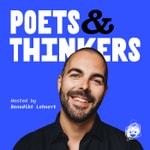
Poets & Thinkers
Benedikt Lehnert
Frequency: 1 episode/14d. Total Eps: 23

Poets & Thinkers explores the humanistic future of business leadership through deep, unscripted conversations with visionary minds – from best-selling authors and inspiring artists to leading academic experts and seasoned executives.
Hosted by tech executive, advisor, and Princeton entrepreneurship & design fellow Ben Lehnert, this podcast challenges conventional MBA wisdom, blending creative leadership, liberal arts, and innovation to reimagine what it means to lead in the AI era.
If you believe leadership is both an art and a responsibility, this is your space to listen, reflect, and evolve.
Recent rankings
Latest chart positions across Apple Podcasts and Spotify rankings.
Apple Podcasts
🇨🇦 Canada - management
01/06/2026#66🇨🇦 Canada - management
31/05/2026#34🇨🇦 Canada - management
20/05/2026#54🇫🇷 France - management
02/04/2026#87🇫🇷 France - management
01/04/2026#73🇫🇷 France - management
30/03/2026#36🇩🇪 Germany - management
20/09/2025#100🇨🇦 Canada - management
24/08/2025#94🇨🇦 Canada - management
23/08/2025#57🇨🇦 Canada - management
22/08/2025#32
Spotify
No recent rankings available
Shared links between episodes and podcasts
Links found in episode descriptions and other podcasts that share them.
See allRSS feed quality and score
Technical evaluation of the podcast's RSS feed quality and structure.
See allScore global : 79%
Publication history
Monthly episode publishing history over the past years.
The Myth of Greatness and Ethics in Business with author and writer Avram Alpert
Season 1 · Episode 1
lundi 3 mars 2025 • Duration 44:23
What if our obsession with being the best is actually holding us back? In this inaugural episode of Poets & Thinkers, we explore the myth of greatness with Avram Alpert. He is a writer and teaches at Princeton University.
Avi challenges the idea that only the “best” deserve success. He proposes an alternative: “Embracing a ‘good-enough’ approach.” – with a focus on fostering sustainability, fulfillment, and a more equitable society.
Avram takes us on a journey through the themes of his book, “The Good-Enough Life”. He unpacks how values influence business, politics, and human connection. We discuss real-world examples of how collaboration, rather than competition, drives meaningful progress. Avram shares how and how leaders can reshape systems to prioritize collective well-being over individual accolades.
In this candid and eye-opening conversation, we explore:
- Why the pursuit of “greatness” can be a trap
- How ethical constraints clash with business ambitions
- What history teaches us about cooperation vs. competition
- The surprising power of “good enough” leadership for a better future
This episode is an invitation to shift your perspective on success, challenge the status quo, and imagine a world where everyone gets a seat at the table.
Topics
01:00 - Introduction to Avram Alpert and his work
04:30 - The intersection of values and business
07:00 - Role of systemic constraints in ethical decision-making
12:00 - The paradox of societal progress vs. individual well-being
18:00 - Defining greatness vs. “good-enough”
22:00 - The “good-enough parent” and its implications for society
27:00 - How history shows us the power of collaboration
36:00 - The paradox of human nature: individualism vs. collectivism
42:00 - What qualities do we need in future leaders?
46:00 - The case for a “good-enough” future
Resources Mentioned
The Good-Enough Life by Avram Alpert
The Theory of Moral Sentiments by Adam Smith
Connect with Avram:
Get in touch: ben@poetsandthinkers.co
Follow us on Instagram: https://www.instagram.com/poetsandthinkerspodcast/
Subscribe to Poets & Thinkers on Apple Podcasts: https://podcasts.apple.com/us/podcast/poets-thinkers/id1799627484
Subscribe to Poets & Thinkers on Spotify: https://open.spotify.com/show/4N4jnNEJraemvlHIyUZdww?si=2195345fa6d249fd
AI Sovereignty & the Literacy Gap: Policy lessons from the frontlines with Jaxson Khan
Season 1 · Episode 13
mercredi 20 août 2025 • Duration 50:29
What if the biggest regret we’ll have in 10 years isn’t over-regulating AI, but failing to educate people about it? In this episode of Poets & Thinkers, we explore the intersection of AI policy, national sovereignty, and digital literacy with Jaxson Khan, a unique cross-sector leader who transitioned from startup founder to senior policy advisor for Canada’s Minister of Innovation, Science and Industry. From his home in Toronto, Jaxson shares hard-won insights from the frontlines of AI policy development, where he helped craft Canada’s approach to artificial intelligence across multiple critical areas.
Jaxson takes us behind the scenes of government AI strategy, revealing why less than 25% of Canadians have any formal AI education despite the country being home to some of the technology’s foundational researchers. He explains Canada’s Sovereign AI Compute Strategy – a response to the brain drain that sees Canadian talent and capital flow south to Silicon Valley – and makes the case for treating AI infrastructure like a public utility. Through his current work helping nonprofits and corporations adopt AI, Jaxson demonstrates how the same technology reshaping global geopolitics can be leveraged for social good.
Throughout our conversation, Jaxson challenges the notion that we need to choose between innovation and regulation, instead advocating for what he calls “meaningful consent” in privacy frameworks and emphasizing the critical importance of cultural sovereignty in AI development. His perspective bridges the technical, political, and deeply human aspects of our AI-powered future, showing how policy decisions made today will determine whether societies remain intact through this transformation.
In this discussion, we explore:
- Why AI literacy should be treated as urgently as national defense in the modern era
- How Canada is building sovereign AI infrastructure without trying to replace Big Tech
- The three pillars of AI sovereignty: technology IP, data and compute, and cultural preservation
- Why privacy laws that predate iPhones are a “travesty” in the AI age
- How the imagination gap is holding back traditional companies from AI adoption
- Why NGOs and government agencies must accelerate AI adoption to stay relevant
This episode is an invitation to think beyond the hype and fear surrounding AI, focusing instead on the practical policy frameworks and educational foundations needed to ensure this powerful technology serves humanity’s highest aspirations.
Resources Mentioned
Canada’s Sovereign AI Compute Strategy
“Bridging the Imagination Gap” Royal Bank of Canada white paper
OECD data on international AI adoption patterns
“AI is Normal Technology” by Prof. Arvind Narayanan and Sayash Kapoor
“Genesis” by Kissing
Get in touch: ben@poetsandthinkers.co
Follow us on Instagram: https://www.instagram.com/poetsandthinkerspodcast/
Subscribe to Poets & Thinkers on Apple Podcasts: https://podcasts.apple.com/us/podcast/poets-thinkers/id1799627484
Subscribe to Poets & Thinkers on Spotify: https://open.spotify.com/show/4N4jnNEJraemvlHIyUZdww?si=2195345fa6d249fd
The Model Can’t Relate: A poet’s rebellion inside the AI machine with Danielle McClune
Season 1 · Episode 12
mercredi 6 août 2025 • Duration 41:28
What if the people building AI are so caught up in the rush to market that they’ve forgotten to ask the most important question: what does this mean for humanity? In this refreshingly honest episode, we explore the human side of artificial intelligence with Danielle McClune, a writer and poet who has spent the last years at the epicenter of AI development at Microsoft, training conversational models and crafting the prompts that shape how AI communicates with millions of users worldwide.
Danielle takes us behind the scenes of AI development with a perspective that’s rare in the tech industry – one grounded in creative writing, poetry, and a deep concern for preserving our humanity in an increasingly automated world. From her Substack “Soft Coded” writing that challenges the industry’s relentless optimism to her daily work training models to sound human while remembering they’re not, Danielle offers a critical yet nuanced view of where AI is headed and what we might be losing along the way.
Throughout our conversation, Danielle reveals the absurdity of charging users for saying “please” and “thank you” to AI while encouraging human-like interaction, questions why we’re bolting chat interfaces onto existing software instead of reimagining human-computer interaction, and argues for maintaining the “uncanny valley” as a crucial reminder that we’re not talking to someone with a childhood. Her vision for AI as a public utility and her insights into what the technology might look like if women had led its development offer provocative alternatives to the current Silicon Valley narrative.
In this conversation, we explore:
- Why saying “please” and “thank you” to AI reveals deeper contradictions in how we’re building the technology
- The rush to add chat interfaces to everything instead of reimagining user experiences from scratch
- Why the uncanny valley might be a feature, not a bug, in human-AI interaction
- How “vibe checks” and human intuition remain essential in evaluating AI output
- The case for treating AI as a public utility rather than private corporate property
- Why training AI models feels like “raising a toddler” and often becomes “women’s work”
This episode is an invitation to slow down, ask harder questions, and remember that behind every AI interaction is a human being whose life might be changed – for better or worse – by the choices we make today.
Resources Mentioned
Soft Coded is Danielle’s excellent Substack
Ruined by Design – Mike Monteiro’s book
Design for the Real World – Victor Papanek
Connect with Danielle
Linkedin: https://www.linkedin.com/in/danielle-mcclune-2b35b95b/
Substack: https://softcoded.substack.com/
Bio
Danielle McClune is a writer and poet embedded in the frontier of AI development at Microsoft, where she has spent the last two years training conversational models and
Get in touch: ben@poetsandthinkers.co
Follow us on Instagram: https://www.instagram.com/poetsandthinkerspodcast/
Subscribe to Poets & Thinkers on Apple Podcasts: https://podcasts.apple.com/us/podcast/poets-thinkers/id1799627484
Subscribe to Poets & Thinkers on Spotify: https://open.spotify.com/show/4N4jnNEJraemvlHIyUZdww?si=2195345fa6d249fd
Do You Breathe When You Scroll? The Art of Digital Mindfulness with conceptual artist Hojin Kang
Season 1 · Episode 3
mercredi 2 avril 2025 • Duration 39:59
What if the very technology that distracts us could be transformed into a mirror reflecting our deepest human connections? In this fascinating episode of Poets & Thinkers, we explore the intersection of tradition, technology, and mindfulness with Berlin-based artist and designer Hojin Kang.
Born to Korean parents in Germany, Hojin creates art that brilliantly juxtaposes ancient spiritual practices with our modern digital behaviors, revealing striking parallels that challenge how we engage with the world around us.
Hojin takes us on a journey through his artistic evolution, from his early influences in both Korean Buddhist traditions and cutting-edge technology to his current work exploring human connection through thermal imaging. His provocative installations –from scrolling behaviors reimagined as prayer beads and notification bell sculptures that trigger visceral responses, to thermal imagining cameras in art and border surveillance – expose the tension between our mindless digital habits and the mindful traditions they inadvertently mimic.
Throughout our conversation, Hojin reveals how his dual perspective as both artist and designer shapes his creative process, embracing curiosity and emotion while maintaining craftsmanship and quality. As we navigate an increasingly AI-driven world, his insights on maintaining human connection and embodied experiences offer a compelling vision for how we might engage with technology without losing our essential humanity.
In this thought-provoking discussion, we explore:
- How scrolling behaviors mirror ancient meditation practices while serving opposite purposes
- The physiological conditioning created by notification sounds and their artistic reimagining
- Why maintaining the mind-body connection is crucial in an increasingly digital world
- How thermal imaging can reveal the warmth that transcends physical and cultural differences
- The balance between artistic curiosity and design discipline in creative work
This episode is an invitation to pause and reconsider our relationship with technology, to find spaces for mindfulness in our digital lives, and to recognize the human warmth that binds us despite our superficial differences.
Topics
00:30 - Introduction to Hojin Kang and his background
03:30 - Drawing inspiration from tradition and technology
06:50 - The parallel between prayer beads and social media scrolling
10:00 - The notification bell sculpture and our conditioned responses
15:00 - Technology's impact on our emotional and physiological states
18:40 - Art as observation rather than providing solutions
22:50 - Using technology as a tool while maintaining emancipation from it
28:00 - Cultivating curiosity about humanity above technology
33:00 - The importance of embodied experiences and physical creation
35:00 - "The Warmth That Binds Us" thermal imaging art project
41:20 - How thermal imagery removes visual markers of difference
44:00 - Balancing artistic expression with design discipline
49:20 - The importance of intrinsic motivation in creating meaningful work
Resources Mentioned
Please Wait (Digital Installation): https://www.hojinkang.com/please_wait/
Scrolling Prayer Beads (Sculpture):
Get in touch: ben@poetsandthinkers.co
Follow us on Instagram: https://www.instagram.com/poetsandthinkerspodcast/
Subscribe to Poets & Thinkers on Apple Podcasts: https://podcasts.apple.com/us/podcast/poets-thinkers/id1799627484
Subscribe to Poets & Thinkers on Spotify: https://open.spotify.com/show/4N4jnNEJraemvlHIyUZdww?si=2195345fa6d249fd
AI Policy-Making in Service of Humanity: From Davos and Washington DC to Riyadh with Manail Anis Ahmed
Season 1 · Episode 2
mercredi 19 mars 2025 • Duration 41:36
What if our approach to AI and technology development is overlooking the most fundamental human value – dignity? In this thought-provoking episode of Poets & Thinkers, we explore the intersection of artificial intelligence, global policy, and human-centered technology with Manail Anis Ahmed.
As a global citizen who has shaped educational institutions in the Middle East and led AI policy research, Manail brings a unique cross-cultural perspective that challenges Western-dominated tech narratives.
Manail is adjunct faculty in Biotech Entrepreneurship at Johns Hopkins University, expert on education, technology & society, and contributes to the AI Governance Alliance at the World Economic Forum.
Manail takes us on a journey across continents, revealing how different societies are navigating the AI revolution through their unique cultural lenses. She unpacks how Saudi Arabia’s rapid transformation of women’s workforce participation offers surprising lessons for the West, and how technology workers in Africa are demanding dignity in the digital economy. Throughout our conversation, Manail makes a compelling case for placing human dignity at the center of our technological future.
In this enlightening discussion, we explore:
- Why technology development needs to prioritize dignity over innovation
- How the Global South is being exploited in AI development while being excluded from its benefits
- What Saudi Arabia's approach to women in the workforce teaches us about structural change
- The natural connection between women and entrepreneurship that venture capital overlooks
- Why "people, planet, and profit" must expand to include resilience and prosperity
Throughout our discussion, Manail articulates a powerful critique of hyper-capitalism and technological determinism. The United States, once the model for prosperity, now shows concerning signs of social fragmentation as its middle class splinters. “We are so insistent on protecting the right to innovation that we forget to protect the right to dignity,” she observes, providing a cautionary tale for developing nations tempted to adopt Silicon Valley’s “move fast and break things” mentality.
As we navigate the future of humanistic business leadership, Manail suggests moving beyond profit-first thinking toward resilience and context-specific prosperity. The fundamental question becomes: how can we build systems where people and societies don’t just function but truly thrive, while preserving our planet? The answer may determine whether our technological future enhances or diminishes our humanity.
Topics
00:30 - Introduction to Manail and her background as a global citizen
02:50 - Teaching responsible AI at Princeton and how it connects to entrepreneurship
10:40 - Manail's work with the Center for AI and Digital Policy
13:50 - The World Economic Forum AI Governance Alliance and "Inclusive AI"
16:00 - How workers in the Global South are exploited in AI development
18:40 - The emergence of an African technology workers alliance
21:00 - Balancing rapid AI deployment with thoughtful regulation
23:00 - How the U.S. model of unbridled entrepreneurialism led to social fragmentation
28:00 - Saudi Arabia's structural approach to enabling women in the workforce
33:20 - Manail's experience creating liberal arts and business education in Sa
Get in touch: ben@poetsandthinkers.co
Follow us on Instagram: https://www.instagram.com/poetsandthinkerspodcast/
Subscribe to Poets & Thinkers on Apple Podcasts: https://podcasts.apple.com/us/podcast/poets-thinkers/id1799627484
Subscribe to Poets & Thinkers on Spotify: https://open.spotify.com/show/4N4jnNEJraemvlHIyUZdww?si=2195345fa6d249fd
Multisensory Beings: How neuroaesthetics shapes the future human-machine interaction and art – with Matthew Bennett
Season 1 · Episode 11
mercredi 23 juillet 2025 • Duration 49:22
Humans are multisensory beings. What if the tiny sounds you hear from your devices every day are literally vibrating through your body, changing your nervous system, and collectively creating decades of audio pollution? And what do we do about it in an age where generative AI is likely going to add even more noise?
In this fascinating episode of Poets & Thinkers, we explore the profound intersection of sound, technology, and human experience with Matthew Bennett, a composer, sound artist, and sensory designer who led sound design at Microsoft for 12 years. From his home studio in Seattle, Matthew reveals how he shaped the sonic experience of billions of people worldwide while pioneering a new paradigm for technology sound design.
Matthew takes us on a journey through the science of sound as sensory experience – not just something we hear, but a form of touch that vibrates our entire body and changes our physiology. He shares mind-blowing insights about how Microsoft’s tiny notification sounds, when multiplied across hundreds of millions of users, created decades of sound pollution daily – and how his team cut 10 years off that global audio footprint by shortening sounds by just one second. Through the lens of neuroaesthetics and multisensory design, Matthew illustrates why our digital experiences are always multisensory whether we intend them to be or not.
Throughout our conversation, Matthew challenges the current AI music generation hype, revealing how these tools expose the formulaic nature of popular music while lacking the human intention and authenticity that gives art its soul. He advocates for a “do no harm” approach to sound design, emphasizing the importance of designing silence and understanding that unexpected sounds can hijack our brains and trigger fight-or-flight responses. His vision for Musical Sensory Environments and precision therapies offers a glimpse into how sound can heal rather than harm.
In this discussion, we explore:
- Why sound is actually a special form of touch that vibrates through your entire body
- How tiny notification sounds create decades of global audio pollution daily
- The ethics of multisensory design and the responsibility that comes with scale
- Why AI-generated music reveals the formulaic nature of popular genres
- How neuroesthetics can become essential literacy for designers and leaders
- The difference between human intention and statistical pattern matching in creativity
This episode is an invitation to understand sound as a powerful force that shapes our digital ecosystems, our physical well-being, and our human connections – and to approach the creation of sensory experiences with the care and intention they deserve.
Resources Mentioned
- Jaron Lanier’ work
- World Health Organization (WHO) research on noise pollution as global health crisis
- Neuroaesthetics research and fMRI studies on brain responses to sound
- Musical Sensory Environments – Matthew’s pioneering approach to immersive audio
Connect with Matthew Bennett:
Website: https://soundandsensory.com/
Get in touch: ben@poetsandthinkers.co
Follow us on Instagram: https://www.instagram.com/poetsandthinkerspodcast/
Subscribe to Poets & Thinkers on Apple Podcasts: https://podcasts.apple.com/us/podcast/poets-thinkers/id1799627484
Subscribe to Poets & Thinkers on Spotify: https://open.spotify.com/show/4N4jnNEJraemvlHIyUZdww?si=2195345fa6d249fd
“Liftoff” rounds, data moats, and trust barriers: How AI is rewriting the venture capital rules with Pascal Unger
Season 1 · Episode 10
mercredi 9 juillet 2025 • Duration 45:25
What if venture capital is finally getting the reset it desperately needed? And what does that mean for the qualities and skills required for future founders, startup leaders, and even investors? In this episode of Poets & Thinkers, we explore the future of venture capital and startup building with Pascal Unger, managing partner at pre-seed VC firm focal. From his base in Miami, Pascal brings a unique perspective shaped by his Swiss roots and global experiences spanning coding, consulting at BCG, and finance before diving into the venture world.
Pascal takes us on a journey through the evolution of software – from systems of record in the 1980s to systems of engagement in the 2000s, and now to systems of intelligence that can automate entire workflows rather than just optimize them. He reveals why this shift is creating what many VCs believe to be the largest market opportunity in history, as software can now target not just software budgets but headcount budgets and enable companies to do exponentially more with existing resources.
Through compelling examples of how his portfolio companies are building data moats and reducing friction to adoption, Pascal illustrates what it takes to win in this new paradigm. However, this platform shift also challenges the VC model to its core because small teams can now go further and faster than ever, start generating revenue early, without requiring to raise a lot of venture capital.
Pascal challenges conventional wisdom about startup building, arguing that distribution and go-to-market strategy are now more critical than ever before. He shares his framework for assessing founders across six key dimensions – from learning speed to moral compass. His insights on the “liftoff round” concept and the compression of funding cycles offer a glimpse into how venture capital itself is being reimagined for the AI era.
In our discussion, we explore:
- Why software is evolving from optimizing workflows to automating entire outcomes
- How the trust barrier affects AI adoption and why humans still need to stay in the loop
- Why data moats and distribution strategies are more crucial than ever for startups
- The six dimensions investors should use to assess founders in an AI-first world
- How building has become more efficient while the bar for initial products has risen dramatically
- Why Europe risks becoming a “museum” due to lack of adaptability
- Where the VC industry is struggling and how it needs to reinvent itself to stay relevant
This episode is an invitation to understand how the fundamental rules of software, venture capital, and startup building are being rewritten in the AI era – and what it takes to thrive rather than just survive in this new paradigm.
Topics
02:45 - Pascal’s journey from Switzerland to BCG to founding Focal VC
05:10 - The evolution of software: from systems of record to engagement to intelligence
07:25 - Why systems of intelligence represent the biggest market opportunity in history
09:50 - The role of trust in AI adoption and keeping humans in the loop
13:35 - How startups can compete against foundation model providers with proprietary data
16:20 - Building data moats through integration strategies and reducing friction
20:25 - Trust-building measures for startups in high-stakes vs. low-risk use cases
24:10 - Why the minimum bar for softwar
Get in touch: ben@poetsandthinkers.co
Follow us on Instagram: https://www.instagram.com/poetsandthinkerspodcast/
Subscribe to Poets & Thinkers on Apple Podcasts: https://podcasts.apple.com/us/podcast/poets-thinkers/id1799627484
Subscribe to Poets & Thinkers on Spotify: https://open.spotify.com/show/4N4jnNEJraemvlHIyUZdww?si=2195345fa6d249fd
The Dark Side of Empathy: On AI “Soul Gaps”, emotional commons, and the responsibility to develop humane technologies with Michael Ventura
Season 1 · Episode 9
mardi 24 juin 2025 • Duration 38:48
What if the very technology that promises to make us more efficient is actually creating “soul gaps” – spaces where human understanding and meaning simply cannot be replicated? In this deeply insightful episode of Poets and Thinkers, we explore the future of humanistic leadership with Michael Ventura, founder of SubRosa, author of “Applied Empathy,” and a fascinating polymath who bridges brand strategy, alternative medicine, and human development. From his practice at Esalen Institute to co-founding a pet food company with Chrissy Teigen and John Legend, Michael brings a unique perspective on how empathy serves as the new language of leadership.
Michael takes us on a journey through what empathy really means – distinguishing it from sympathy and compassion – and why it's become critical for leaders navigating increasingly diverse, multi-generational workforces. He shares compelling insights about how AI can replicate the technical aspects of creativity but misses the essential human elements, like where to place the divine spark of light in a Renaissance painting. Through examples ranging from political manipulation to Meta’s disturbing targeting of insecure teenagers, Michael reveals both the light and dark sides of applied empathy.
Throughout our conversation, Michael challenges us to slow down in a world obsessed with speed, arguing that patience – not just efficiency – should be a core leadership skill. He envisions a future where leaders move from having all the answers to asking all the right questions, creating space for diverse perspectives and collective intelligence. And we’ll even get a little teaser for Michael’s upcoming book on “constellation thinking” which promises to revolutionize how we understand purpose in our complex, multi-faceted modern lives.
In this discussion, we explore:
- Why empathy is not about being nice – it's about understanding without conversion
- How AI creates “soul gaps” where human meaning and divine sparks cannot be replicated
- The difference between cognitive empathy used for manipulation versus authentic connection
- Why leaders must transition from answer-givers to question-askers
- How patience becomes a revolutionary skill in our hyperconnected world
- The loss of shared cultural moments and emotional commons in our fragmented media landscape
This episode is an invitation to reclaim the deeply human skills that technology cannot replicate, and to use empathy not as weakness but as a strategic advantage in building more connected, innovative organizations.
Resources Mentioned
- Applied Empathy: The New Language of Leadership by Michael Ventura
- “The Dark Side of Empathy” - Michael’s New York Times op-ed
- “America's Uncontacted Tribes” article by Michael Ventura
- Center for Humane Technology - led by Tristan Harris
- Kismet – pet food company Michael co-founded with Chrissy Teigen and John Legend
Connect with Michael Ventura:
Get in touch: ben@poetsandthinkers.co
Follow us on Instagram: https://www.instagram.com/poetsandthinkerspodcast/
Subscribe to Poets & Thinkers on Apple Podcasts: https://podcasts.apple.com/us/podcast/poets-thinkers/id1799627484
Subscribe to Poets & Thinkers on Spotify: https://open.spotify.com/show/4N4jnNEJraemvlHIyUZdww?si=2195345fa6d249fd
Rewriting All Layers Of The Stack – Leading with agency when everyone is uncomfortable with Meg Bear
Season 1 · Episode 8
mercredi 11 juin 2025 • Duration 41:35
What if the discomfort leaders feel right now, at the beginning of the AI age, isn’t a problem to solve, but the exact place where transformation happens? In this episode of Poets & Thinkers, we explore the future of organizational leadership and human potential with Meg Bear, a seasoned tech executive turned “future inventor” who brings a unique perspective as a fifth-generation Bay Area native and first-generation college graduate. From her advisory work with CEOs and boards to her mission of creating abundant futures that value our shared humanity, Meg offers a compelling vision for navigating unprecedented change.
Meg takes us on a journey through her unconventional life and career path – from engineering leadership at Oracle and president of SAP’s HCM (Human Capital Management) business to her current work helping organizations harness human ingenuity. She reveals why the traditional business leadership playbook – built on certainty and past experience – is not only obsolete but counterproductive in our current moment.
Drawing from her background as a cultural outsider who learned to navigate different worlds, Meg explains how the skills of adaptation and cross-cultural communication that immigrants develop are exactly what all leaders need now.
Throughout our conversation, Meg challenges the narrative that change is simply happening to us, instead advocating for agency in shaping the future we want to live in. She argues that we’re at a unique moment where discomfort is hitting “all layers of the stack” – from the board room and the c-suite to the ICs – and that this discomfort is not only natural but necessary for growth. Her vision for leadership emphasizes curiosity over certainty, collective intelligence over individual expertise, and the courage to embrace vulnerability as a pathway to learning.
In this transformative discussion, we explore:
- Why the space between what you can’t control and what you can impact is bigger than you think
- How traditional business leadership models based on certainty are failing in uncertain times
- Why emotions are data that reveal deeper fears about changing definitions of competence
- The need for psychologically safe spaces where experienced leaders can express confusion
- How untapped human ingenuity could be unlocked through more inclusive value creation in organizations of the future
- Why our “messy bits” are actually our greatest sources of strength and adaptability
This episode is an invitation for leaders to move beyond fear-based reactions to inevitable change, and instead embrace the agency we have to invent futures that serve our shared humanity.
Resources Mentioned
- Reid Hoffman on GenAI as the cognitive industrial revolution: https://www.mckinsey.com/capabilities/mckinsey-digital/our-insights/gen-ai-a-cognitive-industrial-revolution
- The myth of exponential hypergrowth: https://longform.asmartbear.com/exponential-growth/
- Inventing the future: https://www.megbear.com/post/inventing-the-future
- Meg’s 2025 word of the year: https://www.megbear.com/pos
Get in touch: ben@poetsandthinkers.co
Follow us on Instagram: https://www.instagram.com/poetsandthinkerspodcast/
Subscribe to Poets & Thinkers on Apple Podcasts: https://podcasts.apple.com/us/podcast/poets-thinkers/id1799627484
Subscribe to Poets & Thinkers on Spotify: https://open.spotify.com/show/4N4jnNEJraemvlHIyUZdww?si=2195345fa6d249fd
Slot Machine Creativity: On the value of friction to create meaningful works of art with Nando Costa
Season 1 · Episode 7
mardi 27 mai 2025 • Duration 48:03
What if the struggle and friction in the creative process is actually what makes art meaningful – and what we’re at risk of losing in our rush toward AI efficiency? In this deeply reflective episode of Poets & Thinkers, we explore the intersection of human creativity and artificial intelligence with Nando Costa, a renowned designer and artist who has been at the very forefront of Generative AI (GenAI) and whose work has shaped the visual identity of major tech companies including Microsoft, Google, and ServiceNow. From his home studio on Bainbridge Island, Nando shares his journey from early GenAI experimentation to a deeper understanding of what makes creativity authentically human.
Nando takes us through his extensive exploration of generative AI, having created over 25,000 pieces using these tools, only to discover their addictive, slot-machine-like qualities and ultimate lack of artistic depth. He reveals how this experience led him to champion “slow photography,” deliberate creative processes, and the irreplaceable value of human intention in artistic work. Through compelling examples – from photographers camping for days to capture the perfect shot to his daughter’s (who’s also an artist) immediate rejection of AI-generated art – Nando illustrates why the time, energy, and personal investment we put into creating something directly correlates to its impact on others.
Throughout our conversation, Nando challenges the dominant narrative that speed and optimization should drive creative work, instead advocating for depth over speed and originality over optimization. His insights on brand work, creative leadership, and the future of design offer a compelling counter-narrative to the “AI will replace everything” mentality, showing how human creativity becomes more precious – not less – in an automated world.
In this thought-provoking discussion, we explore:
- Why generative AI feels addictive but ultimately lacks the depth of human-created art
- How the time and energy invested in creation directly impacts the meaning of the work
- Why Gen Z is gravitating toward analog processes like film photography and vinyl records
- The importance of “slow” and deliberate creative processes in maintaining authenticity
- How friction in the creative act isn’t a bug to be fixed, but a feature to be embraced
- What the future of brand work looks like when anyone can generate content instantly
This episode is an invitation to reconsider our relationship with creative tools and the creative act itself, to value the human struggle that gives art its meaning, and to champion depth and originality in an age of optimization.
Resources Mentioned
- Book: Slow Productivity
- Theo Jansen’s wind-powered beach sculptures
- SomeForm Studio example of curated AI automation in design
Get in touch: ben@poetsandthinkers.co
Follow us on Instagram: https://www.instagram.com/poetsandthinkerspodcast/
Subscribe to Poets & Thinkers on Apple Podcasts: https://podcasts.apple.com/us/podcast/poets-thinkers/id1799627484
Subscribe to Poets & Thinkers on Spotify: https://open.spotify.com/show/4N4jnNEJraemvlHIyUZdww?si=2195345fa6d249fd
Related Shows Based on Content Similarities