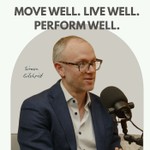
Welcome to Move Well, Live Well, Perform Well, the podcast that explores how to optimise your movement, train effectively, recover from injuries and live stronger.
Hosted by Simon Gilchrist, sports physiotherapist and founder of Mayfair Health and WellQ.
Simon sits down with experts each week to share insights on movement, performance and real health challenges. From knee pain to back injuries to burnouts and recovery, they share practical advice and tips for optimising your health along the way.
The podcast is powered by Mayfair Health, helping you to move better, live longer and perform at your best.
Site
RSS
Spotify
Apple
Data updated on 01/10/2026
Recent rankings
Latest chart positions across Apple Podcasts and Spotify rankings.
Shared links between episodes and podcasts
Links found in episode descriptions and other podcasts that share them.
Inside the GP Consultation: Common Diagnoses & How Medications Work with Dr Jagrati Acharya
Wednesday, September 30, 2026 • Duration 01:05:02
What actually happens during a typical GP consultation? Behind a ten-minute appointment is often a complex process of recognising patterns, managing uncertainty, deciding what needs investigating and understanding how different treatments may interact.
In this episode, we sit down with Dr Jagrati Acharya, an experienced GP who has spent 26 years working across both NHS and private general practice. Jagrati studied at Imperial College London before qualifying in medicine from St George’s Hospital Medical School in 1998, and today combines NHS practice with her private work at Biome Medical, the boutique private GP and lifestyle medicine clinic she founded in Chelsea.
We take a behind-the-scenes look at what GPs actually see every day, from common conditions and unexpected findings to the challenge of deciding what needs investigating immediately and what can be safely monitored. We also explore how much of general practice is about diagnosis versus reassurance, prevention and managing uncertainty.
A major focus of the conversation is pharmacology and drug interactions. Jagrati explains what happens to a medication after we take it, why absorption, metabolism and elimination matter, and why the same drug and dose can affect different people in very different ways.
We then tackle two areas that regularly generate questions and confusion: blood pressure and statins. We discuss how hypertension is diagnosed, why readings can vary so significantly, the role of home monitoring and lifestyle changes, and how doctors approach cardiovascular risk beyond simply looking at a single cholesterol number.
The conversation also explores statins, including why they are prescribed so widely, concerns around side effects and the importance of understanding an individual's overall cardiovascular risk rather than treating cholesterol in isolation.
Finally, we look beyond the prescription pad at prevention, lifestyle and holistic care, including the realistic role of diet, movement, sleep and stress, before asking what actually separates a good GP from an average one and how the doctor-patient relationship has changed in the age of Google and online symptom checkers.
🎙️ In This Episode, We Cover
Jagrati's journey from medical school to 26 years in general practice
The differences between NHS, private and unusual GP settings
What GPs actually see during a typical working week
The ten conditions commonly encountered in general practice
Diagnosis, reassurance and managing uncertainty
How GPs decide what needs investigating and what can be monitored
How medications are absorbed, distributed, metabolised and eliminated
Why some medicines need to be taken with food or at specific times
Why the same drug and dose can affect different people differently
How medication interactions actually occur
Common interactions involving medicines, supplements and foods
Managing patients taking multiple medications
The risks and challenges of polypharmacy
How hypertension is diagnosed
Why blood pressure readings can vary
White coat hypertension and home blood pressure monitoring
Lifestyle changes vs medication for blood pressure
What statins actually do and why they are prescribed
Understanding cardiovascular risk beyond a cholesterol number
Statins, side effects and the evidence behind common concerns
Balancing conventional medicine with lifestyle and preventative care
The role of diet, movement, sleep and stress
Where complementary approaches may have a role
What actually makes a good GP
How Google and online symptom checkers have changed consultations
The parts of general practice patients rarely see
🎯 Who This Episode Is For
Anyone who wants to understand what really happens inside a GP consultation
People taking regular prescription medications
Anyone taking multiple medications or supplements
Those wanting to better understand drug interactions
People concerned about blood pressure or cholesterol
Anyone considering or currently taking statins
People interested in preventative and lifestyle medicine
Those who want a more practical understanding of everyday medicine
Healthcare professionals interested in the realities of general practice
🎙️ Powered by Mayfair Health
At Mayfair Health, we specialise in recovery, performance and proactive wellness, helping our clients move well, live well and perform well for the long term.
From physiotherapy and Clinical Pilates to strength, movement and proactive health optimisation, we take a personalised approach to helping you build a healthier future.
Menopause: Hormones, HRT & Women's Health with Dr Jeanette Sundberg
Wednesday, September 16, 2026 • Duration 01:20:28
Menopause is often discussed in terms of symptoms such as hot flushes, poor sleep, brain fog and changes in mood. But the menopause transition is about much more than symptom management. It can be a pivotal period for protecting a woman’s long-term health.
In this episode, we sit down with Dr Jeanette Sundberg, a medical doctor with a specialist interest in women’s health, to explore perimenopause, menopause and postmenopause, and how we can better support women through each stage.
Jeanette’s route into medicine is anything but conventional. After studying at Brown University and completing an MBA at INSEAD, she built an international business career before retraining as a doctor. Today, her work brings together clinical medicine, women’s health, healthcare strategy and innovation.
We explore what happens hormonally during the menopause transition, how symptoms are recognised, and why midlife can be an important opportunity to think proactively about bone, muscle, metabolic, cardiovascular and sexual health.
A major focus of the conversation is HRT, including what we are actually replacing, the different forms of oestrogen and progesterone, when treatment can be considered, and how benefits and risks should be assessed on an individual basis.
🎙️ In This Episode, We Cover
Jeanette’s unconventional journey from international business to medicine and women’s health
Understanding perimenopause, menopause and postmenopause
The hormonal changes taking place during the menopause transition
Early and commonly missed symptoms of perimenopause
Brain fog, sleep, anxiety, joint pain, libido and changes in body composition
When hormone blood tests are useful and when they may create confusion
Why menopause is about more than symptom management
The impact of declining oestrogen on bone, muscle and body composition
Menopause, cardiovascular and metabolic health
What HRT actually replaces
Oestrogen and progesterone and why both may be needed
Oral vs transdermal oestrogen
When to consider starting HRT
Infra-Red Sauna, Red Light & Recovery: What the Science Really Tell Us?
Wednesday, September 2, 2026 • Duration 53:39
💵 Exclusive Offer: Use code MAYFAIRHEALTH for 10% discount for Sunlighten products
Heat and light therapies have moved well beyond the traditional spa environment, becoming increasingly popular in conversations around recovery, performance, longevity and healthspan. But how much of the hype is actually supported by science?
In this episode, we sit down with Joie Risk, Managing Director for Sunlighten across the UK, Ireland and Europe, to explore where infrared sauna and red and near-infrared light therapy genuinely fit within modern recovery and health optimisation.
Joie shares her perspective on the evolution of infrared sauna, how the technology has developed, and what actually happens physiologically when we are exposed to heat. We explore the differences between near, mid and far infrared, how infrared sauna compares with traditional Finnish sauna, and whether the benefits come primarily from infrared wavelengths, increased core temperature, or a combination of both.
A key focus of the conversation is heat exposure and recovery. We discuss the evidence around circulation, heat-shock proteins, soreness, sleep and tissue recovery, as well as the idea that “heat is the new cardio”. We also explore whether there is an optimal dose of sauna, how temperature, duration and frequency should be considered, and whether timing matters around exercise.
The conversation also looks at how men and women may respond differently to heat, including the influence of hormonal fluctuations, the menstrual cycle, perimenopause and menopause. Joie explains why heat tolerance and adaptation may vary between individuals and why sauna protocols shouldn't necessarily be one-size-fits-all.
Finally, we compare heat and cold exposure, discuss the potential role of contrast therapy, and consider where infrared sauna belongs within a wider recovery pyramid alongside sleep, exercise, nutrition and stress management.
The key message? Sauna and light therapy may have a role in recovery and healthspan, but the most important question isn't simply whether they “work”. It's how, when, for whom, and at what dose they should be used as part of a broader evidence-based approach to health and recovery.
🎙️ In This Episode, We Cover• How infrared sauna has evolved from spa treatment to recovery and longevity tool• What actually happens physiologically during infrared sauna• Near, mid and far infrared explained• Infrared sauna vs traditional Finnish sauna• Whether “heat is the new cardio”• Heat exposure, recovery, circulation and sleep• Heat-shock proteins and physiological adaptation• How long, how hot and how often to use a sauna• The best timing for sauna around exercise• Sex differences in heat tolerance and adaptation• Heat exposure during the menstrual cycle, perimenopause and menopause• What red and near-infrared light therapy actually does• Photobiomodulation and its potential applications• Where the evidence for red light therapy is strongest• Heat vs cold exposure and the role of contrast therapy• Where sauna belongs within an evidence-based recovery strategy• Common mistakes with temperature, hydration, duration and frequency• How to approach sauna if you're completely new to it🎯 Who This Episode Is For• Athletes and active individuals interested in recovery• People exploring sauna and heat therapy for health and wellbeing• Anyone interested in longevity and healthspan• People curious about red and near-infrared light therapy• Those looking to optimise sleep, recovery and stress management• Clinicians, coaches and practitioners interested in emerging recovery technologies🎙️ Powered by Mayfair HealthAt Mayfair Health, we specialise in recovery, performance and proactive wellness. We believe emerging technologies can play a role in health optimisation when they are used alongside the fundamentals of sleep, exercise, nutrition and stress management.🔗 Website: https://www.mayfairhealth.co.uk📩 Contact: info@mayfairhealth.co.uk📞 Phone: 020 3985 1500📱 Instagram: @mayfairhealth
Pars Stress Fracture, RED-S & Young Athlete Development with Elite Sports Physio Vishal Kanji
Wednesday, August 12, 2026 • Duration 57:32
Bone stress injuries are becoming an increasingly important issue in young and high-performance athletes. From sudden increases in training load to rapid growth, poor recovery and low energy availability, a combination of factors can leave developing athletes vulnerable to injury.
In this episode, we sit down with Vishal Kanji, Specialist Physiotherapist at Mayfair Health, with extensive experience across the NHS and elite sport, including work with Arsenal FC, Middlesex County Cricket Club, Essex County Cricket Club and Brentford FC.
Vish specialises in spinal rehabilitation, lumbar spine stress fractures, movement control and return to play, and shares his experience managing one of the more challenging injuries seen in young athletes: Pars stress fractures.
We explore why these injuries are particularly common in adolescent athletes and fast bowlers, how repeated spinal extension and rotation can place stress on the pars, and why early symptoms are often mistaken for simple muscular back pain.
A key focus of the conversation is load management. We discuss how sudden changes in training volume, year-round competition, early sport specialisation and inadequate recovery can influence injury risk, and why successful rehabilitation requires balancing temporary unloading with progressive strength and capacity building.
We also explore the role of RED-S, nutrition and bone health, including how low energy availability, hormonal changes, sleep and recovery can influence bone adaptation and healing. Vish explains why treating the injury alone may not be enough if the underlying biological factors aren't addressed.
Using fast bowling as a case study, we dive into biomechanics, including front-on, side-on and mixed bowling actions, counter-rotation, hip–shoulder separation and the role of the front-foot block. We discuss how technique, workload and physical capacity interact, and whether biomechanics can be modified without compromising performance.
Finally, we look beyond rehabilitation towards prevention and long-term athlete development. From strength training and bone loading to better communication between coaches, parents and clinicians, Vish explains how we can build stronger, more resilient athletes before injury occurs.
Cardiologist Explains Why Heart Diseases are Happening Earlier
Friday, July 31, 2026 • Duration 01:06:02
Heart disease remains the leading cause of death worldwide, yet many cases are preventable through earlier intervention and healthier lifestyle choices.
In this episode, we sit down with Dr Asif Qasim, Consultant Interventional Cardiologist at Cleveland Clinic London, Founder and CEO of MedShr, and expert in cardiovascular prevention, to explore what modern heart health really looks like.
Drawing on his experience in clinical cardiology, research, and digital healthcare innovation, Dr Qasim explains why prevention should be the foundation of cardiovascular medicine, and why exercise, metabolic health, and lifestyle often have a greater impact than many people realise.
A key focus of the conversation is exercise as medicine. We discuss the evidence behind the 5•3•8 framework — five exercise sessions per week, comprising three resistance sessions, two cardiovascular sessions, and 8,000 daily steps - and explore how consistency, strength training, and cardiorespiratory fitness can dramatically reduce cardiovascular risk and improve longevity.
We also examine the close relationship between metabolic health and heart disease, why cardiologists are increasingly thinking beyond cholesterol alone, and the lifestyle interventions that offer the greatest return for long-term health.
The discussion then turns to GLP-1 medications and their growing role in cardiovascular prevention. Dr Qasim shares his perspective on the benefits and limitations of these therapies, why preserving muscle and bone health is essential during weight loss, and why every prescription should be accompanied by an exercise and nutrition plan.
Finally, we explore cardiovascular screening, including who should consider coronary calcium scoring, the most valuable biomarkers for healthy ageing, and what an ideal heart health assessment looks like for someone looking to prevent disease rather than treat it.
🎙️ In This Episode, We Cover
• Why prevention is the future of cardiovascular medicine • The biggest drivers of heart disease today • Exercise as medicine and the evidence behind the 5•3•8 framework • Resistance training, VO₂ max, and cardiovascular health • Why consistency matters more than intensity • Daily step counts and their impact on long-term health• The relationship between metabolic health and cardiovascular disease• GLP-1 medications, muscle preservation, and bone health• Why exercise and nutrition should accompany weight-loss medication• Coronary calcium scoring and cardiovascular screening• The biomarkers that matter most for healthy ageing• Three practical habits to improve heart health and longevity🎯 Who This Episode Is For• Anyone looking to reduce their risk of heart disease• People interested in exercise, longevity, and preventative health• Those considering or currently taking GLP-1 medications• Individuals wanting to improve their metabolic and cardiovascular health• Healthcare professionals interested in modern preventative cardiology🎙️ Powered by Mayfair HealthAt Mayfair Health, we specialise in recovery, performance, and proactive wellness. Whether you're looking to improve your cardiovascular health, optimise your fitness, or take a proactive approach to healthy ageing, our multidisciplinary team is here to help.🔗 Website: https://www.mayfairhealth.co.uk📩 Contact: info@mayfairhealth.co.uk📞 Phone: 020 3985 1500📱 Instagram: @mayfairhealth
Tendon Pain and Rehabilitation Explained by Prof. Peter Malliaras
Wednesday, July 1, 2026 • Duration 50:31
Tendon pain is one of the most common musculoskeletal conditions affecting both active individuals and the general population, yet it remains widely misunderstood.
In this episode, we sit down with Professor Peter Malliaras, internationally recognised physiotherapist, researcher, and one of the world's leading experts in tendinopathy, to explore what we now understand about tendon pain, rehabilitation, and recovery.
Drawing on decades of research, Professor Malliaras explains how our understanding of tendinopathy has evolved beyond simply viewing it as tendon damage, towards a broader understanding of tendon capacity, adaptation, and function.
A key focus of the conversation is the relationship between pain and imaging. We explore why tendon scans often don't correlate with symptoms, why structural abnormalities aren't always the cause of pain, and why rehabilitation should be guided by clinical presentation rather than imaging alone.
We also discuss why load is one of the most effective treatments for tendon pain. From determining the right starting point to understanding how much pain is acceptable during exercise, Professor Malliaras explains why complete rest is often counterproductive and why successful rehabilitation is built around individualised loading rather than rigid exercise protocols.
The discussion extends beyond biomechanics into the growing influence of metabolic health and hormones on tendon health. We explore why clinicians should increasingly think beyond the tendon itself, and where treatments such as shockwave therapy and PRP fit within modern evidence-based care.
Finally, Professor Malliaras shares practical advice for managing tendon pain early, the biggest misconceptions surrounding tendon rehabilitation, and what excites him most about the future of tendon research.
🎙️ In This Episode, We Cover
• What tendinopathy actually is and how our understanding has evolved • Why tendons heal differently from muscles • Why tendon pain doesn't always match MRI or ultrasound findings • Why load is one of the most effective treatments for tendon pain • Isometrics, eccentrics, and heavy slow resistance explained• How much pain is acceptable during rehabilitation• The influence of metabolic health and hormones on tendon health• When shockwave therapy and PRP are appropriate• The biggest myths surrounding tendon pain and recovery• Practical advice for returning safely to activity
Neuroscientist Explains Why Our Brain Struggles to Switch Off | Sophie Hascher
Monday, June 15, 2026 • Duration 01:12:30
Modern life is placing unprecedented demands on the human brain.
From constant notifications and digital stimulation to chronic stress, poor sleep, and highly rewarding foods, many of the environments we live in today are fundamentally different from those our brains evolved to handle.
In this episode, we sit down with Sophie Hascher, neuroscientist, neuro-wellness strategist, and founder of BrainFlowElite, to explore how modern lifestyles are reshaping cognition, behaviour, emotional regulation, and long-term brain health.
With a multidisciplinary background spanning neuroscience, psychology, neurofeedback, behavioural science, and longevity, Sophie shares insights into how our reward systems, nervous systems, and cognitive resilience are being challenged in the modern world.
A key focus of the conversation is dopamine and reward processing. Sophie explains what dopamine is actually doing in the brain, why it is often misunderstood, and how modern technologies, social media, ultra-processed foods, and digital environments increasingly compete for our attention by leveraging the brain's reward circuitry.
We also explore addictive behaviours and nervous system dysregulation, discussing why some individuals are more vulnerable to compulsive behaviours, how chronic stress can become neurologically reinforcing, and whether high performers can sometimes mistake nervous system dysregulation for ambition, productivity, or success.
The discussion extends into sugar cravings, emotional regulation, sleep, metabolism, and the growing evidence linking physiological health to cognitive performance. Sophie explains how sleep deprivation, chronic stress, blood sugar instability, and hormonal changes can influence decision-making, impulse control, and reward-seeking behaviours.
Beyond understanding the problem, we explore practical solutions. We discuss the role of movement, recovery, intentional rest, and neurofeedback in supporting nervous system regulation and long-term cognitive wellbeing.
Finally, Sophie introduces the concept of "brain capital" — the idea that cognitive health, emotional resilience, and neurological performance may become some of the most valuable personal and societal assets of the future. We explore why preserving brain health could become one of the defining challenges of modern longevity medicine.
Breathing Dysfunction, Red Light Therapy & Modern Health with Dr Steve James
Thursday, May 28, 2026 • Duration 01:23:16
Metabolic health is becoming one of the most important conversations in modern medicine, yet many people still underestimate how deeply it influences energy, performance, resilience, and long-term health.
In this episode, we sit down with Dr Steve James, Consultant in Metabolic Health and Performance Medicine, to explore how physiology, behaviour, breathing, and environment shape health outcomes in the modern world.
With a background spanning critical care, cardiac anaesthesia, and performance medicine, Dr James brings a unique perspective on human physiology under both extreme stress and high-performance conditions. His work now focuses on helping people optimise metabolic health through a more integrated and preventative approach to medicine.
We break down what metabolic health actually means, why it matters far beyond weight or fitness, and how modern lifestyles may be driving widespread metabolic dysfunction. A key focus of the conversation is VO₂ max - what it tells us about cardiovascular fitness, resilience, and longevity, and why it may be one of the most important health markers we can track.
We also explore the role of breathing and respiratory health, discussing how modern life may be changing the way we breathe, the physiological consequences of poor breathing patterns, and whether breathwork should become part of daily health routines.
The discussion expands into environmental and recovery factors, including light exposure and red light therapy. Dr James explains the physiology behind these interventions, what the evidence currently shows, and how light may influence inflammation, recovery, and overall wellbeing.
Beyond physiology alone, we explore the behavioural side of health. Dr James shares insights into why sustainable behaviour change is often the missing link in long-term health outcomes, and why understanding psychology, motivation, and habits is just as important as understanding biology.
Finally, we discuss the foundations of long-term resilience, the highest-impact habits for improving metabolic health, and why many people may be overlooking the fundamentals while searching for quick fixes or interventions.
🎙️ In This Episode, We Cover • What metabolic health actually means • Why metabolic dysfunction is becoming increasingly common• VO₂ max and its relationship with longevity and resilience• Blood sugar regulation and energy metabolism• How the body produces and uses energy• Why breathing is often overlooked in health and performance• The consequences of poor breathing patterns• Breathwork and respiratory health• Light exposure and red light therapy explained• The relationship between environment and recovery• Behaviour change and long-term health outcomes• Why psychology matters in health optimisation• Modern lifestyles and their impact on physiology• The highest-impact habits for long-term health• Practical ways to improve resilience and recovery🎯 Who This Episode Is For• Anyone interested in improving long-term health and resilience• People looking to optimise energy, recovery, and performance• Individuals interested in metabolic health and longevity• Those curious about breathwork, VO₂ max, and recovery tools• Clinicians, coaches, and practitioners interested in preventative health🎙️ Powered by Mayfair HealthAt Mayfair Health, we specialise in recovery, performance, and proactive wellness. Whether you’re looking to optimise your health, improve resilience, or better understand your physiology, our multidisciplinary team is here to help.🔗 Website: https://www.mayfairhealth.co.uk📩 Contact: info@mayfairhealth.co.uk📞 Phone: 020 3985 1500📱 Instagram: @mayfairhealth
Why Tendon Pain Keeps Coming Back with Dr Lorenzo Masci
Wednesday, May 13, 2026 • Duration 01:11:44
Tendon pain is one of the most common issues seen in both sport and everyday life, yet tendinopathy remains widely misunderstood.
In this episode, we sit down with Dr Lorenzo Masci, Consultant in Sport and Exercise Medicine, to explore how tendon injuries develop, why some cases become chronic, and what actually drives successful recovery.
With extensive experience managing complex tendon conditions in both elite athletes and the general population, Dr Masci shares a practical and evidence-based perspective on conditions such as Achilles tendinopathy, patellar tendinopathy, and proximal hamstring injuries.
We break down what tendinopathy really is, how tendon injuries differ from muscle injuries, and why recovery often requires a very different approach than most people expect.
A key focus of the conversation is the role of imaging and investigations. Dr Masci explains why scans don’t always correlate with pain, the common mistakes clinicians and patients make when interpreting imaging findings, and why clinical presentation should often guide treatment more than structural changes alone.
We also explore the foundations of tendon rehabilitation, including load management, building tendon capacity, and how to progress safely from pain back to performance. The discussion covers why many people either underload or overload tendons during rehab, and how finding the right balance is critical for long-term recovery.
Beyond rehabilitation, we discuss where treatments such as shockwave therapy, PRP, and injection-based interventions fit into tendon management, what the evidence actually shows, and when these treatments may or may not be appropriate.
Finally, Dr Masci explores the growing understanding that tendon health is influenced by far more than mechanics alone. We discuss the links between metabolism, hormones, inflammation, lifestyle, and tendon pathology, and why clinicians increasingly need to think beyond the tendon itself when managing recurrent or persistent injuries.
🎙️ In This Episode, We Cover
• What tendinopathy actually is • Why tendon injuries differ from muscle injuries • The role of scans and imaging in tendon pain • Why imaging findings don’t always match symptoms • Common mistakes when interpreting scans• How to “get someone out of trouble” with a painful tendon• Load management and tendon rehabilitation principles• Building tendon capacity safely• How to progress from pain back to performance• Shockwave therapy and what the evidence says• PRP and injection-based treatments• Why some tendon problems become chronic• The role of the nervous system in chronic tendon pain• Metabolic health and its relationship with tendinopathy• Hormones, menopause, and tendon health• Lifestyle, inflammation, and recovery• Tendon stiffness, elasticity, and injury prevention• The biggest mistakes people make during rehab🎯 Who This Episode Is For• Anyone dealing with ongoing tendon pain or injury• Runners and athletes managing Achilles, patellar, or hamstring issues• People struggling with recurrent or chronic tendinopathy• Clinicians and therapists interested in tendon rehabilitation• Anyone looking to better understand tendon health and recovery🎙️ Powered by Mayfair HealthAt Mayfair Health, we specialise in recovery, performance, and proactive wellness. If you’re managing ongoing pain, rehabilitating from injury, or looking to optimise your long-term health and movement, our multidisciplinary team is here to help.🔗 Website: https://www.mayfairhealth.co.uk📩 Contact: info@mayfairhealth.co.uk📞 Phone: 020 3985 1500📱 Instagram: @mayfairhealth
HRV Explained: The Metric You Are Reading Wrong
Thursday, April 30, 2026 • Duration 01:04:30
HRV has become one of the most talked-about metrics in health and performance, but it’s also one of the most misunderstood.
In this episode, we sit down with Dr Marco Altini, data scientist, endurance coach, and founder of HRV4Training, to explore what heart rate variability actually reflects in the body, and how it should (and shouldn’t) be used.
With a background spanning data science, physiology, and wearable technology, Marco brings a unique perspective on how physiological data can inform stress, recovery, and long-term adaptation. His work has influenced elite athletes, coaches, and increasingly, how HRV is applied in general health and longevity.
We break down the foundations of HRV, how it relates to the autonomic nervous system, and whether it should be viewed as a marker of recovery, resilience, or overall system health.
A key focus of the conversation is interpretation. Marco explains why “higher HRV is always better” is a flawed concept, the importance of understanding your individual baseline, and why daily fluctuations often matter far less than long-term trends.
We also explore the role of wearable technology — from ECG to PPG devices — and whether consumer tools are now accurate enough to guide decision-making. As an advisor to Oura, Marco shares insight into how these technologies are evolving, and the risks of oversimplifying complex physiology into single scores.
Finally, we discuss the practical side: what actually impacts HRV, how lifestyle factors like sleep, stress, and alcohol influence your data, and how to use HRV in a way that genuinely supports healthspan and performance.
🎙️ In This Episode, We Cover
What HRV actually measures in the body
HRV and the autonomic nervous system
HRV as a marker of health, resilience, and longevity
Why “higher HRV is better” is misleading
The importance of baseline, normal range, and trends
Daily vs long-term HRV: what really matters
Common mistakes when interpreting HRV data
Which metrics are actually useful (and which aren’t)
Related Shows Based on Content Similarities
Discover shows related to Move Well, Live Well, Perform Well, based on actual content similarities. Explore podcasts with similar topics, themes, and formats, backed by real data.
Apple Podcasts
Spotify
🇬🇧 Great Britain - trending
06/08/2026
#140
↘
🇬🇧 Great Britain - trending
05/08/2026
#81
↘
🇬🇧 Great Britain - trending
04/08/2026
Body-identical vs compounded hormones
Personalising HRT around symptoms, risk profile and individual circumstances
The evolution of our understanding of HRT benefits and risks
Breast cancer, blood clot and stroke considerations
What we know about HRT and long-term health and where the evidence remains uncertain
Vaginal oestrogen and genitourinary health
Testosterone in women: where it may have a role and where evidence remains limited
Why HRT is only one part of a long-term health strategy
Exercise, resistance training, protein, nutrition, sleep and stress management
How to approach menopause as an opportunity to protect healthspan
🎯 Who This Episode Is For
Women approaching or going through perimenopause
Women in menopause or postmenopause
Anyone experiencing unexplained changes in sleep, mood, energy, cognition or body composition
Women considering HRT or wanting to better understand the benefits and risks
Anyone interested in protecting bone and muscle health through midlife and beyond
Healthcare professionals working with women through the menopause transition
Partners, family members and anyone wanting to better understand women’s health
🎙️ Powered by Mayfair Health
At Mayfair Health, we specialise in recovery, performance and proactive wellness, helping our clients move well, live well and perform well for the long term.
From physiotherapy and Clinical Pilates to strength, movement, nutrition and proactive health optimisation, we take a personalised approach to helping you build a healthier future.
• Why bone stress injuries may be increasing in young athletes • Pars stress fractures and why they occur • How to recognise the early warning signs of lumbar stress injury • MRI, CT and SPECT imaging and when they may be used • The impact of growth and adolescence on injury risk • RED-S, nutrition and hormonal health • Why fast bowlers are particularly vulnerable to lumbar stress injuries • Front-on, side-on and mixed bowling biomechanics • The relationship between technique, workload and injury risk • How to safely manage training loads in young athletes • Staged rehabilitation and return-to-bowling • The role of strength training in prevention and recovery • How bone adapts to resistance training and impact loading • Building long-term skeletal resilience in young athletes • Practical strategies for preventing bone stress injuries
🎯 Who This Episode Is For
• Young athletes and aspiring elite performers • Cricket players, particularly fast bowlers • Parents and coaches involved in youth sport • Athletes recovering from a pars stress fracture or bone stress injury • Physiotherapists, sports physicians and strength & conditioning coaches • Anyone interested in injury prevention, bone health and long-term athletic development
🎙️ Powered by Mayfair Health
At Mayfair Health, we specialise in recovery, performance and proactive wellness. Our multidisciplinary team works with athletes and active individuals to manage injury, build physical capacity and develop the foundations for long-term performance and resilience.
• Anyone experiencing ongoing tendon pain or recurrent injuries • Runners, athletes, and active individuals managing tendinopathy • People recovering from Achilles, patellar, gluteal, or hamstring tendon injuries • Physiotherapists, sports medicine clinicians, and rehabilitation professionals • Anyone interested in understanding the latest evidence surrounding tendon rehabilitation
🎙️ Powered by Mayfair Health
At Mayfair Health, we specialise in recovery, performance, and proactive wellness. Whether you're recovering from injury, returning to sport, or looking to better understand how your body adapts to training and load, our multidisciplinary team is here to help.
• How modern environments are affecting the brain • Dopamine, reward systems, and human behaviour • Why social media, technology, and ultra-processed foods are so compelling • The neuroscience of attention and instant gratification • Addictive personalities and nervous system dysregulation • Why some people are more vulnerable to compulsive behaviours • Stress addiction, productivity addiction, and high-performance culture • Sugar cravings and reward processing • The impact of chronic stress on the brain and nervous system • Cognitive overload, burnout, and emotional regulation • The relationship between sleep, hormones, metabolism, and behaviour • How exercise influences dopamine and nervous system regulation • Neurofeedback and brain training explained • The concept of brain capital and cognitive resilience • Longevity, brain health, and the future of human performance • Practical strategies to reduce overstimulation and protect cognitive health
🎯 Who This Episode Is For
• Anyone feeling overwhelmed, stressed, or mentally fatigued by modern life • Professionals navigating high-performance environments • People interested in neuroscience, psychology, and behaviour change • Individuals looking to improve focus, resilience, and emotional regulation • Those interested in longevity, brain health, and cognitive performance • Clinicians, coaches, and practitioners working in health and wellbeing
🎙️ Powered by Mayfair Health
At Mayfair Health, we specialise in recovery, performance, and proactive wellness. Whether you're looking to optimise your health, improve resilience, or better understand how your brain and body respond to modern life, our multidisciplinary team is here to help.
Practical ways to use HRV for health and performance
🎯 Who This Episode Is For • Anyone using or considering wearable health technology • People interested in recovery, stress, and longevity • Athletes and coaches using HRV for performance • Individuals looking to better understand their physiology • Clinicians and practitioners interested in data-driven health
🎙️ Powered by Mayfair Health
At Mayfair Health, we specialise in recovery, performance, and proactive wellness. If you’re navigating ongoing symptoms, optimising your health, or looking to better understand your body, our multidisciplinary team is here to help.