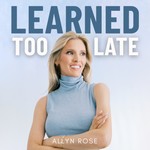
Learned Too Late is an educational podcast about the things we all wish we’d been taught sooner—explained with clarity, compassion, and a healthy dose of humor. Hosted by Allyn Rose, each episode breaks down essential life skills—from health and prevention to money, mindset, relationships, and personal well-being—alongside experts, advocates, and cultural voices who know the system from the inside.
Designed as a practical “how-to” for modern life, Learned Too Late tackles serious topics without taking itself too seriously. Through honest conversations, smart questions, and moments of levity, the show helps listeners turn confusion into clarity and learn the things that can change outcomes—before a crisis forces the lesson.
Because learning it the hard way shouldn’t be the only way.
If you’ve ever thought, “I was today years old when I learned this,” you’re in the right place. Blending dry humor with real-world insight, Learned Too Late is here to help you make smarter, more empowered decisions. Allyn’s here to be the big sister you always needed—so you don’t learn too late.
Site
RSS
Apple
Data updated on 20/09/2026
Recent rankings
Latest chart positions across Apple Podcasts and Spotify rankings.
Shared links between episodes and podcasts
Links found in episode descriptions and other podcasts that share them.
Learned Too Late, a podcast by Allyn Rose - Stats, Episodes and Rankings - My Podcast Data
Screen Time: How to Schedule Your First Mammogram
Season 1 · Episode 28
Wednesday, September 2, 2026 • Duration 24:06
Getting your first mammogram can feel surprisingly confusing. Who do you call? Do you need a referral? What’s the difference between a screening mammogram and a diagnostic mammogram? And what happens if you find a lump before you ever reach the age for routine screening?
In this solo episode of Learned Too Late, Allyn breaks down the entire process of scheduling your first mammogram — step by step — so you know exactly what to do, what to ask, what to expect at the appointment, and how to understand the results afterward.
She explains the difference between routine screening and diagnostic imaging, how to find a breast imaging center, what questions to ask your doctor or insurance company, how to prepare for the appointment, and what actually happens during mammography.
The episode also walks through common terms you may see in your results, including negative, benign, probably benign, suspicious, BI-RADS scores, and incomplete imaging, so a callback doesn’t automatically send you into a panic.
Allyn also discusses why knowing your breast density matters, what dense breasts can mean for future screening, and why you should make sure you understand whether mammography alone is appropriate for your personal risk.
And most importantly: if you found a lump or another breast change and your mammogram comes back clear, that does not mean you should stop asking questions. Keep advocating for yourself, follow up on persistent symptoms, and get a second opinion if something still feels wrong.
In This Episode
How to schedule your first mammogram
Who to call to book a mammogram
Whether you need a referral or doctor’s order
Screening mammogram vs. diagnostic mammogram
What to do if you find a breast lump
How to choose a breast imaging center
Questions to ask your insurance company
What to wear to a mammogram
How to prepare for your first mammogram
What mammogram compression actually feels like
What happens during the appointment
What common mammogram results mean
Understanding BI-RADS 0–6
Why you may be called back after your first mammogram
What “benign” and “probably benign” mean
Why breast density can affect your screening plan
Why a normal mammogram should not automatically end the conversation if you still feel a lump
When to seek a second opinion
How to advocate for yourself when something feels wrong
Disclaimer
This episode is for general educational purposes only and is not a substitute for individualized medical advice, diagnosis, or treatment. Your personal breast screening plan should be discussed with a qualified healthcare professional and may depend on your age, symptoms, family history, genetics, breast density, previous medical history, and individual breast cancer risk.
If you notice a new breast lump, nipple discharge, skin changes, persistent focal pain, dimpling, or another new breast change, contact a healthcare professional rather than waiting for your next routine screening.
Connect
Follow Learned Too Late on Instagram: @learnedtoolatepod
Learn more about Allyn and breast cancer prevention through The Previvor Foundation at theprevivor.org
Listen to Learned Too Late on Apple Podcasts, Spotify, and watch on YouTube.
Bragging Rights: Why Liking Yourself Makes People Uncomfortable
Season 1 · Episode 27
Tuesday, August 18, 2026 • Duration 16:15
Why Are We So Afraid of Being "Full of Ourselves?"
Why is saying “I hate my body” considered relatable, but saying “I look incredible today” makes you sound conceited?
In this solo episode of Learned Too Late, Allyn explores our cultural obsession with humility—and why confidence, ambition, pride, and even accurately recognizing your own strengths can make other people uncomfortable.
We’re taught to believe in ourselves, but apparently not too much. We can be successful, as long as we act surprised by it. We can be beautiful, as long as we pretend we don’t know. And particularly for women, accomplishment often comes with an unspoken requirement: make yourself smaller so everyone else feels more comfortable.
But is that actually humility—or just socially acceptable insecurity?
Allyn talks about learning to use self-deprecation as a way to become more likable, the strange language of the “humble brag,” why we require outside validation before allowing ourselves to believe we’re talented, and why someone else’s confidence can feel threatening even when it has absolutely nothing to do with us.
She also asks a bigger question:
What would you say about yourself if you knew no one was allowed to call you conceited?
Because maybe being “full of yourself” isn’t the insult we think it is. Maybe the real problem is being so full of everyone else’s opinions that there’s no room left for your own.
In This Episode
Why self-deprecation has become socially desirable
The difference between confidence and arrogance
Why openly liking yourself can make other people uncomfortable
Why women are expected to package confidence differently
The psychology of the humble brag
Why we wait for external validation before believing in ourselves
Confidence vs. superiority
Why false humility can actually be dishonest
The Villain Edit: How Brands Manipulate What You Believe
Season 1 · Episode 26
Wednesday, August 5, 2026 • Duration 01:13:17
Can celebrities really control what we think about them, or are we all easier to influence than we'd like to admit?
Every week, the internet seems to decide who's the hero, who's the villain, and which celebrity deserves to be canceled. But behind many of these viral moments are carefully crafted PR strategies, reputation management teams, and marketing tactics designed to shape public opinion.
This week on Learned Too Late, Allyn sits down with Marisa, founder of Dirty Copy and host of Dirty Chats, to pull back the curtain on celebrity branding, crisis management, cancel culture, and the psychology that drives online outrage.
From Meghan Markle and Blake Lively to Kim Kardashian, Taylor Swift, Alex Earle, Kylie Jenner, Selena Gomez, Zendaya, Dave Portnoy, Spencer Pratt, and the Kardashians, they break down what today's biggest celebrity stories reveal about modern marketing, and what entrepreneurs, creators, and business owners can learn from them.
Whether you're building a personal brand, launching a business, or simply fascinated by celebrity culture, this episode explains why attention has become the world's most valuable currency.
In This Episode
How PR teams shape public perception behind the scenes
Why authenticity has become the most valuable brand asset
The psychology behind cancel culture and online outrage
What makes some celebrities survive controversy while others don't
Why humor can be the ultimate reputation management strategy
How Kim Kardashian consistently wins the marketing game
The branding mistakes Meghan Markle continues to make
Why Taylor Swift has built one of the strongest communities in entertainment
The marketing genius behind Kylie Jenner's product launches
What rage bait is and why creators continue using it
Why villains often outperform heroes on social media
The dangers of parasocial relationships with celebrities
How founders can build a memorable personal brand
Manifest Destiny: It's Only Delusional Until It Works
Season 1 · Episode 25
Wednesday, July 29, 2026 • Duration 12:56
Every breakthrough begins the same way: someone believes in something before there's any evidence they should.
In this solo episode of Learned Too Late, Allyn explores why the biggest obstacle to success isn't usually talent, intelligence, or opportunity—it's the fear of looking foolish.
From inventing the airplane to running a four-minute mile, history is filled with people who were called unrealistic, naive, or even delusional before they proved everyone wrong. The difference? They kept going long enough for reality to catch up.
Drawing from her own unconventional journey—from feeling like an outsider in high school to competing at Miss America, moving abroad, building a nonprofit, and creating a podcast—Allyn shares why she's learned to stop waiting for permission and start betting on herself.
She explains the psychology behind why embarrassment feels so dangerous, why perfection keeps us stuck, and why so many dreams don't actually fail—they simply expire because people quit too soon.
If you've been waiting for the "right time" to start the business, launch the podcast, publish the video, apply for the opportunity, or chase the life you want, this episode is your reminder that confidence often looks like delusion—until it works.
In This Episode
Why every breakthrough is considered "delusional" before it succeeds
The surprising reason your brain fears embarrassment more than failure
Why confidence is often mistaken for arrogance before success
How fear of judgment keeps people from pursuing their biggest dreams
Why you don't need permission to start something meaningful
The psychology of rejection and public embarrassment
How perfectionism quietly kills progress
Why consistency beats talent in the creator economy
The "delusion gap" where most people give up
How to tell whether your friends support your growth—or resent it
Why beginners all have embarrassing first attempts
The difference between impossible goals and goals that simply feel impossible
Love Is Blinding: How To Stop Dating Potential w/ Ashley Carpenter of Love Is Blind
Season 1 · Episode 24
Wednesday, July 22, 2026 • Duration 53:25
Most people think your wedding day is where your love story begins. For Ashley Carpenter, it was the end.
Millions watched Ashley walk away from the altar on Season 10 of Love Is Blind. But the decision that made headlines didn't begin on her wedding day, it started years earlier through toxic relationships, painful lessons, and learning what she would no longer tolerate.
In this episode of Learned Too Late, Allyn Rose sits down with Ashley for an honest conversation about dating, boundaries, self-worth, and why the person you marry may be the single most important decision you'll ever make.
Together they explore why so many people stay in relationships that no longer serve them, how childhood shapes our standards for love, why women often fall in love with potential instead of reality, and the subtle red flags that are easy to miss until it's almost too late.
Ashley also shares what wasn't shown on Love Is Blind, what was really happening behind the scenes, what her father (a divorce attorney) noticed long before she did, and why her now-famous line "Saying no to you today is a win." has resonated with millions.
If you've ever questioned a relationship, ignored red flags, struggled to leave, or wondered whether healthy love actually exists, this conversation is for you.
In This Episode
Why Ashley walked away at the altar on Love Is Blind
The biggest red flags she ignored
Why women stay in relationships long after they know they should leave
How childhood shapes the partners we choose
Why dating potential can keep you trapped for years
What healthy love actually feels like
The surprising relationship lessons Ashley learned from her father, a divorce attorney
Why protecting your peace isn't selfish
The difference between chemistry and emotional safety
How to rebuild your standards after a toxic relationship
Why consistency matters more than grand romantic gestures
Rich Girl Habits: How to Start Investing Without Feeling Intimidated
Season 1 · Episode 23
Tuesday, July 14, 2026 • Duration 01:09:27
What if building wealth had less to do with earning more—and more to do with thinking differently?
This week, Allyn sits down with finance creator Fran, better known online as Martha Stewish, whose refreshingly practical advice has helped thousands of women rethink money, spending, and what it actually means to live a rich life.
From accidentally becoming a viral creator to teaching women how to invest with confidence, Frances explains why financial freedom isn't about deprivation—it's about intention.
Together, they discuss why so many women feel anxious around money, the psychology behind impulse purchases, how social media fuels overconsumption, and why creating systems—not willpower—is the secret to building wealth.
Whether you've never invested before, struggle with emotional spending, or simply want to stop buying things that don't actually improve your life, this episode offers practical advice you can start using today.
In This Episode
Why most women were never taught how to invest
The easiest way to begin building wealth—even if you're starting late
The difference between saving, investing, pensions, and retirement accounts
Why "time in the market" matters more than picking winning stocks
Rich girl habits that have nothing to do with designer handbags
How to stop impulse buying without feeling deprived
The psychology behind financial anxiety—even when you're financially stable
Why your bank statement reveals more than your budget
How identifying your personal values changes the way you spend
Quiet luxury vs. performative wealth
The surprising connection between ADHD, convenience spending, and guilt
Why simplifying your wardrobe, beauty routine, and home can actually save money
Creating systems that make good financial habits automatic
How AI can remove everyday friction and make life easier
Why optimizing your life doesn't mean eliminating every challenge
Memorable Moments
Parent Trap: How To Heal Yourself While Raising Kids
Season 1 · Episode 22
Tuesday, July 7, 2026 • Duration 59:37
What if the hardest part of parenting isn't understanding your child...it's understanding yourself?
This week, Allyn sits down with parenting coach, TEDx speaker, former preschool teacher, and founder of Parenting on Mars, Rachael Fritz, for one of the most honest conversations yet about what really shapes the way we raise our kids.
From yelling and emotional triggers to sibling conflict, public meltdowns, and the pressure to be the "perfect" parent, this episode explores why so many of our parenting instincts aren't actually about our children—they're reflections of our own childhoods.
Together they discuss how to break generational patterns without expecting perfection, why self-awareness matters more than parenting hacks, and practical tools that can immediately make life at home a little calmer.
Whether you're raising toddlers, teenagers, or simply trying to heal the child inside yourself, this conversation is packed with thoughtful insights you'll carry long after the episode ends.
In this episode:
Why parenting often exposes parts of ourselves we never knew existed
The difference between parenting with your child instead of parenting over them
How your own childhood silently shapes your parenting style
Why yelling works—and why it leaves a lasting impact
What to do when your parenting partner approaches discipline differently
Questions every couple should ask before (or after) having children
How to recognize your emotional triggers before they become reactions
Why some parents struggle to "play" with their kids—and why that's okay
Why transitions are one of the hardest parts of childhood
The truth about bribing, rewards, and long-term motivation
Why public tantrums often trigger parents more than children
What realistic expectations actually look like at different developmental ages
Helping siblings build lifelong friendships instead of lifelong rivalries
The surprising lesson Rachael learned too late in life
Trauma Bonds: How Pain Gets Passed Down
Season 1 · Episode 21
Thursday, July 2, 2026 • Duration 25:43
Why do we keep repeating the same family patterns—even when we promised ourselves we'd do things differently?
In this episode of Learned Too Late, Allyn explores the hidden ways generational trauma, childhood experiences, and learned behaviors shape the adults we become. From emotional neglect and attachment styles to yelling, perfectionism, conflict, and parenting, many of the habits we think are simply "who we are" may actually be inherited survival strategies.
If you've ever wondered why you react the way you do, why certain relationships feel familiar, or whether it's possible to break unhealthy family cycles, this episode is for you.
Together, we'll explore:
Why we're often "victims of victims"
How childhood trauma shapes adult relationships
The difference between understanding behavior and excusing it
Emotional neglect and the wounds created by what didn't happen
How attachment styles develop in childhood
Why emotional regulation is learned—not inherited
Parenting differently than you were parented
The connection between nervous system regulation and emotional reactions
Why we often choose partners who feel emotionally familiar
How to identify unhealthy family patterns before passing them on
What it really means to become a cycle breaker
This episode is a reminder that while you may not have chosen the family you were born into, you can choose the legacy you leave behind. Healing doesn't erase your past—but it can change your future.
If this conversation resonated with you, be sure to subscribe, leave a review, and share it with someone who's trying to break the cycle too.
Follow Learned Too Late: Instagram: @learnedtoolatepod
To Be Continued: Surviving the Worst Chapter of Your Life
Season 1 · Episode 20
Monday, June 15, 2026 • Duration 01:08:04
What happens when the person whose job is educating the world about breast cancer suddenly becomes a patient herself?
This week, Allyn sits down with Sadia Zapp, Managing Director of Communications at the Breast Cancer Research Foundation, to discuss the surreal experience of going from talking about breast cancer every day to living it.
At 36, despite knowing the warning signs and having a family history of breast cancer, Sadia was repeatedly classified as "average risk." Then she found a lump.
In this deeply personal conversation, Sadia shares what it was like to receive a cancer diagnosis while working in breast cancer advocacy, how treatment changed her marriage, the unexpected ways cancer affected her young son, and why she believes so many women are dismissed when they raise concerns about their health.
But this episode isn't just about cancer. It's about learning to live in the "before times" instead of worrying about what might happen next. It's about motherhood, resilience, grief, and finding your way back to yourself after life changes you forever.
In this episode, we discuss:
Finding a breast lump at age 36 despite being considered "average risk"
Why family history isn't always evaluated the way patients expect
The difference between first-degree and second-degree relatives in breast cancer risk assessment
Why younger women are often dismissed when they raise concerns about breast cancer
What it's like to work in breast cancer communications while undergoing treatment
How cancer changes marriages and long-term relationships
Parenting through chemotherapy, surgery, and recovery
The emotional impact cancer has on children—and why they're often more resilient than we think
Living with scan anxiety and fear of recurrence
The hidden aftermath of cancer that few people talk about
Learning to stop worrying about outcomes you can't control
The importance of advocating for yourself in healthcare
A quote you'll remember:
Frozen Assets: IVF Laws Nobody Warns You About
Season 1 · Episode 19
Tuesday, June 9, 2026 • Duration 36:14
What happens to your embryos if you divorce? What if your spouse dies?
What if you move to a different state, change your mind about having children, or disagree about what should happen next?
These aren't hypothetical questions. They're real legal issues facing thousands of IVF patients... and most people don't think about them until it's too late.
This week, Allyn sits down with fertility attorney, IVF mom, and Alabama Supreme Court candidate Ashleigh Dunham to unpack the legal side of assisted reproduction. From embryo ownership and donation to divorce disputes and state laws that can determine what happens to your genetic material, this conversation explores the questions most fertility clinics don't have time to answer.
Ashleigh also shares her own five-year infertility journey, why she left Alabama to pursue fertility treatment, and how a landmark IVF ruling inspired her run for the state's highest court.
In this episode:
• Who legally owns an embryo? • What happens to embryos during a divorce? • Can a surviving spouse use embryos after a partner dies? • Why IVF patients should discuss worst-case scenarios before treatment • How embryo donation works • The surprising legal status of embryos across the United States • The Alabama IVF ruling and its national implications • Why fertility law is becoming increasingly important for modern families • The one question every IVF patient should ask before signing clinic paperwork
Whether you're currently navigating IVF, considering fertility preservation, or simply curious about the legal realities behind assisted reproduction, this episode will leave you asking questions you may never have considered.
Follow Learned Too Late: Instagram: @learnedtoolatepod
Follow Allyn: Instagram: @allynrose
Listen on Apple Podcasts:
Apple Podcasts
Spotify
No recent rankings available
How insecurity can make people easier to control
Why confident people behave differently in relationships and friendships
Teaching children self-esteem—and then teaching adults to hide it
Why successful people are called “delusional” before they succeed and “visionary” afterward
The difference between confidence and self-possession
Why it might finally be time to retire “I just got lucky”
The Learned Too Late Takeaway
You don't have to diminish someone else to believe highly in yourself.
You can know what you're good at. You can be proud of what you've accomplished. You can recognize the work it took to get there.
Humility should leave room for learning, gratitude, and perspective—but it shouldn't require self-denial.
Maybe the goal isn't performing confidence at all.
Maybe it's self-possession: knowing what you're good at, knowing what you're bad at, knowing what you've earned, and refusing to exaggerate yourself or make yourself smaller for someone else's comfort.
Follow @learnedtoolatepod for episode clips, conversations, and everything we're learning slightly later than we should have.
Listen to Learned Too Late on Apple Podcasts, Spotify, and watch full episodes on YouTube.
Lessons entrepreneurs can steal from celebrity branding
The future of influencer marketing and creator-led businesses
Marisa is the founder of Dirty Copy and the host of Dirty Chats, where she breaks down celebrity news, PR disasters, internet culture, and viral moments through the lens of marketing and consumer psychology. Rather than simply discussing celebrity gossip, she explores what these moments reveal about branding, influence, and why audiences respond the way they do.
If you enjoyed this episode, subscribe to Learned Too Late on your favorite podcast platform and leave a review. It helps more people discover the show and supports future conversations with experts, creators, and entrepreneurs who share the lessons they wish they'd learned sooner.
Why persistence often matters more than immediate results
The mindset shift that changed Allyn's entire life
Follow Allyn for more conversations on preventive health, personal growth, and the lessons we all wish we'd learned sooner.
Instagram: @allynrose
Podcast Instagram: @learnedtoolatepod
Subscribe to Learned Too Late on Apple Podcasts, Spotify, YouTube, or wherever you listen to podcasts, and if you enjoyed this episode, please leave a rating and review—it helps more people discover the show.
The dating advice Ashley wishes she'd learned years earlier
How to know when it's time to walk away
Key Takeaways
You don't have to earn healthy love.
A relationship should bring peace—not constant anxiety.
Love without respect eventually becomes resentment.
Stop dating someone's potential and start believing their actions.
The right partner doesn't complete your life—they add to a life that's already full.
Connect with Ashley Carpenter
Follow Ashley's journey and keep up with her latest projects:
How one gardening TikTok unexpectedly launched a finance career
The investment lesson Frances learned from her accountant father
Why Allyn's viral hair tutorial completely changed her career
The "rich girl habits" mindset that has nothing to do with being rich
Why spending on convenience isn't always a waste
The beauty product philosophy that helps resist influencer marketing
The surprisingly emotional conversation about women, money, and financial confidence
Who This Episode Is For
If you've ever:
Felt intimidated by investing
Wondered where all your money goes each month
Bought things hoping they'd improve your life
Felt guilty spending money on yourself
Wanted to simplify your finances without sacrificing joy
...this conversation is for you.
Connect with Frances Shaw
Follow Frances (Martha Stewish) for approachable, practical conversations about personal finance, intentional spending, and building long-term wealth.
Subscribe
If you enjoyed this episode, subscribe to Learned Too Late for weekly conversations about the life skills nobody teaches us—from money and relationships to health, career, beauty, and everything in between.
Because some lessons are too important to learn the hard way.
Connect with Rachael
Follow Rachael and Parenting on Mars for practical parenting advice and thoughtful conversations about raising emotionally healthy kids.
Instagram: @parentingonmars
If this episode resonated with you, share it with another parent who could use the reminder that perfection isn't the goal—connection is.
Don't forget to follow Learned Too Late so you never miss a new episode, and leave a review if you're enjoying the conversations. It helps more people discover the show.
"There's plenty of time to worry in the after. Don't ruin the before."
What Sadia Learned Too Late:
That people living with chronic illness carry burdens we often don't fully understand—and that showing up for the people we love matters more than we realize while we still have the chance.
Connect with BCRF:
Learn more about the life-saving research being funded through the Breast Cancer Research Foundation.
Discover shows related to Learned Too Late, based on actual content similarities. Explore podcasts with similar topics, themes, and formats, backed by real data.