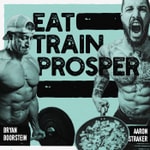
Eat Train Prosper, by coaches Aaron Straker and Bryan Boorstein provides tangible advice about lifting, nutrition, and incorporating these into your lifestyle to achieve prosperity. Topics include sustainable training principles for increasing strength, building muscle, effective nutrition to get and stay lean, men's health, improving recovery, and practical lifestyle habits. Become the champion of your own health, both inside and out.
Site
RSS
Apple
Data updated on 13/09/2026
Recent rankings
Latest chart positions across Apple Podcasts and Spotify rankings.
Shared links between episodes and podcasts
Links found in episode descriptions and other podcasts that share them.
Discover shows related to Eat Train Prosper, based on actual content similarities. Explore podcasts with similar topics, themes, and formats, backed by real data.
For the first 5 years of Aaron's coaching business he kept a running doc of every question a client ever asked. Hundreds. The single most asked question was a form of: "What actually counts as a training day?" Sounds simple, right up until you have to draw the line. And that line quietly decides whether you run one set of macros or two, and how you feed a surplus, a deficit, and everything in between.
The definition we keep coming back to is dead simple: a training day is something you need to recover from. That alone drops a lot of the confusing stuff, big step count days, hikes, a long zone 2 ride, into a gray area, and the call there is about duration and cost, not a hard yes or no. A 30 minute spin is not a training day. A 90 minute zone 2 ride is. From there we run the whole thing through nutritional periodization, because the phase you are in changes the answer. Maintenance, surplus, and deficit each get an argument for splitting your training and non-training day macros, and an argument against.
The deficit is where splitting really earns its keep, so that is where most of the episode lives: protecting training intensity as the number one lever for holding onto muscle, pulling food off rest days to hit your target rate of loss, and the psychology of dieting that no spreadsheet ever accounts for. That last part goes deep, from why hard training kills your appetite while rest days leave you bored and food focused, to the counterintuitive move of eating less on training days, to how going bland on purpose and cleaning up your Instagram feed can pull your hunger right back down. We wrap on the constrained energy model and step counts, HIIT versus low intensity cardio, why your wearable's calorie number lies but its trend does not, and the non-bodyweight reasons, stuff like metabolic flexibility and quality of life, that never make the spreadsheet but matter anyway.
Covered in this episode:
The one definition that cuts through it: a training day is something you need to recover from
Why needing to recover from something every single day means you are probably doing too much
The gray area of big step counts, hikes, and long zone 2 rides
Why a 30 minute zone 2 is not a training day but a 90 minute ride is
What happens if your expenditure is genuinely too high, and why body weight tells the truth
Using nutritional periodization to decide when to split training and non-training macros
Maintenance: absorbing meals out and protecting insulin sensitivity versus keeping it simple
Why maintenance is the only phase where letting appetite drive the bus makes sense
Whether biasing calories toward training or rest days matters if the weekly total is met
Surplus: nutrient partitioning, GLUT4, and intra-workout carbohydrate
Loading carbs pre and post workout so 8pm does not become a 100 gram carb problem
Monitoring a surplus with photos, performance, and a well-timed DEXA
The build calculus: is the extra muscle from the last six pounds worth dieting it back off
Deficit: protecting training intensity as the number one driver of muscle retention
Pulling food from non-training days to hit a target rate of loss around 1% per week
Bryan's opposite approach: eating less on training days to manage food focus
Why hard training blunts appetite for a couple of hours and rest days do not
Going bland on purpose, and how the Instagram algorithm quietly doubled the hunger
The constrained energy model, step counts, and where movement stops paying off
HIIT versus low intensity cardio in a deficit, and why your leg days pay for it
Non-bodyweight reasons to split: metabolic flexibility, fat digestion, and quality of life
Higher carb versus higher fat by phase, and why a deficit favors higher carb
Why a wearable's calorie number is unreliable but its trend is accurate to you
Consistent inaccuracy: pick the same food entry every time and let the trend guide you
Why we pull cardio before steps when the rate of loss runs too hot
Timestamps:
00:00:00 - Intro and updates 00:05:00 - The six minute cardio ramp, and why lifting isn't a zone 2 substitute 00:09:00 - What actually counts as a training day: recovery as the definition 00:10:30 - The gray area: high step days, hikes, and zone 2 00:13:00 - Nutritional periodization and the maintenance phase 00:17:30 - Appetite blunting, rebound hunger, and the weekly average 00:22:00 - Surplus: insulin sensitivity and nutrient partitioning around training 00:29:00 - Monitoring a surplus: DEXA, and whether six more pounds is worth it 00:31:30 - Deficit: the phase where splitting matters most 00:34:00 - The psychology of dieting and Bryan's opposite approach 00:37:30 - Going bland on purpose: flavor, the algorithm, and hunger 00:42:00 - The constrained energy model, steps, and the Pontzer research 00:47:00 - HIIT versus low intensity cardio in a deficit 00:50:00 - Non-bodyweight reasons: metabolic flexibility and quality of life 00:54:00 - Wearables, the trend over the number, and pulling cardio before steps
Training hard, but don't look like it? Aaron closes that gap ⬇️ https://coach.strakernutritionco.com/bio
ETP226 comes from a DM question posed to Bryan wondering whether we have taken the "abs are made in the kitchen" idea too far. That question opened up into a bigger one, and it is the question this whole episode chases: for muscle groups like abs and arms, how much does training them directly actually change your physique relative to the extra time it costs you?
We work through it from a few angles. Whether a base of prior ab development carries over through years of compound lifting, how core stability from free weights compares to braced machine work, and where the honest line sits between a six-pack and true influencer-level abs. From there it moves to the more interesting half of the conversation, the arms. The thought experiment at the center of it is a natural lifter who has gotten genuinely strong, think a 200 press, 300 bench, 400 squat, 500 deadlift plus weighted pull-ups and dips, and whether that person ends up with basically the same arms as someone who added years of dedicated direct arm work on top.
That leads into some of our favorite tangents: why body fat distribution is largely hormonal and splits so differently between men and women, whether the size you get from direct arm work is real myofibrillar growth or mostly transient sarcoplasmic pump, whether muscle and fat compete for the same space, and Bryan's one arm experiment as evidence. It all ties back to the one question worth actually sitting with, how much optimization is worth pursuing for you, which comes down to what you care about and what your time is better spent on.
Covered in this episode
The DM that started it: have we taken "abs are made in the kitchen" too far?
Why nutrition, not ab training, is what stands between most people and visible abs
Whether prior ab development is maintained through years of compound lifting
Core stability from free weights versus bracing on machines
The ex-powerlifter example: big lifts leave developed midsections behind
Defining the goal: a six-pack versus influencer or Ryan Terry level abs
The arms thought experiment: the genuinely strong natural lifter
The strength benchmarks that mean you have put in the work
Why weighted pull-ups and dips matter for elbow flexion and extension
How execution differences change how much arm you get from rows and pulls
August 2026 Instagram Q&A | ETP#225
Friday, August 28, 2026 • Duration 01:04:40
Another month, another batch of questions pulled straight from the Instagram audience. This one runs the full range, from how to build a bro split around daily cardio, to the zone 2 discourse currently making the rounds, to a couple of surprisingly good questions from Bryan's nine year old. We take each one in turn and give the honest answer rather than the tidy one.
A lot of this episode lives in the nuance. How to read research when you do not have a science background and whether reviews are the better use of your time, whether an 80/20 commitment can really get you to 95% of your muscle gain potential and why the way you define that 80/20 changes the answer, and Aaron's transparent take on TRT after being on it for a while, including what he would do differently if he could start over. Bryan revisits the one arm training experiment and what it actually proved, and we get into practical troubleshooting for the classic wake up after two to three hours sleep problem.
Covered in this episode
Building a 5 to 7 day bro split that still fits daily cardio for health
Managing beat up legs when cardio stacks on top of lower days
The Dr. Mike T. Nelson zone 2 discourse and where it actually holds up
Why hard lifting already lives close to zone 2 for a lot of people
Reading primary research versus research reviews as an enthusiast
Picking one or two reviewers and knowing your actual goal for reading
Why "more research is needed" is the most common and most frustrating conclusion
Whether an 80/20 effort can reach 95% of your muscle gain potential
The difference between 80% every day and 100% for 80% of the time
How a 9 year old should train abs, and the minimum to get jacked at puberty
Stepping back evenly on reverse lunges, and whether it is worth thinking about
Training through pregnancy, autoregulation, and taking advantage of a good day
Aaron's honest TRT regrets and what he would do differently starting over
Why buying less TRT content and finding one trusted person beats the noise
What the one arm training experiment proved and what comes next
Troubleshooting the wake up after two to three hours, starting with caffeine
Food and water timing before bed, and breathing tools to fall back asleep
What we are currently enjoying and excited about
The Benefits of Using Your Fitness | ETP#224
Wednesday, August 19, 2026 • Duration 43:03
This week we have a slightly different kind of episode. We talk less about the mechanics of training and more about the benefits of using your fitness out in the world, specifically outdoors. We talk about environment, how the right gym or the mountains can pull effort out of you when your own motivation is low.
The back half of the episode revisits the Misogi Challenge and the value of planning something with a real chance of failure, why hard physical challenges reframe everyday life, and how the pursuit of hard things changes from your twenties to thirties and forties. It closes on the big one, using your fitness to buy a longer and more capable lifespan, why your 30s are when the trajectory of your actions starts to show, and why 56 does not look so old looking forward from 44.
Covered in this episode
Pushing a session to a day you can actually give it a better effort
How environment, the right gym or the mountains, pulls effort out of you
The carryover that lets you hike well even at a heavier body weight
Awe as a real mechanism, and why noticing is the key word
Dacher Keltner's book on the science of everyday wonder
Keeping the mountains from ever becoming just another Wednesday
Revisiting the misogi and planning something with a real chance of failure
Why hard physical challenges reframe everyday life as manageable
How the pursuit of hard things changes from 24 to 34 to 44
Using your fitness for a longer, more capable lifespan
Why your 30s are when the trajectory of your actions starts to show
Mountains versus the ocean, and the wildlife you only see out there
Timestamps
00:00:00 - Intro 00:05:00 - You don't have to train every day to keep your fitness 00:09:30 - Environment and how the right gym pulls effort out of you 00:13:30 - The benefits of using your fitness outdoors 00:16:30 - Awe as a mechanism, and Keltner's science of wonder 00:20:00 - Revisiting the misogi and planning something hard 00:24:30 - Doing hard things, and how that pursuit changes with age 00:32:00 - Using your fitness for a longer, more capable lifespan
Is Your Fat Loss Stalled? Then Do These | ETP#223
Friday, July 24, 2026 • Duration 48:58
This one came straight out of the DMs. Aaron gets messages from people who are interested in coaching and they usually lay out everything they have been doing and everything they have tried. The same handful of problems keep showing up over and over again, so instead of answering them one at a time, this episode is the full breakdown.
The whole thing is built around three buckets. Poor metrics, where the plateau only exists in perception because there was never a baseline, a rate of loss target, or any real objectivity built into the approach in the first place. False plateaus, where the deficit is actually intact but something is muddying the water and making it look like nothing is happening. And true plateaus, where the deficit on paper simply does not match the deficit in reality.
If you are coaching yourself through a fat loss phase, this is the episode to have open when the scale stops moving and you are trying to figure out whether to change something or hold the line. Bryan spent a good portion of this one saying he had nothing to add, which is probably the best endorsement it could get. Before that, Bryan talks about the ten day family road trip through the canyons that has him off the mic for the next couple of weeks, and Aaron recaps the boys training trip he put together in Dallas.
Covered in this episode
Why an emotional goal like fat loss needs objective metrics to save you from yourself
Establishing an actual baseline before you start, and why "intuitive eating" is not a plan
The problem with subjective labels like eating healthy or eating good
Daily weigh-ins as data points, not verdicts, and how to use weekly and seven day moving averages
Weighing under identical conditions so you stop importing noise into your own metrics
Why the mirror is a terrible short term progress tool
Setting a target rate of loss, 0.5% to 1% of body mass per week, and reverse engineering the timeline from there
Why the first week whoosh on low carb is gut contents, glycogen, and water, not fat
Water retention and inflammation from hard training, travel, poor sleep, sickness, and menstrual cycles
Fat loss is not linear, and what a huge week usually means for the week after it
The gut check question: have my actions actually changed, or am I still running it by the book?
Reverse Diets, Deloads & New Coach Advice: July Q&A | ETP222
Friday, July 10, 2026 • Duration 01:01:02
Episode 222 is our July Instagram Q&A, and per usual the questions did not disappoint. We dig through a big stack covering everything from exercise sequencing and deloads to GLP-1s, telehealth companies, and what we actually learned in our late-stage natty years that still apply.
There is a lot of practical programming talk in this one. Where RDLs should actually go in your session, how to build a minimum effective program on three 45-minute sessions per week, the five exercises we would pick if we could only use five for an entire year, and how to structure a four day split when chest and arms are the priority.
We also cover softer but equally important stuff: advice for new online coaches, why most people do not actually need a reverse diet, health habits we'll never stop doing, and the best sub $100 purchases that have improved our training. Fun one this month.
One quick note: a number of pregnancy and fertility questions came in this round. Those were forgotten. They are getting saved for an upcoming episode so they can get the time and depth they deserve instead of a rushed answer at the end of a Q&A.
Covered in this episode:
Life updates: Bryan's program drop July 20th, Aaron's boys training trip in Dallas and September Refining Hypertrophy seminar in Utah
Exercise sequencing for barbell RDLs and whether exercise order actually matters
TRT telehealth recommendations in the US and what to look for in a company
Educational courses vs in-person seminars for coaches
Top advice for aspiring online coaches
Why most people think they need a reverse diet but usually don't
High protein deficits, low carb diets, and nutrient timing around workouts
GLP-1 use for gen pop: tool or crutch?
Current thoughts on deloads now that the dogma has died down
Lessons from TRT that still apply to natural lifters
Minimum effective programming and desert island exercise picks
Lazy healthy meals, favorite health habits, and best cheap training purchases
Timestamps:
00:00:00 – Intro and life updates: Bryan's travel and July 20th program drop, Aaron's Dallas boys training trip and September Refining Hypertrophy seminar
How Much Is Enough? A Volume Dose Response | ETP221
Friday, June 26, 2026 • Duration 55:50
We have covered volume a handful of times on the podcast — ETP#167 (Personalizing Your Training Volume), ETP#188 (Quality Volume), and most recently ETP#207 (The Training Volume Model). This one comes at it from a different angle: not "what's the right number of sets," but how that number can change over a training career as skill as a lifter improves.
The whole thing started with Aaron's quads. They used to be the body part he was almost ashamed of, and now they're on par with everything else. Except he only trains them once a week, six sets, and they're in shambles for five or six days afterward. That low a dose creating that much stimulus had Aaron questioning a lot of things, mainly: what actually makes a lagging body part lag? Is it genetics, or is it that you just haven't figured out how to contract the muscle well enough yet? Aaron's honest belief is leaning hard toward the second one.
So we get into the precision side of volume. Why a row isn't always a 1.0 stimulus, why your weak points might not need more sets so much as better execution, how strength curves explain why back and delts get buried under volume while quads light up off almost nothing, and how to actually manipulate all of this with rep ranges and resistance profiles. Plus some personal updates up top, including one of Aaron's that went unexpectedly viral.
Covered in this episode:
Why volume needs can drop as your precision and skill improve, and the asterisk on "more volume is better until it isn't"
Aaron's theory that lagging body parts lag because you haven't learned to contract them well — not because of genetics
The Kyle Baxter pronation/foot-pressure cue that finally unlocked Aaron's quads
Why quads hold post-workout stimulus for days when nothing else does (blood flow, lengthened overload, and the fact that we walk on our legs)
Strength curve vs resistance curve, and why short-overloaded muscles like delts and back need more volume to reach the same inroads
The leaning lateral raise trick — disadvantaging your own bad habit to force a better stimulus
Using the 15/10/5 rep scheme to go short on the high-rep sets and lengthened on the low-rep sets
Prioritization: deprioritize what's already good and pour the days into what you actually want to bring up
Hamstrings/biceps vs quads/triceps, the cramp problem, and why some muscles just don't follow the same rules
Chasing BIG Goals - Part 2 | ETP220
Friday, June 19, 2026 • Duration 01:00:08
ETP#220 is the part two follow-up to last week's episode, and this is the one we really wanted to get to. We ran out of road last week before doing CrossFit Pacific Beach any justice, so this episode picks right back up there and runs all the way through the rest of the arc: going online, the failed business that taught Bryan everything, the origins of Straker Nutrition, building Undefeated, and Aaron winning his pro card on the first try.
The throughline is the same as part one. Spotting the gap in the market before anyone else does, putting in the reps when no one's watching, leaning on the people around you, and making things so simple it'd be unreasonable to screw them up. A lot of what looks like luck in hindsight is really just opportunity meeting preparation, over and over again.
Before we get into it, Aaron's got some big news that we're both pretty fired up about.
Covered in this episode:
Big news: a little baby Straker (a boy) is coming in December, and Bryan's headed to Steamboat to celebrate his wife's birthday, twelve years after the trip that made him want to move to the mountains in the first place
Updates: new Paragon hypertrophy cycles starting 6/22 with the core challenge, and a reminder on Good Labs (code STRAKER for an additional 20% off the cheapest labs in the US)
How CrossFit PB built its reputation as the gym where everyone was actually jacked, and why Bryan refused to just do CrossFit for the sake of CrossFit
The first real business goal: getting to $35K a year each so they could quit their day jobs, and the absolutely brutal 5:30am-to-midnight grind it took to get there
Sharing a wall with an urgent care, opening a second location as a safety net, then maxing out both
When the love started fading: the CrossFit burnout, the animosity with Anders, the balloon rent payment, and the slow unwind
Going online before it was a thing, building Evolved Training Systems, and spotting the price gap in the market
The failed business (Active Traveler Network) and why underpricing the market and failing taught Bryan everything he needed to succeed later
Jenny's "I'm not rolling any fucking dice, I'm making this happen" moment and how reframing it took failure off the table
The COVID inflection point: dumbbell-only programs ready to go the day the world shut down, and why removing everyone's excuses produced better results
Chasing BIG Goals - Part 1 | ETP219
Friday, June 12, 2026 • Duration 54:10
ETP#219 (Part 1) is all about chasing big goals. If you've listened for a while you know we talk a ton about training, a decent amount about nutrition, and honestly not enough about the prosper side. This episode leans into that third pillar. Between the two of us we've moved across the country (and the world), changed careers, built gyms, build successful coaching and training businesses, and turned pro. With plenty of wins and a fair share of losses along the way. And the behind the scenes of how those things actually came together is where the real value is.
So we each break down the foundations we've used for deciding if a big goal is actually worth the time, energy, and relationship cost it's going to demand. Because it will demand it. Your life is already full, and you cannot just stack a big goal on top of a full life without trading in the pursuit of a new big goal.
We got deep enough into the examples that we ran out of time before giving CrossFit PB the conversation it deserves. So that story, plus the pro card win and the Paragon origin, is coming next week in Part 2.
Covered in this episode:
Updates: new Paragon physique cycles starting 6/22 with a six-week abs challenge, and Bryan digging further into his kidney labs (cystatin C, UACR, urinalysis)
Aaron officially partnering with Good Labs, the best priced blood work in the US by a wide margin (code STRAKER for an additional 20% off)
Why a big goal needs deep personal relevancy, and why purely money-motivated goals fall apart fast
Getting goals out of your head and into spoken words, and why "word is bond" means being really selective with what you commit to
Support systems and accountability, and the reality that we've let ourselves down hundreds of times but never someone else
Going into business with friends versus going solo, and why it's better for good business partners to become friends than good friends to become business partners
Being honest about the trade-offs, including Aaron telling Jenny "I'm going to be really selfish for the next five months" before prep
Simplifying execution down to daily chunks so small it would be unreasonable to screw them up
Discipline turning into motivation turning into obsession
Writing the CrossFit PB business plan in coffee shops, and dealing with the friends who don't believe in you
Progression Models You Should Try | ETP#218
Friday, June 5, 2026 • Duration 01:07:30
ETP 218 is all about progression models. The whole conversation starts from one non-negotiable idea: eventually there has to be real, tangible progression. Most of the "models" people get excited about are really just different ways to make the process less mundane than running linear or double progression forever. And to be clear, LP and DP are still the GOAT. They're proven, time-tested, and they work. We break down what they actually are and why they've earned that status.
The catch with all of these models is that they live and die by consistent form. Heavier weights or more reps with execution falling apart isn't progress. A big reason we like employing these models in the first place is that they tend to produce more consistent output and execution than LP/DP, where the only thing you're chasing is weight and reps. That consistency is a lot of why they're effective.
From there we walk through the models we actually use and where each one fits.
Covered in this episode:
Why LP and DP are the proven foundation, and why everything else is built on top of them
Wave loading, including the 4/3/2 strength model and the 4-3-2-1-0 weekly RIR approach Bryan often runs, where the goal is to beat the same week in sequence so progression plays out over a five to six week window
Bryan’s current favorite: 2-week microcycles, alternating an intensity week (2 x 5-8 to 0-1 RIR) with a volume week (4-5 x 5-6 at 85-90% of the prior week's load)
Rep goal progression, basically a more fun spin on double progression, hitting a total rep target across your sets before adding load
Reverse pyramid and top set plus back-off work, where progression is driven mostly by the top set and the back-offs chase stimulus
Volume progression, the original RP model, where workload climbs week to week before load goes up across the meso
Density progression, doing the same work in less time, plus Aaron playing devil's advocate on whether efficiency gains actually confirm strength or hypertrophy progress or just imply it
Load cycling across longer time frames, meso to meso
Myo-rep and rest-pause progression, beating your total rep count session to session
Timestamps:
00:00:00 Episode Introduction and Personal Updates
Body fat distribution as a largely hormonal, sex-linked pattern
Whether long term TRT slowly shifts where you store fat
Sarcoplasmic versus myofibrillar hypertrophy from direct arm work
Why the pure compound-only lifter is a bit of a hypothetical purgatory
The one arm experiment and what it suggests about transient arm size
Whether muscle and fat compete for the same space
Why more developed abs can actually look worse if you are not lean
How much optimization is worth pursuing, and how that answer is personal
The earlier lifter: get strong on compounds before chasing direct arm work
Timestamps: 00:00:00 - Episode Intro 00:02:00 - Have we taken abs are made in the kitchen too far 00:05:00 - Core stability from free weights versus braced machines 00:07:00 - The ex-powerlifter example: big lifts leave a developed midsection 00:10:30 - Defining ab development: a six-pack versus influencer abs 00:12:30 - The arms thought experiment: the strong enough natural lifter 00:15:30 - How execution changes the arm you get from rows and pulls 00:18:30 - Body fat distribution, hormones, and male versus female patterns 00:22:30 - Whether long term TRT shifts where you store fat 00:24:30 - Sarcoplasmic versus myofibrillar hypertrophy from direct arm work 00:27:30 - The one arm experiment and what it suggests about transient size 00:29:30 - Can muscle and fat compete for the same space 00:34:30 - Why developed abs can look worse if you are not lean 00:38:30 - How much optimization is actually worth pursuing 00:40:30 - The earlier lifter: get strong on compounds first
Training hard, but don't look like it? Aaron closes that gap ⬇️ https://coach.strakernutritionco.com/bio
00:00:00 - Intro and updates 00:06:00 - Programming a bro split around daily cardio for health 00:14:00 - Dr. Mike T. Nelson and the zone 2 discourse 00:22:00 - Reading research versus research reviews as an enthusiast 00:29:00 - Can 80/20 get you to 95% of your muscle gain potential 00:34:00 - Bryson's questions: training abs and getting jacked at puberty 00:38:00 - Stepping back evenly on reverse lunges 00:40:00 - Training through pregnancy 00:44:00 - Any regrets about starting TRT 00:50:00 - The one arm training experiment, and what's next 00:54:00 - Waking up after two to three hours and can't fall back asleep 00:58:00 - What are you currently enjoying or excited about
Training hard, but don't look like it? Aaron closes that gap ⬇️ https://coach.strakernutritionco.com/bio
Getting leaner makes you more sensitive to stress, sleep, and digestion
Recomping as an explanation, and why you probably should not hold your breath on it
Too much flexibility and macro Tetris, and why more opportunities equal more errors
When to suspect user error versus when to actually go get labs
Overconfidence from early success and why the corners you cut early stop working later
Inversion of control, or too many meals sourced by hands that are not your own
Untracked sauces, oils, bites, tastes, the mom tax, and the zero calorie spray technicality
Alcohol as its own macronutrient and the weekend pattern robbing weekday progress
NEAT quietly dropping the longer you diet, with an important caveat on improving health
Metabolic adaptation, why it is real but often overblown, and Pontzer's constrained energy model
Body temperature after meals as a real time readout of energy availability
Sleep as the unsung hero of fat loss and the one natural cheat code that actually exists
Building in non-progress weeks proactively because life is going to happen
Accepting that rigidity has to increase as your ambition increases
Timestamps 00:00:00 - Intro: Is Your Fat Loss Stalled? Then Do These 00:00:55 - Updates: Bryan's road trip and Aaron's Dallas training trip 00:06:25 - Bucket one: poor metrics 00:07:25 - Establishing an actual baseline 00:10:15 - Weekly averages and seven day moving averages 00:13:40 - Setting a target rate of loss: 0.5% to 1% per week 00:16:45 - Setting realistic goals and running the math 00:19:40 - Bucket two: false plateaus 00:22:45 - Fat loss is not linear 00:26:20 - Too much flexibility and macro Tetris 00:31:00 - Inversion of control 00:32:15 - Bucket three: true plateaus 00:36:20 - NEAT dropping the longer you diet 00:38:00 - Metabolic adaptation: real but often overblown 00:41:20 - Sleep is the unsung hero of fat loss 00:43:30 - Take homes and building in non-progress weeks
Training hard, but don't look like it? Aaron closes that gap ⬇️ https://coach.strakernutritionco.com/bio
00:00 Intro: How Much Is Enough? + The Prior Volume Episodes 01:00 Bryan's Update: 15/10/5 and Why Full Body Is "For the Birds" 03:00 Aaron's Personal Update + The Post That Went Viral 05:00 The 1989 LA Raiders Mug 06:00 The Real Topic: Volume Dose Response Per Muscle Group 07:00 Can Precision Change Your Volume Needs? 08:00 Aaron's Quads: From Lagging to Wrecked on Six Sets 09:00 What Actually Makes a Lagging Body Part? 10:00 Lengthened Overload and Leaning Into the Stretch 12:00 Squat Variables: Stance, Knee Tracking, Foot Pressure 13:00 The Kyle Baxter Pronation Cue 15:00 Aaron's Current Quad Setup (Leg Extension + Squat Pattern) 17:00 Six Sets, Shattered for Days + Repeated Bout Effect 21:00 The Post-Workout Stimulus Window: Quads vs Everything Else 22:00 Double the Chest Volume, Lower the Stimulus 23:00 The "Washing Your Hair" Delt Test 24:00 Splitting Volume vs One Big Day 25:00 Aaron's Theory: Lagging = Not Contracting Well Yet 27:00 The Leaning Lateral Raise (Disadvantaging the Shrug) 29:00 Strength Curve vs Resistance Curve 30:00 Why Beginners Can't Feel Their Legs 31:00 Blood Flow, Bro Splits, and Dispersed Stimulus 33:00 Prioritizing: Deprioritize What's Already Good 34:00 Building a Program Around Your Weak Points 35:00 Aaron's Back Days: High Volume, Still Can't Feel It 37:00 Why Back and Delts Need More Volume 38:00 Manipulating Resistance Profiles Across a Whole Day 39:00 The 15/10/5: Short on the Highs, Lengthened on the Lows 41:00 The Asterisk on "More Volume Is Better" 42:00 A Row Isn't Always a 1.0 Stimulus 43:00 Finding the Rep Range Before Weight Takes Over 44:00 Pausing in the Short Position to Build the Pattern 47:00 Hamstrings, Biceps, and the Cramp Problem 49:00 Biceps Femoris: Pullers vs Pushers 50:00 Why Quads Are Just Different Post-Workout 52:00 Closing: Training Maturity and Looking Inward
Training hard, but don't look like it? Aaron closes that gap ⬇️ https://coach.strakernutritionco.com/bio
The origin of Straker Nutrition: spotting the gap between female-led coaching and male bodybuilding prep, and serving the people in the middle
Building Undefeated around equipment because bodybuilders build better gyms than businessmen do
The pro card: going from "natural Aaron who said he'd never compete" to winning on his first attempt, the TRT goal physique that left him feeling empty, and the pressure Jackson put on him
Structuring the prep like a pro, turning the brain off, and the "crack in the dam" philosophy
Why posing is the worst, and using accountability to your circle as the thing that actually drives you
Closing thoughts: don't fear failure, expand your network, and drop the ego that keeps you from hiring a coach
Timestamps: 00:00 Intro: Chasing Big Goals Part 2 00:55 Updates + Bryan's Big Party Weekend Recap 01:35 Steamboat Springs and the 12-Year Mountain Dream 03:15 Aaron's Big News + Good Labs Reminder 05:05 How CrossFit PB Differentiated on Training 06:50 Bodybuilding First, Metcon Second 11:25 The First Business Goal: Quitting the Day Jobs 13:30 Two Locations, the Urgent Care War, and Maxing Out 14:10 Falling Out of Love: Burnout and the Unwind 16:50 Going Online and Building Evolved 20:00 The Paragon Partnership and the COVID Surge 24:00 The Failed Business That Taught Him Everything 26:30 Jenny's "I'm Not Rolling Dice" Reframe 28:50 The COVID Inflection Point for SNC 33:30 Lockdown Life and Spotting the Software Exit 35:00 The Origin of Straker Nutrition 39:00 Building Expertise (and Hiding in Education) 40:00 Building Undefeated Around Equipment 42:30 The Pro Card: From "Never Competing" to First Try 43:00 The TRT Goal Physique That Left Him Empty 45:30 Deciding to Prep + Jackson's Pressure 47:00 Structuring the Prep Like a Pro 48:30 Making It Too Simple to Fail + The Crack in the Dam 51:30 Why Posing Is the Worst 55:00 Get Your Circle on Your Side 56:00 Closing Thoughts: Network, Ego, and Hiring a Coach
Training hard, but don't look like it? Aaron closes that gap ⬇️ https://coach.strakernutritionco.com/bio
Bryan cashing out the Amazon stock he bought at 13 (at a loss) to fund his San Diego move
The weekly master plan meeting Aaron and Jenny have kept every single week since 2018
Timestamps: 00:00 Intro: Chasing Big Goals 01:20 Updates: Paragon Physique Cycles and Abs Challenge 02:55 Bryan's Kidney Lab Deep Dive 06:00 Aaron's Good Labs Partnership + Coaching Opportunities 08:25 How We Laid This Episode Out + Our Examples 12:50 Deep Personal Relevancy 15:00 Speaking Goals Into Existence 16:05 Support Systems and Accountability 17:25 Business With Friends vs. Going Solo 21:30 Being Honest About the Costs and Trade-offs 23:50 Simplify Into Daily Action Chunks 25:30 Bryan's Foundations: Passion and Obsession 28:55 Discipline to Motivation to Obsession 30:30 Writing the CrossFit PB Business Plan 32:30 Buy-In From Your People and Handling Doubters 36:20 No Solutions, Only Trade-offs 39:05 Moving Across the Country: Our Two Stories 43:00 The Master Plan: Weekly Planning Meetings 46:00 Separation of Duties and the Undefeated Build 50:45 Why CrossFit PB Deserves Its Own Episode (Part 2 Teaser)
Training hard, but don't look like it? Aaron closes that gap ⬇️ https://coach.strakernutritionco.com/bio