Between Two Psychs with Dr Adam McCartney and Mike Lane – Details, episodes & analysis
Podcast details
Technical and general information from the podcast's RSS feed.
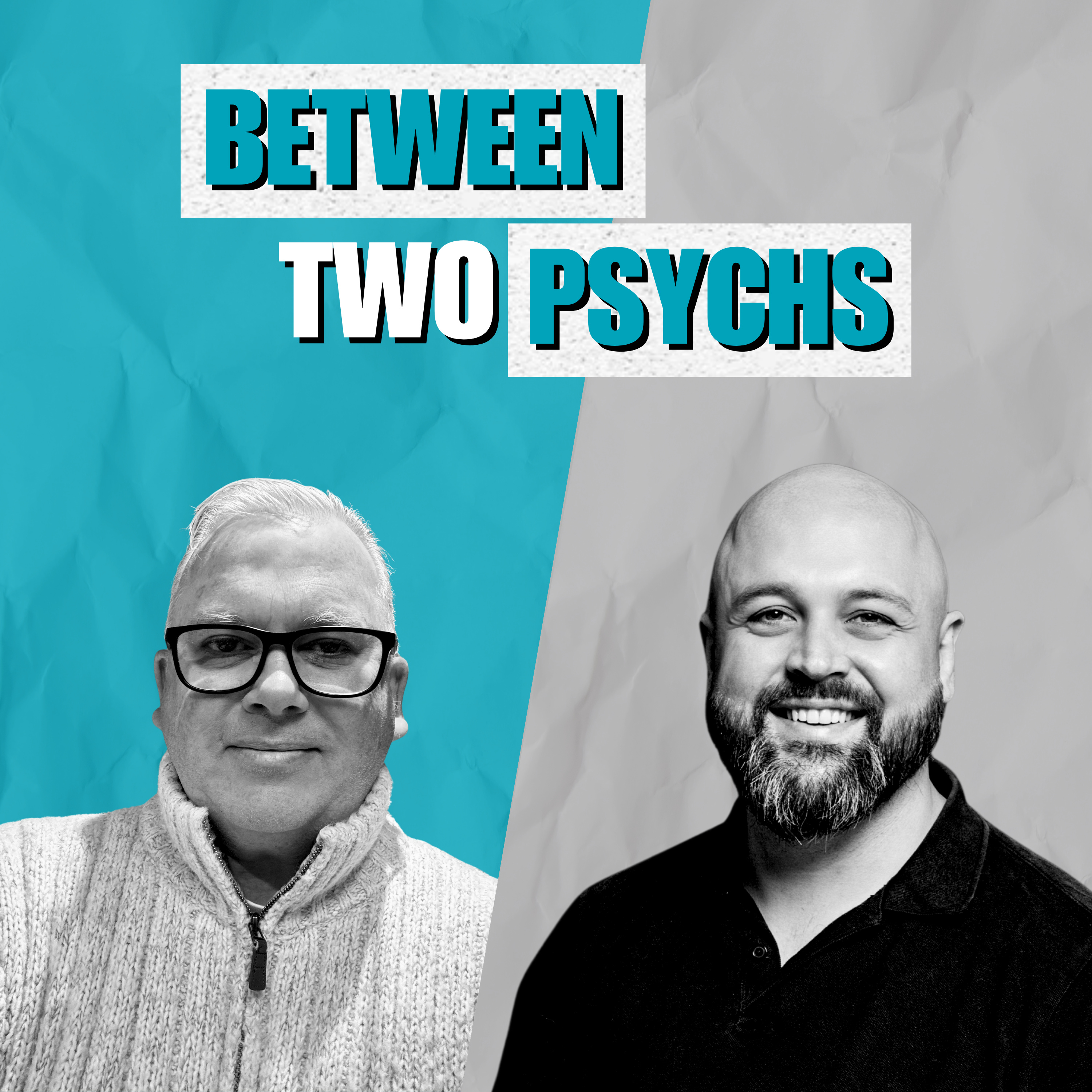
Between Two Psychs with Dr Adam McCartney and Mike Lane
Dr Adam McCartney and Mike Lane
Frequency: 1 episode/8d. Total Eps: 27

Recent rankings
Latest chart positions across Apple Podcasts and Spotify rankings.
Apple Podcasts
🇬🇧 Great Britain - educationForKids
16/06/2026#94🇬🇧 Great Britain - educationForKids
05/06/2026#93🇬🇧 Great Britain - educationForKids
04/06/2026#80🇬🇧 Great Britain - educationForKids
03/06/2026#71🇬🇧 Great Britain - educationForKids
02/06/2026#63🇬🇧 Great Britain - educationForKids
01/06/2026#44🇬🇧 Great Britain - educationForKids
24/05/2026#93🇬🇧 Great Britain - educationForKids
23/05/2026#85🇬🇧 Great Britain - educationForKids
22/05/2026#74🇬🇧 Great Britain - educationForKids
21/05/2026#91
Spotify
No recent rankings available
Shared links between episodes and podcasts
Links found in episode descriptions and other podcasts that share them.
See allRSS feed quality and score
Technical evaluation of the podcast's RSS feed quality and structure.
See allScore global : 58%
Publication history
Monthly episode publishing history over the past years.
Ep. 1 - Building Neurodiverse Friendly Classrooms
Season 1 · Episode 1
vendredi 7 novembre 2025 • Duration 37:23
In this episode, we sit down for a thoughtful conversation on what it truly means to create learning spaces where neurodiverse students can feel seen, safe, and supported. This conversation weaves personal experiences with practical tools exploring how small, intentional shifts in classroom practice can create profound ripples of inclusion.
We explore how predictable structures, emotional safety, and sensory awareness can shape not just how students learn, but how they belong. From the power of ritual and routine to the nuance of identity in adolescence, this episode offers both grounding wisdom and actionable strategies for educators, caregivers, and anyone passionate about inclusive education.
In this episode we talk about:
✨Why inclusion in education must go beyond policy and into daily practice
✨Common challenges faced by neurodiverse students and how to address them
✨How predictable routines, rituals, and visual communication reduce anxiety and increase learning
✨Using tools like visual timetables, “now and next” boards, and social stories to support transitions
✨Understanding sensory processing and how it impacts a child’s readiness to learn
✨The emotional landscape of adolescence and identity for neurodiverse students
✨Building trust between students and educators to foster belonging
✨The role of emotional intelligence programs, like Zones of Regulation and ELSA, in supporting classroom well-being
✨Why inclusion isn’t an “extra,” but the foundation of thriving learning communities
This conversation is an invitation to slow down, see the classroom through the eyes of neurodiverse learners, and remember that inclusion begins with relationship, trust, and structure. When classrooms become spaces of safety and predictability, learning transforms from a task into a shared human experience.
✨Resources Mentioned:
- Zones of Regulation
- Emotional Literacy Support Assistant (ELSA)
- Visual communication strategies & social stories
Inclusion is not just about who is in the room it’s about how the room is built.
Connect with Mike Lane
Website: https://www.ridgewaypsychology.co.uk/
LinkedIn: https://uk.linkedin.com/in/michael-lane-4304a3123
Connect with Me:
Instagram: https://www.instagram.com/dradammcartney/
Website: https://www.dradammccartney.com/
Thank you for listening and for being part of a movement that centers care, connection, and true inclusion in education.
Ep. 2 - The Psychology of Leading: Building Inclusive Schools
Season 1 · Episode 2
vendredi 21 novembre 2025 • Duration 37:28
In this episode of Between Two Psychs, Adam McCartney and Mike Lane continue their three-part series exploring psychology in education this week turning the spotlight on leadership. Moving beyond models and hierarchies, they unpack how psychological principles can shape more compassionate, empowered and inclusive school cultures.
Drawing from Adam’s research on empowerment and communities of practice and Mike’s application of Maslow’s Hierarchy of Needs and the SCARF model, this episode explores how understanding human motivation, belonging and autonomy can transform the way leaders engage their teams and sustain inclusive practice.
From headteachers navigating role identity to teachers finding their professional voice, this conversation bridges theory and lived experience reminding us that great leadership begins with self-awareness, trust and a shared sense of purpose.
In this episode we talk about:
✨How school leaders can apply psychological theory not just management frameworks to lead more effectively
✨Adam’s empowerment model: aligning identity, role and control to create autonomy and trust
✨Using communities of practice (Wenger, 1998) to understand how professionals learn and evolve together
✨Why micromanagement undermines inclusion and innovation and how leaders can foster agency instead
✨Mike’s application of Maslow’s Hierarchy of Needs to leadership: meeting physical and emotional needs before introducing change
✨Exploring the SCARF model (Status, Certainty, Autonomy, Relatedness, Fairness) as a practical framework for safe, motivated teams
✨The psychological importance of belonging and how fairness, recognition, and connection create cultures where staff thrive
✨Why clarity of vision and ethos helps align every role in a school toward inclusion
✨How leadership psychology mirrors what we know about supporting students: safety, trust and meaningful connection
This conversation invites leaders, SENCOs and educators alike to look inward to understand not just what they lead, but how they lead. When schools build systems grounded in psychological safety, fairness and belonging, inclusion stops being a directive and becomes part of the culture.
✨Resources Mentioned:
- Communities of Practice Etienne Wenger (1998)
- Maslow’s Hierarchy of Need
- The SCARF Model David Rock (2008)
Connect with Mike Lane
Website: https://www.ridgewaypsychology.co.uk/
LinkedIn: https://uk.linkedin.com/in/michael-lane-4304a3123
Connect with Me:
Instagram: https://www.instagram.com/dradammcartney/
Website: https://www.dradammccartney.com/
Thank you for joining this episode of Between Two Psychs. Leadership begins with understanding people and psychology gives us the tools to lead with empathy, clarity and purpose.
Ep. 4 - Beyond Behaviour: Why Students get Excluded
Season 1 · Episode 4
mardi 9 décembre 2025 • Duration 43:41
In this episode of Between Two Psychs, Adam McCartney and Mike Lane take on one of the most debated areas in education: School Exclusions. Moving beyond headlines and assumptions, they explore what the data really shows, why so many young people reach crisis point, and crucially how schools can intervene earlier, more compassionately, and more effectively.
Drawing on casework, psychological models and years of school-based practice, Adam and Mike unpack how factors like identity, belonging, trust, developmental stage and social context intersect with behaviour and why the story of exclusions is rarely just about “poor choices.”
From the challenges of transition in Year 7 to the pressures of adolescence, resource limitations, and the complexities of trust and relationships in secondary settings, this conversation brings together data, humanity, and practical insight. It reminds us that when schools create predictable, relational, inclusive environments, young people are more able to engage, participate, and thrive.
In this episode, we discuss:
✨The data behind exclusions and what changed after 2014 and again post-pandemic
✨Why secondary pupils are far more likely to be excluded than primary pupils
✨ How identity development in adolescence can impact behaviour, belonging, and wellbeing
✨Why transitions and unpredictability can fuel anxiety, avoidance, and disruption
✨The role of acceptance, competency and peer approval in shaping behaviour
✨How social communication needs (e.g., autism, ADHD) interact with expectations in secondary school
✨Why exclusion is often linked to trust, self-worth, and unmet emotional needs
✨How socioeconomic factors and wider community contexts affect exclusion rates
✨The power of consistent relationships and predictability at Key Stage 3
✨Resource bases, alternative provision, and how schools can build relational practice even without specialist spaces
✨Practical approaches that help build connection and safety:
– Emotion coaching
– Motivational interviewing
– Pastoral investment
– Inquiry-based and cooperative learning
✨Why restorative conversations need training, time, and structure not just good intentions
✨How policies move from punitive to relational when they centre clarity, empathy, and shared responsibility
This episode invites teachers, leaders, and SEN professionals to reflect on:
How do we make school a place where students feel seen, safe, connected and competent?
When that foundation is secure, behaviour improves not because young people fear sanctions, but because they feel they belong.
Inclusion is not just about preventing exclusion it is about building environments where young people want to participate.
Connect with Mike Lane
Website: https://www.ridgewaypsychology.co.uk/
LinkedIn: https://uk.linkedin.com/in/michael-lane-4304a3123
Connect with Me
Instagram: https://www.instagram.com/dradammcartney/
Website: https://www.dradammccartney.com/
Ep. 3 - Supporting Parents of Neurodiverse Children
Season 1 · Episode 3
mardi 2 décembre 2025 • Duration 35:54
In this episode of Between Two Psychs, Mike and Adam explore what it really means to support neurodiverse children at home not from a textbook, but from the everyday realities of parenting, psychology and growing together.
After exploring how schools and leaders can champion neurodiversity in earlier episodes, this time we bring the focus home. Drawing on Mike’s experience running parent programmes and Adam’s own reflections as both a psychologist and parent, we look at how small, consistent routines can help families create calm and connection in what can sometimes feel like chaos.
Adam and Mike talk honestly about what happens when plans fall apart, when predictability disappears and when all you can do is pause, co-regulate and try again. Because every parent neurodiverse household or not knows that perfection isn’t the goal. Presence is.
In this conversation, you’ll hear about:
- Why routine and predictability are powerful for creating calm and reducing anxiety
- How visual timetables and social stories help children feel safe and prepared
- What co-regulation looks like in practice (and why it’s different for every child)
- The importance of forewarning and gentle communication during change
- Why consistency not complexity makes the biggest difference
- And how teamwork between parents, schools and psychologists helps every child thrive
This episode is a gentle reminder that no one parents alone.
Predictability and consistency aren’t just strategies they’re acts of love.
Connect with Mike Lane
Website: https://www.ridgewaypsychology.co.uk/
LinkedIn: https://uk.linkedin.com/in/michael-lane-4304a3123
Connect with Me (Dr. Adam McCartney)
Instagram: https://www.instagram.com/dradammcartney/
Website: https://www.dradammccartney.com/
Ep. 5 - Celebrating Difference: How Identity Shapes Inclusion in Schools
Season 1 · Episode 5
mardi 16 décembre 2025 • Duration 31:50
In this episode of Between Two Psychs, Adam McCartney and Mike Lane explore one of the most fundamental yet often overlooked aspects of school life: Individual Differences.
From personality traits and identity development to group dynamics, belonging and routine, they unpack how children understand themselves, how they fit into a group, and how teachers shape that journey every single day.
Drawing on psychological frameworks including the Big Five personality model, Self-Determination Theory, Tajfel’s social identity research, Bandura’s social learning theory, Bruner’s narrative identity, and early years work by Rogers and Dan Siegel, Adam and Mike show how inclusion is built in the subtle everyday moments: acceptance, modelling, routine, and relationships.
This episode moves beyond labels or “learning styles” and examines the deeper question behind them:
How do we create classrooms where every child feels seen, valued and able to be themselves without losing the cohesion that helps groups thrive?
Through real school casework, practical examples, and warm reflection, they explore the challenges teachers face in balancing thirty personalities, diverse needs, and a curriculum and the surprising power of shared experiences, role play, collaborative tasks, and even simple rituals to build identity and belonging.In this episode, we discuss:
✨ Why “individual differences” are really about identity, personality, and development
✨ How the Big Five traits show up in everyday classroom behaviours
✨ Why unconditional positive regard helps children feel safe, grounded, and ready to learn
✨ How threat, trust and emotional safety connect to identity formation
✨ What in-group/out-group dynamics look like in real classrooms
✨ How social challenges escalate and how relational approaches reduce conflict
✨ Why modelling is powerful: identity through Bandura’s social learning theory
✨ The role of play, role-play and shared roles (builder/leader/worker) in forming identity
✨ How collaborative and multimodal teaching supports mixed personalities
✨ The impact of narrative: why what children say about themselves matters
✨ Why routine isn’t only about predictability it’s about shared experience
✨ How routine and rhythm build group identity and belonging
Practical strategies for teachers:
- Using group work intentionally
- Restorative conversations
- Circles of Friends
- Guided role play
- Identity-safe classroom routines
This episode invites educators to reflect on:
How do we cultivate classrooms where differences aren’t just accommodated they’re celebrated?
Where every child feels part of something bigger, yet confidently themselves?
Because when children experience belonging, safety, acceptance and clarity, their identity can flourish and so can their learning.
Connect with Mike Lane
Website: https://www.ridgewaypsychology.co.uk/
LinkedIn: https://uk.linkedin.com/in/michael-lane-4304a3123
Connect with Me
Instagram: https://www.instagram.com/dradammcartney/
Website: https://www.dradammccartney.com/
YouTube: https://www.youtube.com/@Dr.AdamMcCartney
EP- 6 Bonding & Attunement: The Art of Teaching
Season 1 · Episode 6
mardi 30 décembre 2025 • Duration 30:25
In this episode of Between Two Psychs, we explore one of the most essential aspects of classroom life: Bonding and Attunement.
We look at why relationships come before learning, how children “borrow” our nervous systems, and the practical ways we can help students move from emotional overwhelm into the calm, thinking brain.
Drawing on attachment theory, polyvagal theory, developmental psychology, and real school examples, we break down what bonding and attunement look like in practice and why they matter now more than ever.
What We Cover
1. Why Relationships Matter
How we, as teachers and adults, often become key attachment figures
Why secure relationships help children feel safe enough to learn
Why relational practice is vital in today’s education landscape
2. Brains & Learning
A clear explanation of polyvagal theory
How the emotional and thinking brain interact
What the amygdala, insula, and cingulate do during stress
Why many children sit in emotional mode longer than we think
3. Attunement Skills
How to see behaviour as communication
How to tune into the message behind behaviour
Why naming emotions builds trust and internal templates
Why curiosity strengthens connection
4. Building Bonds
How bonding differs from attunement
Why we work with “connection before correction”
How low-demand, shared moments help students trust us
Why shared experiences strengthen classroom relationships
Key Ideas We Discuss
Attachment theory
Polyvagal theory
Co-regulation & self-regulation
PACE model
Transference & counter-transference
Carl Rogers’ relational principles
Mirroring, matching & pacing
Motivational Interviewing (OARS)
Why This Episode Matters
Learning can only happen when children feel safe, calm, connected, and understood.
When we prioritise relationships, we make learning possible.
This episode shows why relational practice isn’t optional, it’s foundational.
Connect with Mike Lane
Website: https://www.ridgewaypsychology.co.uk/
LinkedIn: https://uk.linkedin.com/in/michael-lane-4304a3123
Connect with Me
Instagram: https://www.instagram.com/dradammcartney/
Website: https://www.dradammccartney.com/
YouTube: https://www.youtube.com/@Dr.AdamMcCartney
Ep- 7 Beyond Behaviour: The Conversations That Change Everything
Season 1 · Episode 7
mardi 6 janvier 2026 • Duration 28:00
In this episode, we explore why behaviour systems work for many students but not for those who sit outside the middle of the bell curve and what changes when we genuinely listen to a child’s story. We look at how timing, nervous-system regulation, curiosity, and relational repair help us move from confrontation to connection.
We also reflect on the post-COVID social gap, why some young people struggle to engage with traditional approaches, and how simple relational moments greetings, attunement, and authenticity create safety in small but powerful ways.
In this episode, we discuss:
Why some students don’t respond to standard behaviour approaches
How dysregulation and shutdown affect when (and how) we talk
“Connection before correction” as a foundation for repair
A clear structure for restorative conversations
Using thoughts–feelings–behaviour models to guide reflection
The role of affirmation versus confrontation
Practical tools: emotion coaching, comic strips, draw-and-talk, gaming-based dialogue
How curiosity lowers threat and builds trust
Why playfulness and authenticity matter in relational moments
Why This Episode Matters
This episode invites us to rethink behaviour support through a relational lens. When we create space for young people to tell their story, conflict becomes a chance to understand, repair, and strengthen trust. Instead of focusing on control or consequences, we focus on connection, timing, and insight, because real change happens when students feel safe, heard, and valued.
When we honour a child’s story, we open the door to growth, for them and for us.
Connect with Mike Lane
Website: https://www.ridgewaypsychology.co.uk/
LinkedIn: https://uk.linkedin.com/in/michael-lane-4304a3123
Connect with Me
Instagram: https://www.instagram.com/dradammcartney/
Website: https://www.dradammccartney.com/
YouTube: https://www.youtube.com/@Dr.AdamMcCartney
Ep. 8 - Is Supervision the Cure to Burnout?
Season 1 · Episode 8
mardi 20 janvier 2026 • Duration 31:15
In this episode, we sit down with Gillian Airey Goodwin to explore what burnout really looks like in education and why understanding our own psychology may be key to keeping educators in the profession.
Drawing on Gillian’s Master’s research in mental health and wellbeing, alongside more than 30 years of experience in education, we reflect on the emotional demands teachers face, the role of emotional intelligence, and why coping alone is no longer enough. We explore how resentment, pressure and constant accountability can slowly erode wellbeing even in highly skilled, experienced professionals.
Together, we discuss why structured reflection, psychological safety and meaningful supervision may be essential for educators to thrive, not just survive.
In this episode, we discuss:
- What burnout looks like beyond exhaustion
- The role of emotional intelligence in managing pressure
- Why emotionally intelligent teachers still leave the profession
- Internal vs external support models in schools
- Trust, judgment and fear of being seen as “not coping”
- Why relationships with pupils keep educators going
Why This Episode Matters
This episode invites us to rethink how we support educators. When teachers understand their own psychology, feel safe to reflect, and are genuinely listened to, wellbeing improves and so does the experience of children in the classroom.
Educator wellbeing isn’t a “nice to have”. It’s fundamental to ethical decision-making, positive relationships and sustainable education systems.
Connect with Gillian Airey Goodwin (Guest)
LinkedIn: https://www.linkedin.com/in/gillian-airey-goodwin-b9b401239/
Instagram: https://www.instagram.com/gillianaireygoodwin?igsh=ZGsxd3NzMXh3MHN1
Connect with Mike Lane
Website: https://www.ridgewaypsychology.co.uk/
LinkedIn: https://uk.linkedin.com/in/michael-lane-4304a3123
Connect with Adam McCartney
Instagram: https://www.instagram.com/dradammcartney/
Website: https://www.dradammccartney.com/
YouTube: https://www.youtube.com/@Dr.AdamMcCartne
Ep. 9 - Is Key Stage Three the Problem?
Season 1 · Episode 9
mardi 27 janvier 2026 • Duration 28:35
The transition into Key Stage 3 is often described as a fresh start but for many young people, it’s where things quietly begin to unravel.
In this episode of Between Two Psychs, we explore why the move from primary to secondary school can be such a vulnerable point, particularly for students who sit on the margins. We unpack the steady rise in exclusions between Years 7 and 9 and ask a deeper question: what does this transition feel like psychologically for children and what are schools unintentionally missing?
We talk about the shift from one secure relationship to many, from nurture to independence and from feeling known to feeling lost in a much bigger system. Along the way, we explore concepts like learned helplessness, acceptance, autonomy and happiness and why behaviour is often a signal of unmet needs rather than defiance.
This is a conversation about connection, belonging and helping young people develop a sense of direction inside a system that can feel overwhelming.
In this episode, we discuss:
- Why exclusions rise so sharply during Key Stage 3
- The psychological impact of moving from one key adult to many
- How independence, when introduced too quickly, can increase distress
- Learned helplessness and its link to disengagement and EBSA
- Why “promoting happiness” may be more useful than “reducing exclusions”
- The role of acceptance, shared identity and belonging in student wellbeing
- Why some students thrive in transition while others struggle
- Starting transition work earlier, including the role of Year 5
- Evidence based supports like Friends for Life and Coping Cat
- Using thoughts feelings behaviour models to support reflection and goal-setting
- Community-focused goals versus purely academic targets
- How small-group and coaching conversations can prevent exclusion
- Why teacher reflection, supervision and support matter just as much as student intervention
Why This Episode Matters
Key Stage 3 is often the most overlooked phase in education but it’s where identity, belonging and disengagement begin to crystallise.
This episode invites educators, leaders, and psychologists to look beyond behaviour and systems and instead focus on acceptance, connection and purpose. When young people can see where they fit, feel supported rather than dropped, and are helped to develop their own internal goals, school becomes something they can stay connected to not something they need to escape from.
Because behaviour is rarely about refusal.
More often, it’s about not feeling seen, safe or accepted.
Connect with Mike Lane
Website: https://www.ridgewaypsychology.co.uk/
LinkedIn: https://uk.linkedin.com/in/michael-lane-4304a3123
Connect with Me
Instagram: https://www.instagram.com/dradammcartney/
Website: https://www.dradammccartney.com/
YouTube: https://www.youtube.com/@Dr.AdamMcCartney
Ep. 12 - Strong Relationships Create Real Change
Season 1 · Episode 12
mardi 17 février 2026 • Duration 42:49
In this episode, we sit down with teaching SENCO Tom Hodgson to explore why relationships sit at the heart of successful inclusion and how emotionally attuned practice can completely change a child’s journey in school.
Drawing on real classroom experience, we reflect on the emotional demands of supporting children with complex needs and why connection must come before correction. Through a powerful case study, we unpack how one pupil moved from the brink of permanent exclusion to full integration through co-regulation, consistency and a strong team around the child.
Together, we discuss why meaningful relationships, emotional literacy and shared staff values are essential for long-term change in schools.
In This Episode, We Discuss
- Why relationships must come before behaviour strategies
- How co-regulation helps prevent escalation
- A real case study from exclusion risk to full inclusion
- The power of empathy, curiosity, and emotional attunement
- Building emotional literacy and helping children name feelings
- Why consistency across adults changes outcomes
- Supporting staff while working with complex pupils
- How everyday interactions become meaningful interventions
Why This Episode Matters
This conversation invites educators to rethink behaviour through the lens of connection and safety. When children feel understood and supported by consistent adults, meaningful progress becomes possible both emotionally and academically.
It also highlights the emotional load educators carry and why reflective practice, shared training and strong professional relationships are essential for sustainable, inclusive education.
Connect with Mike Lane
Website: ridgewaypsychology.co.uk
LinkedIn: Michael Lane
Connect with Me
Instagram: @dradammcartney
Website: dradammccartney.com
YouTube: @Dr.AdamMcCartney
Related Shows Based on Content Similarities