AfterMASH – Details, episodes & analysis
Podcast details
Technical and general information from the podcast's RSS feed.

aftermash.substack.com
Recent rankings
Latest chart positions across Apple Podcasts and Spotify rankings.
Apple Podcasts
🇺🇸 USA - socialSciences
18/03/2026#78🇺🇸 USA - socialSciences
08/03/2026#84🇺🇸 USA - socialSciences
07/03/2026#71🇺🇸 USA - socialSciences
06/03/2026#79🇺🇸 USA - socialSciences
05/03/2026#67🇺🇸 USA - socialSciences
04/03/2026#51
Spotify
No recent rankings available
Shared links between episodes and podcasts
Links found in episode descriptions and other podcasts that share them.
See allRSS feed quality and score
Technical evaluation of the podcast's RSS feed quality and structure.
See allScore global : 84%
Publication history
Monthly episode publishing history over the past years.
The Booming Business of Fertility Preservation
Episode 1
mardi 3 mars 2026 • Duration 53:33
In this, our inaugural episode, Jackie and Zoe introduce the podcast and the game of MASH. Once we are all on the same page about the best way to predict the future (circa 2006), Jackie takes us on a journey to learn about the hottest new trend in elective surgeries for women in their 30s: egg freezing. What is it, how does it work, how much does it cost, and why would one do it? For the audience who isn’t on the market, don’t worry: even if you don’t have eggs or don’t want to freeze them, there’s still a lot to learn about capitalism, biology, and health insurance (yay adult things.)
If you are considering freezing your eggs, I strongly recommend the following two resources:
Everything Egg Freezing by Catherine Hendy and Brittany Hawkins
and Society for Assisted Reproductive Technology
Sources for specific statistics and tables mentioned in the episode:
The study that is the source of the graph and two tables shown: Predicting the likelihood of live birth for elective oocyte cryopreservation by Goldman et al 2017
Utilization rate of frozen eggs:
Outcomes of Social Egg Freezing by Kakkar et al 2023
, Planned oocyte cryopreservation by Hirsch et al 2024
, and Planned oocyte cryopreservation-10-15-year follow-up by Blakemore et al 2021
The best age to freeze your eggs: Optimal timing for elective egg freezing by Mesen et al 2015
Comparing IVF vs using previously frozen eggs for a woman who is 40: Baby Budgeting by Devine et al 2015
Likelihood of getting pregnant in a given month, by age (“fecundity”): Age and fecundability in a North American preconception cohort study by Wesselink et al 2017
Origins of infertility; tl;dr approximately ⅓ from female partner, ⅓ from male partner, and ⅓ unexplained or combo of both: Seven out of 10 couples treated by IVF achieve parenthood following either treatment, natural conception or adoption by Troude et al 2017
The earlier you have your first successful pregnancy, the less likely you will be to need Assisted Reproductive Technologies later (note: correlation != causation) The Supply of and Demand for Assisted Reproductive Technologies in the United States by Stephen et al 2017
Long term outcomes of egg freezing Fifteen years of autologous oocyte thaw outcomes from a large university-based fertility center by Cascante et al 2022
IVF rates in the US US IVF usage increases in 2023, leads to over 95,000 babies born | American Society for Reproductive Medicine
The vast majority of women considering egg freezing would be more likely to do so if covered by employer, but it wouldn’t change their timelines Employee benefit or occupational hazard? How employer coverage of egg freezing impacts reproductive decisions of graduate students by Cardozo et al 2020
This is a public episode. If you would like to discuss this with other subscribers or get access to bonus episodes, visit aftermash.substack.com
Episode 0: Trailer
0mardi 24 février 2026 • Duration 01:39
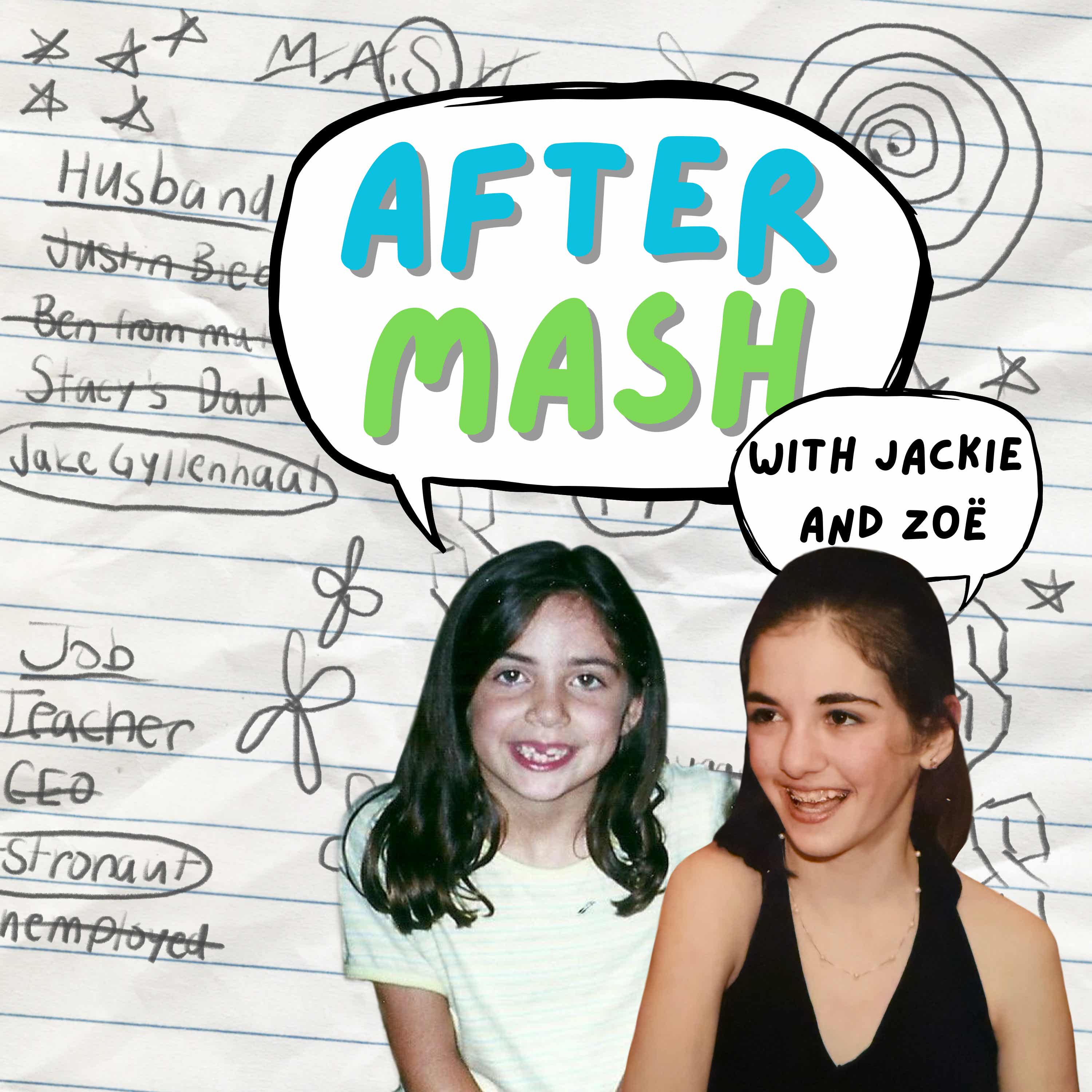
In elementary school we thought life as an adult was simple: first comes love, then comes marriage, then you come with a baby carriage. A silly game called MASH even laid out our lives for us, answering who we would marry, what kind of house we would live in, and how many kids we would have.
Maybe you were like us, and you survived the suburban-kid-to-college pipeline and graduated thinking you had all the answers. But then you found yourself in your mid-twenties, having done everything “right”, but somehow nowhere near the future you had envisioned for yourself. Well, we’re here to talk about it!
Join Jackie and Zoë every other week as we attempt to answer new questions using the old faithful game of MASH. Coming to all podcast apps near you every other Tuesday!
Check out our website: https://aftermash.substack.com/
This is a public episode. If you would like to discuss this with other subscribers or get access to bonus episodes, visit aftermash.substack.com
One Big Professional Distraction
Episode 2
mardi 17 mars 2026 • Duration 43:24
If you wake up in the morning feeling like a “Professional”, I have some questions about your identity. In this episode, Zoe will be talking about what she believes the real problem is with the educational loan caps enacted in the One Big Beautiful Bill from the perspective of the medical journey.
If you’re someone who knows how to read legislation, you can find the OBBB here. I am not. I know of a podcaster by the name of Jennifer Briney who has built a career of watching C-SPANN so you can also listen to her give a two part rundown. I just focused on the federal loan caps for education.
As far as student loans data is concerned, Education Data Initiative, US News & World Report, and the Center on Budget and Policy Priorities were my main sources. And good ol’ studentaid.gov spelled out the current federal aid funding available to students. Ivywise told me a bit about financing for university in the UK.
I asked Merriam-Webster what the definition of “professional” is. And obviously reddit its thoughts on medical school loans:
How much is everyone realistically pulling out for loans for med school?
The average debt thing makes no sense to me
Are med students really in this much debt???
And because I’m an APA girl at heart, this is the study on Title IV eligible versus non-eligible for-profit schools (aka DeVry, Phoenix, Kaplan Universities) - pretend there’s a hanging line:
Cellini, S. R., & Goldin, C. (2014). Does federal student aid raise tuition? New evidence on for-profit colleges. American Economic Journal: Economic Policy, 6(4), 174-206.
And the list of resources at the end of my notes which may be redundant to above but it’s important I don’t miss anything because plagiarism is the eighth deadly sin (or maybe the first, depending on who you ask):
Key Changes to Federal Student Loans Made in the Recent One Big Beautiful Bill Act
NAICU - Frequently Asked Questions About the One Big Beautiful Bill Act
Subsidized and Unsubsidized Loans | Federal Student Aid
University of Connecticut Tuition and Fees | SoFi
Average Cost of College Over Time: Yearly Tuition Since 1970
How Much Student Loan Debt Does the Average College Graduate Have?
U.S. vs. U.K. College Costs | IvyWise
How much does a university degree cost and is it worth it?
College 'sticker prices' have risen dramatically. Here's why : NPR
Cellini, S. R., & Goldin, C. (2014). Does federal student aid raise tuition? New evidence on for-profit colleges. American Economic Journal: Economic Policy, 6(4), 174-206.
The Hidden Costs of College: Why Tuition Keeps Rising
Average Medical School Debt [2025]: Student Loan Statistics
How Much Does It Cost To Become A Doctor In The UK? - Study Medicine Europe
How much is everyone realistically pulling out for loans for med school? : r/premed
Financial Aid for 2026 Incoming Health Professional Students Post-OBBB
Analyzing the Effects of the OBBB's Student Loan Limits on Tuition - AAF
Source of the stat that female-dominated fields get paid less because they are female-dominated: Rich Girl Nation by Katie Gatti Tassin
This is a public episode. If you would like to discuss this with other subscribers or get access to bonus episodes, visit aftermash.substack.com
Related Shows Based on Content Similarities