Tiny Living Beings – Détails, épisodes et analyse
Détails du podcast
Informations techniques et générales issues du flux RSS du podcast.
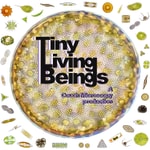

Tiny Living Beings is a weekly podcast where listeners get to know a scientist, a weird microorganism they like, and why they think it’s interesting. Our planet is full of billions of different microscopic organisms, most of which are still unknown to science. The ones we do know are diverse and strange. Microbiology knowledge is often gatekept by scientists who discuss this information in exclusive professional circles, but more of these topics need to be shared with the public! Although generally upbeat and fun, conversations often tangentially address frustrations with society or become existential, which, because of the time we are living through, is inherently connected to any discussion of topical scientific information. Content is geared toward all ages and backgrounds, anyone who is scientifically curious.
Classements récents
Dernières positions dans les classements Apple Podcasts et Spotify.
Apple Podcasts
🇺🇸 États-Unis - naturalSciences
23/05/2026#97🇫🇷 France - naturalSciences
13/05/2026#100🇫🇷 France - naturalSciences
12/05/2026#75🇫🇷 France - naturalSciences
26/03/2026#93🇫🇷 France - naturalSciences
25/03/2026#86🇫🇷 France - naturalSciences
24/03/2026#69🇫🇷 France - naturalSciences
23/03/2026#59🇬🇧 Grande Bretagne - naturalSciences
22/03/2026#87🇫🇷 France - naturalSciences
22/03/2026#47🇬🇧 Grande Bretagne - naturalSciences
21/03/2026#71
Spotify
Aucun classement récent disponible
Liens partagés entre épisodes et podcasts
Liens présents dans les descriptions d'épisodes et autres podcasts les utilisant également.
See all- https://www.cell.com/cell/fulltext/S0092-8674
496 partages
- https://noma.dk/
70 partages

- http://www.couchmicroscopy.com/store
53 partages
- https://twitter.com/couchmicroscopy?lang=en
34 partages
- https://twitter.com/seth_bromagen
2 partages
- https://twitter.com/MullinsLab
2 partages
Qualité et score du flux RSS
Évaluation technique de la qualité et de la structure du flux RSS.
See allScore global : 83%
Historique des publications
Répartition mensuelle des publications d'épisodes au fil des années.
Life is beautiful - with Ursula Goodenough
Saison 1 · Épisode 18
lundi 24 juillet 2023 • Durée 51:11
Choanoflagellates and animal evolution - with David Booth
Saison 1 · Épisode 17
lundi 17 avril 2023 • Durée 54:19
Choanoflagellates are unicellular protists but they also happen to be the closest living relatives to animals. This week, David Booth discusses what choanoflagellates are, where you can find them, and the connection to animal evolution. He also talks about how these microbes are interesting in their own right, impacting whole food webs and ecosytems and interacting with bacteria. We talk about the fossil record and cover a bunch of major evolutionary transitions and how microbial life was the precursor to the kingdoms of organisms we're most familiar with today.Dr. David Booth, PhD, is an assistant professor at University of California San Francisco. His lab investigates the ecological interactions and cell fate of choanoflagellates. You can follow him on Twitter (@dsboothacosta), Instagram (@bioboothlab) or find his work on his lab website or on Google Scholar.For more info on microbes and to follow updates of this podcast, find @couch_microscopy on Instagram, @CouchMicroscopy on Twitter, or visit www.couchmicroscopy.com/store for merch!Music is "Introducing Cosmic Space" by Elf Power and "Vorticella Dreams" by L. Felipe Benites.
Genetic engineering of algae - with Kyle Lauersen
Saison 1 · Épisode 8
lundi 16 janvier 2023 • Durée 59:09
What can we get algae to do for us (other than be beautiful and produce half of our oxygen)? How can we engineer different algae to create products and services we need? And what do algae SMELL like? Which smell like feet and which smell like "milky grass"? Dr. Kyle Lauersen is on this week's episode answering these questions and more! He explains all about his research on algal biotechnology and how we can engineer these tiny green cells to produce chemical products that are useful to us and clean up industrial and other aquatic waste. From aquaculture feeds, to perfumes, to ice creams without freezer burn, the little machines that are algal cells can do some amazing things! (We also take some time to discuss the Cyanidiophyceae red algae which are near and dear to my heart.)
Dr. Kyle Lauersen, PhD is an assistant professor at King Abdullah University of Science and Technology (KAUST). There he runs a lab that focuses on synthetic biology and metabolic engineering of various types of algae. You can follow his work on his lab's website, GoogleScholar, ResearchGate, and on Twitter: @KyleLauersen.
For more info on microbes and to follow updates of this podcast, find @couch_microscopy on Instagram, @CouchMicroscopy on Twitter, or visit www.couchmicroscopy.com/store for merch!
Music is "Introducing Cosmic Space" by Elf Power and "Vorticella Dreams" by L. Felipe Benites.
While some of the content on this podcast may be relevant to human or veterinary medicine, this information is not medical advice. The views and opinions expressed on this program are those of the host and guests and do not reflect the views of any institution.
Glaucophyte algae - with Debashish Bhattacharya
Saison 1 · Épisode 7
lundi 9 janvier 2023 • Durée 42:57
What the heck are glaucophyte algae? And where are they found? Spoiler alert: everywhere and nowhere. This week, Prof. Debashish Bhattacharya talks about Glaucophyta, one of the most ancient photosynthetic eukaryotic lineages on the planet and why they are great models for understanding evolution and endosymbiosis (a process introduced in last week's episode). He focuses on Cyanophora paradoxa, the most well-studied glaucophyte, what we can learn from this organism and its ancient origins, why few have studied the glaucophytes, and why it's important to explore our planet's biodiversity.
Dr. Debashish Bhattacharya, PhD is a distinguished professor in the department of Biochemistry and Microbiology at Rutgers University. He runs a research program that focuses heavily on genomics and evolution and has worked on organisms including red seaweeds, red algal extremophiles, green algae, Paulinella, dinoflagellates, coral reefs, and sub-par postdocs. Debashish was the recipient of the 2022 Miescher-Ishida prize for endosymbiosis. He is also passionate about science communication and has produced award-wining short films describing his lab's research and its impacts that can be found on YouTube. You can follow his work on his website, Google Scholar, ResearchGate, or on Twitter.
Links to things mentioned in this episode:
Paper describing Glaucocystis bhattacharyae (alga named after Debashish)
Trends in Genetics paper we wrote about horizontal gene transfer
Cyanophora paradoxa genome paper
Book chapter on glaucophytes that I like because it covers everything
Paper on the "menage a trois" (or MAT) hypothesis
For more info on microbes and to follow updates of this podcast, find @couch_microscopy on Instagram, @CouchMicroscopy on Twitter, or visit www.couchmicroscopy.com/store for merch!
Music is "Introducing Cosmic Space" by Elf Power and "Vorticella Dreams" by L. Felipe Benites.
The views and opinions expressed on this program are those of the host and guests and do not reflect the views of any institution.
Photosynthetic amoeba - with Arwa Gabr
Saison 1 · Épisode 6
lundi 2 janvier 2023 • Durée 42:23
"Photosynthesis is very important if you care about breathing."
Half of the oxygen on the planet is produced by microbes. Dr. Awra Gabr talks about the photosynthetic Paulinella lineage of rhizarian amoebas that represent an independent acquisition of a photosynthetic organelle in eukaryotic cells. This is HUGE because this kind of event has only successfully occurred two other times in the four billions year history of life on Earth. We talk about the ins and outs of this process, why Paulinella is the most annoying organism to work with with, and I explain why half of the episodes of this podcast have been about amoebas.
Dr. Arwa Gabr, Ph.D. is a graduate of the Microbiology and Molecular Genetics program at Rutgers University. You can follow her on LinkedIn and find her publications on ResearchGate.
In the intro of this episode I give a kind of convoluted explanation of amoebas. Here is a link to an open access paper from 2019 about how eukaryotic life is classified. There have been other papers in the three years since that have added to this field but I like this one because Figure 2 is a great illustration of the eukaryotic tree of life and you can see where the Discoba (Percolozoa), Rhizarians, and Amoebozoa all fit (as it currently stands). https://doi.org/10.1016/j.cub.2019.07.031
For more info on microbes and to follow updates of this podcast, find @couch_microscopy on Instagram, @CouchMicroscopy on Twitter, or visit www.couchmicroscopy.com/store for merch!
Music is "Introducing Cosmic Space" by Elf Power and "Vorticella Dreams" by L. Felipe Benites.
While some of the content on this podcast may be relevant to human or veterinary medicine, this information is not medical advice. The views and opinions expressed on this program are those of the host and guests and do not reflect the views of any institution.
Cassava viruses - with Alvin Crespo
Saison 1 · Épisode 5
lundi 26 décembre 2022 • Durée 42:23
As a society we have (rightly) spent soooo much time talking and thinking about SARS-CoV-2 but what about the billions of other viruses out there, most of which don't infect humans? This week evolutionary virologist Alvin Crespo talks about cassava mosaic begomoviruses which infect cassava plants, a food crop that is the main source of carbohydrates for the people of sub-Saharan Africa. We talk about where this virus came from, where all viruses may come from, and we also tackle topics related to 'parachute science', the scientific method and its limitations, and whether or not I am a generally ignorant person. It was fascinating learning about plant epidemics but sad to learn about the devastation they cause. However, as Alvin says during our conversation, we can learn a lot from these outbreaks which can hopefully prepare us for emergent plant viruses of the future.
Alvin Crespo is a PhD candidate in the Ecology and Evolution program at Rutgers University in the Duffy lab. You can follow him on Twitter: @alvincrespo2 or read his published work on Google Scholar.
Here are some links to things we mentioned in the episode:
Alvin's research is funded by a n NSF Program called "PIRE: U.S.-East Africa Research and Education Partnership: Cassava mosaic disease - A paradigm for the evolution of insect-transmitted plant virus pathosystems".
Here is the NSF award abstract and a list of the related publications to date
Collaborating institutes: North Carolina State University, North Carolina A&T, Rutgers University, Auburn University, Biosciences eastern and central Africa International Livestock Reasearch Institute (BecA-ILRI) Hub in Nairobi, Keny, Tanzania Agricultural Research Institute (TARI)- Mikocheni in Dar es Salaam, Tanzania, and JOMO Kenyatta University of Agriculture and Technology (JKUAT) in Nairobi, Kenya.
Here is a link to the phycologist mentioned from Burkina Faso, Dr. Bilassé Zongo: https://www.researchgate.net/profile/Bilasse-Zongo
Also, fun fact: it is the 40th anniversary of the first sequenced cassava mosaic begomovirus!
For more info on microbes and to follow updates of this podcast, find @couch_microscopy on Instagram, @CouchMicroscopy on Twitter, or visit www.couchmicroscopy.com/store for merch!
Music is "Introducing Cosmic Space" by Elf Power and "Vorticella Dreams" by L. Felipe Benites.
The microbes transforming our food system - with David Zilber
Saison 1 · Épisode 4
lundi 19 décembre 2022 • Durée 01:07:06
Did you know that one third of the food we eat is transformed by microbes? Why did people start eating sauerkraut? Will veggie burgers ever taste better? Is humanity doomed??? We answer these questions and more on this episode of TLB. Bacteria and many fungi may be invisible to the naked eye but their impact is all around us and is especially important when it comes to food. Chef, author, food scientist, fermenter, and TV personality David Zilber talks about the past, present, and future of fermentation and why fermented foods taste so good, are a healthy choice, and are a powerful weapon in the fight for a sustainable future. He lays out the rough path ahead for human society when it comes to reworking some of our most prevalent structures (e.g., capitalism, globalism, the non-local nature of food production) but leaves us with a message of hope. This episode is also a must-listen if you want the tea (or should I say red wine) on Top Chef Canada season 10.
David Zilber is the head of fermented food research and development at Chr. Hansen, a bioscience company based in Denmark. He is a former chef and head of the fermentation lab at Noma which has three Michelin stars and is commonly referred to as the "best restaurant in the world". David is also New York Times bestselling author of The Noma Guide to Fermentation (which I highly recommend) that has revolutionized how home and professional chefs around the world incorporate fermentation practices into their cooking, and he is currently a judge on Top Chef Canada. To follow his work and impeccable book recs on social media, find him on Instagram: @david_zilber. I also want to link "The Entropy of a Carrot" which was mentioned; definitely worth reading.
For more info on microbes and to follow updates of this podcast, find @couch_microscopy on Instagram, @CouchMicroscopy on Twitter, or visit www.couchmicroscopy.com/store for merch!
Music is "Introducing Cosmic Space" by Elf Power and "Vorticella Dreams" by L. Felipe Benites.
While some of the content on this podcast may be relevant to human or veterinary medicine, this information is not medical advice. The views and opinions expressed on this program are those of the host and guests and do not reflect the views of any institution.
Slime molds - with Kyle David
Saison 1 · Épisode 3
lundi 12 décembre 2022 • Durée 35:30
What do some amoebozoans and the urban planners of Tokyo have in common? And who is smarter? What even is intelligence? Find out by learning about Physarum polycephalum, a slime mold (aka "slimy guy") you could find on a walk in the woods. Scientist Kyle David talks about the lifestyle and weird features of P. polycephalum and how, even when it's meters long and wrapping itself around trees, it's really still only one single cell. We also talk about human vs. non-human intelligence, how this amoeba defies the human-created and often nebulous paradigms of "biological sex", and what we can learn from the formidable microbes around us.
Dr. Kyle T. David, PhD is a postdoctoral fellow in the Rokas Lab at Vanderbilt University, who has studied the evolution of many organisms, from yeasts to frogs! To follow his work, check out his Google Scholar page or follow him on Twitter: @KyleTheDavid, where he regularly goes viral for posting weird science stuff.
Here are some links to studies referenced in this episode if you're interested in further reading:
1. https://www.nature.com/articles/35035159
2. https://www.pnas.org/doi/full/10.1073/pnas.0912198107
3. https://www.pnas.org/doi/full/10.1073/pnas.1215037109
4. https://royalsocietypublishing.org/doi/10.1098/rspb.2016.0446#d4543081e1
5. https://journals.aps.org/prl/abstract/10.1103/PhysRevLett.100.018101
For more info on microbes and to follow updates of this podcast, find @couch_microscopy on Instagram, @CouchMicroscopy on Twitter, or visit www.couchmicroscopy.com/store for merch!
Music is "Introducing Cosmic Space" by Elf Power and "Vorticella Dreams" by L. Felipe Benites.
While some of the content on this podcast may be relevant to human or veterinary medicine, this information is not medical advice. The views and opinions expressed on this program are those of the host and guests and do not reflect the views of any institution.
Leptospira bacteria - with Kyra Hartog
Saison 1 · Épisode 2
lundi 5 décembre 2022 • Durée 39:53
If you have a dog, you'll want to listen to this one! Leptospira is a genus of spirochete bacteria that can infect many different mammals, from rats to rhinos. Veterinarian Kyra Hartog talks about what Leptospira do in nature and why some animals get Leptospirosis and others do not. She also describes symptoms and treatments and gives advice on how to keep your dogs safe! We also go on a rant about outdoor cats' impact on wildlife that you won't want to miss.
Dr. Kyra Hartog, DVM is a veterinarian at a cat and dog clinic in St. Pete, Florida. To follow her work, find her on Instagram: @dr_kyra_h and Twitter: @kyra_hartog.
If you want to follow Murray, my cat son (who has been officially diagnosed as extremely cute), his instagram is: @furry_purry_murray.
For more info on microbes and to follow updates of this podcast, find @couch_microscopy on Instagram, @CouchMicroscopy on Twitter, or visit www.couchmicroscopy.com/store for merch!
Music is "Introducing Cosmic Space" by Elf Power and "Vorticella Dreams" by L. Felipe Benites.
While some of the content on this podcast may be relevant to human or veterinary medicine, this information is not medical advice. The views and opinions expressed on this program are those of the host and guests and do not reflect the views of any institution.
Deadly amoeba - with Seth Bromagen
Saison 1 · Épisode 1
lundi 28 novembre 2022 • Durée 39:18
Naegleria fowleri is a Percolozoan flagellate protist known as the "brain-eating amoeba". While fatal to humans, this microbe doesn't have a sinister motive. In fact, as Dr. Bromagen explains, infecting humans has no benefit to the amoeba and will be fatal to it as well as the infected human. In this episode we discuss the ecology, natural history, and pathogenicity of Naegleria fowleri and then things get existential...
Dr. Seth Bromagen, PhD is a parasitologist and assistant professor of zoology at Kentucky Wesleyan College. To follow his work, find him on Twitter: @seth_bromagen or check out his website: www.bromagenparasitology.com. He also has a fascinating background which can be read here.
For further reading on preventing Naegleria fowleri infections and why knowledge and education is key to preventing future infections, visit www.amoeba-season.com.
For more info on microbes and to follow updates of this podcast, find @couch_microscopy on Instagram, @CouchMicroscopy on Twitter, or visit www.couchmicroscopy.com/store for merch!
Music is "Introducing Cosmic Space" by Elf Power and "Vorticella Dreams" by L. Felipe Benites.
While some of the content on this podcast may be relevant to human or veterinary medicine, this information is not medical advice. The views and opinions expressed on this program are those of the host and guests and do not reflect the views of any institution.
Podcasts Similaires Basées sur le Contenu