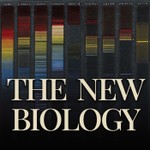
The New Biology – Détails, épisodes et analyse

Détails du podcast

Informations techniques et générales issues du flux RSS du podcast.

Podcast The New Biology

The New Biology

Niko McCarty

Sciences
Technologie

Fréquence : 1 épisode/18j. Total Éps: 3

Hosting podcast Transistor
The New Biology features long-form discussions with historians, technologists, and scientists who are working on some of the biggest ideas in biotechnology, from magnet-controlled medicines to virtual cells. Supported by Astera Institute.
RSS
Apple

Classements récents

Dernières positions dans les classements Apple Podcasts et Spotify.

Apple Podcasts

  • 🇫🇷 France - lifeSciences

    09/07/2026
    #100
  • 🇺🇸 États-Unis - lifeSciences

    08/07/2026
    #85
  • 🇺🇸 États-Unis - lifeSciences

    07/07/2026
    #75
  • 🇺🇸 États-Unis - lifeSciences

    06/07/2026
    #55
  • 🇺🇸 États-Unis - lifeSciences

    04/07/2026
    #70
  • 🇫🇷 France - lifeSciences

    04/07/2026
    #89
  • 🇫🇷 France - lifeSciences

    03/07/2026
    #80
  • 🇫🇷 France - lifeSciences

    02/07/2026
    #74
  • 🇩🇪 Allemagne - lifeSciences

    01/07/2026
    #93
  • 🇺🇸 États-Unis - lifeSciences

    01/07/2026
    #98

Spotify

    Aucun classement récent disponible


Qualité et score du flux RSS

Évaluation technique de la qualité et de la structure du flux RSS.

See all
Qualité du flux RSS
À améliorer

Score global : 53%


Historique des publications

Répartition mensuelle des publications d'épisodes au fil des années.

Episodes published by month in

Derniers épisodes publiés

Liste des épisodes récents, avec titres, durées et descriptions.

See all

Mark Budde - How to speed up wet-lab biology

Épisode 1

vendredi 8 mai 2026Durée 57:32

Plasmidsaurus took plasmid sequencing from $600 to $15 and turned a "boring" service company idea into a hugely successful company serving 70,000+ scientists. In this episode, CEO Mark Budde and Niko McCarty get into the bigger question: what does it take for companies to automate and scale wet-lab biology methods in the same way that Plasmidsaurus did for sequencing? They cover the early Oxford Nanopore bet, the obsession with speed, and why Mark won’t sell customer data to AI labs. 

This podcast is made possible by Astera Institute.

The Bitter Lesson for Biology — Adam Green on Virtual Cells and Scaling Laws

Épisode 3

vendredi 12 juin 2026Durée 01:29:34

Markov Biosciences, a startup in San Francisco, is betting that biology is about to have its GPT moment. In this episode, founder Adam Green explains the "bitter lesson" for biology, the idea borrowed from Richard Sutton that large unbiased datasets and the right training objective tend to outcompete models with hard-coded rules and human priors. Adam thinks, in particular, that the virtual cell field took a wrong turn by spending hundreds of millions of dollars collecting expensive perturbation data. Green’s counterargument is that the data needed to train useful virtual cells is not limiting, but rather compute (and the loss function) are. By treating single-cell RNA-seq as a ranking problem rather than raw counts (a century-old idea traceable to a 1927 psychophysics paper), they found that virtual cells pre-trained on plain observational data show clean scaling laws, getting monotonically better at predicting unseen perturbations as the models grow, and beating a state-of-the-art model built specifically for that task.


00:00 - Cold open and introduction 

01:58 - The first clinical prediction from a virtual cell

05:38 - What is a "virtual cell," really? 

08:01 - Single-cell RNA-seq biases and the urns analogy

23:29 - The bitter lesson for biology

30:55 - Geometric Plackett-Luce: the right loss function

59:26 Trop2 deep dive

1:11:16 - Top-down vs. bottom-up biology, mechinterp, and control as the goal 


Readings and mentions: 

Magnet-Controlled Medicines — Andrew York & Maria Ingaramo

Épisode 2

vendredi 29 mai 2026Durée 02:07:36

Nonfiction Laboratories is building a technology called “magnetogenetics” that promises to control proteins inside the body — such as antibodies or enzymes — using small magnets. In this episode, co-founder Maria Ingaramo and scientific advisor Andrew York explain how they engineered a protein, MagLOV, that responds strongly to magnetic fields, why most prior attempts have failed to replicate, and how the mechanism of magnetically-controlled proteins actually works. They also get into the “dream” use cases, like cancer drugs that activate only at the tumor, which might have a lower toxicity inside the body. 

This podcast is made possible by Astera Institute.

Notes from our discussion: https://nikomc.com/essays/protein-magnets.html

00:00 - Opening

00:54 — Introduction

01:35 — The dream

05:38 — Why magnets vs. light or ultrasound

10:05 — The physics

17:48 — On the name "magnetogenetics"

21:25 — Birds and cryptochromes

27:09 — Why is the field filled with so much junk?

29:51 — Adam Cohen's molecule

33:24 — Markus Meister’s debunking

38:06 — The experiment

46:22 — Finding the LOV domain

54:11 — Singlets, triplets, and cysteine

56:54 — What the magnet is actually doing

1:05:13 — The conformational-change red herring

1:12:46 — The Quantum Biology Institute

1:19:31 — Founding Nonfiction Labs

1:24:38 — How to convince skeptical investors

1:29:39 — What a magnetogenetic medicine might look like

1:38:50 — First clinical indications

1:45:12 — The regulatory path

1:48:01 — What the field needs

1:54:30 — Appendix: Whiteboard lecture


Podcasts Similaires Basées sur le Contenu

Découvrez des podcasts liées à The New Biology. Explorez des podcasts avec des thèmes, sujets, et formats similaires. Ces similarités sont calculées grâce à des données tangibles, pas d'extrapolations !
Podcast The Stem Cell Podcast
Podcast Lenny's Podcast: Product | Career | Growth
Podcast Machine Learning Street Talk (MLST)
Podcast NeuroRadio
Podcast This Week in Virology
Podcast Work For Humans
© My Podcast Data