The Living Conversation – Détails, épisodes et analyse
Détails du podcast
Informations techniques et générales issues du flux RSS du podcast.
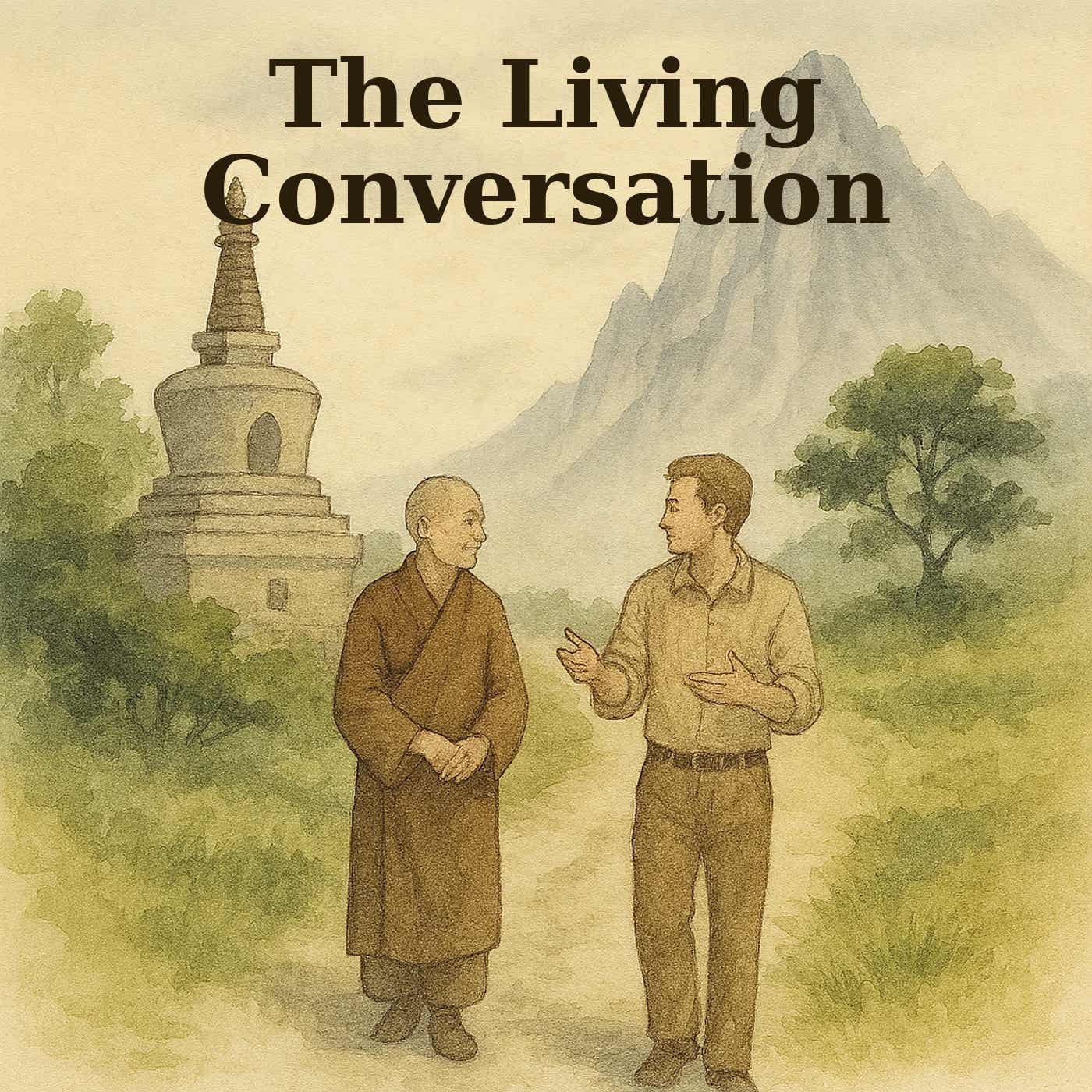
The Living Conversation
A podcast on philosophy
Fréquence : 1 épisode/7j. Total Éps: 33

Classements récents
Dernières positions dans les classements Apple Podcasts et Spotify.
Apple Podcasts
🇨🇦 Canada - philosophy
05/02/2026#88🇬🇧 Grande Bretagne - philosophy
16/11/2025#99
Spotify
Aucun classement récent disponible
Liens partagés entre épisodes et podcasts
Liens présents dans les descriptions d'épisodes et autres podcasts les utilisant également.
See all- https://youtube.com
266 partages
- https://substack.com
47 partages
- https://theonaut.com
5 partages
- https://www.instagram.com/the.waybetween
3 partages
Qualité et score du flux RSS
Évaluation technique de la qualité et de la structure du flux RSS.
See allScore global : 59%
Historique des publications
Répartition mensuelle des publications d'épisodes au fil des années.
Dr. Nick Egan on Zen, Tibetan Buddhism, and the Nature of Mind
Saison 1 · Épisode 24
vendredi 14 novembre 2025 • Durée 28:00
In this special crossover episode, we launch The Way Between Podcast from within The Living Conversation.
Adam introduces The Way Between as a more flexible, long-form space to explore East–West philosophy in a story-driven way: how thinkers like Socrates, Confucius, Laozi, and Hui Neng emerged, how their ideas shaped cultures, and how their influence still reaches our lives today.
From there, Adam, Anthony, and guest Dr. Nick Egan dive into:
- Socrates’ image of the wise sea captain and why philosophy is the “art of navigation” in life
- How Adam’s Philosophy 101 class planted the seed that led him to change his major and devote his life to this work
- The Tibetan Buddhist framework of view, path, and result—and how “view” quietly shapes everything we do
- Dr. Yi Wu’s integral life philosophy and his triangle of reality, practice, and theory
- Zen stories of Hui Neng and how a single exchange between teacher and student can become the most important moment in the universe
- Nick’s experience of a Zen Roshi responding, “This is Nirvana,” and how that answer cracked ordinary thinking
- Tibetan pointing-out instructions on the nature of mind, and why we may glimpse it many times without recognizing it
- How our “story” about reality locks us into patterns—and how Socratic questions can loosen that story
- Adam’s time teaching freshman philosophy, planting the first seeds of “examining your life” in students who may not even know what philosophy is yet
- Jung’s sense of the hero’s journey and the challenge to actually cultivate the soul in ordinary life
Along the way, they explore Zen, Tibetan Buddhism, Confucianism, and Western philosophy as different ways of pointing toward the same question:
How should I live?
And they return again and again to the idea that philosophy is not just a subject—but a daily practice of view, conversation, and self-cultivation.
Connect with our guest:
- Dr. Nick Egan – nickeganphd.com
- Shift Leadership Group – shiftleadership.group
Connect with the hosts:
- Adam Dietz – “The Way Between” on Substack (search: The Way Between Substack)
- Email Adam: dietzadam@gmail.com
- Anthony Wright – theonaut.com
If this conversation resonates, you can follow The Way Between Podcast on your favorite podcast app and keep listening to The Living Conversation on 'Attunement' on KWMR and wherever you get your podcasts.
The Living Conversation: Philosophy, Anxiety, and the Muddy Water Mind
Saison 1 · Épisode 23
jeudi 6 novembre 2025 • Durée 28:00
In this episode of The Living Conversation, Adam Dietz and Anthony Wright sit down with members of the Sonoma State University Philosophy Club to explore how philosophy lives through real experience.
From Lao Tzu’s image of muddy water settling into clarity, to personal stories of anxiety, creativity, and healing, the discussion ranges from Daoism to Buddhism to Socratic thought; all grounded in lived experience. Together with Colette, Haley, and Andrew, they examine how logic and emotion, feeling and reason, art and philosophy, all belong to the same search for wisdom.
Themes: anxiety and awareness, Daoist clarity, creativity and emotion, the Middle Way, the Eightfold Path, philosophy as a living practice.
🎓 Featuring the Sonoma State University Philosophy Club.
🌿 Hosted by Adam Dietz and Anthony Wright.
Finding Growth Through Ancient Wisdom
Saison 1 · Épisode 14
vendredi 22 août 2025 • Durée 28:00
The central theme of this podcast episode revolves around the enduring relevance of philosophy in contemporary life, akin to the warmth of the sun that persists despite its distance. We engage in a profound discussion about the teachings of Confucius and the importance of integrating ancient wisdom into our modern existence. Our conversation delves into the concepts of sincerity and humility as foundational aspects of Chinese philosophy, emphasizing their significance in fostering harmonious relationships and personal growth. We also explore the distinction between fate and heaven's destiny, encouraging listeners to actively seek growth in unfamiliar territories rather than resigning themselves to predetermined paths. Ultimately, our aim is to invite our audience to reflect on their experiences and the practical applications of philosophical principles in their daily lives.
Delving deeper into the philosophical teachings, the conversation transitions to the critical examination of the dual concepts of sincerity and humility, as articulated within the framework of Chinese philosophy. The hosts reference their mentor, Dr. Yi Wu, highlighting the importance of these virtues as foundational to harmonious living. They discuss the energetic interplay between sincerity, representing Yang, and humility, embodying Yin, and how these principles manifest in everyday interactions. The dialogue further elucidates the intricate relationship between these concepts and the overarching principles of Daoism, wherein the harmony of opposites is essential for personal and communal well-being. This aspect of the discussion serves to underscore the importance of balance in one’s approach to life, suggesting that the cultivation of both attributes fosters a more profound connection with oneself and others. The hosts also draw on the insights from their studies to encourage listeners to explore how these philosophical tenets can enhance their own lives, thereby transforming abstract concepts into practical applications that resonate within the fabric of daily existence.
Takeaways:
- Philosophy serves as a warm guide, continually relevant in helping individuals navigate the complexities of life.
- The essence of Confucius's teachings lies in transmitting the wisdom of ancient sages to enrich contemporary understanding.
- Understanding heaven's destiny involves recognizing the opportunities for growth that life presents, rather than succumbing to a fatalistic outlook.
- The dichotomy of sincerity and humility reflects the balance required in both personal and philosophical pursuits, embodying the principles of yin and yang.
- Engaging with philosophy should not be viewed as a luxury, but rather as a fundamental necessity for personal development and societal harmony.
- The interconnectedness of existence suggests that by nurturing our own growth, we contribute to the peace and harmony of the greater universe.
Links referenced in this episode:
- dietzadam@gmail.com
- theonaut.com
- thewaybetween
- substack.com
- youtube.com
Companies mentioned in this episode:
- California Institute of Integral Studies
The Power of Conversation: Philosophy for the People
Saison 1 · Épisode 13
vendredi 15 août 2025 • Durée 28:00
This podcast episode delves into the essential role of philosophy in public discourse and its enduring relevance in contemporary society. We assert that philosophy has historically served as a forum for communal engagement, promoting wisdom and virtue among individuals and within societies. We explore the significant contributions of both Eastern and Western philosophical traditions, highlighting figures such as Socrates and Confucius, who sought to disseminate knowledge to the public. Our discussion further emphasizes the importance of critical thinking as a tool for navigating the complexities of modern life, particularly in the face of manipulative tactics that exploit vulnerability. Ultimately, we invite listeners to reflect on their own philosophical journeys and consider how cultivating wisdom can enrich their lives and the broader community.
The discourse presented in this episode revolves around the profound significance of public philosophy and its inherent role in fostering communal wisdom. Both speakers engage in a thought-provoking exploration of historical philosophical figures, such as Socrates and Confucius, emphasizing their commitment to disseminating knowledge and virtue amongst the populace. This reflection elucidates the essence of philosophy as a communal endeavor rather than an isolated pursuit, underscoring the necessity for philosophical dialogue in contemporary society. The episode further delves into the practical implications of philosophy, particularly in the context of critical thinking and self-awareness, as the hosts share personal anecdotes about the challenges posed by modern manipulative tactics, such as scams, that exploit cognitive biases. The conversation serves as a clarion call for listeners to cultivate their critical faculties and remain vigilant against the encroachment of manipulative influences, thus reinforcing the episode's central thesis: philosophy is not merely an academic exercise but a vital instrument for navigating the complexities of life. Through this examination, the hosts invite the audience to reflect on their own practices of self-cultivation and the importance of philosophical inquiry in enhancing personal and communal well-being.
Takeaways:
- This podcast emphasizes the public nature of philosophy, highlighting its accessibility and importance for all individuals.
- Philosophy serves as a means of cultivating wisdom and virtue, which positively impacts society as a whole.
- The conversation discusses critical thinking in the context of recognizing and avoiding manipulative techniques and scams.
- Listeners are encouraged to reflect on how they cultivate their own self-awareness and clarity during challenging times.
- The hosts explore the significance of education as a tool for liberation from ignorance, akin to the allegory of the cave.
- Ultimately, the podcast advocates for the integration of philosophical discussions into everyday life to enhance understanding and personal growth.
Links referenced in this episode:
- dietzadam@gmail.com
- thewaybetween@substack.com
- theonaut.com
- theonaut2nr.com
From Firewood to Enlightenment: The Remarkable Story of Hui Neng
Saison 1 · Épisode 12
lundi 4 août 2025 • Durée 28:00
The narrative presented in this episode elucidates the profound journey of Hui Neng, the first patriarch of Zen Buddhism, whose extraordinary life trajectory defied the conventions of his time. Initially an illiterate and impoverished laborer, Hui Neng's serendipitous encounter with the recitation of the Diamond Sutra catalyzed his instant enlightenment, marking a pivotal moment in the evolution of Zen thought. This episode delves into the intricate interplay between Buddhism and Taoism, expounding upon the philosophical underpinnings that shaped Hui Neng's experiences and teachings. We further explore the ensuing contest within the monastery, where Hui Neng's unorthodox insights challenged the established paradigms of enlightenment and knowledge. Through a detailed examination of his life and the implications of his teachings, we aim to illuminate the enduring legacy of Hui Neng and his revolutionary approach to spiritual awakening.
The narrative encapsulates the remarkable journey of Hui Neng, the sixth patriarch of Zen Buddhism, who emerged from obscurity to become a pivotal figure in the spiritual landscape of China. Born into a family that faced political ostracism, Hui Neng lived in Guangdong province, distanced from the cultural and intellectual heart of the country. Despite his humble beginnings as an illiterate wood gatherer, his life took a transformative turn upon hearing the Diamond Sutra, a text revered for its profound insights. This moment of revelation catalyzed his enlightenment, allowing him to perceive the essence of mind without formal education or prior study. His subsequent journey to a monastery to further explore Buddhism is marked by both physical and metaphorical challenges, emphasizing the theme of perseverance in the quest for spiritual understanding. Hui Neng's story serves as a poignant reminder of the potential for enlightenment irrespective of one's social status or educational background, ultimately culminating in his recognition as a leader in Zen Buddhism, where he challenged established norms and advocated for a direct, personal experience of enlightenment beyond scholarly pursuits.
Takeaways:
- Huineng, the first patriarch of Zen Buddhism, emerged from a humble background marked by adversity and ignorance.
- The Diamond Sutra played a pivotal role in Huineng's enlightenment, signifying its profound impact on Buddhist philosophy.
- The story of Huineng illustrates the concept of sudden enlightenment, challenging traditional beliefs about intellectual attainment in Buddhism.
- Buddhism and Taoism share a deep connection, as evidenced in the teachings and practices that influenced Zen Buddhism's development.
Links referenced in this episode:
- theonaut.com
- dietzadam@gmail.com
- thewaybetween.substack.com
From Stagnation to Innovation: A Path Forward
Saison 1 · Épisode 4
mardi 29 juillet 2025 • Durée 14:13
The central theme of this podcast episode revolves around the notion of attunement and the necessity of revitalizing stagnant ideas within our society. We delve into the metaphor of decay, illustrated by an image from Chinese philosophy depicting a bowl of food that has become infested, symbolizing the stagnation of both creativity and political thought. We advocate for the urgent need to "clean the bowl," which entails acknowledging the current state of disarray and the prevalence of unhelpful ideas that pervade public discourse. Through our discussion, we emphasize the value of independent thinking and the importance of fostering a humane society that embraces diverse perspectives, particularly in the context of our nation’s immigrant heritage. Ultimately, we contend that a commitment to deep reflection and a collective effort toward humanity can lead us toward a more vibrant and just society.
This image of “cleaning the bowl” comes from the I Ching…a root text of both Taoism and Confucianism.
We talk about how ideas decay, and how the Way calls us to renew them: not with outrage, but with alignment.
This clip is from The Living Conversation, our ongoing dialogue on clarity, rhythm, and return.
#taoism #iching #stillness #philosophy #culturalrenewal #clarity
Get full access to The Way Between at thewaybetween.substack.com/subscribeTakeaways:
- The conversation emphasizes the necessity of refreshing stagnant ideas to foster creativity and progress.
- We discussed how acknowledging problems is essential to address and improve societal issues effectively.
- Immigrants are portrayed as vital sources of innovation and resilience within our evolving society.
- The podcast highlights the importance of broad education as a foundation for independent and humane thinking.
- Stagnation in societal ideas can lead to decay, necessitating a concerted effort to revive them.
- Humanity and the acknowledgment of historical injustices are crucial for a more united and compassionate society.
The discussion commences with Anthony Wright and Adam Dietz sharing their reflections on the current societal climate, characterized by a sense of stagnation and discontent. Wright introduces a potent metaphor derived from Chinese philosophy, specifically a hexagram signifying decay. The imagery of a stagnant bowl of food corrupted by maggots serves as a profound analogy for the ideas and creative energies that have become stagnant within contemporary discourse. Rather than attributing blame to individuals, Wright emphasizes that it is the ideas themselves that have failed to evolve, leading to a cultural malaise. He posits that just as one must clean a decayed bowl, we too must refresh our ideas to rejuvenate our collective consciousness and foster a more humane society. Through this lens, the conversation invites listeners to reflect deeply on the nature of our political and cultural landscape, urging an acknowledgment of the decay present in our ideologies and the necessity of renewal.
As the dialogue unfolds, the hosts explore the historical context of immigration in the United States, recognizing it as a vital source of vitality and innovation. Dietz underlines the resilience and determination of immigrant populations throughout history, suggesting that their contributions have been instrumental in shaping the nation’s character. This leads to a broader discussion on the need for a comprehensive educational framework that promotes independent thinking and a well-rounded understanding of the world. The hosts assert that a liberal education, encompassing the humanities, arts, and sciences, is essential for nurturing engaged and thoughtful citizens. They advocate...
The Sanity Clause: Sorting Truth from Noise in a Distracted World
jeudi 17 juillet 2025 • Durée 14:25
In this closing segment of The Living Conversation, Adam and Anthony reflect on how to stay grounded when trust breaks down, institutions collapse, and cultural conversation becomes incoherent.
They explore Confucius’ warning about those who only seek profit, the modern loss of good-faith discussion, and how Lao Tzu’s teachings help us sort through confusion…like letting sediment settle in muddy water.
You’ll also hear about Plato’s cave, the Marx Brothers’ “sanity clause,” and why treating ourselves as “wastewater professionals” might be the most spiritual practice of all.
Featuring:– The fallacy of false equivalence– The social cost of abandoning trust– Taoist clarity as inner filtration– An invitation to rebuild wisdom together
—🎧 All episodes at thewaybetween.substack.com📍 Instagram: @the.waybetween
Get full access to The Way Between at thewaybetween.substack.com/subscribe
The Same Light, Many Paths: Humanity, Destiny, and the Illusion of 'Belonging'
jeudi 17 juillet 2025 • Durée 14:08
In this segment of The Living Conversation, we explore the tension between conformity and individuality, between the illusion of belonging and the truth of who we are.
Drawing from Confucian and Taoist thought, we reflect on how real unity doesn’t erase our differences, but honors them. Adam and Anthony discuss why walking your own path is not just courageous…it’s essential.
Through the lens of Eastern philosophy, critical thinking, and classroom experience, we look at the subtle manipulations that shape identity, the pressure to trade insight for approval, and the quiet rebellion of becoming fully human.
Featuring:– Confucius on destiny and “walking bits of Heaven”– Lao Tzu on being and non-being– The fallacy of ridicule and the story of chess with a pigeon
This episode is a meditation on real belonging, the kind that arises not from agreement, but from deepening our insight, our humanity, and our true selves.
—🎧 Listen to all episodes at thewaybetween.substack.com📍 Follow on Instagram: @the.waybetween
Get full access to The Way Between at thewaybetween.substack.com/subscribe
The Tao Is Already Here: Contentment Without the Chase
jeudi 17 juillet 2025 • Durée 15:46
In this segment of The Living Conversation, we explore Lao Tzu’s vision of contentment: a village where sharp weapons are never used, where carriages sit still, and where people live fully without needing to go anywhere.
This is not minimalism. It’s a radical teaching about presence, about realizing the Tao is already here, not somewhere else, not after effort.
We also reflect on the tension between logic and experience, the role of critical thinking in spiritual inquiry, and the Eastern philosophical approach to truth that can’t be grasped, only lived.
Featuring a story about teaching students who resist “wordless wisdom,” a passage from Heinrich Zimmer on enlightenment, and a conversation on what happens when we stop trying to chase the sacred and start recognizing it in our ordinary lives.
🎧 Find all episodes at thewaybetween.substack.com📍 Follow on Instagram: @the.waybetween
Get full access to The Way Between at thewaybetween.substack.com/subscribe
Don’t Stir the Muddy Water
mercredi 16 juillet 2025 • Durée 14:34
In this episode of The Living Conversation, we talk about what happens when the world feels too loud. From Taoist metaphors to YouTube algorithms, we explore how staying still…rather than grasping…becomes an act of clarity.Whether you’re dealing with media overload, political despair, or daily FOMO, this is a reminder that you don’t have to get pulled in. The Tao is always present; not in what’s next, but in what’s already here.
Get full access to The Way Between at thewaybetween.substack.com/subscribe
Podcasts Similaires Basées sur le Contenu