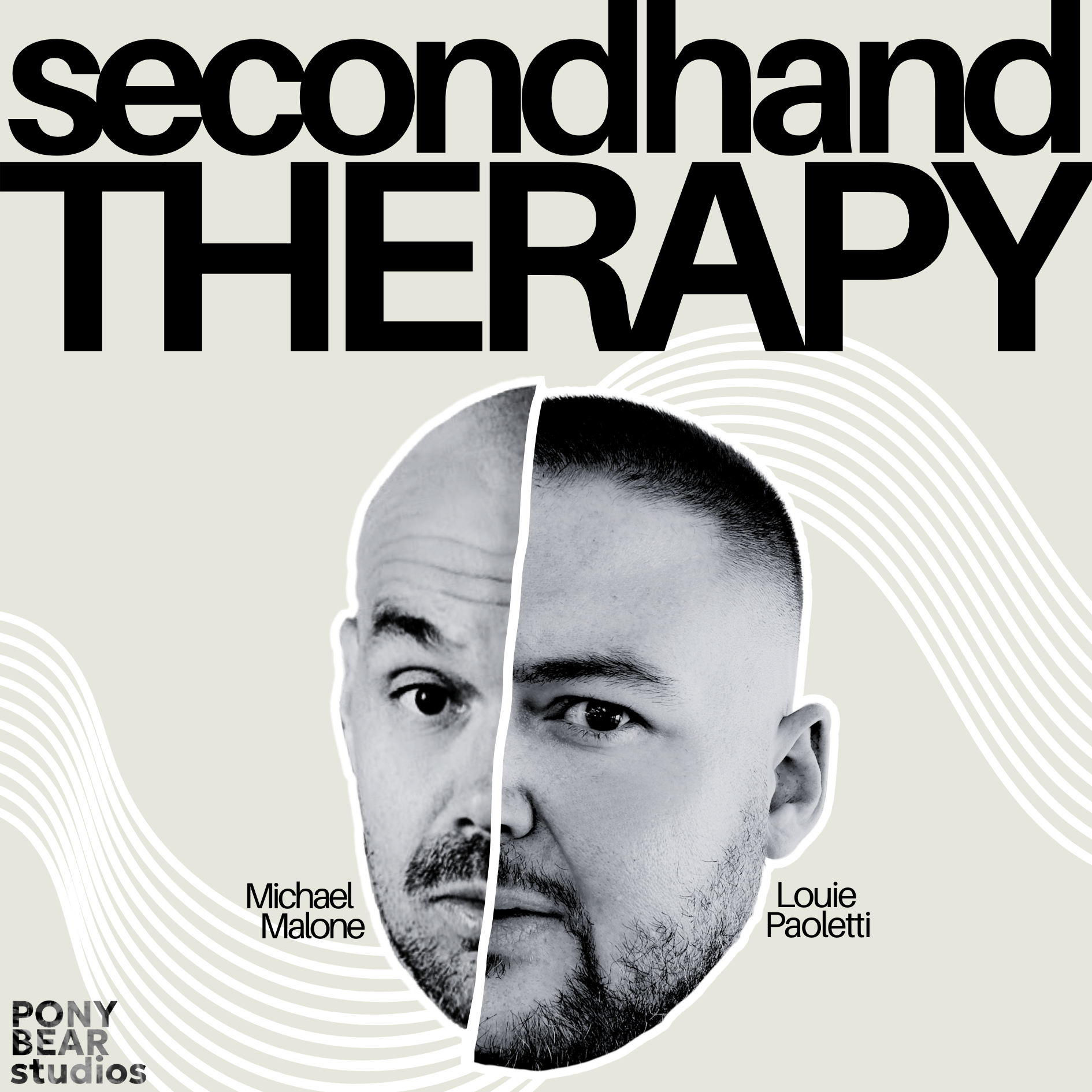
Secondhand Therapy is a funny, honest mental health podcast where two unlicensed best friends unpack their weekly therapy sessions. Join Louie Paoletti and Michael Malone as they explore anxiety, ADHD, grief, masculinity, and emotional growth—with humor, heart, and total transparency. Each episode blends raw self-reflection with real time takes on therapy, trauma, relationships, and the messy process of healing. It’s real talk about mental health in the modern world, and why personal growth is so damn hard.
Site
RSS
Apple
Données mises à jour le 27/10/2026
Classements récents
Dernières positions dans les classements Apple Podcasts et Spotify.
Liens partagés entre épisodes et podcasts
Liens présents dans les descriptions d'épisodes et autres podcasts les utilisant également.
Aura: Your data is being sold right now. Let my sponsor Aura find the brokers selling it and remove you automatically. Try 14 days for free: https://aura.com/sht
Psychic Source: Go to our sponsor https://trypsychicsource.com/sht10 and use our code sht10 to try up to 40 minutes with an advisor for just $19.80. That is up to a $240 value!
BetterHelp: Sponsored by BetterHelp. Visit https://betterhelp.com/secondhandtherapy. For members in the US, therapy may now cost less. With insurance, many members pay $15 or less. Some pay $0. If you don't have insurance or you don’t live in the United States, you can still get 10% off your first month. Insurance availability, coverage, and cost may vary by state, plan, provider network, therapist availability, and deductible status.
Grief, addiction, family relationships, emotional healing, and the complicated relationship between love and control. On Secondhand Therapy, we explore mental health, personal growth, vulnerability, and the messy realities of being human through honest conversations, uncomfortable questions, and humor. A mental health and comedy podcast about relationships, emotional intelligence, boundaries, and figuring ourselves out along the way.
Aura: Your data is being sold right now. Let my sponsor Aura find the brokers selling it and remove you automatically. Try 14 days for free: https://aura.com/sht
Psychic Source: Go to our sponsor https://trypsychicsource.com/sht10 and use our code sht10 to try up to 40 minutes with an advisor for just $19.80. That is up to a $240 value!
BetterHelp: If you’re struggling, consider therapy with our sponsor. Visit https://betterhelp.com/secondhandtherapy for a discount on your first month of therapy. #sponsored
Why is it so hard to let go of control, stop overthinking, and feel comfortable with uncertainty? On Secondhand Therapy, we explore the messy realities of mental health, anxiety, grief, personal growth, and the complicated ways our minds shape everyday life. Through honest conversations, dark humor, and unfiltered reflections, we get into the psychology of fear, emotional healing, pessimism, optimism, gratitude, and learning to navigate life's challenges. If you're interested in self-awareness, relationships, emotional intelligence, and making sense of the human experience, join us for another conversation about figuring it all out — or at least trying to.
Aura: Your data is being sold right now. Let my sponsor Aura find the brokers selling it and remove you automatically. Try 14 days for free: https://aura.com/sht
Psychic Source: Go to our sponsor https://trypsychicsource.com/sht10 and use our code sht10 to try up to 40 minutes with an advisor for just $19.80. That is up to a $240 value!
BetterHelp: If you’re struggling, consider therapy with our sponsor. Visit https://betterhelp.com/secondhandtherapy for a discount on your first month of therapy. #sponsored
How do we grow as people without overthinking every decision, taking everything personally, or feeling like we’re constantly falling short? On this episode of Secondhand Therapy, we get into personal growth, self-awareness, relationships, emotional intelligence, and the messy reality of trying to become a better version of yourself. From navigating expectations to understanding our own patterns, we explore the challenges of change, communication, and figuring out what actually matters. Because working on yourself is complicated, progress isn't always linear, and sometimes the best therapy comes with a few laughs.
Aura: Your data is being sold right now. Let my sponsor Aura find the brokers selling it and remove you automatically. Try 14 days for free: https://aura.com/sht
Psychic Source: Go to our sponsor https://trypsychicsource.com/sht10 and use our code sht10 to try up to 40 minutes with an advisor for just $19.80. That is up to a $240 value!
BetterHelp: If you’re struggling, consider therapy with our sponsor. Visit https://betterhelp.com/secondhandtherapy for a discount on your first month of therapy. #sponsored
What happens when care turns into caretaking, expectations turn into resentment, and control starts to feel like safety?
In this episode of Secondhand Therapy, Lou and Michael explore codependency, relationships, healthy boundaries, anxiety, emotional regulation, control, trust, self-trust, communication, accountability, and personal growth.
Psychic Source: Go to our sponsor https://trypsychicsource.com/sht10 and use our code sht10 to try up to 40 minutes with an advisor for just $19.80. That is up to a $240 value!
BetterHelp: If you’re struggling, consider therapy with our sponsor. Visit https://betterhelp.com/secondhandtherapy for a discount on your first month of therapy. #sponsored
What happens when love, friendship, communication, and expectations all collide?
In this episode of Secondhand Therapy, a tense conversation turns into a deeper look at relationships, emotional triggers, anxiety, resentment, control, communication, and the expectations we place on the people we care about. Sometimes the conflict in front of us isn't the whole story—and sometimes our reactions are shaped by experiences that started long before the current situation.
Psychic Source: Go to our sponsor https://trypsychicsource.com/sht10 and use our code sht10 to try up to 40 minutes with an advisor for just $19.80. That is up to a $240 value!
BetterHelp: If you’re struggling, consider therapy with our sponsor. Visit https://betterhelp.com/secondhandtherapy for a discount on your first month of therapy. #sponsored
What happens when anxiety turns literally everything into a potential problem?
On this episode of Secondhand Therapy, Michael goes down the rabbit hole of anxiety, control, uncertainty, and the exhausting need to always have a plan. From needing an exit strategy to questioning every possible worst-case scenario, he starts looking at why his brain has such a hard time believing that things will be okay.
Psychic Source: Go to our sponsor https://trypsychicsource.com/sht10 and use our code sht10 to try up to 40 minutes with an advisor for just $19.80. That is up to a $240 value!
BetterHelp: If you’re struggling, consider therapy with our sponsor. Visit https://betterhelp.com/secondhandtherapy for a discount on your first month of therapy. #sponsored
What if your intuition isn't random—and what if changing your life has less to do with willpower and more to do with paying attention to your patterns?
In this episode of Secondhand Therapy, we sit down with Laura Day to unpack intuition, manifestation, executive dysfunction, personal growth, healing your past self, and the psychology of real change. We explore whether some people are naturally more intuitive, how executive dysfunction may affect the way we process information, and where intuition overlaps with manifestation and intentional living.
Advertising Inquiries: Privacy & Opt-Out:
Low Stuff and Steam | #143
Épisode 143
lundi 24 août 2026 • Durée 01:04:23
Trigger Warning: This episode contains a discussion including suicide
Psychic Source: Go to our sponsor https://trypsychicsource.com/sht10 and use our code sht10 to try up to 40 minutes with an advisor for just $19.80. That is up to a $240 value!
BetterHelp: If you’re struggling, consider therapy with our sponsor. Visit https://betterhelp.com/secondhandtherapy for a discount on your first month of therapy. #sponsored
What if your “need for context” is actually just defensiveness in disguise?
This week on Secondhand Therapy, Lou and Michael unpack low self-esteem, codependency, validation, people-pleasing, emotional safety, and the surprisingly complicated art of admitting when you’re wrong. A conversation about why some of us struggle to trust our own opinions, constantly look to other people for reassurance, and feel personally attacked when someone points out a mistake.
Advertising Inquiries: Privacy & Opt-Out:
Podcasts Similaires Basées sur le Contenu
Découvrez des podcasts liées à Secondhand Therapy. Explorez des podcasts avec des thèmes, sujets, et formats similaires. Ces similarités sont calculées grâce à des données tangibles, pas d'extrapolations !
Secondhand Therapy is a mental health and comedy podcast about relationships, self-improvement, vulnerability, personal development, and the everyday struggles of being human. Join us for honest conversations about emotional growth, self-worth, and navigating life with a little more awareness and a lot less pressure.
In this episode of Secondhand Therapy, we get into the complicated reality of relationships, emotional healing, grief, vulnerability, and what happens when the past continues to shape the way we experience love in the present.
We talk about emotional trauma, complicated grief, addiction and relationships, trust, betrayal, guilt, shame, self-forgiveness, boundaries, control, fear, and the difficult process of moving forward after experiencing something that changes you.
It’s an honest conversation about relationships and mental health—and about the things we carry long after a relationship ends. Sometimes healing isn't about finding a perfect explanation. Sometimes it's about learning what you can control, what you can't, and how to live with everything in between.
Secondhand Therapy is a mental health and comedy podcast about relationships, vulnerability, anxiety, emotional growth, therapy, grief, and the messy parts of being human.
They unpack the complicated ways codependent relationships can create unspoken expectations, blurred boundaries, anxiety, guilt, and attempts to control how other people respond. The conversation also explores healthy relationships, emotional needs, empathy, relationship communication, intention versus impact, accountability, apologies, and learning how to communicate more effectively.
The episode also gets into emotional overwhelm, avoidance, coping mechanisms, self-sabotage, progress, motivation, and trusting yourself when everyday responsibilities feel bigger than they actually are. Along the way, Lou and Michael examine how fear, anxiety, uncomfortable emotions, and old patterns can affect the way we navigate relationships and personal growth.
This is an honest, funny, and relatable conversation about mental health, relationships, codependency, anxiety, boundaries, communication, self-awareness, emotional growth, and the process of becoming more aware of your own patterns.
Lou and Michael explore what it means to feel considered, misunderstood, supported, or judged in a relationship, while unpacking the difference between intentions and impact, spoken and unspoken expectations, and taking responsibility for your own emotions without taking responsibility for someone else's.
It's an honest, uncomfortable, and occasionally very funny conversation about relationship dynamics, boundaries, emotional regulation, family patterns, codependency, personal growth, and trying to communicate better with the people you love.
A therapy session introduces a surprisingly strange cast of characters from inside his own head—including an extremely anxious robot and a very unexpected voice of reason.
Lou and Michael unpack what anxiety is actually trying to accomplish, why uncertainty can feel so threatening, and what it takes to start trusting yourself when your brain keeps insisting that something could go wrong.
It's funny, uncomfortable, unexpectedly emotional, and filled with the kind of therapy revelations that make you stop and go, “...oh.”
The conversation gets especially interesting when we dig into why change can feel impossible even when you desperately want it. Instead of relying on belief, trust, or massive life overhauls, we talk about noticing small changes, gathering evidence, and creating a feedback loop that builds confidence over time. We also explore the difference between trying to force yourself to change and understanding the patterns that are already shaping your behavior.
Plus: discipline vs. motivation, core values, minimalism, authenticity, kindness vs. niceness, and why being “nicer” might actually be harder than it sounds.
If you've ever wondered why you keep repeating the same patterns, struggled to trust yourself, felt stuck trying to change, or questioned whether your intuition is actually telling you something, this episode is for you.
Lou digs into what codependency and low self-esteem look like in everyday life—from difficulty making decisions and valuing other people’s opinions over your own to seeking praise, struggling with healthy boundaries, and needing external validation. They also explore how childhood experiences can shape confidence, emotional regulation, and the ability to process your own feelings.
Meanwhile, Michael confronts his own relationship with defensiveness, accountability, perfectionism, and the instinct to explain himself whenever he feels criticized. Is providing context actually helpful—or is it just a very articulate way of avoiding “I fucked up”?
The conversation gets into emotional intelligence, conflict in relationships, resentment, holding space, vulnerability, self-worth, childhood emotional neglect, processing emotions, and the difference between taking accountability and beating yourself up.
And, naturally, there is an extended discussion about cereal for dinner.