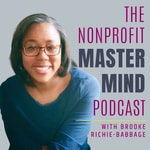
This podcast offers nonprofit founders and leaders a deep-dive into the mindset and key strategies behind launching, scaling, and leading a high-impact nonprofit organization.
Site
RSS
Apple
Données mises à jour le 21/10/2026
Classements récents
Dernières positions dans les classements Apple Podcasts et Spotify.
Liens partagés entre épisodes et podcasts
Liens présents dans les descriptions d'épisodes et autres podcasts les utilisant également.
Découvrez des podcasts liées à Nonprofit Mastermind Podcast. Explorez des podcasts avec des thèmes, sujets, et formats similaires. Ces similarités sont calculées grâce à des données tangibles, pas d'extrapolations !
Leveraging AI Micro Series Part 2: Stop Using AI to Save Time. Use It to Build Capacity.
mardi 20 octobre 2026 • Durée 10:33
Every leader has been told to document their processes. Almost nobody has done it — not because they didn't believe it mattered, but because writing it all down took longer than just doing the work themselves. That math has changed.
In part two of her AI micro series, Brooke picks up where part one left off: AI is the smartest new hire you've ever had, and when its work comes back generic, the problem is usually that nobody onboarded it. This episode gets practical about closing that gap. She lays out the difference between handing AI tasks one at a time and teaching it how things work at your organization — and why the second one is what actually builds capacity.
Along the way she makes a case for the messy voice memo over the polished manual, and for letting AI interview you about the things you've known so long you've forgotten to say them out loud.
What You'll Learn
The two ways to use a brilliant new hire — and why only one of them scales. Handing over tasks one at a time gives you time back on each task. Teaching how the work gets done means the organization stops routing everything through you.
How to turn a spoken explanation into usable documentation. Talk one recurring process through out loud the way you'd explain it to someone on their first day, then hand the recording to AI and ask it to produce a step-by-step process.
The follow-up question that surfaces what you forgot to say. Asking AI to interview you about what a new person would need to know pulls out the know-how you've held so long you no longer notice you're holding it.
Key Takeaways
Saving time and building capacity are not the same thing. Brooke Richie-Babbage defines capacity as the organization's ability to do more without routing every decision and task back through the executive director. Faster task completion doesn't produce that. Written-down process does.
When AI output comes back generic, the problem is onboarding, not the tool. AI has no context on your organization until someone gives it context. The gap it exposes is a documentation gap that already existed.
The barrier to documenting processes was never belief — it was time. Leaders have always known it mattered. Writing a manual took longer than doing the work. AI removes the writing, which means the leader only has to talk.
Documentation built for AI is documentation built for people. Once how the work gets done exists in writing, a staff member can run it, a contractor can run it, and the next hire can run it. The AI use case is the forcing function, not the point.
"Only I can do this" is usually "only I know how — for now." The process quietly eating your week is almost always the one you've assumed is non-transferable. Most of the time what's non-transferable is the knowledge, not the work.
Want to work together?
Apply for the Next Level Nonprofit Mastermind, a high-touch coaching and training accelerator for established organizations with $1M+ budgets that are ready to design for impact sustained at scale.
Budget under $1M? Join Elevate and get proven step-by-step playbooks + coaching support to build each of the core elements of your nonprofit's operating system - strategic clarity, a fundraising engine, a high-performance team, and an active and engaged board!
Leveraging AI Micro Series Part 1: Why AI Still Sounds Generic — Even When Your Prompts Are Good
mardi 13 octobre 2026 • Durée 07:44
Two nonprofit leaders open the same tool on the same day. One of them hands it a pile of notes and gets back an SOP she can use, and a task that used to take two hours takes twenty minutes. The other corrects the draft, re-explains the context, tries another prompt, and quietly concludes the whole thing is more trouble than it's worth. The difference between them is almost never the prompt. In this episode, Brooke Richie-Babbage makes the case that the second leader is sitting on an onboarding gap, not a skills gap — and that the gap predates AI by years. She walks through the brilliant-new-hire frame, explains why the knowledge that runs most organizations lives in people rather than in structure, and leaves listeners with one exercise to do this week. Part one of a two-part micro-series.
What You'll Learn:
Why generic AI output is an onboarding failure, not a capability failure — and what a brilliant new hire with no onboarding and a one-line instruction would produce in exactly the same situation.
Where your organization actually keeps its knowledge — the layer underneath the SOPs that governs judgment calls, funder framing, and what "good" looks like, and why it is the last thing to get documented.
A one-week exercise that turns the friction into a document — pick one recurring piece of work, and brain dump what you'd have to tell someone brilliant for them to do it the way you want.
Key Takeaways:
The difference between leaders who get value from AI and leaders who don't is rarely the prompt. Brooke Richie-Babbage argues it comes down to how much of the organization's context was already written down before the leader started. That is a structural head start, and it can be built.
Generic AI output is a predictable result of no onboarding. An extremely capable new hire given a task, one line of instruction, and no background will produce something competent that doesn't sound like your organization and misses the judgment calls you'd make without thinking. Nobody would call that a bad hire.
The friction is diagnostic information, not evidence of failure. Every time a leader finds herself re-explaining something, she has located a piece of her organization's know-how that lives in a person rather than in a system.
Inside the Coaching Room: When Your Board Is Either Micromanaging or Ghosting You
mardi 6 octobre 2026 • Durée 32:29
A board can be overreaching, newly energized, or quietly checked out — and on the surface those look like three different problems. One board won't stop approving things that belong to staff. Another has finally leaned in, except every bit of that engagement now routes through the executive director. A third is ready to think strategically but keeps sliding back into execution. Brooke Richie-Babbage argues these are one organizational development challenge wearing three faces. As a nonprofit grows, it needs its board to shift from an operational, all-hands model to generative governance. But leaders almost always deliver that shift as a list of things the board should stop doing — and a board handed only subtraction will either white-knuckle its old role or float away entirely. This episode lays out what boards actually need instead: a visible line between what they own and what they don't, information set at the right altitude, and a real new role to grab onto.
What You'll Learn:
Why overreach and disengagement come from the same place. Both show up when leaders remove the board's operational role without replacing it — creating a vacuum that boards fill by either clinging on or disappearing.
The allowances-and-constraints approach to goals. How to give the board genuine ownership of the "container" — the risks, financial boundaries, and non-negotiable commitments — while leadership and staff keep ownership of goals and execution inside it.
How to change board behavior by changing board information. Why a packet full of operational detail produces an operational board, and what to hand them instead: a one-page "what you own / what you don't own," a monthly dashboard, and generative-level questions.
Key Takeaways:
Overreach and disengagement are the same design failure, not two different board problems. Both come from asking a board to let go of its operational role without naming the governance role that replaces it. Lack of structure, not lack of character, is what sends the work back to the executive director.
You cannot deliver the board transition as subtraction. If you want someone to release meaningful responsibility in one area, you have to replace it with meaningful responsibility in another — otherwise you create a vacuum, and people do not respond well to a vacuum.
Revisiting: Why Adding Money or Staff Can Break a Growing Nonprofit - Understand the Design Deficit
mercredi 30 septembre 2026 • Durée 16:28
If a genie handed you $2 million or five new team members today, would it really solve your organization's biggest challenges—or reveal them? In this episode, I unpack a myth that keeps many nonprofit leaders stuck: that more money or people will automatically fix what's hard. Spoiler alert—it doesn’t. Instead, growth amplifies what’s already fragile. I share real-world examples from organizations that scaled quickly and struggled, and help you ask the right questions to prepare for sustainable impact. If you’ve ever felt overwhelmed by the chaos of growth, this conversation will help you see where your systems need to evolve so your organization doesn’t break under the pressure of its own potential.
In this episode, you’ll learn:
Why more money and people often create new problems, not solve old ones
How to recognize the pressure points that growth exposes in your organization
Three questions to uncover whether your org is ready to scale sustainably
Key takeaways:
Growth magnifies weaknesses—it doesn’t fix them
Budgeting, funder relationships, and decision-making are often the first things to crack
If everything still depends on you, scaling will eventually burn you out
Step-by-step reflection process: Set aside 20 minutes and use these three questions to assess your organization's growth readiness:
What decisions would become slower or more political if we doubled in size?
Where would things start slipping through the cracks, even with more money or staff?
What still depends on me to hold together, and what would happen if I stepped away for 6 weeks?
Want to work together?
Apply for the Next Level Nonprofit Mastermind, a high-touch coaching and training accelerator for established organizations with $1M+ budgets that are ready to design for impact sustained at scale.
Budget under $1M? Join Elevate and get proven step-by-step playbooks + coaching support to build each of the core elements of your nonprofit's operating system - strategic clarity, a fundraising engine, a high-performance team, and an active and engaged board! Connect with me!
Revisiting: How Sustainable 7-Figure Nonprofits Are Built Differently
mercredi 23 septembre 2026 • Durée 01:26:21
In this audio workshop, I pull back the curtain on the core elements that successful 7-figure nonprofits consistently point to as the reason they were able to grow to and sustain 7-figures - without burning out!
By the end of the workshop, you’ll know what it takes to scale and how to begin to integrate these elements into your own growth plans.
Want to work together?
Apply for the Next Level Nonprofit Mastermind, a high-touch coaching and training accelerator for established organizations with $1M+ budgets that are ready to design for impact sustained at scale.
Budget under $1M? Join Elevate and get proven step-by-step playbooks + coaching support to build each of the core elements of your nonprofit's operating system - strategic clarity, a fundraising engine, a high-performance team, and an active and engaged board!
Revisiting: What an Effective Nonprofit Strategic Plan Actually Contains
mardi 15 septembre 2026 • Durée 25:07
In this episode, I dive into the essentials of creating a high-impact strategic plan for your nonprofit. Last week, we explored the importance of a well-structured planning process and clarity about your end goal. This week, we focus on the content of your strategic plan, ensuring it’s both inspiring and actionable. Whether you're leading the process or working with a facilitator, understanding these elements is crucial.
What You'll Learn:
How to articulate a 10-year guiding vision that serves as your organization's North Star.
The importance of defining 3-year strategic priorities and goals.
Effective strategies for engaging stakeholders and maintaining flexibility in your plans.
Key Takeaways:
10-Year Vision: Define a long-term vision that inspires and guides your team.
Strategic Priorities: Choose focus areas that maximize your impact over the next 3-5 years.
Goals vs. Activities: Set strategic goals as end results, not just a list of tasks.
Core Strategies: Outline broad approaches instead of detailed activities to stay flexible.
Stakeholder Engagement: Involve key stakeholders in the planning process for better buy-in and support.
Want to work together?
Apply for the Next Level Nonprofit Mastermind, a high-touch coaching and training accelerator for established organizations with $1M+ budgets that are ready to design for impact sustained at scale.
Budget under $1M? Join Elevate and get proven step-by-step playbooks + coaching support to build each of the core elements of your nonprofit's operating system - strategic clarity, a fundraising engine, a high-performance team, and an active and engaged board!
Why Your Strategic Thinking Time Disappears Every Week
mardi 25 août 2026 • Durée 17:54
Most nonprofit executive directors lose their strategic thinking time every week for a reason that has nothing to do with discipline: it is the only block on the calendar with no one waiting on the other end of it. In this micro-episode, Brooke Richie-Babbage explains why strategy loses to everything else on a CEO's week — every competing commitment carries a consequence for missing it, and unstructured thinking time carries none — and lays out three moves that make the strategic function structural instead of willpower-dependent. She also reframes executive fatigue as data rather than a character flaw: when a design cannot absorb organizational pressure, the leader absorbs it instead.
Episode Description
The finance committee meets on the fourteenth. Multiple active grants have reporting windows that don't line up. A program officer already has a call on the books. Every one of those has a person on the other end, and that — not its importance — is what makes it happen. Then there's the two hours blocked to think about the next three years. Nobody is waiting for that. So when something else needs the slot, it takes the slot.
In this micro-episode, Brooke Richie-Babbage makes the case that this is a scoring problem, not a time management problem, and not a discipline problem either. Strategy is the only function in most growing nonprofits with no structure holding it up. Payroll has a calendar. Grants have portals and deadlines. Governance has bylaws. Strategy has the CEO — and that's the entire infrastructure. Listeners walk away understanding why guarding the block harder has already failed, and what to build instead.
Key Questions Answered
Why does my strategic thinking time always get canceled?
Is it a discipline problem if I can't protect time to think?
Why do nonprofit executive directors struggle to do long-range planning?
How do I make strategic time stick without relying on willpower?
What is a Design Deficit in a nonprofit organization?
Why does executive director burnout keep getting treated as a personal failing?
What should a nonprofit CEO focus on during a week when they're already depleted?
Is it key-person dependency if the whole strategy function runs through me?
What You'll Learn
Crossover! How To Make Your Org More Sustainable, With Casey Lardner & Chidi Asoluka | From the We Are For Good Summit
mardi 11 août 2026 • Durée 27:08
Capacity is something you design. And when you feel strain, it's about that design, not about passion or ability.
In this conversation, I talk with two leaders who've redesigned their organizations to support the full weight of incredible org impact. Casey Lardner is the Executive Director of Genspace, the world's first community biology lab, Chidi Asoluka is the Founder and CEO of NewComm, which went from a classroom experiment with 18 kids to a student-led organization delivering projects for the NYC Department of Health and Mount Sinai.
In this episode, you'll hear:
Why sustainability starts with clarity — you can't design the right systems until you know what you're running toward
The mindset shift from vision holder to architect of systems, and how Chidi stopped being the bottleneck in his own org
How Casey unlearned "strain equals effort" and started treating burnout as a diagnosable syndrome, not a cost of doing business
The roles-and-responsibilities work that has to land before shared decision-making or partnerships can actually lighten your load
What frees up when operational work leaves the founder's plate: time in the field, time to think, time to dream
You'll walk away with a practical way to read your own strain as data — and a starting point for building an org that keeps running when you step back.
Want to work together?
Apply for the Next Level Nonprofit Mastermind, a high-touch coaching and training accelerator for established organizations with $1M+ budgets that are ready to design for impact sustained at scale.
Budget under $1M? Join Elevate and get proven step-by-step playbooks + coaching support to build each of the core elements of your nonprofit's operating system - strategic clarity, a fundraising engine, a high-performance team, and an active and engaged board!
Connect with me!
The Answer To Your Funding Instability May Be Hiding In Plain Sight
mardi 28 juillet 2026 • Durée 14:18
"Once we stabilize the funding, we'll invest in systems." It sounds like responsible stewardship, and almost every leader running a $1M–$2M organization has said some version of it. But Brooke Richie-Babbage takes the belief apart, because she's watched it keep good organizations stuck in a loop that never resolves: the funding doesn't stabilize, and the missing infrastructure is one of the reasons it doesn't. This episode names the catch-22 directly — you're waiting for a door to unlock from the inside while standing outside holding the key. Brooke explains why the causality most leaders assume actually runs in reverse, what funders are really reading when they evaluate capacity, and why the version of infrastructure that moves the needle is far smaller and more affordable than the overhaul leaders imagine they can't afford. Listeners will walk away seeing their funding problem as a design decision they can act on now.
What You'll Learn
Why the "stabilize first, build second" sequence keeps $1M–$2M organizations stuck in a loop that never resolves — and how to reverse it.
What funders are actually assessing when they evaluate organizational capacity, and how "organizational confidence" shapes renewal and major-gift decisions.
The minimum viable infrastructure for an organization this size: three documented processes and one clear accountability structure — not a six-figure operations overhaul.
Key Takeaways
Funding instability is usually a systems problem living inside a money story. This happens because unpredictable renewals, cold major-donor relationships, and inconsistent reporting are all downstream of missing infrastructure, not of missing revenue.
Infrastructure creates the conditions for stability — it is not the reward you unlock once you're already stable. The causality most leaders assume runs backwards, which is why the waiting never ends.
The fix is smaller than it feels. At this size, the floor is a handful of documented processes and one unambiguous accountability structure. The investment is modest; the ongoing cost of not having it is not.
Want to work together?
Apply for the Next Level Nonprofit Mastermind, a high-touch coaching and training accelerator for established organizations with $1M+ budgets that are ready to design for impact sustained at scale.
Why Pretending the Organization Is Simpler Than It Is Doesn't Work
mardi 21 juillet 2026 • Durée 13:36
You leave a leadership team meeting where everyone got their assignments and everyone nodded — and you still can't shake the sense that the real problem never got said out loud. That feeling isn't paranoia, and it isn't a sign your team is conflict-averse.
In this episode, Brooke Richie-Babbage names a pattern she sees constantly in growing nonprofits: capable, mission-driven rooms shrinking a genuinely hard problem down to something manageable, because there's nowhere organizational to put the hard version. Brooke reframes complexity avoidance as a design failure rather than a people failure, walks through the three moves a room makes when it does this — the Compression, the Peripheral Solve, and the Collective Agreement — and shows why the problem you don't name in the fall becomes the more expensive crisis you're managing by winter. Listeners will leave able to spot the pattern in their own meetings, and with one specific question that interrupts it.
What You'll Learn
The three moves a leadership room makes to avoid complexity — and the specific "tell" that gives each one away, starting with the word "just."
Why naming a hard problem feels like volunteering to own it in an under-resourced organization — and why that makes shrinking it a rational response rather than a personal failing.
The one question to bring into your next leadership meeting that forces a concrete answer the room usually already has.
Key Takeaways
A busy meeting and a real meeting can look identical from the outside. Engagement, action items, and relief in the room are not proof that the actual problem got addressed — they're often the evidence that it didn't.
This happens because complexity only stays manageable when there's a container for it: shared frameworks for naming hard things, and clear decision rights that say whose job it is to hold a problem. When that architecture is missing, complexity becomes personal — and the self-protective move is to make it smaller.
Avoided complexity doesn't disappear; it compounds. What a room declines to name in September becomes the February crisis, and the February version costs more in money, time, and staff morale than the version that was on the table months earlier.
Want to work together? , a high-touch coaching and training accelerator for established organizations with $1M+ budgets that are ready to design for impact sustained at scale.
This is a design deficit arriving through a new door. A design deficit is the gap between what an organization is being asked to carry and what its structure was actually built to absorb. Organizations that grow faster than their structures end up running on knowledge that was never institutionalized, and AI makes that visible faster than anything else.
Writing it down pays a bigger dividend than better AI output. The same document that lets a tool act on the organization's behalf is the document that stops the organization from depending on any one person's memory.
Want to work together?
Apply for the Next Level Nonprofit Mastermind, a high-touch coaching and training accelerator for established organizations with $1M+ budgets that are ready to design for impact sustained at scale.
Budget under $1M? Join Elevate and get proven step-by-step playbooks + coaching support to build each of the core elements of your nonprofit's operating system - strategic clarity, a fundraising engine, a high-performance team, and an active and engaged board!
An operational board was not a bad board. At an earlier stage, board members stood in for roles the organization couldn't yet staff — producing financials before there was a CFO, solving operational problems because no one else could. Honoring that stage is what makes the next one possible.
A generative governance board is not a less active board. It owns strategic direction, fiduciary oversight, organizational sustainability, executive accountability, risk, and ambassadorship — higher-leverage work, not less work.
The frame you put in front of people shapes where they look. Change the information, the rhythm, and the questions, and board behavior changes with them.
Want to work together?
Apply for the Next Level Nonprofit Mastermind, a high-touch coaching and training accelerator for established organizations with $1M+ budgets that are ready to design for impact sustained at scale.
Budget under $1M? Join Elevate and get proven step-by-step playbooks + coaching support to build each of the core elements of your nonprofit's operating system - strategic clarity, a fundraising engine, a high-performance team, and an active and engaged board!
Why strategic time loses on the calendar every week — and why the mechanism is a missing consequence, not weak prioritization or poor time management.
The three moves that make the strategic function structural — attaching thinking to a deadline that already exists, requiring one small written output per block, and clarifying decision rights so escalations stop eating the hours.
A subtraction protocol for depleted weeks — how to identify the two or three decisions that actually change the shape of the next quarter, and what to do with everything else.
Key Takeaways
Strategic time doesn't need more protection. It needs a consequence. Every strategic question a CEO is carrying sits upstream of a decision someone will eventually be waiting on. The work isn't to manufacture urgency — it's to find the deadline that already exists on the governance calendar and attach the thinking to it.
Strategy is the only function in a growing nonprofit with no scaffolding. Payroll has a calendar, grants have portals, governance has bylaws, programs have staff and workplans. Clarity — the direction-setting, the deciding — runs on one person's unprotected calendar. That's a Design Deficit, and at $1M–$5M it's the most expensive one.
Depletion is a reading on the gauge, not a verdict on the leader. Systems absorb pressure or people do. When a CEO is the absorber, exhaustion is telling them what the organization isn't carrying yet — which makes it diagnostic information, not evidence of inadequacy.
The hours come back through decision rights, not willpower. Thinking time gets eaten by escalation: a director who copies the CEO to be safe, a small reallocation waiting on approval, a board chair calling about something the ops manager owns. As long as everything has a legitimate claim on those two hours, protecting them won't hold.
Grinding through is how a structural problem stays a personal one. Pushing harder works, briefly. It also spends the one asset the organization can't replace — the CEO's judgment — and buys the design flaw another quarter of invisibility.
FAQs
What is a Design Deficit in a nonprofit organization?
A Design Deficit is the gap between how an organization is structured and what its current size actually requires. Brooke uses the term for nonprofits whose systems were built for a smaller version of themselves and were never rebuilt as the budget, staff, and funder base grew.
Why do nonprofit executive directors keep canceling their strategic thinking time?
Because strategic time is the only block on the calendar with no one waiting on the other end. Brooke argues this is a scoring problem, not a discipline problem: every competing commitment carries a consequence for missing it, and unstructured thinking time carries none.
How can a nonprofit CEO protect strategic time without relying on willpower?
Attach the thinking to a deadline that already exists on the governance calendar, require each session to produce one small written output, and give that output a named recipient. Brooke adds that the hours only hold once decision rights are clarified so escalations stop claiming them.
What is key-person dependency in a nonprofit, and how does it apply to strategy?
Key-person dependency exists when a critical organizational function runs entirely through one individual. Brooke points out that boards flag this immediately when it applies to revenue, but rarely notice when the entire strategic function of a $2M organization depends on the CEO having one uninterrupted Thursday.
What should a nonprofit leader do during a week when they are already depleted?
Subtract rather than add. Brooke recommends identifying the two or three decisions that would change the shape of the next quarter if made badly or not at all, keeping only those, and assigning everything else a decision rule, a delegate, or a stated delay.
Is executive director burnout a personal problem or a structural one?
Brooke treats depletion as data rather than a character report. When a design cannot absorb organizational pressure, the leader absorbs it instead. The useful question is not how to push harder but what the depletion reveals the organization is not yet carrying on its own.
Step-by-Step: Three Moves That Make the Strategic Function Strutural
1. Attach it to a deadline that already exists. Strategic time needs a consequence, and the governance calendar is already full of them — the finance committee in six weeks, the renewal decision in October, the director-level hire that has to happen before the fiscal year turns. The block stops being "Thursday, nine to eleven, think" and becomes "Thursday, nine to eleven, the two funding scenarios for the finance committee on the fourteenth." It's the same hours, but now canceling costs something.
2. Require one small output. Open-ended thinking time is easy to cancel because when it's skipped, nothing is visibly missing. Give every block one deliverable and keep it small: three options and what each one costs, or one decision written down with the reasoning underneath it. Not a forty-page plan — a page. This also does a second job. Institutional memory that currently lives entirely in the CEO's head starts moving into the organization, one written decision at a time.
3. Give it an owner and an audience — then fix decision rights. Put a person on the other end: a deputy expecting the memo Friday, a board chair who knows the scenario is coming, a peer expecting the question that's been circling for months. Then address what actually eats the block, which is escalation. What can a director decide without the CEO, up to what threshold, and who do they go to instead? The hours come back through decision rights, not through discipline.
For weeks when the tank is already empty: don't add anything — subtract by what's meaningful. Ask which two or three decisions this week, if made wrong or not at all, change the shape of the next quarter. Those get the CEO. Everything else gets a decision rule, a delegation, or an honest delay, stated out loud so it stops sitting as an open loop. Then name what the depletion is revealing in one sentence — I'm still the only person who can close a six-figure gift; my directors bring me problems, not recommendations — and treat that sentence as the redesign brief.
Want to work together?
Apply for the Next Level Nonprofit Mastermind, a high-touch coaching and training accelerator for established organizations with $1M+ budgets that are ready to design for impact sustained at scale.
Budget under $1M? Join Elevate and get proven step-by-step playbooks + coaching support to build each of the core elements of your nonprofit's operating system - strategic clarity, a fundraising engine, a high-performance team, and an active and engaged board!
Budget under $1M? Join Elevate and get proven step-by-step playbooks + coaching support to build each of the core elements of your nonprofit's operating system - strategic clarity, a fundraising engine, a high-performance team, and an active and engaged board!
Budget under $1M? Join Elevate and get proven step-by-step playbooks + coaching support to build each of the core elements of your nonprofit's operating system - strategic clarity, a fundraising engine, a high-performance team, and an active and engaged board!