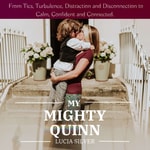
Welcome to "My Mighty Quinn”, the introductory podcast series that finally sheds light and clarity on the mysteries behind our beautiful children's learning, attention, behaviour and developmental challenges.
I'm Lucia Silver, your host, and above all, the devoted and proud mother to the Mighty Quinn. Join me on this extraordinary journey as I share the fruits of five years of tireless searching and research to find scientific explanations, answers and meaningful help for my son.
In a world where the educational, SEN, paediatric and other experts leave us feeling unsupported, with contradictory information, and countless unanswered questions, I discovered a ground-breaking drug-free approach within neuroscience. This method has led to a radical transformation in countless children with Quinn himself transforming from a "Life of Tics, Turbulence, Distractedness, and Disconnection to Calm, Confident, Coordinated, and Connected."
Prepare to meet the brilliance of the individuals and organisations that I first encountered, as well as trailblazing pioneers in neuroscience and child brain development from the US. Together we will explore how they are tackling and addressing the root causes behind symptoms like ADHD, Autism, Tourette's, Tics, Dyslexia and other neurological disorders.
Throughout "My Mighty Quinn," we'll engage in captivating interviews, gain expert insights, and be inspired by heart-warming success stories, that will empower and inspire parents, caregivers, and families facing similar challenges.
Site
RSS
Apple
Données mises à jour le 10/10/2026
Classements récents
Dernières positions dans les classements Apple Podcasts et Spotify.
Liens partagés entre épisodes et podcasts
Liens présents dans les descriptions d'épisodes et autres podcasts les utilisant également.
S3 Episode 24: When You Know Something Isn't Right: A Mum-to-Mum PANS/PANDAS Special
Saison 3 · Épisode 24
vendredi 9 octobre 2026 • Durée 01:24:28
Welcome to My Mighty Quinn
This special episode is a little different.
Released for PANS/PANDAS Awareness Day, it brings together two mothers who know this journey from the inside.
I’m joined by Lucy from Parenting PANDAS, who turns the tables and asks me the questions as we talk openly, mum to mum, about what it is really like to watch your child change in front of you, to know instinctively that something is wrong, and then find yourself fighting for answers in a system that so often looks at each symptom in isolation.
Lucy has lived PANS/PANDAS within her own family and created Parenting PANDAS to give families the community, understanding and connection she needed herself.
My own son Quinn’s journey took me in a different but complementary direction, into the science of nervous system health, neurodevelopment, immunity, inflammation and whole child healing, and ultimately to the world-leading doctors and experts who now form The Brain Health Movement.
So this is not simply a conversation about raising awareness of PANS and PANDAS.
It is a deeply personal conversation about what happens next.
What do you do when you finally have a diagnosis but still have no roadmap?
Where do you start when one practitioner is talking about infection, another the gut, another primitive reflexes, another the nervous system, and you are left trying to coordinate it all while your child is struggling and you are running on empty?
Together, Lucy and I explore why healing has a sequence, why the nervous system matters so much, why seemingly disconnected symptoms may be telling us something about the same child, and why supporting the parent and wider family cannot be separated from supporting the child.
We also talk candidly about the exhaustion, fear, gaslighting and trauma so many parents experience, and the enormous power that comes when we begin to understand what may be happening biologically and become informed advocates for our children.
Key takeaways
The early signs of Quinn’s PANS journey and the dramatic changes that followed
Why a PANS/PANDAS diagnosis may answer one question but immediately create another: what do we actually do now?
Why symptoms across the brain, gut, immune system, behaviour, sleep and development should not always be viewed in isolation
Why calming and supporting the nervous system can be such an important early part of the journey
The role of stress, infection, environment, mould and cumulative biological load
Why primitive reflex work and other therapies may sometimes make a child worse when introduced at the wrong time
Why development has a sequence, and why healing does too
The importance of movement, sleep, natural light, nutrition and everyday environmental inputs
Why the parent’s nervous system matters, and why healing often needs to become a whole family journey
How parents can move from overwhelm and endless rabbit holes towards education, clarity and a more manageable roadmap
Why understanding the biology behind your child’s symptoms can transform the way you advocate at school and within the medical system
And most importantly, why there is hope
Today, Quinn is thriving.
And perhaps that is the most important message in this episode.
When you are in the darkest part of this journey, it can feel impossible to imagine life beyond it. But a diagnosis does not have to be the end of the story.
It can be the beginning of understanding.
You do not need another 15 Google tabs.
You need clarity. You need the right sequence. You need support.
And you need to know that there can be a way forward.
S3 Episode 23: Is Mould Making Your Child Sick? Hidden Signs, Mycotoxins and What to Do First with Dr Jill Crista
Saison 3 · Épisode 23
jeudi 23 juillet 2026 • Durée 01:20:43
Welcome to My Mighty Quinn
In this powerful episode, I’m joined by Dr Jill Crista — naturopathic doctor, bestselling author of Break the Mould, and one of the world’s leading experts in mould-related illness, PANS and PANDAS.
Dr Jill’s work sits at the intersection of environment, immunity and brain health — helping families understand how hidden mould and mycotoxin exposure can affect a child’s behaviour, nervous system, development and overall health.
Together, we explore a concept that changes everything: That mould is not simply an allergy problem.
It can be a powerful biological stressor affecting the brain, immune system, gut, hormones and nervous system — sometimes sitting beneath symptoms that appear neurological, behavioural or psychiatric.
This conversation takes us beyond visible mould and musty smells — into the hidden world of water-damaged buildings, mycotoxins, neuroinflammation and the body’s growing toxic load.
It is both confronting and deeply hopeful, because when we understand what is driving a child’s symptoms, we can stop chasing each one individually — and begin supporting the body in the right order.
Key takeaways
Why mould illness is so much more than an allergy or respiratory issue
How hidden mould and mycotoxins can affect the brain, immune system and nervous system
Why mould exposure may show up as anxiety, rage, tics, OCD, fatigue, sensory issues or poor sleep
Why children can react very differently from adults living in the same environment
Why symptoms can seem to appear suddenly when the body’s toxic load becomes too great
The connection between mould, neuroinflammation, PANS and PANDAS
The importance of looking at the home, school and wider environment
S3 Episode 22: Your Child Can See. But Can They Cope? Why Vision may be the Missing Piece behind Attention, Behaviour and School Struggles with Dr Bryce Appelbaum
Saison 3 · Épisode 22
jeudi 9 juillet 2026 • Durée 01:24:39
Welcome to My Mighty Quinn
In this powerful episode, I’m joined by Dr Bryce Appelbaum — neuro-optometrist, founder of My Vision First, and creator of ScreenFit Vision Foundations.
Dr Bryce’s work sits at the intersection of the eyes, brain, body and nervous system — helping families understand why a child may pass a standard eye test, yet still struggle with reading, learning, attention, coordination, behaviour and confidence.
Together, we explore a concept that may change the way parents understand their child’s struggles:
Eyesight is not the same as vision.
A child may be able to see clearly, read the letters on the chart, and be told their eyesight is “fine” — while still struggling to track across a page, coordinate both eyes, shift focus from the board to their book, process visual information, or integrate vision with balance, posture and movement.
This conversation takes us beyond 20/20 eyesight and into the hidden world of functional vision — the eye-brain-body connection that underpins so much of how a child learns, moves, attends, regulates and feels safe in the world.
It is both confronting and deeply hopeful, because when vision is understood as a learned, developmental and trainable brain-body skill, we begin to see that many children are not lazy, difficult or simply “not trying.”
They may be working far harder than anyone realises.
Key takeaways
Why passing a routine eye test does not mean a child’s visual system is working efficiently
The crucial difference between eyesight and functional vision
How hidden vision difficulties can affect reading, writing, copying, attention and classroom stamina
Why visual stress may show up as behaviour, avoidance, frustration, fatigue or dysregulation
The connection between vision, balance, posture, movement and primitive reflexes
S3 Episode 21: Why Healing Is Never Just About The Child - Understanding The Family Nervous System in an Overwhelmed World with BG Mancini
Saison 3 · Épisode 21
jeudi 18 juin 2026 • Durée 01:22:01
Welcome back to My Mighty Quinn
In this deeply compassionate and eye-opening episode, I’m joined by BG Mancini — neurodevelopmental specialist, functional medicine practitioner and educator, whose work has spent almost three decades connecting the dots between the nervous system, sensory processing, movement, the gut and the emotional wellbeing of the entire family.
This conversation feels more urgent than ever.
Because children today appear increasingly overwhelmed.
More anxious. More sensory-sensitive. More emotionally reactive. More exhausted. And, in many cases, less able to adapt to the relentless demands and stimulation of modern life.
But this episode is not simply about what is happening to our children.
It is about what is happening to all of us.
Together, BG and I explore the concept of the family nervous system — and why healing can never happen by looking at the child in isolation.
Because when a child is struggling, the parent is often struggling too.
When a mother has spent years holding everyone else above the water, her own body may eventually begin to shut down.
And when an entire family is living in survival mode, everybody’s physiology, behaviour, emotions and capacity for connection can be affected.
BG helps us understand how stress is not always one enormous, identifiable event. Often, it is the accumulation of hundreds of smaller experiences — sensory overload, disrupted sleep, inflammation, digital stimulation, environmental stress, emotional strain and the constant pressure of trying to hold everything together.
These “micro-traumas” can gradually drain the body’s reserves until even an ordinary demand begins to feel like a threat.
But this is also a conversation filled with hope.
S3 Episode 20: The Work I Didn't Know I Needed Until I Reach My Limit - A Mother's Journey Into Nervous System Healing with Dr Kylie Foster
Saison 3 · Épisode 20
jeudi 4 juin 2026 • Durée 01:09:39
Welcome back to My Mighty Quinn
In this deeply personal episode, I’m joined by Dr Kylie Foster — neurologically focused chiropractor, founder of Organic Family Chiropractic, and someone who has become an incredibly important part of both mine and Quinn’s healing journey.
This conversation is different.
Because one of the questions I’m asked again and again by parents is: “What did you actually do?” “Who helped you?” “What has your journey really looked like behind the scenes?”
And the truth is, one of the most foundational pieces of our healing journey has been nervous system work.
Together, Dr Kylie and I explore why nervous system regulation is not a “nice extra” in healing — but the foundation upon which everything else rests.
Because when the body is stuck in survival mode… When a child’s nervous system is overwhelmed… When a mother’s body has been living in chronic stress for years…
Healing becomes much harder.
This episode is an honest, compassionate and eye-opening conversation about what nervous system dysregulation actually looks like in babies, children and parents — and how neurologically focused chiropractic care can help restore safety, regulation and resilience to the entire family system.
Key takeaways
What neurologically focused chiropractic care actually is — and how it differs from traditional chiropractic approaches
Why nervous system regulation is foundational for digestion, immunity, emotional regulation, behaviour and healing
How chronic stress and “fight or flight” impact both children and parents
Why babies may struggle with latching, feeding, reflux, tension, sleep and regulation after stressful pregnancies or births
The early signs of nervous system stress parents can look out for in newborns and young children
S3 Episode 19: Something Is Happening To Our Children - A Conversation Between Lucia Silver & her "Wing-Woman" Connah
Saison 3 · Épisode 19
jeudi 21 mai 2026 • Durée 01:17:36
Welcome back to My Mighty Quinn
Today’s episode is a little different.
There’s no guest expert, no polished interview and no clinical conversation.
Instead, for the very first time, Lucia is stepping out from behind the interviewer’s chair and into the story herself — joined by BHM’s co-founder and Lucia’s “wing woman”, Connah Edgington, for an honest, raw and deeply personal conversation about how The Brain Health Movement was born.
This is the story behind the movement. The story behind the Whole Child Healing Roadmap. And the story behind Quinn.
Together, Lucia and Connah explore the terrifying years when Quinn’s health suddenly unravelled — from severe tics, sensory overwhelm and emotional dysregulation to seizures, panic, intrusive thoughts and the devastating reality of PANS/PANDAS.
But this episode is about far more than one child.
It is about the epidemic unfolding quietly around us.
The rising rates of anxiety, ADHD, autism, school refusal, emotional dysregulation, chronic illness and nervous system collapse in children — and the growing feeling among parents that something deeper is happening beneath the labels and behaviours.
Lucia shares the fear, confusion and isolation of trying to navigate a fragmented medical system while desperately searching for answers no one seemed able to provide.
And perhaps most importantly, she shared the moment that changed everything!
Together, Lucia and Connah explore:
Quinn’s story — from early signs and tics to seizures, PANS/PANDAS and
The nervous system’s role in anxiety, rage, meltdowns, sensory struggles and shutdown
The concept of “The Perfect Storm” — and how modern childhood may be overloading children’s biology
S3 Episode 18: The Brain in Motion: How Movement Can Transform Family Life with Aaron Delgrolice
Saison 3 · Épisode 18
jeudi 23 avril 2026 • Durée 01:39:32
Welcome to My Mighty Quinn
In this episode, I’m joined by Aaron Delgrolice — founder of Hybrid Fitness Training, brain-based movement specialist, and passionate advocate for the connection between movement, the brain, and the nervous system.
Aaron’s work sits at the intersection of neuroscience, movement, breathwork and nervous system regulation — helping both children and adults understand how simple, accessible activities can profoundly influence focus, coordination, mood, behaviour and resilience.
Together, we explore a concept that changes everything:
That movement is not just about fitness.
Movement is brain development. Movement is regulation. Movement is connection.
We explore why so many children struggling with ADHD, autism, anxiety, sensory issues, emotional dysregulation, poor coordination and learning difficulties may not simply need more discipline, more therapy or more medication — but more of the right kinds of movement.
Key takeaways
Why movement is foundational for brain development, regulation and emotional wellbeing
How the visual, vestibular and proprioceptive systems influence focus, balance, behaviour and learning
Why movement patterns like crawling, crossing the midline and balance work matter so much for child development
How nervous system dysregulation can show up as clumsiness, poor posture, emotional explosions, anxiety, poor concentration and sensory challenges
Why many children today are missing crucial movement experiences because of screens, sedentary lifestyles and modern environments
The role of breathwork in calming the nervous system and supporting focus, posture and emotional regulation
How parents can use simple, practical activities at home to support coordination, focus and nervous system regulation
How co-regulation, connection and movement together can strengthen the whole family
This episode is deeply hopeful because it reminds us that some of the most powerful tools for healing are free, available to every family, and often hiding in plain sight.
S3 Episode 17: The Hidden Truth About Modern Brain Health - Lucia Silver's Guest Appearance on The UNspecial Podcast with Zack Ponder
Saison 3 · Épisode 17
jeudi 9 avril 2026 • Durée 01:07:05
What if anxiety isn’t “just anxiety”? What if ADHD, burnout, rage, meltdowns, sensory overwhelm, sleep problems and school refusal are not random problems to manage… but signals from a nervous system under siege?
In this powerful and deeply personal conversation, Lucia joins Zack Ponder on the UNspecial podcast to explore the uncomfortable truth that so many families are living: our modern world is dysregulating children and adults at an alarming rate.
Lucia shares the raw story behind The Brain Health Movement and My Mighty Quinn — how her son Quinn went from a happy little boy to experiencing seizures, tics, anxiety, sensory overwhelm and school refusal, and how years of gaslighting, unanswered questions and “there’s nothing you can do” led her to uncover the deeper root causes behind his struggles.
Together, Lucia and Zack explore:
Why so many children are stuck in fight-or-flight
How birth trauma, nervous system dysregulation and chronic stress can shape development
The role of tech, ultra-processed food, sleep disruption and “the attention economy”
Why symptoms are often “smoke, not fire”
What PANS/PANDAS is and why so many families are missing it
The overlooked importance of co-regulation and a parent’s nervous system
Why families often feel stuck despite trying “everything”
The healing sequence Lucia believes every parent deserves to understand
This is a conversation about nervous systems, root causes, resilience, parenting, hope and the possibility of healing.
Because your child is not broken. And you are not powerless.
If you have ever felt like your child is slipping through the cracks, or that you are carrying the weight of everything alone, this episode will make you feel seen, understood and far less alone.
S3 Episode 16: The Energy Crisis Inside Our Children: Mitochondria, Behaviour and Healing with Kelsey Spanbauer
Saison 3 · Épisode 16
jeudi 26 mars 2026 • Durée 01:16:01
Welcome to My Mighty Quinn
In this powerful episode, I’m joined by Kelsey Spanbauer — midwife, cellular healing expert, and founder of Engedi Wellness Centre.
Kelsey’s work sits at the intersection of biology, environment and parental intuition — helping families understand what is truly happening beneath the surface of chronic childhood conditions.
Together, we explore a concept that changes everything: That beneath many of today’s rising childhood challenges — anxiety, autism, ADHD and autoimmune illness — lies something far more fundamental.
An energy crisis inside the body’s cells.
This conversation takes us deeper than protocols, deeper than symptom management — into the role of mitochondria, cellular safety, and the signals that determine whether a child’s body moves toward healing or survival.
It is both confronting and deeply hopeful, because when we understand how the body truly works, we stop fighting it — and start working with it.
Key takeaways
Why many childhood conditions may stem from a cellular energy crisis — not isolated symptoms
What mitochondria really do — and how they influence behaviour, immunity and development
The concept of the cell danger response and how it keeps children stuck in chronic illness
Why conventional and even holistic treatments can fail if cellular energy isn’t restored first
How modern environments (light, EMF, water, stress) are directly impacting children’s biology
Why healing must follow a specific biological sequence, not a scattergun approach
The powerful role of the parent in regulating and guiding healing
How small, foundational changes at home can shift a child’s trajectory
Why resilience — not symptom suppression — is the true marker of healing
This episode is about asking a different question.
Not what is wrong with my child? But
S2 Episode 10: The Truth About Our Children’s Health: Total Load and Modern Life - Why Parents are Being Forced to Lead with Beth Lambert
Saison 2 · Épisode 10
jeudi 12 mars 2026 • Durée 01:34:49
Welcome to My Mighty Quinn
In this powerful and deeply important episode, I’m joined by Beth Lambert, founder and executive director of Documenting Hope, a non-profit dedicated to understanding, preventing and reversing chronic health and developmental conditions in children.
Her work is uncovering how environmental exposures, lifestyle factors and biological stress are shaping children’s health — and showing that healing is possible when those conditions change.
Together, we explore why the epidemic of childhood chronic illness cannot be explained by genetics alone, why children may be acting as “canaries in the coal mine” for our wider environment, and why parents are increasingly becoming investigators and advocates in their children’s healing journeys.
This conversation is both sobering and hopeful — because once we understand what is driving this crisis, we can begin to change it.
Key takeaways
Why the rise in autism, ADHD, autoimmune illness and anxiety represents a children’s health crisis
The concept of “total load” — how toxins, stress, infections and lifestyle accumulate in a child’s body
Why the conventional medical model often misses the bigger picture of chronic illness
What Beth’s CHIRP Study reveals about environmental drivers of childhood disease
The FLIGHT Study and what happens when families reduce toxic exposures and support whole-child health
How nervous system health and detox pathways influence resilience and healing
Why genetics alone cannot explain the explosion of childhood illness
Evidence that many chronic conditions can improve when root causes are addressed
Why empowered parents are becoming drivers of change in children’s health
This episode is about stepping back and asking the bigger question.
Not what diagnosis does a child have? But what has changed in the world around them?
Because our children are not broken.
Why removing or reducing exposure must come before detoxification
How aggressive detox protocols can overwhelm an already struggling child
Why healing must follow a careful sequence of avoidance, nourishment, protection, repair and recovery
This episode is about asking a different question.
Not simply what condition does my child have?
But what is their body being exposed to?
Because children do not all respond to mould in the same way.
And when we recognise mould as part of the wider biological picture, we uncover a hidden piece of the puzzle — one that may be keeping a child’s brain and body stuck in survival.
Resources
Mould Free Guide: Signs, Checklist and First Steps for Parents
Why some children labelled with ADHD, dyslexia or poor motivation may have an overlooked visual processing difficulty
How screens, reduced movement and lack of outdoor time are affecting visual development
Why crawling, early movement and developmental sequencing matter for the eye-brain-body connection
How functional vision challenges can impact confidence, sport, coordination and social engagement
Why the right visual exercises and training can help children build stronger, more efficient visual skills
This episode is about asking a different question.
Not simply can my child see?
But is their visual system helping them learn, move, focus and regulate?
Because a child may have perfect eyesight and still be visually overwhelmed.
And when we understand the difference between eyesight and vision, we uncover a hidden piece of the developmental puzzle — one that may be sitting behind many of the struggles parents are seeing every day.
Resources
Free Guide: A Parent's Guide to Functional Vision - Including vision checklist!
Because healing does not require us to change everything overnight.
Sometimes the smallest intervention — a moment of movement, touch, silence, visual rest, nourishment or connection — can begin to shift the nervous system towards greater safety and resilience.
Key takeaways
What the “family nervous system” means — and why healing is never just about the child
How the accumulation of small, everyday stresses can gradually overwhelm the nervous system
Why the goal is not to eliminate all stress, but to build the resilience and flexibility to recover from it
How neuroception shapes whether the brain and body perceive the world as safe or threatening
Why the gut and microbiome can influence inflammation, anxiety, emotional regulation and neurological function
How vestibular, proprioceptive and interoceptive input help children feel safer within their bodies
What shutdown, numbness and “the lights are on but nobody is home” can reveal about prolonged survival stress
The biological importance of co-regulation — and why parental self-care is not selfish or optional
BG’s powerful 5% rule — and why small, accessible changes are often more effective than overwhelming protocols
Simple micro-resets families can use through movement, touch, rhythm, visual exercises, nourishment and connection
Why play, joy, hope and community are not luxuries, but physiological resources for healing
If you have ever wondered why your child appears unable to cope with things other children seem to manage…
If you have tried countless protocols and felt increasingly overwhelmed by everything you are “supposed” to be doing…
If your child has started to improve, only for your own body to begin falling apart…
Or if you recognise yourself as the mother beneath the water, holding everybody else above the surface…
This episode is for you.
You do not have to do everything.
You do not have to do it perfectly.
And you do not have to heal alone.
Sometimes healing begins with one small moment of safety, repeated gently over time.
Because when we support the family nervous system, we create more regulation, more resilience, more connection — and more possibility for everyone.
How nervous system dysregulation can evolve into anxiety, sensory issues, emotional dysregulation, attention difficulties and behavioural challenges later in childhood
The importance of co-regulation and why children borrow safety from the nervous systems around them
How nervous system work can help increase resilience, adaptability and emotional capacity for the whole family
Why healing is not about “fixing” children — but helping their nervous systems feel safe enough to heal
This episode is both deeply educational and profoundly emotional.
It’s a conversation about motherhood. About survival. About the body keeping score. And about the possibility of healing when we finally understand that nervous system support is not optional — it is foundational.
If you’ve ever felt like your child’s struggles are deeper than “just behaviour”… If you’ve been holding everything together while quietly falling apart yourself… Or if you’ve sensed there’s a missing piece nobody has properly explained…
How birth trauma, inflammation, processed food, toxins, screens, stress and disconnection may all contribute to neurodevelopmental struggles
Why behaviour is often a symptom — not the root cause
The powerful connection between co-regulation, maternal stress and child healing
What the “cell danger response” and mitochondrial dysfunction really mean in simple human terms
Why healing requires sequence, safety, nervous system support and understanding
And how Quinn eventually found his way back to connection, regulation and thriving
This conversation is emotional, hopeful and deeply validating for any parent who has ever felt:
“There has to be more going on here.”
Because perhaps the greatest tragedy is not that our children are struggling.
It’s that we have normalised it.
And perhaps the greatest act of love right now is refusing to stop asking why.
Resources
Free Masterclass "From Burnout to Breakthrough" - Discover the real reasons behind your child’s struggles - and why your nervous system holds the key to your child’s ability to heal.
They are responding — intelligently and adaptively — to the environments we have created. And when those environments change, healing becomes possible.
Découvrez des podcasts liées à "My Mighty Quinn" - From Tics, Turbulence, Distraction and Disconnection to Calm, Confident and Connected". Explorez des podcasts avec des thèmes, sujets, et formats similaires. Ces similarités sont calculées grâce à des données tangibles, pas d'extrapolations !