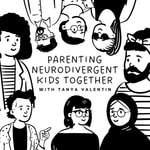
Join Tanya Valentin (NZ neuro-affirming family coach) and Emma Gilmour (AUS alcohol-free & neurodivergent women’s coach) for honest, heart-led chats about being late-diagnosed AuDHD, perimenopausal, parenting teens in burnout, and trying not to lose ourselves (again).
We cover masking, menopause, motherhood, identity, friendship, grief, and the messy magic of raising neurodivergent kids.
This is a podcast for every mum who’s ever felt like she’s doing it wrong, too much, or not enough.
Expect laughter, raw honesty, a little swearing, and a whole lot of validation.
Site
RSS
Apple
Classements récents
Dernières positions dans les classements Apple Podcasts et Spotify.
Liens partagés entre épisodes et podcasts
Liens présents dans les descriptions d'épisodes et autres podcasts les utilisant également.
In this first episode, Emma Gilmour and Tanya Valentin introduce themselves and share what this podcast is really about — the conversations we’re having, the stories we’re telling, and what you can expect from this space.
If you are a midlife mother raising a neurodivergent child, there’s a strong chance you’ll feel right at home here.
You’re so welcome.
When Self-Help Harms: Rethinking Growth, Safety, and Healing
Saison 1 · Épisode 4
lundi 30 mars 2026 • Durée 01:01:14
In this honest and layered conversation, we explore the often-unquestioned world of self-help, personal development, and “growth” culture, and gently ask:
What happens when the very tools meant to help us… actually harm us?
Drawing from our own lived experiences as coaches, parents, and neurodivergent women, we unpack the complexity of healing spaces that can feel both transformative and unsafe at the same time.
This episode invites you to step out of rigid self-improvement narratives and into something softer, more human, and more attuned.
The hidden harm in some personal development spaces
How power dynamics and lack of consent can show up in “growth” environments
Why neurodivergent and trauma-affected individuals may be especially vulnerable
The pressure of “always improving” and how it disconnects us from our humanity
The impact of productivity culture on parents, especially those supporting children in burnout
Why common self-help language (like resilience, self-sabotage, and inner critic) can be harmful
Reframing behaviours as nervous system responses, not personal failings
The difference between co-regulation and codependency
How cultural conditioning shapes our relationship with rest, worth, and safety
The importance of holding multiple truths — compassion for our past and space for our own experience
If you are a neurodivergent person or a parent of a neurodivergent child or a child in burnout, this conversation may land deeply.
So much of what we’ve been taught about success, behaviour, and growth doesn’t account for nervous systems, trauma, or capacity.
And when we try to apply those frameworks to our children (and ourselves), it can create shame, fear, and disconnection.
You are not doing it wrong. You are navigating something complex — with the tools you were given.
If something in this episode didn’t sit right…
or felt uncomfortable… or quietly resonated…
You are allowed to trust that.
You don’t need to override yourself to grow. You don’t need to push through something that doesn’t feel safe.
There is another way.
Podcast:Meltdowns, Menopause and Magic
Hosts: Tanya Valentin & Emma Gilmour
If you are a parent of a child or teen in burnout needing support, join Tanya's Parent Community: From Burnout to Balance
When Lived Experience Is Dismissed: Autism, Masking & Why This Conversation Matters
Saison 1 · Épisode 3
lundi 23 mars 2026 • Durée 44:20
In this episode, Tanya and Emma gently unpack a recent and controversial article by Uta Frith, which has stirred deep conversation within the neurodivergent community.
Together, we explore what happens when lived experience is questioned… When progress feels like it’s being pushed backwards… And when already-marginalised voices—especially late-diagnosed women—are dismissed once again.
This is not just a conversation about autism.
It’s a conversation about power, voice, identity, and what it means to trust ourselves in a world that often asks us not to.
What We Explore in This Episode:
The Impact of Narrow Definitions of Autism
How early diagnostic frameworks shaped our current understanding
Why expanding the lens of autism matters
The harm that can come when the spectrum is described as “too broad”
What masking actually is (and why it exists)
How masking connects to burnout, especially in children and parents
Why dismissing masking invalidates lived experience—and delays support
The concerning timing of these narratives alongside funding cuts
How public discourse can influence access to support
Why this conversation is bigger than one article
The reality behind diagnosis (it’s not a “trend”)
Misdiagnosis, internalised shame, and years of confusion
The deep relief and self-understanding that can come with diagnosis
Moving from self-blame to self-understanding
How diagnosis can support compassion, not limitation
The ripple effect this has on parenting, relationships, and identity
The emotional weight of being dismissed (again)
The intersection of gender, disability, and systemic bias
Polyvagal Theory, Nervous Systems, and the Debate Happening Online
Saison 1 · Épisode 2
lundi 16 mars 2026 • Durée 57:12
In this episode, Tanya Valentin and Emma Gilmour explore the conversation currently unfolding in the wellness and neuroscience communities around polyvagal theory and recent critiques of the model.
Polyvagal theory, originally proposed by Stephen Porges, has become a widely used framework in therapy, coaching, and neurodivergent spaces for understanding how the nervous system responds to safety and threat.
Recently, a critique led by researcher Paul Grossman and colleagues sparked headlines suggesting that aspects of the theory may be incorrect or overstated.
Rather than jumping into polarised takes, Tanya and Emma slow the conversation down.
Together they explore what the debate actually means, what parts of the science are well supported, and why the framework has still been profoundly helpful for many people — especially those navigating trauma, burnout, and neurodivergent experiences.
Most importantly, they reflect on the deeper question: How do we hold scientific nuance while still honouring lived experience?
• What polyvagal theory is and why it became so influential • Why the recent critique of the theory has caused so much debate • What parts of the theory are still well supported by evidence • Why nervous system frameworks have helped many people move away from shame-based behaviour models • How understanding safety responses can transform parenting and self-compassion • Why regulation does not mean being calm all the time • The difference between burnout, shutdown, and depression • Why lived experience must remain central when interpreting psychological theories • The importance of small moments of safety rather than forcing “perfect” self-care
Share your thoughts or your own “magic moment” from the week in the comments or on social media.
If you enjoyed this episode, please follow, rate, and share the podcast so more parents navigating burnout, neurodivergence, and midlife transitions can find this community.
Midlife Momentum, Neurodivergence & Doing Life Your Own Way with Lisa Corduff
Saison 1 · Épisode 1
lundi 9 mars 2026 • Durée 01:07:40
In this very first episode of Meltdowns, Menopause and Magic, Tanya and Emma sit down with author, coach and long-time entrepreneur Lisa Corduff for a deeply honest conversation about midlife, neurodivergence, grief, identity, and the pressure to live life “the right way.”
Emma shares the story of how joining one of Lisa's programs years ago helped Emma shift from shame and perfectionism into a different relationship with time, productivity and self-acceptance. From there, the conversation unfolds into something many women will recognise: the tension between societal expectations and the reality of living with an ADHD or neurodivergent brain.
Together they explore:
Why the pressure to be productive can push women toward burnout
Learning to trust your instincts instead of external “rules” for success
The grief, identity shifts and self-questioning that often come in midlife
How neurodivergent women often build businesses and lives differently
Why rest, novelty and fun can be powerful strategies for momentum
The freedom that comes from letting go of perfection and doing things your own way
Lisa also reflects on navigating grief after losing her husband, the long road back to energy and creativity, and how she’s rebuilding momentum in her life in a way that honours her brain, her family and her capacity.
This episode is full of laughter, honesty and those moments of recognition that remind us we’re not alone.
✨ At the end of the conversation, Tanya, Emma and Lisa share their recent “magic moments” — small glimpses of joy that help anchor us in the midst of complex lives.
If you’ve ever felt like you’re doing life differently… or wondered if maybe the rules were never written for you in the first place — this conversation will feel like sitting at the kitchen table with friends who truly get it.
Why Fairness Matters So Much: Justice, PDA and the Nervous System
Saison 1 · Épisode 9
lundi 1 juin 2026 • Durée 56:05
Why do some people seem able to let things go while others feel deeply affected by unfairness, injustice, or double standards?
In this episode of Meltdowns, Menopause and Magic, Tanya and Emma explore the powerful relationship between neurodivergence, fairness, social justice, and nervous system activation.
Together, they unpack why many Autistic and PDA individuals experience injustice not simply as an idea, but as a whole-body experience. They discuss how fairness shows up in childhood, schools, workplaces, families, and society more broadly, and why experiences of being misunderstood, excluded, or othered can leave lasting impacts.
The conversation also explores the emotional labour of caring deeply about the world around us, how social justice can become intertwined with our own experiences of belonging, and what we can do when the weight of unfairness feels overwhelming.
In this episode, we chat about:
• Why fairness and justice can feel so important for many Autistic and PDA people. • The difference between noticing injustice and experiencing it as nervous system activation. • How schools, workplaces, and social systems can unintentionally create feelings of inequity. • Why many neurodivergent children struggle when rules are applied inconsistently. • The connection between fairness, belonging, masking, and childhood experiences of being misunderstood. • How experiences of exclusion can shape our responses to injustice as adults. • The emotional impact of witnessing discrimination and systemic inequities. • Supporting children who are highly affected by unfairness and social issues. • The challenge of staying informed without becoming overwhelmed. • Practical strategies for managing nervous system activation when feelings of injustice arise.
If this conversation resonated with you, we'd love to hear your thoughts. What role does fairness play in your life or your child's experience?
Follow along for more conversations about neurodivergence, parenting, menopause, identity, nervous systems, and the magic that can be found in unexpected places.
When Support Hurts: Burnout, Belonging and Trusting Ourselves Again
Saison 1 · Épisode 8
vendredi 22 mai 2026 • Durée 01:12:41
In this episode of Menopause, Meltdowns and Magic, Tanya and Emma explore a complicated topic for many neurodivergent families:
What happens when the “support” being offered actually causes more harm?
Together, they unpack the long middle of burnout recovery, that messy, uncertain stage where things may appear to be improving on the surface, while nervous systems are still overwhelmed underneath.
This conversation explores:
Why the wrong support can prolong burnout.
How even “good” support can become overwhelming during deep nervous system exhaustion.
The pressure parents feel to accept therapies, interventions, and professional advice.
Medical-model thinking versus relational and nervous-system-informed approaches.
The grief, guilt and vulnerability of learning to trust ourselves again as parents.
Why body autonomy and consent matter deeply for neurodivergent children.
The difference between fitting in and true belonging.
How compliance-based systems can disconnect children from themselves.
The hidden trauma many parents carry while advocating for their children.
This episode also touches on masking, chronic fatigue, accommodations in schools, interdependence versus independence, and the powerful ripple effects of cycle-breaking parenting.
As always, the conversation weaves between personal stories, deep reflection, humour, nervous system wisdom, and moments of everyday magic.Resources & References Mentioned
Dr. Emmi Pikler and respectful caregiving.
Amanda Diekman and Low Demand Parenting.
Brené Brown’s work on belonging versus fitting in.
Internal Family Systems and No Bad Parts by Richard Schwartz.
Peter Levine and nervous system trauma work.
Podcast:Meltdowns, Menopause and Magic
Hosts: Tanya Valentin & Emma Gilmour
What Matters Most: Pressure, Parenting, and Repair
Saison 1 · Épisode 7
mardi 12 mai 2026 • Durée 57:44
In this deeply honest episode of Menopause, Meltdowns and Magic, Tanya and Emma explore the invisible pressure many parents carry to keep pushing through, even when their nervous systems, relationships, and families are asking for something gentler.
Together, they unpack the cultural conditioning around productivity, perfectionism, people pleasing, and “good parenting,” and how these pressures can quietly shape the way we relate to ourselves and our children, especially during burnout recovery.
This conversation moves through grief, masking, autonomy, relational safety, repair, fawning, self-compassion, and the emotional labour of parenting neurodivergent children. Tanya and Emma reflect on how burnout recovery can feel confusing when children begin to emerge from shutdown, and how easy it is to unconsciously compare them to who they were before burnout.
This episode is a gentle reminder that healing is not linear, parenting is deeply human, and repair is always possible.
In this episode, Tanya and Emma discuss:
How productivity culture teaches us to keep pushing through exhaustion.
Why parents can unconsciously place pressure on children emerging from burnout.
The grief of letting go of who our children were before burnout.
The connection between burnout, masking, perfectionism, and people pleasing.
Why many coping behaviours are rooted in nervous system safety, not manipulation.
How childhood experiences shape hypervigilance and fawning responses.
The emotional impact of believing our children are a reflection of our worth.
Why repair can create deeper and more authentic relationships.
The difference between guilt and shame in parenting.
Why self-compassion may matter even more than self-care.
How relational safety allows children to advocate, unmask, and speak honestly.
The importance of sitting beside difficult emotions instead of rushing to fix them.Resources & References Mentioned
The Book of Awakening by Mark Nepo.
Tuning Into Kids / Tuning Into Teens emotion coaching framework.
The Hidden Struggles of Neurodivergent Friendships
Saison 1 · Épisode 6
mardi 28 avril 2026 • Durée 58:09
Friendship can feel complicated, especially for neurodivergent women navigating masking, burnout, grief, and identity shifts.
In this deeply honest conversation, we explore how our experiences of friendship have been shaped over time—from early moments of exclusion and heartbreak, to high-masking personas, to the quiet unravelling that often comes with burnout, sobriety, or late diagnosis.
We talk about what happens when your world becomes smaller, when your capacity changes, and when the people around you don’t quite meet you where you are. And we gently name the grief that lives underneath it all—the friendships that didn’t hold, the community that didn’t show up, and the longing to be truly seen.
This episode is a soft place to land if you’ve ever felt like you don’t quite “fit” in friendship, or if connection has felt confusing, one-sided, or out of reach.
You are not alone in this.
In this episode, we explore:
Why friendships can feel especially complex for neurodivergent women
How early friendship experiences can shape masking and identity
The impact of high masking and performing “acceptability” in relationships
Friendship breakups and the deep, often unspoken grief they carry
How alcohol, achievement, or caregiving roles can become forms of masking
The shift that happens when masking drops (through burnout, diagnosis, or sobriety)
Why some friendships feel “hollow” or difficult to sustain over time
The emotional labour of being the one who maintains connection
The experience of “disappearing” from friendships during burnout or crisis
Why many neurodivergent people prefer depth over small talk
Object permanence and “out of sight, out of mind” in friendships
The difference between neurotypical and neurodivergent social expectations
How parenting a child in burnout or crisis can reshape your identity and relationships
Supporting Trans and Gender Diverse Children with Chris McAllister
Saison 1 · Épisode 5
mardi 21 avril 2026 • Durée 53:05
In this heartfelt and deeply human conversation, we are joined by comedian and content creator Chris McAllister, The Trans Comedian, who shares his journey of gender exploration, identity, and finding joy through humour.
Together, we explore what it means to support trans and gender diverse children in a world that can feel both affirming and challenging.
This episode gently weaves together lived experience, parenting reflections, and moments of lightness—offering reassurance that there is no single “right way” to navigate this path.
This is a conversation about safety, belonging, and the power of being seen.
Chris’s journey of discovering his identity and the role of gender euphoria
How humour can be a powerful tool for healing, connection, and advocacy
The reality of growing up outside gender norms—and the impact of bullying
Why representation matters (and how it can change a child’s sense of possibility)
The story behind Chris’s viral “I Can Tell” campaign and its ripple effect of kindness
The difference between dysphoria and euphoria—and why this matters for understanding trans experience
How parents can support their child when they begin exploring gender
The importance of community, safe spaces, and finding “your people”
Letting go of fear-based narratives and making space for possibility and joy
You don’t need to have all the answers—presence and openness matter most
Supporting your child’s identity can be as simple (and powerful) as using their name and pronouns
Exploration is a natural part of childhood—gender is no different
Creating a home where your child feels safe to be themselves can become a protective anchor, even when the outside world feels hard
Connection, not perfection, is what helps families find their way forward
This episode softly challenges the idea that a trans identity automatically means a life of struggle. Instead, it invites a more nuanced and hopeful perspective—one where joy, humour, and thriving are also part of the story.
Why this moment feels activating for so many
We acknowledge that this conversation may feel tender, especially if you’ve experienced dismissal, misdiagnosis, or long periods of not being seen.
Next week, Tanya and Emma explore the debate sparked by a recent article questioning the autism spectrum model and what it might mean for autistic and AuDHD communities.
Podcast:Meltdowns, Menopause and Magic Hosts: Tanya Valentin & Emma Gilmour
If you are a parent of a child or teen in burnout needing support, join Tanya's Parent Community: From Burnout to Balance
If you are a woman questioning your relationship with alcohol, join Emma's 5 Day Alcohol Reset: https://www.hoperisingcoaching.com/fivedayresetA 5-day self-paced break from alcohol - to learn the tools to make alcohol a small and irrelevant part oftheir lives.
If you are a parent of a child or teen in burnout needing support, join Tanya's Parent Community: From Burnout to Balance
A 5-day self-paced break from alcohol - to learn the tools to make alcohol a small and irrelevant part of their lives.
If you are a parent of a child or teen in burnout needing support, join Tanya's Parent Community: From Burnout to Balance
Podcasts Similaires Basées sur le Contenu
Découvrez des podcasts liées à Menopause, Meltdowns & Magic - Two AuDHD, midlife mums. Two countries. Too many tabs open.. Explorez des podcasts avec des thèmes, sujets, et formats similaires. Ces similarités sont calculées grâce à des données tangibles, pas d'extrapolations !