Wise Mind: A DBT Podcast – Details, episodes & analysis
Podcast details
Technical and general information from the podcast's RSS feed.
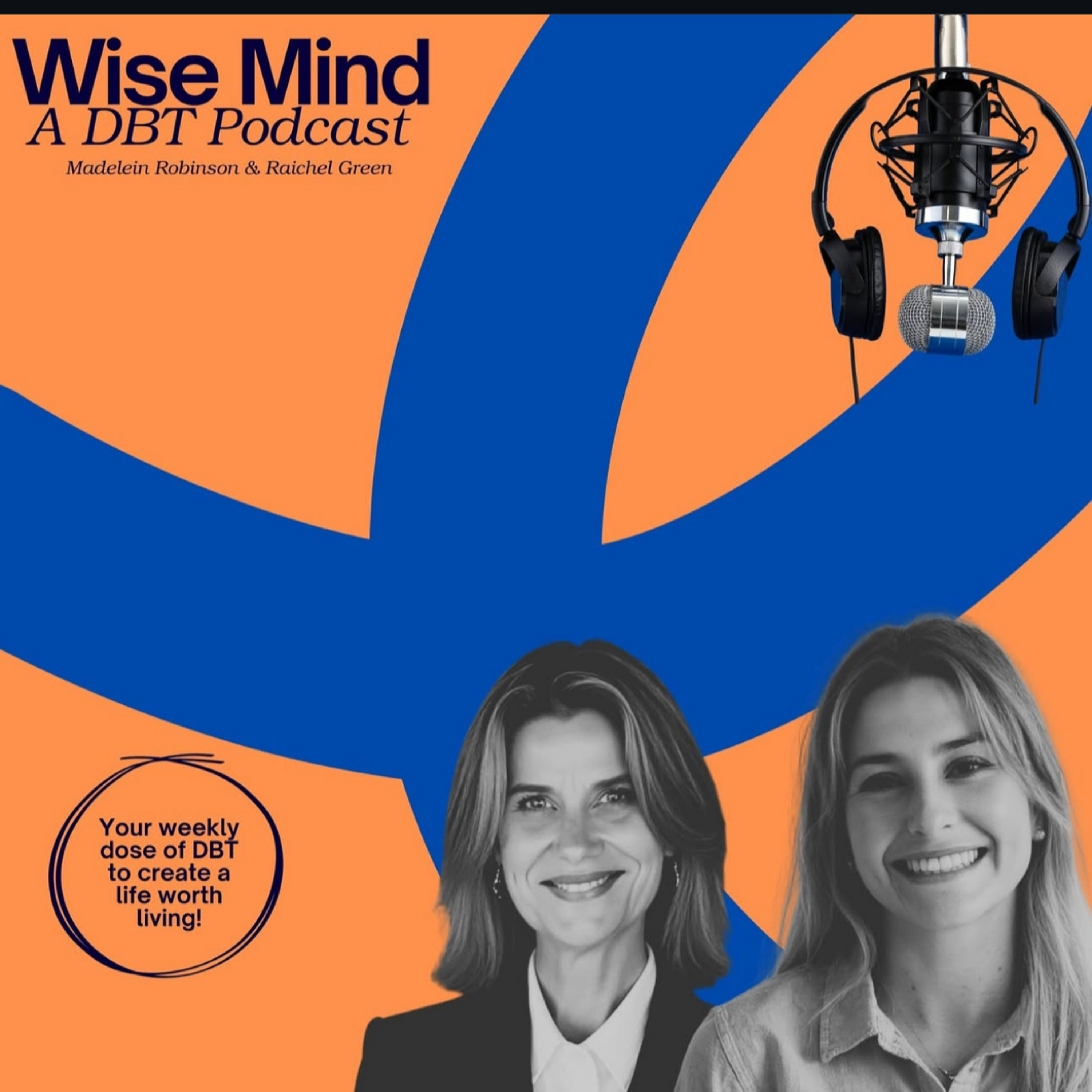
Wise Mind: A DBT Podcast
Wise Mind: A DBT Podcast
Frequency: 1 episode/7d. Total Eps: 41

Recent rankings
Latest chart positions across Apple Podcasts and Spotify rankings.
Apple Podcasts
🇨🇦 Canada - mentalHealth
19/04/2026#100🇨🇦 Canada - mentalHealth
17/04/2026#89🇨🇦 Canada - mentalHealth
16/04/2026#77🇨🇦 Canada - mentalHealth
15/04/2026#53🇨🇦 Canada - mentalHealth
14/04/2026#72🇨🇦 Canada - mentalHealth
13/04/2026#94🇨🇦 Canada - mentalHealth
27/12/2025#92🇨🇦 Canada - mentalHealth
13/12/2025#91🇨🇦 Canada - mentalHealth
11/12/2025#71🇨🇦 Canada - mentalHealth
10/12/2025#78
Spotify
No recent rankings available
Shared links between episodes and podcasts
Links found in episode descriptions and other podcasts that share them.
See allRSS feed quality and score
Technical evaluation of the podcast's RSS feed quality and structure.
See allScore global : 38%
Publication history
Monthly episode publishing history over the past years.
PLEASE Skills: The Get Your Shit Together Basics
mardi 2 décembre 2025 • Duration 01:01:56
In this episode of the Wise Mind DBT Podcast, we dive into what we lovingly call “the get your shit together skills.” These foundational skills highlight how your body sets the foundation for your emotional world, and why tending to basic physical care is essential before trying more advanced DBT strategies. We focus on the first half of the PLEASE skills—P-L-E, which covers treating physical illness, balanced eating, and exercise.
We explore the deep connection between body and mind, breaking down how unmet physical needs often lead to emotional instability. Maddy is especially excited because this is the one time of year she gets to use her Bachelor’s degree, and she is very PLEASED about it. Together, we discuss what it really means to treat physical illness early, how both what and when you eat affect your mood, and how movement acts as a stabilising force for emotional regulation.
If you’ve ever felt “off” without knowing why, this episode explains how addressing physical basics might be the missing link.
We’ve also released all upcoming 2-day, 5-day, and DBT group trainings.
👉 All our resources for todays episode and training info and rego is now at www.wisemindcollective.com.au
Contact us:
wisemindcollective.com.au
Or
Instagram + Facebook - Wisemind DBT Podcast
Crisis Support
This space may include discussions that bring up strong emotions or difficult topics. If you’re feeling overwhelmed, please know you're not alone and support is available.
If you or someone you know is in crisis, we encourage you to reach out to:
Lifeline – 13 11 14 (24/7)
Beyond Blue – 1300 22 4636
13YARN – 13 92 76 (A 24/7 national support line for Aboriginal and Torres Strait Islander people)
Emergency Services – 000 (if you are in immediate danger)
Acknowledgment of Dr. Marsha M. Linehan and the Origins of DBT
We honor Dr. Marsha M. Linehan, psychologist and professor who created Dialectical Behavior Therapy.
It’s thanks to Dr. Linehan that DBT has become a proven intervention for a range of mental health challenges.
Wise Mind A DBT Podcast gratefully acknowledges that DBT is Dr. Linehan’s work, not ours, and we honor her legacy.
Opposite Action, When Behaviour Beats Emotion
mardi 25 novembre 2025 • Duration 56:55
In this episode of Wise Mind DBT Podcast, Raich and Maddy explore what to do when emotions don’t match the facts—when the intensity is off, or when acting on feelings just isn’t helpful. (Yes, unfortunately, punching people in the face isn’t a DBT skill… we know, it’s sad.)
We dive into why the Opposite Action skill can be so effective, how and when to use it, and share common situations where Emotion Mind can take over. Plus, we offer practical tips and tricks for recognizing these moments quickly and responding skillfully. Tune in now to learn how to act opposite to unhelpful urges and reclaim a bit of control over your emotions!
check out our brand new website at 👉 wisemindcollective.com.au for resources, updates, and a sneak peek at an exciting February announcement!
Contact us:
wisemindcollective.com.au
Or
Instagram + Facebook - Wisemind DBT Podcast
Crisis Support
This space may include discussions that bring up strong emotions or difficult topics. If you’re feeling overwhelmed, please know you're not alone and support is available.
If you or someone you know is in crisis, we encourage you to reach out to:
Lifeline – 13 11 14 (24/7)
Beyond Blue – 1300 22 4636
13YARN – 13 92 76 (A 24/7 national support line for Aboriginal and Torres Strait Islander people)
Emergency Services – 000 (if you are in immediate danger)
Acknowledgment of Dr. Marsha M. Linehan and the Origins of DBT
We honor Dr. Marsha M. Linehan, psychologist and professor who created Dialectical Behavior Therapy.
It’s thanks to Dr. Linehan that DBT has become a proven intervention for a range of mental health challenges.
Wise Mind A DBT Podcast gratefully acknowledges that DBT is Dr. Linehan’s work, not ours, and we honor her legacy.
The Unsung Heroes of DBT: Pros and Cons + Diary Cards
Season 1 · Episode 10
mardi 23 septembre 2025 • Duration 01:04:00
This week on the Wise Mind DBT Podcast, we’re diving into not just one but two essential DBT skills!
First up: Pros and Cons, one of the most pivotal and practical tools in DBT. We explore how this skill helps you overcome barriers to using other skills, and how weighing the pros and cons of action vs. inaction can help guide wise, effective decisions in all areas of life.
Then, we shift gears into a DBT essential that most people don’t even realise is a skill... the Diary Card! We’re not like most people and neither is DBT. We believe (and so does the science) that what you track is what you change. Join us as we unpack how the diary card supports long-term change, pattern recognition, and accountability.
As always, we explore these skills through laughter, insight, and the quirky Raich and Maddy way.
Listen now and let us know what you think—your feedback helps us grow!
Contact us:
Wiseminddbtpodcast@gmail.com
Or
Instagram + Facebook - Wisemind DBT Podcast
Resources:
Pros + Cons worksheet: https://drive.google.com/file/d/1BFLAlwJB6_M7-EhPeqO5Gd-PuoVWonf4/view?usp=sharing
Lane Pederson Diary Card: https://drive.google.com/file/d/1hJRNNQieBc8IAHg1Vp2QJT_mziyuowMe/view?usp=sharing
Crisis Support
This space may include discussions that bring up strong emotions or difficult topics. If you’re feeling overwhelmed, please know you're not alone and support is available.
If you or someone you know is in crisis, we encourage you to reach out to:
Lifeline – 13 11 14 (24/7)
Beyond Blue – 1300 22 4636
13YARN – 13 92 76 (A 24/7 national support line for Aboriginal and Torres Strait Islander people)
Emergency Services – 000 (if you are in immediate danger)
Acknowledgment of Dr. Marsha M. Linehan and the Origins of DBT
We honor Dr. Marsha M. Linehan— psychologist and professor who created Dialectical Behavior Therapy.
It’s thanks to Dr. Linehan that DBT has become a proven intervention for a range of mental health challenges.
Wise Mind A DBT Podcast gratefully acknowledges that DBT is Dr. Linehan’s work—not ours—and we honor her legacy.
Your Inner Anchor: Self-Soothe
Season 1 · Episode 8
mardi 16 septembre 2025 • Duration 01:09:17
In this warm, practical, and slightly quirky episode of Wise Mind DBT Podcast, Raich and Maddy explore the DBT distress tolerance skill of self-soothe and how it connects to the fascinating world of the vagus nerve. If you’ve ever felt overwhelmed and wished you had a reset button, this episode is for you. Raich and Maddy explain how engaging your five senses can send calming signals to your nervous system and why these techniques work from a biological and emotional perspective. They also dig into why some people struggle to self-soothe, especially if they didn’t grow up learning how—and how that gap can be gently bridged with intention and practice. From using sound, scent, and touch to soothe the body, to building your own Self-Soothe Kit for moments of distress, this episode is full of creative, accessible tools to help you shift from chaos to calm. Tune in for practical tips, compassionate insight, and a little bit of nervous system nerdiness, all delivered with the signature Wise Mind mix of humor and heart.
Resources & Recommendations:
- https://www.uaf.edu/mentalhealth/dbt-group-handouts/DT%20Handout%208-8A.pdf
Crisis Support
This space may include discussions that bring up strong emotions or difficult topics. If you’re feeling overwhelmed, please know you're not alone and support is available.
If you or someone you know is in crisis, we encourage you to reach out to:
Lifeline – 13 11 14 (24/7)
Beyond Blue – 1300 22 4636
13YARN – 13 92 76 (A 24/7 national support line for Aboriginal and Torres Strait Islander people)
Emergency Services – 000 (if you are in immediate danger)
Acknowledgment of Dr. Marsha M. Linehan and the Origins of DBT
We honor Dr. Marsha M. Linehan— psychologist and professor who created Dialectical Behavior Therapy.
It’s thanks to Dr. Linehan that DBT has become a proven intervention for a range of mental health challenges.
Wise Mind A DBT Podcast gratefully acknowledges that DBT is Dr. Linehan’s work—not ours—and we honor her legacy.
A twist on ACCEPTS: Managing the Fire, Not Avoiding the Flames
Season 1 · Episode 8
mardi 9 septembre 2025 • Duration 01:17:33
In this episode, Raich and Maddy dive into the DBT skill of Distraction a key part of the Distress Tolerance module, designed to help us survive emotional crises without making things worse.
Quick but crucial reminder: Distraction is NOT avoidance. Used wisely, it’s about managing the fire, not pretending it’s not there. Raich and Maddy unpack the vital difference between the two because yes, they might look similar, but they’re absolutely not the same thing.
You’ll get a walk-through of the DBT acronym Wise Mind ACCEPTS because of course it’s another acronym (Marsha, we see you!). From Activities to Sensations, Raich and Maddy share relatable, real-life ways to apply each letter. Plus, they introduce a fresh twist on this classic skill that might just blow your mind.
They also break down the science behind why distraction works, and how it’s a short-term tool to reduce SUDS (Ep 3!) when you’re overwhelmed and your Wise Mind says: not right now.
Whether you're learning DBT for yourself, supporting someone else, teaching skills, or just curious you’re in the right place.
Resources & Recommendations:
ACCEPTS skill (Handout)-https://www.therapistaid.com/therapy-worksheet/dbt-accepts
Contributing- Enlightment youtube link - https://www.youtube.com/watch?v=U-iHolnQ5tc
Comparison-
Mark Manson-'Everything Is F*cked: A Book About Hope.
Eddie Jaku- Happiest Man alive
Everything to Live For -Turia Pitt
The Ninth Life of a Diamond Miner: A memoir
Happiest Man on Earth - Eddie Jaku
Victor Frankle-Mans search for meaning
smiling minds & insight timer -Leaves on a stream
Crisis Support
This space may include discussions that bring up strong emotions or difficult topics. If you’re feeling overwhelmed, please know you're not alone and support is available.
If you or someone you know is in crisis, we encourage you to reach out to:
Lifeline – 13 11 14 (24/7)
Beyond Blue – 1300 22 4636
13YARN – 13 92 76 (A 24/7 national support line for Aboriginal and Torres Strait Islander people)
Emergency Services – 000 (if you are in immediate danger)
Acknowledgment of Dr. Marsha M. Linehan and the Origins of DBT
We honor Dr. Marsha M. Linehan— psychologist and professor who created Dialectical Behavior Therapy.
It’s thanks to Dr. Linehan that DBT has become a proven intervention for a range of mental health challenges.
Wise Mind A DBT Podcast gratefully acknowledges that DBT is Dr. Linehan’s work—not ours—and we honor her legacy.
More Than a Label: Humanising Cluster B Diagnoses and Exploring the Trauma Link
Season 1 · Episode 8
mercredi 3 septembre 2025 • Duration 01:24:36
Cluster B? Trauma? BPD? Overcontrol? Undercontrol? Let’s Talk About It…In this episode of Wise Mind: A DBT Podcast, we take a deep dive into the often misunderstood and stigmatised phrase: “Cluster B.” What does it really mean? Why does it carry so much emotional weight? And how does it intersect with trauma, Borderline Personality Disorder (BPD), and patterns of emotional dysregulation?
We explore the overlap between trauma traits and BPD traits, breaking down the idea that these experiences are rare or “other.” Truth is—we all carry some of these traits, especially if we’ve faced adversity, invalidation, or complex emotional environments.
You’ll also hear about Radically Open DBT (RO-DBT)—a powerful approach that focuses on overcontrolled personality styles, a lesser-talked-about side of emotional suffering. We unpack the dialectic of overcontrol vs undercontrol, and how both can shape personality, relationships, and mental health struggles.
We keep it real, reflect on how this episode almost got cursed (again), and marvel at the fact that we’re still not cancelled (yet). Plus, we share a moving, poetic reflection from someone with lived experience of BPD that you won’t want to miss.
Whether you live with BPD, have trauma, have traits, support someone who struggles, or work in mental health—this episode brings insight, compassion, and a little humor to the conversation.
Happy Listening.... WISE MIND OWWT!
Work With Us
We’d love to connect with you! Whether you have questions, feedback, collaboration ideas, or just want to say hello — reach out to us at:
wiseminddbtpodcast@gmail.com
To learn more about our clinical work or book a session, visit:🔗 Raichel Green Counselling www.raichelgreencounselling.com
📸 Madelein Robinson on Wise Mind- A DBT Podcast Instagram: @wiseminddbtpodcast
Stay tuned for the launch of The Wise Mind Collective — website - Coming soon!
Music“Note to Daisy” by the incredibly talented Micah Polla🎧 Listen on Spotify
Acknowledgement of Country
We acknowledge the Darkinjung people as the Traditional Custodians of the land on which we record, share, and connect here on the Central Coast. We pay our deepest respects to Elders past , present and emerging, and extend that respect to all First Nations peoples joining us today.
Crisis Support
This space may include discussions that bring up strong emotions or difficult topics. If you’re feeling overwhelmed, please know you're not alone and support is available.
If you or someone you know is in crisis, we encourage you to reach out to:
Lifeline – 13 11 14 (24/7)
Beyond Blue – 1300 22 4636
13YARN – 13 92 76 (A 24/7 national support line for Aboriginal and Torres Strait Islander people)
Emergency Services – 000 (if you are in immediate danger)
Acknowledgment of Dr. Marsha M. Linehan and the Origins of DBT
We honor Dr. Marsha M. Linehan— psychologist and professor who created Dialectical Behavior Therapy.
It’s thanks to Dr. Linehan that DBT has become a proven intervention for a range of mental health challenges.
Wise Mind A DBT Podcast gratefully acknowledges that DBT is Dr. Linehan’s work—not ours—and we honor her legacy.
Rewiring Your Brain: The Neurobiology of the Triggered Brain and the Biosocial Model
Season 1 · Episode 7
mardi 26 août 2025 • Duration 01:03:10
In this episode of Wise Mind: A DBT Podcast, Maddy and Raich explore the neurobiology of the triggered brain and how trauma impacts how our neurons fire- Not always in the most effective way! We discuss how trauma and chronic stress impact brain structures such as the amygdala, prefrontal cortex, HPA and hippocampus, leading to heightened threat responses and difficulty regulating emotions.These reactions aren’t signs of weakness or failure. They’re rooted in survival systems your brain developed to keep you safe- Guess what, its NOT your fault.
We break down what happens neurologically when you’re triggered, including how trauma and chronic invalidation can rewire your nervous system. We also discuss the role of neuroplasticity and how DBT skills can help create new, more effective neural pathways over time.
From there, we introduce one of the most important concepts in DBT: the Biosocial Model, developed by Marsha Linehan. This model explains how emotional sensitivity (biological factors) and an invalidating environment (social factors) interact to shape the way we respond to the world. It also answers the classic nature versus nurture question with a core DBT principle: two things are true.
Here’s the dialectic at the heart of this episode: It’s not your fault your brain and environment shaped you this way. And—it is your responsibility to learn new skills and make meaningful changes.
We also take a moment to explain why this episode took longer than planned to release—and yes, it involves some behind-the-scenes chaos we can now laugh about and we can confirm, this ep is not cursed (95% sure).
Understanding your brain is the first step toward compassion—and toward building a life worth living, one skill at a time.
Recommendations & Links to Our Resources:
- Brain Scans - The Neuro Biology https://drive.google.com/file/d/1eN3lNyW5L3AmS34rkxWR5SBpawz-4e0z/view?usp=drive_link
- Biosocial Theory- https://drive.google.com/file/d/1RpWVmPsTDJTUlkCgRAcU3oymPJjs-k5G/view?usp=drive_link
- The Body Keeps the Score: Brain, Mind, and Body in the Healing of Trauma- Book by Bessel van der Kol
Work With Us
We’d love to connect with you! Whether you have questions, feedback, collaboration ideas, or just want to say hello — reach out to us at:
wiseminddbtpodcast@gmail.com
To learn more about our clinical work or book a session, visit:🔗 Raichel Green Counselling www.raichelgreencounselling.com
📸 Madelein Robinson on Wise Mind- A DBT Podcast Instagram: @wiseminddbtpodcast
Stay tuned for the launch of The Wise Mind Collective — website - Coming soon!
Music“Note to Daisy” by the incredibly talented Micah Polla🎧 Listen on Spotify
Acknowledgement of Country
We acknowledge the Darkinjung people as the Traditional Custodians of the land on which we record, share, and connect here on the Central Coast. We pay our deepest respects to Elders past , present and emerging, and extend that respect to all First Nations peoples joining us today.
Crisis Support
This space may include discussions that bring up strong emotions or difficult topics. If you’re feeling overwhelmed, please know you're not alone and support is available.
If you or someone you know is in crisis, we encourage you to reach out to:
Lifeline – 13 11 14 (24/7)
Beyond Blue – 1300 22 4636
13YARN – 13 92 76 (A 24/7 national support line for Aboriginal and Torres Strait Islander people)
Emergency Services – 000 (if you are in immediate danger)
Acknowledgment of Dr. Marsha M. Linehan and the Origins of DBT
We honor Dr. Marsha M. Linehan— psychologist and professor who created Dialectical Behavior Therapy.
It’s thanks to Dr. Linehan that DBT has become a proven intervention for a range of mental health challenges.
Wise Mind A DBT Podcast gratefully acknowledges that DBT is Dr. Linehan’s work—not ours—and we honor her legacy.
TIPP Is My Emergency Contact
Season 1 · Episode 6
mardi 19 août 2025 • Duration 01:01:06
In this episode of Wise Mind: A DBT Podcast, hosts Maddy and Raich introduce some of the most essential and reliable skills in Dialectical Behavior Therapy (DBT): the TIPP skills. These body-based distress tolerance techniques—Temperature, Intense Exercise, Paced Breathing, and Progressive/Paired Muscle Relaxation—have NEVER let them down, and they explain exactly why these simple tools are so powerful.
When intense emotions flood our system, our brain’s rational part—the frontal cortex—often goes offline, leaving us stuck in reactive panic or overwhelm. The TIPP skills work by targeting your body’s natural reflexes and chemistry, helping to lower or metabolise stress hormones like cortisol and adrenaline. This physical regulation tricks the brain out of its panic state, calming the nervous system and bringing the frontal cortex back online so clearer thinking and intentional action become possible.
Maddy and Raich explore the science behind these body-based skills, showing how they are essential for grounding and calming when emotions feel out of control and we have the urge to react. These techniques work with your body’s natural responses, not against them, making them among the MOST effective tools in your DBT toolbox.
Beyond their use for managing crises outside therapy, the hosts discuss how TIPP skills support the therapy process itself. They explain how clients can use TIPP to stay grounded during particularly difficult sessions—when they are close to a skills breakdown point—and how therapists often use these same techniques between sessions to regulate their own nervous systems. Maddy and Raich share practical tips for clinicians on how to help clients effectively integrate TIPP skills into their daily lives and therapy work.
Recommendations & Links to Our Resources:
- TIPP Handout https://drive.google.com/file/d/1QbieUm7frKwc-OE5U5l5M7zpYbE0F40y/view?usp=sharing
- Subjective Units of Distress (SUDs)- https://drive.google.com/file/d/1mRKxCeuezL2hsorcMsO58WgWr27SQ0aG/view?usp=sharing
- Insight Timer- Progressive Muscle Relaxation By Moira Hutchison
- Smiling Minds- Paced Breathing (SOS Meditation, Belly Breathing)
Work With Us
We’d love to connect with you! Whether you have questions, feedback, collaboration ideas, or just want to say hello — reach out to us at:
wiseminddbtpodcast@gmail.com
To learn more about our clinical work or book a session, visit:🔗 Raichel Green Counselling www.raichelgreencounselling.com
📸 Madelein Robinson on Wise Mind- A DBT Podcast Instagram: @wiseminddbtpodcast
Stay tuned for the launch of The Wise Mind Collective — website - Coming soon!
Music“Note to Daisy” by the incredibly talented Micah Polla🎧 Listen on Spotify
Acknowledgement of Country
We acknowledge the Darkinjung people as the Traditional Custodians of the land on which we record, share, and connect here on the Central Coast. We pay our deepest respects to Elders past , present and emerging, and extend that respect to all First Nations peoples joining us today.
Crisis Support
This space may include discussions that bring up strong emotions or difficult topics. If you’re feeling overwhelmed, please know you're not alone and support is available.
If you or someone you know is in crisis, we encourage you to reach out to:
Lifeline – 13 11 14 (24/7)
Beyond Blue – 1300 22 4636
13YARN – 13 92 76 (A 24/7 national support line for Aboriginal and Torres Strait Islander people)
Emergency Services – 000 (if you are in immediate danger)
Acknowledgment of Dr. Marsha M. Linehan and the Origins of DBT
We honor Dr. Marsha M. Linehan— psychologist and professor who created Dialectical Behavior Therapy.
It’s thanks to Dr. Linehan that DBT has become a proven intervention for a range of mental health challenges.
Wise Mind A DBT Podcast gratefully acknowledges that DBT is Dr. Linehan’s work—not ours—and we honor her legacy.
A Moment Between Reacting & Responding: Mastering STOP and Grounding
Season 1 · Episode 5
mardi 12 août 2025 • Duration 47:45
In this episode of Wise Mind- A DBT Podcast, we introduce the very first Distress Tolerance skill in Dialectical Behavior Therapy (DBT): the STOP skill — a powerful tool for those moments when your automatic responses take the wheel and your frontal cortex basically says, “See ya!” Whether you’re overwhelmed, panicked, angry, or just about to spiral, this skill invites you to create space between a trigger and a reaction — and choose to respond with intention, rather than react from an old story.
We explore how recognising and expanding that space can actually begin to rewire your brain. Through regular practice of STOP, you start forming new neural pathways, increasing your capacity to respond skillfully rather than impulsively. Raich beautifully captures this idea with Viktor Frankl’s words: “Between stimulus and response there is a space. In that space lies our freedom and power to choose our response. In our response lies our growth and freedom.”
We also unpack how STOP skill acts as a link to other skills. Plus, you'll hear honest stories from your hosts, Maddy and Raich, who share how this skill has helped them in grenade throwing moments.
But we don’t STOP there. Maddy takes us into the science of grounding, explaining how it works in the brain and body when your nervous system is overwhelmed. We look at the wonderful and wondrous role of the vagus nerve, and how grounding can bring your system back online when you’re feeling disconnected or dysregulated.
To make these skills tangible, we guide you through two practical grounding exercises, engaging your senses.
Recommendations & Links to Our Resources:
- STOP Skill Handout https://drive.google.com/file/d/1zPnep6wNX5Y2QmFgo7Gxm5rRlElWDXPv/view?usp=sharing
- STOP Skill (Wallet size) https://drive.google.com/file/d/1ukE5A7oqObq84n240SO6bfPDYvwNVXQH/view?usp=sharing
- Grounding Skill Ideas (Therapist Aid) https://www.therapistaid.com/worksheets/grounding-techniques
- Grounding Practice 5,4,3,2,1- Youtube (Lewis Psycology)5-4-3-2-1 Grounding Method: 5 Senses Grounding Exercise To Manage Anxiety
- Headspace App- (Engage Your Senses)Mental Wellness App: Meditation & Sleep - Headspace
Work With Us
We’d love to connect with you! Whether you have questions, feedback, collaboration ideas, or just want to say hello — reach out to us at:
wiseminddbtpodcast@gmail.com
To learn more about our clinical work or book a session, visit:🔗 Raichel Green Counselling www.raichelgreencounselling.com
📸 Madelein Robinson on Wise Mind- A DBT Podcast Instagram: @wiseminddbtpodcast
Stay tuned for the launch of The Wise Mind Collective — website - Coming soon!
Music“Note to Daisy” by the incredibly talented Micah Polla🎧 Listen on Spotify
Acknowledgement of Country
We acknowledge the Darkinjung people as the Traditional Custodians of the land on which we record, share, and connect here on the Central Coast. We pay our deepest respects to Elders past , present and emerging, and extend that respect to all First Nations peoples joining us today.
Crisis Support
This space may include discussions that bring up strong emotions or difficult topics. If you’re feeling overwhelmed, please know you're not alone and support is available.
If you or someone you know is in crisis, we encourage you to reach out to:
Lifeline – 13 11 14 (24/7)
Beyond Blue – 1300 22 4636
13YARN – 13 92 76 (A 24/7 national support line for Aboriginal and Torres Strait Islander people)
Emergency Services – 000 (if you are in immediate danger)
Acknowledgment of Dr. Marsha M. Linehan and the Origins of DBT
We honor Dr. Marsha M. Linehan— psychologist and professor who created Dialectical Behavior Therapy.
It’s thanks to Dr. Linehan that DBT has become a proven intervention for a range of mental health challenges.
Wise Mind A DBT Podcast gratefully acknowledges that DBT is Dr. Linehan’s work—not ours—and we honor her legacy.
Wise Mind in Crisis: The Science & Art of Distress Tolerance
Season 1 · Episode 4
mardi 5 août 2025 • Duration 01:05:34
In this episode of Wise Mind: A DBT Podcast, Raich and Maddy dive into the essential DBT module of Distress Tolerance (Maddy’s favorite—maybe?). These are the skills you need when everything feels like it’s on fire and you’ve lost the extinguisher (or never bought one in the first place).
These tools aren’t about feeling prevention—they’re about not making it worse or blowing up your life, while bringing your frontal cortex (Wizard Brain) back online and soothing that amygdala (Lizard Brain).
We explore the why and how behind these skills, showing how they help you build a life worth living and reclaim emotional control in moments of overwhelm. You’ll learn to spot the difference between short-term crisis and long-term avoidance, use the SUDS (Subjective Units of Distress Scale)—also known as your crisis intensity thermometer—to track emotional intensity, identify when your Lizard Brain is in charge, and create your own Distress Tolerance Plan (yes, we give you a roadmap).
We also explore the rich territory of triggers, not as problems to fix, but as clues to better understand yourself. Like emotional archaeologists—channeling Raich’s metaphor—we gently brush away the dust to reveal what’s underneath. Self-awareness, after all, is uncovered, not forced.
With humor, heart, and actionable skills, we invite you to practice, not just listen. Because surviving the moment is the first step toward changing your life.
Recommendations & Links to Our Resources:
- Crisis Survival Skills- https://drive.google.com/file/d/1SXfFxdyTvnKniCFQRPF3AxXR9EHyTjeG/view?usp=sharing
- Am I Distress Intolerant -https://drive.google.com/file/d/1Lor0vw6tnrMtqHs313ku_fG0f2e9wzaI/view?usp=sharing
- Subjective Units of Distress (SUDs)- https://drive.google.com/file/d/1mRKxCeuezL2hsorcMsO58WgWr27SQ0aG/view?usp=sharing
- Distress Tolerance Plan-https://drive.google.com/file/d/19YZRzQPxHHJ9FLfq4MD83du66V2bBKI8/view?usp=sharing
- Trigger Chart-https://drive.google.com/file/d/1mBvLHtdNwSzsR4wGm_ML0VTWO-xbi-xk/view?usp=sharing
- Glimmer Chart-https://drive.google.com/file/d/1RySvJf0q05aSL5wFNxwu6X62x33q0RKl/view?usp=sharing
Work With Us
We’d love to connect with you! Whether you have questions, feedback, collaboration ideas, or just want to say hello — reach out to us at:
wiseminddbtpodcast@gmail.com
To learn more about our clinical work or book a session, visit:🔗 Raichel Green Counselling www.raichelgreencounselling.com
📸 Madelein Robinson on Wise Mind- A DBT Podcast Instagram: @wiseminddbtpodcast
Stay tuned for the launch of The Wise Mind Collective — website - Coming soon!
Music“Note to Daisy” by the incredibly talented Micah Polla🎧 Listen on Spotify
Acknowledgement of Country
We acknowledge the Darkinjung people as the Traditional Custodians of the land on which we record, share, and connect here on the Central Coast. We pay our deepest respects to Elders past , present and emerging, and extend that respect to all First Nations peoples joining us today.
Crisis support
This space may include discussions that bring up strong emotions or difficult topics. If you’re feeling overwhelmed, please know you're not alone and support is available.
If you or someone you know is in crisis, we encourage you to reach out to:
Lifeline – 13 11 14 (24/7)
Beyond Blue – 1300 22 4636
13YARN – 13 92 76 (A 24/7 national support line for Aboriginal and Torres Strait Islander people)
Emergency Services – 000 (if you are in immediate danger)
Acknowledgment of Dr. Marsha M. Linehan and the Origins of DBT
We honor Dr. Marsha M. Linehan— psychologist and professor who created Dialectical Behavior Therapy.
It’s thanks to Dr. Linehan that DBT has become a proven intervention for a range of mental health challenges.
Wise Mind A DBT Podcast gratefully acknowledges that DBT is Dr. Linehan’s work—not ours—and we honor her legacy.
Related Shows Based on Content Similarities