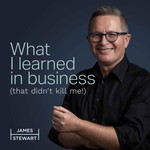
Have you ever wondered why some businesses go broke and others are successful? Have you ever wondered why some leaders rise to the top in difficult situations?
For 40 years I was a corporate undertaker. I buried businesses that failed and helped save those where there was still a pulse.
I was parachuted into some of corporate Australia’s biggest financial crisis, insolvencies and turnaround environments. I have been in Board rooms, Court rooms and on shop floors when all seems lost (and sometimes it was).
Over decades at the coal face of business (often in the most difficult circumstances), I have seen & heard stories that delighted and inspired me, as well as those which serve as a guide of the path not to take.
I also spent years in leadership roles at Ferrier Hodgson and KPMG Australia where I sat on the Board and was the National Consumer and Retail leader.
The purpose of What I learned about Business (that didn’t kill me!) is to share the stories behind some of the world's most interesting business situations, how they unfolded, how my guests dealt with them, and how those experiences changed them and the way they do business.
I hope that my podcast entertains and engages listeners who want to know more about the worlds great business leaders and the lessons that didn’t kill them…….
The Australian residential housing market is unaffordable for many. It is being impacted by a perfect storm of a supply demand imbalance, rising construction costs, a fuel crisis, and a planning system which many argue needs wholesale reform.
To hear more, I sit down with Angus Raine, Executive Chairman of Raine & Horne — one of Australia’s oldest and most enduring family businesses to get his perspective on Australia's housing crisis and what it takes to build a sustainable, intergenerational family business.
Founded in 1883 and now in its fourth generation of family ownership, Raine & Horne has navigated more than a century of market cycles — from booms and busts to wars and recessions — and today operates at scale across Australia and international markets.
In this wide-ranging conversation, we explore both the evolution of a multi-generational family enterprise and the realities of Australia’s housing market.
We cover:
The 140-year journey of Raine & Horne and how succession has been successfully managed across generations.
How to avoid ego, groupthink and capability gaps in family businesses.
The current state of Australia’s residential property market.
The housing affordability crisis — and the key drivers behind it, from supply constraints to migration, tax settings and construction costs.
Major planning reforms, including recent high-density development changes in Victoria.
The rise of institutional capital and the build-to-rent sector.
How technology, data and AI are reshaping the real estate agency model.
The concept of regional "rentvesting" and how that may make property ownership accessible to a generation of Australians.
This episode is proudly brought to you by the Family Business Association in Australia and New Zealand. Whether you’re an investor, business leader, or part of a family enterprise, this is a practical and insightful discussion on markets, leadership and long-term thinking.
Disclaimer:
This podcast is for general informational purposes only and does not constitute financial, investment, legal or professional advice. The views expressed by guests are their own and do not necessarily reflect those of the host. You should seek appropriate professional advice before making any financial or investment decisions.
Merriden Varrall: China, Trump & the New World Order.
Season 1 · Episode 23
Monday, April 13, 2026 • Duration 49:03
Geopolitics now sits at the centre of business decision-making.
My guest is Dr Merriden Varrall, one of Australia’s leading geopolitical analysts and China specialists, and the founder and CEO of Vantage Geopol.
Merriden brings a rare combination of academic depth, policy experience, and commercial advisory insight. She has spent nearly a decade living and working in China, held senior roles with the United Nations Development Programme in Beijing, led the East Asia Program at the Lowy Institute, and now advises boards and executives on how global political shifts impact strategy, risk, and long-term investment decisions.
In this conversation, we explore:
How China actually sees the world — and why Western analysis often gets it wrong
The evolution of geopolitics from a fringe issue to a top-three boardroom risk
The impact of leadership and political disruption on global stability
The fragmentation of the global economic order and the growing importance of energy, climate policy, and critical minerals
Practical advice for business leaders navigating geopolitical uncertainty
This is a deep and timely discussion on one of the most important forces shaping the global economy — and what it means for decision-makers today.
The information, views, and opinions expressed in this podcast are those of the host and guest and are provided for general informational purposes only. They do not constitute financial, legal, investment, or other professional advice. This podcast is not intended to provide, and should not be relied upon for, decision-making in relation to any investment, business, or strategic matter. Listeners should seek appropriate professional advice tailored to their individual circumstances. While reasonable care has been taken to ensure the accuracy of the information presented, no representation or warranty is made as to its completeness or reliability, and no liability is accepted for any loss or damage arising from reliance on this content.
Mark Raddan: CEO Interpath Advisory.
Season 1 · Episode 22
Monday, March 23, 2026 • Duration 38:57
What happens when one of the UK’s largest companies collapses—and takes trust in the entire UK audit profession with it?
In this episode, I sit down with Mark Raddan, CEO of Interpath Advisory and former KPMG UK Senior Partner and Board member, to unpack the fallout from the Carillion collapse and how it fundamentally reshaped the UK turnaround and restructuring profession.
Carillion employed more than 40,000 people and delivered critical public infrastructure across the UK. But in 2018, it collapsed under the weight of debt, aggressive accounting, and failing contracts—triggering parliamentary inquiries, regulatory backlash, and record fines for KPMG.
What followed wasn’t just the failure of a company—it was a structural reset of the entire profession in the UK. Regulators moved to address conflicts of interest within the Big Four, ultimately forcing KPMG to sell its restructuring business.
That carve-out became Interpath Advisory—a new, independent firm backed by private equity and now operating as one of the large independent global turnaround and restructuring firms.
Mark was at the centre of that transition.
In this conversation, we cover:
The Carillion collapse and the consequences that followed.
The impact on KPMG UK and the wider profession
Why the Big Four were forced to rethink their business models
The creation and rapid growth of Interpath Advisory
How private equity is reshaping the professional services model
The future of restructuring, advisory, and the impact of AI
This is a rare, insider perspective on how crisis, regulation and capital combined to create an entirely new competitive landscape in global advisory.
⚠️ Disclaimer
This podcast is for .
🔗 Connect with James
Adam Posner: What's the Point of Loyalty?
Season 1 · Episode 21
Monday, March 9, 2026 • Duration 57:26
What is customer loyalty — really?
Is it points? Discounts? Retention metrics? Or is it something deeper?
In this episode of What I Learned in Business (That Didn’t Kill Me!), I sit down with Adam Posner, founder of The Point of Loyalty, host of the What’s the Point of Loyalty? podcast, and author of For Love or Money™ — one of Australia’s longest-running loyalty research studies, spanning nearly two decades and 18 editions.
But before Adam became a loyalty strategist, his life gave him a very different education. Growing up in Johannesburg during apartheid, living through conscription into national service, surviving a terrorist car bomb explosion, and emigrating to Australia to start again from scratch — Adam’s worldview was shaped long before he ever designed a loyalty program.
From walking the streets delivering scratch-and-save cards into letterboxes, to building a direct marketing agency and ultimately pivoting into customer research and loyalty strategy, Adam has spent nearly 20 years asking a deceptively simple question:
What actually makes customers stay?
In this conversation, we explore:
Why loyalty is about Behaviour, Belief and Belonging
The importance of retail response when the customer experience disappoints loyalty
Why customer loyalty and trust are closely connected
Why the world needs a “Pandemic of Joy” — and what Adam calls Joyalty
How AI and agentic technology may redefine brand–customer relationships
This episode is a masterclass in what Adam calls “the finance of feelings” — the commercial power of emotion in a data-driven world.
If you lead a brand, manage customer strategy, sit on a board, or simply care about how businesses build trust — this one is for you.
Disclaimer
Anne Laure Descours: The Invisible Engine of Global Retail
Season 1 · Episode 20
Monday, March 2, 2026 • Duration 55:43
Everyone talks about sustainable retail products and saving the planet, but who really cares? Retailers? Customers? Government?
The global retail sourcing & supply chain is invisible to most consumers, yet it is one of the most complex, highly integrated and culturally nuanced business ecosystems in the world.
James H Stewart sits down with Anne-Laure Descours, one of the world’s most senior and respected leaders in global sourcing and sustainable manufacturing in the footwear and apparel industry.
Anne-Laure spent more than three decades in the engine room of global retail — living and working across China, Vietnam, Bangladesh and Hong Kong — and ultimately serving as Chief Sourcing Officer of PUMA, overseeing the manufacturing and supply-chain operations that power an €8+ billion global brand.
Before PUMA, she held senior leadership roles at Li & Fung, the legendary Hong Kong-based sourcing powerhouse that helped shape modern global manufacturing.
Since leaving PUMA in 2025, Anne-Laure has continued her work in responsible supply chains, joining the board of Gildan Activewear (owner of American Apparel) and serving as an advisor and board member to Haelixa, a Swiss innovator in DNA-based traceability solutions for fashion and textiles.
In this wide-ranging conversation, we explore:
What global supply chains actually look like behind the scenes
The realities of sustainable sourcing across Asia
Cultural intelligence and leadership under pressure
The role of government and regulation in driving changes to sourcing models and sustainability reporting
Why end of life products are the biggest unsolved hurdle for sustainable manufacturing - and this goes to the heart of consumer demand.
How DNA tracing is reshaping sourcing transparency
What three decades in high-stakes global operations teaches you about resilience and trust
🔎 Connect⚠️ Disclaimer
Ian Robson: Premierships & Pressure points. Sport in the Spotlight
Season 1 · Episode 19
Monday, February 23, 2026 • Duration 54:26
Ian Robson isone of the most experienced and battle-tested sports administrators in Australia.
At just 32 years old, with no prior CEO experience, Ian was appointed Chief Executive of the New Zealand Warriors, building the club ahead of its entry into top-tier rugby league.
From there, his career spans:
CEO of Hawthorn Football Club during its rebuild and 2008 premiership
CEO of Essendon Football Club during the supplements saga
CEO of Melbourne Victory during A-League success
CEO of Rowing Australia, navigating Olympic sport, funding pressures and global competition
Leadership roles in UK sport, including CEO of Sport Scotland
Today, Ian is CEO of the iconic Kooyong Lawn Tennis Club, long associated with the Australian Open.
Across rugby league, AFL, soccer, Olympic sport and government-funded systems, Ian has seen the intersection of culture, governance, pressure and public accountability at the highest levels.
What we cover in this episode
Building a professional sports club from scratch in New Zealand
The Hawthorn rebuild and the 2008 AFL premiership
The Essendon supplements saga — what happened, how it unfolded, and the lessons learned
Governance failures, salary cap breaches and the cost of cutting corners
Drugs in professional sport — performance enhancing and recreational
Gambling, match fixing and player welfare
Racism, tribalism and sexual diversity in elite sport
The difference between running a football club and leading a taxpayer-funded Olympic sport
DisclaimerYou can connect with me, James H. Stewart (GAICD), via LinkedIn or at www.jameshstewart.com.
Simon Toohey: Masterchef to Market Maker
Season 1 · Episode 18
Monday, February 16, 2026 • Duration 37:27
MasterChef finalist, television host and food entrepreneur Simon Toohey, is this week's guest.
Many Australians know Simon from MasterChef Australia (Season 11 and “Back to Win”) or from his SBS series Freshly Picked. But behind the television profile is a far more layered story — one that spans cocktail bars in London, a Masters in Gastronomy in Edinburgh, plant-forward food innovation, pop-up smokehouses, consulting internationally, and now launching the fast-growing Geelong City Market, attracting thousands of visitors every Saturday.
We discuss:
Growing up in a food-loving family and learning to cook when independence forced it
Working in London hospitality, including at globally recognised bar Callooh Callay
Why he chose plant-forward cooking as his point of difference
The reality of competing on MasterChef — the pressure, structure and exposure
Building a media brand through Freshly Picked on SBS
Launching the Geelong City Market — vision, business case, government support, and startup challenges
What he has learned about entrepreneurship in the food industry
The hard days, the pivots, and the principles he anchors to
This is a conversation about food — but also about reinvention, resilience, public profile, sustainability, and backing yourself when you see a gap in the market.
If you are interested in food systems, food startups, media, or building a purpose-driven career, this episode is for you.
About the Show
What I Learned in Business (That Didn’t Kill Me!) explores the real stories behind business leaders, founders and professionals — the successes, the setbacks, and the lessons learned along the way.
Andrew Love: Surrounded by Liars and Thieves
Season 1 · Episode 17
Monday, February 9, 2026 • Duration 44:25
The collapse of Rothwells Bank in late 1988 signalled the beginning of the end for WA inc.
In this episode, James H Stewart sits down with Andrew J Love, one of Australia’s most experienced former restructuring advisers and non-executive directors, for a deep dive on the collapse of Rothwells Bank and the beginning of the end for WA Inc in the late 1980's.
Andrew spent nearly three decades as a senior partner at Ferrier Hodgson, and at just 34 years old, found himself advising the Western Australian Premier, Peter Dowding during one of the most politically charged and financially catastrophic episodes of the WA Inc era.
Rothwells, was a merchant bank controlled by Laurie Connell, was authorised to take deposits from the public and ultimately collapsed owing enormous sums to creditors — many of them everyday “mum and dad” investors. The failure became a defining moment in Australian corporate and political history, and a formative experience for Andrew’s approach to risk, governance and transparency.
The discussion traces how that baptism of fire shaped Andrew’s career — from leading mining restructurings, to stepping into boardrooms across mining, oil and gas, property, aged care and infrastructure.
Andrew also reflects on his time as Director of multiple companies in the ming sector through volatile commodity cycles, offering candid insights into why boards fail, how cycles repeat, and what experienced directors learn to watch for.
The conversation also takes an unexpected but revealing turn into the world of modern art. Andrew shares how he and his wife Amanda became deeply involved in the contemporary art community, including his time as Chair of the Museum of Contemporary Art in Sydney, and how the diversity of the modern art community help shape his thinking in the boardroom.
This episode is a masterclass in lived experience — from advising governments in moments of crisis, to navigating boardrooms through boom and bust, and understanding why humility, scepticism and independence of thought matter more than ever in business.
⚠️ Important Disclaimer
Christo Van Egmond: The School of Rock!
Season 1 · Episode 16
Monday, February 2, 2026 • Duration 40:32
Christo Van Egmond — Inside the Business of Live Music
ACDC is one of the worlds biggest rock bands.
So what does it really take to bring the world’s biggest artists to Australia?
In this episode James Stewart goes inside the live-entertainment industry with Christo Van Egmond, Managing Director of TEG Van Egmond, one of Australia’s most influential concert promoters.
Christo quite literally grew up in the music business — selling merchandise for the Moscow Circus at eight years old, spending time around global artists such as Dire Straits and INXS as a child, and learning the craft alongside his father, the late Garry Van Egmond, a legendary promoter who helped shape modern touring in Australia.
Christo lifts the curtain on an industry most of us only ever experience from the audience — revealing the commercial realities, financial risks and leadership judgement required to make live entertainment work at scale.
In this episode, we explore:
How the live-entertainment business actually works — promoters, agents, artists and venues
Why promoters are often “betting the house” before a single ticket is sold
The impact of private-equity ownership on live entertainment
How technology, data and AI are reshaping touring and audience engagement
Artist anecdotes, industry insights and the risks that paid off
The leadership lessons Christo has learned along the way — including what he’d tell his younger self
⚠️ Disclaimer
This podcast is for general information and discussion purposes only.
The views and opinions expressed by the host and guest are and do not constitute financial, legal, investment or professional advice. Any references to companies, transactions, artists, tours or commercial arrangements are illustrative only and should not be relied upon as advice. Listeners should seek independent professional advice before making any decisions based on the content of this episode.
🔗 Connect with the show
Anastasia Pelot: Inside the Mind of Gen Z & Gen A.
Season 1 · Episode 15
Monday, January 19, 2026 • Duration 55:09
In this episode of What I Learned in Business (That Didn’t Kill Me!), James Stewart explores one of the most important and misunderstood challenges facing leaders, employers, marketers and boards today: how to understand and engage the next generations of consumers and workers—Gen Z and Gen Alpha.
James is joined by Anastasia Pelot, founder of House of Context and a youth-culture strategist who helps organisations decode how young people think, behave, buy and communicate. Raised across Kenya, Greece, Germany, Syria and Lebanon before moving to the United States at 15, Anastasia brings a rare global and cultural lens to the question of identity, belonging and generational change.
The conversation begins with Anastasia’s extraordinary upbringing as a Third Culture Kid (TCK), the cultural shock of settling in the US as a teenager, and how those experiences shaped her sensitivity to identity formation, emotional safety and belonging—themes that sit at the heart of her work today.
James and Anastasia then dive deep into the real differences—and overlaps—between Gen Z and Gen Alpha, cutting through stereotypes and simplistic labels. Anastasia explains why she views youth not as a “segment” but as a signal—an early indicator of where culture, leadership, work and consumer behaviour are heading next.
Key themes explored include:
Why dividing young people strictly into Gen Z versus Gen Alpha can obscure deeper behavioural patterns
Gen Z as the first generation to experience “public adolescence” online, and the self-protective instincts that emerged as a result
Gen Alpha as a more AI-native, immersive and sensory-driven cohort
How young people form identity, relationships and belonging in an algorithmic world
The headwinds and tailwinds shaping youth development today, from mental health pressures to economic uncertainty
From there, the discussion shifts to a business and consumer lens, examining what really means to younger generations, how brands succeed—or fail—when engaging them, and why traditional measures of loyalty often miss what actually matters: community, participation, advocacy and influence.
⚠️ 🔗
Related Shows Based on Content Similarities
Discover shows related to What I learned in business (that didn't kill me!), based on actual content similarities. Explore podcasts with similar topics, themes, and formats, backed by real data.
The views expressed by guests are their own and do not constitute financial, legal, investment or professional advice. Nothing in this episode should be relied upon as a recommendation or advice to make any business, financial or investment decision. While every effort has been made to ensure accuracy, the content is based on publicly available information and personal perspectives, which may be incomplete or subject to change. Listeners should seek their own independent professional advice before acting on any matters discussed.
Follow the podcast for more conversations on business, leadership, crisis and recovery.
The views expressed in this podcast are those of the individual guest and host and do not constitute financial, legal, investment, marketing or professional advice.
This podcast is intended for general informational and educational purposes only. Any discussion of brands, loyalty programs, corporate events or data breaches reflects publicly available information and personal opinion at the time of recording. Listeners should conduct their own independent enquiries and seek appropriate professional advice before making any commercial or strategic decisions.
This episode is not a promotional platform and no endorsement of any organisation or product is intended or implied.
This is a rare, inside-the-system perspective from someone who has led through crisis, transformation and geopolitical disruption — at scale.
James H Stewart is a former KPMG restructuring partner and Australian Board member who interviews global leaders about the hard lessons they’ve learned in business — and survived.
This podcast is for general informational and educational purposes only. The views expressed by guests are their own and do not necessarily reflect the views of their past or present employers, affiliated organisations, or the host. Nothing discussed in this episode constitutes financial, investment, legal, regulatory or professional advice. Listeners should seek appropriate independent advice before making any commercial or investment decisions. All commentary is based on publicly available information and personal experience at the time of recording.
This is not a highlight reel. It’s a serious conversation about leadership when the stakes are public and the consequences are generational.
This podcast is for general informational and educational purposes only. The views expressed are those of the participants at the time of recording and do not constitute legal, financial, medical or professional advice. Discussions about historical events, investigations and sporting matters are based on publicly available information. Listeners should form their own views and seek independent advice where appropriate.
If you enjoyed this episode, please follow, rate and share the podcast.
The views expressed by guests are their own and are shared for general informational purposes only. This podcast does not constitute financial, legal, investment or professional advice. Listeners should seek appropriate independent advice before making business or financial decisions.
If you enjoyed this episode, please follow the show and share it with someone who might find value in it.
This podcast is provided for general information and discussion purposes only. The views expressed by the host and guest are personal in nature and reflect individual experiences at the time. Nothing in this episode constitutes, or should be relied upon as, legal, financial, investment, accounting or professional advice. Listeners should seek their own independent advice before making any decisions based on matters discussed in this podcast.
Any references to historical events, companies or individuals are based on publicly available information and personal recollections, and are shared for educational purposes only.
The episode also looks forward, exploring how emerging technologies such as AI, augmented and virtual reality, digital avatars and immersive platforms are reshaping expectations—and what businesses should be doing now to remain relevant.
Finally, James and Anastasia discuss Australia’s new laws restricting access to social media for under-16s from December 2025, the potential cultural consequences, and how Gen Alpha in particular may adapt to a more regulated digital environment.
This is a wide-ranging, practical and thought-provoking conversation for anyone trying to understand the future of leadership, marketing, culture and commerce—and the generations who will define it.
Disclaimer
This podcast is provided for general information and discussion purposes only. The views and opinions expressed by the host and guest are their own and do not constitute financial, legal, investment, regulatory or professional advice. Listeners should not rely on the information discussed in this episode as a substitute for independent advice tailored to their specific circumstances. While every effort has been made to ensure accuracy at the time of recording, no representations are made as to the completeness or ongoing accuracy of the information.
Connect with the Show
To learn more about the podcast, access episode notes, or explore upcoming guests, visit jameshstewart.com.
You can also connect with James on LinkedIn at James H Stewart GAICD.