Unmaking the Prison Image – Details, episodes & analysis

Podcast details

Technical and general information from the podcast's RSS feed.
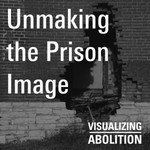
Podcast Unmaking the Prison Image

Unmaking the Prison Image

Visualizing Abolition

Society & Culture

Frequency: 1 episode/7d. Total Eps: 4

Hosting podcast Unknown

A three-episode series exploring the role documentary can play in imagining a world without prisons. Hosted by Pooja Rangan and supported by Visualizing Abolition.

Site
RSS
Apple

Recent rankings

Latest chart positions across Apple Podcasts and Spotify rankings.

Apple Podcasts

  • 🇩🇪 Germany - documentary

    08/06/2026
    #96
  • 🇨🇦 Canada - documentary

    25/04/2026
    #81
  • 🇨🇦 Canada - documentary

    24/04/2026
    #89
  • 🇨🇦 Canada - documentary

    23/04/2026
    #98

Spotify

    No recent rankings available


RSS feed quality and score

Technical evaluation of the podcast's RSS feed quality and structure.

See all
RSS feed quality
To improve

Score global : 68%


Publication history

Monthly episode publishing history over the past years.

Episodes published by month in

Latest published episodes

Recent episodes with titles, durations, and descriptions.

See all

Film Pedagogy as Abolitionist Practice

Season 1 · Episode 1

mardi 21 avril 2026Duration 01:27:28

What does it mean to learn filmmaking as a practice of abolition?

In this first episode of Unmaking the Prison Image, host Pooja Rangan speaks with filmmakers and educators Christopher Harris, Brett Story, and Thanh Tran about how documentary shapes what we think we know about prisons, and how filmmaking can help us unlearn those assumptions.

The conversation traces how media literacy becomes a form of political education, from community radio to experimental cinema and a self-taught film collective inside San Quentin prison. Thanh recounts teaching himself filmmaking from a closet full of unused cameras inside prison. Brett reflects on learning narrative responsibility through activist media work. Chris asks how carceral images shape perception, and how dissonant filmmaking can interrupt them.

Together, they ask: What allows an image to do abolitionist work? And how can filmmaking become a collective practice for imagining worlds beyond incarceration?

Citations:

Media Resources

Full transcripts for each episode are available at https://ias.ucsc.edu/unmaking-the-prison-image/.

Unmaking the Prison Image is a production of Visualizing Abolition, a public scholarship initiative at the University of California, Santa Cruz, directed by Gina Dent and Rachel Nelson. Additional support comes from Amherst College.

Music credit: Pray by Terri Lynne Carrington and Social Science

Unmaking the Prison Image: Trailer

Season 1

mardi 14 avril 2026Duration 01:30

Welcome to Unmaking the Prison Image, a three-episode series exploring the role documentary film can play in imagining a world without prisons. Host Pooja Rangan speaks with filmmakers, scholars, and system-impacted artists and organizers who are rethinking the role documentary plays in shaping how we see, and imagine, prisons.

Unmaking the Prison Image is a production of Visualizing Abolition, a public scholarship initiative at the University of California, Santa Cruz, directed by Gina Dent and Rachel Nelson. Podcast produced by Alex Moore, Louise Leong, and Pooja Rangan. Eric “Maserati E” Abercrombie is our editor and sound designer. The theme music for Visualizing Abolition is Pray by Terri Lyne Carrington and Social Science. Our cover art features an image from Christopher Harris’s still/here. Transcripts available at https://ias.ucsc.edu/unmaking-the-prison-image/

Against the Carceral-Entertainment Complex

Season 1 · Episode 3

mercredi 6 mai 2026Duration 01:28:35

What happens when entertainment joins forces with law enforcement? Who gets hurt, and who--or what--evades accountability? 

In Episode 3 of Unmaking the Prison Image, host Pooja Rangan is joined by filmmaker Davit Osit, critical criminologist Michelle Brown, and formerly incarcerated policy advocate and founder of America on Trial, Inc. Vidal Guzman to discuss the social costs of carceral entertainment, from reality TV shows filmed inside prisons to self-appointed vigilantes and "predator catchers." 

Davit Osit reflects on the ethical contradictions of documentary filmmaking, including his own film Predators, and walking the tightrope of complicity and challenge. Michelle Brown situates "carceral entertainment" within a broader political landscape that exhausts our imagination and normalizes punitive responses to harm. Vidal Guzman talks about how incarcerated people experience the physical and legal harms of incarcerated reality shows like 60 Days In and his work on the #AIRS (Abolish Incarcerated Reality Shows) campaign.

Citations:

  • AIRS Campaign (Abolish Incarcerated Reality Shows)
  • America on Trial, Inc.
  • The Appalachian Justice Research Center
  • Ruth Wilson Gilmore, Golden Gulag: Prisons, Surplus, Crisis, and Opposition in Globalizing California.
  • Michelle Brown, The Culture of Punishment: Prison, Society and Spectacle 
  • Michelle Brown and Travis Linneman, Under the Gun: Criminology Goes Back to the Movies
  • Paul Kaplan and Daniel LaChance, Crimesploitation: Crime, Punishment, and Pleasure on Reality Television
  • Angela Davis, Are Prisons Obsolete?
  • Pooja Rangan, The Documentary Audit: Listening and the Limits of Accountability


Media Resources:

  • Predators (dir. David Osit, 2025)
  • The Prison in Twelve Landscapes (dir. Brett Story, 2016)
  • Bulletproof (dir. Todd Chandler, 2020)
  • Riotsville, USA (dir. Sierra Pettengill, 2022)


Unmaking the Prison Image is a production of Visualizing Abolition, a public scholarship initiative at the University of California, Santa Cruz, directed by Gina Dent and Rachel Nelson. Additional support comes from Amherst College. Full transcripts for all episodes are available at https://ias.ucsc.edu/unmaking-the-prison-image/.

Theme music for Visualizing Abolition is Pray by Terri Lyne Carrington and Social Science. Our cover art features an image from Christopher Harris’s still/here.

What About the Rapists and Murderers?

Season 1 · Episode 2

mardi 28 avril 2026Duration 01:24:45

This episode includes discussion of rape and sexual violence. We recognize that these topics may be difficult or distressing for some listeners, so please take care while listening and feel free to pause or step away at any time.

What happens when abolition meets its most common objection?

In Episode 2 of Unmaking the Prison Image, host Pooja Rangan brings together curator and scholar Rachel Nelson, documentary scholar Laliv Melamed, and feminist filmmaker Deepa Dhanraj to confront the question that often marks the limit of abolitionist imagination: “But what about the rapists and murderers?”

Drawing from personal experience and feminist media practice, the conversation examines how rape becomes a powerful moral and emotional boundary in debates about prisons across multiple geopolitical contexts.

Citations


Additional Resources

Unmaking the Prison Image is a production of Visualizing Abolition, a public scholarship initiative at the University of California, Santa Cruz, directed by Gina Dent and Rachel Nelson. Additional support comes from Amherst College.

Theme music for Visualizing Abolition is Pray by Terri Lyne Carrington and Social Science. Our cover art features an image from Christopher Harris’s still/here. Full episode transcripts are available at https://ias.ucsc.edu/unmaking-the-prison-image/.


Related Shows Based on Content Similarities

Discover shows related to Unmaking the Prison Image, based on actual content similarities. Explore podcasts with similar topics, themes, and formats, backed by real data.
Podcast The Connect- with Johnny Mitchell
© My Podcast Data