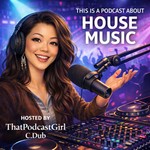
Dig through house music history by city and decade. Immerse yourself in ASMR stories of the birth of House Music and its regional influences.
r/thatpodcastgirl
All episodes and more at https://www.thatpodcastgirl.com
This podcast is perfect for: people who like the style of an ASMR, spoken slowly, in a moderated tone, perfect for putting the entire season on autoplay while you do work in the background
Disclaimer: Some names and personal details in this episode have been changed or composited to honor privacy while preserving the emotional and cultural truth of these histories.
Site
RSS
Recent rankings
Latest chart positions across Apple Podcasts and Spotify rankings.
Shared links between episodes and podcasts
Links found in episode descriptions and other podcasts that share them.
Under the vision of Peter Gatien, New York began to experiment with scale. Limelight, housed inside a deconsecrated church, offered stained glass windows and marble floors that glowed under strobes. The Tunnel stretched long and narrow, a place where each room carried a different fantasy. Club USA sat on Times Square like a wild attraction, complete with a slide that carried dancers from the balcony down into the crowd. Palladium mixed ballroom glamor with club futurism.
These clubs treated nightlife as theater. They were built for spectacle and for the feeling that anything could happen inside their walls.
The soundtrack of the megaclub era needed a conductor: someone who could take a massive room, a restless crowd, and a long night, and shape it into a story. That conductor was about to arrive.
Junior Vasquez had been in the city for years before he became a name people whispered with reverence. He started as a studio assistant, then remixer, and eventually found his way into the booth at Bassline. His early sets were raw, emotional, and tightly shaped. You could hear the influence of disco, but he pushed the music harder, darker, and more cinematic.
Everything changed when the Sound Factory opened on West 27th Street.
The Factory became Junior’s canvas. His marathon Saturday night sets often lasted until noon the next day. Dancers would talk about arriving in the dark and walking out into bright sunlight with mascara running and sweat drying on their skin. Junior had an uncanny ability to build tension for long stretches. He kept dancers suspended in anticipation and then broke the room open with a kick or a vocal line that felt like release.
He treated the booth like a laboratory. Rumor had it he would isolate frequencies and push EQ curves in ways that made the body feel the shift before the ear fully understood it. Regulars began calling themselves “Junior’s Children.” They followed him with devotion because he created a space where pain and joy could move through the body without explanation or judgment.
During the AIDS crisis, the dance floor became a place where people carried grief quietly inside them. Junior built sets that allowed that grief to surface without language. This wasn’t therapy in the clinical sense. It was community surviving the only way it knew how.
New York was a magnet for models, musicians, and artists. The supermodel era was thriving. Designers were pushing boundaries. And celebrities wandered into Junior’s booth because they wanted to feel the way the Factory felt.
Madonna appeared frequently, and their artistic relationship became its own legend. Junior remixed tracks for her, and she fueled his visibility. Their bond was complicated but electric. When he created the track “If Madonna Calls,” it sparked tension, humor, and myth. It became one of those New York stories people still repeat because it captures the wild intimacy of that era when fame and nightlife were always bumping into each other.
Designers also drew from the energy of his nights. Runways picked up the rhythm of house. Magazine spreads reflected the neon glow of the clubs. The line between fashion and nightlife blurred to the point where it felt like they were breathing the same air.
While Junior held the energy of the night, another revolution was happening during the day inside recording studios. Record labels were beginning to understand something dancers had known for years. A remix could change everything.
Producers and DJs like David Morales, Masters At Work, Frankie Knuckles, Satoshi Tomiie, François K, Hex Hector, and Armand Van Helden turned remixes into cultural events. Major artists began requesting club versions of the
Copyright 2025. “This is a Podcast About House Music” hosted by C-Dub
Detroit House: Then and Now (Kevin Saunderson, KMS Records, Paragon, Brooklyn: S2 E5)
Hey everyone, I’m C. Dub. And this is a podcast about house music.
When we last left Detroit, house and techno were twins raised in the same neighborhood—one born of gospel and groove, the other of machines and math. But the story didn’t end in those warehouses. It kept growing, shaped by the people who carried both sounds in their bones.
Kevin Saunderson was one of them.
He was born in Brooklyn in 1964, but his family moved to Belleville, Michigan when he was still a kid. The move dropped him right between farmland and factory smoke. Detroit was close enough to feel, but far enough to dream about. At home, his older brother’s records spun Parliament, Stevie Wonder, and Ohio Players. Late at night, the radio turned futuristic—Kraftwerk, Prince, The Electrifying Mojo. Those frequencies collided in his mind. Funk met circuitry. Soul met sequence. That’s where the blueprint started.
At Belleville High, he met two kids who heard music the same way: Juan Atkins and Derrick May. They weren’t the popular ones. They were the ones talking about drum machines no one had seen and records no one else understood. They built a friendship out of sound. Juan was the philosopher. Derrick was the provocateur. Kevin was the engineer—the one who could take an idea and make it move.
By 1987, he founded KMS Records—his initials on the door, his fingerprints on the city’s next chapter. It was one of the first Black-owned electronic labels to release straight from Detroit to the world. The label became a launchpad for his own projects and for producers who were inventing Detroit techno in real time.
Then came Inner City, his collaboration with vocalist Paris Grey. Their sound wasn’t borrowed from Chicago or Europe. It was Detroit optimism with a house heartbeat.
In 1988, “Big Fun” hit the UK Top 10. “Good Life” followed and crossed continents. These weren’t crossover tracks; they were cross-pollinations—soulful, synthetic, and deeply human. Inner City didn’t just make radio hits; they made history.
Legendary NYC DJ David Morales gets his start in House Music (S1 E5 my favorite)
Hey everyone, welcome back to *House Foundations*—the podcast where we celebrate the legends, the anthems, and the stories that shaped house music. I’m your host, C. Dub.
Today, we’re getting into the life and legacy of someone whose name is etched deep into the foundation of this culture. A Grammy-winning remixer, global DJ, and true craftsman of the dancefloor: **David Morales**.
He took house music from the basement to the Billboard charts, from Brooklyn block parties to Ibiza sunrises. But before all of that, he was just a kid in Flatbush chasing sound—and that’s where we start.
David Morales was born in 1962 and raised in Flatbush, Brooklyn—a neighborhood bursting with music, movement, and survival. His mom raised him as a single parent, working long hours to keep the home together. Life wasn’t easy, but it was alive.
Flatbush back then was a cultural crossroads—a swirl of Caribbean rhythms, Black American soul, Puerto Rican pride, and working-class grit. The soundtrack of his childhood came from every corner: soul out the window, funk blasting from cars, reggae pulsing from open shops, and the occasional salsa drifting from kitchen radios. It was chaotic, vibrant, and full of rhythm.
Morales was drawn to music from the start. He tells this story about being three or four years old, finding a record at a friend's house—"Spinning Wheel" on RCA Victor—and just knowing it mattered. Not because he understood it, but because it made him feel something. That curiosity never left.
He grew up above a local social club, and the real education came early in the mornings, when the party was over and the grown-ups were gone. The door would be cracked open, the air still thick with perfume and smoke, the music equipment still buzzing low. Little David would wander in, fascinated by what had just happened in that room. The vibe was still there, even without the people. And somehow, **he understood the energy music left behind.**
Early 90s: House Music Reaches UK, Berlin's Love Parade, and Mix Tapes (S1 E4)
“Hello, house enthusiasts! Welcome back to House Foundations. I’m C Dub your host, and today, we’re journeying through the early ’90s—a transformative era when house music transcended its Chicago roots and captivated dance floors worldwide. From the underground clubs of Berlin to the bustling streets of Tokyo, house music became a universal language of rhythm and unity.”
“By the dawn of the 1990s, house music had firmly planted its flag in numerous cities across the globe. In the United States, while Chicago remained a pivotal hub, other urban centers like New York, Detroit, and San Francisco began cultivating their own unique house scenes. Each city infused the genre with its distinct cultural flavors, enriching the tapestry of house music.”
“New York City, in particular, emerged as a powerhouse in the house movement. The city’s dynamic energy and melting pot of cultures fostered a fertile ground for innovation. Clubs like the Sound Factory and Shelter became sanctuaries for house aficionados. DJs such as David Morales and Frankie Knuckles, who had migrated from Chicago, mesmerized crowds with their eclectic mixes. Morales’s remix of Mariah Carey’s ‘Dreamlover’ exemplified the seamless blend of pop sensibilities with house rhythms, making the genre more accessible to mainstream audiences.”
“Across the Atlantic, the United Kingdom was experiencing its own house renaissance. The late ’80s acid house wave had set the stage, and by the early ‘90s, the UK was producing its own house anthems. Labels like XL Recordings were at the forefront, releasing seminal tracks that would define the era. The Prodigy’s early work, for instance, showcased a fusion of house beats with breakbeat hardcore, pushing the boundaries of the genre.”
“Meanwhile, in continental Europe, cities like Berlin and Paris were embracing house music with open arms. Berlin’s Love Parade, which began in 1989, grew exponentially in the early ‘90s, drawing hundreds of thousands of revelers. The city’s unique history and burgeoning club scene made it a hotspot for electronic music. Parisian clubs, too, were pulsating with house beats, with DJs like Laurent Garnier leading the charge. Garnier’s track ‘Crispy Bacon’ became a staple in the European house scene, known for its driving rhythm and innovative sound.”
The Late 80s: Chicago, New York, and UK House Music Grows Up (S1 E3)
Host “Hey everyone, welcome back to House Foundations! I’m C Dub your host, and today, we’re diving into an exciting chapter: the mid to late 1980s, when house music burst out of Chicago and took the world by storm. We’ll explore how this underground sound became a global phenomenon between 1985 and 1990.”
Host “By 1985, Chicago had firmly established itself as the epicenter of house music. But why Chicago? Well, the city’s rich musical heritage, combined with its vibrant club scene, created the perfect breeding ground for innovation. Clubs like The Warehouse and the Music Box were more than just venues; they were cultural hubs where DJs like Frankie Knuckles and Ron Hardy experimented with new sounds, blending disco, electronic, and synthesized beats to craft something entirely fresh. This unique environment fostered a sense of community and creativity that was unparalleled.”
“In 1986, Farley ‘Jackmaster’ Funk released ‘Love Can’t Turn Around,’ featuring Darryl Pandy. This track became one of the first house records to chart in the UK, peaking at number 10. Its success overseas signaled the beginning of house music’s international appeal. Farley once said, ‘We were just making music for our friends in Chicago; we had no idea it would blow up like this.’”
“Meanwhile, in the UK, the late ‘80s saw the rise of the acid house movement. Clubs like Manchester’s Haçienda became epicenters for this new sound. British DJs and producers embraced the Chicago house style, infusing it with their own electronic influences. This cross-pollination led to a rave culture that swept across Europe. A regular at the Haçienda recalled, ‘Those nights were magical; the music was like nothing we’d ever heard before.’”
“Back in Chicago, the group Phuture, led by DJ Pierre, released ‘Acid Tracks’ in 1987. This track is often credited with pioneering the acid house subgenre, characterized by its squelchy basslines produced by the Roland TB-303 synthesizer. DJ Pierre reflected, ‘We were just messing around with the 303, trying to make it sound different. We didn’t know we were creating a whole new sound.’”
Chicago House Music: The Power Plant and Smart Bar in the early 80s (S1 E2)
Host: Hello, groove aficionados! Welcome back to House Foundations, where we don't just spin tracks—we unravel the tales behind the beats. I'm your host, C Dub, and today, we're diving deep into the iconic house music venues that defined Chicago and New York City.
Previously, we've explored Chicago's legendary Warehouse with Frankie Knuckles and the electrifying Music Box helmed by Ron Hardy. Today, let's shine a spotlight on two other Windy City institutions that kept the rhythm alive: Smart Bar and The Power Plant.
Picture this: It's 1982 in Chicago. The city is still reeling from the aftermath of Disco Demolition Night, but amidst the rubble of disco records, a new sound is emerging. Enter Smart Bar, nestled in the basement of the Metro building at 3730 North Clark Street. Founded by Joe Shanahan, this venue was envisioned as a haven for the burgeoning dance music scene. As Shanahan recalls, "I distinctly remember how Division Street and Rush Street clubs would not even let you on the dancefloor without someone of the opposite sex. If you tried to dance by yourself or in a same-sex couple, the bouncer would tell you to leave."
Smart Bar prided itself on its eclectic mix, drawing goths, rockers, industrial fans, and house heads under one roof. DJs like Frankie Knuckles and Joe Smooth graced its decks, spinning sets that often stretched into the early morning hours. The club's inclusive atmosphere and dedication to musical exploration ensured its lasting legacy in Chicago's nightlife. As one patron reminisced, "It was a special place. There was a variety of other alternative music types, all together.“
After departing The Warehouse, Frankie Knuckles established The Power Plant in 1983. Situated on the Near West Side, this venue became his new playground, where he continued to innovate and define the house sound. Knuckles' sets were legendary, often featuring his own edits and remixes, keeping the dance floor pulsating until dawn. The Power Plant attracted a diverse crowd, all united by their love for the emerging house sound. Unfortunately, the club's reign was short-lived, closing its doors in 1985, but its impact on the Chicago house scene was indelible.
Disco Demolition Night, 1979 and House Music is born in Chicago (S1 E1)
Hey everyone, welcome to House Foundations! I'm C Dub, and today, we're embarking on a journey through the origins of house music—a genre that's been the heartbeat of dance floors for decades. As someone who's always been into reggaeton and Afrobeats, I'm excited to delve into the rich history of house music, especially after a friend's enthusiasm piqued my curiosity. So, let's explore this together!
Our story begins in the late 1970s. Picture this: It's July 12, 1979, at Chicago's Comiskey Park. The event? 'Disco Demolition Night.' Organized by radio DJ Steve Dahl, fans were invited to bring disco records to be blown up on the field. What started as a promotional stunt quickly spiraled into chaos, with thousands storming the field, setting fires, and chanting 'Disco sucks!'
So why did Steve Dahl do this? He organized this event after being fired from his job at WDAI radio station when it switched from rock to disco. Feeling spurned, he channeled his frustration into an anti-disco campaign, culminating in this explosive event. While some saw it as a pushback against disco's mainstream dominance, many felt a deeper sting. Disco was a haven for Black, Latino, and LGBTQ+ communities—a space where they could express themselves freely. Vince Lawrence, a young Black usher at the event, later reflected, 'Basically, if you were Black, gay, or sympathized with either of the above, you were being punished.'
"From this turmoil, a new sound emerged. Marginalized communities, feeling sidelined, sought refuge in underground venues where they could dance without judgment. One such sanctuary was 'The Warehouse' at 206 South Jefferson Street in Chicago. Established in 1977 by Robert Williams, this club became a beacon for many.
At the helm was DJ Frankie Knuckles, often dubbed the 'Godfather of House.' He didn't just play tracks; he reinvented them. By blending disco classics with European electronic music and layering in drum machine rhythms, he crafted a sound that was both nostalgic and revolutionary. This fusion laid the foundation for what we now know as house music.
New York City House Music: Part 2 (Untold Stories in House Music: S2 E4)
Welcome back, beautiful souls… it’s that podcast girl, C-Dub. I wanted to give a quick shout out to our listeners tuning in from the UK tonight, thanks for your support from across the world.
Tonight—especially since the episodes on New York, New Jersey, and Detroit House Music are leading our search charts—we’re leaning deep into the roots, starting with New York City. We’re not just touching the pulse of ’90s NYC house. We’re breathing the air from those rooms.
Red Zone wasn’t just a club—it was a confession. David Morales famously called it the place where he “made a statement for the new age,” and he wasn’t exaggerating. He described that era as mixing the “dark side”—minimal vocals or no vocals—not just music, but revolution in 4/4. He said, “Red Zone was the turning point on the map for music changing.” People remember it as the spot that flipped disco into club soul through sheer grit, vinyl dig, and rebellious rhythm.
Red Zone was theater in flesh; the naked, the naughty, and the unapologetic moved inside it. The club embraced extreme self-expression—think raw nudity, sex, spontaneous hookups, and sometimes eruptions of violence. It was a place where curtains, fog, and a pulsing beat blurred lines between pleasure and performance. The edge was always one step away from confrontation, because survival in that crowd meant daring to be seen.
This was the home turf of the Club Kids—Michael Alig, James St. James, Screamin Rachael, Lady Buddy, Dan Dan the Naked Man, Goldie Loxxx—and the rest of that flamboyant crew who tore the norm apart with feathers, glitter. Their wild identities flashed, flirted, and fought in the space. They were Red Zone.
Imagine this: curtains hiding backrooms where sex happened behind velvet folds. Fog machines creating halos you couldn’t see—but felt in your bones. Fights that erupted out of passion or possession, fueled by too much adrenaline, and too little filter. Sex, chaos, and liberation weren’t just tolerated—they were invitation-only. Red Zone allowed things to come unhinged, and unhinged they became.
The Record Store (Untold Stories in House Music: S2 E3)
This is a podcast about house music. I'm thatpodcastgirl, C-Dub—and I want to thank all of you for helping us hit over 200 downloads in just three and a half months, across 11 episodes. JohnJohn guess what? We did it!
This episode is called: The Record Store.
Picture this: It’s the early '90s. Somewhere between grit and gold chains. Between big dreams and dirty sneakers. And on both coasts—if you wanted to find a sound, you walked into a record store.
Let’s start with Chicago.
Gramaphone Records: it wasn’t big. Tucked into a narrow space on Clark Street, its walls were crowded with bins and bins of vinyl. The floor had the signature black and white checkered tile. It smelled like plastic and cardboard and gum stuck to a sneaker. Flyers were shoved under the glass of the counter. The lighting was harsh and honest. But it was church.
DJs walked in like they had a mission. They’d flip through crates with the reverence of a surgeon in the middle of a procedure. Customers would clear out of the way if someone serious walked in. Because the booth in the back? That was sacred ground.
Behind the glass, a selector would listen to your picks. The staff could tell if you knew what you were doing by the second record you previewed. “If you played the wrong thing too loud, they’d cut the sound. You’d feel it before you even noticed.”
Gramaphone didn’t sell records. It passed on secrets. There were codes in the track listings. White labels with no names. You’d find the record someone played at 3AM that melted your brain—and it wouldn’t be there next week. You either knew when to come, or you didn’t and missed out.
Frankie Knuckles was a regular. So was Derrick Carter. But even if you weren’t a name, you could be a witness. One customer remembered watching Derrick build an entire set in the store over two hours—testing tracks, building tension, then walking out without a word.
Die-In On The Dance Floor (Untold Stories in House Music: S2 E2)
This is a podcast about house music. I’m thatpodcastgirl, C Dub, and I’m here to guide us through the untold stories behind the house music. This season, we’re remembering what was almost lost—what pulsed in the basslines and lived in the corners. Stories that stayed alive only because someone danced them into memory. Picture this:
It’s 2024, and you’re in Berlin. A DJ pulls out a vinyl with no label and no sleeve. Just black wax and instinct. She drops it. It’s from Shelter. A remix from decades ago. The crowd roars. But most people in the room don’t know that track was once played in protest. They don’t know about the night the beat was an act of defiance.
In the early 1980s, a virus began to spread. And for far too long, the world stayed quiet.
The clubs that gave people freedom—places like the Warehouse, the Paradise Garage, the Power Plant—became spaces of mourning. Dancers disappeared every week. DJs lost their friends. Party flyers became obituaries.
The government wasn’t naming it. So the music did.
Michael Roberson is a scholar, a father of the House of Garcón, and a Black queer activist. He’s often spoken about the ballroom floor as a sacred place during the AIDS epidemic.
“We were losing people every week. So we danced with them, for them, through them.”
For Michael and so many others, house wasn’t just escape. It was church and it was ritual. It was where you could scream into the bass and still be held.
At the Paradise Garage, DJ Larry Levan began playing extended versions of tracks with long breakdowns and pauses. Sometimes he left full seconds of silence.
Kevin didn’t stop there. Under other names—E-Dancer, Reese, Tronik House—he kept pushing deeper underground. In 1988 he released “Just Want Another Chance,” a track whose bassline became immortal. That detuned low-end, now known as the Reese bass, shaped drum & bass, jungle, dubstep, and half the darker corners of modern electronic music. His fingerprints are in genres that didn’t even exist when he pressed that record.
As house and techno grew into global industries, Kevin stayed rooted. He kept the independent grind alive, touring, mentoring, and producing from his KMS studio. He welcomed young Detroit artists like MK and Carl Craig, offering gear, advice, and patience. He wasn’t a gatekeeper. He was a gardener.
His legacy runs in the family now. His sons, Dantiez and DaMarii, are producers and DJs, carrying the Saunderson name into new decades. Every year at Movement Festival on Detroit’s riverfront, Kevin still headlines. He’s treated like royalty there, but he plays like a worker—head down, hands on, eyes on the crowd.
He’s received official recognition for it too. In 2016, the City of Detroit awarded him a Spirit of Detroit Resolution Award for his contributions to electronic music. He’s also been honored internationally for advancing Detroit’s global presence in arts and culture. For a kid who started making beats in his bedroom, that’s a full-circle moment.
Kevin’s story is full of side roads too. He’s collaborated with artists you might not expect—from British rappers to European producers like KiNK on the 2017 track “Idyllic,” a playful, retro-futurist piece that felt like a wink to his eighties self. His remixes of pop and hip-hop acts in the lat
Copyright 2025. “This is a Podcast About House Music” hosted by C-Dub
What set Morales apart was that, even in a Puerto Rican home, he gravitated toward Black American music. He wasn’t spinning salsa or Latin jazz in his room—he was locked into funk, disco, soul. It wasn’t about turning away from his culture—it was about chasing the groove that spoke to his spirit.
His first real brush with DJing came at 13—at his prom. He remembers standing outside, hearing First Choice's "Ten Percent" playing, and seeing a DJ for the first time with **two turntables.** That blew his mind. The idea that someone could mix from one record into another? It was like magic.
By 15, Morales was trying it for himself. But here’s the thing—he didn’t have pro gear. He was using a mic mixer with **no cueing** capability. He wasn’t even supposed to be running turntables through it, but he made it work. He figured out how to phase tracks in and out by ear. It was messy, but he was doing it.
He was learning with scraps, not state-of-the-art tech. And that’s part of the legend: Morales wasn’t handed the tools—he **willed** them into existence.
In 1980, Morales discovered **The Loft**. Saturday nights. Twelve, fifteen hours of dancing. David Mancuso’s sound system. That room. That experience.
That place taught him that DJing wasn’t about being flashy—it was about curating an emotional journey. It was about taste, pacing, dynamics. And that changed everything for him.
Soon after, Morales found himself behind the decks regularly—clubs like the Ozone Layer, Red Zone, The World. Places that defined New York’s nightlife.
He developed a rep for long sets, deep transitions, soulful builds. He didn’t just play records—he **sculpted** nights.
But he wasn’t just DJing—he was starting t
Copyright 2025. “This is a Podcast About House Music” hosted by C-Dub
“Back in the U.S., the West Coast was carving out its niche in the house landscape. San Francisco’s vibrant LGBTQ+ community played a significant role in nurturing the scene. The city’s clubs, such as The EndUp and 1015 Folsom, became epicenters for house music, with DJs like Doc Martin spinning tracks that blended deep house with elements of funk and soul. His sets often featured tracks like ‘Is the Swing,’ which encapsulated the West Coast’s unique take on the house genre.”
“Distribution channels for house music also evolved during this period. Independent record labels proliferated, pressing vinyl records that DJs would spin in clubs and on radio shows. The rise of mixtapes and DJ mixes allowed the sound to spread beyond club walls, reaching listeners in their homes and cars. This grassroots distribution was instrumental in building a dedicated following.”
“Reflecting on this era, it’s evident that the early ‘90s were a time of rapid expansion and innovation for house music. The genre’s infectious rhythms and inclusive ethos resonated with people from diverse backgrounds, fostering a global community united by the dance floor. As we move forward, we’ll explore how house music continued to evolve, giving birth to numerous subgenres and influencing countless artists.”
“Thank you for joining me on this journey through the early ‘90s house scene. Until then, keep the beats alive."
Copyright 2025. “This is a Podcast About House Music” hosted by C-Dub
“As house music spread, it began to influence and blend with other genres. In New York, the garage house scene emerged, named after the Paradise Garage club, where DJ Larry Levan reigned supreme. His eclectic mixes and emotive style added a soulful dimension to house music. Levan once mentioned, ‘It’s all about emotion; if the music doesn’t move you, what’s the point?’”
“New York’s house scene was further enriched by influential figures like Todd Terry, who fused hip-hop and house to create a grittier sound. His 1988 track ‘Can You Party’ under the alias Royal House became a dancefloor staple. Terry noted, ‘I wanted to bring the streets into the clubs, mixing the rawness of hip-hop with the energy of house.’ The Burrell brothers, Ronald and Rheji, also left a significant mark with their work on Nu Groove Records, producing deep, minimalist tracks that still resonate today. Additionally, clubs like The World in the East Village became melting pots for diverse crowds, featuring performances by artists such as Madonna and Public Enemy, and hosting DJs like David Morales and Frankie Knuckles, who further popularized house music in the city. ”
“Record labels played a crucial role in this expansion. In the UK, labels like FFRR and Rhythm King began signing house tracks, helping to bring the sound to a broader audience. Meanwhile, Chicago’s Trax Records continued to churn out hits, solidifying the city’s influence on the global stage. Marshall Jefferson, whose ‘Move Your Body’ became an anthem, noted, ‘We were just trying to make people dance; it’s amazing how far it’s come.’”
“By 199
Copyright 2025. “This is a Podcast About House Music” hosted by C-Dub
Now, let's hop over to the East Coast, where New York City was cultivating its own vibrant house scene. The Big Apple was home to several iconic venues that not only embraced house music but also played pivotal roles in its evolution.
At 84 King Street stood the Paradise Garage, operating from 1977 to 1987. Under the masterful curation of resident DJ Larry Levan, the Garage became a sanctuary for dance music enthusiasts. Levan's eclectic mixes of disco, soul, and emerging house tracks created an atmosphere that was both electric and intimate. His Saturday night sets were legendary, often stretching into Sunday afternoon. As Levan once said, "The Garage was more than a club; it was a family. We were all connected through the music."
Founded by David Mancuso in 1970, The Loft was initially an invitation-only party held in his own home at 645 Broadway. Unlike traditional nightclubs, it emphasized high-quality sound and a welcoming environment. Mancuso's audiophile approach and eclectic music selection made The Loft a seminal space for dance music culture. The parties were known for their inclusive atmosphere, attracting a diverse crowd united by their love for music and dance.
Opened in 1989 at 530 West 27th Street, The Sound Factory quickly became a focal point for house music enthusiasts. DJ Junior Vasquez held a residency there, drawing crowds with his innovative mixes and energetic sets. Vasquez noted, "The Sound Factory was a place where I could experiment, where the crowd truste
Copyright 2025. “This is a Podcast About House Music” hosted by C-Dub
Knuckles was known for his innovative use of equipment. He utilized reel-to-reel tape machines to extend tracks and create seamless mixes. Additionally, drum machines like the Roland TR-909 allowed him to add unique percussive elements, giving his sets a distinctive and mesmerizing rhythm.
Another iconic spot was the 'Music Box,' where DJ Ron Hardy ruled the decks. Hardy was renowned for his experimental mixes and electrifying energy. He once said, 'I don't play what's popular; I play what's good.' I like that. His fearless approach pushed the genre's boundaries and inspired countless artists.
Hardy was a pioneer in manipulating tracks to create a unique experience. He often sped up records, added effects, and wasn't afraid to play unconventional tracks people had never heard. His use of the reel-to-reel tape recorder allowed him to edit and loop tracks live, creating a hypnotic and energetic atmosphere that kept dancers on their toes.
So that’s the 1970s. Moving into the 1980s, the house music scene continued to evolve. Larry Heard, also known as Mr. Fingers, emerged as a pivotal figure. His track 'Can You Feel It' became an anthem, characterized by its deep basslines and emotive melodies. Heard's background as a drummer influenced his production style, bringing a rhythmic complexity to his music.
Heard's use of synthesizers and drum machines, like the Roland Juno-60 and TR-909, allowed him to craft lush, atmospheric tracks that stood out in the burgeoning house scene. His music bridged the gap between the dancefloor and introspective listening, adding a new dimension to the genre.
Meanwh
Copyright 2025. “This is a Podcast About House Music” hosted by C-Dub
Then came NASA nights at The Shelter—NASA stands for Nocturnal Audio Sensory Awakening. Moby called it “utopian,” and Chloë Sevigny said it “transcended raves.” Imagine a Tribeca loft drenched in light and smoke, with acid, trance, and jungle tracks all whirled through that booth by Scotto and DB.
And then there was Sound Factory. It was hallowed ground—Junior Vasquez said people told him they were “going to church on Sunday morning… but they meant Factory.” He co-founded that room with Richard Grant and Christine Visca in 1989. Right in the heat of New York house’s golden era, Junior Vasquez dropped a track that became infamous—not just for its sound, but for how it ended a whole era.
The track “If Madonna Calls” (1996) loops a snippet from what sounded like Madonna’s voice on his answering machine:
“Hello Junior… This is Madonna… are you there? Call me in Miami.”
It continued with a cheeky retort — “If Madonna calls, tell her I’m not here.” The vocal loop was so bold that it became known as a “bitch track”—campy, savage, and hilarious in its defiance.
The story goes: Madonna allegedly bailed on appearing at his club night at The Tunnel, leaving him in the lurch. He turned that moment into house-music history—with total disregard for permission or precedent. Not surprisingly, Madonna never forgave the joke. Their friendship—and any chance of future collaboration—was done.
Yet the track exploded on dance floors. It did hit #2 on Billboard’s Dance Club chart and became a cult anthem for underground queer scenes and ballrooms. DJ queens would perform it, the sound of gossip and betrayal turne
Copyright 2025. “This is a Podcast About House Music” hosted by C-Dub
“Gramaphone was like a dojo,” one woman said. “You didn’t go there to buy. You went to train.”
Over in New York—it was different.
Downtown, you had places like Vinylmania, Dance Tracks, and Satellite. Tucked behind basements. No two stores were the same. Some were dark and sleek, others crowded and chaotic. But all of them had a pulse.
Dance Tracks, on East 3rd Street, had tall racks and endless stacks, plus a community board with handwritten ads—DJ needed. Roommate wanted. One wall had stickers from clubs that no longer existed. Another had a memorial photo of someone from the scene, framed with scribbled tributes.
This is where Joe Claussell got his start. Where François K would come through in his sunglasses. Where a new DJ might overhear a conversation that would change everything.
One regular recalled being handed a record and told, “Don’t play this unless you mean it.” Another described the joy of walking in hungover, digging through wax, and finding a beat so perfect it made you cry.
At Vinylmania, there were whispers. About a rare Japanese pressing. About a reel from a closing party. About a limited promo that came in through someone’s cousin in Detroit. It wasn’t about the money. It was about the mythology.
These stores weren’t commercial. They were coded. You had to dress the part, or dress in defiance of it. Some people came in gender-blurred—baggy pants, nail polish, stubble and gloss—because in those four walls, there was no wrong way to be. In fact, dressing ambiguously sometimes gave you more space. People didn’t know how to categorize you, so they left you alone.
One woman recalls she never got called out for being a woman in the DJ booth because she wore oversized hoodies and kept her voice low. “If I didn’t speak, they assu
Copyright 2025. “This is a Podcast About House Music” hosted by C-Dub
Club historian Tim Lawrence says:
“People would stand still, or scream, or weep. The music gave them space to grieve.”
In 1989, ACT UP held a die-in at the CDC in Atlanta, Georgia. That same night, on the floor at a gay club in New York, dancers lay down in silence.
They called it dancing to remember.
There’s also a story about a track that included a voicemail. The voice said:
“I can’t go on.”
Nobody agrees on who made it, and some say it was a real message. Others say it was constructed from memory.
It was played only once. In a small club. Quiet room. Full of people who understood.
Then the beat dropped.
At the door, the ten-dollar cover might be for the DJ—or for someone’s casket. Sometimes it paid for AZT. Sometimes for rent, or a hospital bed.
At the Shelter in New York, one woman came every weekend, in the same shirt. She danced in the same corner.
“I’m here for my brother,” she told the DJ once. “He used to dance here. I still do it for him.”
At certain parties, there was a board behind the DJ booth—names were pinned, and candles lit. It wasn’t advertised because it didn’t need to be - those were friends.
Flyers used coded language: “This one’s for family,” or “bring your breath.” That meant someone had passed. That meant come ready to move through it.
These weren’t just parties. They were vigils on the dance floor.
Frankie Knuckles once said:
“You can play joy. But you can also play mourning. The floor knows the difference.”
The dancefloor didn’t ignore the crisis. It became the memorial.
And for some, it stayed that way. From the early 1980s through the late 1990s—and even into the 2000s in clubs like The Shelter and Body & Soul—these spaces continued to hold grief and memory. Candles continued behind the
Copyright 2025. “This is a Podcast About House Music” hosted by C-Dub
Related Shows Based on Content Similarities
Discover shows related to This Is A Podcast About House Music, based on actual content similarities. Explore podcasts with similar topics, themes, and formats, backed by real data.