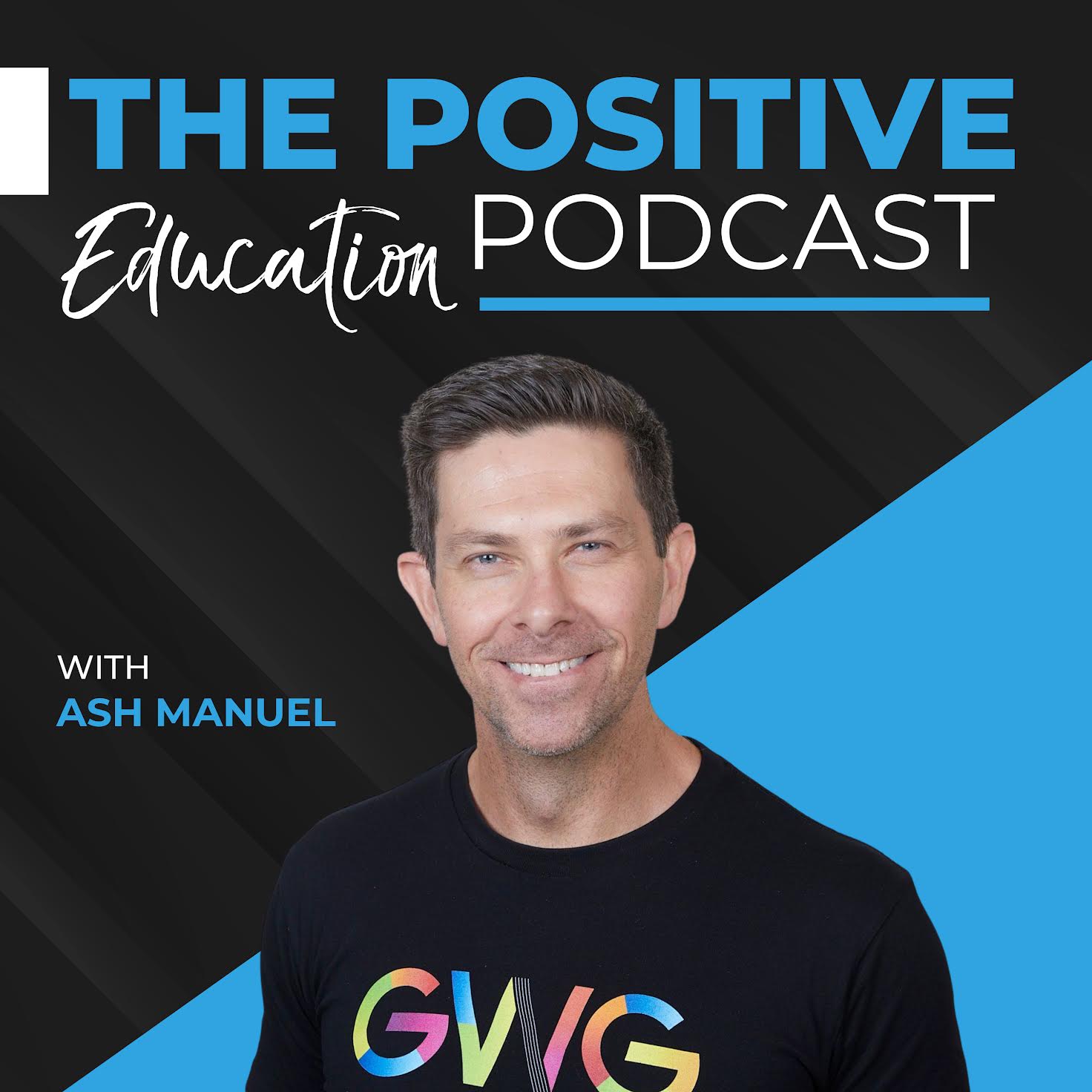
In this podcast you’ll hear stories, information and actionable ideas from positive education and wellbeing experts, school wellbeing coordinators, teachers and sports coaches. The purpose of the podcast is that you takeaway ideas that you can execute in your classroom, across your school, at your sports club and in your organisation, plus tips and tricks that you can apply in your own life.
Site
RSS
Apple
Recent rankings
Latest chart positions across Apple Podcasts and Spotify rankings.
Shared links between episodes and podcasts
Links found in episode descriptions and other podcasts that share them.
Discover shows related to The Positive Education Podcast With Ash Manuel, based on actual content similarities. Explore podcasts with similar topics, themes, and formats, backed by real data.
Episode #69 | Natalie Coote - Creating Safe Spaces: Supporting Students with Additional Needs
Wednesday, May 27, 2026 • Duration 41:03
In this episode with Natalie Coote, we dive into how wellbeing is embedded into the everyday experience at Riverland Special School, and what it truly looks like to support young people with additional needs through connection, structure, and personalised care. The conversation reinforces that wellbeing is not something extra, it is built through consistent actions, relationships, and understanding each student deeply.
Key Takeaways
Wellbeing is about students feeling safe, connected, and part of a genuine community, not just delivering a program.
The way students are welcomed each morning sets the tone, with small consistent moments helping staff quickly understand how each student is feeling.
Emotional regulation is taught intentionally, helping students recognise their feelings and use strategies before they are ready to learn.
Every approach is personalised, with learning, support, and pathways adapted to the individual rather than a one size fits all model.
Giving students a voice, especially through communication supports, builds confidence, connection, and a stronger sense of belonging.
Success is defined differently for each student, and growth can be seen in both big achievements and small moments of confidence.
Episode #68 | Damian Hill - Aleda: The Coaching Skill Every School Leader and Teacher Needs
Wednesday, April 1, 2026 • Duration 43:48
In this episode with Damian Hill, we dive into how better questions can transform the way educators lead, teach, and support students. From coaching conversations to classroom practice, this episode is packed with practical ways to shift from telling to empowering others to think for themselves.
Key Takeaways
Better questions help build ownership, allowing students and staff to take responsibility for their thinking and actions.
Coaching is about unlocking thinking rather than giving advice, leading to deeper learning and more sustainable outcomes.
The person with the problem should do the thinking, rather than relying on others to solve it for them.
Non-judgmental questions create trust and open the door for more honest reflection and meaningful conversations.
These questioning approaches can be used across classrooms, leadership, staff conversations, and even at home to build empathy and accountability.
Pausing and allowing space for thinking leads to better responses and stronger problem-solving.
Episode #59 | Sagar Bahadur – Supporting Students Across Cultures: Education, Wellbeing & Mobility
Wednesday, July 23, 2025 • Duration 43:24
In this episode with Sagar Bahadur, we dive into the future of international education, student mobility, and how institutions can better support learners across cultures, especially in India and South Asia.
Here are seven key takeaways from the conversation:
Only 2% of India’s 40 million higher education students currently study abroad, yet 58% aspire to access international education. This gap presents a major opportunity to rethink how global learning can be delivered within India.
Internationalisation is evolving beyond travel. Students are increasingly engaging with global education through short-term programs, hybrid learning, foreign faculty, international certifications, and local branch campuses.
India’s education landscape is vast and competitive, with limited university spots creating pressure for students to achieve high academic results, especially for elite institutions like the Indian Institutes of Technology.
The Indian government is focused on expanding access by promoting vocational education, skill development, and international collaborations, including mutual recognition of qualifications with countries like Australia.
Student wellbeing is a growing focus. Institutions are now offering more robust pre-departure and post-arrival support to help students navigate academic pressure, cultural change, and independent living.
Cultural transitions can be overwhelming for first-time international students. Sagar highlights the importance of preparing students not only academically, but emotionally for challenges like managing finances, homesickness, and balancing part-time work with studies.
Universities are being pushed to innovate. Acumen, Sagar’s organisation, is helping institutions explore new regions, delivery models, and partnerships from setting up campuses to building school pipelines and transnational programs.
More About Sagar is a recognised leader in global education strategy, with a 15-year track record of shaping and scaling international higher education initiatives. As the , he leads the region’s growth and expansion strategy for Sannam S4/Acumen, a premier global partner for strategic and sustainable international education. His work focuses on building bridges between institutions, governments, and students across borders, with a strong emphasis on long-term partnerships and high-impact outcomes.Sagar’s visionary leadership led to the successful launch of in 2022, securing over 40 global university collaborations and delivering rapid growth. His prior experience includes an 8-year tenure with , where he played a key role in establishing multiple international campuses. At , he redefined their India strategy, setting a benchmark for higher education market engagement across Asia. He also worked closely with , supporting their market development and institutional outreach across the region.Educated in , and further trained at and , Sagar brings a global outlook combined with deep regional insight.In the context of Japan, he has played a leading role in efforts to , especially across South Asia. His work focuses on building institutional capacity, enabling two-way...
Episode #58 | Isabella Portolesi – Belonging First: Creating Classrooms Where Every Student Matters
Tuesday, July 15, 2025 • Duration 45:00
In this episode with Isabella Portolesi, we dive into what it truly means to action Positive Education in the classroom, through both daily routines and intentional teaching. Isabella shares her journey from psychology to education, offering practical insights that every educator can relate to and apply.
6 Key Takeaways
Isabella transitioned from a clinical psychology focus to teaching because she was drawn to the proactive, preventative side of supporting young people. Positive Psychology allowed her to focus on building strengths, belonging, and meaning, rather than only addressing what’s broken.
A strong culture of belonging is at the heart of Isabella’s teaching. She uses inclusive classroom rituals, encourages student-led sharing, and ensures every student feels recognised for their individuality. These daily practices create a safe space where connection and learning can thrive.
Isabella emphasises the importance of both embedding wellbeing language across everyday interactions and explicitly teaching skills like gratitude, resilience, and character strengths. The two approaches work best when used together and revisited regularly.
By creating low-stakes challenges without instructions, such as origami or puzzles, Isabella helps students become aware of their inner dialogue. These reflective activities build confidence and demonstrate how mindset impacts learning and achievement.
Isabella reassures educators that Positive Education often isn’t something “extra.” Many of its principles are already happening in schools, through relationships, support and daily care. The key is to notice, refine, and build upon what’s already working.
Living the values of Positive Psychology is just as important as teaching them. Isabella believes modelling wellbeing through how we treat students, colleagues, and ourselves is what makes the biggest impact. Her approach is rooted in authenticity, purpose, and consistency.
More About Isabella
Isabella holds a Master of Applied Positive Psychology, complemented by qualifications in Psychological Science and Education. In collaboration with PeopleQ, her Master’s research explored the intersection of organisational psychology and wellbeing science, with a focus on how trust and team dynamics contribute to thriving workplace cultures.
Episode #57 | Matt Pitman – Connection Is the Curriculum: Leading with People at the Centre
Monday, June 30, 2025 • Duration 01:00:20
In this episode with Matt Pitman, we dive into the transformative power of connection in schools, what it really means, how it can be intentionally built, and why it’s essential for students, staff, and families. Matt shares practical strategies and leadership insights drawn from his experience as a head of school and author of The Connection Curriculum.
6 Key Takeaways
Connection isn’t a buzzword, it’s a framework. Matt outlines connection as a journey of relationships, belonging, and meaning, and shows how schools can intentionally support all three.
Human-first leadership matters more than ever. In a world focused on tech and outcomes, Matt reminds us that the person in the middle. The student, staff, or parent, must remain the focus.
Face-to-face interaction is underrated. Emails and calls have their place, but real connection comes from shared space, especially when working with families.
Leaders build connection by asking, not telling. Rather than providing quick answers, great leaders coach staff through reflection, helping them grow their own confidence and solutions.
Culture is created through the small things. From knowing a student’s weekend plans to welcoming parents at events, genuine connection grows through consistent, human moments.
You can sense connection when it’s there. While it’s not always easy to measure, signs of connection show up everywhere, in staff morale, student engagement, alumni returning, and parent relationships.
More About Matt Pitman
Matt Pitman is the Head of Senior School at Catholic Regional College Caroline Springs, a Catholic secondary school in the western suburbs of Melbourne, Victoria, and the author of The Connection Curriculum published by Amba Press. An experienced educational leader and a doctoral candidate researching connections across school communities, Matt’s experience is varied, from the leadership of curriculum teams and programs to student wellbeing, student improvement and community engagement portfolios. He has led Positive Education and student support programs and has a passion for working with students, parents, and staff to develop new understandings of the needs of young people in the 21st century.
Episode #56 | Jacqui Clarke – Money and Wellbeing: What Every Teacher Should Know
Monday, June 23, 2025 • Duration 54:09
In this episode with Jacqui Clarke, we dive into how money impacts teacher wellbeing, the importance of building healthy financial habits, and how we can teach students the value of financial literacy, no matter their age.
Key Takeaways:
Why financial wellbeing is directly tied to overall wellbeing, and how it often goes overlooked in schools
The importance of knowing your “open the front door” cost to feel more in control of your money
Simple, realistic habits teachers can use to build financial confidence and reduce money stress
How educators can introduce financial literacy in the classroom through practical, age-appropriate activities
Key financial concepts like compound interest and dollar-cost averaging, and how they can set students up for success
How to normalise money conversations with kids to build healthy lifelong attitudes toward money
More About Jacqui Clarke
Jacqui Clarke FCA, FTI, GAICD, JP, International award-winning author of Stop Worrying About Money (Wiley), is a trusted advisor, board member, executor and veteran business executive. As a personal wealth and money management expert and over three decades of experience, 25 years at Deloitte and PWC helping high-net-worth families, individuals and business owners to build, manage and preserve their wealth. Her message is simple: with careful planning and effort, you can manage your money, so it doesn’t manage you.
Episode #55 | Tansel Ali – Train Your Brain: Memory Secrets for Every Teacher
Monday, June 16, 2025 • Duration 50:42
In this episode with Tansel Ali, we dive into how teachers can sharpen their memory, boost mental clarity, and use practical memory techniques to connect more deeply with students and teach more effectively. Tansel shares actionable tools that can be applied immediately in the classroom, for both educators and students.
Key Takeaways:
Memory is a skill, not a gift. Anyone can improve their memory using proven techniques like visualization, association, and storytelling.
Remembering student names builds stronger connections. Tansel shares simple strategies to help teachers recall names quickly and with confidence.
Mind mapping reduces overwhelm and boosts comprehension. Organising information visually helps students and teachers retain and understand complex material more easily.
Speed reading improves learning by turning words into images. The goal isn’t speed for speed’s sake—it’s better comprehension through visual encoding.
Teachers don’t need to master every subject. Being just one step ahead of students is enough to teach effectively and reduce overwhelm.
Managing overwhelm is key to memory and focus. Practical tools like the “one-minute rule” help overcome procrastination and build momentum.
More About Tansel Ali
Tansel Ali is recognised as one of the world’s leading memory experts — helping individuals enhance their mental performance and sharpen their minds to succeed. He is a 4-time Australian Memory Sports Champion and the international bestselling author of The Yellow Elephant and How To Learn Almost Anything in 48 Hours.
Tansel is best known for his incredible feat of memorising two entire Yellow Pages phone books in just 24 days.
With over 20 years of experience training individuals and organisations, Tansel is a trusted advisor for those seeking a cognitive edge. His memory systems and practical strategies are used around the world and have been featured in bestselling books including by Cal Newport, , and by Jonathan Creek — as well as across television, documentaries, podcasts, and global media.
In this episode with Melo Calarco, we dive into the practical tools and powerful mindset shifts teachers can use to protect their wellbeing, prevent burnout, and perform at their best. Drawing on decades of experience, including cycling 30,000km across five continents, Melo shares transformational strategies tailored for educators working in high-pressure environments.
6 Key Takeaways
Self-awareness is the #1 skill to prevent burnout Melo explains why you “can’t change what you don’t notice”—and how educators must tune into early signs of stress and exhaustion before they spiral into burnout.
Burnout is more than tiredness, it’s complete depletion He outlines the three core indicators of burnout: persistent exhaustion, emotional detachment, and a loss of professional efficacy—plus how to tell if you’re “just stressed” or truly burnt out.
Micro-breaks are a game-changer for teacher wellbeing Teachers often wait until holidays to rest. Melo recommends 90-second breath breaks throughout the day to recharge, reset the nervous system, and protect long-term energy.
Role modelling wellbeing isn’t optional, it’s essential From meditation to mindful breaks, Melo emphasises that educators who model wellbeing practices help students develop their own emotional regulation skills.
A strong school culture can prevent staff burnout Toxic environments can amplify stress. Melo encourages open conversations, shared resources, and checking in on colleagues regularly to build a healthier team dynamic.
Train your mind like your body—with challenge and consistency Drawing on personal routines and endurance feats, Melo urges teachers to seek discomfort intentionally and build mental resilience through daily habits—even just one push-up or a 5-minute breath session.
More About Melo Calarco
As a TEDx Speaker and multi award-winning author, Melo loves sharing his passion with the world speaking about wellbeing, high-performance, resilience, mindfulness, mental health and so much more.
Episode #53 | Dr Huu Kim Le – Gaming Addiction Is Real: What Every Parent and Teacher Needs to Know
Monday, June 2, 2025 • Duration 43:53
In this episode with Dr. Huu Kim Le, we dive into the hidden dangers of gaming addiction, how screens are rewiring young brains, and what parents and teachers can do to set healthy, realistic boundaries.
Here are 6 key takeaways you won’t want to miss:
Gaming addiction is real and it’s growing fast Dr. Le shares how screen addiction is tearing families apart, with some children refusing school, becoming aggressive, and even experiencing suicidal thoughts due to compulsive gaming.
Screens are reshaping young brains during key development years Excessive screen time between ages 12–15 can impact the frontal lobe, reducing attention, self-control, and emotional regulation, similar to the effects of a mild brain injury.
Modern games are built to be addictive Dr. Le breaks down how game mechanics like loot boxes, daily rewards, and the “hook–habit–hobby” cycle are designed to keep kids playing and spending for as long as possible.
Boundaries beat battles when it comes to screen time He recommends tools like the TP-Link Deco M4 mesh router to automate screen limits and reduce arguments, alongside clear family agreements built on mutual understanding.
Schools must step up with stronger screen policies Without clear rules, students are gaming in class on school devices. Dr. Le explains how this deepens educational inequality and calls for a shift in school tech strategy.
A meaningful real-world goal is the best protection Young people need purpose outside of screens. Dr. Le says when kids have real-life goals they care about, they’re less likely to retreat into gaming for reward and identity.
More About Dr Huu Kim Le
Dr Huu Kim Le is an Australian child and adolescent psychiatrist specialising in internet gaming disorder and ADHD. Based in Adelaide, he founded CGI Clinic, Australia’s first telepsychiatry service dedicated to gaming-related mental health. Dr Le is a board member of the Australian Gaming and Screens Alliance and is a prominent advocate for responsible gaming. He has consulted internationally and frequently speaks at conferences on the psychological impacts of digital technology on young people.
Episode #52 | Ali Casiano – How educators Can Model Emotional Intelligence and Create Stronger Connections
Tuesday, May 27, 2025 • Duration 35:14
In this episode with Ali Casiano, we dive into how educators can build emotionally intelligent, connected, and future-ready classrooms—using practical tools from both schools and the tech world.
Here are 6 powerful takeaways you won’t want to miss:
EQ isn’t a one-time lesson—it’s a life skill Ali explains why emotional intelligence should be part of everyday classroom routines like journaling, breathing exercises, group sharing, and “good things” check-ins.
Model it before you teach it One of the most impactful things a teacher can do is show students how they manage their own emotions and challenges. That modelling builds deep trust and connection.
Connection leads to performance Students thrive when they feel seen and heard. Simple moments of reflection and conversation can boost empathy, engagement, and classroom culture.
Big tech EQ strategies work in schools too Ali shares how strategies from her work at Amazon—like daily reflection prompts and chatbot check-ins—can be adapted for schools using tools as simple as whiteboards or Google Forms.
AI can help—but the teacher is still the heart AI should support self-awareness and reflection, not replace human connection. It’s a powerful assistant, not a replacement for real conversations.
Kids need space to practise real-life skills Conflict resolution, empathy, and emotional awareness don’t happen by accident. Alinnette explains how role-play and storytelling can help kids develop these essential life skills early.
More About Ali
Ali is an educator, EQ Champion, Bestselling author, Organisational Leadership Strategist, and UX researcher at AWS with 15+ years of experience blending emotional intelligence, agile leadership, and system thinking. Founder of Growing Your EQ, helping brands and teams scale with purpose and people-first innovation. Bilingual, doctoral candidate, and advocate for inclusive, high-impact leadership.
Sagar Bahadur
Executive Director for India, South Asia, and South East Asia at Acumen
Acumen is widely regarded as a sector-leading firm, supporting over 100 global institutions across key education markets.
Gradstar Global Education
Amity Education Group
The University of Queensland
MDIS Singapore
Singapore
UCLA
ISB India
elevate Japan’s visibility and competitiveness as a global study destination
Driven by a genuine belief that everyone deserves a meaningful and purpose-filled life, Isabella brings warmth, curiosity, and evidence-based practice to her work. She is particularly passionate about helping individuals uncover their strengths and reach their full potential, whether in the classroom, in professional settings, or through collaborative research.
As an educator, Isabella values the opportunity to create safe and supportive environments where individuals are encouraged to grow, connect, and flourish.
Since 2020, Isabella has been an active member of the PESA SA Chapter, committed to championing system-wide wellbeing initiatives and expanding access to wellbeing science across all schools.
As a keynote speaker, Tansel delivers powerful and engaging talks worldwide, teaching people how to think faster, remember more, and learn better. He has led transformational initiatives such as the Australian Memory Championships, School Mind
Games, The FutureMinds Project, and TEDxDocklands, and has proudly served as a Celebrity Ambassador for Crohn’s & Colitis Australia and the AFL — inspiring people to live happier, healthier lives.
Tansel holds dual Master’s degrees in Information Systems Management (MISM) and Business Administration (MBA). He combines deep expertise in memory science and performance coaching to help people from all walks of life master memory, accelerate learning, and perform at their peak.
His workshops and keynotes have been described as ‘truly transformational’ drawing from his unique life lessons while cycling over 30,000km across five continents, where Melo learned to manage stress, build mental endurance, and overcome many challenges, including near-death experiences.
He now shares this profound experience with global companies and high performers to help them operate at their best, without the risk of burning out.