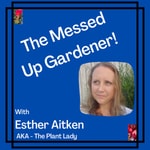
Hello and Welcome to The Messed Up Gardener. This podcast covers all areas of gardening from a beginner, intermediate to advanced level. It covers gardening on any budget, any space, any place. There are no rules when it comes to me, and my gardens and I do it messy. There is nothing more fun than getting your hands dirty and creating that space that gives you joy and abundance. This podcast will give tips, tricks, hacks and methodology’s to make any space work from the tiny indoor garden to the rolling meadows with even a dash of bees, mushrooms and hydroponics thrown in. I have been a horticulturist for as long as I can remember and in the industry since I was 15 so that’s nearly 30 years of hands on gardening experience. I am really looking forward to being on this journey & doing it messy with you.
Site
RSS
Apple
Data updated on 21/10/2026
Recent rankings
Latest chart positions across Apple Podcasts and Spotify rankings.
Shared links between episodes and podcasts
Links found in episode descriptions and other podcasts that share them.
Discover shows related to The Messed Up Gardener, based on actual content similarities. Explore podcasts with similar topics, themes, and formats, backed by real data.
Free Gardening Resources at the bottom of the show notes
Every garden seems to have that one awkward spot.
Beside the house.
Behind the shed.
Under a tree.
Or along a fence where the sunshine barely makes an appearance.
You plant something, water it, feed it and hope for the best.
But the plants struggle, the harvest disappoints, and eventually you start wondering whether anything useful will grow there.
Here's the thing...
Shade doesn't automatically mean wasted garden space.
In this episode of The Messed-Up Gardener, Esther Williams explores which vegetables, herbs and other edible crops can grow in shady conditions, why some plants struggle with reduced sunlight, and how to make those overlooked garden spaces productive.
Because not all shade is the same.
And choosing the right crop can make an enormous difference.
🌱 In This Episode You'll Discover:
🌿 The difference between full shade, partial shade and dappled sunlight
🌿 Which leafy vegetables grow best in partially shaded gardens
🌿 Why tomatoes, courgettes and other fruiting crops often struggle with reduced sunlight
🌿 Which herbs and root crops are worth trying in lower-light conditions
🌿 How shade changes watering, soil moisture and airflow
🌿 Why some plants survive in shade but never produce a worthwhile harvest
🌿 How containers can help you make better use of changing sunlight
🌿 Why oyster mushrooms offer another way to grow food in sheltered, shady spaces
🌿 How to create productive growing zones within a shady garden
🌿 A simple shade assessment to help you choose what to grow next
If you've been struggling with a shady garden bed, this episode will help you stop fighting the conditions and start working with them.
Because sometimes the answer isn't more fertiliser, more water or another gardening trick.
It's simply choosing a crop that actually wants to grow there.
🎧 Press play above to listen.
🍄 Turn Your Shady Corner Into a Mushroom Patch
Did you know that shaded garden spaces can also be suitable for growing gourmet oyster mushrooms?
At Mushrooms By The Sea, we have outdoor oyster mushroom patch kits available in Raglan, Pink and Phoenix Oyster varieties.
Each kit contains approximately 3 kg of mushroom mycelium, enough to establish a patch of approximately 2 m × 2 m with suitable straw and fresh woodchips.
With the right moisture, airflow and growing conditions, that forgotten shady corner could become another productive part of your garden.
Gardening can happen in any space, in any place, and on any budget.
Have an incredibly abundant week, and I'll buzz you later.
The Messed-Up Gardener is brought to you by Mushrooms by the Sea. Use code SHROOM10 for 10% off your first full-priced order. Excludes discounted products and bundles.
Want to grow your own gourmet mushrooms at home? Visit Mushrooms by the Sea and use code SHROOM10 at checkout to receive 10% off your first full-priced order.
Discount applies to full-priced products only and does not apply to already discounted products or bundles.
Ep 194: Why Are Your Seedlings Growing Tall, Thin and Weak?
Saturday, October 3, 2026 • Duration 16:32
🎧 Press Play to Listen to Today’s Episode
Free Gardening Resources at the bottom of the show notes
Your seedlings germinated beautifully.
Everything seemed to be going exactly to plan.
Then almost overnight...
...they stretched.
The stems became long and thin.
They started leaning toward the window.
Some began falling over.
Others looked pale and weak.
And suddenly that tray of promising little seedlings looks as though it may never survive the journey into the garden.
So what has gone wrong?
In this episode of The Messed-Up Gardener, Esther Williams takes a closer look at why seedlings become tall, thin and weak, what is actually happening when they stretch, whether leggy seedlings can still be saved, and how to grow stronger seedlings from the beginning.
Because a leggy seedling is not simply growing too much.
It is growing in the wrong proportions.
And one of the biggest clues is usually light.
Seedlings naturally grow toward light.
But when the available light is too weak, they can begin investing heavily in height as they try to reach better conditions.
Add warmth, overcrowding, still air or poor watering habits into the mix...
...and those little seedlings can become surprisingly weak, surprisingly quickly.
In this episode you’ll discover:
🌱 Why seedlings become tall, thin and "leggy"
🌱 What phototropism is and why seedlings naturally lean toward light
Ep 193: Is Your Mulch Helping the Garden - or Hiding a Problem?
Saturday, September 26, 2026 • Duration 28:21
🎧 Press Play to Listen to Today’s Episode
Free Gardening Resources at the bottom of the show notes
Your garden bed looks beautiful.
Fresh mulch covers the soil. The weeds are hidden. Everything looks tidy and protected.
But what is actually happening underneath?
Is the soil staying too wet? Are slugs sheltering beside your seedlings? Or is the mulch absorbing water before it ever reaches the roots?
In this episode of The Messed-Up Gardener, Esther Williams explores how mulch affects your garden soil, when it helps, and when it can create problems you might not even realise are there.
Because mulch is not automatically beneficial simply because it covers the soil.
In this episode you’ll discover:
🌱 How mulch affects soil moisture, temperature and root health
🌱 Why too much mulch can cause waterlogging, delayed soil warming and poor plant growth
🌱 The advantages and disadvantages of different mulching materials
🌱 Why mulch depth matters and why stems, crowns and trunks need breathing space
🌱 How mulch can shelter slugs, snails and persistent weeds
🌱 Why wet mulch doesn't always mean wet soil
🌱 How mulch can conceal compaction, poor drainage and unhealthy root conditions
🌱 A simple mulch diagnosis to help you identify problems before adding another layer
If your plants are struggling despite regular watering and careful garden maintenance, it might be time to look beneath the surface.
Because a beautifully mulched garden bed is not necessarily a healthy one.
Sometimes the most useful thing you can do is pull the mulch aside and see what is actually happening underneath.
Ep 192: Why Flowers Appear but Fruit Never Follows
Saturday, September 19, 2026 • Duration 30:21
🎧 Press Play to Listen to Today’s Episode
Free Gardening Resources at the bottom of the show notes
Your plant is covered in flowers.
The bees are visiting.
Everything looks as though a bumper harvest should be just around the corner.
Then the flowers fall off...
...and nothing follows.
No tomatoes.
No courgettes.
No pumpkins.
No fruit at all.
So what has gone wrong?
In this episode of The Messed-Up Gardener, Esther Williams takes a closer look at what actually has to happen between a flower opening and a fruit beginning to grow - and the surprisingly large number of places where that process can stop.
Because flowers are only the beginning.
Pollination still has to happen.
Fertilisation has to succeed.
The right kind of flower needs to be present.
The weather has to cooperate.
And the plant needs enough water, energy and healthy root function to support the developing fruit.
In this episode you’ll discover:
🌱 Why seeing flowers doesn’t necessarily mean fruit will follow
🌱 The important difference between pollination and fertilisation
🌱 How to tell male and female flowers apart on courgettes, pumpkins, cucumbers and squash
🌱 Why bees visiting your flowers doesn’t always mean successful fruit set
🌱 How heat, cold, rain and wind can interfere with pollination and fertilisation
Ep 191: Why Your Compost Is Not Breaking Down
Saturday, September 12, 2026 • Duration 29:58
🎧 Press Play to Listen to Today’s Episode
Free Gardening Resources at the bottom of the show notes
Your compost pile is full.
You’ve added kitchen scraps, grass clippings, dry leaves and cardboard.
But weeks later...
...not much seems to be happening.
The pile is cold. The cardboard is still cardboard. Or worse, everything has become wet, slimy and smelly.
So what has gone wrong?
In this episode of The Messed-Up Gardener, Esther Williams takes a closer look at what is actually happening inside a compost pile — and why decomposition sometimes slows down or seems to stop altogether.
Because composting is a living process.
And when the organisms doing the work are missing the right balance of food, moisture, oxygen or time, the pile will tell you.
In this episode you’ll discover:
🌱 Why some compost piles break down faster than others
🌱 How to balance carbon-rich browns and nitrogen-rich greens
🌱 How to tell whether your compost is too wet or too dry
🌱 What bad smells can reveal about conditions inside the pile
🌱 When turning your compost helps — and when it doesn’t
🌱 Why a cold or slow compost pile is not necessarily a failed one
🌱 A simple way to diagnose what your compost actually needs
If your compost has been sitting there doing very little, this episode will help you stop guessing and start reading the clues.
Because sometimes your compost doesn’t need another activator, ingredient or quick fix.
It simply needs the right conditions to get back to work.
Episode 190: What Is Really Happening When a Plant Wilts?
Saturday, August 29, 2026 • Duration 25:38
A wilted plant can make us reach for the hose before checking anything else.
But wilting does not always mean the soil is dry.
A plant can wilt in wet soil, after transplanting, during hot weather, in cold conditions, or when damaged roots cannot move water properly.
In this episode of The Messed-Up Gardener, Esther Williams takes a slightly more technical look at what wilting really means and why very different problems can create the same drooping leaves.
In this episode you’ll discover:
🌱 What turgor pressure is and why plants lose their firmness
🌱 How both dry soil and waterlogged roots can cause wilting
🌱 Why some plants droop during the hottest part of the day and recover later
🌱 How transplant shock, root-bound pots, wind and cold soil affect water movement
🌱 Why water can run through a pot while the root ball remains dry
🌱 How the timing of the wilt can help reveal the cause
🌱 A simple diagnosis process to use before reaching for the hose
If you have ever looked at a drooping plant and assumed it needed water...
This episode will help you slow down and check what is really happening.
Because watering a thirsty plant may save it.
But watering a plant with damaged, oxygen-starved roots may make the problem worse.
The symptom may look the same.
The response should not be.
🎧 Press play above to listen.
🍄 A Little Gift for NZ Podcast Listeners
Many of you know that growing food is a big part of my world. Alongside the vegetable garden, I also grow gourmet oyster mushrooms through Mushrooms By The Sea.
Ep 189: What Are Yellow Leaves Really Trying to Tell You?
Sunday, August 9, 2026 • Duration 20:55
🎧 Press Play to Listen to Today’s Episode
Free Gardening Resources at the bottom of the show notes
Yellow leaves have a remarkable ability to make gardeners panic.
One day the plant looks fine.
The next, two leaves have turned pale.
Before long, you are wondering whether it needs more water, less water, fertiliser, better soil, pest treatment...
...or a respectful burial.
But yellow leaves are not a diagnosis.
They are a symptom.
And the position, pattern and timing of that yellowing can tell you far more than the colour alone.
In Episode 189 of The Messed-Up Gardener, Esther Williams takes a slightly more technical look at what yellow leaves may really be trying to tell you.
Because yellowing can be connected to nutrient shortages...
But it can also be caused by waterlogged roots, dry soil, cold conditions, low light, pests, disease, transplant stress or natural ageing.
In this episode you’ll discover:
🌱 What chlorosis means and why it describes a symptom rather than the cause
🌱 Why yellowing on older leaves may tell a different story from yellowing on new growth
🌱 How the pattern inside the leaf can help narrow down the problem
🌱 Why nutrients can be present in the soil but still unavailable to the plant
🌱 How root stress, waterlogging and compaction can cause leaves to turn yellow
🌱 Why adding more fertiliser can sometimes make the problem worse
🌱 How both overwatering and underwatering can create similar symptoms
🌱 When low light, pests, disease or physical damage may be involved
Ep 188: What Is Winter Really Doing to Your Garden?
Saturday, August 1, 2026 • Duration 24:03
🎧 Press Play to Listen to Today’s Episode
Free Gardening Resources at the bottom of the show notes
Winter damage does not always happen in one obvious moment.
More often, it builds slowly through cold soil, wet roots, short days, wind and plants that cannot recover as quickly as they would in spring or summer.
That is why winter problems are so easy to misread.
A plant may still be alive, but growth has stopped. Leaves begin to yellow. Soil stays wet for days. Seedlings barely move.
And before long, we assume the garden needs more water, more fertiliser or more protection.
But sometimes the garden is not asking for more.
It is asking you to understand what kind of stress it is under.
In this episode of The Messed-Up Gardener, Esther Williams takes a more technical look at what winter is really doing to your garden.
You’ll discover:
🌱 The difference between slowed growth, cold stress and frost damage
🌱 Why wet soil can be more dangerous than frost
🌱 What frost cloth really does and how to use it properly
🌱 How winter wind, poor airflow and waterlogging affect plant health
🌱 Why pale or stalled plants do not always need more fertiliser
🌱 How to judge winter watering more accurately
🌱 Which plants to protect, monitor or let go
🌱 A simple winter survival check to use this week
If you have ever wondered whether a winter plant is cold, hungry, waterlogged, frost-damaged or simply waiting for better conditions...
This episode will help you look beyond the symptoms and understand what may really be happening.
Ep 187: Before You Rip Everything Out...
Saturday, July 25, 2026 • Duration 20:00
🎧 Press Play to Listen to Today's Episode
Free Gardening Resources at the bottom of the show notes
Have you ever stood in your garden and thought...
"That's it. I'm ripping everything out."
Not because the garden has failed...
But because it suddenly feels too messy.
Too many weeds.
Too many unfinished jobs.
Too many decisions waiting all at once.
In this episode of The Messed-Up Gardener, Esther Williams explores one of the biggest mistakes many gardeners make when they feel overwhelmed.
Because most gardens don't actually need rebuilding.
They need resetting.
A messy garden isn't always a sign that everything has gone wrong.
Sometimes it's simply a sign that life has been busy, the seasons are changing, and the garden is asking for one small, sensible step instead of one enormous project.
In this episode you'll discover:
🌱 Why most messy gardens don't need a complete rebuild
🌱 The difference between a garden that's noisy and a garden that's truly struggling
🌱 How finding what's still working can completely change the way you see your garden
🌱 Why reducing visual clutter often makes the real problems much easier to solve
🌱 The power of choosing one recovery zone instead of trying to fix everything at once
🌱 How removing everyday gardening frustrations helps you build momentum again
🌱 A simple garden reset exercise you can try this week
If you've ever looked at your garden and felt tempted to start over...
Ep 186: The Crops That Teach You How to Garden
Saturday, July 18, 2026 • Duration 25:12
🎧 Press Play to Listen to Today’s Episode
Free Gardening Resources at the bottom of the show notes
Have you ever noticed that some crops seem to teach you far more than they ever produce?
Not because they're difficult...
But because they're honest.
A row of radishes can teach you about timing.
A lettuce can teach you when conditions are changing.
Silver beet quietly builds confidence.
Tomatoes have a remarkable way of keeping even experienced gardeners humble.
In this episode of The Messed-Up Gardener, Esther Williams explores why the simplest crops often become our greatest teachers.
Because beginner crops are not really beginner crops at all.
They're foundation crops.
The ones that quietly help us develop the habits, confidence, and observation skills that stay with us for years.
In this episode you'll discover:
🌱 Why the easiest crops often teach the biggest gardening lessons
🌱 How silver beet quietly builds confidence when other crops struggle
🌱 Why lettuce, beans, peas, and radishes give some of the clearest feedback in the garden
🌱 The surprising lessons tomatoes, potatoes, herbs, and zucchini can teach every gardener
🌱 Why matching crops to the skills you want to develop can transform the way you garden
🌱 How simplifying your garden can actually help you learn more
🌱 One simple question to ask before planting your next crop
If you've ever wondered whether you're "doing gardening right"...
This episode is a gentle reminder that every crop is teaching you something.
🌱 Helpful Garden Resources
🌱 Why a bright-looking windowsill may still not provide enough useful light
🌱 Why simply rotating your seed tray doesn't actually solve the underlying problem
🌱 How warm conditions combined with weak light can encourage rapid, stretched growth
🌱 Why seedlings may benefit from slightly cooler conditions once germination has occurred
🌱 How overcrowding causes seedlings to compete for light, root space, water and nutrients
🌱 Why thinning seedlings can result in stronger plants
🌱 How gentle air movement can help seedlings develop sturdier stems
🌱 Why a leaning seedling doesn't automatically need more water
🌱 How to tell the difference between an ordinary leggy seedling and damping-off
🌱 Whether stretched seedlings can be rescued — and when restarting may actually be the better option
🌱 Why tomatoes are particularly forgiving when it comes to planting leggy seedlings deeper
🌱 Why not every seedling should be buried deeply when it is transplanted
🌱 How hardening off helps prepare indoor-grown seedlings for sunlight, wind and changing outdoor conditions
🌱 A simple seedling check to help you work out what is actually causing the problem
If your seedlings are racing upward but becoming weaker rather than stronger, this episode will help you stop guessing and start looking at the growing conditions around them.
Because fast growth is not always good growth.
And sometimes the solution isn't more fertiliser...
...or more water.
It is giving the plant the conditions it needs to grow strong, rather than simply the conditions that encourage it to grow fast.
🎧 Press play above to listen.
🍄 A Little Gift for NZ Podcast Listeners
Many of you know that growing food is a big part of my world. Alongside the vegetable garden, I also grow gourmet mushrooms through Mushrooms By The Sea.
If you’ve ever wanted to try growing your own gourmet mushrooms at home, I’d love to give you 10% off your first full-priced order.
Discount applies to full-priced items only and does not apply to already discounted products or bundles.
If you enjoyed this episode, please consider sharing it with another gardener or leaving a review. Every share and every review helps more people discover the show.
I’d also love to hear...
What are you growing from seed at the moment — and are your seedlings short and sturdy, or enthusiastically leaning toward the nearest window?
Want to grow your own gourmet mushrooms at home? Visit Mushrooms by the Sea and use code SHROOM10 at checkout to receive 10% off your first full-priced order.
Discount applies to full-priced products only and does not apply to already discounted products or bundles.
🎧 Press play above to listen.
🍄 A Little Gift for NZ Podcast Listeners
Many of you know that growing food is a big part of my world. Alongside the vegetable garden, I also grow gourmet mushrooms through Mushrooms By The Sea.
If you’ve ever wanted to try growing your own gourmet mushrooms at home, I’d love to give you 10% off your first full-priced order.
Discount applies to full-priced items only and cannot be used on products already on sale, discounted products or bundles.
If you enjoyed this episode, please consider sharing it with another gardener or leaving a review. Every share and every review helps more people discover the show.
I’d also love to hear...
What are you using to mulch your garden right now – and have you ever checked what is happening underneath?
Want to grow your own gourmet mushrooms at home? Visit Mushrooms by the Sea and use code SHROOM10 at checkout to receive 10% off your first full-priced order.
Discount applies to full-priced products only and does not apply to already discounted products or bundles.
Want to grow your own gourmet mushrooms at home? Visit Mushrooms by the Sea and use code SHROOM10 at checkout to receive 10% off your first full-priced order.
Discount applies to full-priced products only and does not apply to already discounted products or bundles.
🌱 Why inconsistent watering can cause flowers and young fruit to drop
🌱 Why adding more fertiliser may not solve the problem - and can sometimes make it worse
🌱 How incomplete pollination can lead to misshapen strawberries, poorly filled corn cobs and courgettes that begin growing before stopping
🌱 Why some fruit trees need a compatible pollinator flowering at the same time
🌱 A simple flower-to-fruit check to help you work out where the process may be failing
If your garden is producing plenty of flowers but very little fruit, this episode will help you stop guessing and start looking at what is actually happening.
Because a fallen flower is only the visible result.
The real cause may have happened hours - or even days - earlier.
🎧 Press play above to listen.
🍄 A Little Gift for NZ Podcast Listeners
Many of you know that growing food is a big part of my world. Alongside the vegetable garden, I also grow gourmet mushrooms through Mushrooms By The Sea.
If you’ve ever wanted to try growing your own gourmet mushrooms at home, I’d love to give you 10% off your first order.
Discount applies to full-priced items only and cannot be used on products already on sale or discounted.
If you enjoyed this episode, please consider sharing it with another gardener or leaving a review. Every share and every review helps more people discover the show.
I’d also love to hear...
What is flowering in your garden right now - and is the fruit actually following?
Want to grow your own gourmet mushrooms at home? Visit Mushrooms by the Sea and use code SHROOM10 at checkout to receive 10% off your first full-priced order.
Discount applies to full-priced products only and does not apply to already discounted products or bundles.
🎧 Press play above to listen.
🍄 A Little Gift for NZ Podcast Listeners
Many of you know that growing food is a big part of my world. Alongside the vegetable garden, I also grow gourmet oyster mushrooms through Mushrooms By The Sea.
If you’ve ever wanted to try growing your own gourmet mushrooms at home, I’d love to give you 10% off your first order.
Discount applies to full-priced items only and cannot be used on products already on sale or discounted.
If you enjoyed this episode, please consider sharing it with another gardener or leaving a review. Every share and every review helps more people discover the show.
I’d also love to hear...
What is happening in your compost pile right now: too dry, too wet, smelly, cold—or simply very slow?
Want to grow your own gourmet mushrooms at home? Visit Mushrooms by the Sea and use code SHROOM10 at checkout to receive 10% off your first full-priced order.
Discount applies to full-priced products only and does not apply to already discounted products or bundles.
If you’ve ever wanted to try growing your own gourmet mushrooms at home, I’d love to give you 10% off your first order.
Discount applies to full-priced items only and cannot be used on products already on sale or discounted.
If you enjoyed this episode, please consider sharing it with another gardener or leaving a review. Every share and every review helps more people discover the show.
I’d also love to hear...
What is the first thing you usually do when one of your plants begins to wilt?
Want to grow your own gourmet mushrooms at home? Visit Mushrooms by the Sea and use code SHROOM10 at checkout to receive 10% off your first full-priced order.
Discount applies to full-priced products only and does not apply to already discounted products or bundles.
🌱 Why some yellow leaves are completely normal
🌱 A simple yellow-leaf diagnosis process you can use in your own garden
If you have ever looked at a yellowing plant and wondered whether to water it, feed it, spray it or leave it alone...
This episode will help you slow down, read the clues and make one measured decision at a time.
Because the most useful question is not simply:
“Why is this leaf yellow?”
It is:
“Where did the yellowing begin... and what else changed?”
🎧 Press play above to listen.
🍄 A Little Gift for NZ Podcast Listeners
Many of you know that growing food is a big part of my world. Alongside the vegetable garden, I also grow gourmet oyster mushrooms through Mushrooms By The Sea.
If you’ve ever wanted to try growing your own gourmet mushrooms at home, I’d love to give you 10% off your first order.
Discount applies to full-priced items only and cannot be used on products already on sale or discounted.
If you enjoyed this episode, please consider sharing it with another gardener or leaving a review. Every share and every review helps more people discover the show.
I’d also love to hear...
What plant in your garden is showing yellow leaves at the moment?
Want to grow your own gourmet mushrooms at home? Visit Mushrooms by the Sea and use code SHROOM10 at checkout to receive 10% off your first full-priced order.
Discount applies to full-priced products only and does not apply to already discounted products or bundles.
Because winter gardening is often less about encouraging growth...
...and more about protecting the garden’s ability to grow again.
🎧 Press play above to listen.
🍄 A Little Gift for NZ Podcast Listeners
Many of you know that growing food is a big part of my world. Alongside the vegetable garden, I also grow gourmet oyster mushrooms through Mushrooms By The Sea.
If you’ve ever wanted to try growing your own gourmet mushrooms at home, I’d love to give you 10% off your first order.
Discount applies to full-priced items only and cannot be used on products already on sale or discounted.
If you enjoyed this episode, please consider sharing it with another gardener or leaving a review. Every share and every review helps more people discover the show.
I’d also love to hear...
What is the biggest winter challenge in your garden right now: frost, wind, wet soil or something else?
Want to grow your own gourmet mushrooms at home? Visit Mushrooms by the Sea and use code SHROOM10 at checkout to receive 10% off your first full-priced order.
Discount applies to full-priced products only and does not apply to already discounted products or bundles.
This episode is a reminder that you probably don't need a fresh start.
You just need the next sensible step.
🎧 Press play above to listen.
🍄 A Little Gift for NZ Podcast Listeners
Many of you know that growing food is a big part of my world. Alongside the vegetable garden, I also grow gourmet oyster mushrooms through Mushrooms By The Sea.
If you've ever wanted to try growing your own gourmet mushrooms at home, I'd love to give you 10% off your first order.
Discount applies to full-priced items only and cannot be used on products already on sale or discounted.
If you enjoyed this episode, please consider sharing it with another gardener or leaving a review. Every share and every review helps more people discover the show.
I'd also love to hear...
What's one small reset your garden needs right now?
Want to grow your own gourmet mushrooms at home? Visit Mushrooms by the Sea and use code SHROOM10 at checkout to receive 10% off your first full-priced order.
Discount applies to full-priced products only and does not apply to already discounted products or bundles.
Sometimes the most ordinary crops grow the best gardeners.
🎧 Press play above to listen.
🍄 A Little Gift for Podcast Listeners
Many of you know that growing food is a big part of my world. Alongside the vegetable garden, I also grow gourmet oyster mushrooms through Mushrooms By The Sea.
If you've ever wanted to try growing your own gourmet mushrooms at home, I'd love to give you 10% off your first order.
Discount applies to full-priced items only and cannot be used on products already on sale or discounted.
If you enjoyed this episode, please consider sharing it with another gardener or leaving a review. Every share and every review helps more people discover the show.
Want to grow your own gourmet mushrooms at home? Visit Mushrooms by the Sea and use code SHROOM10 at checkout to receive 10% off your first full-priced order.
Discount applies to full-priced products only and does not apply to already discounted products or bundles.