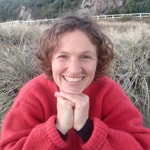
A science communicator on a mission to reveal the invisible economic forces that shape our lives and environment. Finding and connecting people across Aotearoa who want to change our economic system for the better.
Today is a full moon and also the third year anniversary of my father’s death. It feels apt and honouring to share this conversation with you today.
Like my father, David is a big hearted Pākehā man who believes in breaking through social barriers and is courageous in pursuing his vision.
David’s background is in youth work. He started his career working for the Methodist Church as their National Youth Director. He spent many years working in Central Government where he led the National Youth Development Strategy Aotearoa under Helen Clark’s Labour government. He then ran his own consultancy before starting his current role at Wesley Community Action.
In the last few years his attention has turned from trying to shift the whole system to creating small islands of change - warm spaces where communities feel safe enough to come together and address the issues that affect them most, such as meth addiction, poverty and food security. He understands that people are the experts of their own lives and have the resources to create change if given the chance.
The stories that David tells of his work with the Mongrel Mob and local communities around the Wellington region are delightful and inspiring. Like my Dad, David looks for the good in people and doesn’t see social boundaries as barriers. Unlike my Dad, David has embarked on a personal journey to uncover and heal the trauma he’s inherited through his own family history.
What strikes me about this conversation is the way David connects the personal and political. He makes the point that Pākehā culture has been founded on a suppression of trauma - a denial which has fuelled colonisation. He dignifies healing as important work and points to how Pākehā need to acknowledge and address our own trauma, to show up as equal treaty partners.
We talk about how many of our Pākehā ancestors came to Aotearoa to escape trouble in the British Isles.
“If you were doing well in those societies, you didn't really wanna hop on a boat and travel to the other side of the world,” he says. “It was people who were trying to flee something; desperate for a new chance and a new break.”
And yet the science of trauma is teaching us that traumatic experiences that go unaddressed and unspoken, live on in our bodies and are passed down from generation to generation. While we deny our own trauma, it shapes the way we see each other and make decisions. David talks about how this suppressed trauma is baked into our political system; it’s in the language of our political processes and policies.
”The biggest barrier to change,” he says, “is the people who've got power and money thinking they don't need to change. And the problems that group over there.”
David shares stories of heart-breaking betrayal, suicide and war from his own family history. He reflects on his childhood in the archetypal middle class suburb of Tawa and the culture he grew up with which encouraged academic success and conformity while suppressing anything unpleasant. He was born in 1962, not long after two world wars, a pandemic and a great depression.
“Come the 1960s,” David says, “there was this desire to just progress, get ahead and dream, so all of that trouble and trauma was just pushed down. We developed ways to protect ourselves from feeling that. That became our culture.”
It feels comforting to reflect on my Dad’s life and our family history in the light of this conversation. My Dad was a deeply sensitive man who never learnt to acknowledge or express his feelings of grief. His mother was an alcoholic and his father suffered from depression. As the oldest, Dad grew up doing his best to hold his family together. Though he was an incredibly cheerful man, he suffered from manic episodes and late in life was diagnosed with manic depression. I can’t help but see these episodes as eruptions of suppressed grief. It comforts me to see a pathway to healing these old wounds by tending to myself and my relationships now.
Over the last few years as I’ve been learning about our environmental crises and the economic causes, I’ve found it easy to lose hope. The problems are so massive and large-scale. But I find something incredibly hopeful in David’s work and perspective. It reveals that we are all part of this system we live in and that while we separate ourselves and deny our trauma we remain stuck. But there is much hope in coming together and allowing space to heal and grow.
Links
Wesley Community Action: https://www.wesleyca.org.nz/
Just Change: https://www.wesleyca.org.nz/just-change
Speaking to the spiritual heart of our economic and environmental crises
Tuesday, June 10, 2025 • Duration 01:02:18
I’ve been exploring the economic forces that shape our world for a few years now and the more I learn, the clearer it becomes that underneath the many layers of economic and environmental crises is a kind of crisis of spirituality and of how we conceive of ourselves as human.
I feel deeply honoured and excited to share this conversation with Pip Ranby, who is, among many other things, one of my favourite people in the world.
Pip is both a spiritual teacher and a friend. I first came across her as my partner Rachel’s teacher in creative arts therapy. I got to know her when we asked her to be our marriage celebrant. She was an incredible comfort and guide as we navigated the difficult territory of working out what marriage meant to us as a queer couple and organising our love festival, which was amazing but stressful. Since then I’ve been seeing her regularly for what we call “spiritual accompaniment” sessions. She helps me make sense of life when I lose my way and has been an enormous support through the grief of losing my Dad and accompanying my Mum through her journey with dementia. I’ve attended many of Pip’s workshops, retreats and gatherings, and find them an enormous source of nourishment and peace in my life.
I first had the idea to invite Pip for this conversation in 2023 at a workshop she facilitated on trauma and spirituality, which I attended straight after the annual conference of Wellbeing Economy Alliance Aotearoa. I was struck by how the wisdom and presence Pip was sharing spoke to the heart of the economic problems we’d been circling at the conference.
I was struck by the way Pip dignified the struggle of trying to live within our economic system. She spoke about “industrial scale forces” that we experience intimately through our bodies. These forces are delivered through pervasive messaging which reduces women’s physicality to appearance, justifies sexual violence and silences voices of emotion and spirit.
In this conversation Pip tells her personal story of trauma, loss and healing with incredible vividness and generosity. She shares her experiences of disordered eating, sexual violence and being helped out of the CTV building when it collapsed in the Christchurch earthquake. She speaks to the way these experiences of wounding and trauma opened her to the healing power of spirit and greater perception. Her story tenderly points to a pathway of healing that I believe lies at the heart of our economic regeneration. It reveals a more noble and generous idea of what it could mean to be human and the possibility of rebuilding practices, culture and economies from this more generous interconnected point of view.
Get full access to The Good Energy Project at
An audio zine of blessings from Gathering at the Gate
Tuesday, May 27, 2025 • Duration 01:03:08
Kia ora friends,
I’m delighted to share with you this audio-zine of poems, incantations, prayers and blessings written by participants and conveners of the Gathering at the Gate course. The zine has been lovingly edited and voiced by Sylvie McCreanor.
You may remember me interviewing Gathering at the Gate conveners, Elli and Wren, last year. I had just taken part in the course myself and it had a big impact on me. We explored the difficult territory of how our Pākehā ancestors contributed to colonising Aotearoa. We were encouraged to research our family history and to reach back to our ancient earth honouring ancestors in Europe, Britain, Scandinavia and other parts of the world to discover their rituals and practices.
Lots of beautiful things came out of these explorations. This zine is a small collection of creative outpourings from the course. The hope is that it can be a resource to help us find own lifeways, words, practices and rituals that connect us with something wider and deeper that we can draw strength from now.
To help you navigate the audio zine, here are some time
My introduction 00:00:00
Title: 01:43:70
Acknowledgements: 01:55:43
Introduction by Wren Maben: 05:01:23
Part 1: Opening: 08:17:26
* Untitled, Anonymous: 08:51:28
* Acknowledgement as Tauiwi - Kay Benseman: 10:01:24
* An invitation to gather in collective care - Áine Kelly-Costello: 10:58:64
Get full access to The Good Energy Project at
Sparking communities from debt to abundance
Monday, May 12, 2025 • Duration 58:55
I’ve been looking forward to this conversation for ages! I first met Makerita Makapelu at the Wellbeing Economy Alliance Aotearoa conference in 2023. It was the end of a full day when I heard her presentation and I remember feeling instantly captivated by the joy and love which streamed from her as she described her work.
Makerita is the Team Leader Innovation and Practice at Te Hiko, a community innovation hub in Cannons Creek, Porirua. It’s a vibrant diverse suburb, with a large Pacific Island community that suffers more than its fair share of injustices from an oppressive economic system. Te Hiko’s work is all about supporting people in the local community to realise their own capability. They do it by creating safe spaces where people can come together, relax and apply themselves to the challenge.
Talking to Makerita, I get the sense that anything is possible when people come together with love and respect around a purpose.
In our conversation, we talk about her childhood and early career - her memories of Samoa before her family moved to Aotearoa, the challenges of growing up in Porirua and her discovery of theatre and dance, which started her on a healing journey. She speaks about the Samoan concepts of tautua (service) and Le Va (the sacred space between) and her vision for Aotearoa that we embrace our own indigenous wisdom.
Get full access to The Good Energy Project at
Loo's journey to find home
Sunday, April 13, 2025 • Duration 01:01:43
Kia ora!
It’s been a while since I’ve shared a podcast - partly because this one has taken ages to make! I’ve been reflecting on my interviews and learnings over the last year as I’ve been exploring the economics of homes and kāinga. I’ve pulled together snippets of interviews, passages from books and my own reflections of the subtle and profound ways this journey has shaped my life.
I’m hoping that through this show I can share with you the blessings I’ve received from the beautiful people and ideas I’ve met. I’d love to give permission and hospitality to all the complex feelings we have while searching for home and belonging. I’d particularly like to open up a dialogue for Pākehā, searching for ways to belong in this whenua and to offer some of the pathways I’ve discovered in this exploration.
My hope is to create more connections and contribute to a sense of possibility and togetherness as we all navigate these fractured times where it’s so easy to shut down and let our differences separate us.
“The economy is too important to leave to the economists!”
That’s what Gareth Hughes says. After working for a decade as an MP in parliament he got thoroughly tired of the seesaw of short term policies and the arguments over the type of ambulance at the bottom of the cliff. He’s now grateful to be working on the cause of the problems rather than the symptoms. He leads the small team at WEAll (Wellbeing Economies Alliance Aotearoa). Their mission is to build a non-partisan, Te Tiriti led, people-powered movement to transform the economy around the wellbeing of our people and te taiao.
“We often think about the economy like it’s a force of nature, like the weather,” Gareth says. “But actually it’s a human-designed machine and it can be re-designed to get the outputs we want to see.”
Economics is a hard thing to talk about - it’s complicated, boring and mostly we forget it exists, like the air we breathe. But Gareth is seeing a groundswell of people across the political spectrum who are realising that something is broken and needs to change.
“Cracks are showing everywhere,” he says. “People are realising it’s not working and are open to talking about system change. I’ve talked to conservatives who are voting National who are really concerned about social cohesion… They just know that you can’t continue to have a society where people are falling through the cracks.”
The time is right for change and Gareth’s mission is to help people see the alternatives and to help uplift and connect the efforts of diverse groups around the country into one big movement for change. His small team are working with businesses, local councils, Iwi groups and community groups to uplift, connect and support their work to shift and change our systems. There is so much going on at the grass-roots level with businesses, iwi corporations, community groups and local government. The international community is excited about Aotearoa. The experience of working with all these people has cured Gareth of his cynicism and he’s feeling positive and hopeful about the future.
This is a very positive and hopeful conversation about pathways open to us and the changes already brewing.
Some helpful links
* WEAll Aotearoa:
Get full access to The Good Energy Project at
Decolonisation as a joyful creative act
Monday, January 13, 2025 • Duration 56:06
This conversation was just what I needed to lift my spirits after a year of overwhelmingly depressing news. Talking to Rebecca felt like meeting a slightly older and more illustrious version of myself. It gave me hope that it’s possible to live in a more intuitive and connected way without disengaging from the institutions and systems of society.
Like me, Rebecca found it hard to choose between subjects at school and university because it was the connections between them that intrigued her most. Her instinct for finding unexpected connections has led her on a fascinating career path, starting with a degree in Chemistry and Maths and moving into architecture where she was captivated by discourses around feminism, art and Te Ao Māori. For several years she has played leadership roles in Massey University’s College of Creative Arts. She recently stepped down as Deputy Pro Vice Chancellor to dedicate more time to The Pākehā Project and other creative acts of decolonisation.
Rebecca talks about how we’ve based our society and our entire approach to the world on the completely wrong assumption that we are separate and that our problems can be solved by pulling things apart and analysing the pieces. She calls this a “traumatised logic” - a way of thinking that has broken the world up into pieces and left us disconnected and at odds with each other.
The Pākehā Project, is about becoming aware of these underlying assumptions and opening to other ways of seeing the world. It’s about learning how to listen and step back as well as using our privileges and positions of power to shift the systems we operate within.
I love the way she describes this work as a joyful creative act. It reconnects us to our own vitality and opens us up to other beings and the living world.
Links and references
In the interview Rebecca names some of her heroes and influences. Here are some links to follow up:
It was very special to be invited to Paul’s ancestral home in Tapsell Road, Rotorua, where we met in the beautiful architecturally designed space shown in the photo above. Paul and his whānau envisioned and built this new home to replace the crumbling old house, built by their father. Back before the days of potatoes and colonisation, this site was a kumara garden and a foundation for the local economy. Now it sits amongst suburban houses, holding precious threads of culture and acting as a hub for the community as well as a home.
Historic amnesia and the illusion of our harmonious bicultural society
In our conversation, Paul painted a picture of a cultural divide ‘as wide as the grand canyon’, which we pretend doesn’t exist.
“On one hand colonisation has dispossessed 780 kāinga communities of their economic base and on the other hand an incoming settler community from Great Britain has come to control that economic base but are living in what my academic mentor used to call historic amnesia.”
Paul spoke about his great great grandmother who was bayoneted to death by British soldiers who were later given their ancestral land to farm for free. He described a Māori community, still living in poverty on the land they were forcibly removed to in 1869, while Pākeha farmers make millions on the land they were dispossessed from.
Somehow, we have manifested a story of a harmonious bicultural society - the nation we call New Zealand. But this illusion is preventing us from facing the scale of trauma and disconnection and finding ways to heal.
Paul’s hope, in writing the book, was to bring to light the forgotten stories and help bridge the cultural divide.
Chasing pinpricks of light in the dark
Get full access to The Good Energy Project at
Rematriating our homes and food systems
Tuesday, October 29, 2024 • Duration 52:48
Jessica is a kaupapa Māori researcher, author and advocate as well as being a farmer. She is the director and founding trustee of the Papawhakaritorito Charitable Trust which is all about decolonising our food systems and restoring indigenous food sovereignty. She lives with her wife Jo Smith (Waitaha, Kāti Māmoe, Kāi Tahu) on twelve acres of beautiful whenua in the foothills of the Tararua with the Remutaka and Orongorongo behind and Pākuratahi Forest Park nearby.
Jessica was involved in establishing Hua ParaKore, a kaupapa Māori system and framework for growing kai. It’s sometimes referred to as Māori organics, but it’s much more than just looking after the soil and our health. Hua Parakore is about reweaving the intricate web of relationships that connect us with each other and with our cultural and spiritual landscapes.
“When I think about Māori food sovereignty,” Jessica says, "I think about food as whanaunga. Food is our relation. It comes from our cultural and spiritual landscapes, from the deities, Tāne Mahuta of the forest, Haumia-tiketike, Hineahuone, deity of soil, Papatūānuku and Ranginui. We are connected to those landscapes through our whakapapa of being the younger sibling, the youngest in the order.”
Jessica and Jo are storytellers, activists, researchers and gardeners. Through their work with the Trust they connect dots across the food system, hold hui and bring growers together to amplify those spaces. At their farm they put the ideas into practice, growing food and restoring the native forest to re-cloak Papatūānuku.
Over the past decade, Jessica has also worked extensively in the Māori housing sector, leading the Building Better Homes, Towns and Cities National Science Challenge, as their Director Māori and helping to build Māori research and capability in the Māori housing area. Along with Jo, she edited the book Kāinga tahi, Kāinga rua, which gathers together Māori experiences and aspirations for housing.
Get full access to The Good Energy Project at
Two mamas share their journey of creating a co-housing village
Monday, August 26, 2024 • Duration 01:00:12
When Simone Woodland dreamed up the idea of creating a co-housing village, she didn’t imagine she’d have to become a developer to make it happen. Simone moved to Aotearoa from the UK in 2018 as a Sir Edmund Hillary Fellow, on a visa programme specifically designed for social entrepreneurs like her. Her initial vision was to build a community that looks after burnt out social entrepreneurs.
When Sarrah Jayne heard about Simone’s idea she was captivated. She gave up her job in Pōneke Wellington and jumped on board the mission. Together with some friends and supporters, they found a plot of land in Takaka, Mohua Golden Bay and started the journey.
The core team was made up of three women, each of whom was pregnant and gave birth during the project. One of the secrets to their success, they say, was the incredible support and understanding they offered each other through these huge life events and the massive challenges of the job.
Their aim from the outset was to create a community - to make it possible to live well together, forge deep bonds with neighbours, share resources, offer mutual support in tough times and tread lightly on the earth.
But stepping into the process was a bit like jumping in a river - the system has a force of its own. It’s designed for large developers to build individual houses and it took a huge amount of energy and determination to hold to their values and create something affordable, communal and ecologically sound. The easiest way to navigate the system, was to start a development company - thus they became developers. It was a race against time and money as COVID struck, building costs soared and they held tight to the trust and life savings of the 30 or so groups who took a leap of faith to join the project. Some ideas - like composting toilets and tiny houses - had to drop away so they could get the job done in time. Explaining the concept of co-housing to banks, councils and lawyers was hard work.
But they made it! Now the first of three clusters of houses has been completed and the villagers have moved in. The plan is to build two more clusters of houses to complete the village.
In our conversation, Simone and Sarrah reflect on the ups and downs of the journey so far, what it’s like to see their vision realised and their hopes and dreams for the future. They see themselves as part of a nationwide movement to make housing more communal and accessible and less commercial. There are so many passionate people working hard around the country on similar kaupapa. They hope their efforts will help to strengthen the pathways in our systems for these important projects to succeed.
Get full access to The Good Energy Project at
Related Shows Based on Content Similarities
Discover shows related to The Good Energy Podcast, based on actual content similarities. Explore podcasts with similar topics, themes, and formats, backed by real data.
The music I’ve used in the interview is a glimpse of a song written by my wife Rachel (with a little contribution from me) and performed by the two of us. We haven’t shared the verses here, just the chorus. It’s called “Rising and Falling”. It feels special to share it in the context of this conversation with someone we both love and admire.
Makerita talks about the gap between the experience of real people on the ground and the policies intended to serve them and the work Te Hiko is doing to bridge that gap. She tells me about the Just Change Programme, which invites people who have a little extra money to spare to connect and grow meaningful relationships with people leading projects in the community. It’s not just about sharing money - it’s about understanding each other’s reality and building relationships of care.
Te Hiko means “spark” in Te Reo and I got the sense of all these sparks being fanned to life by the loving support of Makerita and her team.
Big thanks to Casual Healing and Chur the Choir for the music!
Makerita is a big fan of Bob Marley, so I’m delighted to be able to play this beautiful cover of One Love by local Paekākāriki musician Nikau Te Huki and Chur the Choir for letting me use this song. You can listen to the whole album here.
The guitar music you’ll hear at the end of the conversation is by Rebecca’s brother Ben. It was the accompaniment to a song they sang together at their father’s funeral.
I was struck by Paul’s approach to facing these hard truths.
“I problematise everything, almost to the point of depression, until I’m surrounded by this darkness. Then I step back and see where the little pricks of light are coming through - just these little pinpricks. Like going down a tunnel, I chase that light and see where it takes me.”
Paul has found pinpricks of light in the fact that young Māori, whose whānau have lived in cities for generations, are wanting to reconnect with their ancestral kāinga. When that relationship between tangata and whenua is restored, there is hope for healing and true leadership. Young Māori give Paul hope.
He also has hope in Pākeha and tauiwi. He shared a story of two Pākeha farmers who fell in love with the whenua and have dedicated their lives to restoring the health of the waterways. They are now working with Paul to connect with an impoverished Māori community living downstream, in the hope of sharing the ecological wealth they’ve helped to restore.
“I think most reasonable non-Māori citizens of this country, if they understand the history, are more likely to respond proactively and create that bridge across the canyon and meet halfway.”
We’re all complex. Let’s stop judging and listen to each other.
Paul and I shared stories of ancestors who crossed the cultural divide and how their decisions have shaped our lives now.
My great grandmother was Māori, born in Te Kaha in Te Moana-a-Toitehuatahi (Bay of Plenty). She moved to Auckland, married a Lebanese businessman, had a family then died. From that point our family has been disconnected from our Māori whakapapa. I have inherited material wealth through the family business but none of the wisdom of my Māori ancestors.
Paul’s grandmother came from Ireland where generations of her family had been dispossessed of their land by the English. Her brothers and sisters settled in Auckland where their families now own large chunks of the waterfront! Paul’s grandmother married a Māori man, found belonging with her new whānau and embraced their culture as her own. Apparently she was known as “the black sheep” of the family. From his Māori elders Paul inherited precious ancient taonga which he is striving to preserve.
It struck me that the hau kāinga who stayed with their whenua and preserved the taonga have carried a huge burden for us all. They have taken a massive hit to protect these lifelines, which are now hanging by a thread.
I found our conversation incredibly helpful for making sense of my own complex feelings and my role now. It’s not about pointing fingers or laying blame, it’s about being prepared to learn and listen, to feel the darkness and follow the pinpricks of light.
In our conversation, Jessica weaves together the kaupapa of housing and food sovereignty, showing how deeply connected they are. She talks about how colonial capitalism not only separated Māori from their ancestral kāinga, it has broken up family units, destroyed indigenous foodways and waterways and dismanteled the fabric of communities. She speaks about how current policy-settings create impossible barriers for Māori wanting to live intergenerationally and the pain of watching our current government pull out supports for papakāinga among many other things. Her hope and aspiration lies in Māori being empowered to take the lead in finding solutions. Her vision is for food to be the hub and heart of our communities - how we grow it and our relationship with the soil and seed.
“I have a vision for indigenous food systems in Aotearoa”, she says, “that are thriving, intergenerational, connected to people in place, that are hua parakore, and that are creating a wellbeing of mauri-rich, abundant kai for people… My vision is for beautiful, healthy people, lands and soils, where we have sovereignty over ourselves.”