The Film Analysis – Details, episodes & analysis

Podcast details

Technical and general information from the podcast's RSS feed.
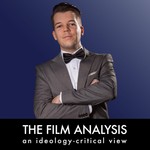
Podcast The Film Analysis

The Film Analysis

Wolfgang M. Schmitt

Tv & Film

Frequency: 1 episode/5d. Total Eps: 20

Hosting podcast Spotify for Podcasters
Hi, my name is Wolfgang M. Schmitt. I am an ideology critic and film critic from Germany. On this channel I will analyze a popular film every week in an ideology-critical way. In addition, I will draw on philosophical, political, psychoanalytic and sociological theories. Like the famous German film critic Siegfried Kracauer said: "Films are a mirror of society". I would be happy if you would like to look into this mirror with me.
Site
RSS
Apple

Recent rankings

Latest chart positions across Apple Podcasts and Spotify rankings.

Apple Podcasts

  • 🇩🇪 Germany - filmReviews

    24/06/2026
    #99
  • 🇩🇪 Germany - filmReviews

    23/06/2026
    #80
  • 🇩🇪 Germany - filmReviews

    22/06/2026
    #68
  • 🇩🇪 Germany - filmReviews

    21/06/2026
    #54
  • 🇩🇪 Germany - filmReviews

    20/06/2026
    #43
  • 🇩🇪 Germany - filmReviews

    19/06/2026
    #34
  • 🇩🇪 Germany - filmReviews

    10/06/2026
    #92
  • 🇩🇪 Germany - filmReviews

    09/06/2026
    #67
  • 🇩🇪 Germany - filmReviews

    08/06/2026
    #53
  • 🇩🇪 Germany - filmReviews

    07/06/2026
    #39

Spotify

    No recent rankings available


RSS feed quality and score

Technical evaluation of the podcast's RSS feed quality and structure.

See all
RSS feed quality
To improve

Score global : 33%


Publication history

Monthly episode publishing history over the past years.

Episodes published by month in

Latest published episodes

Recent episodes with titles, durations, and descriptions.

See all

Ep. 10: Why are the Japanese really attacking? PEARL HARBOR – Review & Analysis

jeudi 26 février 2026Duration 15:57

Is "Peal Harbor" by #MichaelBay primarily a #war movie or a #love movie? And if it is a love movie, we should also ask: Who actually loves whom here? With this blockbuster, Michael Bay and producer Jerry Bruckheimer wanted to create a similarly opulent and successful film in 2001 as James Cameron had previously succeeded with "Titanic". There is no doubt that "Peal Harbor" is not high-class kitsch compared to Cameron's award-winning film, but terrible trash - even though it was very successful with box-office takings of 449 million US dollars. But as in "Titanic," a historical event is intertwined with a love story. However, the three-person constellation - Ben Affleck, Josh Hartnett and Kate Beckinsale - makes it much more complicated. However, we have to detach ourselves from the concrete history to learn why the Japanese actually attack.


More on this from Wolfgang M. Schmitt in the film analysis. 

Ep. 9: David Lynch on the couch: BLUE VELVET – Analysis & Review

jeudi 19 février 2026Duration 22:22

David Lynch is the great maverick of U.S. cinema: His films are in some ways part of Hollywood's tradition, but at the same time they make a disturbing break with it. This is particularly visible in the 1986 classic "Blue Velvet" - with Kyle MacLachlan, Laura Dern, Isabella Rossellini and Denis Hopper. This work, situated between film noir and coming-of-age film, invokes common narrative and aesthetic Hollywood conventions, but takes them in a completely different direction. David Lynch shows the offbeat in the idyllic, the barbaric in the peaceful, the obsessive in the schmaltzy. The focus is on a young man who goes in search of his desire and in the process is confronted with his own dark side. It is often said that David Lynch makes obscure films, that they are chaotic psycho trips, labyrinthine and ultimately indecipherable. But what if exactly the opposite is the case? "Blue Velvet" does pose some riddles, but they can be solved if you pick up the right key. This key is Sigmund Freud. Let's subject the work to a psychoanalysis, let's put "Blue Velvet" on the couch:


More on this by Wolfgang M. Schmitt in the film analysis!

Ep. 8: INDIANA JONES sucks!

jeudi 12 février 2026Duration 23:51

„Indiana Jones: Raiders of the Lost Ark" was released in 1981. The material was developed by "Star Wars" creator George Lucas, but director Steven Spielberg implemented the idea, which said goodbye to New Hollywood and marked a return to Hollywood's studio system. The blockbuster does not thrive on the new, but on a remix of the old familiar: Thus in "Indiana Jones," which is laid out as an American answer to the British James Bond, set pieces from the genres of adventure and detective films, film noir, the comedy and the western are cobbled together to create a film for the entire family. Indy (Harrison Ford) must find the Ark of the Covenant, where the Ten Commandments were kept, because it can make a state invincible. Remarkably, God himself intervenes in the action. It is not the hero, but a higher power that ultimately directs the destiny. This deus ex machina brings about a remythologization that amounts to a peculiar, anti-modern understanding of the state.


More on this by Wolfgang M. Schmitt in the new Film Analysis!“ 

Ep. 7: OPPENHEIMER – That's how brilliant Nolan's film is – Review & Analysis

jeudi 12 février 2026Duration 29:19

With "Oppenheimer", Christopher Nolan presents a biopic that sets standards. This film vibrates for 181 minutes to show the multi-faceted figure of J. Robert Oppenheimer from several perspectives. Nolan jumps wildly back and forth in time, an impressive star ensemble fits into the aesthetic, which consists mainly of close-ups. Nolan focuses on two themes in particular:


1. what responsibility do scientists have?


2. what is the relationship of the state to its citizens - and vice versa?


The father of the atomic bomb appears in this film in all his turmoil, but is not a cinematic monument, a psychological drama, nor do we experience a celebration of the cult of genius; rather, this film throws us into the present again and again. At the same time, "Oppenheimer" is a highly intelligent reflection on the medium of film and the gaze of the camera.


Read more by Wolfgang M. Schmitt in the new Film Analysis!

Ep. 6: Is AMERICAN BEAUTY overrated?

jeudi 12 février 2026Duration 12:57

"American Beauty" by Sam Mendes from 1999 is already a modern classic. The film drama, which won five Oscars, has even found its way into school lessons and is considered one of the best films. Wolfgang M. Schmitt takes a critical look at the debut film, which was the beginning of a furious career for Sam Mendes.

Ep. 5: What Nolan wants to tell us: TENET – Review & Analysis

jeudi 12 février 2026Duration 23:01

We have to think of Christopher Nolan as a lucky man, because he has achieved something tremendously rare in Hollywood: He has made himself independent of the whims and fashions of the culture industry, which primarily wants to systematically underchallenge the audience. Demand is considered an imposition today. "Tenet" stands in the way of this alarming development and relies on the thinking viewer. It can already be said: we will not only talk about this film for a long time, and we will refer to it in future discourses when we try to understand the conflicts that are coming ever closer to us - and to us.  Christopher Nolan tells a story with the means of the agent film - the references to James Bond are unmistakable - and with fabulous actors - first and foremost: John David Washington, Robert Pattinson and Elizabeth Debicki - that is by no means meant to merely illustrate a physics mind game, this film is rather very concretely about us and about climate change. Nolan seduces us to leave linear thinking and seeing in order to gain clarity and to find a way out. In doing so, "Tenet" ties in less with "Inception" than with "Interstellar".


More on this by Wolfgang M. Schmitt in the film analysis!

Ep. 4: Why trigger warnings often trigger us

jeudi 12 février 2026Duration 25:07

Discussions about trigger warnings recur weekly. Is it paternalism? Well-intentioned? Or silly? There is a lot of confusion here: the trigger warning is actually a communicative tool to announce potentially stressful or traumatic content before it is presented. The aim of this advance notice is to give people who are vulnerable to emotional or psychological stress due to their individual experiences the opportunity to prepare for the upcoming content or, if necessary, to decide whether they want to expose themselves to it. In the meantime, however, trigger warnings are increasingly being extended to warn against all kinds of microaggressions and outdated stereotypes - streaming providers and film festivals in particular are relying on this strategy.


More on this by Wolfgang M. Schmitt in Film Analysis!

Ep. 3: Conspiracy theories and Heidegger: THE TRUMAN SHOW – Review & Analysis

jeudi 12 février 2026Duration 22:38

Conspiracy theories are currently more popular than ever, often based on a world view, as we can see in Peter Weir's cult film "The Truman Show": It is assumed that everything is controlled by one person - currently, various conspiracy theorists have settled on Bill Gates. They give him a role similar to that of the "Truman Show" director and creator Christof, who has the show, in which Truman (Jim Carrey) is unwittingly the protagonist, completely under his control. But what else does the dystopia have to say to us today? Is it merely a media critique of reality TV? As much as we sympathise with Truman, we should realise that we, who are constantly filming ourselves voluntarily, have little to do with him.


More on this from Wolfgang M. Schmitt in the video!

Ep. 2: The Emergence of Capitalism: THERE WILL BE BLOOD

jeudi 12 février 2026Duration 24:06

Paul Thomas Anderson has asserted in various interviews that his great film "There Will Be Blood" is not a story about capitalism, but is instead about archaic forces, about man against man. The film is also not to be understood politically. Of course, if you watch the film, this is all nonsense. Either the director has not understood his film or he is using this misdirection to weaken the film's criticism of capitalism after the fact. "There Will Be Blood" not only harks back to the era of Classical Hollywood, but also films the 24th chapter of Marx's "Capital", in which the emergence of capitalism is explained. The "original accumulation" was by no means as idyllic as bourgeois economists thought; instead, blood, fire and violence ensured that the economic system could develop. At the same time, however, this also ensured the relative freedom of individuals. The film by Paul Thomas Anderson is also about such individualisation processes - because it is first and foremost a work about two entrepreneurs: an oil baron and a preacher. With his leading actors Daniel Day Lewis and Paul Dano, Anderson also creates great acting cinema. Find out more from Wolfgang M. Schmitt in the video.

Ep. 1: The Best Movie of All Time: VERTIGO by Alfred Hitchcock – Review & Analysis

jeudi 12 février 2026Duration 30:20

Alfred Hitchcock's film "Vertigo" is not just a masterpiece, it is the best film of all time. With a magnificent cast including Kim Novak and James Stewart, this thriller set in San Francisco is far more than just a suspenseful, mysterious crime film. It is also a complex work about the structure of our desires, about film as such and about seeing and watching as well as our own blindness. Find out more from Wolfgang M. Schmitt in the video!


Related Shows Based on Content Similarities

Discover shows related to The Film Analysis, based on actual content similarities. Explore podcasts with similar topics, themes, and formats, backed by real data.
Podcast Punjabi Audiobooks By Dr. Ruminder
Podcast Hypno-Zzz's | Sleep Hypnosis w/ Professional Hypnotist Kimberly Ann O'Connor | ConsultingHypnosis.Ca
Podcast Become New with John Ortberg
Podcast The Rick and Kelly Show
Podcast Shepard Ambellas Show
Podcast David Ogbueli
Podcast The Screen Chatter Audio Podcast
Podcast The Central Club Podcast
Podcast SENSESPACE
Podcast Your Sex Your Way
© My Podcast Data