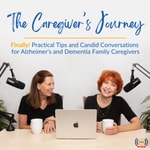
The Caregiver’s Journey podcast is an innovative and refreshing way to learn how to tackle day-to-day Alzheimer's and dementia family caregiving challenges with strength, patience, and peace of mind. Using practical tips and candid conversations, Sue Ryan and Nancy Treaster help you navigate caregiving’s ups and downs, so you move from feeling frustrated, overwhelmed, and sometimes frightened - to confident, balanced, and supported.
Site
RSS
Apple
Recent rankings
Latest chart positions across Apple Podcasts and Spotify rankings.
Shared links between episodes and podcasts
Links found in episode descriptions and other podcasts that share them.
How To Create a Care Plan: Five Essential Tips / Alzheimer’s and Other Dementias
Season 2 · Episode 33
Tuesday, April 22, 2025 • Duration 26:38
Are you prepared for others to take care of your loved one? Do you have a care plan in place? Having a comprehensive care plan is one of the most important tools a caregiver can create — not just for emergencies, but for everyday peace of mind.
We are Sue Ryan and Nancy Treaster. As caregivers for our loved ones with Alzheimer’s and other types of dementia, we’ve learned the importance of creating a care plan for our loved one. We spoke with Amanda Lukoff, co-founder and CEO of Eleplan, about what a care plan is and how to create one that works for your unique situation.
Amanda's journey to creating Eleplan was deeply personal. Her brother Liam, who has autism, is her "North Star" and the inspiration behind her career path, including going to law school for special education law. Through observing her parents' caregiving journey with Liam, Amanda recognized the need to capture all the knowledge that lived in her parents' heads so that others could provide care that truly honored who Liam is as a person.
The first step in creating a care plan is to document the essential information that would allow someone to provide short-term care (even for just 30 minutes) while you step out.
This includes:
Emergency contacts
Medications and dosages
High-level meal preferences
Allergies
Relevant medical conditions
Tip 2: Outline Preferences and Daily Routines
Beyond the basics, a good care plan should capture what makes your loved one unique—their preferences, personality traits, and daily routines.
Your care plan should include:
Likes and dislikes
Daily schedule and routines
Bedtime and morning rituals
Behavioral patterns
Emotional triggers (both positive and negative)
Tip 3: Document What to Do in an Emergency
Crisis situations demand clear instructions. Your care plan should outline:
What constitutes an emergency for your loved one
When to call 911 vs. other resources
Who to contact and in what order
Special instructions for EMTs or ER staff
Location of important medical documents
Tip 4: Collect Key Contacts and Documents
Gathering important documents in one accessible location is critical for seamless care. This includes:
Insurance cards
Healthcare directives
Power of Attorney documents
Guardianship forms
Medical history and medication lists
Tip 5: Keep Everything Accessible and Current
A care plan is only effective if it's up-to-date and easily accessible. Amanda frames this with an important question:
"Do I have a system that is as dynamic as the needs of my loved one and the ever-changing piles of documents and information?"
Whether you're using a physical binder, shared digital documents, or a specialized platform like Eleplan, the key is having a system that makes updates easy and ensures the information is available whenever and wherever it's needed.
Navigating the Caregiver Hiring Process: Five Essential Tips / Alzheimer’s and Other Dementias
Season 2 · Episode 32
Tuesday, April 8, 2025 • Duration 28:48
When the time comes to bring professional caregiving support into your loved one’s life, the process can feel overwhelming. Whether you’re hiring a caregiver for home care or to complement care in a community setting, understanding how to find, evaluate, and select the right person is crucial for both your peace of mind and your loved one’s well being.
We are Nancy Treaster and Sue Ryan, we’ve developed five essential tips for hiring a paid caregiver, based on real experiences and practical advice from caregiving experts. These insights will help you navigate this important transition with confidence and clarity.
Delusion Support: Six Essential Tips / Alzheimer’s and Other Dementias
Season 1 · Episode 23
Tuesday, December 10, 2024 • Duration 39:12
When your loved one experiences delusions or hallucinations for the first time, it can be frightening and overwhelming for everyone involved. As caregivers for our loved ones with Alzheimer’s and other types of dementia, we've learned how to navigate these challenging moments.
These resources contain affiliate links so we may receive a small commission for purchases made at no additional cost to you.
Electronic medication dispensing and monitoring device for caregiver here
Creating Engaging Activities: Three Essential Tips / Alzheimer’s and Other Dementias
Season 1 · Episode 22
Tuesday, December 3, 2024 • Duration 25:39
As caregivers for our loved ones with Alzheimer’s and other types of dementia, we often struggle with adapting activities to their changing abilities. Through our experiences, and what we’ve learned from others on their caregiving journeys, Nancy Treaster and I developed three important tips to help you create meaningful engagement that honors who our care receivers are today.
These resources contain affiliate links so we may receive a small commission for purchases made at no additional cost to you.
Large plastic rings child's toy that center screws into base here
Meaningful Caregiver Gifts: Five Essential Tips / Alzheimer’s and Other Dementias
Season 1 · Episode 21
Tuesday, November 26, 2024 • Duration 17:06
"If you give me a spa certificate but no gift of time to go with it, I'll probably never use it."
As friends and family of Alzheimer’s and other dementia family caregivers, we want to give meaningful gifts that will actually be used and appreciated. Through our experiences and what we've learned from others on their caregiving journeys, we've developed five important categories of gifts that truly make a difference in a caregiver's life.
Medication Management: Four Essential Tips / Alzheimer’s and Other Dementias
Season 1 · Episode 20
Tuesday, November 19, 2024 • Duration 20:55
"I wish I had started monitoring my husband's medication sooner than I did."
As caregivers for our loved ones with Alzheimer's and other types of dementia, we've learned that medication management becomes increasingly challenging. Through our experiences, and what we've learned from support groups and others on their journeys, we've developed four important tips to help you support your care receiver with medication management.
Traveling: Four Essential Tips / Alzheimer’s and Other Dementias
Season 1 · Episode 19
Monday, November 11, 2024 • Duration 23:50
“We’ve both had ‘that’ trip — the last trip that you take when you decide we’re not traveling ever again with our care receiver. Or, as we like to say, it’s the trip after the last trip you should have taken!”
We are Sue Ryan and Nancy Treaster. As caregivers for our loved ones with Alzheimer’s and other types of dementia, we’ve learned travel decisions require careful consideration. Through our experiences, and what we’ve learned from support groups and others on their journeys, we’ve developed four important tips to help you decide whether you and your care receiver should stay home or go on what could be ‘that’ trip.
Search and Rescue: Three Essential Tips / Alzheimer’s and Other Dementias
Season 1 · Episode 18
Monday, November 4, 2024 • Duration 15:45
The moment you realize your loved one with dementia is missing, every second feels critical. While the natural instinct is to immediately begin searching, having a clear action plan can make the difference in finding them quickly and safely. Through insights from John Clark, a specialized dementia search and rescue expert in Georgia, we've compiled three essential tips for these frightening situations.
Preparing for Holidays: Five Essential Tips / Alzheimer’s and Other Dementias
Season 1 · Episode 17
Tuesday, October 29, 2024 • Duration 20:08
The secret to successful holiday celebrations with our dementia care receivers isn't perfect decorations or parties—it's having a peaceful retreat space ready for them when needed.
As caregivers navigating the holiday season with loved ones who have Alzheimer's and other types of dementia, we've learned that intentional planning makes all the difference. The holiday season brings additional activities, decorations, and visitors that can disrupt the routines so vital to our care receivers' well-being. Success requires careful observation, thoughtful preparation, and gradual adaptation of celebrations.
Through our experiences, what we've learned from support groups, and from others on their journeys, we've developed five essential tips to help create positive holiday experiences while maintaining the calm and familiar environment your care receiver needs.
Rate, Subscribe and Share Your Tips on Social Media!
Please click here to review, follow or subscribe to our podcast.
If you don’t see your preferred platform click on Podchaser and click at the bottom “Write my review”
You can log in with Twitter, Facebook or Google
On the right you’ll see a box with “Follow”, “Rate and Review” and “Share”
Eating and Drinking: Seven Essential Tips / Alzheimer’s and Other Dementias
Season 1 · Episode 16
Tuesday, October 22, 2024 • Duration 21:54
As caregivers for our loved ones with Alzheimer's and other types of dementia, we've learned eating and drinking become significant challenges. Through our experiences, and what we've learned from support groups and others on their journeys, we've developed seven important tips to help you and your care receiver navigate dining.
Rate, Subscribe and Share Your Tips on Social Media!
Please click here to review, follow or subscribe to our podcast.
If you don’t see your preferred platform click on Podchaser and click at the bottom “Write my review”
You can log in with Twitter, Facebook or Google
On the right you’ll see a box with “Follow”, “Rate and Review” and “Share”
Before you begin searching for a caregiver, it’s important to thoroughly understand what kind of support your loved one requires. This assessment will guide all your subsequent decisions about the type of caregiver, frequency of care, and specific qualifications needed.
Consider these key areas when assessing needs:
Activities of Daily Living (ADLs)
Medical Needs
Household Management Tasks
Safety Concerns
Transportation and Mobility
Companionship Needs
Tip 2: Determine the Type of Caregiver and Frequency Needed
There are three main categories of paid caregivers, each with different training levels and capabilities:
Companion Care
Certified Nursing Assistant (CNA)
Skilled Nursing
Tip 3: Understand Your Financial Resources
Review Your Financial Resources
Savings and investment accounts
Long-term care insurance policies
Regular income sources
Family financial contributions.
Explore Available Benefits
Medicare
Medicaid
Veterans Benefits
Consider Family Contributions
Tip 4: Decide Between Agency or Private Hire
When you work with a caregiving agency:
They Handle Administrative Tasks
They Provide Backup Coverage
They Offer Training and Supervision
They Assume Liability
Private Hire Benefits
It’s Usually Less Expensive
You Have Complete Control
There’s Often More Flexibility
You May Find Through Word-of-Mouth
Private Hire Challenges
You’re the Employer
No Backup Coverage
Limited Screening Resources
Tip 5: Evaluate potential caregivers thoroughly
Key Questions for Interviews
Scheduling and Availability
Qualifications and Experience
Approach to Care
Communication Style
Background Checks and References
Set Clear Expectations
Especially for private hires, establish from the beginning that the arrangement is on a trial basis.
From the moment of diagnosis, we need to shift our focus from what our care receivers used to do to what brings them joy now.
Tip 1: Adjust Our Expectations
Our care receivers’ engagement and abilities change throughout their journey — even throughout each day.
Key points:
Let go of ‘before’ comparisons
Let go of outcomes
Watch for signs of enjoyment or frustration
Pay attention to new interests
Adapt activities to current abilities
Accept different ways of engaging
Tip 2: Prioritize Their Safety
As we introduce or adapt activities, safety must be a primary concern, considering both cognitive and physical abilities.
Key points:
Consider vision changes and depth perception challenges
Adapt activities to safely maintain independence
Provide appropriate supervision and get creative in places to find it
Make creative adjustments to familiar activities
Create support networks for safety
Tip 3: Create Engaging Activities
Create activities to reflect their personal history, career, hobbies and interests, while engaging their senses. Whenever possible, engage multiple senses for a deeper connection and engagement.
Key points:
Engage their senses:
• Touch (e.g.: fidget blankets, textured items)
• Sound (e.g.: familiar music, calming sounds)
• Smell (e.g.: familiar scents, cooking aromas)
• Sight (e.g.: colorful objects, family photos)
• Movement (e.g.: seated dancing, simple exercises)
Create social connections through:
• Small group activities
• Religious or spiritual practices
• Memory cafes
• Senior center programs
• Family gatherings
When planning activities:
Observe body language for signs of engagement or distress
Have backup calming activities ready if they get agitated
Remember that watching can be a form of participation
Consider “drip grief” (see bottom of post for definition) — both yours and theirs
Not every community has specialized dementia search and rescue teams, but there are ways to improve local capabilities:
Steps to take:
Contact your local Alzheimer's Association chapter
Ask about existing specialized search resources
Inquire about training opportunities for local emergency services
Advocate for specialized training in your community
Network with other caregivers to share experiences and resources
Note: If you're in Georgia, specialized dementia search and rescue services are available. Contact your local emergency services or Alzheimer's Association chapter for more information.
The holidays and routines might share the same number of letters, but that's where their similarities end. While the season pulls us toward special events and gathering, we must remember that routines are the cornerstone of stability for our care receivers. These familiar patterns aren't just habits—they're vital anchors that help our loved ones navigate their days with confidence and security.
Tip 2: Be Prepared With a Calm Retreat Space
In the midst of holiday celebrations, having a sanctuary becomes essential. Think of this space as your loved one's personal haven—a place where the overwhelming stimuli of holiday gatherings can't reach. Just as we all need a quiet moment sometimes, our care receivers often require a calm, familiar space where they can retreat and regroup when festivities become too much.
Tip 3: Set Expectations With Visitors While Also Acknowledging Their Feelings
The holiday season often brings an increase in visitors, each carrying their own expectations and memories of past celebrations. While these visits can be precious opportunities for connection, they require careful management to ensure everyone's comfort—especially our care receivers. Understanding and communicating about the current reality of your loved one's condition helps create more meaningful interactions and minimize uncomfortable situations.
Tip 4: Teach Visitors How To Visit
Creating successful visits is about helping others understand how to connect with your care receiver in their current reality. As their ability to process information changes, the ways others can best interact with them evolves too.
Tip 5: Introduce Changes Gradually
The magic of holiday decorations and traditions can quickly become overwhelming for someone with dementia. What once brought joy might now cause confusion or distress. This doesn't mean we must abandon all holiday cheer—rather, we need to be thoughtful about how we introduce these changes to our environment. Think of it as slowly turning up the dimmer switch rather than flipping on bright lights all at once.
Observe and record how they naturally eat and drink (e.g., time of day, order, how they cut their food, which hand they use for each utensil).
Continuously observe, adjust, and share with others who are helping your care receiver with their eating and drinking.
Tip 2: Utilize Pre-made Meals and Visual Cues
Leave pre-made meals in easily accessible places (e.g., eye-level in the refrigerator).
Use visual cues like notes on the refrigerator or preset table settings with a note where the plate will go that tells your care receiver where the meal is.
Check to make sure they have actually eaten their food and finished what they had to drink so you know if they’re able to understand what to do.
Tip 3: Pre-cut Food, Adjust Portions, Observe How They’re Able to Eat and Drink
Pre-cut food into manageable pieces.
Consider converting sandwiches and other foods into finger foods.
Be aware of changes in hand stability, grip strength, vision, and coordination.
Some people with dementia diagnoses lose regulation with their appetite. It’s important for us to observe how they’re eating and the portions they’re eating to make sure they’re getting the proper amount of food.
Introduce non-breakable drinkware, consider tops or adult sippy cups.
Tip 4: Prepare for Messier Eating
Consider using regular bibs or large disposable bibs
Place a towel on the chair to catch spills.
Keep a basket of cleaning supplies (e.g. paper towels, hand wipes, table wipes) handy for quick clean-ups.
Tip 5: Simplify Eating Utensils and Tableware
Low bowls with a slight rim make it easier to push food onto utensils
Sporks combine the functions of spoons and forks, so one utensil can be used.
Grippy placemats keep plates from sliding.
Tip 6: Monitor and Adjust Nutrition
Watch for unexplained weight loss or gain.
Consult with doctors if you notice sudden changes.
If you move your care receiver to a memory care community, develop nutrition plans and weight monitoring processes and stay actively engaged with them.
Tip 7: Gradually Take Over Feeding and Hydration
Position yourself closer to them at mealtimes to make assistance easier.
What begins as prompting them to eat or drink and gradually increases to handing them their utensils and/or putting food on their utensils, showing them their drinking glass becomes modifying their drinking glass to make it easier for them to use, to eventually fully feeding them and controlling their beverages.
Discover shows related to The Caregiver's Journey, based on actual content similarities. Explore podcasts with similar topics, themes, and formats, backed by real data.