Smart Advice with Carissa Lucreziano – Details, episodes & analysis
Podcast details
Technical and general information from the podcast's RSS feed.
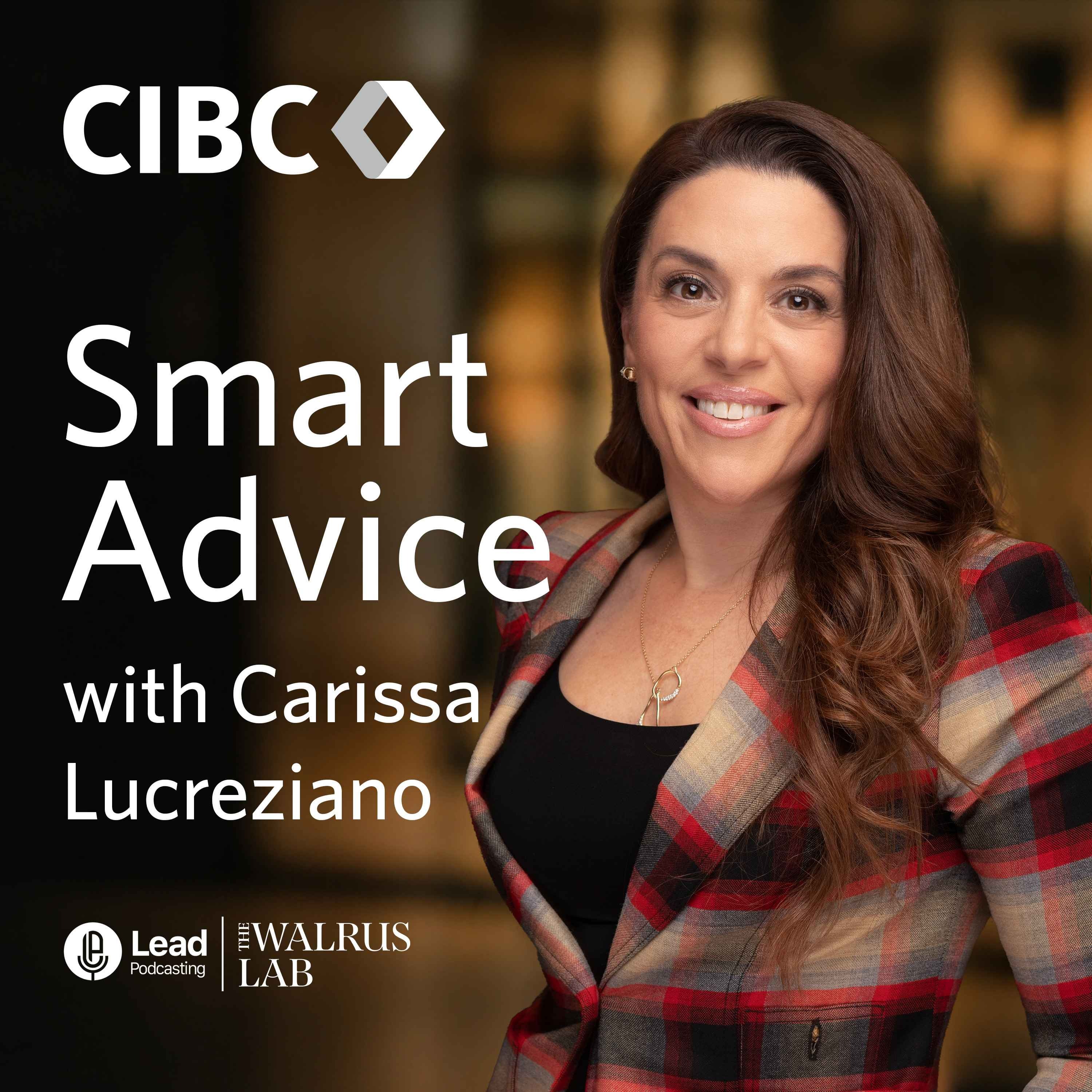

Hosted on Acast. See acast.com/privacy for more information.
Recent rankings
Latest chart positions across Apple Podcasts and Spotify rankings.
Apple Podcasts
No recent rankings available
Spotify
No recent rankings available
Shared links between episodes and podcasts
Links found in episode descriptions and other podcasts that share them.
See allRSS feed quality and score
Technical evaluation of the podcast's RSS feed quality and structure.
See allScore global : 83%
Publication history
Monthly episode publishing history over the past years.
What's next for Canada's economy? Former cabinet ministers weigh in
Season 4 · Episode 1
lundi 11 mai 2026 • Duration 36:53
As Canada–US trade dynamics evolve alongside global instability and rising inflation, they break down how major policy decisions are made and what they mean for Canadians in practical terms. This discussion explores the balance between long-term economic growth and short-term affordability, the role of natural resources and energy in Canada’s future, and how global events, from tariffs to geopolitical conflict, are directly impacting Canadian households.
Drawing on their experience at the highest levels of government, Lisa and Marco offer perspective on how Canada is positioning itself on the global stage, where opportunities lie, and what needs to happen next to drive sustainable growth and stability.
- Understand how global events, from tariffs to geopolitical conflict, are shaping Canada’s economy and directly impacting your finances
- Learn how Canada is balancing long-term economic growth with short-term affordability pressures, and what that means for households
- Gain perspective on how major policy decisions are made at the federal level and how they influence everyday economic outcomes.
Lisa Raitt is a former federal cabinet minister, vice-chair of CIBC Capital Markets and newly appointed member of Prime Minister Mark Carney’s advisory committee on Canada-US economic relations. During her time in government, she held several senior portfolios, including natural resources, labour, and transport, playing a key role in shaping Canada’s economic and regulatory landscape. Today, she brings deep insight into capital markets, business strategy, and public policy, advising clients on navigating complex economic environments.
Marco Mendicino is a former Member of Parliament who served as Minister of Public Safety and Minister of Immigration, Refugees and Citizenship. Most recently, he acted as Prime Minister Mark Carney’s interim chief of staff during a pivotal period in Canada–US relations. With extensive experience in law, public policy, and government leadership, he offers a behind-the-scenes perspective on decision-making at the highest levels.
● CIBC's "Smart Advice" Podcast and Website - Website | Apple Podcast | Spotify
● Visit CIBC for more Smart Advice
● The Raitt Stuff - Podcast
If you did, be sure to subscribe and share it with your friends!
Post a review and share it! If you enjoyed tuning in, leave us a review. You can also send this to your friends and family.
Hosted on Acast. See acast.com/privacy for more information.
Introducing Season 4 of Smart Advice with Carissa Lucreziano
Season 4
lundi 4 mai 2026 • Duration 01:00
Hosted on Acast. See acast.com/privacy for more information.
What else can you invest in? How alternative investments are shaping the market
Season 3 · Episode 5
lundi 14 juillet 2025 • Duration 25:40
Here are three reasons why you should listen to this episode:
- Understand the rise of alternative investments and why public markets are no longer the full picture.
- Learn how private equity, private credit, and real assets can enhance diversification and hedge against inflation.
- Gain clarity on how everyday investors can access and implement alternatives in traditional portfolios.
- Alternative investments enter the mainstream
- CIBC's "Smart Advice" Podcast and Website - Website | Apple Podcast | Spotify
- Visit CIBC for more Smart Advice
- Meric Koksal: LinkedIn
- Traditional investment strategies may no longer be enough for long-term growth.
- The public markets are shrinking, and fewer companies are going public.
- With over 20 years of global experience, Meric Koksal explains how alternatives like private equity, private credit, and real assets are gaining popularity among Canadian investors.
[03:20] Meric: “With the public markets shrinking and companies staying private longer, it really fueled the growth of these alternative investments or another way to talk about it is the private investments.”
[03:33] Examples of Alternative Investments
- Private equity includes investments like growth equity and venture capital, giving investors ownership in private companies.
- Private credit is non-bank lending, where funds lend directly to private businesses.
[05:02] Meric: “Private credit, which we hear a lot about, and it's arguably the fastest growing pillar within alternatives … for instance, a fund manager may be lending money to a soccer team to support a stadium construction.”
- Real assets are physical assets like infrastructure and natural resources that provide investment opportunities.
- Meric highlights these alternatives as key pillars in today’s investment landscape, especially in Canada.
[7:03] Carissa: “I found it surprising that 90% of companies are privately held. They're not listed on public markets. As you mentioned, public markets are just like a sliver of the pie, and it seems like we're missing out on that broader universe.”
- Private investments often offers higher returns due to lower liquidity compared to public markets.
- These investments provide unique opportunities not available in public markets.
- Private equity has a low correlation to public markets, making it a strong diversification tool.
[11:16] Meric: “In a nutshell, these product alternatives provide great benefits to clients from higher income potential, higher return potential, without introducing any additional risk portfolio while you're providing some inflation hedging.”
[11:46] Misconceptions About Alternative Investments- Many investors still think alternative investments are too complex or opaque.
[13:01] Meric: “What used to be, you need to have a $5 million investment to even start talking about these investments is now accessible for as little as $25,000.”
- Monthly asset valuations and detailed reporting have made alternatives more transparent.
- Quarterly liquidity options are available, but these remain long-term investments.
- Meric proposes a 50/30/20 framework: 50% equities, 30% fixed income, and 20% alternatives.
- Replacing some equity and fixed income allocations with alternatives increases diversification and yield.
- Private equity can replace public equity, while private credit and real assets can replace fixed income.
- Infrastructure investments offer both growth and steady income within the real assets pillar.
- Financial advisors play a key role in educating clients about the value of alternative investments.
- Advisors can help clients understand how alternatives can provide higher returns and diversification.
- With intergenerational wealth transfer occurring, long-term financial goals and risk profiles should be considered.
- Advisors are essential in guiding clients through the complexities of integrating alternatives into their portfolios.
- Meric discusses how CIBC Asset Management is making alternative investments more accessible to Canadians.
- CIBC leverages expertise across the firm, from private credit to commercial banking, to offer innovative solutions.
- The firm is committed to helping individual investors navigate alternatives with confidence.
- Meric highlights CIBC’s focus on building tailored investment strategies that meet clients’ evolving needs.
- Meric encourages listeners to explore alternatives to diversify and strengthen their portfolios.
- Alternative investments offer higher returns and greater stability, especially during market volatility.
- Staying informed and working with trusted advisors is crucial as the landscape of alternatives evolves.
- With increased accessibility, the future of alternative investments in Canada looks promising.
Meric Koksal is the Managing Director and Head of Product at CIBC Asset Management. She leads the firm’s efforts to make alternative investments more accessible to Canadian investors. With over 20 years of global investing experience, Meric has worked on trading desks from Wall Street to Singapore, bringing a broad, world-class perspective to the investment space.
She is an expert in driving innovation within investment strategies, focusing particularly on alternative assets like private equity, private credit, and real assets. Her deep knowledge of these asset classes helps Canadian investors navigate today’s evolving market landscape. Passionate about increasing accessibility to alternative investments, Meric is dedicated to providing practical solutions for individuals looking to diversify their portfolios and achieve long-term financial goals.
Connect with Meric Koksal on her LinkedIn.
Enjoyed this Episode?If you did, be sure to subscribe and share it with your friends!
Post a review and share it! If you enjoyed tuning in, leave us a review. You can also send this with your friends and family. The investment landscape may be shifting, but your approach doesn’t have to be. Discover how alternative investments can help you diversify and stay resilient, even in uncertain times.
Have any questions? You can connect with me on LinkedIn or through CIBC’s Facebook, or Instagram.
Thanks for tuning in! For more updates, visit our website. You can also listen to more amazing episodes on Spotify or Apple Podcasts.
Hosted on Acast. See acast.com/privacy for more information.
What Canadians want: New CIBC poll reveals what matters most to us right now
Season 3 · Episode 4
lundi 23 juin 2025 • Duration 25:43
Has the current economic landscape led you to revisit your goals or adjust your journey to achieving them? If so, you’re not alone.
In this episode of Smart Advice, Carissa Lucreziano is joined by Sean Simpson, Senior Vice President of Public Affairs at Ipsos, to unpack the findings of the inaugural CIBC Ambitions Index. Together, they explore how Canadians are reshaping their goals with a focus on balancing health, financial stability, and personal relationships. From Gen Z's short-term wins to Boomers' focus on preserving wealth, the conversation dives into generational differences, economic challenges, and the resilience driving Canadians forward.
Learn how clear goals, professional guidance, and celebrating milestones can help you achieve success in today’s complex environment. This discussion offers valuable insights for anyone looking to reshape and achieve their ambitions.
Three reasons you should listen to this episode:
- Learn how Canadians are reshaping their goals and priorities in the face of economic uncertainty
- Gain a deeper understanding of how ambitions differ across generations
- Discover actionable strategies Canadians are using to achieve their goals
Resources
- CIBC's "Smart Advice" Podcast and Website
- Visit CIBC for more Smart Advice
- CIBC Ambitions Index
- Ipsos
- Each generation has different financial goals; Gen Z’s bold dreams, Gen X’s balancing act, and Boomers’ retirement plans reflect how they meet economic shifts.
- The CIBC Ambitions Index, a groundbreaking inaugural study, reveals what drives these goals and the challenges holding people back.
- Senior Vice President of Public Affairs at Ipsos, Sean Simpson, joins us to unpack these insights, offering a clear lens on Canadians’ financial and personal priorities.
- The CIBC Ambitions Index, a comprehensive study, maps the goals, challenges, and shifting ambitions of Canadians.
- Health and wellness top the list, with 57% prioritizing a healthy lifestyle, while 85% focus on financial stability to secure their future.
- Personal relationships also matter deeply, as 49% emphasize building strong connections with family and friends.
- This balanced approach reflects a post-pandemic reset, where Canadians spread their energy across multiple domains rather than fixating solely on career or wealth.
[04:29] Sean Simpson: “We can see through health, through finance and relationships that Canadians are really striving for a balanced approach, not putting all their attention on their career, not putting all their attention on health, but spreading their goals across many different ambitions.”
[05:08] Resilience and determination of Canadians- Despite rising costs and economic uncertainty, 68% of Canadians remain steadfast in pursuing their goals.
- Strategic task prioritization and effective time management fuel this resilience, keeping progress on track.
- Celebrating small milestones proves crucial, with those who regularly review and acknowledge achievements showing greater motivation.
- Optimism prevails, as 61% feel confident about future successes, demonstrating a collective ability to navigate headwinds with purpose.
- Carissa and Sean discuss the generational differences in ambitions, with Gen Z being the most ambitious and optimistic.
[09:05] Sean Simpson: “Gen Z is, while focused on the long term, I think has put a little bit more focus on almost bite sized ambitions or shorter term ambitions where they're able to recognize their progress and build on that.”
- Millennials prioritize saving for a home and spending quality time with family, while Gen X focuses on financial stability and retirement.
- Boomers aim to preserve their wealth and maintain financial independence without relying on their children.
- Economic challenges, dubbed a "poly crisis," steer Canadians toward short-term goals, aiming to focus on the most urgent concerns.
- Soaring housing costs, high inflation, and elevated interest rates push 61% to focus on immediate needs like debt repayment and emergency funds.
- Long-term goals, such as retirement savings, often take a backseat as time-sensitive financial demands pile up.
[12:55] Sean Simpson: “Everybody realizes that if you don't put that away now, you're going to struggle later in life. Absolutely. But some may not be able to afford to do that right now.”
- Affordability constraints force a practical mindset, and Canadians are adapting to live in the now while still eyeing future stability.
- Financial independence takes unique forms across generations, shaped by distinct hurdles.
- For Gen Z, it means covering tuition or living without roommates, while Millennials strive for homeownership and stable budgets.
- Gen X focuses on building nest eggs to retire comfortably, avoiding work into later years.
- Boomers prioritize preserving wealth to remain self-sufficient, with mental health emerging as a key barrier for Gen Z, intertwining emotional and financial well-being.
- Financial advisors serve as vital partners in turning ambitions into reality, with 60% of successful Canadians leveraging their resources.
- Strategic planning support helps set and prioritize goals, while skills development tools enhance financial literacy.
- Networking and guidance from banks strengthen support systems, fostering resilience.
[20:08] Sean Simpson: “Canadians who are successfully advancing their ambitions are more inclined to utilize their bank as a resource for achieving their goals, with a usage rate of 60% compared to only 49% among those who aren't.”
- Traditional financial assistance, like investment and tax planning can help Canadians progress toward their financial goals.
- Current economic uncertainties, from tariffs to market volatility, mark a unique moment, yet hope persists.
[23:35] Sean Simpson: “I think Canadians will make even more progress on their ambitions than they have in the last year, which has no doubt been challenging, but rewarding at the same time.”
- As challenges like job anxiety and inflation ease, we may see greater progress toward ambitions.
- 68% of surveyed Canadians feel that they are advancing toward their goals, setting the foundation for bolder aspirations.
- With reduced uncertainty, the pendulum may swing back toward long-term planning, inspiring new ambitions and sustained optimism.
Sean Simpson is the Senior Vice President of Public Affairs at Ipsos, with over 15 years of expertise in public opinion polling, reputation management, and social trends research. Specializing in understanding Canadian behavior, Sean leads Ipsos’ public affairs research, providing insights into financial independence, political behavior, and consumer confidence. His work, including the CIBC Ambitions Index, empowers organizations and individuals to navigate economic and social challenges with data-driven strategies.
A trusted media spokesperson, Sean regularly appears on Global News, CTV and CP24, translating complex data into actionable insights. Passionate about education, he teaches survey design at the Laurier Summer Institute for Research Methods, helping professionals and policymakers make informed decisions in a rapidly changing world.
Connect with Sean Simpson on LinkedIn.
Enjoyed this Episode?If you did, be sure to subscribe and share it with your friends!
Post a review and share it! If you enjoyed tuning in, leave us a review. You can also send this with your friends and family. A third of the way into 2025, we’re seeing new financial challenges crop up. But similarly, Canadians are rising to meet them. Financial stability and independence are realistic, achievable goals that we can reach once we use all the tools available to us.
Have any questions? You can connect with me on LinkedIn or through CIBC’s Facebook, or Instagram.
Thanks for tuning in! For more updates, visit our website. You can also listen to more amazing episodes on Spotify or Apple Podcasts.
Hosted on Acast. See acast.com/privacy for more information.
Recession or rally? Mid-year investment insights and strategies with David Wong
Season 3 · Episode 3
lundi 9 juin 2025 • Duration 28:15
Market volatility isn’t new, but over the past year it has intensified due to tariff tensions, unpredictable interest rates, and persistent inflation, leaving investors to navigate contradictory and confusing economic signals. This raises a critical question for investors: how can you make wise decisions when news cycles outpace policy changes and traditional indicators seem unreliable?
In this episode of Smart Advice, host Carissa Lucreziano welcomes back David Wong, Chief Investment Officer and Head of Total Investment Solutions at CIBC Global Asset Management. With decades of experience guiding investors through economic storms, David brings clarity to a chaotic moment. He breaks down what’s really happening with Canadian and global markets, discusses the potential for recession amid tariff uncertainties, and highlights the evolving roles of fixed income, gold, and alternatives in a diversified portfolio. Additionally, David also explores the impact of artificial intelligence as a future growth driver and its potential implications for investment strategies. He emphasizes the importance of staying invested during turbulent times and offers insights into low-volatility equity strategies as a practical approach to managing risk.
This episode provides a strategic perspective on investing, offering practical insights on managing risk and refining your investment strategy amidst the noise of the headlines.
Here are three reasons why you should listen to this episode:- Understand how global tariff tensions and inflation are shaping Canadian markets—and what that means for your investment strategy.
- Discover effective strategies for building a resilient, diversified portfolio that can weather short-term volatility without sacrificing long-term growth.
- Explore the influence of artificial intelligence and alternative investments on market trends and your investment approach.
- CIBC's "Smart Advice" Podcast and Website
- Visit CAM Investment insights for timely expert insights and research
- Visit CIBC for more Smart Advice
- Chicago Mercantile Exchange FedWatch Tool
- McKinsey Study on AI Adoption
- Goldman Sachs Forecast on AI Impact
- Market turbulence in 2025 means Canadians need to adapt their investment strategy.
- David Wong describes the current market in one word: “challenged”.
[02:41] David: “More than anything, the uncertainty surrounding where tariffs will ultimately settle is creating challenges on planning for investments from businesses and big ticket purchases from consumers.”
- He outlines the major factors distorting traditional economic indicators—particularly tariffs—and explains how these distortions complicate policy decisions.
- As uncertainty continues to cloud the outlook, the importance of adaptable, long-term strategies becomes even more apparent.
- Two possible economic scenarios are in the Bank of Canada’s latest monetary policy report—one involving tariff resolution, and the other pointing toward global trade conflict.
- Interest rate expectations in the U.S. have shifted; markets are now pushing back rate cut forecasts due to persistent inflation.
- In Canada, rising unemployment and stubborn core inflation have increased the risk of recession, adding more weight to central bank decisions.
- Rather than react to every policy shift, a better investment strategy may be to build diversified portfolios that reflect multiple possible outcomes.
[09:07] Volatility and market reactions
- Market movements in April reflect just how reactive investors have become to tariff-related headlines, swinging sharply with each new development.
- David emphasizes that inflation remains a key concern—one that hasn’t been resolved post-COVID and could be exacerbated by global trade tensions.
- In times like these, staying invested and resisting panic is more valuable than ever, especially for those with a long investment horizon.
- Low-volatility equity strategies are suggested as a practical way to stay the course while addressing investor concerns around risk.
[13:08] Investment allocation and diversification
- Carissa raises the question of whether investors should stay Canada-focused or explore U.S. and international markets for growth.
- David explains that while U.S. exposure has historically delivered strong returns, overconcentration can pose risks—especially in uncertain times.
- Artificial intelligence is flagged as a future growth driver with long-term potential. However, it likely will not make a significant impact for several years.
- Diversification across regions, sectors, and asset types—including gold and fixed income—is presented as a foundational strategy for resilience.
[20:33] Risk management and investment approach
- Risk isn’t just about volatility, it’s about understanding what drives market changes and how to prepare for them.
[21:06] David: “Reward and risk are related concepts, and you simply can't get reward without taking some level of risk.”
- David introduces CIBC’s Managed Solutions framework, built on three pillars: purpose, structure, and fulfillment.
- By focusing on fundamental diversification, his team aims to deliver consistent value even in unpredictable market conditions.
- Balancing short-term noise with long-term discipline remains key, especially as markets send mixed signals on a daily basis.
[26:07] Final thoughts and investment framework
- David urges listeners to develop a clear investment framework aligned with their financial goals.
- He reinforces that earnings growth and bond yields—not daily headlines—are the real engines of long-term returns.
[26:49] David: “The fear of missing out can be just as dangerous as overreacting to negative news. It's the Scylla and Charybdis of investing.”
- It’s critical to contextualize media-driven fear and avoid impulsive decisions; overcorrecting due to media can severely damage a portfolio.
- Canadians can confidently navigate market uncertainty, but have to remain disciplined while diversifying their portfolios and utilizing expert insight.
David is responsible for CIBC Global Asset Management’s managed solutions investment process and portfolio management. His Total Investment Solutions team helps to determine the asset allocations and the construction of portfolios, researches, evaluates, and helps select the managers, and monitors the investments of the firm’s roughly $80 billion managed solutions programs. The team is also responsible for trading execution, beta management, and performance and risk oversight across all of CIBC Global Asset Management. In addition, David is a member of the CIBC Family Office’s Leadership Team and provides institutional asset allocation advice to ultra-high net worth individuals and families.
David joined CIBC Global Asset Management in July 2011, and served as Managing Director, Investment Management Research (IMR) until June 2021. David has more than 26 years of industry experience in New York and Toronto.
Connect with David Wong on his LinkedIn.
Enjoyed this Episode?If you did, be sure to subscribe and share it with your friends!
Post a review and share it! If you enjoyed tuning in, leave us a review. You can also send this with your friends and family. The economy may be unpredictable, but your investment strategy doesn’t have to be. Equip yourself with timeless strategies that work, even when the markets don’t.
Have any questions? You can connect with me on LinkedIn or through CIBC’s Facebook, or Instagram.
Thanks for tuning in! For more updates, visit our website. You can also listen to more amazing episodes on Spotify or Apple Podcasts.
Hosted on Acast. See acast.com/privacy for more information.
Canada’s housing market: What would Scott McGillivray do?
Season 3 · Episode 2
lundi 26 mai 2025 • Duration 28:15
For many Canadians, real estate is a deeply personal milestone. It’s an investment in the future, and often a building block for wealth. But as we look ahead, a new reality is taking shape. With mortgage renewals on the horizon, economic uncertainty and real estate markets showing varied performance across the provinces, homeowners and buyers alike are facing more complex decisions than ever. Is now the time to look into an investment property, buy, sell or renovate?
In this episode of Smart Advice, host Carissa Lucreziano sits down with real estate investment expert, entrepreneur, and television host Scott McGillivray. Known for empowering Canadians through shows like Vacation House Rules and Renovation Resort, Scott brings sharp insight to a timely conversation. Together they explore what’s happening in the 2025 real estate market—from pre-construction drawbacks and cash-flow-positive regions to renovation trends and hidden equity opportunities. Scott's refreshingly candid advice offers both caution and optimism to those looking to make their next move in today’s unpredictable environment.
This episode gives you actionable insights to make smarter financial decisions and seize the real estate opportunity others may miss.
Here are three reasons why you should listen to this episode:- Understand where Canada’s real estate opportunities are strongest in 2025
- Learn which renovations offer the highest ROI and how to capitalize on timing and costs.
- Reflect on how building the right financial team can help you make strategic real estate moves.
- CIBC's "Smart Advice" Podcast and Website - Website | Apple Podcast | Spotify
- Visit CIBC for more Smart Advice
- How to navigate the housing market in 2025 with confidence
- Vacation House Rules | Website: HGTV Canada - Vacation House Rules
- Renovation Resort | Website: Renovation Resort Show
- The Canadian real estate market is shifting due to political and global changes, so investment strategies will also be in flux.
- Scott McGillivray joins the conversation, highlighting the mixed confidence in the market and the impact of economic uncertainty on mortgage renewals.
- The delayed spring market and regional differences in real estate trends make for an interesting environment in which to look for an investment property.
- However, there are still many opportunities in the current market, particularly for first-time home buyers and those looking to upgrade or renovate.
- The condo market may be stagnating, while condo developers also face multiple challenges.
- New and existing condo markets are not the same; the market is dynamic and affected by changing rates, rules, pricing, immigration, and even government.
- Existing inventory may perform better in the next few years due to the lack of investor incentives and high development costs.
- Government policies have the potential to stimulate the condo market, including reducing development fees and taxes on new construction.
- Scott marks Alberta, Saskatchewan, Manitoba, New Brunswick, and Newfoundland as provinces for investors looking for cash flow.
- For equity investors, Ontario, British Columbia, and Quebec may be provinces where an equity investor might look for an investment property.
[11:41] Scott: “Your ticket to getting good deals right now — as long as you know what a good deal really looks like, that doesn't mean just go buy it — but Ontario, British Columbia, Quebec, those are the provinces right now where you see the opportunity.”
- It’s not enough to have an investment property in these locations; equally critical is understanding the local market and working with professionals.
- Chasing opportunities tends to be a losing game; Canadians need financial education and preparation to seize opportunities when they arise.
- Carissa introduces the topic of renovations for an investment property, noting that 50% of Canadians are either planning or completing renovations according to a 2024 CIBC homeownership poll.
- Scott advises focusing on small to medium renovations with the best return on investment, such as upgrading fixtures, flooring, and paint.
- Scott highlights the importance of predictability in renovations, especially with the potential for increased costs on appliances and materials.
- Scott suggests having a safety net and working with financial professionals to manage costs and ensure long-term renovation success.
- Accessibility is the top trend in real estate, particularly due to the significant influence of baby boomers on the real estate market.
- Equally important is being able to enjoy your home. For example, a gym or pool might not generate income, but it may make your home more enjoyable for you, the owner.
- There is a balance to be struck between resale value and personal enjoyment of renovations.
- However, when it comes to a return on investment, Scott advises running the numbers to ensure profitability.
- Scott advises starting now and positioning oneself to take advantage of opportunities, especially while others are in a state of decision paralysis.
[25:42] Scott: “Trying to chase opportunities in real estate is a fool's game. Putting yourself in the path of progress is strategic. So when everyone else is doing nothing, that's the best time to do something.”
- A critical act to take is to surround yourself with the right people and be strategic in real estate investments.
- Preparation, understanding the numbers, and working with the right team are what helps people find a workable investment property to achieve their real estate goals.
Scott McGillivray is one of Canada’s most trusted voices in real estate, known for turning properties into powerful wealth-building tools. As the host of HGTV’s Vacation House Rules and Renovation Resort, he brings over 20 years of experience in property investment, construction, and market analysis. Through hundreds of income-generating properties across Canada, Scott has mastered the art of strategic renovations and resilient investing.
Today, he helps Canadians navigate complex housing decisions with a clear, practical approach grounded in data and experience. Whether the market is cooling or heating up, Scott equips homeowners and investors with the tools to act confidently and build long-term value.
Connect with Scott McGillivray on his LinkedIn and website.
Enjoyed this Episode?If you did, be sure to subscribe and share it with your friends!
Post a review and share it! If you enjoyed tuning in, leave us a review. You can also send this with your friends and family. Step out of the chaos of the ever-changing real estate market and find your next investment property. Arm yourself with knowledge, build a strong support system, and embrace the next phase of your real estate journey with confidence.
Have any questions? You can connect with me on LinkedIn or through CIBC’s Facebook, Twitter, or Instagram.
Thanks for tuning in! For more updates, visit our website. You can also listen to more amazing episodes on Spotify or Apple Podcasts.
Hosted on Acast. See acast.com/privacy for more information.
What’s next for Canada? Lisa Raitt on politics and the economy in the Carney era
Season 3 · Episode 1
lundi 12 mai 2025 • Duration 28:25
In this episode of Smart Advice, Carissa Lucreziano sits down with the Honourable Lisa Raitt, former federal cabinet minister and current Vice Chair of CIBC Capital Markets, to navigate the complex interplay of politics, economics, and markets. With insight shaped by decades of experience in government and now in the financial services sector, Lisa cuts through the noise to reflect on what matters most: Canada's sovereignty, strategy, and resilience in a rapidly changing global landscape.
Be equipped with insights to make sense of volatility, understand the tools available to weather potential changes in US-Canada relations, and learn where smart money might be headed next. This episode is for every Canadian asking how to turn economic uncertainty into actionable opportunity.
Here are three reasons why you should listen to this episode:- Learn how political shifts, including Canada's new leadership, could reshape economic priorities at home and abroad.
- Understand the long-term implications of Donald Trump's return to the global stage and how Canada must prepare for potential changes in US-Canada relations.
- Gain clarity on growth opportunities in sectors like power generation, manufacturing, and national defence.
- CIBC's "Smart Advice" Podcast and Website - Website | Apple Podcast | Spotify
- The Raitt Stuff
- Visit CIBC for more Smart Advice, including a recent piece on ‘Navigating uncertainty and market volatility’
- Lisa Raitt is introduced as a former cabinet minister in natural resources, labor, and transportation, now serving as Vice Chair at CIBC Capital Markets.
- Canadians today face rising global tensions, inflationary pressures, and heightened political transitions which are reshaping economic expectations and policies.
- Lisa shares her optimism over the clarity offered by Canada’s newly elected Prime Minister, Liberal leader Mark Carney, noting the stability—even in a minority government.
- The current US-Canada relations may shift with Prime Minister Carney’s approach, but Lisa warns against overconfidence.
- Trade negotiations require more than charisma—leaders must find practical ways to provide the U.S. with a political “win” while protecting Canadian interests.
- Lisa outlines how economic nationalism, especially in the US, has led to the weaponization of tariffs and elevated supply chain threats.
- Canada’s dependence on US trade is now seen as both a strength and a potential vulnerability—prompting calls for increased self-reliance.
- She advocates for doubling down on sectors where Canada already has a comparative advantage: energy, agriculture, mining, and forestry.
[08:48] Lisa: “What has happened in the time of Trump is we realize that you can't continue on just accepting the United States growth as the growth that we're going to get; that we actually have to do some work ourselves”
- Government must play a dual role—advocating for global trade fairness while supporting long-term investment in domestic capacity and infrastructure.
[09:31] Understanding Trump’s policy vision
- Unlike previous leaders, Trump’s economic policy direction is guided less by data and more by ideology, particularly focused on ‘Made in America’ mandates.
- Lisa emphasizes that traditional counter-arguments (e.g., logic, economic impact) often fall flat with the Trump administration.
- Trump is unapologetically focused on rebuilding American manufacturing—painful or not—for the long-term benefit of US jobs and industrial strength.
- Canadian leaders and citizens must stop assuming rational policy shifts or midterm electoral changes in the US will automatically solve trade tensions.
- Despite controversial rhetoric, some of Trump’s policies—bringing semiconductor production back, advancing nuclear energy—could deliver strategic benefit.
- The concern lies in whether these wins are drowned out by large-scale costs: fractured alliances, damaged supply chains, and fragile diplomacy.
[13:42] Lisa: “When you're presented with a dog's breakfast of tons of different policies, some of them are going to be good. The question, though, is whether or not the overall policy direction is such that it kind of takes away all the wins because the losses are so massive.”
- Canada’s response needs to be realistic, grounded in its own capabilities and long-term values rather than reactive politics.
[14:05] Canada: Not the 51st US State
- Lisa strongly believes in Canadian sovereignty, rejecting the suggestion that Canada could—or should—become the 51st US state.
- She suggests that the idea may stem from a desire for closer cooperation, but realizing that idea must not come at the cost of Canada’s national identity or self-determination.
- However, it may be beneficial to push for stronger strategic collaboration in areas like North American defence, transportation infrastructure, and trade logistics.
- According to Lisa, Canada and many other NATO states have neglected their roles in national defence, often relying on U.S. military spending.
[18:50] Market trends to watch amidst shifting U.S.-Canada relations
- Lisa identifies power generation as the backbone of future economic infrastructure—no longer just a policy option but a necessity.
- Energy constraints are already impacting provincial decisions, signalling long-term opportunities for investors.
- Lisa urges Canadian investors to continue trusting expert advisors—and to anchor their portfolios to well-researched macro insights.
- Branching into sectors like energy, resource extraction, and clean technology offers more stability in an uncertain political environment.
- Watching how the Carney government navigates energy pipeline development will be crucial; investors should blend pragmatic strategy with public policy foresight.
[25:04] Charting a path forward for Canada
- Lisa remains hopeful yet cautious about the government’s ability to deliver meaningful results in the next four years.
- The speech from the throne will be telling as to whether there’s a break from past policy gridlocks toward more resilient, future-focused legislation.
- Maintaining stable US-Canada relations involves more than policy; we have to remember to distinguish between governments and people.
- The thickening of the U.S.-Canada border is another sad consequence of political tension, and efforts must be made to restore trust and open channels.
Lisa Raitt is the Vice Chair at CIBC Capital Markets, bringing decades of experience in navigating economic and political landscapes. A former Canadian federal cabinet minister, she held key portfolios including Natural Resources, Labour, and Transport, steering policy through complex economic shifts. Known for her pragmatic approach, Lisa now applies her expertise to the financial sector, offering strategic insights on global trade, economic resilience, and market trends.
As host of The Raitt Stuff podcast, she delivers candid, impactful discussions on economic issues affecting Canadians and global markets. A trusted voice in policy and finance, Lisa combines political acumen with economic foresight, empowering individuals and businesses to thrive in an evolving world.
Connect with Lisa Raitt on LinkedIn.
Enjoyed this Episode?If you did, be sure to subscribe and share it with your friends!
Post a review and share it! If you enjoyed tuning in, leave us a review. You can also send this with your friends and family. Step out of the chaos of modern life and into clarity. Learn how to take informed steps forward, understand the impact of shifting policies, and secure a financially sound future amidst shifting U.S.-Canada relations.
Have any questions? You can connect with me on LinkedIn or through CIBC’s Facebook, Twitter, or Instagram.
Thanks for tuning in! For more updates, visit our website. You can also listen to more amazing episodes on Spotify or Apple Podcasts.
Hosted on Acast. See acast.com/privacy for more information.
Introducing Season 3 of Smart Advice with Carissa Lucreziano
Season 3
jeudi 8 mai 2025 • Duration 01:33
Hosted on Acast. See acast.com/privacy for more information.
Women's guide to wealth: Smart money strategies for every stage
Season 2 · Episode 12
lundi 9 décembre 2024 • Duration 41:55
Women’s financial journeys are shaped by unique milestones and challenges ranging from navigating career transitions to planning for retirement. In this special edition of Smart Advice, we break down the results of a groundbreaking Women of Influence+ survey conducted in collaboration with CIBC, on Women, Money, and Wealth
This episode offers expert guidance and practical tools to help you navigate your financial journey.
You won’t want to miss this roundtable discussion featuring CIBC financial advice expert Carissa Lucreziano, Dr. Rumeet Billan, CEO of Women of Influence+ and Margaret Adaniel, Vice President of Wealth Digital, Marketing and Communications at CIBC.
Here are three reasons why you should listen to this episode:- Understand the benefits of working with an advisor to help you manage finances during major life transitions.
- Discover strategies to build financial wealth with budgeting, goal setting and regular investing.
- Learn how to protect yourself and your loved ones with an estate plan.
- Canadian Perspectives: Women, Money and Wealth Survey
- Willing Wisdom by Thomas William Deans
- Wealth planning for women: Why do I need a prenup?
- CIBC's "Smart Advice" Podcast and Website - Website | Apple Podcast
- Over the years, women have increasingly grown their influence in Canada's economy.
- Carissa highlights a study by Women of Influence+ and CIBC
- It revealed that 68% of women feel in control of their finances while 42% are concerned about long-term security.
- The study shows that major life events, such as retirement and marriage, often prompt women to seek financial advice.
- Retirement and other life transitions play a huge role in women’s finances. It’s also important to see retirement as a journey, not a destination.
[3:33] Margaret: “Retirement is not a point of arrival… It's actually a journey within itself”
- Women face increased financial responsibility. In particular, this involves balancing work and family, leading to evolving financial needs.
- Understanding your current financial situation, budgeting, and setting future goals are foundational steps for building financial resilience.
- Building an emergency fund and investing in long-term wealth, despite market complexities, is crucial in the modern era.
- All business plans include market research, business model, marketing strategy, and cost analysis.
- It’s vital to keep personal and business accounts separate to simplify balancing your finances.
- It helps to automate bill payments, as missing a payment can harm your credit score and make financing your business more difficult.
- Digital resources like BDC and Zen Business can make it much easier to start a business, even if you are early in your financial journey.
- Carissa emphasizes the value of working with a trusted business advisor to navigate the early stages of entrepreneurship.
- Communication is key in both new and second marriages, starting with full disclosure of financial obligations and establishing clear money management practices.
[19:42] Carissa: “In any relationship, first marriage or partnership or second communication is key. That is the foundation.”
- Carissa recommends cohabitation agreements or prenups to outline financial responsibilities and protect individual interests.
- Define what is "yours, mine, and ours" clearly in financial arrangements, particularly in second marriages. Doing so prevents misunderstandings and fosters transparency.
- Financial disagreements are a common source of conflict in relationships and highlight the value of open communication to build a strong financial foundation.
- Estate planning is more than just legal documents. Women need to organize details like family contacts and personal wishes.
[25:18] Margaret: “We think about it [estate planning] in the legal document terms, not the emotional side of the conversation. It's both. It really is both of those and we have to balance them out.
- Families are encouraged to discuss emotional aspects of estate planning, such as deciding who will care for pets or how assets will be distributed.
- The book Willing Wisdom is recommended for reframing your financial journey with thoughtful questions about values and personal priorities.
- Digital platforms like Willful are suggested as affordable and accessible tools to start or update wills and legal documents, making the process easier to navigate.
- 50% of Canadians lack a will. Starting this process is crucial for protecting assets and ensuring they are passed down as intended
[27:55] Carissa: “You've worked a good portion of your life, working so hard to accumulate these assets… You want to be able to protect that, and you want to be able to preserve as much as possible to go to the next generation ”
- Begin open, age-appropriate discussions about estate planning, focusing on values, beliefs, and priorities rather than just financial details.
- Use investments strategically to equalize estates when multiple assets are involved, such as a family cottage and investment accounts.
- For example, compensate one child who inherits a family cottage with an investment account to ensure fairness and reduce disputes.
- Estate planning that incorporates investments can reduce stress, and preserve family harmony.
- Carissa recommends consulting a financial advisor about your available options for managing your 401(k) accounts during layoffs.
- Margaret and Carissa discuss the benefits of life insurance in estate planning, highlighting its flexibility in offsetting estate imbalances and covering debts.
- Young women should start their financial journey early.
- It’s more important than anything else to just start budgeting and investing.
- Carissa emphasizes the importance of understanding your financial situation while also developing a plan that gets you to your financial goals.
- Don’t be too hard on yourself, and celebrate financial achievements. Paying a student loan, saving a down payment, and building your savings are significant milestones.
- Stick to your financial plan and stay invested in your future.
- Margaret highlights the value of starting with small, regular investments. Having more time in the market is more important than trying to time the market.
- She encourages women to give themselves permission to seek a financial advisor. Trusted and professional support is invaluable on your financial journey.
Carissa Lucreziano has over two decades of experience as a Certified Financial Planner. She is the Vice President of Financial and Investment Advice at CIBC, where she aims to simplify complex financial concepts to give people the ability to make informed decisions about their money.
As CIBC’s financial advice expert, Carissa leads a team dedicated to empowering Canadians through accessible financial education and smart advice.
Connect with Carissa Lucreziano on LinkedIn.
About MargaretMargaret Adaniel is the Vice President of Wealth Digital, Marketing, and Communications at CIBC, where she leads strategic initiatives to enhance client engagement and financial education.
Margaret is committed to fostering financial confidence by creating tailored solutions that address evolving client needs, leveraging her expertise in wealth management, financial literacy, and strategic communication.
Connect with Margaret Adaniel on LinkedIn.
About Dr. RumeetDr. Rumeet Billan is the founder and CEO of Viewpoint Leadership and former CEO of Women of Influence+. Her approach to entrepreneurship, business development, and leadership training prioritizes trust, belonging, and resilience to elevate the quality of her work.
Dr. Rumeet has been recognized as one of Canada’s Top 10 Power Women. She showcases a commitment to giving back to communities by helping improve access to education through schools and libraries and funding scholarships.
Connect with Dr. Rumeet on LinkedIn or her website.
Enjoyed this Episode?If you did, be sure to subscribe and share it with your friends!
Post a review and share it! If you enjoyed tuning in, leave us a review. You can also send this to your friends and family — especially the young women in your life! The sooner you start your financial journey and address key transitions like retirement, entrepreneurship, and estate planning, the better equipped you’ll be to protect your wealth and secure your family’s financial future.
Have any questions? You can connect with me on LinkedIn or through CIBC’s Facebook, Twitter, or Instagram.
Thanks for tuning in! For more amazing episodes, tune in on Spotify or Apple Podcasts.
Hosted on Acast. See acast.com/privacy for more information.
Yours, mine, ours: How blended families can navigate the nuances of wills and estate planning
Season 2 · Episode 11
lundi 21 octobre 2024 • Duration 33:18
In this episode of Smart Advice, we delve into the intricate world of estate planning for blended families—a crucial yet often overlooked topic for many Canadians. Estate planning becomes significantly more complex when it involves couples with children from previous relationships, second marriages, or common-law partnerships, which are increasingly common across the country.
Our guest, Richard Voss, Director of Wealth Strategies at CIBC Private Wealth, shares expert insights to help protect your family’s legacy. Tune in for practical tips on managing wills, powers of attorney, and trust planning to help avoid potential conflicts and ensure everyone’s interests are protected.
Three reasons you should listen to this episode:- Learn how to navigate the complexities of estate planning for blended families.
- Discover the legal differences between common-law partnerships and marriage and how they affect your estate plan.
- Understand the importance of open communication within families when discussing estate planning.
- CIBC Article: 5 Tips On Talking About Money With Your Partner
- CIBC Private Wealth Insights Hub
- CIBC Smart Advice hub
- Estate planning is an important part of ensuring your wealth is transferred smoothly.
- However, every family has its own unique dynamics, which creates unique challenges and considerations.
- Blended families in particular have specific nuances to their financial situation.
- 23% of couples in Canada are living as common law partners — the highest among G7 countries.
- It’s a financially smart decision to fully understand your financial assets and liabilities before entering a new relationship.
- There is a difference between hard assets (real estate, cars, collections) and soft assets (family knowledge, heirlooms with emotional attachments).
- Review your current wills, powers of attorney, and beneficiary designations to ensure they are up to date.
[5:44] Richard: “If you are remarried or in some provinces common law, and intend to leave your entire or the majority of your estate to your children and you die without a will, recognize that a portion of your estate will go to your new spouse. This can vary depending upon the province you reside in, unless you have what's known as a domestic agreement or a marriage contract in place.”
- Ideally, blended families should have a will and power of attorney to help with financial planning of both the children and the parents.
- Both partners should understand each other’s spending habits and set boundaries on how to utilize their finances.
[10:15] Richard: “When two families are coming together to be one new family, it's important for the new heads of the household to be in tune with what type of a spender they are and what type of a spender their new partner is.”
- There are different approaches to financial planning, from fully integrated finances to separate accounts.
- Richard advises regular cash flow monitoring and open conversations about financial goals and obligations.
- Carissa and Richard discuss the importance of communication in blended families, especially with minor and adult children.
- Richard advises demonstrating an abundance mentality and ensuring minor children feel secure.
- Adult children, on the other hand, need to understand the estate plan and potential changes in financial security.
- Plus, it is a good idea to discuss care decisions and responsibilities for aging parents early on.
- There are two legal partnerships in Canada that can differ significantly in the eyes of the court: married and common law relationships.
- Defining common law couples in Canada depends on different perspectives and the lens through which it’s viewed.
- The property rights for common law couples varies depending on the province they’re in, jurisdictional rules, and cohabitation agreements.
- Legal advice from qualified practitioners for different aspects of estate planning helps smoothen estate planning.
- Estate planning can be a complex topic, which may be the reason why only 50% of Canadians have a will.
[27:36] Richard: “Parents often times underestimate the complexity of their financial situation and overestimate the ability of their personal representatives, such as executors and beneficiaries, many times kids.”
- Revisiting estate plans annually and documenting intentions clearly helps simplify estate planning.
- He suggests introducing new spouses to professional advisors and involving adult children in financial discussions.
- Family meetings are a great way to address potential conflicts and express estate planning goals.
- Family meetings are an opportunity to understand family dynamics and estate planning goals.
- Open communication and transparency are critical for estate planning in blended families.
- The emotional and financial needs of all family members are just as important to discuss in these meetings.
- Professional executors or trust companies can be useful to include in the discussion to help manage estate affairs.
Richard Voss is the Director of Wealth Strategies at CIBC Private Wealth. With over 37 years’ experience in the financial services industry, Richard advises families in the areas of wealth and enterprise planning including business succession, family governance and legacy planning.
Richard holds an extensive background in wealth strategy and is dedicated to simplifying estate planning for Canadians. He focuses on providing tailored, actionable advice that addresses the unique financial dynamics of today’s modern families. This ensures smooth wealth transfer and long-term financial security for future generations.
Enjoyed this Episode?If you did, be sure to subscribe and share it with your friends!
Post a review and share it! If you enjoyed tuning in, leave us a review. You can also send this with your friends and family — especially the parents! The sooner you start understanding how estate planning impacts your family’s financial future the better your chances of protecting your assets and ensuring smooth wealth transfer to the next generation.
Have any questions? You can connect with me on LinkedIn or through CIBC’s Facebook, Twitter, or Instagram.
Thanks for tuning in! For more updates, visit our website. You can also listen to more amazing episodes on Spotify or Apple Podcasts.
Hosted on Acast. See acast.com/privacy for more information.
Related Shows Based on Content Similarities