Republican Party RNC 2025 – Details, episodes & analysis
Podcast details
Technical and general information from the podcast's RSS feed.
Republican Party RNC 2025
Inception Point Ai
Frequency: 1 episode/2d. Total Eps: 266

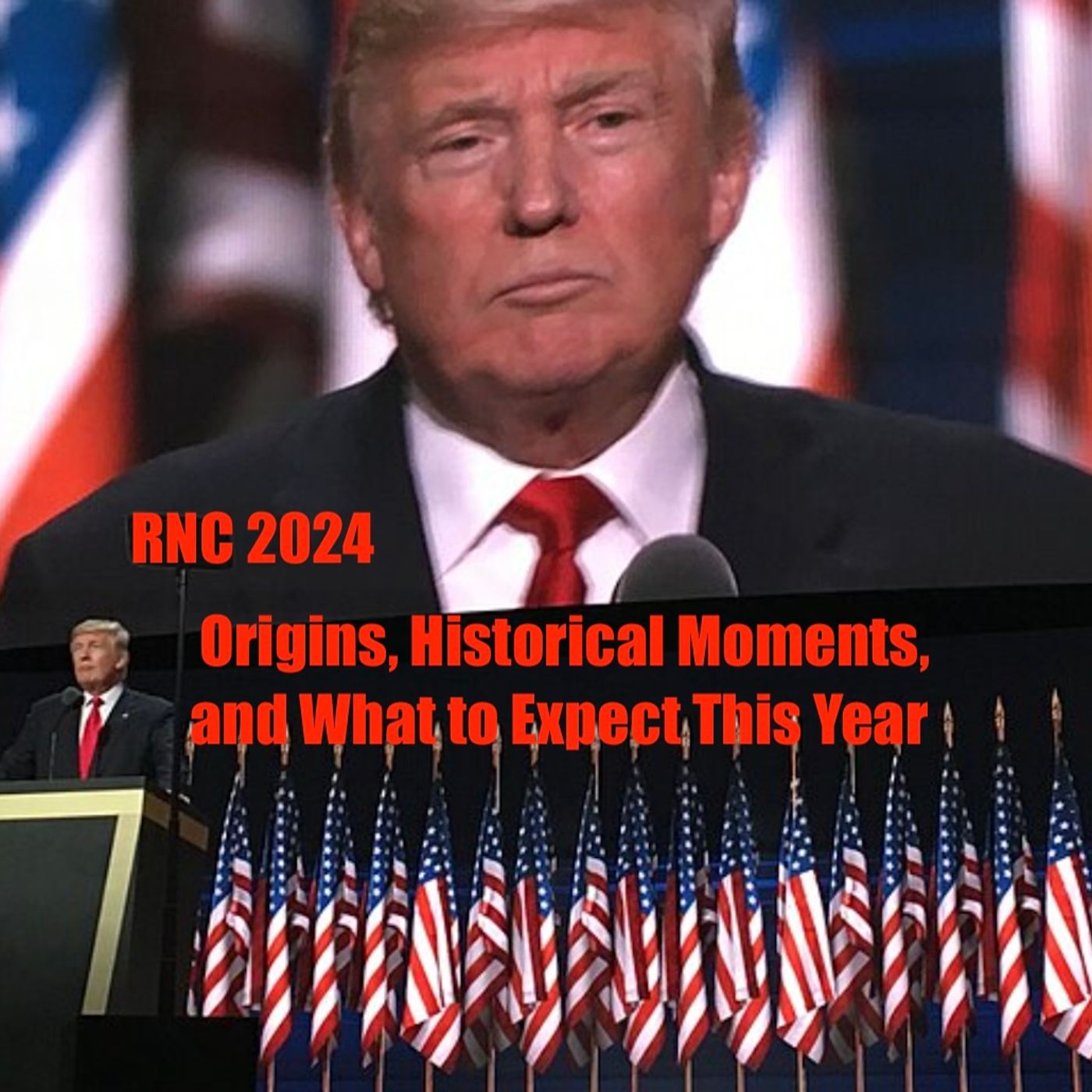
The Republican National Convention: Origins, Historical Moments, and What to Expect This Year
Origins of the Republican National Convention The Republican National Convention (RNC) is a pivotal event in the American political landscape, serving as the platform where the Republican Party nominates its presidential and vice-presidential candidates and outlines its policy agenda. The origins of the RNC date back to the mid-19th century, a period marked by significant political upheaval and the emergence of new political entities.
The Republican Party was founded in 1854, in the wake of the Kansas-Nebraska Act, which threatened to expand slavery into new territories. This act, which effectively repealed the Missouri Compromise of 1820, galvanized opposition to the expansion of slavery and led to the formation of the Republican Party. The party quickly gained traction among Northern voters who were concerned about the spread of slavery and the power of the "slave states" in national politics.
The first Republican National Convention was held in 1856 in Philadelphia, Pennsylvania. This inaugural convention nominated John C. Frémont as the party's first presidential candidate. Frémont, known as "The Pathfinder" for his explorations of the American West, represented the party's anti-slavery stance. Although Frémont did not win the presidency, losing to Democrat James Buchanan, the convention marked the beginning of the Republican Party's ascent in American politics. The party's strong showing in the election, particularly in the Northern states, demonstrated its potential as a major political force.
The RNC has evolved significantly since its early days, reflecting the changing dynamics of the party and the broader political landscape. Initially, conventions were more informal and less structured, often lasting several days as delegates engaged in lengthy debates and multiple rounds of voting to select a nominee. Over time, they became highly organized and media-centric events, reflecting the importance of public image and mass communication in modern politics.
In the early years, convention delegates were largely party insiders and political elites. However, as the party grew and the democratic process evolved, the selection of delegates became more representative of the broader party membership. The introduction of primary elections and caucuses in the 20th century further democratized the nomination process, though the convention remained the final arbiter of the party's choice.
Significant Historical Moments
1860 – Abraham Lincoln's Nomination: The 1860 convention, held in Chicago, Illinois, was a watershed moment for the Republican Party. Abraham Lincoln, a relatively unknown figure at the time, emerged as the party's nominee. Lincoln was not the front-runner going into the convention; Senator William H. Seward of New York was considered the favorite. However, Lincoln's campaign team skillfully maneuvered to secure support from delegates, ultimately winning the nomination on the third ballot.
Lincoln's nomination and subsequent election as president played a crucial role in shaping the future of the United States, leading to the abolition of slavery and the preservation of the Union during the Civil War. His presidency defined the Republican Party for generations, establishing it as the party of national unity and equal rights.
1912 – Theodore Roosevelt's Bull Moose Campaign: The 1912 convention in Chicago was marked by a dramatic split within the Republican Party. Former President Theodore Roosevelt, dissatisfied with the policies of incumbent President William Howard Taft, challenged Taft for the nomination. Roosevelt had previously hand-picked Taft as his successor but had grown disillusioned with Taft's conservative policies.
The convention was rife with tension as Roosevelt's supporters accused Taft of using his presidential power to manipulate the delegate selection process. When Taft secured the nomination through what Roosevelt's camp deemed unfair means, Roosevelt and his supporters walked out and formed the Progressive Party, also known as the "Bull Moose Party." This division ultimately contributed to the Democratic victory of Woodrow Wilson in the presidential election, marking one of the few times in American history when a major party split led to electoral defeat.
1964 – Barry Goldwater's Nomination: The 1964 convention in San Francisco, California, saw the nomination of Barry Goldwater, a staunch conservative. Goldwater's nomination represented a significant shift towards a more conservative ideology within the Republican Party. His famous declaration that "extremism in the defense of liberty is no vice" electrified conservatives but alarmed moderates within the party.
Although he lost the general election to Lyndon B. Johnson in a landslide, Goldwater's campaign laid the groundwork for the conservative movement that would later bring Ronald Reagan to power. His emphasis on states' rights, limited government, and a strong national defense became key tenets of the modern Republican Party.
1980 – Ronald Reagan's Rise: The 1980 convention in Detroit, Michigan, was a turning point for the Republican Party. Ronald Reagan, a charismatic former governor of California, was nominated and went on to win the presidency in a landslide victory. Reagan had previously sought the nomination in 1976, narrowly losing to incumbent President Gerald Ford. His 1980 campaign successfully united various factions within the party, including social conservatives, fiscal conservatives, and foreign policy hawks.
Reagan's presidency ushered in an era of conservative policies, economic reforms, and a renewed emphasis on American exceptionalism. His vision of "Morning in America" and his ability to communicate complex ideas in simple terms reshaped the Republican Party and American politics more broadly.
2016 – Donald Trump's Unexpected Nomination: The 2016 convention in Cleveland, Ohio, was one of the most contentious in recent history. Donald Trump, a businessman and television personality with no prior political experience, secured the nomination amidst a crowded field of more traditional Republican candidates. Trump's unorthodox campaign style and populist message resonated with a significant portion of the Republican base, despite initial skepticism from party elites.
Trump's eventual victory in the general election marked a significant realignment within the party, emphasizing populist and nationalist themes. His presidency saw a shift in Republican priorities, with increased focus on immigration restriction, trade protectionism, and a more confrontational approach to international relations.
What to Expect at This Year's Convention
The 2024 Republican National Convention promises to be a dynamic and closely watched event, as the party gears up for the upcoming presidential election. Here are some key aspects to look forward to:
Location and Format: The convention will be held in Milwaukee, Wisconsin, a critical swing state in the upcoming election. The choice of location reflects the party's strategic focus on winning crucial battleground states. Wisconsin, which had been reliably Democratic in presidential elections for decades until Trump's victory in 2016, is seen as a key to Republican hopes of recapturing the White House.
The format of the convention is expected to blend traditional elements with modern technology and media strategies. While maintaining the ceremonial aspects of past conventions, organizers are likely to incorporate innovative presentation techniques and digital engagement tools to reach a broader audience.
Nomination Process: The convention will formally nominate the Republican candidates for president and vice president. While the primary season will provide a clearer picture of the leading candidates, the convention will be the final stage for solidifying the party's ticket. The nomination process itself is largely ceremonial at this point, as the presumptive nominee is usually determined well before the convention through the primary and caucus system.
However, the convention still plays a crucial role in unifying the party behind its chosen candidate and building momentum for the general election campaign. The roll call of states, where each delegation announces its vote totals, is a tradition that highlights the nationwide support for the nominee.
Policy Platform: The party's platform, outlining its policy priorities and vision for the country, will be a central focus. Key issues such as the economy, healthcare, immigration, and national security are expected to dominate the agenda. The platform development process involves input from various party factions and interest groups, aiming to create a document that reflects the party's core principles while appealing to a broad electorate.
In recent years, there has been debate within the party about the role and importance of the platform, with some arguing for a more concise statement of principles rather than a detailed policy document. The 2024 convention may see further evolution in how the party presents its policy agenda to the public.
Speakers and Presentations: The convention will feature a lineup of prominent speakers, including party leaders, rising stars, and influential figures from various sectors. Notable speakers include:
Donald Trump Jr. and Kimberly Guilfoyle Lara Trump Senators Tom Cotton, Rick Scott, Marco Rubio, Tim Scott, and Marsha Blackburn Representatives Elise Stefanik, Mike Johnson, Steve Scalise, Matt Gaetz, and Marjorie Taylor Greene Governors Ron DeSantis, Kristi Noem, Sarah Huckabee Sanders, and Greg Abbott Conservative personalities Tucker Carlson, Franklin Graham, and
Recent rankings
Latest chart positions across Apple Podcasts and Spotify rankings.
Apple Podcasts
🇬🇧 Great Britain - government
04/11/2025#82🇬🇧 Great Britain - government
03/11/2025#64🇬🇧 Great Britain - government
09/08/2025#82🇬🇧 Great Britain - government
08/08/2025#54
Spotify
No recent rankings available
Shared links between episodes and podcasts
Links found in episode descriptions and other podcasts that share them.
See all- http://www.quietplease.ai
19309 shares

- https://amzn.to/49SJ3Qs
3090 shares

RSS feed quality and score
Technical evaluation of the podcast's RSS feed quality and structure.
See allScore global : 59%
Publication history
Monthly episode publishing history over the past years.
GOP Redistricting Battle Heats Up in Texas Ahead of Crucial Midterms
mercredi 6 août 2025 • Duration 03:41
Tensions are boiling in the Republican Party as a critical redistricting battle explodes in Texas. Republicans, pushed by President Donald Trump, have launched a mid-decade effort to redraw congressional districts, aiming to net up to five additional GOP seats ahead of the 2026 midterms. This is highly unusual, as redistricting typically only happens every ten years after the census. With the GOP holding one of the narrowest House majorities in nearly a century, these extra seats could be decisive in maintaining control. Trump, in interviews and public statements, has insisted that Republicans are "entitled to five more seats" in Texas after his historic win there and is calling for aggressive action, stating the party should act like Democrats do in states like California and New York, describing those states as already heavily gerrymandered in favor of Democrats.
Democrats in Texas have responded with a dramatic walkout, denying the Texas House the quorum needed to advance the Republican maps. Over fifty Democratic legislators have fled not just the state but also to places such as Illinois, effectively stalling the redistricting process for at least several days. Texas Governor Greg Abbott, also a Republican, has ordered state troopers to locate and arrest these lawmakers to force their return, intensifying the showdown. Democratic leaders in other states, including New York Governor Kathy Hochul and California Governor Gavin Newsom, have pledged to pursue their own partisan redistricting efforts, possibly setting the stage for a national "arms race" in redistricting tactics.
This escalating battle has drawn national attention because control of the U.S. House may hinge on just a handful of seats. House Speaker Mike Johnson has openly backed the Texas GOP’s campaign, expressing confidence that Republicans will not only defend but possibly expand their majority. Meanwhile, Democrats argue the new Texas map would dilute Black and Latino representation, potentially violating federal law, and have pledged legal challenges.
Amid this political upheaval, President Trump is also making headlines on other fronts. Trump signed a major executive order this week establishing a task force dedicated to security and logistics for the 2028 Los Angeles Olympics, positioning it as a move to safeguard the high-profile event. He also made news by signaling an intention to penalize large banks that deny service to customers for political reasons, claiming he himself has been targeted by major institutions like Bank of America and JP Morgan Chase.
In related congressional investigations, the Republican-led House Oversight Committee has subpoenaed the Department of Justice for records related to the late Jeffrey Epstein, targeting high-profile former officials in its probe, while administration officials are touting multibillion-dollar initiatives to strengthen domestic defense and job creation tied to U.S. support for Ukraine.
The rapid-fire developments around the Republican National Committee, Trump, and the broader GOP reflect an intensifying and unusually confrontational approach to both national and state-level politics. With the next midterms looming and both parties willing to exploit legal and procedural loopholes, American political norms are being tested as rarely before.
Thank you for tuning in—make sure to subscribe so you’re always in the loop. This has been a Quiet Please production, for more check out quietplease dot ai.
For great Trump Merch
https://amzn.to/49SJ3Qs
For more check out
http://www.quietplease.ai
This content was created in partnership and with the help of Artificial Intelligence AI
"Ahead of 2026 Midterms, Trump and GOP Tighten Grip Through Redistricting and Trade Policies"
lundi 4 août 2025 • Duration 04:04
Donald Trump and the Republican Party are making headlines this week with aggressive moves to solidify their advantage ahead of the 2026 midterms. According to NBS News, President Trump is laser-focused on shoring up Republican control of Congress, despite the historical trend where the president’s party loses ground during the midterms. The party’s current slim majority has prompted a push for new redistricting efforts in key states, with particular attention on Texas. The Wall Street Journal notes that Democratic approval ratings are at a 35-year low, giving Republicans a favorable landscape to defend their position.
In Texas, a major flashpoint erupted as Democratic House lawmakers fled the state to deny the GOP the quorum needed for an expedited redistricting bill. Trump has called for mid-decade changes to political maps, aiming to flip up to five Democratic congressional seats to the Republicans through a controversial gerrymander. NBC 5 Dallas-Fort Worth and The Texas Tribune both report that Texas Democrats, led by James Talarico and Gene Wu, argue this is a direct attack on the democratic process. Republican state officials defend the redistricting as "totally legal," while activists and lawmakers prepare for extended standoffs, legal battles, and possible arrests, as House rules permit fines and even the threat of apprehension for absent legislators.
Economic policy is another major front this week. ABC News reports that Trump has rolled out sweeping new tariffs on nearly 70 countries, with some rates ranging from 10% to 40%. The administration positions this as a trade protectionist measure, foundational to Trump’s nationalist economic agenda. However, critics warn these tariffs could cost Americans thousands annually and raise consumer prices. Simultaneously, Trump created shockwaves by firing Erika McEntarfer, the Bureau of Labor Statistics Commissioner, after disappointing jobs data. Trump claimed—without evidence—that the labor numbers had been manipulated, prompting concerns among economists about political interference in federal data. Former Treasury Secretary Larry Summers labeled the accusation “preposterous,” cautioning it poses risks for democratic institutions.
On immigration, CNN highlights how the United States is seeing negative net migration for the first time in at least 50 years, with Trump framing this turnaround as a fulfillment of his promise to stem illegal immigration and deport undocumented migrants. Commentators and networks, including CNN’s Harry Enten, now refer to Trump as one of the most influential presidents in American history, noting that these immigration policies are likely to be a cornerstone of his campaign messaging.
The Republican National Committee, under the leadership of Chairman Michael Whatley and finance Chair JD Vance, has substantially outpaced the Democrats in 2025 fundraising, racking up over $96 million in contributions, as revealed by recent Federal Election Commission filings. Despite the RNC’s solid cash reserve, internal tensions in both parties are growing. According to recent reports, MAGA’s coalition experienced strain following Elon Musk’s high-profile split from Trump and congressional Republicans over new tax and spending measures. Meanwhile, Democratic Party woes are compounded by leadership challenges and fundraising gaps.
As for upcoming party events, the Republican National Convention will be held in Milwaukee, Wisconsin, later this year, a sign of the party’s focus on battleground states. Organizers are expected to blend traditional elements with modern digital engagement to energize the base and solidify the ticket for 2028, with the nomination process mostly ceremonial at this stage.
Thanks for tuning in, listeners. Don’t forget to subscribe to stay informed. This has been a quiet please production, for more check out quiet please dot ai.
For great Trump Merch
https://amzn.to/49SJ3Qs
For more check out
http://www.quietplease.ai
This content was created in partnership and with the help of Artificial Intelligence AI
"Trump's Tax Cuts and Republican Agenda Dominate Political Landscape"
dimanche 20 juillet 2025 • Duration 03:38
Donald Trump and the Republican Party have dominated headlines this week as the administration pushes forward with sweeping tax and spending reforms, while internal GOP dynamics and Trump’s influence on Congress remain front and center. President Trump recently signed a high-profile package of tax breaks and spending cuts, which included blocking $8 billion in funding to the U.S. Agency for International Development and $1 billion for the Corporation for Public Broadcasting for the rest of the fiscal year, according to Fox News. The measures are touted by Trump as massive tax cuts aimed primarily at benefiting working-class Americans rather than donors or elite interests, a point emphasized in regional press like TribLIVE.
On Capitol Hill, Republicans have largely fallen in line with Trump's legislative priorities, with the House and Senate leadership closely coordinating with the White House on both policy and political strategy. Speaker Johnson and Senate Majority Leader John Thune have been facilitating Trump’s requests, including support for contentious nominees such as Robert F. Kennedy Jr. for the health secretary role and Pete Hegseth for Defense, according to WDIO/AP. There has also been significant internal debate within the GOP about Trump’s aggressive efforts to rescind congressional appropriations, including funding cuts for public broadcasting and overseas aid. While many Republicans have shown loyalty, a few, like Senator Lisa Murkowski, have expressed frustration about the legislative branch yielding too much power to the executive.
Internationally, Trump continues to pursue an assertive foreign policy. The president confirmed his administration’s involvement in airstrikes that “destroyed or badly damaged” Iran’s nuclear infrastructure last month, a move acknowledged by U.S., Israeli, and Iranian officials. Secretary of State Marco Rubio and European allies have given Iran until the end of August to agree to a nuclear deal, with automatic UN sanctions set to snap back if talks fail. Domestically, Trump announced executive actions to restrict travel from nearly 20 countries identified as security risks, resulting in border crossings hitting record lows, as confirmed by recent Customs and Border Protection data.
Within the Republican National Committee, succession speculation is swirling over North Carolina’s Senate seat for 2026. RNC Chair Michael Whatley openly stated in an interview with the Washington Examiner that he and the “entire Republican universe” would get behind Lara Trump, the president’s daughter-in-law, should she decide to run. Tillis’s decision not to seek another term after conflicts with Trump has made the race a key toss-up and will likely bring party infighting to the forefront as the primary field shapes up.
Meanwhile, Trump has lashed out at critics calling for more transparency in the Jeffrey Epstein investigation. ABC News reports that despite Trump’s request for the Justice Department to release more grand jury records related to Epstein, he dismissed those asking for more disclosure as “troublemakers.” He reiterated that even full transparency would not satisfy his most vocal detractors. The Justice Department signaled its intention to seek court approval for the release of relevant documents, but legal experts believe the public is unlikely to learn significantly new information from upcoming disclosures.
Thank you for tuning in, and don’t forget to subscribe. This has been a Quiet Please production, for more check out quiet please dot ai.
For great Trump Merch
https://amzn.to/49SJ3Qs
For more check out
http://www.quietplease.ai
This content was created in partnership and with the help of Artificial Intelligence AI
"Trump's Tariff Push and Tax Cut Plans Shake Up GOP as 2025 Approaches"
vendredi 14 février 2025 • Duration 02:36
In the latest developments, President Donald Trump has been at the forefront of several significant events that are shaping the landscape for the Republican Party.
On February 13, 2025, President Trump signed an executive order aimed at increasing U.S. tariffs to match those imposed by other countries. This move is part of a broader strategy to implement reciprocal tariffs, which Trump believes will reduce costs for Americans and boost U.S. production. The order includes a 180-day review period, with the possibility of implementing the new tariffs as early as April 1, 2025, depending on the outcome of the review and any decisions made by the president. Trump emphasized that this policy is a two-way street, suggesting that if other countries drop their tariffs, prices for Americans will decrease.
In addition to the tariff policy, Trump has also been pushing for new tax cuts, a promise he made during his campaign. These proposals include eliminating taxes on tips, Social Security benefits, and overtime pay. However, these ideas are facing significant resistance from within the Republican Party, with many lawmakers expressing concerns about the feasibility and cost of such measures. Senators like John Curtis of Utah and Chuck Grassley of Iowa have highlighted the challenges in making the math work, especially given the need to extend the existing tax cuts from 2017. The Senate is currently focused on Trump’s legislative agenda, which is expected to reveal new tensions within the party, particularly between fiscal hardliners and those who support Trump’s populist tax policies.
Meanwhile, Trump has also announced his intent to nominate several individuals to key administration posts. On February 13, 2025, he announced plans to nominate Gustav Chiarello, Gary Andres, and Michael Stuart to positions within the Department of Health and Human Services.
These developments underscore the ongoing dynamics within the Republican Party as it navigates Trump’s ambitious policy initiatives. The party is grappling with how to balance fiscal responsibility with the president’s populist promises, setting the stage for potential conflicts and negotiations in the coming weeks.
Thank you for listening to the Republican News 2025 podcast. Please subscribe for more updates and analysis on the latest developments.
For great Trump Merch
https://amzn.to/49SJ3Qs
For more check out
http://www.quietplease.ai
This content was created in partnership and with the help of Artificial Intelligence AI
"Reshaping the Federal Landscape: GOP's Transformative Agenda under Trump"
mercredi 12 février 2025 • Duration 03:53
In the ongoing landscape of American politics, the Republican Party and President Donald Trump are making significant moves that are reshaping the federal government and party dynamics.
President Trump is aggressively pushing his supercharged "Make America Great Again" agenda, which includes radical changes to government agencies and policies that were once anathema to traditional GOP thinking. Despite some isolated voices of dissent, Republicans are largely supporting Trump's initiatives, including backing Cabinet nominees with controversial histories. For instance, Senator Bill Cassidy voted to advance the nomination of Robert F. Kennedy Jr. as health secretary, despite Kennedy's long history of anti-vaccine activism.
The Republican Party's unity behind Trump is evident, with the party described as "strong, united and thriving" by White House spokesperson Harrison Fields. However, there are some cracks in this support. Senators like Tom Cotton, Lindsey Graham, and Chuck Grassley have expressed concerns over specific policies, such as stripping security protection from former government officials, pardoning Jan. 6 rioters, and the impact of tariffs on certain industries.
In terms of policy implementation, Trump's administration is swiftly reshaping the federal government. Recently, an executive order was signed to enforce the work of the Department of Government Efficiency, which includes plans by Elon Musk to slash the federal workforce. This move was announced during a joint appearance by Trump and Musk in the Oval Office.
The Environmental Protection Agency has also been affected, with 11 DEI and 160 environmental justice staffers placed on leave to comply with Trump's executive orders. Additionally, a federal judge has blocked the Trump administration from removing public health data from government websites, citing the critical need for these datasets in monitoring and responding to disease outbreaks.
On the legislative front, House Republicans are moving forward with a budget plan that aims to lay the foundation for approving Trump's agenda. This plan includes resources for border security, extending some of the 2017 tax cuts, incentivizing domestic manufacturing, and investing in American energy, while also trimming government programs and addressing the debt limit. However, the process has faced delays due to intraparty disagreements, prompting the Senate to pursue its own budget proposal.
The Senate Budget Committee, led by Senator Lindsey Graham, is marking up its budget resolution, which focuses on border security, defense, and energy priorities, with tax components to be addressed later. The House Freedom Caucus has also released its own budget resolution, advocating for significant spending cuts and a substantial debt ceiling increase.
In other administrative actions, the Department of Homeland Security has fired four employees, including the chief financial officer, for allegedly making payments to luxury hotels for migrant housing. This move follows allegations that FEMA had paid over $50 million to hotels for migrant housing using grant program funds.
Overall, the Republican Party and the Trump administration are pushing through a robust agenda, despite some internal and external challenges. The party's unity and the administration's actions are setting the stage for significant changes in federal policy and governance.
Thank you for listening to the Republican News 2025 podcast. Please subscribe for more updates and in-depth analysis on the latest developments in American politics.
For great Trump Merch
https://amzn.to/49SJ3Qs
For more check out
http://www.quietplease.ai
This content was created in partnership and with the help of Artificial Intelligence AI
Republican Party Aligns Closely with Trump's Expansive Agenda
lundi 10 février 2025 • Duration 03:25
In the latest developments, the Republican Party is aligning closely with President Donald Trump's aggressive and expansive policy agenda, marking a significant shift in the party's stance on several key issues. Trump, now three weeks into his new presidency, is pushing the boundaries of traditional Republican principles, and for the most part, Republicans are supporting him unequivocally.
Trump's "Make America Great Again" agenda includes radical changes such as tearing down government agencies and implementing policies that would have been met with strong resistance from Republicans in the past. Despite some isolated voices of dissent, the broader Republican resistance that was evident during Trump's initial presidential run has been largely sidelined. This unity is facilitated by Republican majorities in both the House and Senate, allowing Trump to proceed with his plans largely unchecked.
One of the notable recent events is the smooth passage of Trump's Cabinet nominees, even those with controversial backgrounds. For instance, Robert F. Kennedy Jr., known for his anti-vaccine activism, has been advanced as the health secretary despite serious concerns from some Republican senators like Bill Cassidy.
On the legislative front, Republicans are strategizing around a tax reform reconciliation bill. During their annual legislative retreat, House Republicans discussed but did not finalize a concrete path forward for this bill. There is a divide within the party, with some preferring a two-bill strategy that separates issues like border security and tax reform, while others, including Speaker Johnson and House Ways and Means Chair Jason Smith, advocate for a single reconciliation bill that addresses all these issues together. President Trump has added pressure by calling for a reduction in the corporate tax rate from 21% to 15% and the exclusion of certain types of income from taxation.
In terms of foreign policy and trade, Trump has imposed significant tariffs on imports from Canada, Mexico, and China, citing national security concerns and the need to combat the flow of illegal drugs, particularly fentanyl. These tariffs include a 25% additional tariff on imports from Canada and Mexico, and a 10% tariff on imports from China, with energy resources from Canada facing a lower 10% tariff. This move is part of Trump's broader strategy to leverage America's economic position to secure its borders and combat drug trafficking.
Additionally, Trump made history by becoming the first sitting president to attend the Super Bowl, an event that drew considerable attention and raised questions about the costs to taxpayers.
While there have been some limited pushbacks from key Republican allies, such as Sen. Tom Cotton criticizing Trump's decision to strip security protection from former government officials and Sen. Lindsey Graham opposing Trump's proposal for a U.S. takeover of Gaza, the overall support for Trump's agenda remains strong within the party.
Thank you for listening to the Republican News 2025 podcast. Please subscribe for more updates and in-depth analysis on the latest developments.
For great Trump Merch
https://amzn.to/49SJ3Qs
For more check out
http://www.quietplease.ai
This content was created in partnership and with the help of Artificial Intelligence AI
Republican Party Navigates Tax Reform, Trump Policies Amidst Sweeping Government Changes
dimanche 9 février 2025 • Duration 03:23
In the latest developments, the Republican Party is navigating several critical issues, particularly around tax reform and aligning with President Donald Trump's policies.
On Capitol Hill, Republicans are deeply engaged in strategizing around a tax reform reconciliation bill. During their recent annual legislative retreat in Miami, House Republicans discussed reconciliation plans, but they have yet to establish a concrete path forward. The main points of contention include the cost of extending the Tax Cuts and Jobs Act (TCJA), which is estimated to be nearly $5 trillion over 10 years. Some Republicans are less concerned about the cost and the impact on the national debt, while others, such as the House Freedom Caucus, are pushing for a budget resolution that includes $3 trillion in deficit reduction over 10 years.
Another significant issue is the format of the reconciliation bill. There is a divide between House and Senate Republicans on whether to use a single bill or a two-bill strategy. House Speaker Mike Johnson and House Ways and Means Chair Jason Smith prefer a single bill that includes tax reform along with other policies like border and defense measures. In contrast, Senate Republicans, led by Senate Majority Leader John Thune, support a two-bill approach, with the first bill addressing border, defense, and energy issues and the second focusing on tax reform.
President Trump has added his own pressure to the situation, advocating for a reduction of the corporate tax rate from 21% to 15% and the exclusion of certain types of income from taxation. His proposals could significantly increase the deficit, potentially by up to $10 trillion over a decade.
In addition to tax reform, President Trump's second administration is making sweeping changes to the federal government. Recently, Trump announced plans to drastically reduce the USAID workforce from 14,000 to just 300 employees, aligning with his call to close down the agency. This move has caused significant uncertainty among aid groups.
Trump also introduced new initiatives during the National Prayer Breakfast, including the establishment of a task force to address alleged anti-Christian bias within the federal government, led by Attorney General Pam Bondi. He also announced the creation of a White House Faith Office, to be led by Pastor Paula White, emphasizing the importance of religious freedom.
The Trump administration's actions have been met with pushback from Democrats and legal challenges. For instance, a federal judge recently granted a temporary restraining order to block the administration from placing 2,200 USAID employees on leave.
In other news, the Consumer Financial Protection Bureau has been effectively shut down under the new administration, with funding being cut off. This move, along with other changes, reflects the ongoing recasting of the federal government under Trump's leadership.
Thank you for listening to the Republican News 2025 podcast. Please subscribe for more updates and in-depth analysis on the latest developments.
For great Trump Merch
https://amzn.to/49SJ3Qs
For more check out
http://www.quietplease.ai
This content was created in partnership and with the help of Artificial Intelligence AI
"Trump's Reshaping of US Politics: Executive Orders and GOP Divisions Dominate the Agenda"
samedi 8 février 2025 • Duration 03:02
In the latest developments, the Republican Party and President Donald Trump have been at the center of several significant news stories. President Trump has continued to reshape various aspects of US policy through a series of executive orders. Since his inauguration, Trump has signed numerous executive orders, fundamentally changing the way things are done in US politics.
One of the key figures influencing these changes is Russell Vought, an architect of Project 2025, a conservative blueprint aimed at dismantling parts of the federal government. Vought has recently been confirmed to lead the White House budget office, which suggests that Project 2025 could indeed play a role in shaping Trump's policy agenda, despite earlier denials.
On Capitol Hill, Republicans are actively strategizing around a tax reform reconciliation bill. During their annual legislative retreat in Miami, House Republicans discussed their reconciliation plans, but they have yet to agree on a unified strategy. There is a divide between House and Senate Republicans on whether to use a single reconciliation bill or a two-bill approach. The House leadership, including Speaker Johnson and House Ways and Means Chair Rep. Jason Smith, prefer a single bill that includes tax reform, border policies, defense, and energy. In contrast, Senate Republicans, led by Senate Majority Leader John Thune, are considering a two-bill strategy.
President Trump has added pressure to this debate by reiterating his desire for a reduction in the corporate tax rate from 21% to 15% and the exclusion of tip income, overtime income, and social security income from income tax. These proposals, if included in a single reconciliation bill, could significantly increase the deficit over a 10-year period.
Additionally, Trump's executive power has been a focal point, with nearly 50 executive orders issued since his inauguration, impacting both domestic and foreign policy. Recent actions include reshaping foreign policy and implementing controversial measures such as sending migrants to Guantanamo and pushing out government workers.
The economic landscape is also being closely watched, with recent jobs reports showing hiring slowing down but the unemployment rate ticking down. This mixed economic data has sparked discussions about its implications for the overall economy.
In summary, the Republican Party and President Trump are navigating complex internal debates on tax reform, while Trump continues to exert significant influence through executive orders. These actions are reshaping various policy areas and generating considerable attention and debate.
Thank you for listening to the Republican News 2025 podcast. Please subscribe for more updates and in-depth analysis.
For great Trump Merch
https://amzn.to/49SJ3Qs
For more check out
http://www.quietplease.ai
This content was created in partnership and with the help of Artificial Intelligence AI
"Trump's MAGA Agenda Reshapes US Policies: Border Security, Foreign Cooperation, and Domestic Crackdown"
vendredi 7 février 2025 • Duration 03:31
In the latest developments, President Donald Trump has been aggressively pushing his 'Make America Great Again' (MAGA) agenda, which is being largely supported by Republicans despite some of the policies being at odds with traditional GOP principles. Trump has been taking bold steps, including attempts to slash the federal government and impose tariffs on key allies, which are testing the limits of Republican support.
One of the significant moves involves international cooperation and border security. Mexico's president has agreed to supply 10,000 soldiers to the US-Mexico border, specifically to combat fentanyl trafficking and criminal aliens. Additionally, Canada's Prime Minister Justin Trudeau has agreed to designate fentanyl cartels as terrorists and increase resources to support the 10,000 frontline personnel at the US-Canada border. In response to these agreements, Trump has paused the implementation of tariffs for one month to allow for further negotiations.
On the foreign policy front, Trump has made significant strides. Following a successful trip by Secretary Rubio to Panama, Panama's president has announced that the country will no longer participate in the Chinese Communist Party's Belt and Road Initiative, marking a significant shift as Panama was the first Latin American nation to join this initiative. Furthermore, El Salvador's president has agreed to an unprecedented migratory agreement, offering to house illegal aliens of any nationality facing deportation in the US within El Salvador's prison system.
Domestically, Trump's administration is moving swiftly on several fronts. Customs and Border Protection has initiated approximately 79 miles of new border wall projects in various stages of construction and planning. The administration has also begun a mass deportation campaign, with the first flights carrying members of the transnational gang MS-13 to Guantanamo Bay. ICE agents have been actively removing violent and criminal illegal aliens from communities across the country, with recent arrests including individuals convicted of serious crimes such as sexual assault, homicide, and assault.
In terms of cabinet confirmations, the Senate is working rapidly to confirm Trump's nominees despite media smear campaigns. As of now, 12 members of Trump's cabinet have been confirmed, including Pam Bondi as the Attorney General. This pace is faster than the average for modern-era presidents.
Trump has also taken executive action to address social and sports issues. He is set to sign an executive order to keep men out of women's sports, aiming to protect the safety of athletes, maintain competitive integrity, and uphold Title IX.
The Republican Party's support for Trump's agenda remains strong, with Republicans in the House and Senate largely backing his policies and cabinet nominees. However, some conservative commentators have criticized this as a "complete surrender" to Trump's vision, highlighting the significant expansion of presidential power and the reimagining of the federal government.
Thank you for listening to the Republican News 2025 podcast. Please subscribe for more updates and in-depth analysis on the latest developments.
For great Trump Merch
https://amzn.to/49SJ3Qs
For more check out
http://www.quietplease.ai
This content was created in partnership and with the help of Artificial Intelligence AI
"Trump's Evolving Agenda: Executive Actions, Foreign Policy, and Congressional Dynamics"
mercredi 5 février 2025 • Duration 02:47
In recent days, several significant developments have emerged involving the Republican Party, Donald Trump, and related administrative actions.
President Donald Trump has been actively engaged in various policy and diplomatic endeavors. On February 3, 2025, Trump signed new executive orders and addressed reporters from the Oval Office, discussing several key issues. He highlighted a recent agreement with Mexico, where Mexico has agreed to deploy 10,000 soldiers to their side of the border to combat the influx of fentanyl and illegal aliens. Trump also mentioned his discussions with Canadian Prime Minister Justin Trudeau, touching on topics such as banking regulations and the overall relationship between the two countries.
Additionally, Trump's administration has been making moves to rein in government spending, a topic that has garnered attention from Congress. Elon Musk, appointed by Trump to lead the newly established Department of Government Efficiency (DOGE), has been at the forefront of these efforts. Musk announced plans to "shut down" the U.S. Agency for International Development (USAID), following a 90-day pause on foreign aid declared by the Trump administration. Although a memo instructing federal agencies to pause all federal grants and payments was later rescinded due to a court challenge, the White House has indicated that its broader efforts to reduce spending will continue.
Republican lawmakers have largely been supportive of these measures, with Senate Majority Leader John Thune and other GOP leaders expressing the view that the administration has the right to demand accountability and transparency in government programs. Despite some concerns raised about the review of foreign aid programs, many Republicans see this as a necessary step to ensure efficient use of funds.
In another significant development, Trump has made statements regarding international involvement, particularly in the Middle East. He has not ruled out deploying U.S. troops to support the reconstruction of Gaza and has envisioned long-term U.S. involvement in the redevelopment of the territory.
These actions and statements reflect the ongoing efforts of the Trump administration to assert its policies and influence both domestically and internationally, while also highlighting the complex interplay between the executive branch and Congressional oversight.
Thank you for listening to the Republican News 2025 podcast. Please subscribe for more updates and in-depth analysis on current events.
For great Trump Merch
https://amzn.to/49SJ3Qs
For more check out
http://www.quietplease.ai
This content was created in partnership and with the help of Artificial Intelligence AI
Related Shows Based on Content Similarities