On Becoming a Healer – Details, episodes & analysis
Podcast details
Technical and general information from the podcast's RSS feed.
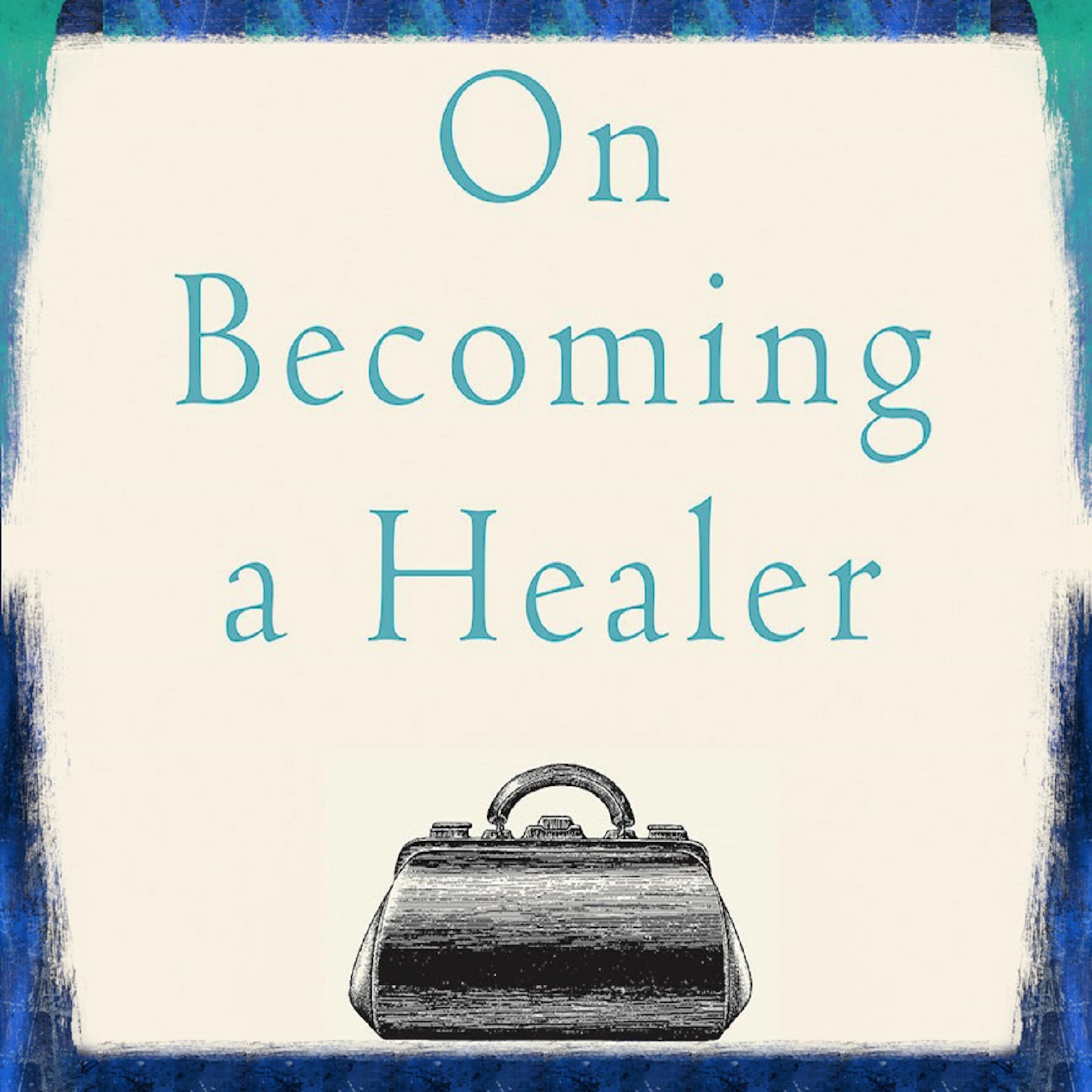
On Becoming a Healer
Saul J. Weiner and Stefan Kertesz
Frequency: 1 episode/29d. Total Eps: 73

Recent rankings
Latest chart positions across Apple Podcasts and Spotify rankings.
Apple Podcasts
🇫🇷 France - medicine
11/05/2026#75🇫🇷 France - medicine
10/05/2026#56
Spotify
No recent rankings available
Shared links between episodes and podcasts
Links found in episode descriptions and other podcasts that share them.
See allRSS feed quality and score
Technical evaluation of the podcast's RSS feed quality and structure.
See allScore global : 79%
Publication history
Monthly episode publishing history over the past years.
Why it's time to remove time limits on tests, like the USMLE exam
Season 6 · Episode 72
mardi 21 avril 2026 • Duration 44:19
There is a widely held misperception that being able to complete a test quickly is an indication of mastery when compared with those who need more time. As a result, it is often difficult to obtain accommodations on high stakes examinations, including the MCAT and USMLE exams. Many students who request extra time because of a disability are denied accommodations and many other students who need it aren't eligible (e.g., English is a second language) or are inhibited from applying (e.g., Veterans, students from certain cultural backgrounds).
In this month's issue of the journal Medical Education, titled The myth that slow test-takers are worse students: Implications for time-limited testing (open access), the authors review the evidence that time pressuring even a small proportion of students taking an exam makes it less valid and less equitable, and that a simple solution would be to give everyone the time they need. In this episode, originally aired in 2023, we hear from one of the authors about why it's past time to do away with time limited tests for everyone.
Why Good Primary Care Is Non-Negotiable
Season 6 · Episode 71
mardi 17 mars 2026 • Duration 44:57
In a recent five-part series in the New England Journal of Medicine on the future of primary care, the author asks:
"Has the long-term general doctor become obsolete? In other words, should the dying primary care system be saved?"
The question itself is unsettling. Could a health system function effectively without primary care? What happens to patients when no one is responsible for truly caring about them and guiding them safely through the health care system? Today many, perhaps most, Americans don't have a doctor like that. But is that okay?
Research by one of the hosts, based on thousands of recorded physician–patient encounters, suggests that physicians who consider the circumstances, needs, and priorities of each patient when planning their care are uncommon.
In this episode, we introduce you to a primary care physician with his own practice in a mid-size Western city who, like many others — but far too few — provides this indispensable service to his community. He is a skilled and deeply knowledgeable clinician, a caring advocate who knows his patients well and finds the work deeply rewarding, despite the daily frustrations of insurance denials, specialists who don't return calls, and a payment system that measures almost everything except how well physicians care for people when they are sick.
There is also a major medical education challenge. What is poorly understood is that producing an excellent primary care physician is often harder than producing an excellent specialist. The work depends less on mastering technical procedures and more on integrating complex information, building long-term relationships, and making collaborative decisions under conditions of uncertainty.
Far too few graduates of U.S. medical schools and residency programs are being prepared for — or supported in — this kind of work. In a profit-driven health system that can at times be predatory, where patients are exposed to unnecessary procedures while their mental health and well-being are overlooked, the absence of accessible, high-quality primary care leaves patients vulnerable and often very alone.
The Extraordinary Dr. Richard Clarke Cabot
Season 5 · Episode 62
mardi 17 juin 2025 • Duration 39:35
It is difficult to overstate the achievements of Richard Clarke Cabot (1868-1939) a relatively little-known, old-moneyed physician of the early 20th century who was far ahead of his time in how much he contributed, and how willing he was to question his own limitations.
Cabot's achievements include: creation and self-funding of the first medical social work service and establishment of the fields of clinical pastoral care and medical ethics. His work offered seminal contributions to the fields of hematology, cardiology, infectious disease, and medical education – including the clinical pathologic conference, case-based learning and the differential diagnosis; the first large-scale randomized experiment in the history of criminology; the science of medical error; and introducing the concept of a group insurance plan. He authored countless books, articles and textbooks.
Most remarkable, considering Cabot's extraordinary intellect, was his openness to reflecting on his own deficits as a physician, including getting diagnoses wrong, and describing his own failures in seeing the humanity of his patients.
Joy, curiosity, and generosity were among his distinctive personal characteristics.
So, why is he not more widely remembered? Perhaps because of one of his greatest attributes: he pointed out things about his profession that the medical establishment didn't want to hear.
Emboldened Bullies Come for Medical Education
Season 5 · Episode 61
jeudi 1 mai 2025 • Duration 53:52
In an April 23rd executive order (EO), the president of the United States alleges that the Liaison Committee for Medical Education (LCME) and the Accreditation Council for Graduate Medical Education (ACGME) are requiring medical schools and residency programs to pursue unlawful discrimination through DEI policies. The EO calls for the US Department of Education to "assess whether to suspend or terminate" them, and to "streamline the process" for recognizing new accreditors to replace them.
In addition, medical journals, including the New England Journal of Medicine, are getting letters from a US Attorney, calling them "partisans in various scientific debates," and requesting information.
As a follow up to our last episode on authoritarianism and its implications for the medical profession, we consider these new developments from two perspectives: On the one hand we look for evidence to support the government's claims; and, on the other, we consider how they fit into the authoritarian's playbook of capitalizing on polarization to breakdown civil society and consolidate power.
There are things physicians and other health professionals can and should be doing now – and we propose a few -- to protect our profession from an authoritarian incursion that threatens our commitment so scientific integrity, and to a medical education system that, however imperfect, is informed by expert knowledge and professional values.
Physicians and Authoritarians: Are We Too Obedient?
Season 5 · Episode 60
mardi 8 avril 2025 • Duration 47:20
The record of physicians standing up for their values as healers under authoritarian regimes is not good, whether it's Nazi Germany, the former Soviet Union, or Iraq, with behaviors ranging from assisting in torture, to psychiatric hospitalization for political reasons. And sadly, it's often without any coercion.
More subtly, physicians may go along with authoritarian regimes' demands, thinking they can just "stay above the fray." But is that possible? Already, other professional institutions, including academia and law, have struck deals in the hope they they can move on, rather than defend academic freedom or long-standing legal principles.
What's in store for medicine? Some might say "not much" -- physicians must simply continue to take good care of their patients. But some are already acceding to orders to abandon care to certain populations, including trans people and refugees; or to compromise privacy. And professional organizations are saying little about looming cuts that would curtail access to care for millions of Americans.
One scholar of authoritarianism, Timothy Snyder has written, "When political leaders set a negative example, professional commitments to just practice become more important. Authoritarians need obedient servants."
In this episode, two physicians wrestle with what those commitments are, and how we hold on to them.
Caring for Patients or Policing Them? Prescription Drug Monitoring, Doctors and Opioids
Season 5 · Episode 59
mardi 18 mars 2025 • Duration 01:08:47
Prescription Drug Monitoring Programs (PDMPs) were originally designed for law enforcement to monitor patients and physicians for criminal behavior before it became available to health care professionals. Physicians and pharmacists often find PDMPs helpful because they can verify what a patient tells them and will often decide not to prescribe or dispense opioids if they discover their patient has been going to multiple providers and pharmacies. But is that health care or policing? Who benefits and who is harmed? Those are questions we consider with our guest, Elizabeth Chiarello, PhD, sociology professor and author of Policing Patients: Treatment and Surveillance on the Frontlines of the Opioid Crisis.
The themes we discuss are not unique to PDMPs. This is at least our fifth episode exploring how the criminal justice mindset has crossed into medical practice with harmful effects. Prior ones include:
· Opioids and the physician-patient relationship: What are we getting wrong? March 2022
· Urine Drug Screening: How it can traumatize patients and undermine the physician-patient relationship without helping anyone August 2022
· My patient's in shackles: Can we take these off? April 2023
· Drug testing at time of birth: How physicians are co-opted into harming families while thinking they are doing the right thing. Nov 2023
What can we learn from all those "Why I quit medicine" videos on YouTube?
Season 5 · Episode 58
mardi 18 février 2025 • Duration 49:57
There are a lot of videos on YouTube that feature typically young physicians explaining why they decided to leave the profession after years of dedication and hard work. For some it appears that they were so successful at building a social media presence and related businesses, that they quit medicine. Others seem to just want to share their experience in the hope it might help others. They describe how a sense of exhaustion, dreading work each day and discovering that it wasn't what they imagined when they dreamed of becoming a doctor drove them away. What they have to say feels quite convincing, and thousands of comments affirm them.
At the same time, there is something missing. They rarely talk about their relationships with patients or how medicine, no matter how corrupted it is by profit seeking, really is a special and unique profession that is worth fighting for. We reflect on what to make of this blind spot, trying very hard not to sound preachy.
The New Medical School Graduation Competencies and Why One of the Them Stands Out
Season 5 · Episode 57
mardi 21 janvier 2025 • Duration 51:20
In December 2024, the three organizations that oversee medical school (MD and DO) and residency education released a set of "Foundational Competencies for Undergraduate Medical Education," that represent a consensus on the observable abilities medical students should exhibit as they begin practicing medicine under supervision. Not surprisingly they include taking a relevant patient history, performing a relevant physical exam, and creating and prioritizing a differential diagnosis. But a new one – and it's the first one under Patient Care -- entails integrating patient context and preferences into patient care.
Stefan interviews co-host Saul Weiner who has documented a strong correlation between contextualizing care and patient health care outcomes in thousands of encounters. Saul reflects on how contextualizing care is a deeply human but teachable process that AI can't replicate and that makes care measurably more effective for patients, and more meaningful for doctors.
The Institute for Health Care Improvement's new online course on contextualizing care is accessed at Contextualizing Care 101. For bulk orders email OpenSchoolSubsribers@ihi.org
A Conversation with Pediatric Surgeon John Lawrence MD, Past Board President of Doctors Without Borders, USA
Season 5 · Episode 56
mardi 17 décembre 2024 • Duration 56:05
At a moment of increasing isolationism and xenophobia and -- for physicians – burnout, in a highly bureaucratic and profit driven health system, service in low resource high needs settings can be an antidote for what ails America and American medicine, at least for the individual clinician. John Lawrence has spent decades serving all over the globe as a pediatric surgeon, most recently in war torn Gaza and South Sudan. He explains how he headed to college with plans to become a mathematician and then got diverted from that career trajectory while teaching math to Native American youth in Montana and seeing the consequences of poor access to needed healthcare. As cliched as it may sound, physicians are supposed to serve humanity rather than just the well insured, and John exemplifies that point of view on a global scale.
Addressing Social Drivers of Health: What is the role of the clinician?
Season 5 · Episode 3
mardi 19 novembre 2024 • Duration 52:56
In can be confusing and even demoralizing for a medical student or resident to understand what's expected of them when caring for patients with social needs. They already feel overwhelmed. Are they supposed to now also screen for housing insecurity? Is it their job to intervene to address social needs? And if someone else is doing the screening, what's their role? And are they also supposed to be advocating for changes to social policies? Finally, what's special about social needs as opposed to all the other reasons that, for instance, a patient can't control their diabetes? A patient may not be able to store their insulin because they are poor. Or they may not be able to administer it because they can't read the bottle or their fingers are arthritic.
Our guest, Emily Murphy MD, an academic hospitalist, provides her perspective on teaching medical students and residents about SDOH. Co-host Saul Weiner, expresses concern that messages to trainees about their roles are confusing, that the SDOH movement is just the latest buzzword in medicine, like "patient-centered care,", and that while getting a huge amount of attention the movement could ultimately have little impact on patient wellbeing. He, Dr. Murphy, and co-host Stefan Kertesz discuss these questions and concerns and consider what needs to change.
Related Shows Based on Content Similarities