Navigating Church Finances: Keeping it Simple & IRS Compliant l Church Bookkeeping, Church Payroll, Minister Taxes – Details, episodes & analysis
Podcast details
Technical and general information from the podcast's RSS feed.
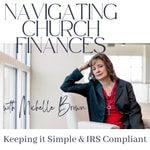
Navigating Church Finances: Keeping it Simple & IRS Compliant l Church Bookkeeping, Church Payroll, Minister Taxes
Michelle R Brown, EA, Christian Business Mentor, Enrolled Agent
Business
Religion & Spirituality
Education
Frequency: 1 episode/8d. Total Eps: 98

Hey there, I’m Michelle and I love all things Jesus, business and church finances! I help church finance individuals just like you go from feeling confused and frustrated with what you don’t know about church finances, to being more confident in your role while increasing your proficiency and expertise in the church finance realm.
Are you tired of Google searches that result in endless pages of answers to your questions about church finances, housing allowances and clergy taxes?
Do you need help with getting the right processes and procedures in place for your church office or business?
Are you looking for a group of like-minded believers who understand your desire to do business and serve the local church God’s way?
In this podcast, you will find practical AND biblically based business solutions for your church office or bookkeeping business that serves churches . We will give you tried and true bookkeeping tips and lessons that are specific to the church ministry and other foundational practices that you need in place to make sure that the church(es) that you serve are in compliance with current industry standards and IRS tax code.
My mission is simple: to help church bookkeepers/treasurers/finance individuals become more confident in their role and increase their expertise in church finances so the church can continue her mission of spreading the Gospel of Jesus Christ
If you are ready to walk out the calling the Lord has on your life while serving Him with excellence - then you are definitely in the right place!
If you are ready to serve your church with confidence while keeping God at the center of everything you do - this podcast is for you!
So grab a notebook and pen to take some great notes. It’s time to serve Him with Excellence!
Learn: www.churchfinances.org
Community: https://www.facebook.com/groups/churchbookkeepingandclergytax
Site
RSS
Apple
Recent rankings
Latest chart positions across Apple Podcasts and Spotify rankings.
Shared links between episodes and podcasts
Links found in episode descriptions and other podcasts that share them.
See allRSS feed quality and score
Technical evaluation of the podcast's RSS feed quality and structure.
See allPublication history
Monthly episode publishing history over the past years.
© My Podcast Data · Independent project · Data from Apple & Spotify