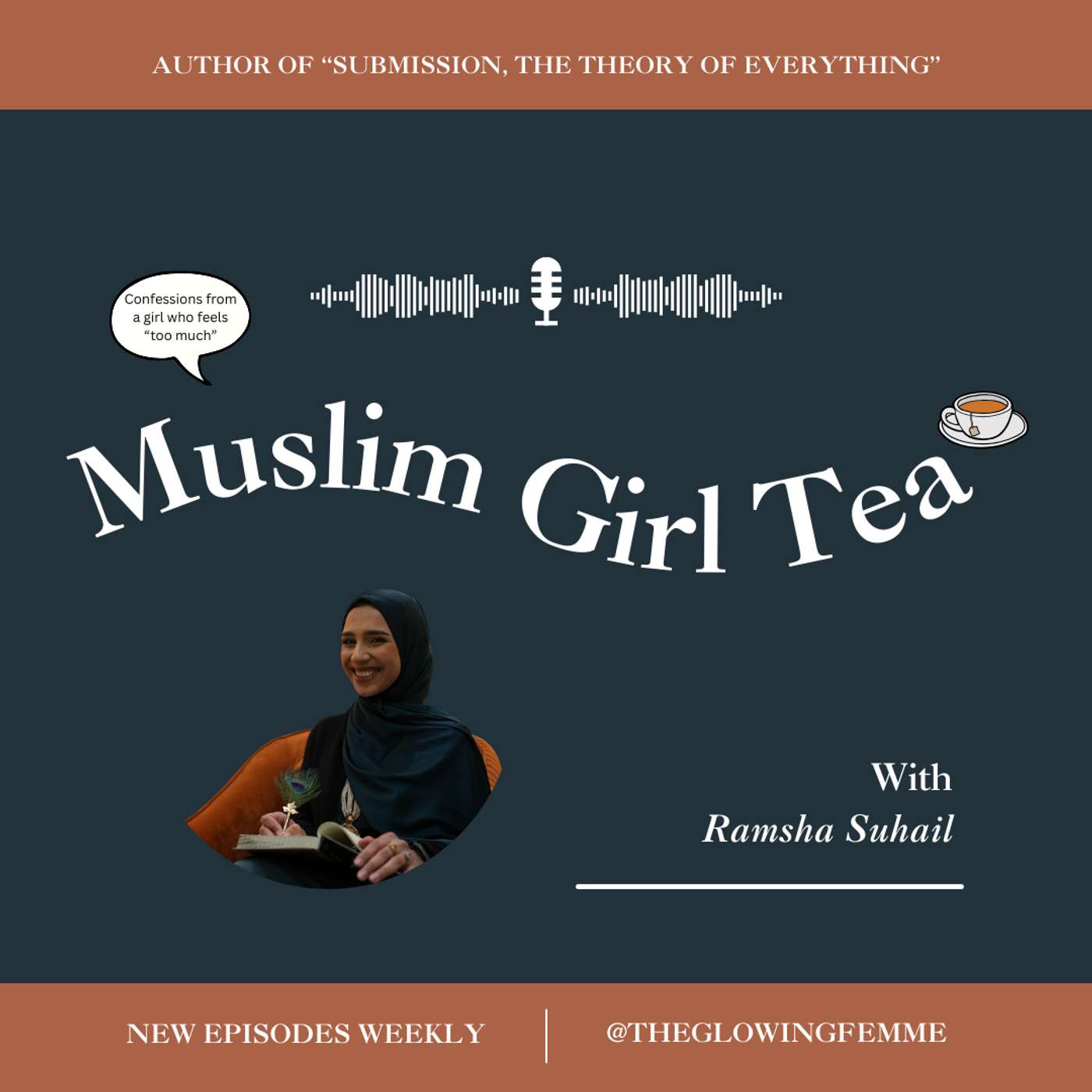
Muslim Girl Tea – Details, episodes & analysis
Podcast details
Technical and general information from the podcast's RSS feed.

Recent rankings
Latest chart positions across Apple Podcasts and Spotify rankings.
Apple Podcasts
🇬🇧 Great Britain - islam
23/09/2025#68
Spotify
No recent rankings available
Shared links between episodes and podcasts
Links found in episode descriptions and other podcasts that share them.
See allRSS feed quality and score
Technical evaluation of the podcast's RSS feed quality and structure.
See allScore global : 64%
Publication history
Monthly episode publishing history over the past years.
The Neuroscience of Salah: How Prayer Relaxes Your Body and Opens Your Heart
Episode 3
dimanche 21 septembre 2025 • Duration 13:34
In this episode of Muslim Girl Tea, host Ramsha Suhail — therapist-trained educator, author, and your big sister in faith — unpacks how salah is more than ritual. It’s a built-in system for emotional regulation, nervous system healing, and heart-opening connection with Allah.
You’ll learn how prayer activates the parasympathetic nervous system, lowers cortisol, and brings rest to the heart — just as the Qur’an and Sunnah have always promised.
From sujūd increasing blood flow to the brain, to dhikr soothing the amygdala, you will learn how science beautifully confirms what faith has always taught.
In this episode, we will cover:
- Why salah calms your nervous system and lowers stress
- The heart–brain connection in sujūd and rukūʿ
- Qur’an (13:28, 29:45) and hadith on salah as comfort and strength
- A simple breathing practice to try in sujūd today
- Why healing is sunnah, and salah is empowerment
💌 Want to go deeper? DM “Regulation” to @theglowingfemme
for your free Emotional Regulation Starter Kit.
⚠️ Disclaimer: This episode is educational and faith-based. It is not therapy or medical advice. Please seek support from a licensed healthcare professional for your healthcare needs - healing is sunnah, and your body is an amanah from Allah ❤️
P.S. If you'd like me to go deeper on any of these topics, or you have a specific topic in mind you'd like to learn more about, email me at iqradreaminternational@gmail.com. I'd love to hear from you!
Muslim Girl Tea Trailer
Episode 1
mercredi 10 septembre 2025 • Duration 02:25
Breaking Taboos Around Mental Health: Rigidity, Oversharing, and Regulation
Episode 2
mercredi 10 septembre 2025 • Duration 09:13
Breaking Taboos Around Mental Health: Rigidity, Oversharing, and Regulation
Confession: growing up in a Pakistani immigrant household, mental health wasn’t just ignored — it was hush hush. I didn’t even know what therapy really was until I was 26, when my husband introduced me to the idea. That moment changed everything: it led me to go back to school for my Master’s in Mental Health Counseling and realize how much silence we carry as Muslim girls.
In this episode of Muslim Girl Tea, I unpack how trauma shapes the way we communicate in friendships and relationships — and why breaking the cycle starts with breaking the taboo.
Together we’ll sip on:
- Why rigidity (shutting down, heart closed) feels safe but deepens isolation.
- How oversharing (no boundaries, everything open) leaves us exposed and drained.
- What regulation (healing, balance, healthy boundaries) looks like — in both psychology and Islam.
- How the Prophet ﷺ modeled balance and acknowledged pain with gentleness (Qur’an 3:159, Bukhari).
- The science behind regulation: naming emotions reduces amygdala reactivity and builds resilience (Lieberman et al., Science, 2007).
- Why seeking therapy is not weakness — it’s sunnah to seek healing, as the Prophet ﷺ said: “Seek treatment, O servants of Allah, for Allah has not created a disease except that He has also created its cure” (Sunan Abu Dawud 3855).
This episode is a reminder that healing is not taboo, it’s prophetic. Therapy is one of the means Allah has placed for us.
📖 References Mentioned:
- Qur’an 2:143; Qur’an 3:159; Qur’an 10:57
- Bukhari: Prophet ﷺ weeping at his son’s death
- Sunan Abu Dawud 3855: Seek treatment…
- Gross, J. J. (2002). Emotion regulation: Affective, cognitive, and social consequences. Psychophysiology
- Lieberman, M. D. et al. (2007). Putting feelings into words: Affect labeling disrupts amygdala activity. Science
- Cuijpers, P. et al. (2019). The efficacy of psychotherapy and pharmacotherapy in treating depressive and anxiety disorders: A meta-analysis. Clinical Psychology Review
🎙 Disclaimer: This podcast is for storytelling and education only. It is not therapy or medical advice. Please consult a qualified healthcare professional for your personal needs.
☕ Pour your chai, press play, and join the conversation.
Related Shows Based on Content Similarities