Midlife Muse: Things Your Mother Never Told You – Details, episodes & analysis
Podcast details
Technical and general information from the podcast's RSS feed.
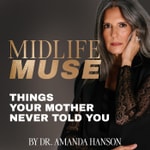
Midlife Muse: Things Your Mother Never Told You
Dr. Amanda Hanson
Society & Culture
Education
Frequency: 1 episode/10d. Total Eps: 70

The magnificence and rapture of womanhood are often not passed down from our mothers. We are all too familiar with stories of sacrificing, shrinking, and overcoming. The majority of women are left to feel like something is constantly missing. And what’s usually missing is the feminine essence of every single one of them.
Dr. Amanda Hanson is a clinical psychologist and a global influencer who has helped millions of women to reimagine their lives, reconnect with their feminine side, and heal generational trauma.
In each episode, Dr. Amanda will introduce you to concepts of womanhood that will ignite your radiance, ease the confusion, and help you craft an unshakeable foundation of self-worth.
Whether you are seeking guidance, inspiration, a deeper reflection on your life, or knowledge for making your lifetime of being a woman more fulfilling ~ The Midlife Muse podcast is for you.
For women of all walks of life, regardless of their origin, religious views, age, or previous experiences, this is a universal platform that unites safe women across the globe.
Site
RSS
Apple
Data updated on 21/07/2026
Recent rankings
Latest chart positions across Apple Podcasts and Spotify rankings.
Shared links between episodes and podcasts
Links found in episode descriptions and other podcasts that share them.
See allRSS feed quality and score
Technical evaluation of the podcast's RSS feed quality and structure.
See allPublication history
Monthly episode publishing history over the past years.
© My Podcast Data · Independent project · Data from Apple & Spotify