Medicine in English | MedVibe - Details, episodes & analysis
Podcast details
Technical and general information from the podcast's RSS feed.
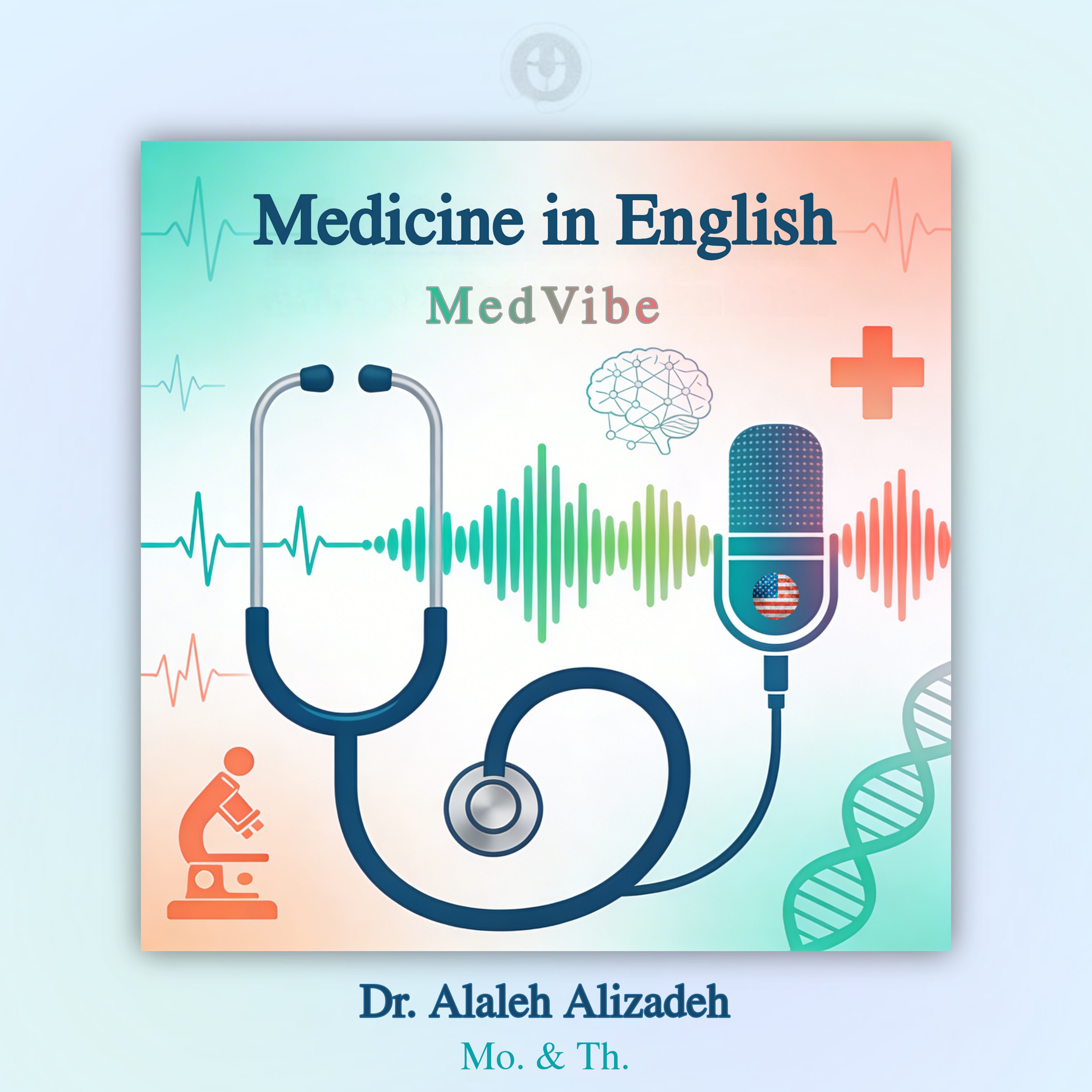
Medicine in English | MedVibe
MedVibe by Dr. Alaleh Alizadeh
Health & Fitness
Frequency: 1 episode/3d. Total Eps: 27

Welcome to Medicine in English | MedVibe 🩺 – your clinical deep-dive!
🎙️ Every Monday & Thursday, we bridge the gap between textbooks and the ward:
✅ High-yield pathophysiology & global diagnostic standards.
✅ Mastering complex clinical cases at a consultant level.
✅ Sharpening your clinical reasoning and bedside communication.
📈 Elevate your medical career!
💡 Upgrade your learning:
▪️ Get exclusive Study Guides & Cheat Sheets on Patreon: patreon.com/MedVibe
▪️ Preparing for Germany? Check out our German editions: Medizin auf Deutsch & FSP Klinik-Boost.
Follow us now! ⏰🤍
Site
RSS
Apple
Data updated on 31/08/2026
Recent rankings
Latest chart positions across Apple Podcasts and Spotify rankings.
Shared links between episodes and podcasts
Links found in episode descriptions and other podcasts that share them.
See allRSS feed quality and score
Technical evaluation of the podcast's RSS feed quality and structure.
See allPublication history
Monthly episode publishing history over the past years.
© My Podcast Data · Independent project · Data from Apple & Spotify