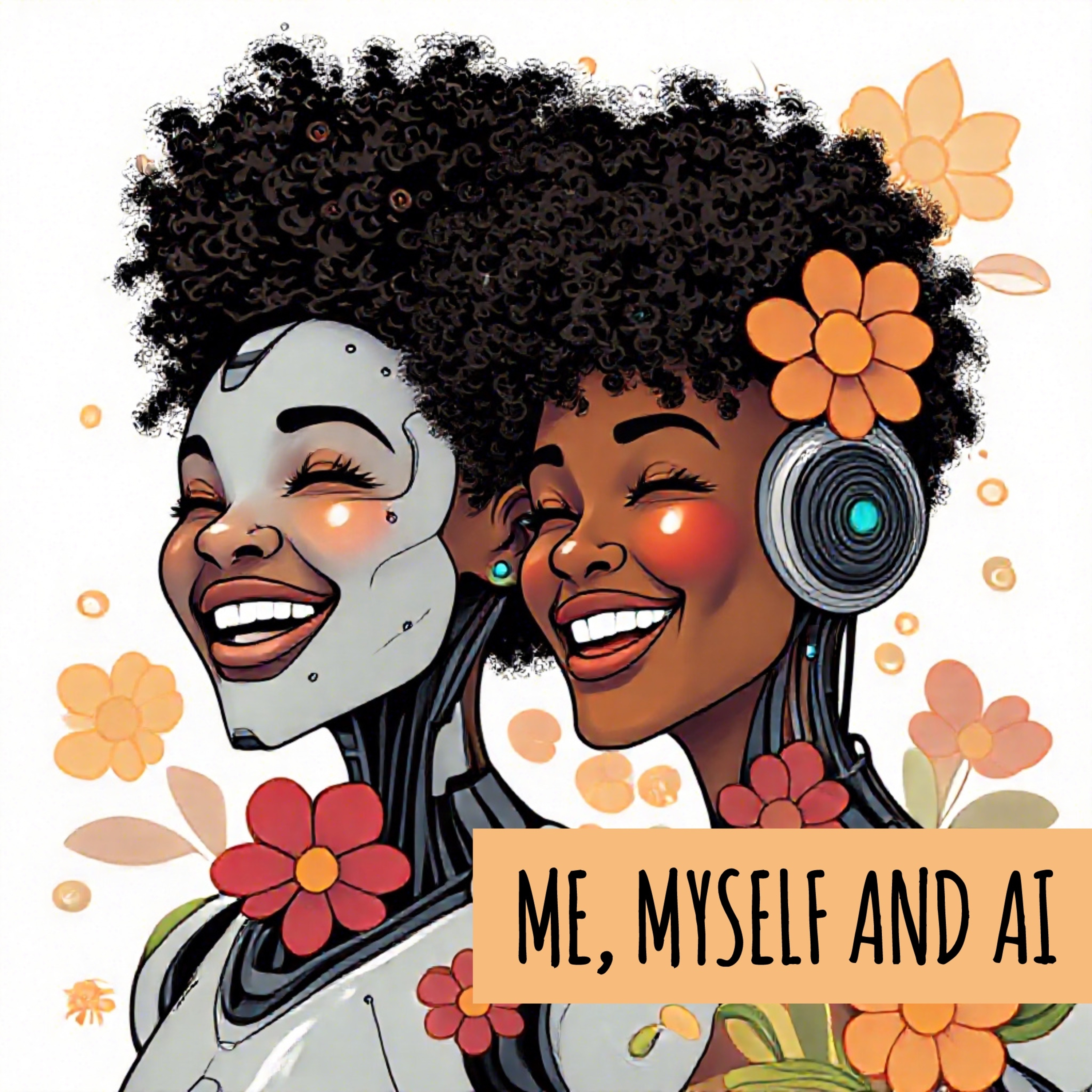
Me, Myself and AI – Details, episodes & analysis
Podcast details
Technical and general information from the podcast's RSS feed.

Recent rankings
Latest chart positions across Apple Podcasts and Spotify rankings.
Apple Podcasts
🇩🇪 Germany - newsCommentary
06/03/2026#90🇩🇪 Germany - newsCommentary
05/03/2026#68🇩🇪 Germany - newsCommentary
28/02/2026#97🇩🇪 Germany - newsCommentary
27/02/2026#68🇫🇷 France - newsCommentary
22/01/2026#99🇩🇪 Germany - newsCommentary
17/12/2025#81
Spotify
No recent rankings available
Shared links between episodes and podcasts
Links found in episode descriptions and other podcasts that share them.
See all- https://www.consumerfinance.gov
8 shares



- https://www.vantagescore.com
4 shares

- https://www.fico.com
3 shares

RSS feed quality and score
Technical evaluation of the podcast's RSS feed quality and structure.
See allScore global : 43%
Publication history
Monthly episode publishing history over the past years.
When Vibes are off at work
vendredi 12 décembre 2025 • Duration 05:31
When the Vibes Are Off at Work
You can feel it before anyone says it out loud.
The side conversations. The tension in meetings. The quiet after certain people speak. In this episode of Me, Myself, and AI, we talk about what’s really happening when the vibes are off at work—and why it’s rarely “just personalities.”
Using peer-reviewed research from organizational psychology and workplace behavior, this episode breaks down how gossip and chronic negativity quietly erode trust, damage morale, and spread through teams like a social contagion. Studies show that negative gossip is linked to increased stress, reduced performance, lower organizational commitment, and higher turnover intentions (Kurland & Pelled, 2000; Wu et al., 2018; Küçük et al., 2025). Research on workplace incivility also finds that even low-level negativity reduces cognitive performance, collaboration, and psychological safety (Porath & Pearson, 2013; Leiter et al., 2011).
We explore how these behaviors influence entire workplace cultures—not just the people directly involved—and why organizations often underestimate the cost of “toxic talk.” We also talk honestly about what it’s like to work in these environments: why people stay silent, how gossip drains energy from teams, and the coping strategies employees use to survive when leaving isn’t an option.
Finally, we look at solutions backed by evidence. Can people who gossip or contribute to negative workplace cultures change? What actually works—training, coaching, accountability, leadership modeling—and where organizations often get it wrong. Research on civility interventions and emotional intelligence training shows that workplace culture can improve when negative behaviors are addressed directly and consistently (Leiter et al., 2011; West & Brassey, 2022).
If you’ve ever walked into work and thought, “something feels off,” this episode is for you.
⸻
Key References Mentioned
• Kurland, N. B., & Pelled, L. H. (2000). Passing the word: Toward a model of gossip and power in the workplace. Academy of Management Review.
• Wu, L. Z., et al. (2018). The effect of workplace gossip on employee outcomes. Journal of Applied Psychology.
• Küçük, A., et al. (2025). Workplace gossip, loneliness, and turnover intention. Journal of Management & Organization.
• Porath, C., & Pearson, C. (2013). The price of incivility. Harvard Business Review.
• Leiter, M. P., et al. (2011). The impact of civility interventions on workplace culture. Journal of Applied Psychology.
• West, T., & Brassey, J. (2022). Addressing toxic workplace behavior. McKinsey Health Institute.
“Culture Fit”: How Familiarity Bias Hurts the Workforce
jeudi 4 décembre 2025 • Duration 08:40
In this episode of Me, Myself, and AI, Casey B challenges the workplace myth that the best hires are the most outgoing, social, and familiar. Through research on cultural fit and the costs of homogenous teams, we uncover how organizations hurt themselves by choosing comfort over capability.
Casey highlights why shows like Netflix’s The Residence matter for representation. Uzo Aduba’s Detective Cordelia Cupp is brilliant, awkward, introverted—and exceptional. A character like this reminds us that excellence comes in many forms.
This episode is an invitation to rethink what talent looks like and to question who we overlook when we only hire those who feel familiar.
The Price of Access: AI, Music, and the Voices Left Out
dimanche 4 mai 2025 • Duration 06:52
In this episode of Me, Myself, and AI, Casey explores the groundbreaking rise of AI-generated music—and why it hits so close to home. From growing up in Canada admiring artists like Kardinal Offishall, Jully (Julie) Black, Keisha Chanté, Nelly Furtado, Justin Bieber, and Drake, to navigating the high costs and gatekeeping of the music industry, Casey shares a personal journey of embracing AI as a tool for creative freedom.
We dive into how AI music platforms like Suno, Riffusion, Udio, Stable Audio, Mfly, and Mind Band are transforming the way music is made, distributed, and consumed. Casey reflects on the benefits and challenges of this new era—highlighting issues of diversity, authenticity, and the ethical dilemmas that come with automation in the arts.
Plus, we look at how major labels are using AI behind the scenes, and ask: Will we even need traditional music labels in the future?
Legal and Ethical Insights (Bonus Notes):
As part of this conversation, it’s important to acknowledge the legal and ethical challenges surrounding AI-generated music. Current copyright laws in many countries only recognize works created by human authors, leaving AI-produced tracks in a legal grey zone. Major lawsuits—like those filed by music publishers against companies such as Anthropic—are testing whether using copyrighted songs to train AI models constitutes infringement. While no landmark rulings have yet declared AI-generated outputs illegal, the question of whether training practices violate copyright is being actively debated in courts across the U.S. and Europe.
At the same time, industry experts are developing AI detection tools to monitor streaming platforms for AI-generated music, addressing concerns about fraud and fair competition with human artists. These conversations are not just about legal ownership—they also raise deeper ethical questions: Who benefits from AI music? Are diverse voices being represented in the data that trains these systems? And how do we balance accessibility with protecting traditional artistry?
This episode includes insights from recent research and reporting, with sources such as:
- Chen, J. (2023). Can the AI-Generated Content be Protected as Work Under Copyright Law?
- Deng, J., Zhang, S., & Ma, J. W. (2023). Computational Copyright: Towards A Royalty Model for Music Generative AI.
- Frosio, G. F. (2021). (The Nonexistent A(I)uthor: a Techno-legal Argument Against the Protection of AI-generated Creativity).
- Hou, Y. (2022). AI Music Therapist: A Study on Generating Specific Therapeutic Music based on Deep Generative Adversarial Network Approach.
- Huang, R., Sturm, B. L., & Holzapfel, A. (2021). De-centering the West: East Asian Philosophies and the Ethics of Applying AI to Music.
- Ji, S., Yang, X., & Luo, J. (2023). A Survey on Deep Learning for Symbolic Music Generation.
- Piskopani, A. M., Chamberlain, A., & Ten Holter, C. (2023). Responsible AI and the Arts: The Ethical and Legal Implications of AI in the Arts and Creative Industries.
- Shang, M., & Sun, H. (2020). Study on the New Models of Music Industry in the Era of AI and Blockchain.
- Vanka, S. S., Safi, M., Rolland, J. B., & Fazekas, G. (2023). Adoption of AI Technology in the Music Mixing Workflow.
- Zhou, X. (2023). Analysis of Evaluation in Artificial Intelligence Music.
We also cover the viral success of Doechii’s song “Anxiety” and explore how social media and influencer culture are reshaping music promotion.
Where do you think music is heading? Share your thoughts in the comments or tag me on social—I’d love to keep this conversation going.
Credit: The Game You Never Knew You Were Playing
vendredi 2 mai 2025 • Duration 09:03
In this episode of Me, Myself, and AI, we dive deep into the mysterious world of credit—how it works, who controls it, and why it feels like an uphill battle, especially for people who weren’t taught the system early on. Casey shares her personal journey with credit—from her first university credit card to the snowball effect of debt—and unpacks how credit scores are calculated, why rent-reporting programs can be both helpful and risky, and the real deal behind consumer proposals. Plus, we look at how other countries handle credit and ask the big question: is there a fairer way? Whether you’re rebuilding your credit, starting from scratch, or just curious about how this system runs your life, this episode is for you.
⸻
Sources:
• Fair Isaac Corporation (FICO): https://www.fico.com
• VantageScore Solutions: https://www.vantagescore.com
• Equifax Canada: https://www.consumer.equifax.ca
• TransUnion Canada: https://www.transunion.ca
• Consumer Financial Protection Bureau (CFPB): https://www.consumerfinance.gov
• Ontario Consumer Reporting Act: https://www.ontario.ca/laws/statute/90c33
• National Consumer Law Center, “Past Imperfect: How Credit Scores and Other Analytics ‘Bake In’ Past Discrimination and Perpetuate Bias,” 2022
• Canada Mortgage and Housing Corporation (CMHC): https://www.cmhc-schl.gc.ca
• Experian Boost: https://www.experian.com/consumer-products/boost
• RentTrack: https://www.renttrack.com
• Equifax Rent Advantage: https://www.consumer.equifax.ca/personal/products/rent-advantage/
• Government of Canada—Insolvency Statistics and Consumer Proposals: https://www.ic.gc.ca/eic/site/bsf-osb.nsf/eng/home
• OECD Reports on International Credit Reporting Systems (2023)
• World Bank: “Credit Reporting Knowledge Guide” (2020)
How to Make Something Out of a Mess
jeudi 1 mai 2025 • Duration 15:51
Hey, it’s Casey B. Today’s episode is a little different—it’s the full audiobook version of How to Make Something Out of a Mess. I wanted to share this with you because I know what it feels like to be building something new while navigating life’s chaos. This is my story, my blueprint, and my encouragement to you. I hope it resonates.
I’m Casey B, you can find me on Instagram @LetCaseyBe, on Facebook as Casey Bradfield, and my music—by Charita B—is available now, including my latest album Golden Hues. Thank you for listening.
Paperwork and Power: The Real Rules of Immigration
mercredi 30 avril 2025 • Duration 09:16
This episode examines President Trump’s 2025 invocation of the Alien Enemies Act to deport Venezuelan migrants without due process, as reported by This American Life and other news outlets. It also explores recent changes in Canadian immigration policy, including reductions in international student visas and asylum access, highlighting how immigration is being redefined across North America.
Sources referenced or explored in this episode:
• This American Life
• Reuters
• Associated Press
• NPR
• Fox News
• The Guardian
• Politico
• CBC
• CTV News
• Government of Canada immigration updates
• ACLU legal responses to the Alien Enemies Act
• U.S. Supreme Court rulings on recent deportations
• Reports on El Salvador’s CECOT prison agreement
• Safe Third Country Agreement changes
• Research on the economic impact of immigration in the U.S. and Canada
Tech’s Pay Gap Exposed: The Truth About Racial Disparities and DEI
samedi 29 mars 2025 • Duration 30:55
In this deep-dive episode, we explore how Google came to settle a $28 million class-action lawsuit for underpaying Latinx, Indigenous, and Native employees—and why Black employees were pursuing separate legal action. We unpack the data, the leaked spreadsheets, the whistleblowers, and how this landmark case was proven. Then we zoom out and look at similar patterns across Meta, Amazon, Microsoft, Apple, and others. Finally, we investigate the rollback of DEI (Diversity, Equity & Inclusion) programs in the U.S. and Canada. Are companies backing away from racial equity? Were these programs ever enough? And who actually benefited? This episode pulls from legal documents, internal testimony, and a balanced mix of media and academic sources to reveal the real story behind the pay gaps in tech.
⸻
Sources Cited in the Episode:
Legal & Primary Documents:
• Class-action lawsuit Cantu v. Google (California Superior Court)
• April Curley’s federal lawsuit against Google
• U.S. Department of Labor v. Oracle (OFCCP complaint)
• EEOC complaints filed against Facebook
• National Labor Relations Board documents (Apple pay transparency case)
Media Outlets – Left & Center:
• Reuters
• The Guardian
• Black Enterprise
• TechCrunch
• Fortune
• NPR
• Time
• CNBC
• People of Color in Tech (POCIT)
• ClassAction.org
Media Outlets – Right & Balanced Perspectives:
• Fox Business (coverage of anti-DEI shareholder push and state backlash)
• Wall Street Journal (commentary on DEI performance)
• Resourceful Finance Pro
Academic & Policy Reports:
• McKinsey & Company – “Race in the Workplace” & DEI outcomes reports
• Harvard Business Review – Research on diversity program effectiveness (Dobbin & Kalev)
• EEOC (Equal Employment Opportunity Commission) – 2023 tech sector diversity report
• Statistics Canada – Racial pay gap data and employment equity outcomes
• Conference Board of Canada – Reports on DEI and representation in the Canadian workforce
Canada’s Policy Maze: What Have Our Leaders Really Done?
samedi 29 mars 2025 • Duration 28:24
In this episode, we take a deep dive into the policies that have shaped Canada over the past 20 years. From the federal level under Justin Trudeau’s Liberal government to the provincial level under Doug Ford’s Conservative leadership, we uncover the key policies that have impacted housing, healthcare, the economy, immigration, and more. We’ll break down what’s been passed, what’s been struck down, and what it all means for everyday Canadians.
Is Canada truly progressing, or are we caught in a cycle of political promises and practical failures? Join us as we make sense of the data and explore how federal and provincial priorities clash, intersect, and shape the way we live. Whether you’re just tuning in to politics or trying to make sense of the headlines, this episode cuts through the noise and lays out the real impact of our leaders’ choices.
Sources:
1. Macrotrends
2. The Guardian
3. Reuters
4. Politico
5. Wikipedia
6. Migration Policy Institute
7. Council on Foreign Relations
8. Financial Times
9. FCJ Refugee Centre
10. Canadian Government (Canada.ca)
11. Ontario Government (Ontario.ca)
12. Public Health Ontario
13. AP News
14. Torys LLP
15. The Le Monde
16. National Observer
17. Bloomberg News
18. CBC News
19. CTV News
20. National Post
21. Toronto Star
22. The Hill Times
23. Globe and Mail
24. The Narwhal
25. Housing Rights Canada
26. eCampusOntario
27. Federal Register
28. Legislative Assembly of Ontario
2025 Elections: Canada’s Next Leader and Trump’s New America
vendredi 28 mars 2025 • Duration 13:44
In this episode, we break down the political landscape of 2025, starting with Canada’s federal election and the candidates vying for leadership. We’ll explore who’s running, what they’re standing on, and how they’re positioning themselves in the race. Then, we shift our focus to the U.S., diving into Trump’s return to office and the whirlwind of policies he’s been putting in place and repealing. Plus, we take a step back to look at how Trump’s actions compare to the legacies of Obama and Biden over the past few years.
It’s all about cutting through the noise and understanding what’s really happening on both sides of the border. Tune in for a straight-up, no-nonsense breakdown that gets to the heart of the matter.
Who Controls the Narrative? Media Bias, Global Perspectives, and the Stories We’re Told
vendredi 28 mars 2025 • Duration 26:38
In this eye-opening episode of Me, Myself, and AI, we dive deep into the media narratives shaping our world today. From the concentrated ownership and ideological leanings of major news outlets in Canada and the U.S., to the complex and often conflicting portrayals of North America from global perspectives, we unravel the stories being told about us — and who’s telling them.
We examine dominant narratives around technology, cultural shifts, democracy, and foreign policy over the past two years, exploring how mainstream media in Canada and the U.S. presents topics like AI, Big Tech regulation, culture wars, and geopolitical rivalries. We also take a global tour to discover how countries like the U.K., China, Russia, Nigeria, South Africa, and Egypt are talking about North America — sometimes reflecting our own perspectives, other times starkly contradicting them. From accusations of Western hypocrisy to narratives of American decline, we see how media worldwide interprets our actions and how those interpretations shape international perceptions.
Join us for a thoughtful and nuanced discussion that challenges how we think about media and the stories we consume — and helps us understand how media ownership and geopolitical realities influence what we see on our screens.
⸻
Sources:
• Diana Maliszewski, Association for Media Literacy – notes on Canadian media bias (CBC “left-centre bias”)
• Wikipedia – Political alignment of Toronto Star and Globe and Mail; Fox News bias descriptions
• Vanessa Otero (AllSides) – media bias: “Fox is right-leaning, CNN is left-leaning, and MSNBC is left-leaning…”
• NewsWhip report (Haley Corzo, 2023) – surge in AI discourse and major narratives like ChatGPT, fear of AI dangers
• Digital Content Next (Jessica Patterson, 2024) – impact of Canada’s Online News Act and Meta’s news ban
• Fox News op-ed (2023) – criticism of “identity politics”
• Media Matters (V. Henry, 2025) – analysis of culture war shifts, focus on attacks on transgender people
• Brookings (Darrell West, 2024) – disinformation shaping views and widespread media attention
• Reuters (D. Ljunggren, 2024) – Canadian intelligence on Chinese election interference
• The Guardian (Leyland Cecco, 2023) – leaked reports of Chinese meddling in Canadian elections
• Global Times (editorial, Jan 5, 2023) – U.S. House speaker chaos and polarization
• Atlantic Council (Ash Jain, 2022) – Biden’s Warsaw speech quote on democracy vs. autocracy
• Responsible Statecraft (Ben Armbruster, 2023) – critique of mainstream media hyping the China threat
• Reuters (Oct 5, 2023) – Putin’s reaction to Canadian parliamentary Nazi tribute
• Time Magazine (Philip Elliott, 2023) – propaganda highlighting U.S. House instability
• News24 (Sept 3, 2023) – “No evidence weapons were loaded onto Lady R,” South African inquiry finds
• African Digital Democracy Observatory (Jan 28, 2025) – Egypt’s state-run media echoing Russia’s narrative on Ukraine
• Responsible Statecraft (Alex Thurston, 2023) – Africans criticizing U.S. policy on Israel vs. Ukraine
• BBC, Guardian, Al Jazeera, Pew Research – context for global media trends
Related Shows Based on Content Similarities